As a DevOps professional, I am sharing my personal experience based on thorough research and interactions with candidates of various levels who have appeared for DevOps interview at multinational companies this year. Based on it, I have created a list of most asked DevOps interview questions with detailed answers for professionals of all levels. The thing worth paying attention to is that most of the questions are technical, ranging from fundamental concepts to advanced topics like CI/CD, automation, containerization, DevOps lifecycle, and cloud technologies.
By making yourself familiarize with these topics and questions, you will be able to demonstrate your potential and problem-solving skills to secure your position for any DevOps role.
Let's begin with the top DevOps interview questions, categorized by experience level.
Depending upon the business type and your previous experience, what you get asked during an interview may vary. However, to help you increase your chances of getting hired, here is a list of top DevOps interview questions and answers. We have segregated these questions into basic, intermediate and advanced levels. Let's begin.
DevOps is a set of software development strategies that combine Development (Dev) and IT Operations (Ops). We can use it to automate and streamline almost every process of software creation including development, testing, deployment, and maintenance. It follows automation and continuous improvement to streamline the software development lifecycle (SDLC). It also has integration with different tools like CI/CD and Infrastructure as a Code.
DevOps has a wide range of tools, including -
DevOps has both technical and business benefits.
Technical benefits -
Business benefits -
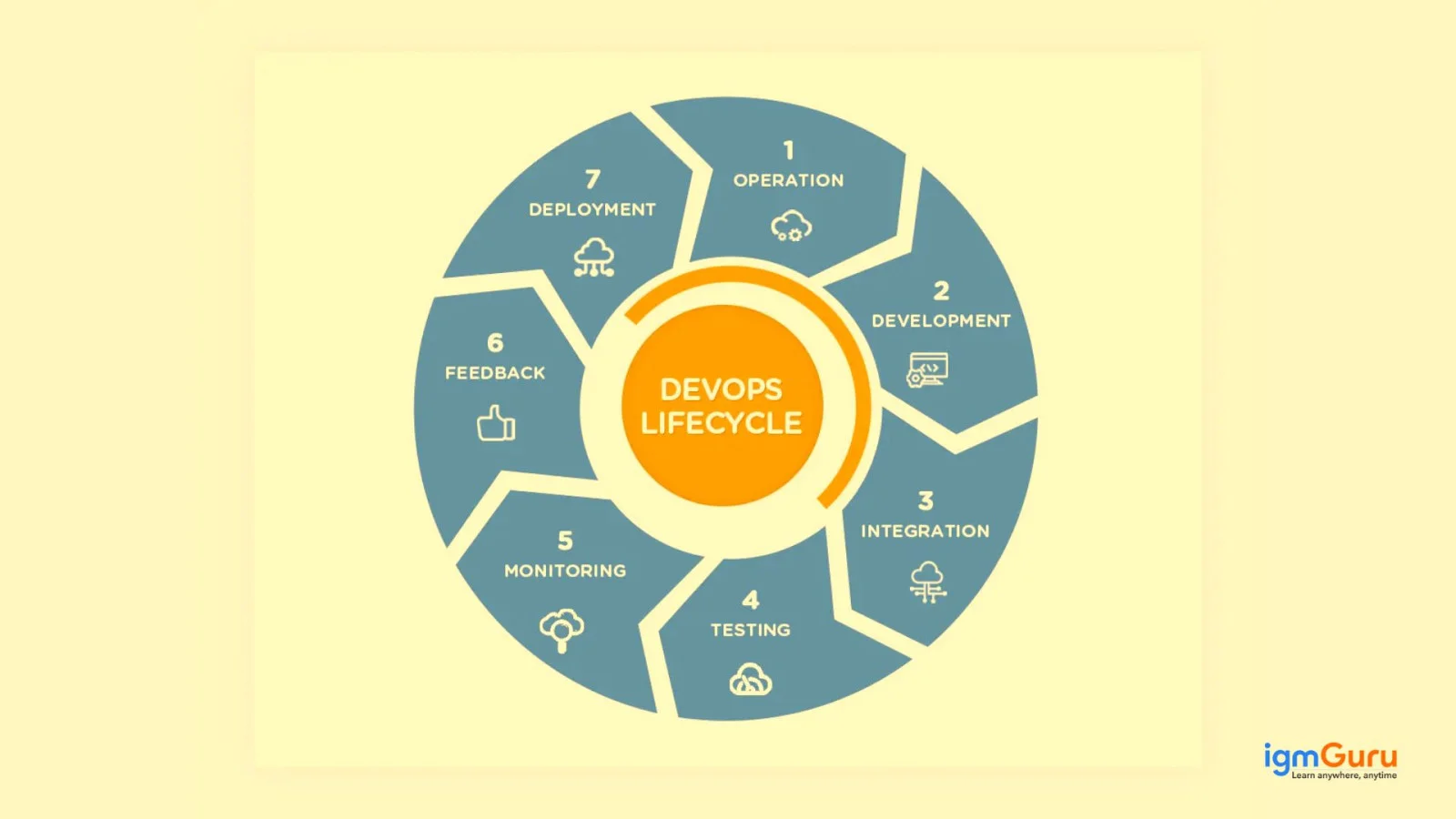
The DevOps lifecycle has these phases -
Configuration management plays a big role in DevOps.
Four important DevOps KPIs are -
The Git clone command is used to download a repository from GitHub to the computer.
Some ways in which a Build can be run/ scheduled in Jenkins are -
In this section, we will discuss some of the most important intermediate DevOps interview questions and answers. These are suitable for individuals who want to boost their skills to get a promotion or join any other company at higher posts.
The shift left concept used in DevOps is implemented with the aim of reducing the time between identifying bugs and fixing them. The simple practice of moving testing is promoted earlier in the stage rather than once the entire integration is done. As errors and bugs are found earlier on in the development stage, less time, money, and effort are wasted later.
When a manual process is automated to test a system or an application, it is referred to as automation testing. It includes using independent testing tools that aid the user in developing test scripts. These can be run endlessly without any human interaction.
There are dozens of benefits of using Automation Testing. Some of them are -
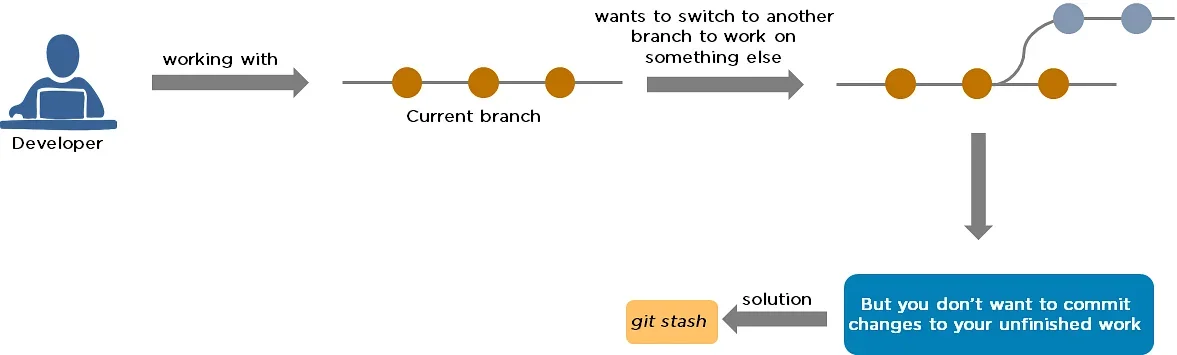
When a developer working with a branch is thinking about switching to another branch to work on another task but is unwilling to commit any changes to the current work, they use Git stash. It helps the developer by saving their modified tracked files.
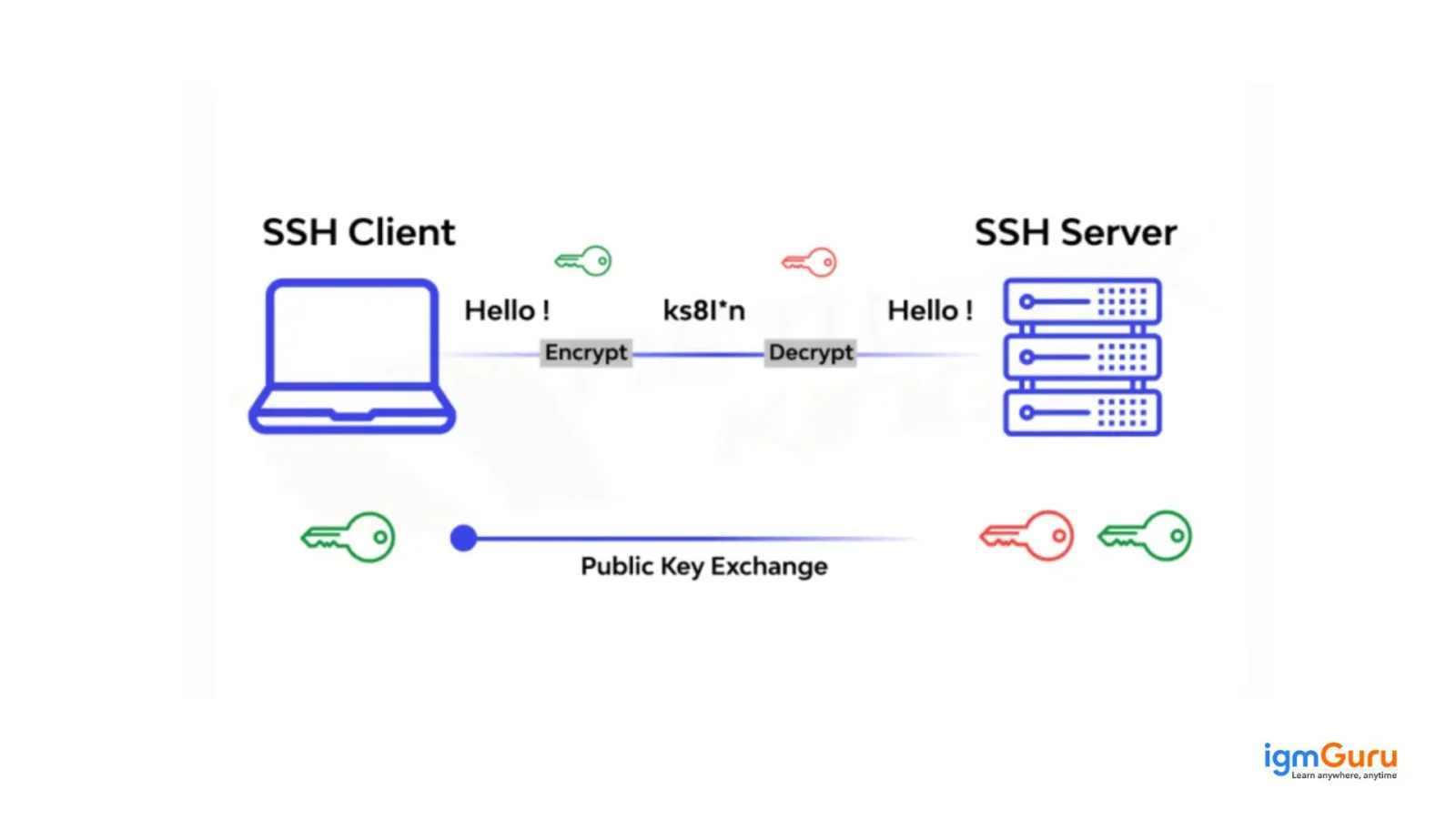
SSH is the credential for accessing the Secure Shell Protocol. It is also referred to as a cryptographic network protocol that can share data over the network in encrypted form. The best part of SSH is that users do not have to remember or enter each system to log in. It can directly connect them to any server they want.
Infrastructure as Code (or IaC) is when the infrastructure is managed and provisioned through code rather than through manual processes. Editing and distributing configurations are made easy with configuration files containing your infrastructure specifications. Undocumented configuration changes can be avoided with configuration management.
CBM is a software development method where applications are built by assembling reusable and independent components. It is easy to combine and manage them that allows for modularity, faster development cycles and improved maintainability. Think of it like building blocks used to construct a larger structure.
A service offered by AWS, CodePipeline offers CI/CD services. It also boasts provisions of infrastructure. It allows the user to swiftly model and configure various phases of a software release process.
HTTPS is a more secure version of HTTP. It uses encryption technology like SSL (Secure Sockets Layer) or TLS (Transport Layer Security). It establishes a connection between the browser and the website to share encrypted data. Individuals can use it to transfer confidential information like credentials and passwords.
Pair programming is a special approach to software development where two developers work on the same project. The developer who builds the code is the driver and the other one who observes the code is the navigator. This way they can create programs with a minimum amount of errors in lease time. They also switch their roles frequently throughout the process.
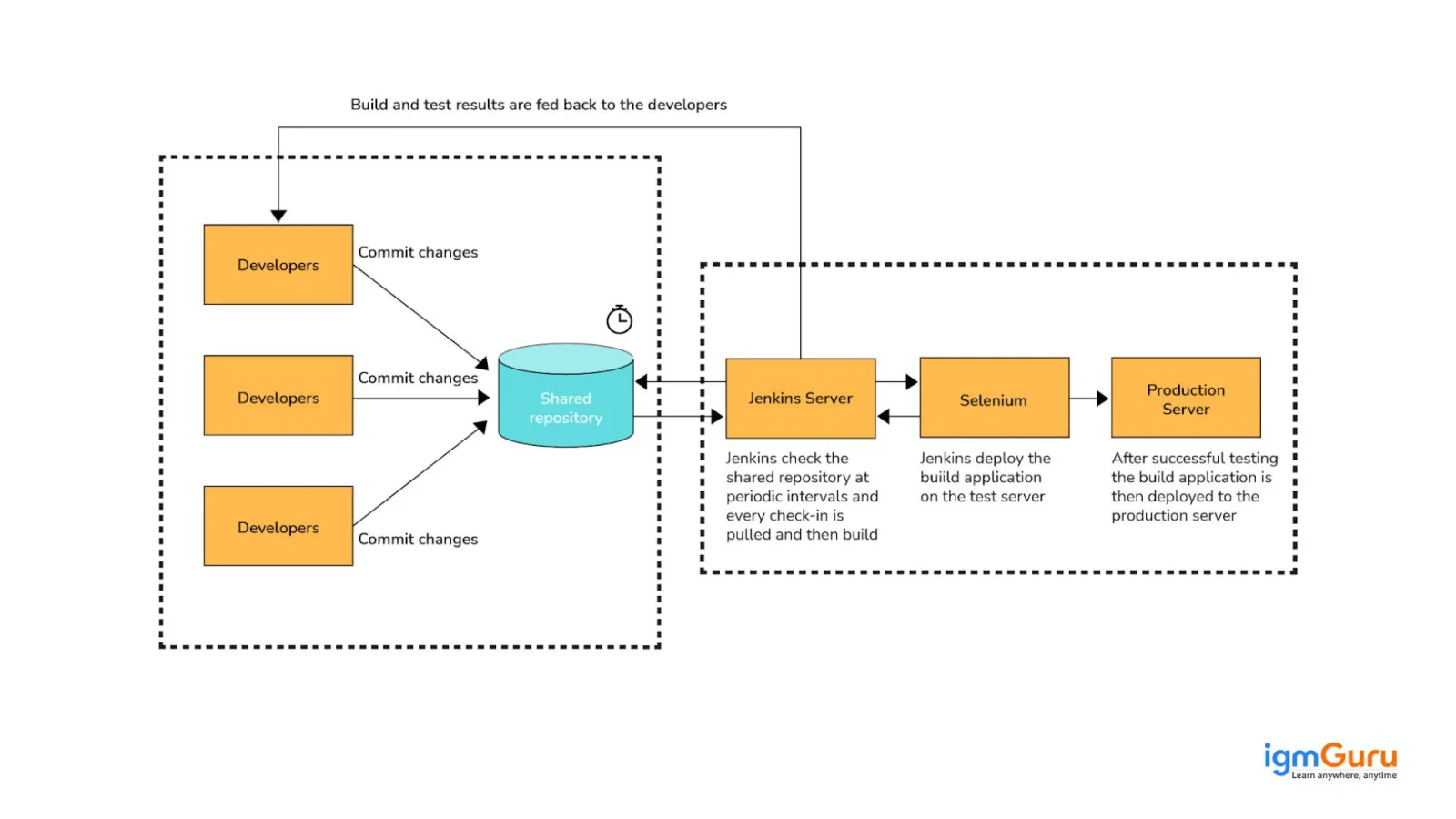
Continuous integration is a software development practice where developers integrate their code changes into a repository. This repository has an integration with each phase of SDLC by which it triggers builds and tests to ensure seamless integrations. It also identifies the potential issue at an early stage making it a core principle of this methodology.
Related Article- How To Become DevOps Engineer?
Now let's jump to the top advanced DevOps interview questions and answers. These questions include the advanced concepts of this methodology. These are best for individuals who want to get a senior job position.
A hybrid cloud is a computing environment that amalgamates an on-premises data center (or a private cloud) and a public cloud to facilitate the sharing of applications and data between them. There are dozens of benefits of a hybrid cloud and that is probably why so many businesses are adopting it.
When a business experiences heightened processing and computing demand that the on-premises data centers cannot take care of, they can switch to the cloud instantly.
The software development life cycle in DevOps involves two sides including the left side and right side. The left side performs planning, designing and development phases whereas the right side performs testing, production staging and user acceptance.
The shift left is a special approach in which many of the tasks from the right side are shifted to the left side. This approach manages and reduces all the errors that may arise in the next stage.
The following function can launch the browsers using WebDriver -
# Firefox |
We can implement continuous testing in DevOps with the following steps -
A) Choose appropriate automation tools for different testing levels like unit, integration, API, and UI testing. The selection will depend on the project needs requirements. Popular options are Selenium, Cypress, JMeter and Rest Assured.
B) Design a modular and maintainable test automation framework for test creation, execution and reporting.
C) Configure the CI/CD pipeline that can automatically trigger tests at every stage from code commits to builds and deployments.
D) Start implementing unit tests at the code level and gradually add more complicated tests throughout the development cycle.
E) Prioritize fast feedback loops for bugs to inform developers. Use parallel test execution across different environments to accelerate testing time. Monitor test results and metrics to identify trends, areas for improvement and potential quality issues.
F) Foster close collaboration between developers and testers to ensure everyone understands the importance of continuous testing and shares responsibility for quality.
G) Consider different testing environments to test application behavior in different scenarios.
H) Implement API automation to validate data exchange and functionality.
Puppet Codedir is the central directory of a Puppet server where all the configuration management codes are available. This directory defines the state of the infrastructure with the help of Puppet declarative language. We have to write and organize our Puppet code to manage our systems across the environment. The following are the locations of this directory -
# Unix |
The Facter is a library in Puppet that collects system information about a node. This information is the key-value pairs, namely facts. These facts are then accessed within the Puppet manifests that tailor configurations according to the specific system details. This allows for dynamic and context-aware management across many machines.
Also Read- DevOps Engineer Salary In India And Other Countries
The following are some of the DevOps engineer interview questions and answers. These include some of the most important concepts a Devops engineer should know. Let's begin!
Ansible is a free automation tool that can manage and configure large groups of servers in DevOps. It can simplify tasks like application deployment, system configuration and cloud provisioning. It has some predefined instructions on remote machines written in YAML. These instructions make it a robust tool for automating repetitive IT operations across an infrastructure.
Ansible handlers are special tasks of the Ansible playbooks. They can not run unless any other tasks notify them to. For instance, the notification of restarting the service after any modification in the file.
The following are referred to as the best continuous monitoring tools -
The auto-deployment feature detects the modifications done on an existing application and deploys them automatically. We can turn this feature off with one of the following methods -
i) Go to the Administration Console > select the name of the domain from the left pane > and click on the Production Mode checkbox from the right pane.
ii) Use the following command in the command line while starting the domain's Administration Server -
Dweblogic.ProductionModeEnabled=true |
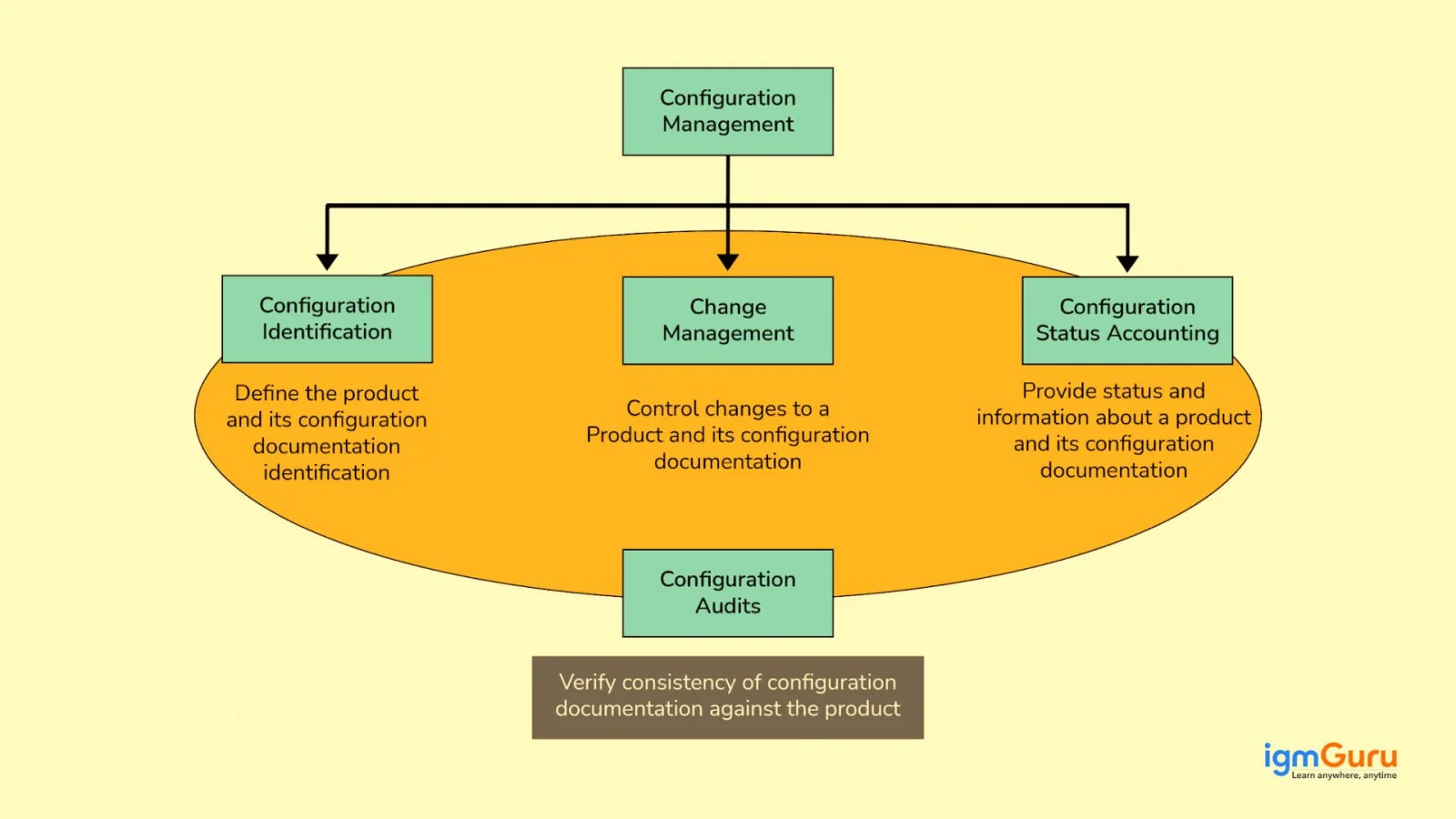
Configuration management controls complete development and deployment processes. This way we can create high-quality software. It has different components including servers, networking, storage and software. These components ensure that the application or system remains in the desired state.
It is a type of continuous deployment method. This method involves two production environments, one consisting of the new code (Green), and the other consisting of the old code (Blue). Both of these instances can be used simultaneously. The application will work according to the new version of the code. However, it holds the old versions for standby in case of any issues.
Nagios is a free-to-use application that monitors and alerts on any issue in IT infrastructure components. These components can be any of the servers, networks, applications or services. It checks their working and sends notifications if any critical parameters fall outside acceptable ranges. This enables teams to identify and resolve issues before they escalate.
Memcached is a high-performance memory caching system. It is very useful in DevOps which stores data temporarily in RAM. This approach speeds up dynamic web applications and reduces the load on databases. It acts as an intermediary layer between the application and the primary database. This layer allows for quicker retrieval of information and better response times.
Related Article- DevOps Tutorial- A Complete Guide For Beginners
Let's explore some of the most important DevOps scenario-based interview questions and answers. These questions will express your problem-solving and creativity skills.
We need to plan this approach while considering security, compliances and cost. Each of them is a very important key point in this process. My plan will be as follows -
Considering all the points, this plan will cover configuring networks and firewalls, deploying servers and resources as per requirements and setting up access controls. It will also involve checking the instance frequently to detect bugs and issues and conducting feedback.
Ad-hoc commands are mostly useful when we want to perform any operation as quickly as possible. It is better to choose them for one-time use. Ansible Playbook, on the other hand, is more complicated to use and it takes time to implement them. It is best to choose them for repetitive tasks.
I would start to investigate the actual problems with the following strategy -
There are many ways to be updated with the latest DevOps practices. The following are some of them -
The following are some of the common challenges of this implementation -
I use the following techniques for collaboration and knowledge sharing in my team -
Ensuring security and compliance in a CI/CD pipeline involves many steps. We will start with using robust authentication mechanisms, data encryption and regular checks of access controls. Next, we will use automatic security scanning and testing of the CI/CD pipeline for detecting vulnerabilities. Lastly, we will create documentation and communication channels to share insights with the team.
Rolling updates and canary releases are the best options to achieve zero-time deployments. Blue/Green deployment pattern dies have the capability to reduce downtime due to its special approach. However, it would be wrong to say that we can achieve zero-downtime deployment in every instance.
To design a CI/CD pipeline for a microservices-based architecture, I'd first ensure each microservice has its own repo with an independent pipeline. The CI stage would run unit tests, code linting, and build Docker images. The images are then pushed to a container registry.
In the CD stage, I'd use a tool like ArgoCD or Jenkins X to deploy services to Kubernetes. Helm charts or Kustomize would help manage configuration per environment. I'd also include automated integration tests and health checks after deployment. Each service should be deployed independently, allowing fast rollbacks or blue/green deployments when needed.
Also Read - Python For DevOps
Python has turned out to be the most popular and widely used language for DevOps.
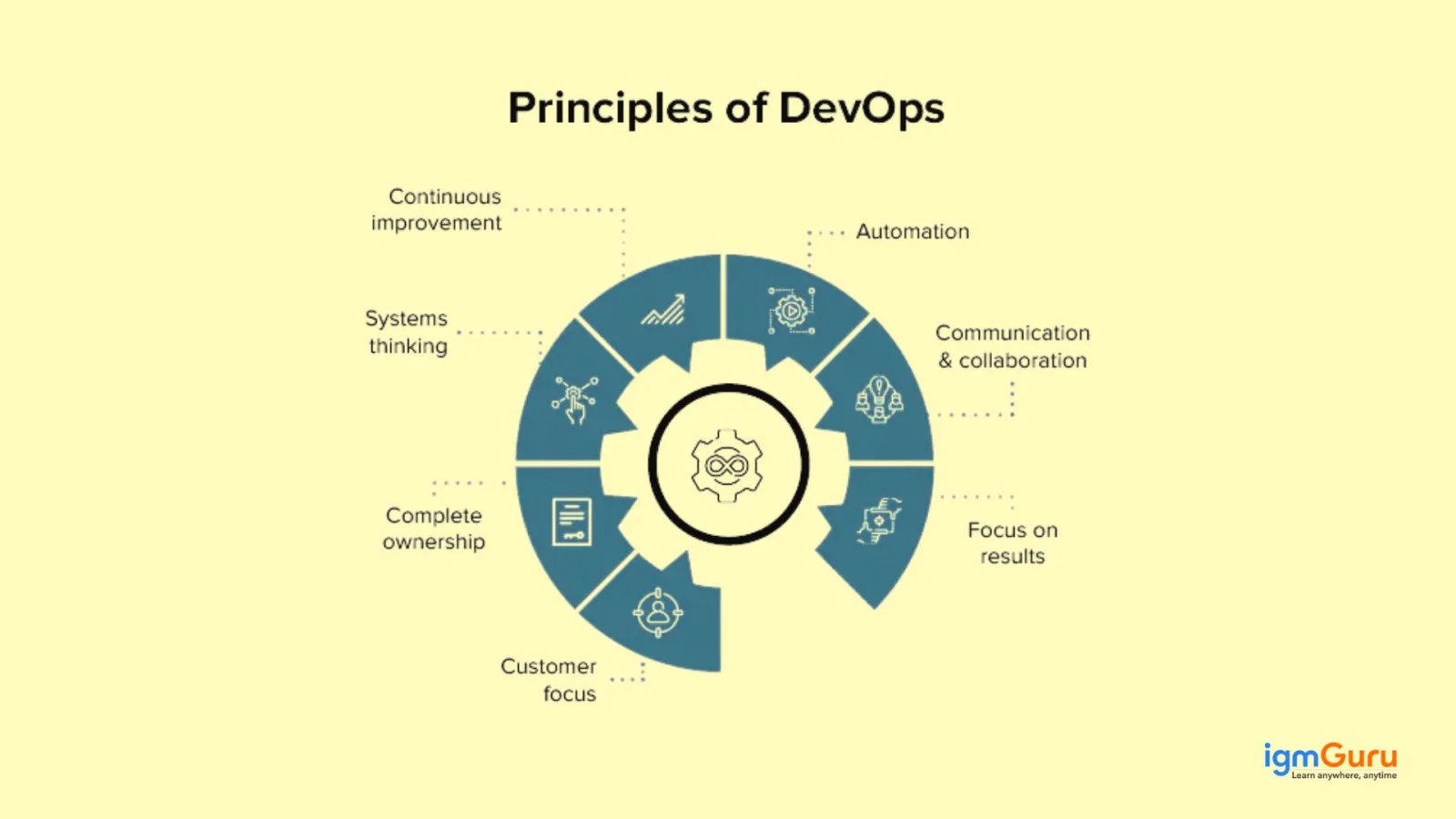
The core principles of DevOps include collaboration, automation, continuous improvement and a customer-centric mindset. These principles are responsible for streamlining software development and deployment. They help to integrate development and operations teams to automate processes and focus on delivering value to the customer.
Managing monitoring and logging is crucial in DevOps. It helps to maintain application health, identify issues and improve overall system performance. It can be achieved by establishing clear objectives, standardizing logging practices, automating monitoring, utilizing metrics and fostering team collaboration.
Establishing an effective collaboration with developers and operational teams requires considering several aspects. You have to ensure that -
The recent updates in DevOps are focused on AI-powered tools, improved security with DevSecOps and advancements in cloud-native development and serverless computing. Some of the key trends also highlight the importance of GitOps, observability and chaos engineering in this technology.
Securing a Docker container includes various aspects, considerations and techniques to follow. To achieve it, users must focus on secure image building, deployment and runtime security. This includes using official images, keeping images updated, running containers as non-root users, using Docker Content Trust and implementing security scanning tools. Additionally, they can slo implement robust defence strategies like network segmentation and firewalls.
Prometheus monitoring system identifies and solves critical issues or anomalies in a system. It follows a rule based strategy where Prometheus collects metrics on the basis of rules, triggers alerts in case of rule violation and manages those alerts through Alertmanager. The Alertmanager handles notifications and silencing.
VCS are responsible for managing and tracking changes to code that ensure collaboration and facilitate continuous integration and delivery (CI/CD). They provide a centralized platform for developers to work together, track changes over time and revert to previous versions if needed. This helps to improve code quality and deployment success.
I will use the following key practices -
Python programming language is used in various operations including automation, data analysis, scripting and infrastructure management. It can help to write scripts for configuration management, cloud provisioning automation and create deployment pipelines.
Scripting enables automation of repetitive tasks, infrastructure provisioning and configuration management. It also streamlines workflows, reduces manual effort and promotes consistency in the DevOps pipeline.
An Internal Developer Platform (IDP) is a set of integrated tools and workflows. They give developers self-service access to infrastructure, environments and deployment pipelines while abstracting away operational complexity. It has various benefits in DevOps environment including:
GitOps is a DevOps practice where Git is the single source of truth for infrastructure and application configurations. It makes all changes through Git commits, pull requests and automated tools continuously to reconcile the actual environment with the desired state stored in the repository. One popular tool for managing infrastructure changes through GitOps is Argo CD.
AI tools can improve monitoring in a DevOps pipeline by detecting anomalies, predicting failures and automating alert responses based on historical data and real-time metrics.
Example: If the average response time of a web application suddenly spikes at 2 AM, an AI-powered monitoring tool (like Datadog with anomaly detection) can:
Many organizations now evaluate candidates through real-world scenarios instead of asking only theoretical questions. The following scenario-based DevOps interview questions assess your troubleshooting ability, decision-making skills, automation knowledge, and understanding of modern DevOps practices.
My first priority would be restoring the service by initiating a rollback to the last stable deployment if one is available. Next, I would analyze deployment logs, application logs, monitoring dashboards, and CI/CD pipeline outputs to identify the root cause. After fixing the issue in a testing environment, I would validate the solution before redeploying. Finally, I would conduct a post-incident review to prevent similar failures in future releases.
I would begin by reviewing the pipeline logs to identify the exact stage where the failure occurs. Next, I would compare the updated dependency with the previous working version, verify compatibility, and reproduce the issue locally if possible. If the dependency is responsible, I would temporarily roll back to the previous version while testing a permanent fix. Once resolved, I would update dependency validation procedures to prevent similar issues.
I would inspect the pod status using kubectl describe pod and review the container logs with kubectl logs. Then I would verify resource limits, liveness and readiness probes, environment variables, mounted volumes, and recent deployment changes. If necessary, I would compare the current deployment with the previous stable version and use monitoring tools like Prometheus and Grafana to identify resource bottlenecks before applying the required fix.
I would first document the current infrastructure and identify all servers, networking components, storage resources, and security configurations. Then I would choose an IaC tool such as Terraform or AWS CloudFormation and gradually migrate infrastructure in small phases instead of replacing everything at once. Every configuration would be stored in Git, validated through automated testing, and deployed using CI/CD pipelines to minimize risks.
I would immediately revoke and rotate all exposed credentials to eliminate security risks. After that, I would remove sensitive information from the repositories using Git history cleanup tools if necessary. The credentials would then be stored securely using services like AWS Secrets Manager, HashiCorp Vault, or Kubernetes Secrets. Finally, I would implement automated secret scanning in the CI/CD pipeline and educate developers about secure credential management practices.
The topic of DevOps is never-ending and there are hundreds of questions that the hiring manager can ask you during your interview. But if we are being honest, we don't even need to mention all of them here. Why? Because once you complete your preparation, you will be able to get all the answers by yourself. Of course, it is extremely important you pick the right resources to learn from and give it your all when it comes to preparing for the interview.
DevOps engineers are hardly ever required to code from scratch. However, it is still essential for them to have a good understanding of top software development languages. They should have a working knowledge of development tools used to create new code and even update existing code.
To become a DevOps engineer, one must at least have a relevant degree in computer engineering, computer science, etc. Additionally, a certification is important. There are a plethora of certifications in the market. Microsoft Certified DevOps Engineer Expert and Amazon Web Services Certified DevOps Engineer are considered good ones.
It usually takes somewhere around six months to become a DevOps Engineer. Even after that, it is a field where you will have to learn constantly and grow as technology and tools advance.
DevOps goals are often divided into four categories, together called CAMS.
DevOps helps organizations release software quickly, improve product quality, reduce failures and enhance teamwork between development and operations teams.