Thinking about stepping into the world of automation? If yes, then Robotic Process Automation (RPA) is probably already on your radar for all the right reasons. RPA roles are booming, and interview panels are getting sharper than ever. Therefore, you need to prepare with the top RPA interview questions and answers, and this guide is your shortcut to success.
It lists the most commonly asked, practical, and real-time RPA interview questions that recruiters absolutely love to ask. From the basics to advanced implementation scenarios, this list will help you walk into the interview room with confidence. Ready to become a RPA developer? Let’s dive in!
Let us begin by exploring some of the top RPA interview questions that are most frequently asked. This list also comprises RPA developer interview questions to help you crack any interview you sit for.
Some of the top applications of RPA include:
To successfully implement RPA, an organization should -
Yes, RPA processes can be audited to learn more about how new strategies can benefit the organization.
Traditional Automation and Robotic Process Automation showcase a vast difference.
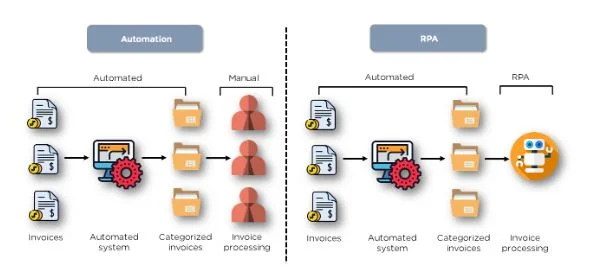
In RPA, here is what a thick client and a thin client refer to:
The RPA lifecycle consists of the following stages.

An key aspect of the RPA toolkit, Screen Scraping refers to the process of accumulating an application's screen display data and then translating it to be displayed by another application.
RPA brings a lot of advantages to the table including-
The top RPA tools today are -
The following tasks are prior in an RPA deployment -
Related Article- How To Learn RPA UiPath? A Guide For Beginners
Now that we have covered some of the top RPA interview questions, it is time to give you a peek into some of the most often asked RPA UiPath interview questions. If you have already completed your UiPath training and certification, you will already know the answers to these questions. Here are the most frequently asked ones.
The steps to deploy UiPath are:
Every activity needed for creating an automation project is contained in the System Activities Pack. These facilitate in:
UiPath Studio consists of -
A UiPath Robot refers to this tool's execution agent that facilitates the developer in running processes that have been created in Studio.
The different components of UiPath Robot are:
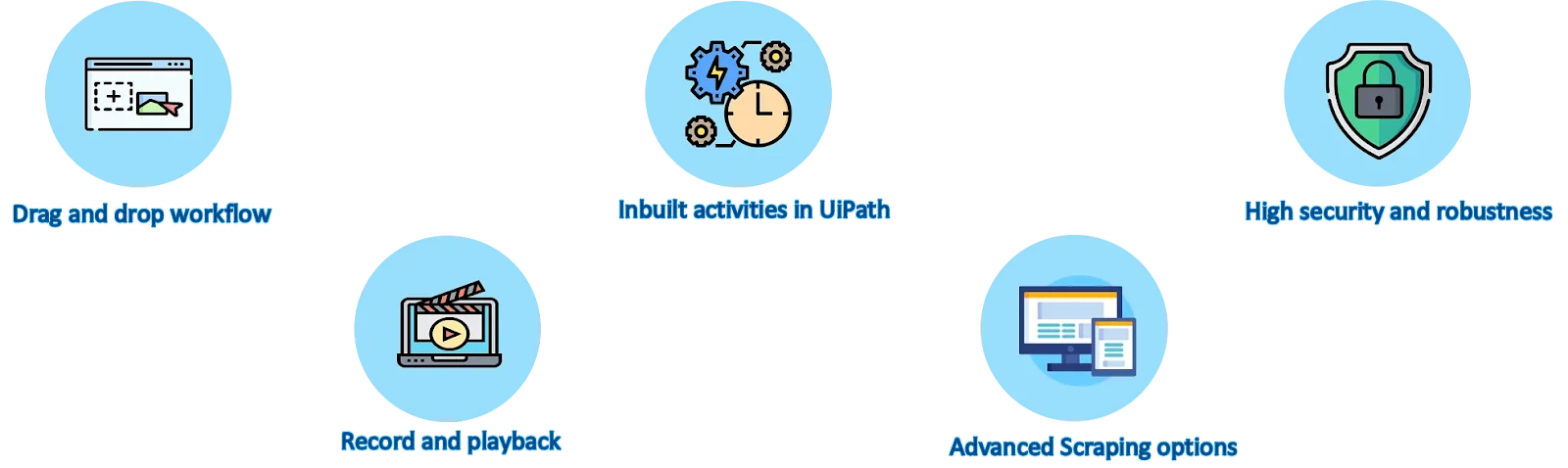
UiPath is full of features including:
Related Article- How To Learn RPA UiPath - A Guide For Beginners
This section lists the most asked RPA UiPath interview questions and answers you should prepare for your next interview. These are based on the most robust and recently introduced concepts.
Sequences are the smallest parts in UiPath with the capabilities of automating repetitive tasks. They streamline activities in a linear approach, executing them one after another in a sequence. These are suitable for simple processes to make it easy to manage and follow the workflow. The benefits of using sequences include -
Here is an instance of using them in workflow, where the Hello word is followed by Welcome.
Scraping is a method of extracting data from various sources like documents, websites or applications. Thai data is then stored in a database (e.g. CSV file, or Excel spreadsheet) and used in workflows. We can also automate the retrieval process through this method, making it suitable to use in RPA. In UiPath, there are many types of scraping techniques including -
UiPath Orchestrator is a web application that can orchestrate, manage and monitor the execution of UiPath Robots. It enables the deployment and execution of repetitive business processes both in attended and unattended automation scenarios.
UiPath robots are the software agents of this platform. They can interact with systems and applications, execute complicated workflows and process data. Think of them as supporters for the organization's employees who perform many repetitive or complicated tasks, saving time and effort. These robots work in two approaches - attended and attended. Attended approaches require human intervention in some cases, whereas the unattended approach handles all the processes individually.
I would follow the given steps:
Q1. What is the primary goal of RPA's implementation in businesses?
Q2. Which RPA platform introduced AI Fabric to integrate AI with automation?
Q3. What is hyperautomation in the context of RPA?
Q4. Which component of an RPA system is responsible for bot development?
Q5. What is a key benefit of cloud-based RPA platforms?
Q6. Which technology enhances RPA's ability to process unstructured data?
Q7. What does the term 'attended automation' refer to in RPA?
Q8. Which RPA tool offers Automation 360 for cloud and AI-driven automation?
Q9. What is a key feature of Microsoft Power Automate in RPA?
Q10. How does process discovery enhance RPA's effectiveness?
When it comes to making a career in the field of robotic process automation, you need to ensure you get good training and get certified. The tool you choose to learn depends upon you because there are a handful that are good. If you decide to go with UiPath, you must take the aid of a UiPath tutorial and certification course to become the best.
We hope this blog containing the most often asked RPA interview questions guides you in the right direction. A lot of companies ask questions associated with what they expect you to know as per your experience and scope of work you have done. But if you are a fresher, you can benefit immensely from a good RPA course.
Explore Our Trending Articles-
Salesforce Interview Questions
Salesforce Integration Interview Questions
Ans. Once you complete your training and certification from a reputable learning platform, you will not feel the need to learn all RPA interview questions because you will feel confident in your knowledge and skills.
Ans. The three types of RPA are attended automation, unattended automation, and hybrid RPA.
RPA professionals earn competitive salaries. The table given below will give a comprehensive view:
| Country | Role / Seniority Level | Typical Salary Range |
| India | Entry / Junior RPA Developer (0–2 yrs) | ₹3 – 8 Lakhs / year |
| RPA Developer (mid-level, 3–5 yrs) | ₹8 – 15 Lakhs / year | |
| Senior RPA Engineer / Lead | ₹12 – 25 Lakhs+ / year | |
| USA | RPA Developer I | $62,000 – $80,000 / year |
| RPA Developer / Engineer (general) | $70,000 – $105,000+ / year | |
| RPA Engineer / Senior roles | Up to $150,000+ / year | |
| UK | RPA Developer (average) | £45,000 – £65,000 / year |
| Senior RPA Engineer | £50,000 – £70,000+ / year | |
| Australia | RPA Engineer / Developer | AUD 100,000 – 130,000 / year |
| Senior RPA Engineer | AUD 100,000+ / year |
Ans. Today, UiPath is the largest RPA software vendor.