Machine learning models are everywhere today, but here’s the truth no one tells you: a model is only as valuable as its ability to survive the real world. And that’s exactly why MLOps has exploded as one of the most in-demand tech skills. Companies aren’t just looking for data scientists anymore; they want professionals who can build, deploy, monitor, scale, and keep models alive in production without breaking a sweat.
The question is, are you racing for an MLOps interview? This guide brings you the most practical, frequently asked, and hands-on MLOps interview questions designed to test exactly how you think in high-pressure, production-ready situations. Explore these questions and prove that you don’t just train models, but make them work in the wild.
This section discusses the most asked MLOps interview questions and answers that a beginner should know. It will help them to understand which topics to prepare and how to answer the questions to impress interviewers.
MLOps (Machine Learning Operations) is a methodology that combines DevOps and machine learning strategies to automate and streamline the entire ML model lifecycle. This methodology was designed to bridge the gap between IT operations and data science. It can now efficiently develop, deploy, monitor and manage the ML models. Its technical aspects include -
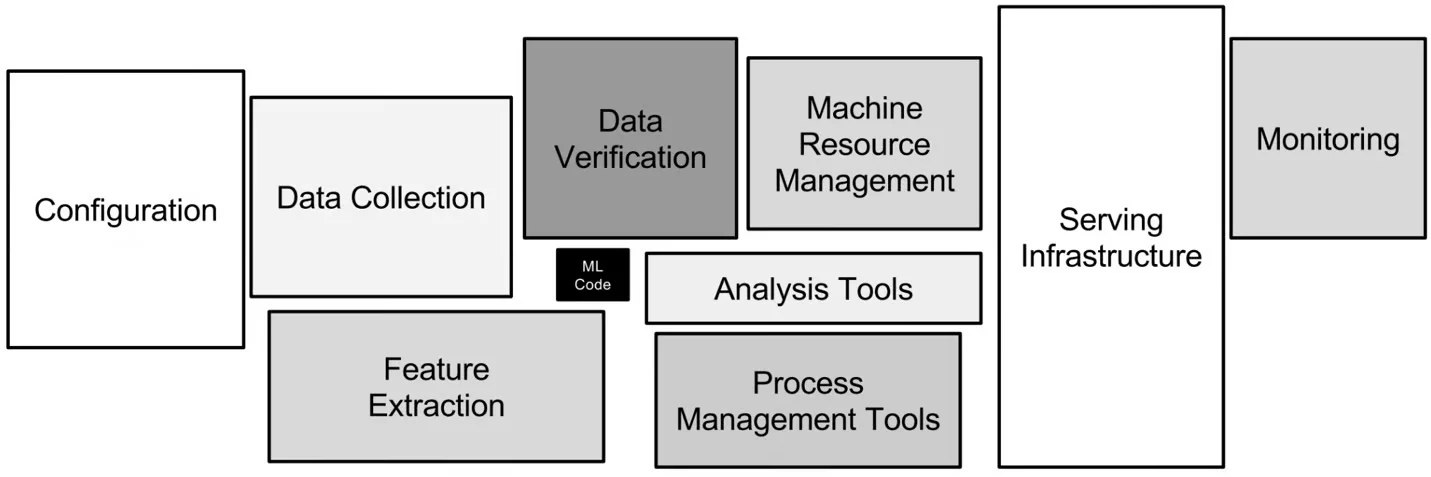
This practice also accelerates innovation, improves operational efficiency and helps companies in data-driven initiatives. It also has many features that make it an important practice -
There is a slight difference in each of their focus areas.
Monitoring pertains to observing a system's performance to outline trends and issues. Logging, however, pertains to logging data in a log file about a system. When compared, monitoring possesses a higher level as it aids in identifying issues that may remain unseen in a log file.
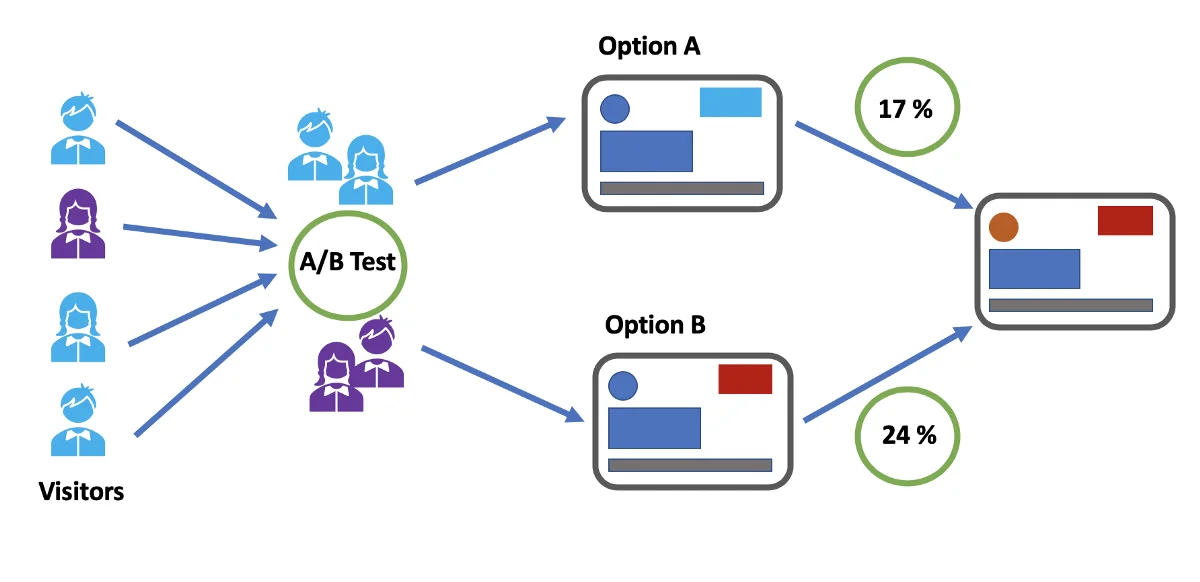
A/B split in model evaluation refers to a method wherein data is randomly selected from a bigger data set and segmented into two groups - A and B.
Group A is employed for training the model, whereas Group B is employed for testing its performance.
It's a great approach to accurately assess the model's performance as the testing is done on unseen data.
These tests should be done -
After getting a certain experience, many individuals want to switch companies for better hikes or learning. Consider the following MLOps interview questions and answers if you are one of them.
Immutable infrastructure is a concept wherein the infrastructure is treated as unchangeable or immutable. It basically means that once the infrastructure has been deployed, efforts to change it should not be made. In case it requires any change, then deploy a new infrastructure. This practice prevents concept drift and maintains the efficiency of the system.
Both of these models differ in terms of data type and training. The online training model learns from the real-time data as soon as possible. It follows a continuous learning approach where any change in data is reflected instantly in the learning. This practice is best for applications that involve dynamic data.
Offline model training is slower than online and learns from batches of different datasets. It is more efficient as we can use big data sizes to train them. It is mostly useful when frequent data changes are not important.
Model drift, also known as model decay, is a constant decline in model performance. It often occurs due to changes in data and environment, such as shifts in data distributions, changes in the relationship between variables, or new concepts appearing. This issue can result in inaccurate predictions, lesser business value, and potentially significant consequences.
Managing this issue involves leveraging different practices. First, we need to detect the drift from the environment. Then, we need to implement different strategies to mitigate it, like retraining the model, adjusting the feature set, etc. Lastly, we also have to ensure that this drift will not occur in the near future.
The following four are the common considerations in this process -
Model Performance: The performance of the model should be aligned with the live data, as it might be different from the training data.
A/B testing in machine learning is a method to test two versions of variables to find out which one is performing best. These variables can be any of models, algorithms, feature sets or hyperparameters, depending on the situation. The goal is to identify the best matrix that caters to every parameter, including accuracy, precision and recall.
Git plays many important roles, including -
Related Article- Top MLOps Tools You Need To Learn
To gain great career height, one may want to grab senior job roles. What it requires is rich experience and proficiency in different MLOps practices. Here are some of the most asked MLOps interview questions and answers that can help them in interviews.
Multi-model serving is a practice of deploying through a single infrastructure. This technique provides a variety of benefits due to its method. It has the potential to scale the deployment of models within a small infrastructure. It does so by intelligently scheduling different models to different servers.
Its Overcommit makes it more efficient by allowing servers to manage multiple models that can fit in memory. It keeps the most used models in memory and pushes others to disk by using a special mechanism known as the least-recently-used cache.
Serverless model deployment means deploying the ML models without using a server. This eliminates the requirement of managing servers, allowing experts to focus on building machine learning models. It is best for fast model deployment with minimum cost. It can scale automatically to handle fluctuating workloads, which results in high availability and performance. Here are some of its examples -
Here is how both of these interfaces are different from each other -
| Feature | Batch Inference | Real-Time Inference |
| Data Processing | Processes data in large and discrete batches. | Processes data as it arrives, in a continuous stream. |
| Latency | High latency acceptable | Low latency critical |
| Response Time | Delayed response | Immediate or near-immediate response |
| Use Cases | Offline analysis, reports, large dataset processing. | Fraud detection, real-time recommendations, autonomous driving. |
| Data Staleness | Data can be stale | Data is up-to-date |
| Computational Resources | Generally less demanding | Potentially more demanding |
| Cost | Often more cost-effective | Can be more expensive |
| Application type | Offline | Online |
| Speed | Slow | Fast |
The explainability is the ability to understand and present the decisions and predictions of a model to users. It aims to highlight how the method has curated that result. In other words, the process of analyzing results and decisions of a model to understand the logic behind them is called explainability. It is mostly useful in black box techniques, which directly learns from data without any human intervention.
Containerization makes it easy to move them from development to the production environment. It has many roles, including standardizing environments, simplifying deployment and enabling reproducible machine learning workflows. It helps experts in -
This section looks into the top scenario-based MLOps interview questions and answers. These questions can be asked to check the problem-solving skills of a candidate.
It is an easy task that requires the use of the auto-scaling features in Kubernetes or any cloud service, such as AWS EC2 Auto Scaling. A monitoring tool tracks resource metrics like memory, CPU and disk usage for efficient resource allocation.
Setting up an alerting model in production involves monitoring key aspects of the machine learning model and the environment it operates in. This includes tracking metrics like model performance, data drift and system health. Then, configure alerts to notify when deviations from normal behavior are detected.
In this situation, I will first troubleshoot the logs and metrics of the model to find out anomalies. Then, I will perform the essential techniques to solve the issue. Let's assume the data pipeline is feeding on unstructured data due to a recent update in the source systems.
I will start from validating the data against the actual input that should go to the model. Once the data issue is detected, I will coordinate with the data engineer team to rectify the issue from the pipeline. Now, I will roll out a hotfix in order to update the model with accurate input handling. Lastly, I will monitor the model's performance to ensure there are no remaining anomalies.
This will require a multistep approach -
Comparing two different models requires a comprehensive strategy that includes the following steps -
The next step in getting your job is to work on enhancing your soft skills along with these MLOps interview questions. Focus on how you present yourself to maintain their focus on you. Also, explore online resources and tutorials to gain in-depth knowledge of it.
Understanding the end-to-end machine learning lifecycle, including model development, deployment, monitoring, and maintenance, is crucial. Be ready to explain how MLOps bridges data science and operations to ensure scalable, reproducible, and reliable ML systems.
Describe MLOps as a way to manage and automate the process of building, deploying, and maintaining AI models, like a factory assembly line that ensures AI systems run smoothly, efficiently, and reliably without manual intervention.
Yes, proficiency in Python is often essential due to its widespread use in ML frameworks like TensorFlow and PyTorch. Knowledge of tools like Docker, Kubernetes, or scripting languages (e.g., Bash) and familiarity with cloud platforms (e.g., AWS, GCP) are also valuable.
Very important, especially for roles involving deployment. Be prepared to discuss how CI/CD pipelines automate model training, testing, and deployment, and explain their role in ensuring consistent, error-free updates to ML systems.
Explore Our Trending Articles -
Cybersecurity Interview Questions
Course Schedule
| Course Name | Batch Type | Details |
| MLOps Training | Every Weekday | View Details |
| MLOps Training | Every Weekend | View Details |