Anyone who is aware of how the tech world works knows about Big Data Analysis. It is changing how businesses understand their problems by getting to them at the right time. The process of data analysis is such that it incorporates multiple steps, right from gathering information to extracting insights from it. This Alteryx tutorial is for beginners who have just stepped in this field or are looking for the best way to make it happen. We will also cover how you can learn this tool through quality online training. Let's begin.
This tutorial is apt for beginners who are not yet sure how to go about making a career in this field. We are going to cover what Alteryx is, how you can install it, creating its workflows, data preparation and the best path to learning.
Let's discuss first what is Alteryx. It's basically a 360-degree data analytics platform, Alteryx facilitates users in preparing, blending, and analyzing through a drag-and-drop UI (user interface). With a drag and drop feature, you get the advantage of simply dragging any dataset or tool to your workspace and start using it.
With this tool, you can clean and repair data to ensure it gels well together. Not only this, you can organize and arrange all this information to effortlessly work with it. You will be able to make better sense of the information at your disposal, extracting useful insights from it.
As a beginner, installing this tool can be a challenge. Here is your guide to making it happen.
To install Alteryx, you must ensure your system fulfills these system prerequisites.
Step 1. Visit the official Alteryx website > select 'Products' > click on 'Cloud Connect Products' section > select 'Designer' option.
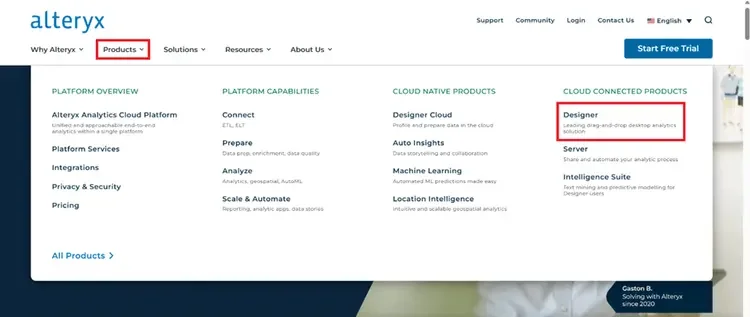
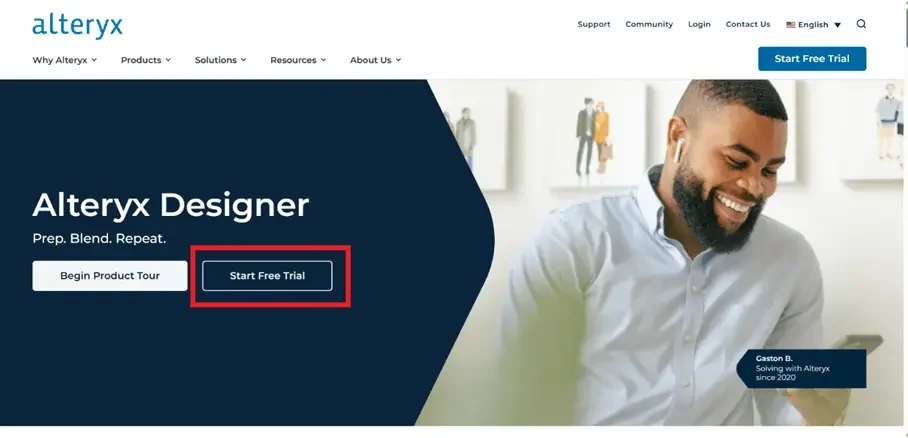
Step 2. Click on 'Start Free Trial'
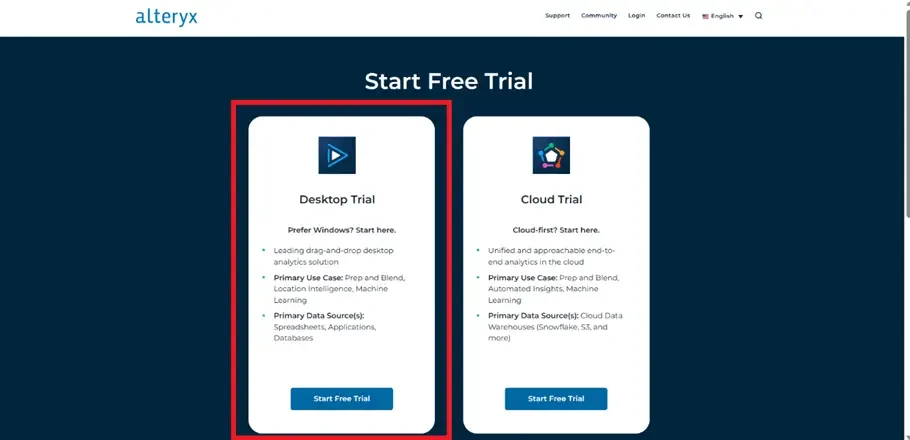
Step 3. From the two options on the pop-up, select 'Desktop Trial'
Step 4. Create your account > fill information in required boxes > submit. The download process will automatically start.
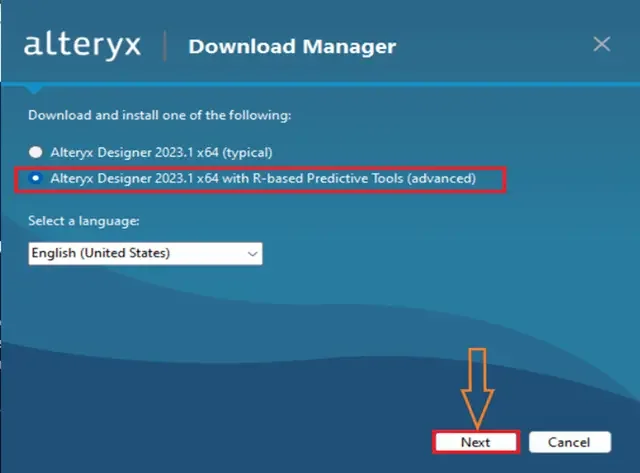
Step 5. On the next pop-up, press the 'Next' button.
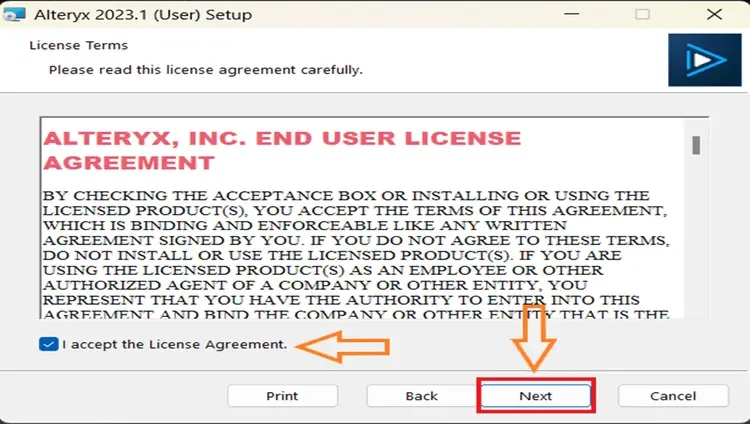
Step 6. Tick on 'I accept the License agreement' > click on 'Next'
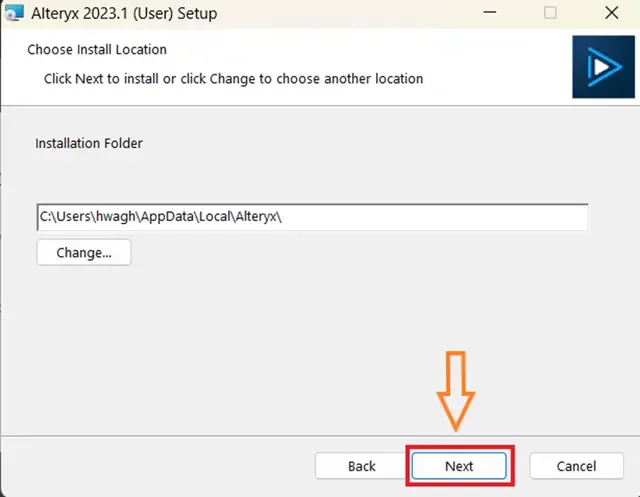
Step 7. Choose the location where you wish to set up Alteryx > click 'Next'
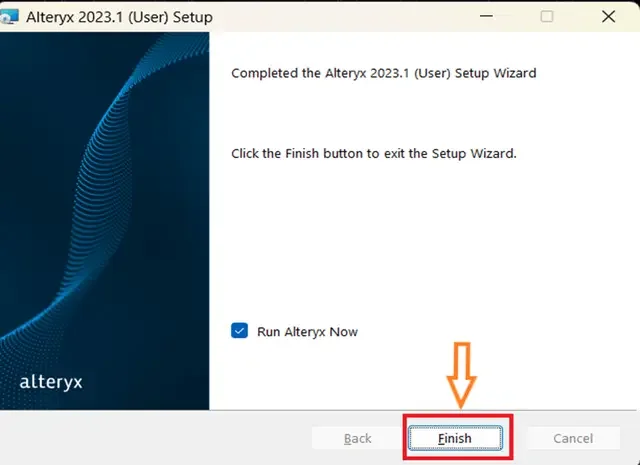
Step 8. Click 'Install' to start the installation process > click 'Finish'
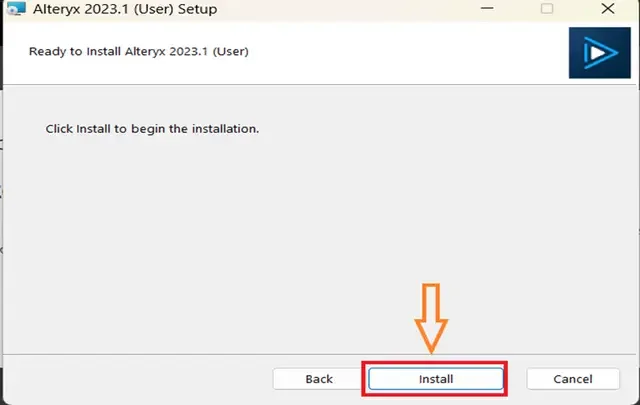
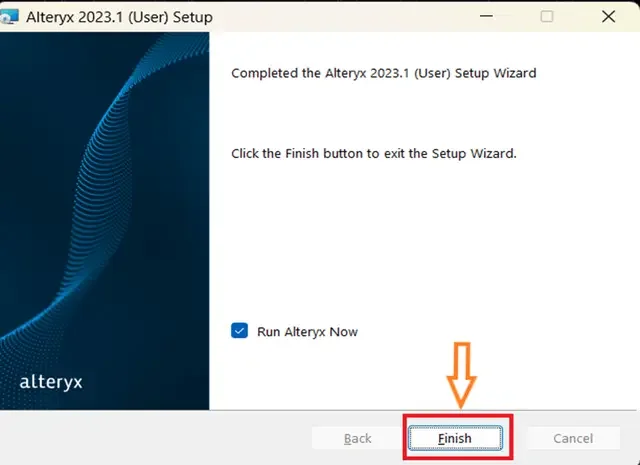
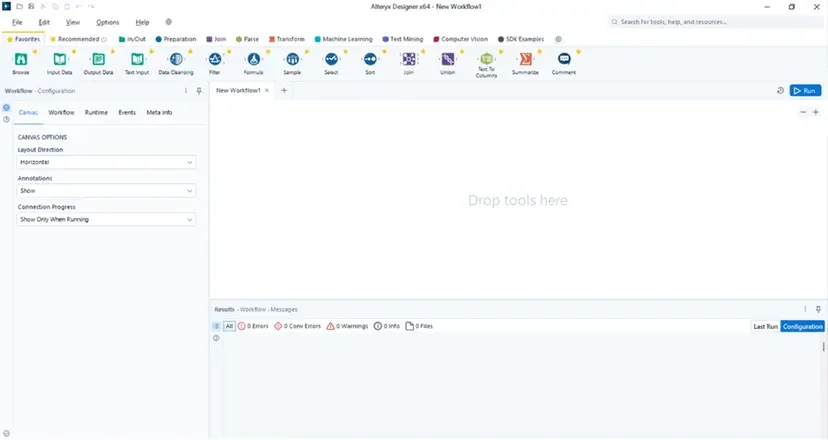
Step 9. And you're all done.
Related Article- How To Start A Career In Big Data?
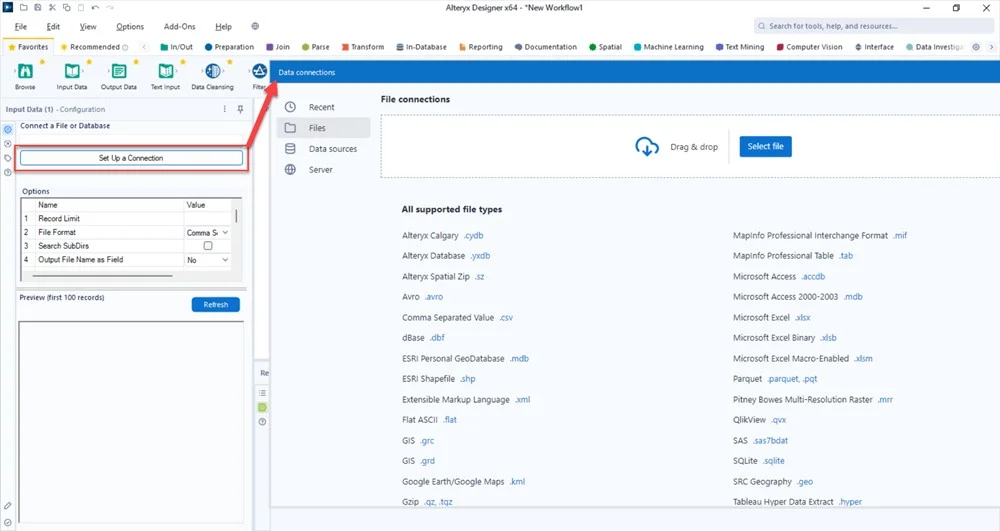
After completing this installation, you must create your first workflow in order to use this tool. It will help you to familiarize with the tool's interface and basic functionalities. Creating a new workflow involves the following steps:
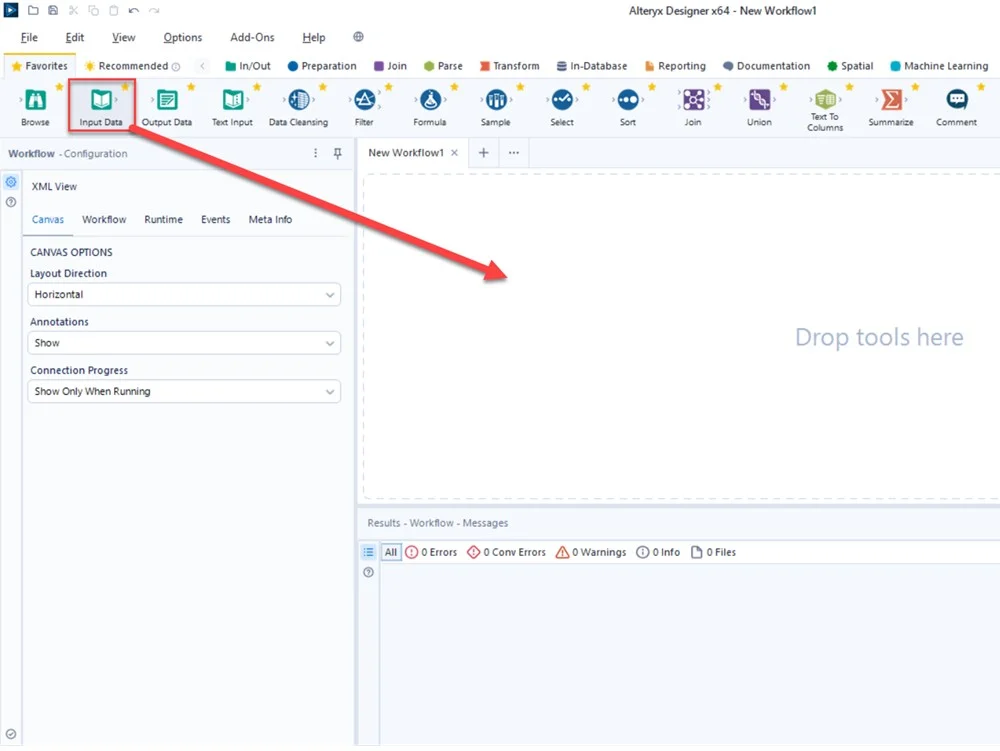
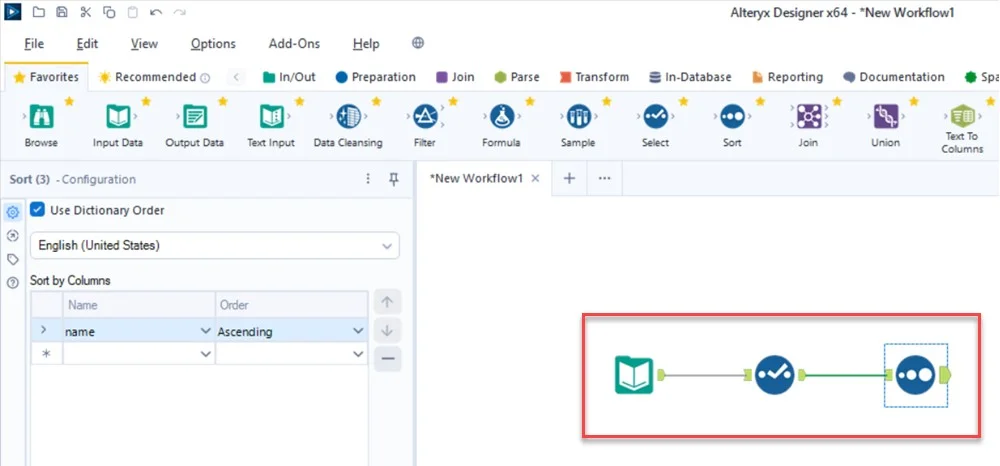
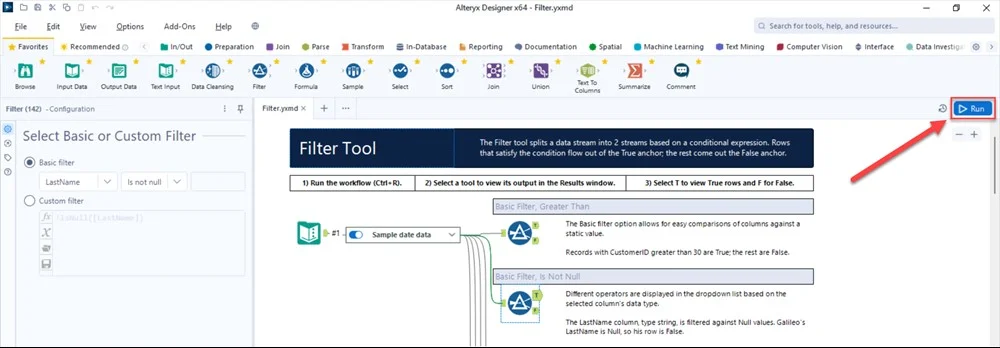
You will see the Run option on the right corner of your canvas. Click on it to start running the workflow.
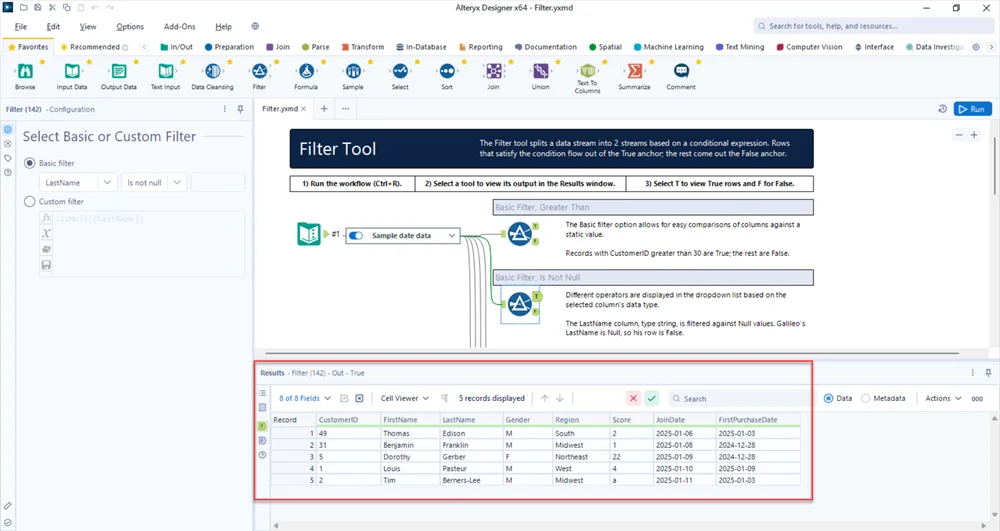
Once you run the workflows, will see the result in the output window as given below.
This tool facilitates data preparation through a visual workflow instance, enabling users to construct repeatable processes for data cleansing, transformation and integration. It also has different core functionalities including data profiling, parsing and the application of user-defined formulas. It specifically addresses quality issues such as inconsistencies, null values and type mismatches.
The significance of data preparation within this tool lies in its ability to streamline ETL processes. This reduces the time required to prepare information for analytical workloads. Key steps involve -
Similar to the other tools, Alteryx also has a set of best practices one should follow. By leveraging these practices, you can develop the best outcomes. Let’s have a look on the most common Alteryx Best Practices one should know:
Browse tools are indeed extremely helpful in the development phase due to their capability of showing the entire dataset from an integrated tool. However, after completing their purpose they are no longer required and need to be removed for the following two reasons:
Using the correct variable names and data types provides a good overview of variables. It also saves time, as there is no need to perform invalid transformations. For instance, there is no need to perform numeric operations, if you have a string.
Using descriptive titles for documentation can be very useful. It helps to share these files between the colleague and clients. This means you will have more time to focus on other tasks.
In case, your workflow has a dependency, there might be plenty of value in defining them. Here the numbers tile can make it much easier to decode the workflow dependency then ever. It leads to a clear understanding of what is going on without opening every workflow.
The warning and errors can lead to workflow corruption, destroying all your valuable work. Try to remove these warnings and errors as soon as possible. There are many ways to find them, like adding an exclamation mark, observing the tool reference, etc.
Use limited records when you start to create your workflows. It is one of the smart ways to speed up processing that saves you valuable time. It is also mostly used when working with humongous datasets. To do so, go to the Configuration window available in the Input Data tool and then specify a value.
To ensure you gain all the necessary information and skills related to Alteryx, here are some things you can do.
To get started, you need Alteryx on your system. In the section above, we have discussed the prerequisites essential to make it happen, along with a step-by-step guidance.
It is important to gain all working knowledge about Alteryx Designer, since this is where workflows are built. It is segregated into five parts, each important and carrying a different function. These are-
Situated at the very top, the Tool Pallet has all the tools needed for building workflows. As you click the tool, a window with details about how each is used comes forth.
Located under box one, the Workflow Area is where all the magic happens. This is where workflows are built by dragging and dropping the tools from the tool pallet as and when required.
Located beside the workflow area on the left-hand side is the configuration window. This space is where you will get the list of all tools that have been dragged and dropped to be used in the workflow space.
Once your workflow is built and the configuration is done, you will be able to see the output in the result window. The only thing left to do is run the workflow. Any additional information or error details will be shown in this area.
The Overview aspect will come into view when the workflow is completed. Thus, when it has become big enough that it can no longer be viewed as a whole in the provided workflow space.
Related Article- Alteryx Interview Questions
Once you have all the knowledge necessary about the designer tool, it's time to get started with the actual thing. This is the step where you also gain hands-on practical learning to help you move ahead in your career. Here are the steps involved in building your first Alteryx workflow:
A key step in the process is enrolling in a training program and or find a right online resources. The right certification course will help you in gaining all the key information about this platform. Under the guidance of experts, you will gain all essential skills to help you become an expert.
There are a few certifications offered by Alteryx to help you validate your skills. These are divided in four categories with further extensions, as mentioned below.
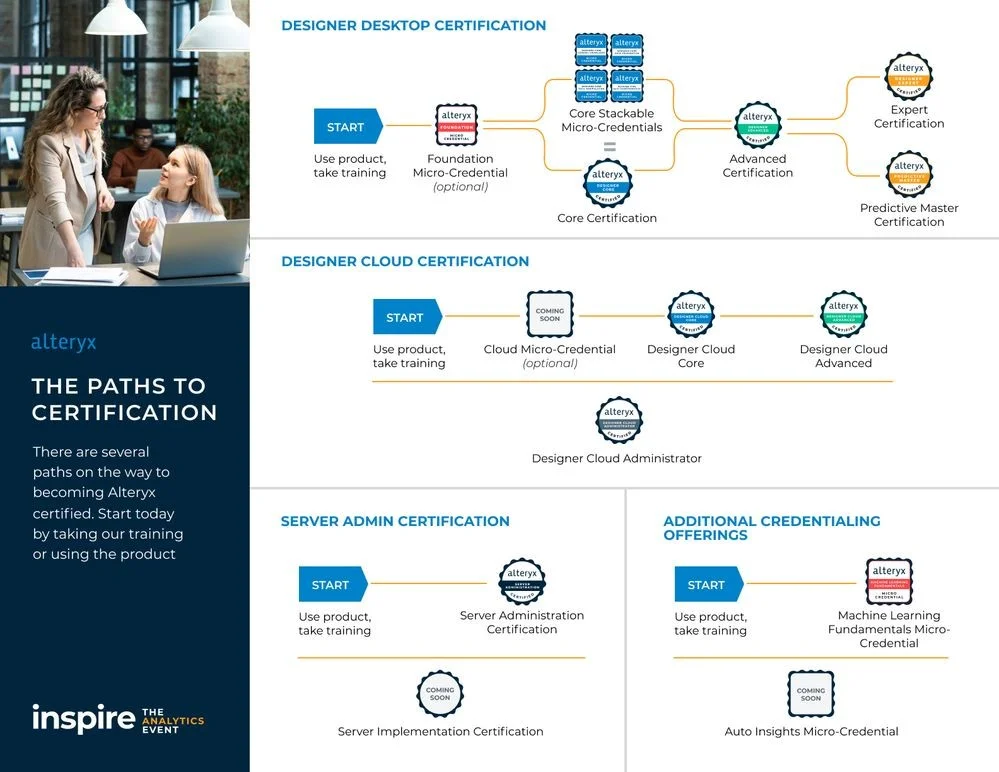
No tutorial is complete without a push towards becoming a part of the community. It is important to pick the right people to learn from and grow with because they will influence how you do in your career. Joining a community will help you stay connected to like-minded people and stay updated with the latest happenings in the sector.
Read Also - AWS DevOps Tutorial For Beginners
A widely used and popular tool, Alteryx is a top data analytical tool that facilitates users in importing information from various sources to blend, cleanse, and transform it. This tool is full of features and has become a favorite among users today. This Alteryx tutorial will help you get in-depth knowledge of it and become a pro in this field by directing you on the right path.
Ans. It has many capabilities and a simple user interface, making it an easy to learn and use tool.
Ans. It facilitates users in working easily with data. In fact, it is said to be an easier to use tool than SQL, Excel, and PowerQuery. Data can easily be accessed, tested, analyzed, cleansed, outputted, and combined with Alteryx.
Ans. Yes, it is a popular ETL tool that ensures data analytics is carried out in a simpler manner with its multiple components and tools.
Yes, learning Alteryx can help you work with data more efficiently. It makes data preparation, blending and analysis faster and easier.
Data blending in Alteryx is the process of combining data from multiple sources into a single dataset. It helps analyze information together and uncover insights faster.