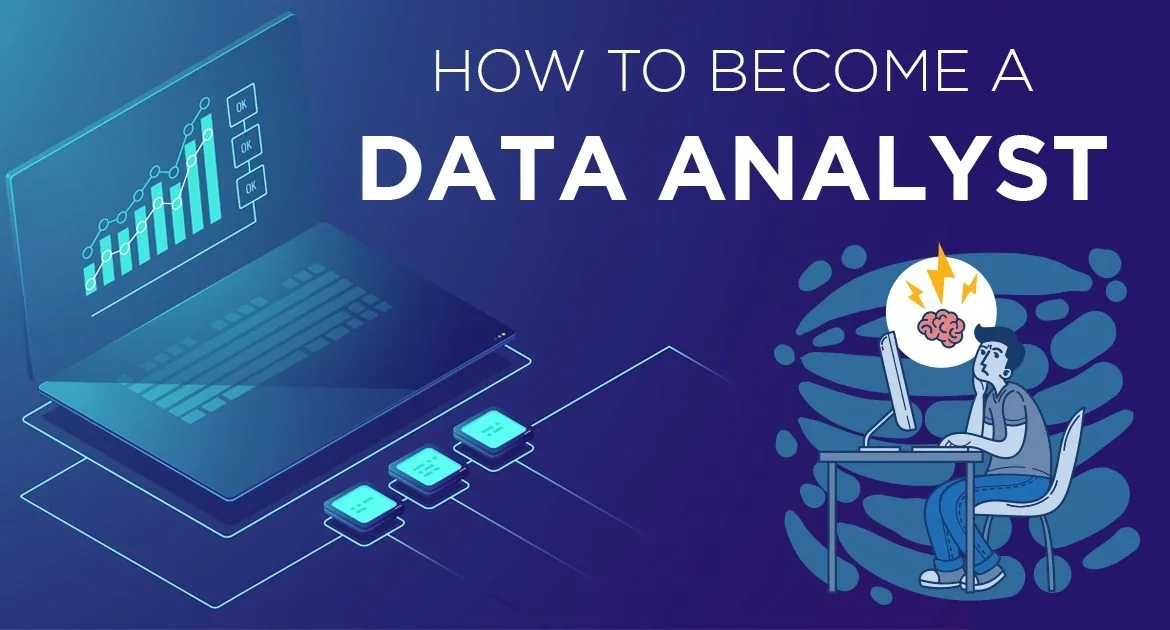
This article has tapped into a few other imperative questions that people usually ask along with how to become a data analyst. Here is everything needed to get on with a career in this expanding field of data analytics.
Are you eager to tap into the fascinating world of data analysis? Well, you are not the only one. Many individuals, from beginners to professionals in different sectors, are looking at it as a great opportunity. Data analysts play a crucial role in many leading industries, which has led everyone to ask how to become a data analyst.
With the rise in data generation, data analysts have become highly sought-after professionals globally. The growth in data analytics jobs is driven by increasing reliance on data-driven decision-making across various industries. The data analytics market is experiencing significant growth, with forecasts predicting a compound annual growth rate (CAGR) of around 25.5% to 35.8% over the next few years.
Explore igmGuru Power BI Course program to become a successful data analyst.
Let's begin with understanding who a data analyst is. Understanding the role will help you to know the true significance, which is essential before choosing a career. A data analyst is a data expert with the skills and knowledge to extract valuable insights from gigantic data sets. They follow a set procedure to help businesses drive growth via informed decision-making.
These are the ones who enable organizations to solve complex problems and make data-driven decisions. These include data collection, processing and performing statistical analysis. Every leading industry today seeks the aid of these experts for market research, logistics and translating sales figures- all in English. The findings are made usable through their efforts in regulating, calibrating and normalizing the data.
Still not sure about a data analyst's career? Let's discuss the why factor. It will create a clean image for you. The following are some of the main reasons that ultimately show the significance of this career.
Data analytics is a field that is enjoying a rapidly expanding market size, which is expected to reach $303.4 billion USD in 2030. This means the demand will grow at an even more rapid pace than today.
A data analyst's salary is around $50,828 to $135,175 per year on average. In India, a data analyst earns somewhere around INR 6 LPA on average. This is on the intermediate level, with salaries going way higher with more experience and expertise.
These experts can easily find a job in different domains like marketing, finance, healthcare, etc.
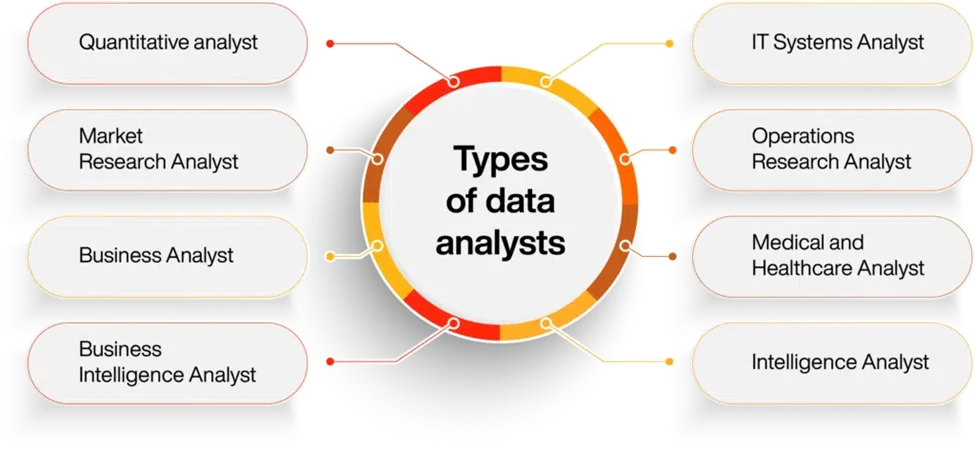
Before starting the preparation, you must know your interests to decide which field to choose. Based on the skill set and interests, it is possible to pursue several different types of data analyst roles. Some of the most common ones are:
Related Article - Data Analytics Tutorial for Beginners
Whether it is about job preparation or learning a technology, one must follow a step-by-step roadmap to achieve their goal. Here is a complete roadmap on how to become a data analyst with pointers.
The first thing certainly is to fulfill data analyst qualifications and prerequisites.
Once you have the essential qualification, start to familiarize yourself with the technical terms of data analysis. The following are some of them:
Programming language plays a crucial role in data analysis. They provide the necessary tools and frameworks needed to process, analyze and visualize data effectively. This ultimately leads data analysts to extract meaningful insights. Therefore, just a normal familiarity with a programming language may not be enough to become a proficient and in-demand data analyst.
This requires choosing and mastering at least one programming language. While there are many of them, Python for data science is the choice of most experts. The other options are Java, R, Julia, and Scala.
A data analyst training program or other learning resource is the key to becoming a professional. Learning under the guidance of industry experts will ensure the acquisition of all necessary key skills and information. An online program is a great way to get started since this saves a lot of time associated with an offline program.
Self-paced programs and online tutorials are also getting a lot of attention these days. It is apt for anyone who wants to get the same learning experience as an instructor-led program, but without being bound to attend the classes.
Gaining practical experience is imperative to open doors to top organizations since most hiring managers lay focus on this factor. There are two ways to make it happen.
There are many ways to begin networking with like-minded people such as workshops, meetups, events and communities. Connect with professionals in the same field, having different knowledge and expertise. Networking is one of the best ways to open job prospects and learning opportunities.
Getting a certification is one great way to demonstrate your skills in data analysis. The certifications prove your expertise in a particular domain. There are various certifications available from Google, Microsoft, SAS and online training providers. Getting them can make your resume stand out in today's competitive industry. The following are some of the most popular certifications you can go for:
Also Read: DevOps Interview Questions with Answers
Here is a simple comparison table showing Data Analyst salaries in India and the USA across different experience levels.
| Category | India (INR) | USA (USD) |
| Entry-Level (0-2 years) | ₹3,00,000 - ₹6,00,000 per year | $55,000 - $75,000 per year |
| Mid-Level (2-5 years) | ₹6,00,000 - ₹12,00,000 per year | $75,000 - $100,000 per year |
| Senior-Level (5+ years) | ₹12,00,000 - ₹20,00,000+ per year | $100,000 - $135,000+ per year |
| Average Salary | ₹7,00,000 - ₹9,00,000 per year | $80,000 - $95,000 per year |
| Top Companies Pay | ₹10L - ₹22L | $120k - $150k |
| Freelance/Contract | ₹800 - ₹2,000 per hour | $35 - $70 per hour |
Note - The salary ranges are approximate and may vary based on skills, company size, and changing market demand.
Data application is becoming wider and more indispensable in most industries today. This has led to a steep rise in the demand for certified, qualified and trained professionals with experience and expertise. This blog has paved a path on how to become a data analyst, along with the reasons to get started in this field. Get certified with a leading credential like Google Data Analytics Professional Certification or AWS Certified Data Analytics to get access to top jobs globally.
Studying data analysis requires good knowledge of data manipulation, mathematics, statistics and programming. Hence, it is not exactly a piece of cake, but certainly a rewarding one.
Data analysts must be adept in using numbers and have a good grasp of statistics and math.
You can easily become a data analyst by following a step-by-step roadmap while following the prerequisites as given in this article.
To become a freelance data analyst, you would have to consider many things, including:
You can use online resources, books and self-paced courses to become a self taught data analyst.
It is possible to get started as a fresher by going for entry-level jobs or completing associated internships.
It depends on your approach and learning skills. An average candidate can easily become a data analyst in six months.
Couse Schedule
| Course Name | Batch Type | Details |
| business intelligence Courses | Every Weekday | View Details |
| business intelligence Courses | Every Weekend | View Details |