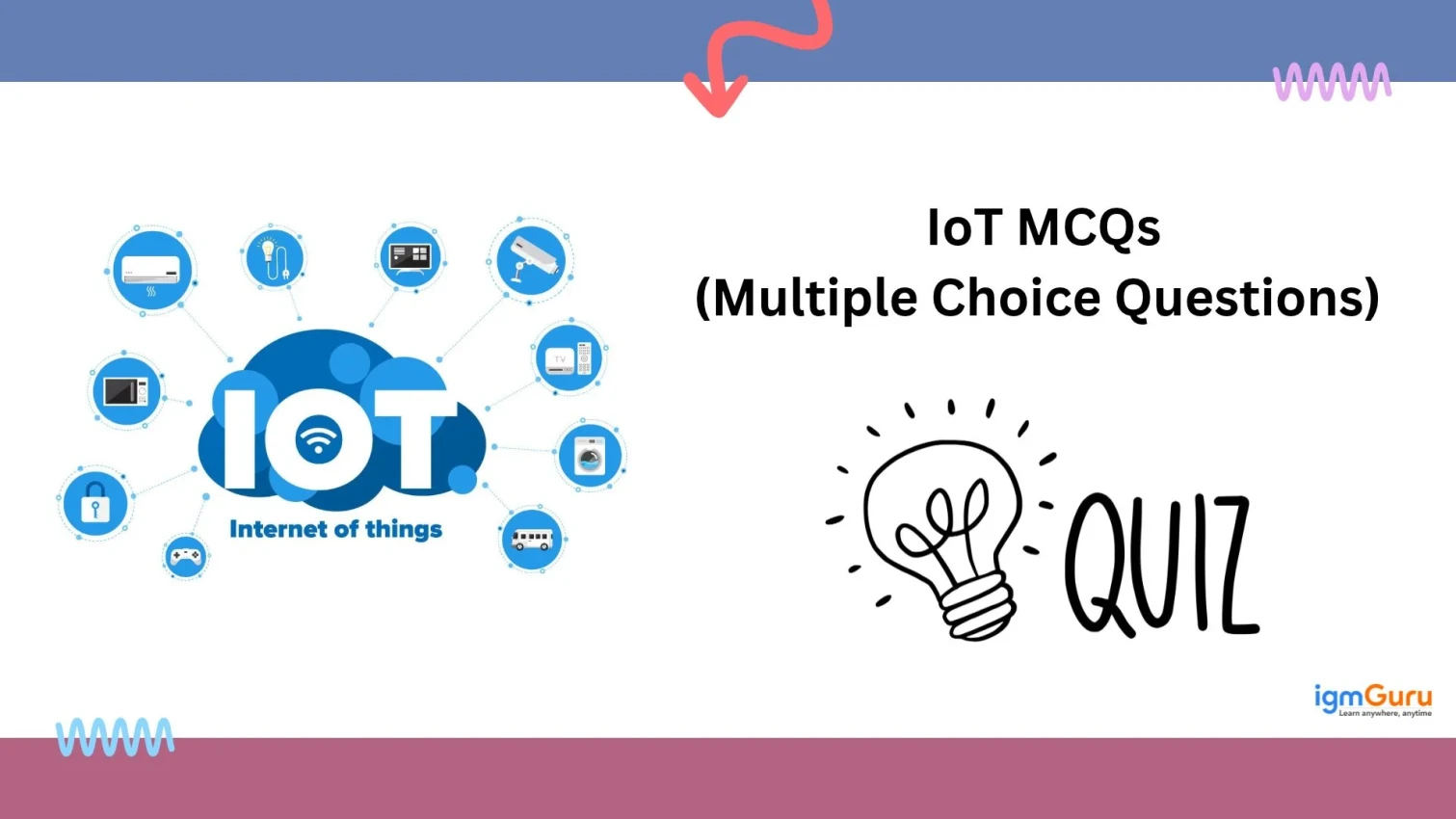
Preparing for an IoT (Internet of Things) certification, interview, or connected-device role? This IoT MCQs collection is a practical resource for testing your knowledge of Internet of Things concepts, sensors, actuators, connectivity, protocols, architectures, edge computing, cloud platforms, security, analytics, and real-world applications.
Note: Score 60% or higher to unlock an exclusive offer of up to 50% off on self-paced IoT courses.
Let’s begin!
1. What does IoT primarily connect?
2. Which component measures a physical condition?
3. Which component performs a physical action?
4. What is telemetry?
5. What is M2M communication?
6. Which is an IoT use case?
7. Why do IoT devices need connectivity?
8. What is an IoT endpoint?
9. Why are IoT devices often resource-constrained?
10. What does IoT enable organizations to do with physical assets?
11. What is the sensing layer responsible for?
12. What is the network layer responsible for?
13. What is the application layer responsible for?
14. What is an IoT gateway?
15. Why can gateways perform protocol translation?
16. What is device provisioning?
17. What is a device registry?
18. What is a digital twin?
19. Why is lifecycle management important?
20. Which architecture combines device, edge, and cloud resources?
21. Which sensor measures temperature?
22. Which sensor commonly detects acceleration?
23. What does a gyroscope measure?
24. Which sensor can measure atmospheric pressure?
25. Which sensor can estimate distance using reflected sound?
26. What is sensor calibration?
27. What is sensor fusion?
28. What is an actuator example?
29. What is a relay commonly used for?
30. Why can sensor noise be a problem?
31. Which technology is commonly used for short-range low-power communication?
32. Which technology commonly supports low-power mesh networks?
33. What is LPWAN designed for?
34. Which cellular technologies target low-power IoT connectivity?
35. What is 6LoWPAN associated with?
36. What is a mesh network?
37. Why is IPv6 useful for IoT?
38. Which factor matters when choosing IoT connectivity?
39. A battery sensor sends tiny readings over several kilometers. Which category fits?
40. What is network latency?
41. What messaging pattern does MQTT use?
42. What is the MQTT broker?
43. What is an MQTT topic?
44. What does MQTT QoS 0 mean?
45. What does MQTT QoS 1 provide?
46. What does MQTT QoS 2 provide?
47. Why is MQTT suitable for constrained IoT systems?
48. What does a subscriber do in MQTT?
49. What does a publisher do?
50. Which protocol provides a REST-like model for constrained devices?
51. What is a microcontroller?
52. What is GPIO?
53. What is I2C commonly used for?
54. What is SPI?
55. What is UART?
56. Why is power management important in IoT?
57. What is deep sleep?
58. What is firmware?
59. Why can watchdog timers be useful?
60. What is real-time behavior?
61. What is edge computing?
62. What is a key edge-computing benefit?
63. Why can edge processing reduce cloud costs?
64. What is fog computing?
65. When is edge computing valuable?
66. A factory safety controller must react immediately. Where should the decision occur?
67. What is edge AI?
68. Why might edge nodes operate during cloud outages?
69. What is cloud-to-edge synchronization?
70. Which workload is well suited to centralized cloud analytics?
71. What is time-series data?
72. Why are timestamps important?
73. What is stream processing?
74. What is anomaly detection?
75. What is predictive maintenance?
76. Why preprocess sensor data?
77. What is feature extraction?
78. Why filter data at the edge?
79. What is event-driven IoT processing?
80. What is data aggregation?
81. What does an IoT cloud platform commonly provide?
82. What is device shadow state?
83. Why use a device registry?
84. What is device fleet management?
85. Why is scalable ingestion important?
86. What is remote device monitoring?
87. What is remote provisioning?
88. Why are APIs important in IoT platforms?
89. What is horizontal scaling?
90. Why separate device data from application logic?
91. Why authenticate IoT devices?
92. What is authorization?
93. What is least privilege?
94. Why encrypt IoT data in transit?
95. What is secure boot?
96. What is a hardware root of trust?
97. Why are unique device credentials useful?
98. What is OTA updating?
99. Why should IoT networks be segmented?
100. What is secure device retirement?
101. What is device onboarding?
102. What is network-layer onboarding?
103. Why verify device identity during onboarding?
104. What is firmware rollback?
105. Why are signed firmware updates useful?
106. What is configuration management?
107. What is device health monitoring?
108. Why is lifecycle inventory important?
109. What is decommissioning?
110. Why automate fleet operations?
111. How can IoT support smart agriculture?
112. How can IoT support smart buildings?
113. How can IoT support logistics?
114. How can IoT support healthcare?
115. How can IoT support energy management?
116. What is an industrial IoT use case?
117. What is a smart-city IoT use case?
118. What is a connected-vehicle use case?
119. What is a smart-home example?
120. How can IoT help cold-chain logistics?
121. What is edge AI?
122. What is a digital twin useful for?
123. Why is interoperability important in IoT?
124. What does zero-trust thinking imply for IoT?
125. Why is device posture useful?
126. What is an IoT digital thread?
127. Why is OTA update security a major concern?
128. What is edge-cloud collaboration?
129. What is an IoT data lake used for?
130. Why is observability important for large IoT fleets?
131. What is device identity attestation?
132. What is a secure element commonly used for?
133. What is mutual TLS?
134. Why use TLS with MQTT?
135. What is a retained MQTT message?
136. What is an MQTT Last Will message?
137. What is QoS negotiation in MQTT 5?
138. What is a geofence in IoT?
139. What is geospatial telemetry?
140. What is condition monitoring?
141. What is a rules engine in IoT?
142. What is command and control in IoT?
143. Why is idempotency useful for IoT commands?
144. What is store-and-forward behavior?
145. What is backpressure in an IoT data pipeline?
146. Why are bounded queues useful at the edge?
147. What is fleet segmentation?
148. What is vulnerability management for IoT?
149. What is SBOM relevance to IoT?
150. Why is secure decommissioning important?

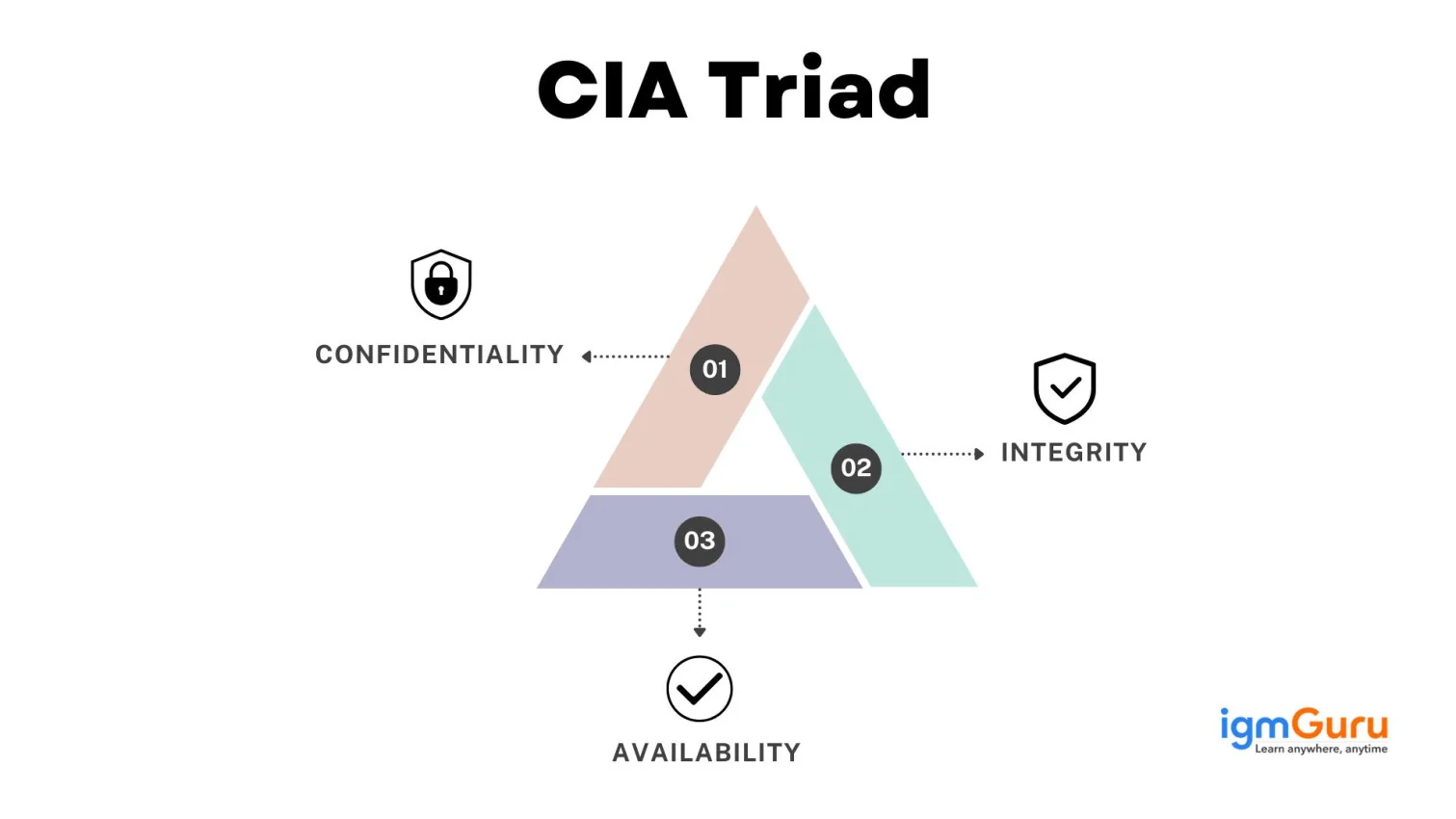
What is the CIA Triad? Definition, Importance and Examples 2026
September 18th, 2026