Are you preparing to become a Scrum Master? Well, clearing an interview can be a tough nut to crack. To help you with it, I have collected the most asked Scrum Master interview questions and answers in this blog. It will give you a tour from the very basic to advanced interview questions for a Scrum Master. These questions cover core knowledge, team dynamics management, coaching skills, and practical scenarios and more. Let’s dive in!
We are starting with the most basic interview questions for a Scrum Master. These questions are frequently asked to each level of candidates.
Scrum is a popular Agile framework that helps teams manage complicated projects. It helps them deliver value incrementally through short cycles using defined roles, events, and artifacts.
They use it to promote self-organization, rapid adaptation to change, continuous feedback, transparency, and efficient delivery of high-quality products. This is all done while focusing on empirical learning and collaboration.
There are multiple roles in Scrum with different key responsibilities. Here is a simple representation of these responsibilities:
| Scrum Role | Key Responsibilities |
| Product Owner | Defines product vision and goals, manages and prioritizes the Product Backlog, writes and refines user stories, ensures maximum business value, communicates with stakeholders |
| Scrum Master | Ensures Scrum framework is followed, facilitates Scrum ceremonies, removes impediments, coaches the team on Agile practices, protects the team from external distractions |
| Development Team (Developers) | Designs, develops, tests, and delivers product increments, self-organizes work, ensures quality standards, collaborates with Product Owner, commits to Sprint goals |
A Scrum Master is responsible for managing everything about the Scrum framework. They ensure it is understood, adopted, and followed effectively. Their responsibilities focus on facilitation, coaching, and removing obstacles rather than managing people. Here are some of them:
Both Scrum Master and Project Manager are responsible for ensuring successful project outcomes. Still, both of these are two different roles. The key difference lies in leadership style, responsibilities and control over the team. Let’s understand it better:
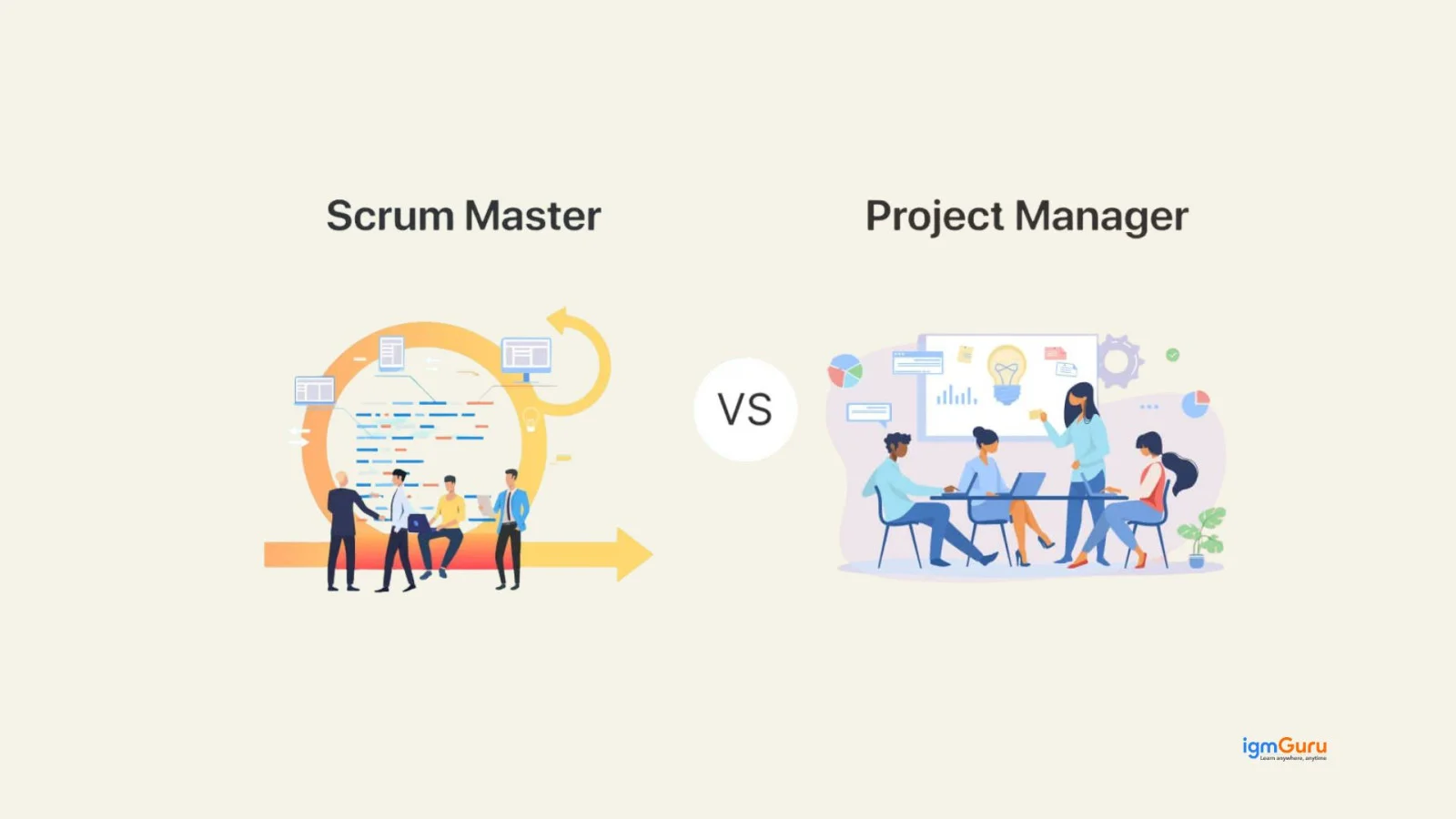
| Aspect | Scrum Master | Project Manager |
| Primary Role | Servant leader and Agile coach | Planner and controller |
| Focus | Scrum process and team effectiveness | Project scope, schedule, and budget |
| Authority | No direct authority over the team | Has authority over team members |
| Work Allocation | Team self-selects work | Assigns tasks to individuals |
| Decision Making | Facilitates team decisions | Makes managerial decisions |
| Change Handling | Welcomes change through backlog refinement | Controls and limits changes |
| Success Measure | Team’s continuous improvement and value delivery | On-time, on-budget project delivery |
| Leadership Style | Coaching and facilitation | Command and control |
A sprint is a time-boxed period that spans between 1 to 4 weeks in Agile/Scrum development. Here, teams work to complete a specific set of prioritized tasks, aiming to produce a potentially releasable product increment. Think of it as a short and fast race with a clear finish line. You have to focus on delivering value quickly and iteratively.
Scrum artifacts are the important information sources that provide transparency and focus for the Scrum Team and stakeholders. They represent work or value in development. There are three three types of core artifacts in Scrum, including:
They help in planning, tracking progress and ensuring everyone shares the same understanding of the project's direction.
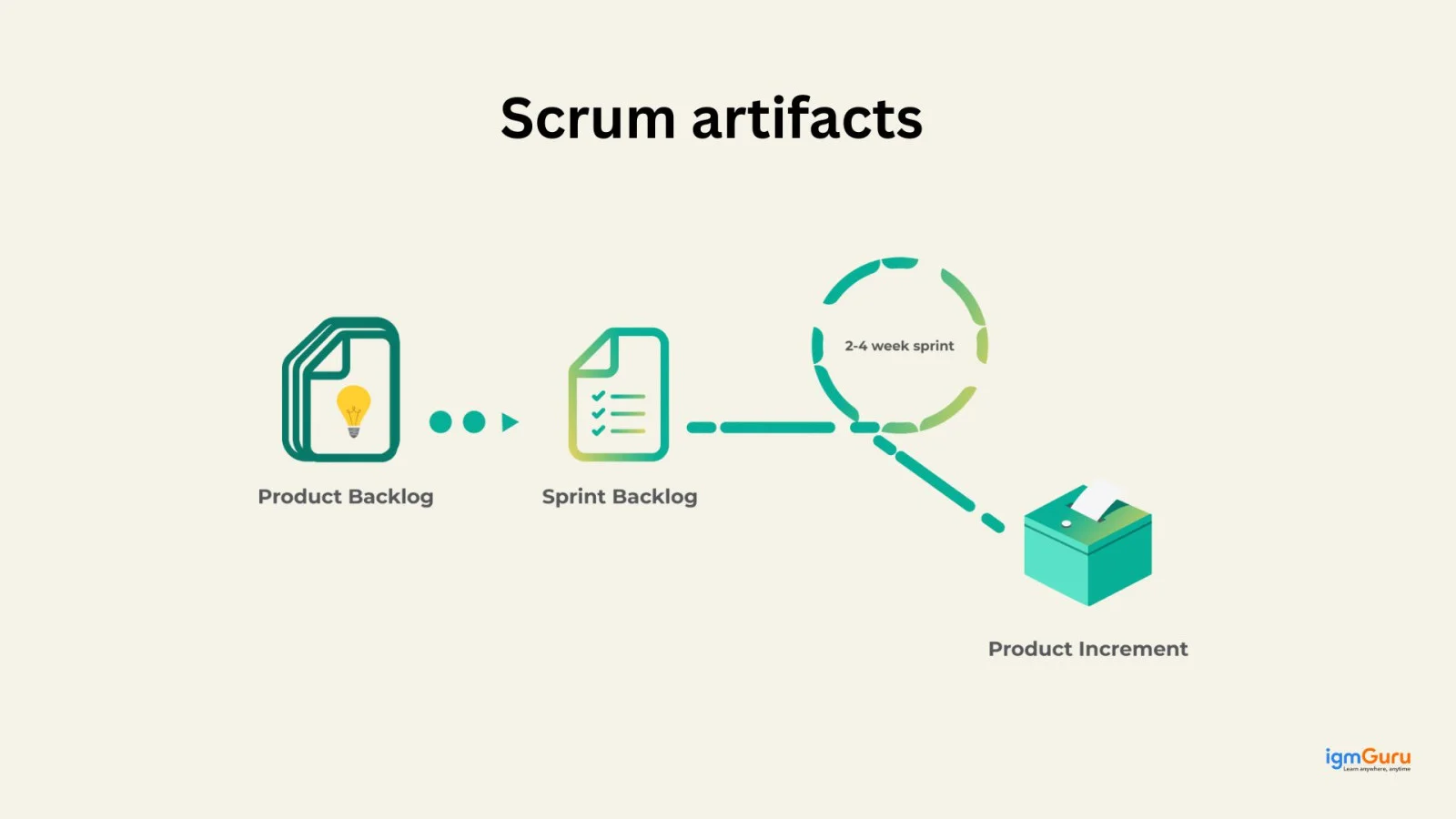
A Product Backlog is a prioritized list of all work items needed to build and improve a product. It acts as the single source of requirements and evolves continuously as the product and business needs change. The Product Owner is the sole owner of the Product Backlog. It contains the following elements:
Stories, epics, and tasks are used to break work into manageable levels. The difference between them lies in their size, scope, and purpose.
| Item | Description | Purpose | Example |
| Epic | A large body of work that represents a high-level feature or goal. | Used to group multiple related user stories. | Build an online payment system. |
| User Story | A small, user-focused requirement that delivers value. | Defines what the user needs and why. | As a user, I want to pay using a credit card. |
| Task | A technical or actionable step required to complete a story. | Explains how the work will be done. | Implement payment API integration. |
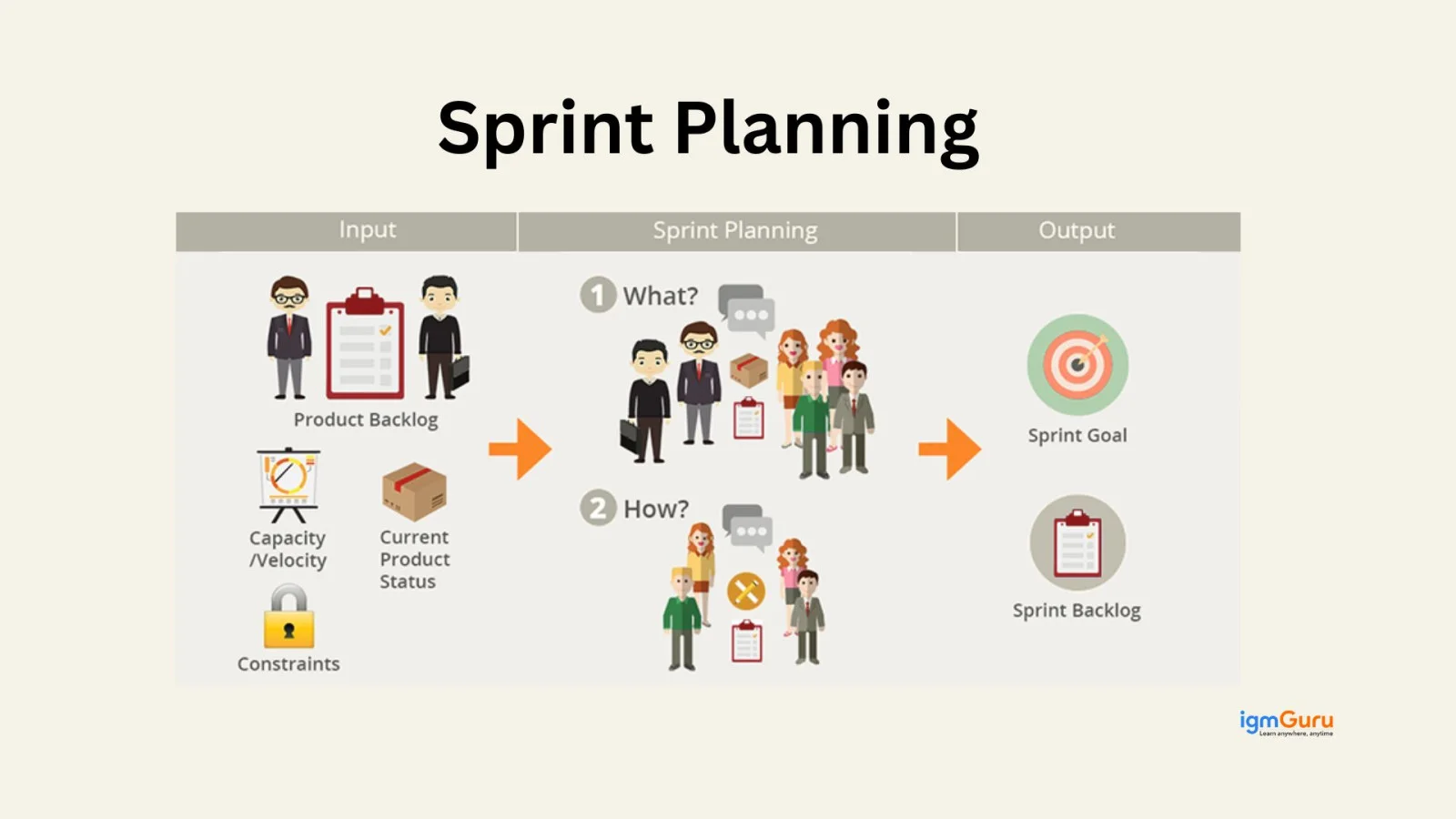
Sprint Planning is a Scrum event or meeting where the team decides what work will be done in the upcoming Sprint. They also strategize how it will be accomplished. It sets a clear direction for the team and aligns everyone on the same objectives before execution begins. The main outcomes of Sprint Planning are:
A Sprint Review and a Sprint Retrospective are both Scrum events held at the end of a Sprint, but they serve very different purposes. One focuses on the product, while the other focuses on the process and team improvement. Here is how they differ:
| Aspect | Sprint Review | Sprint Retrospective |
| Focus | Product and value delivered | Process and team performance |
| Audience | Scrum Team + stakeholders | Scrum Team only |
| Purpose | Get feedback on the product | Improve how the team works |
| Output | Feedback and backlog updates | Improvement actions |
| Tone | Collaborative and outward-facing | Reflective and inward-facing |
After strengthening the fundamentals, you should move to the real-world interview questions. Here are some of the most asked Scrum Master interview questions and answers for beginners.
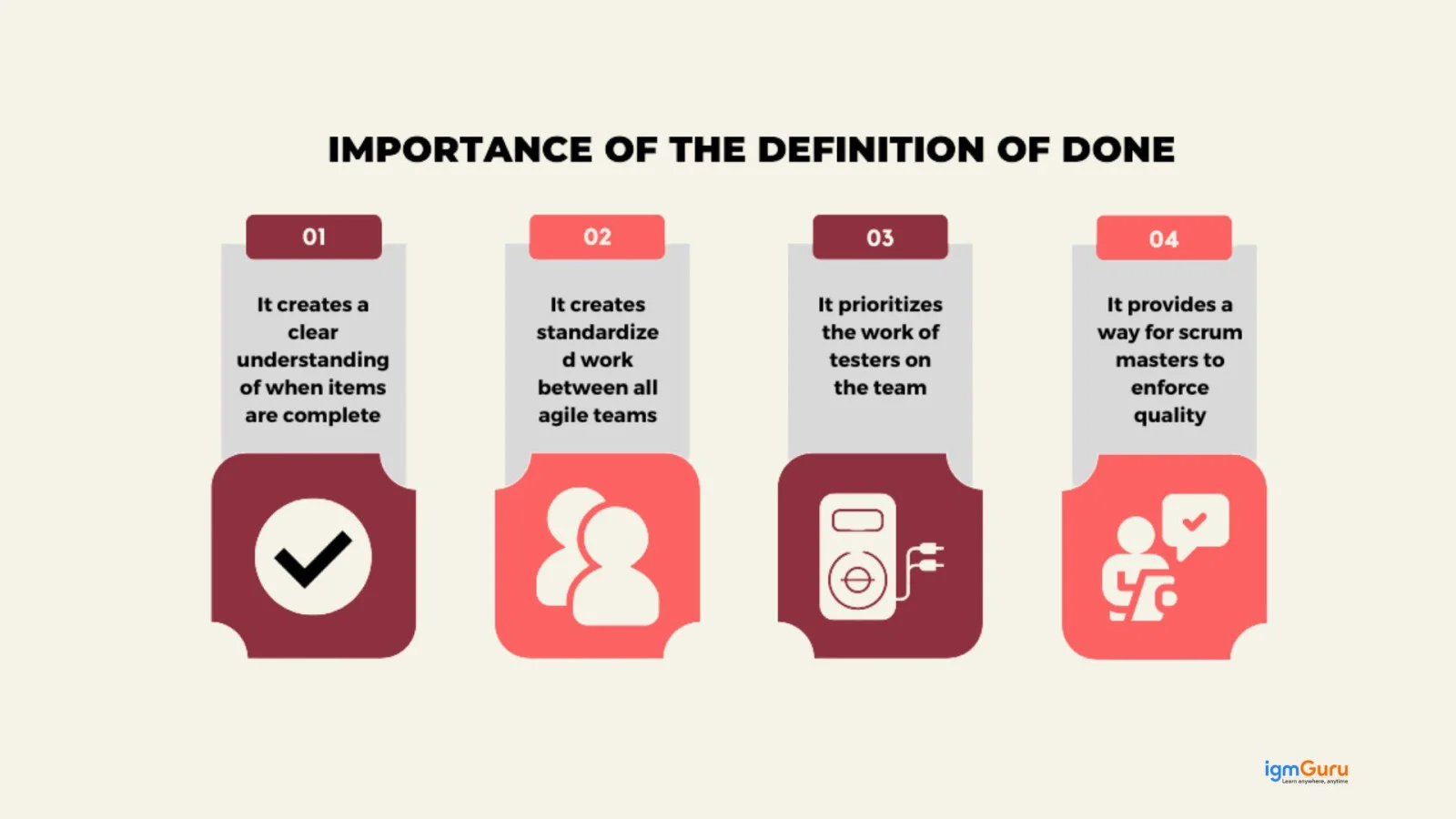
The Definition of Done (DoD) is a shared checklist of quality standards and criteria the entire Scrum Team agrees on. It creates a consistent baseline for "done" work that prevents partial features from being shipped and ensures quality and predictability. This helps to:
The impediments are managed by actively identifying, removing and preventing anything that blocks the Scrum Team’s progress. The goal is to keep the team focused on delivering value without unnecessary delays. This involves the following steps:
Scrum events are structured activities that support planning, inspection and adaptation. They include the Sprint, Sprint Planning, Daily Scrum, Sprint Review and Sprint Retrospective. These events are time-boxed to maintain focus, avoid unnecessary discussions and ensure regular feedback. Time-boxing creates consistency, improves efficiency and helps teams inspect progress and adapt quickly without wasting time.
I ensure it by acting as a servant leader and coach rather than an authority figure. I create awareness by explaining the why behind Scrum best practices, facilitate open discussions during events, and guide the team to self-correct when deviations occur. My key is to use coaching, feedback, and retrospectives to help the team understand the value of Scrum and take ownership of following it.
There are no definite best qualities for them. It changes with the teams and the organization they are working with. The common ones are as follows:
The Product Backlog is a prioritized list of all features, enhancements, and fixes required for the entire product and is owned by the Product Owner. The Sprint Backlog is a subset of the Product Backlog selected for a specific Sprint, owned by the Development Team, and includes a plan to deliver the Sprint Goal.
The Daily Stand-up session is a short time-boxed meeting held every day of the Sprint. Here the Development Team synchronizes work and plans for the next 24 hours. Team members briefly discuss progress, upcoming work, and any blockers. Its purpose is to maintain transparency, identify impediments early and keep the team aligned toward the Sprint Goal.
Scrum of Scrums is a coordination technique used when multiple Scrum teams are working on the same product. Representatives from each team meet regularly to discuss progress, dependencies, and impediments that impact other teams.
Its purpose is to improve communication, manage cross-team dependencies, and ensure alignment toward a common product goal without disrupting individual team Scrum ceremonies.
Scrumban is a hybrid Agile approach that combines the structure of Scrum with the flexibility of Kanban. It uses Scrum roles and reviews while adopting Kanban practices like visual workflow boards and work-in-progress limits.
Scrumban is commonly used by teams that want continuous flow, fewer rigid time boxes, and better handling of changing priorities while still keeping Agile discipline.
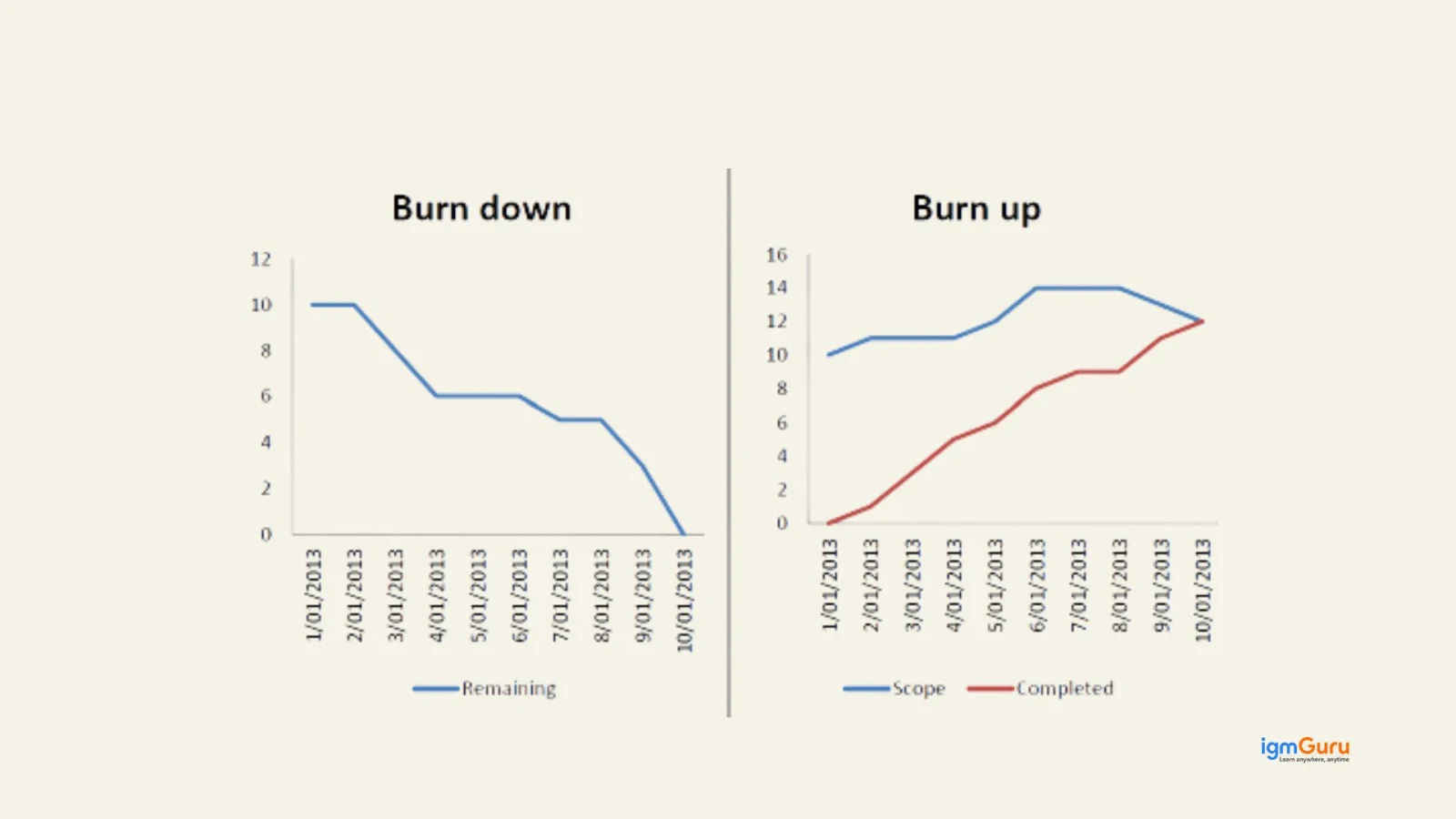
Burndown and Burnup charts are visual Agile tools tracking project progress. Burndown charts track remaining work. These charts add a scope line to show new work, which provides a fuller picture of scope changes. Burnup charts track completed work. These charts offer a simple view of work left to finish a fixed set of tasks.
Now, it is time to explore the most asked Scrum Master interview questions and answers for intermediates. These are mostly useful to candidates who are already working as a fresher and want a promotion or a job change.
Scrum are the key elements that form the bedrock for team behavior, foster trust, and enable effective collaboration. This helps to achieve goals within the framework, guide how teams interact, make decisions, and deliver value by supporting the core pillars of transparency, inspection, and adaptation.
They give purpose to the practices to prevent them from becoming rote. They are essential for building psychological safety where teams can innovate and tackle challenges. These values are:
Timeboxing is a time management method that includes assigning a fixed, maximum duration for a specific task. The decider has to work only within that slot, then stop when time's up. They may have to force focus, prevent procrastination, and combat perfectionism by prioritizing progress over endless polishing. This method is mostly useful when tasks feel overwhelming, deadlines loom, or you struggle with focus.
I ensure the proper implementation by guiding the team rather than policing them. Our goal is to build understanding and ownership, not compliance through authority. Here are the steps I usually follows:
I treat spikes as a learning and risk-reduction tool rather than a delivery activity. They are used deliberately to gain clarity where uncertainty is high. This helps the team make better commitments in future sprints. Here is how I handle spikes:
There are various techniques to improve the collaboration. Here are the most useful one:
| Technique | How it improve collaboration? |
| Clear Sprint Goals | Aligns the entire team toward a shared objective, reducing individual task focus and encouraging collective ownership. |
| Effective Scrum Events | Daily Scrums improve coordination, Refinements build shared understanding, and Retrospectives create space for open feedback. |
| Cross-functional Working | Encourages team members to pair, swarm on critical tasks, and share responsibility instead of working in silos. |
| Transparency through Visuals | Visible boards, Definition of Done, and backlog clarity ensure everyone has the same understanding of progress and priorities. |
| Psychological Safety | Creates an environment where team members feel safe to raise concerns, ask questions, and suggest improvements without fear. |
| Continuous Feedback | Regular feedback from peers and stakeholders helps the team adapt quickly and strengthens ongoing communication. |
I ensure continuous improvement during Sprint Retrospectives by making them action-oriented rather than discussion-oriented. The focus is not just on identifying what went well or what went wrong, but on agreeing to measurable improvement actions. I create a safe environment where the team can speak openly, analyze root causes, and commit to small or realistic changes that can be implemented in the very next sprint.
I support product owners by:
This all helps to create a prioritized and well-understood backlog for the Dev team.
My approach to identifying and removing impediments is proactive, transparent, and team-centric. I continuously observe the team’s workflow through Daily Scrums, backlog refinement, and direct conversations to surface blockers early.
If an impediment is identified, I focus on understanding its root cause, assessing its impact on sprint goals, and deciding whether it can be resolved within the team or requires escalation.
I remove impediments by facilitating collaboration, coordinating with external stakeholders, and addressing systemic issues, while ensuring the team remains focused on delivering value.
CI/CD pipelines facilitate faster and safer Sprint deliveries by automating the software delivery lifecycle, integrating robust testing, and enabling rapid feedback loops. This automation helps to reduce manual errors, ensure consistent build processes, and allow teams to deliver value to customers more frequently and reliably.
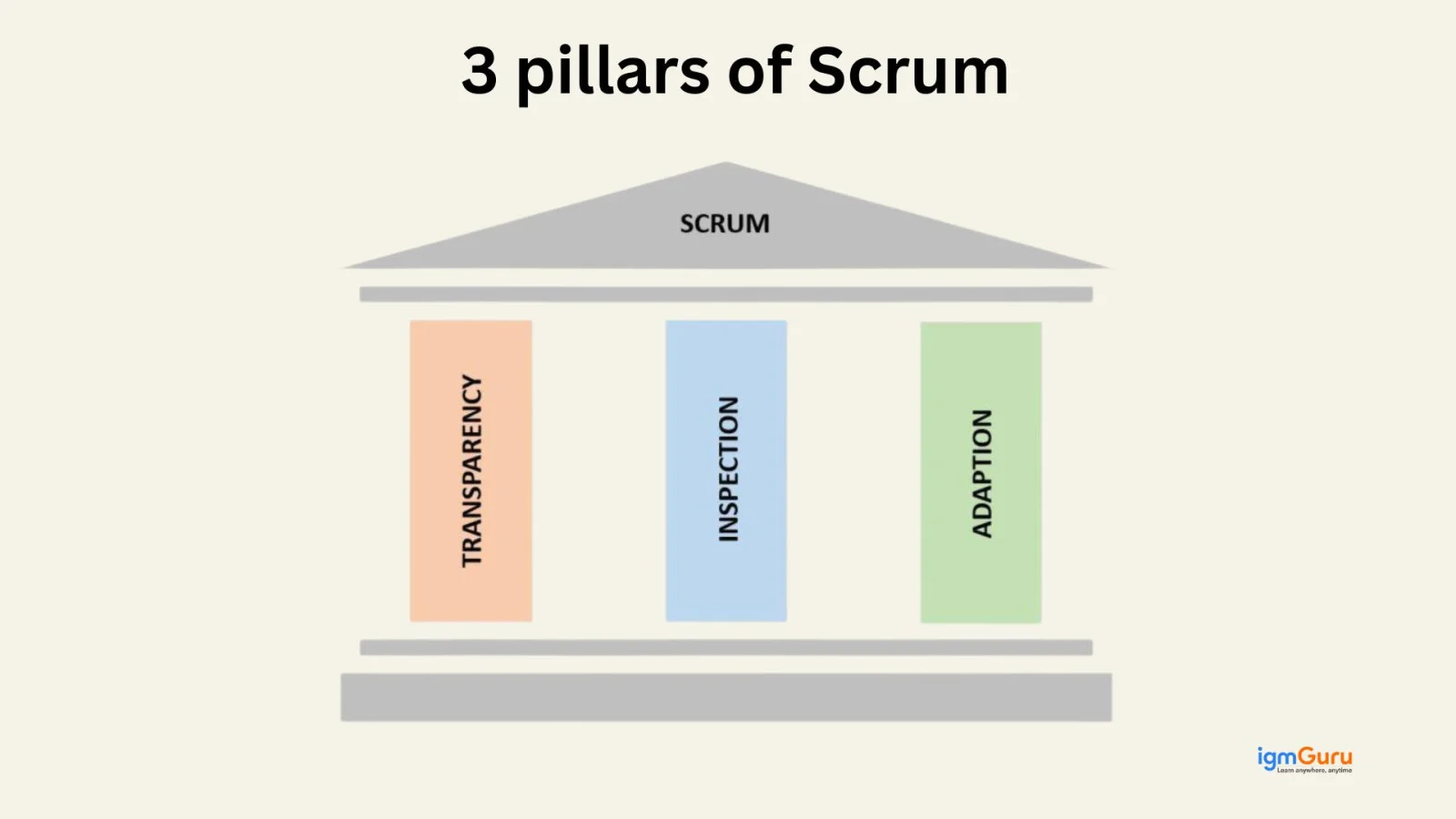
The three pillars of Scrum are Transparency, Inspection, and Adaptation. They form a framework for continuous improvement by ensuring clear visibility of work, regular assessment, and necessary adjustments to achieve better outcomes.
To move ahead in your career, you should also prepare for the most commonly asked Scrum Master interview questions and answers for experienced professionals. Here are some of them:
I track different metrics for this purpose. These metrics focus on flow, predictability, quality, and continuous improvement, rather than individual productivity. The goal is to understand how effectively the team delivers value and how consistently they improve over time. Here are some go them:
| Metric | What It Measures | Why It Matters |
| Velocity | Amount of work completed per sprint | Helps with forecasting and sprint planning |
| Sprint Goal Success Rate | Whether sprint goals are achieved | Indicates focus and planning effectiveness |
| Cycle Time | Time taken to complete a work item | Reflects delivery flow and bottlenecks |
| Lead Time | Time from request to delivery | Shows customer responsiveness |
| Burndown Chart | Remaining work over the sprint | Highlights progress and scope changes |
| Defect Rate | Number of bugs or rework needed | Measures quality of delivered work |
| Escaped Defects | Defects found after release | Indicates testing and quality gaps |
| Retrospective Action Completion | Completion of improvement actions | Shows commitment to continuous improvement |
| Team Happiness / Engagement | Team morale and collaboration health | Impacts sustainability and performance |
Tightly coupled systems introduce significant risks in Scrum-based delivery as they reduce team autonomy and slow down the ability to deliver incremental value.
In the high independent condition, a change in one area can impact multiple teams or systems that can increase coordination overhead and the likelihood of defects. This weakens Scrum principles such as fast feedback, frequent releases, and self-organizing teams.
As a result, delivery becomes less predictable, testing becomes harder, and the team’s ability to respond to change is compromised.
Sprint progress is tracked using tools like Burndown/Burnup Charts, the Sprint Backlog, and Daily Stand-ups. This focuses on remaining work (hours/story points) versus ideal progress to visualize if you'll meet goals, identify scope creep, and adjust actions daily. Key methods involve:
MVP and MPP differ mainly in purpose and maturity. Here is a comprehensive overview on their differences:
| Aspect | MVP (Minimum Viable Product) | MPP (Minimum Polished Product) |
| Primary Goal | Validate ideas and assumptions | Deliver a refined, market-ready product |
| Feature Set | Only essential core features | Core features with polish and enhancements |
| User Experience | Basic and functional | Smooth, refined, and user-friendly |
| Quality Level | Acceptable for learning | High and production-ready |
| Target Audience | Early adopters | Wider customer base |
| Feedback Usage | To decide what to build next | To optimize and scale the product |
| Risk Level | High learning, low investment | Lower risk, higher confidence |
Technical debt is the additional work created when teams choose quick or short-term solutions instead of sustainable ones. While some technical debt is intentional to meet short-term goals, unmanaged debt slows down delivery, increases defects, and reduces the team’s ability to adapt to change.
A Scrum Master helps manage technical debt by creating transparency. This encourages engineering best practices and ensures that debt reduction is treated as part of delivering value rather than as optional cleanup work.
Story structure is the way a user story is written and organized so that it clearly communicates value, scope, and acceptance criteria. A well-structured story helps the team understand who needs something, what they need, and why it matters.
Good story structure ensures shared understanding, supports accurate estimation, and enables incremental delivery of value within a sprint. Here is an example of a well-structured user story:
I ensure user stories meet requirements by making expectations explicit early and validating them collaboratively before development starts. Here are the steps to follow:
Scope creep is an uncontrolled addition or change of requirements after a sprint or project has already started. It is done without proper evaluation of its impact on time, cost, or resources. It usually appears when new features or changes are pushed into an active sprint.
They disrupt focus and reduce predictability. If not managed properly, it leads to missed sprint goals, team overload, and reduced product quality. Managing them involve the following steps:
A good Scrum user story follows a simple and user-focused structure:
|
This format clearly captures the Who, What, and Why of the requirement. In addition, a well-written story includes a clear title, a meaningful description, and specific acceptance criteria that define when the story is complete.
I ensure the timely delivery of action items in Scrum by making them visible, owned, and prioritized just like regular backlog items. Instead of treating action items as side tasks, I integrate them into the team’s workflow, assign clear ownership, and track progress regularly. I also keep them small and achievable within a sprint, and review their status frequently to ensure follow-through.
Last, but not least, here are some of the most asked Scrum Master scenario-based interview questions and answers. These are asked to check your experience and logical thinking.
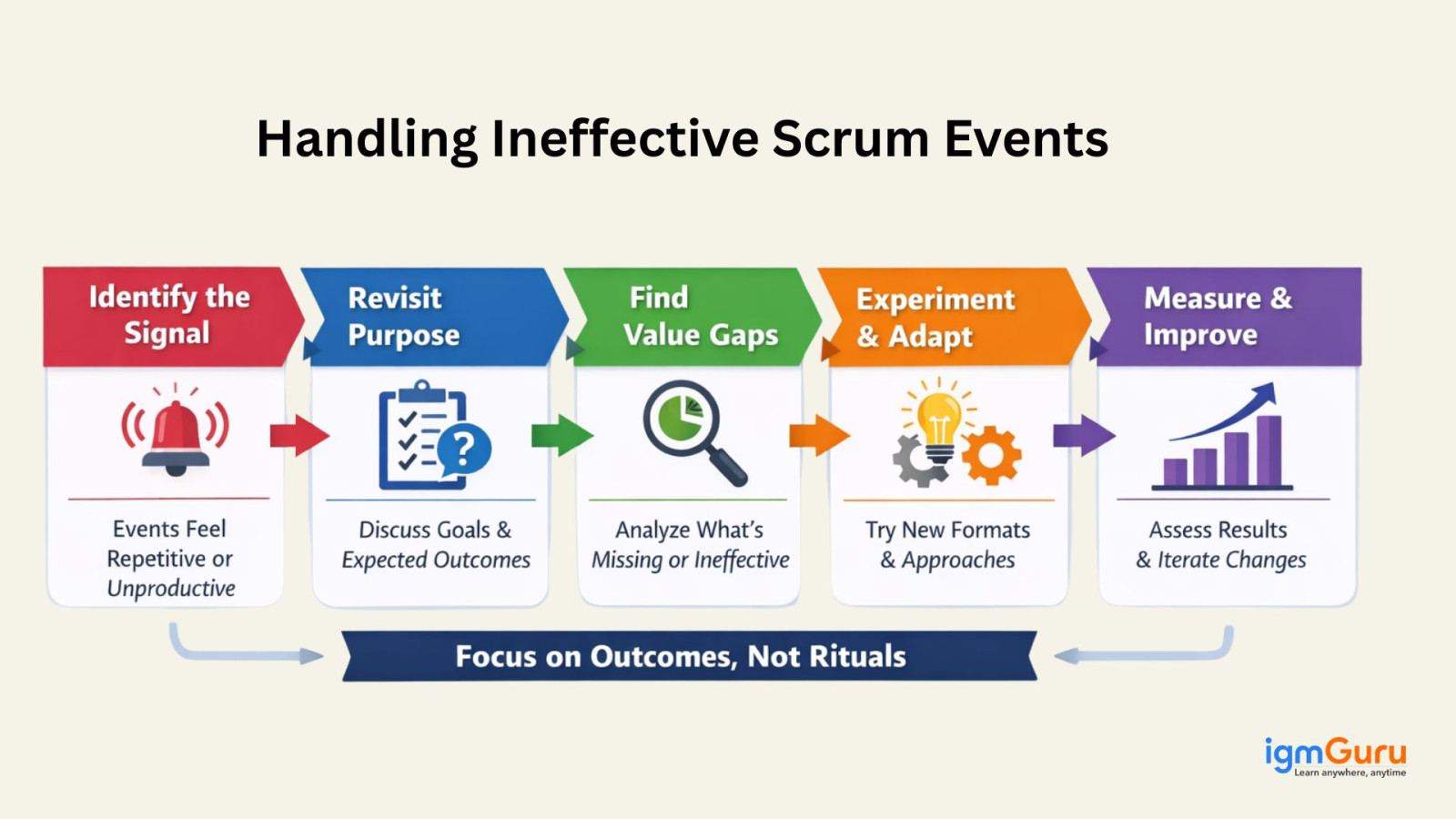
When Scrum events feel repetitive, I treat it as a signal rather than a failure. I revisit the purpose of each event with the team and inspect whether we are getting real value from it. I experiment with formats, such as focused retrospectives, data-driven reviews, or shorter stand-ups. The goal is to keep events outcome-oriented, not ritualistic.
I see Scrum as a framework, not a rigid rulebook. I protect core principles like transparency, inspection, and adaptation, while pragmatically working within organizational realities. I educate leadership on Agile values, negotiate small incremental changes, and ensure the team can still deliver value without violating Scrum fundamentals.
I first understand the urgency behind the request. If it’s critical, I facilitate a discussion with the Product Owner to assess trade-offs. The Product Owner decides whether to adjust scope by removing equivalent work or defer the change. I protect the team from disruption while ensuring business priorities are respected.
I focus on transparency and education. I explain concepts like empirical planning, velocity, and incremental delivery using real data from past sprints. Instead of fixed promises, I set expectations around ranges and probabilities. Regular Sprint Reviews help stakeholders see progress and understand how Agile planning works in practice.
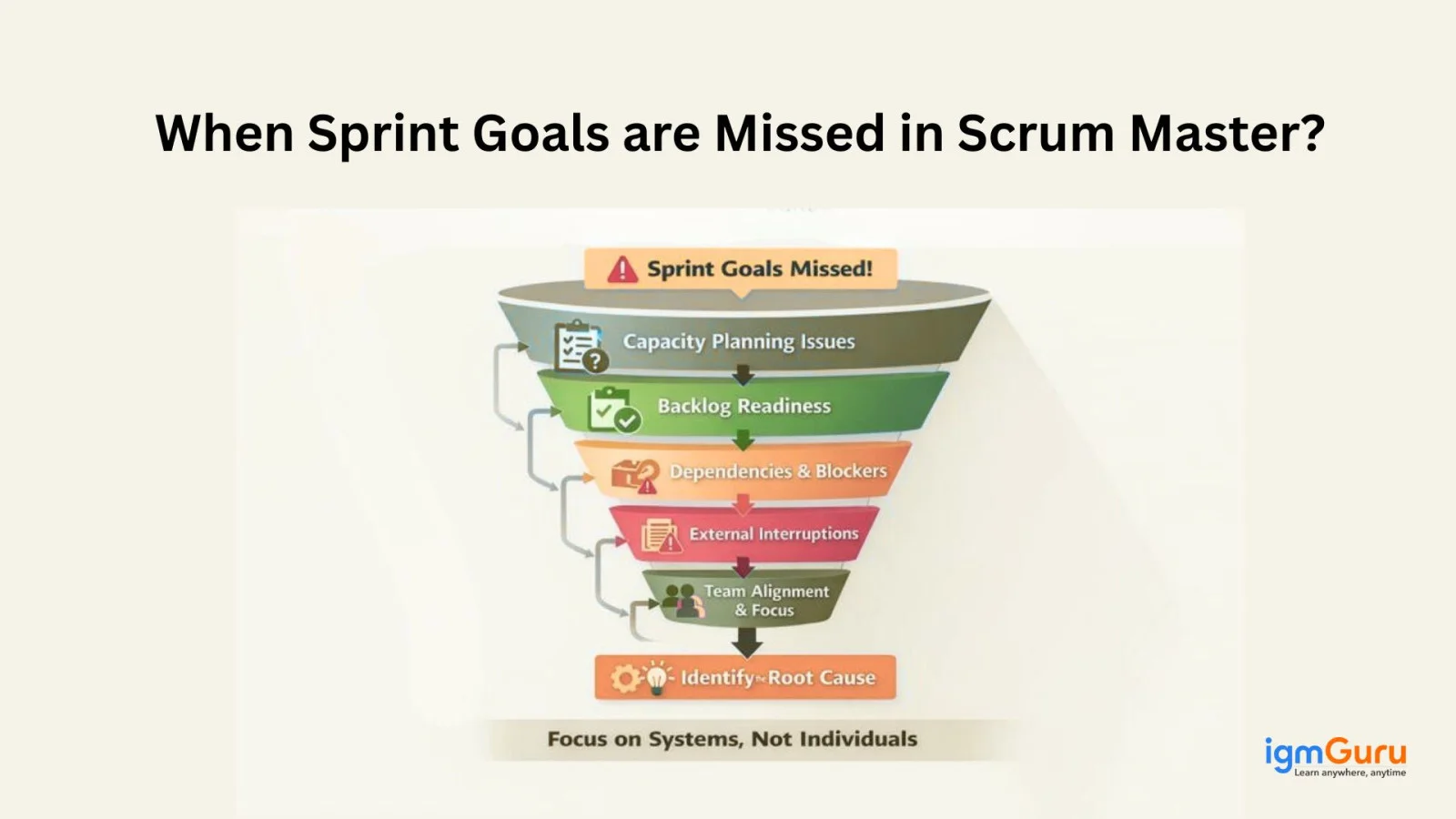
I avoid blaming individuals and focus on systemic issues. I analyze Sprint data, capacity planning, dependencies, and backlog quality. In retrospectives, I facilitate honest conversations to identify root causes. Often the solution involves better backlog refinement, realistic forecasting, or reducing external interruptions.
I work with the Product Owner to ensure technical debt and quality work are visible in the backlog. I advocate for allocating capacity for refactoring and improvement tasks every sprint. I also help stakeholders understand that sustained delivery speed depends on long-term code health, not just short-term feature output.
Common challenges I’ve faced include resistance to change, lack of Agile understanding, and command-and-control leadership styles. I addressed these through continuous coaching, small wins, and by demonstrating tangible improvements in predictability and team morale. Building trust and patience was key to long-term adoption.
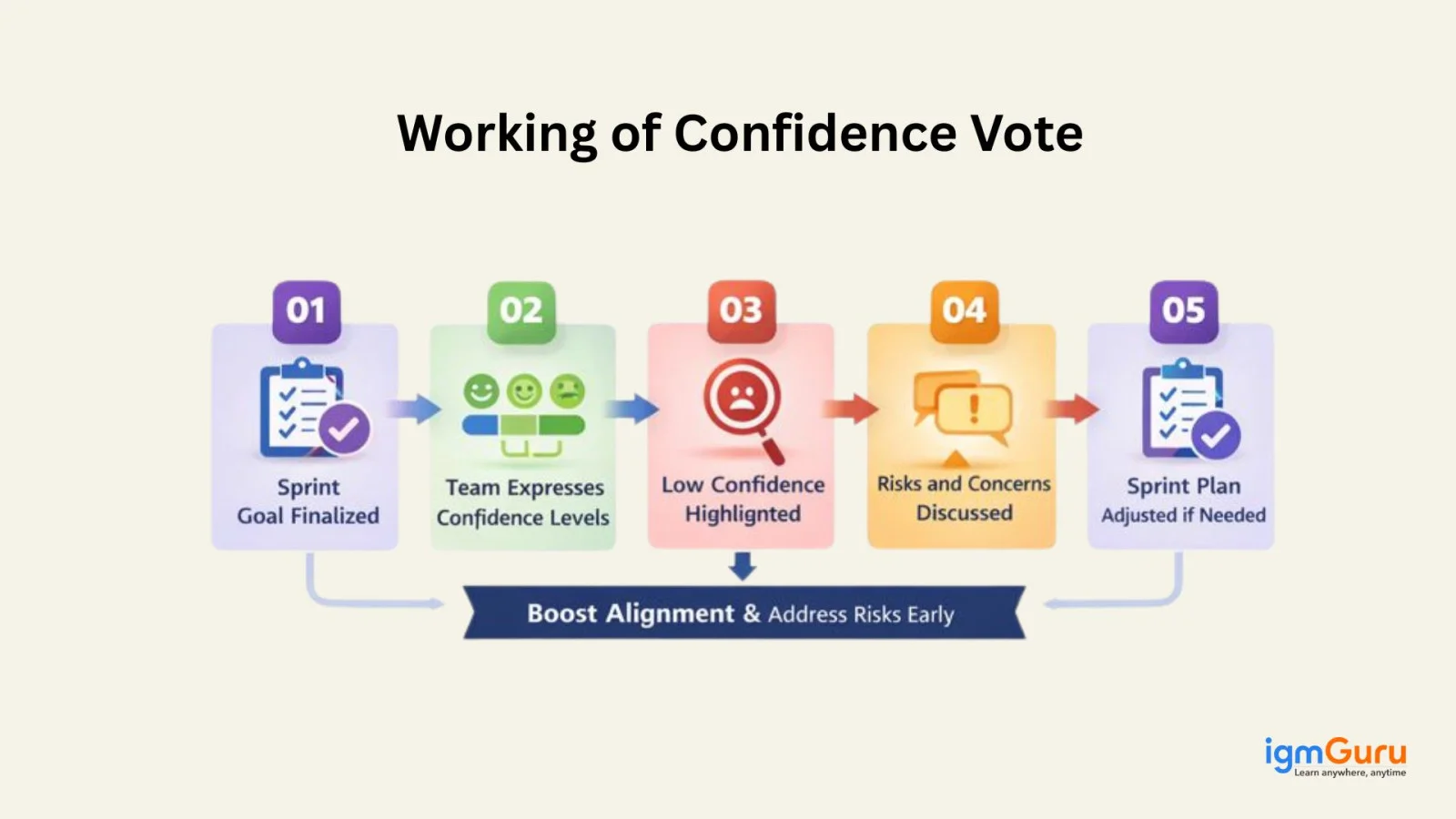
A Confidence Vote is a quick team alignment technique used after Sprint Planning. Team members express their confidence level in achieving the Sprint goal. I use it to surface hidden risks, clarify uncertainties, and encourage open communication. It helps prevent issues from emerging late in the sprint.
Yes, Scrum encourages cross-functional collaboration. I involve team members in backlog refinement, Sprint Reviews, and customer feedback sessions. Developers can contribute ideas, technical insights, and feasibility inputs. This shared ownership improves product quality and strengthens alignment between business and technical goals.
Agile is a mindset and set of values defined in the Agile Manifesto, while Scrum is a specific framework that applies Agile principles. Agile defines what we believe in, such as adaptability and customer collaboration, whereas Scrum defines how to work using roles, events, and artifacts to deliver value incrementally.
This article has provided a comprehensive list of the most asked Scrum Master interview questions and answers. With this guide you will be ready to crack your next interview. Just prepare all the questions with proper dedication and focus, no one can stop you from achieving your dream job.
It is easy to become a certified Scrum Master. You just need continuous learning, strong soft skills like leadership/coaching, and practical experience.
The salary of these professionals varies widely by location, experience, and company. They earn about ₹18-19 Lakhs in India to over $100k-$130k in the USA.
It is a high-demand job as the business and companies are moving to agile methodologies and these professionals are the ones who implement and manage these.
Explore Our Trending Articles-