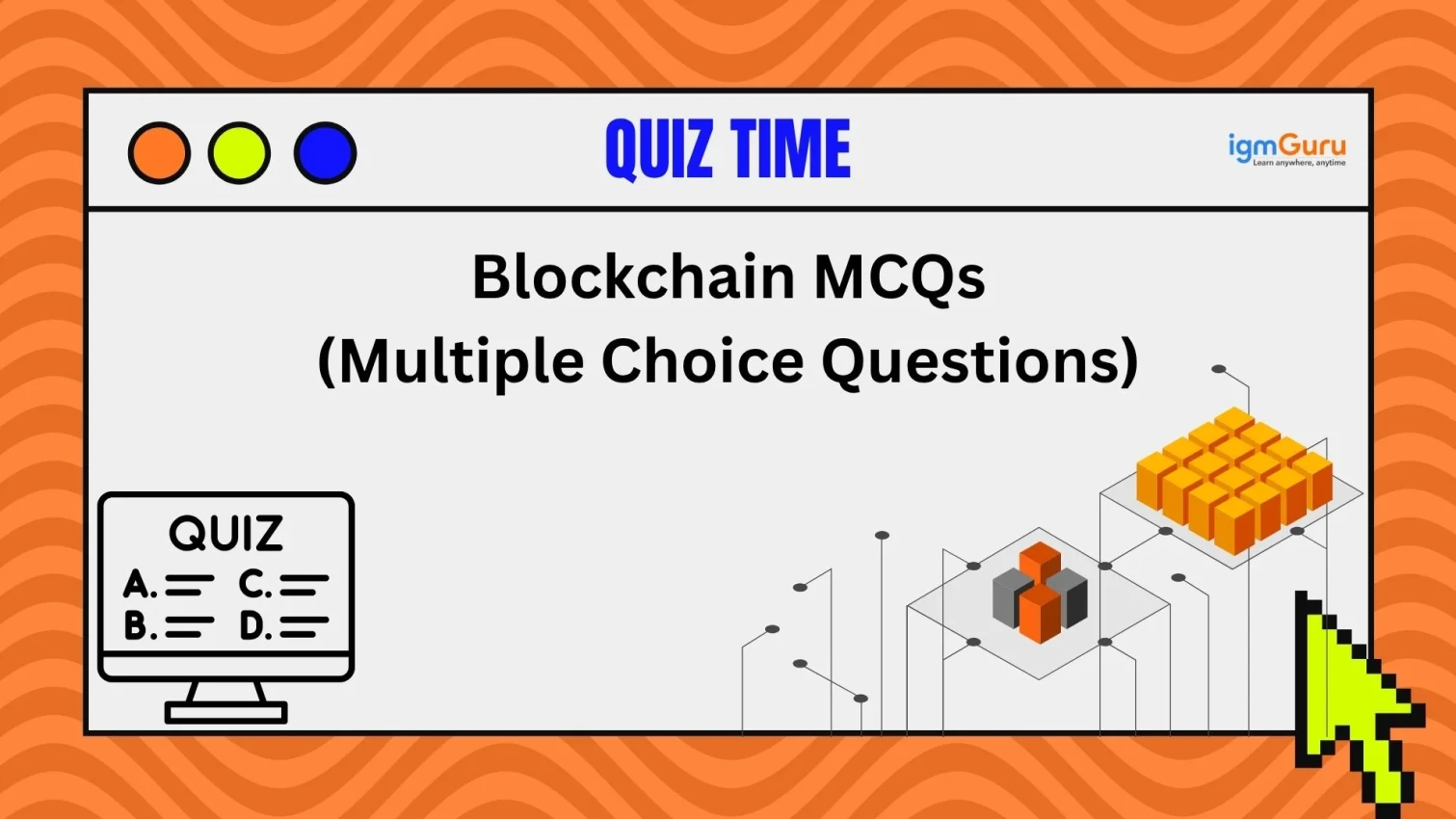
Preparing for a blockchain certification, interview, or Web3 role? This collection of Blockchain MCQs is a practical resource for testing your knowledge of blockchain fundamentals, cryptography, consensus mechanisms, Bitcoin, Ethereum, smart contracts, tokens, wallets, DeFi, scaling, security, enterprise blockchain, and real-world blockchain scenarios.
Note: Score 60% or higher to unlock an exclusive offer of up to 50% off on self-paced Blockchain courses.
Let’s begin!
1. What is blockchain primarily used for?
2. What is a block?
3. What links a block to its predecessor?
4. What is decentralization?
5. What is a blockchain node?
6. What is a blockchain ledger?
7. What does immutability mean in blockchain?
8. Why are hashes important?
9. What is a transaction?
10. Why is consensus required?
11. What is a cryptographic hash function?
12. What is the avalanche effect?
13. What is collision resistance?
14. What is a digital signature used for?
15. What is asymmetric cryptography?
16. What must remain secret in a blockchain wallet?
17. What can a public key help others do?
18. What is a nonce in proof-of-work?
19. What is a Merkle tree?
20. What is a Merkle proof?
21. What is blockchain consensus?
22. What does Proof of Work rely on?
23. What does Proof of Stake use?
24. What is a validator?
25. What is staking?
26. What is slashing?
27. What is finality?
28. What is a 51% attack?
29. What is delegated proof of stake?
30. Why does consensus design matter?
31. What is Bitcoin?
32. What does UTXO stand for?
33. What does the UTXO model track?
34. What is a Bitcoin transaction input?
35. What is a Bitcoin transaction output?
36. What is the Bitcoin mempool?
37. What is a Bitcoin transaction fee?
38. What is a mining pool?
39. Why can a Bitcoin transaction remain unconfirmed?
40. What is a Bitcoin block reward?
41. What is Ethereum?
42. What is a smart contract?
43. What is the Ethereum Virtual Machine?
44. What is gas?
45. Why do Ethereum transactions consume gas?
46. What is an Ethereum account?
47. What is a smart-contract event?
48. What is an Ethereum Layer 2?
49. What is an oracle?
50. Why do smart contracts need oracles for many real-world facts?
51. What is reentrancy?
52. What is the checks-effects-interactions pattern?
53. Why validate smart-contract inputs?
54. What is an access-control vulnerability?
55. What is integer overflow?
56. Why are oracle attacks important?
57. What is a flash-loan attack?
58. What is a smart-contract audit?
59. Why use a test network for contract testing?
60. What is an upgradeable contract?
61. What is a blockchain token?
62. What is a fungible token?
63. What is a non-fungible token?
64. What is a token standard?
65. What is token minting?
66. What is token burning?
67. What is a stablecoin?
68. What is tokenization of real-world assets?
69. What is a governance token?
70. What is token custody?
71. What is a blockchain wallet?
72. What is a seed phrase?
73. Why is a seed phrase sensitive?
74. What is a hot wallet?
75. What is a cold wallet?
76. What is a hardware wallet?
77. What is a blockchain address?
78. What is transaction signing?
79. Why verify a destination address before sending?
80. What is multisignature authorization?
81. What is a peer-to-peer blockchain network?
82. What is node discovery?
83. What is block propagation?
84. What is transaction propagation?
85. What is a block explorer?
86. What is a full node?
87. Why run a full node?
88. What is a blockchain fork?
89. What is a hard fork?
90. What is a soft fork?
91. Why do blockchains face scalability challenges?
92. What is Layer 2 scaling?
93. What is a rollup?
94. What is an optimistic rollup?
95. What is a zero-knowledge rollup?
96. What is a state channel?
97. What is sharding?
98. What is a sidechain?
99. Why can Layer 2 reduce base-layer congestion?
100. What trade-offs can scaling solutions introduce?
101. What is decentralized finance?
102. What is a decentralized exchange?
103. What is an automated market maker?
104. What is a liquidity pool?
105. What is yield farming?
106. What is a DAO?
107. What is on-chain governance?
108. What is impermanent loss?
109. What is protocol composability?
110. Why does smart-contract risk matter in DeFi?
111. Why might an enterprise use a permissioned blockchain?
112. What is a permissionless blockchain?
113. What is supply-chain traceability?
114. How can blockchain support provenance?
115. What is the oracle problem?
116. Why is identity important in permissioned networks?
117. What is a consortium blockchain?
118. How can blockchain improve auditability?
119. What is a key limitation for supply-chain data?
120. When might a traditional database be preferable?
121. What is a zero-knowledge proof?
122. What is MEV?
123. Why can transaction ordering matter in DeFi?
124. What is blockchain interoperability?
125. What is a bridge?
126. Why are bridges security-sensitive?
127. What is account abstraction?
128. What is an oracle network?
129. What is a blockchain data availability concern?
130. Why is privacy difficult on public blockchains?
131. A company wants several independent organizations to share a record without one controlling it. What is relevant?
132. A user signs a transaction with a private key. What does the signature primarily show?
133. A contract makes an external call before updating sensitive state. What should developers examine?
134. A proof-of-stake validator violates a slashable rule. What may happen?
135. Employees enter false supply-chain data before it is written on-chain. What remains true?
136. A contract needs a current exchange rate. What does it need?
137. A network is congested and transaction costs rise. What may help?
138. A treasury should not be controlled by one compromised key. What helps?
139. An upgradeable contract has one administrator key. What risk exists?
140. A user loses the only private key controlling assets. What is the likely consequence?
141. What is an on-chain governance proposal?
142. Why are smart-contract upgrade keys sensitive?
143. What is a timelock in blockchain governance?
144. Why can timelocks improve governance security?
145. What is an intent-based blockchain interaction?
146. What is restaking in proof-of-stake ecosystems?
147. What is a restaking risk?
148. What is a modular blockchain architecture?
149. What is data availability sampling intended to help with?
150. Why is formal verification used for some smart contracts?