Splunk is a big data collection and analytics platform. Most often, it is used for deriving insights from the gigantic volumes of machine data. Additionally, it is extremely easy to use and is being used globally by thousands of organizations for security, troubleshooting, and monitoring purposes. In this blog, we are going to take a quick look at the benefits of Splunk analytics for Hadoop.
"According to research from the Bureau of Labor Statistics, computer and IT jobs are expected to grow much faster than average from 2023 to 2033, with a projected 356,700 job openings annually."
These points will help you get a better idea about why organizations prefer Splunk over any other platform. Hence, you could also get started in this field and enjoy a bright career.
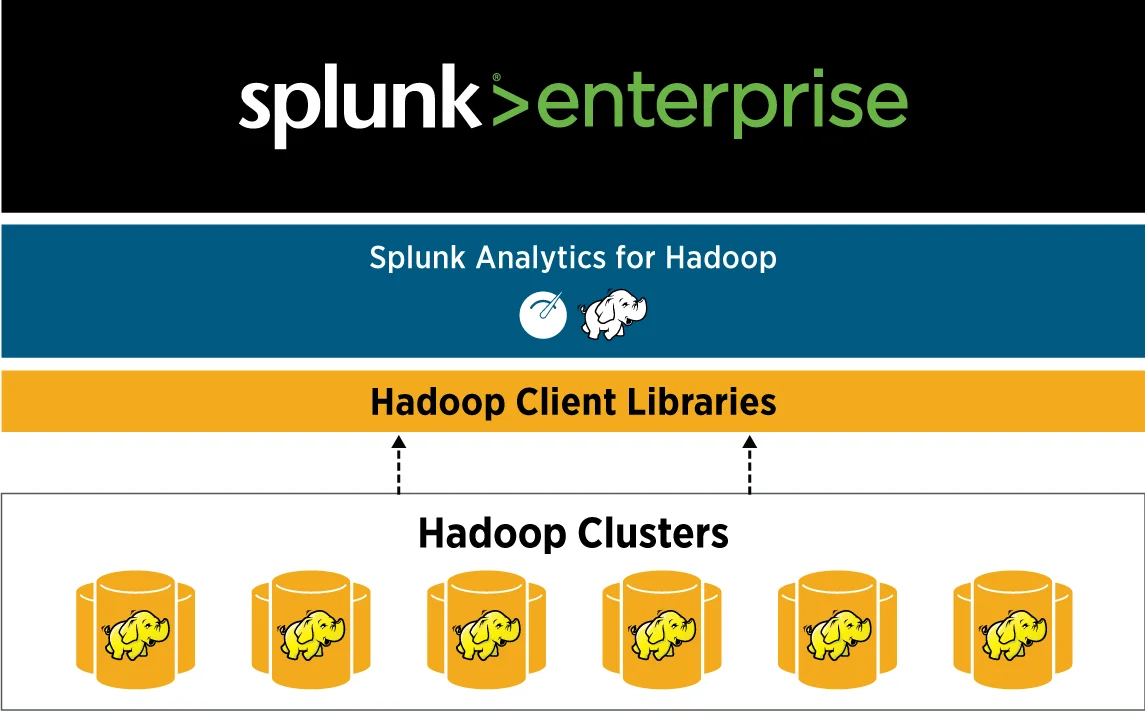
Splunk analytics on Hadoop, also known as Hunk, is a completely integrated platform. It is used for swift data analysis, exploration, and visualization. With this, extracting data insights becomes a piece of cake, especially when compared to other platforms. Hunk has time and again proven itself to be an advanced platform.
It is something that you should learn if you are interested in working with data. There is no doubt that data is taking the world by storm and a plethora of job opportunities have stemmed from it. Read these benefits to better understand why companies are adopting Splunk, and why the demand for Splunk professionals will grow.
It facilitates users to integrate data from HDFS (Hadoop Distributed File System) into Splunk's search and indexing capabilities. This is done seamlessly and without any delays. Hence, organizations are able to make the most of their existing Hadoop infrastructure as well as Splunk's powerful analytics.
It leverages Hadoop's distributed computing architecture to handle gigantic data volumes. Hence, rendering it apt for organizations having large-scale data processing needs.
Even though Hadoop usually does batch processing, Splunk analytics on Hadoop facilitates near-real-time data analysis. Features such as data indexing continuous running of queries facilitate it.
This platform allows users to perform advanced analytics on humongous datasets that are stored in Hadoop. It also includes correlation searches, machine learning algorithms, statistical analysis, and running complex queries for extracting valuable insights from this data.
Splunk provides a wide array of robust security features. These include role-based access control, data encryption, and user authentication. Hence, enabling organizations to protect sensitive data and maintain high level of compliance with regulatory requirements.
Splunk analytics on Hadoop enables organizations to amalgamate the power of Splunk Enterprise with Hadoop. Hence, it enables seamless searching and analyzing of Hadoop-oriented data. Explore the opportunity to work with some of the biggest companies in the world by gaining the right skill set and knowledge base.
You can also read: What is ChatGPT
It connects directly to Hadoop data and runs analytics using Splunk’s search and reporting tools, making big data easier to explore and understand.
Hadoop is used to store and process big data, while Splunk is used to search, analyze, and visualize machine data.
Hadoop has 4 main components: HDFS for storage, YARN for resource management, MapReduce for processing, and Hadoop Common for shared utilities.
Data in Hadoop is analyzed using tools like MapReduce, Hive, or Spark to process large datasets and extract useful insights.
Course Schedule
| Course Name | Batch Type | Details |
| Hadoop Developer Training | Every Weekday | View Details |
| Hadoop Developer Training | Every Weekend | View Details |