Azure is a cloud computing platform developed by Microsoft. It provides a variety of enterprise-grade cloud services, including analytics, compute, storage and networking for different industries like e-commerce, finance and more. Even Fortune 500 companies are using it. Isn't it impressive? There is more to it.
The global cloud computing market is expected to cross $1 trillion by 2028. In the fourth quarter of 2023, Azure market share in the cloud infrastructure market was 24%, only a little short from its competitor Amazon. This positions Microsoft Azure as the second-largest cloud provider globally.
These digits reflect the stagnant and constant expansion of the cloud sphere and how much significance Microsoft Azure holds here. This blog discusses what is Microsoft Azure, its working, and central aspects. Let's get started with the introduction.
Microsoft is a diversified platform for cloud computing, enabling users to access and manage Microsoft services. It brings a large number of services across different categories to meet different needs. This includes storage, computing, analytics, networking, migration and many more added to its list of services. It works as a brimming toolbox for businesses to build and manage applications.
Professionals like IT specialists and developers can get access to this platform in both public and private clouds. Assisting businesses in facing their challenges with cloud services, Microsoft provides SaaS (software-as-a-service), PaaS (platform-as-a-service) and IaaS (infrastructure-as-a-service). Organizations are seamlessly tackling their technology demands with these computational services. This versatility ensures that Azure can meet the needs of nearly any enterprise, regardless of its size or current infrastructure setup.
Explore igmGuru's Azure Admin training program to boost your career in cloud technology.
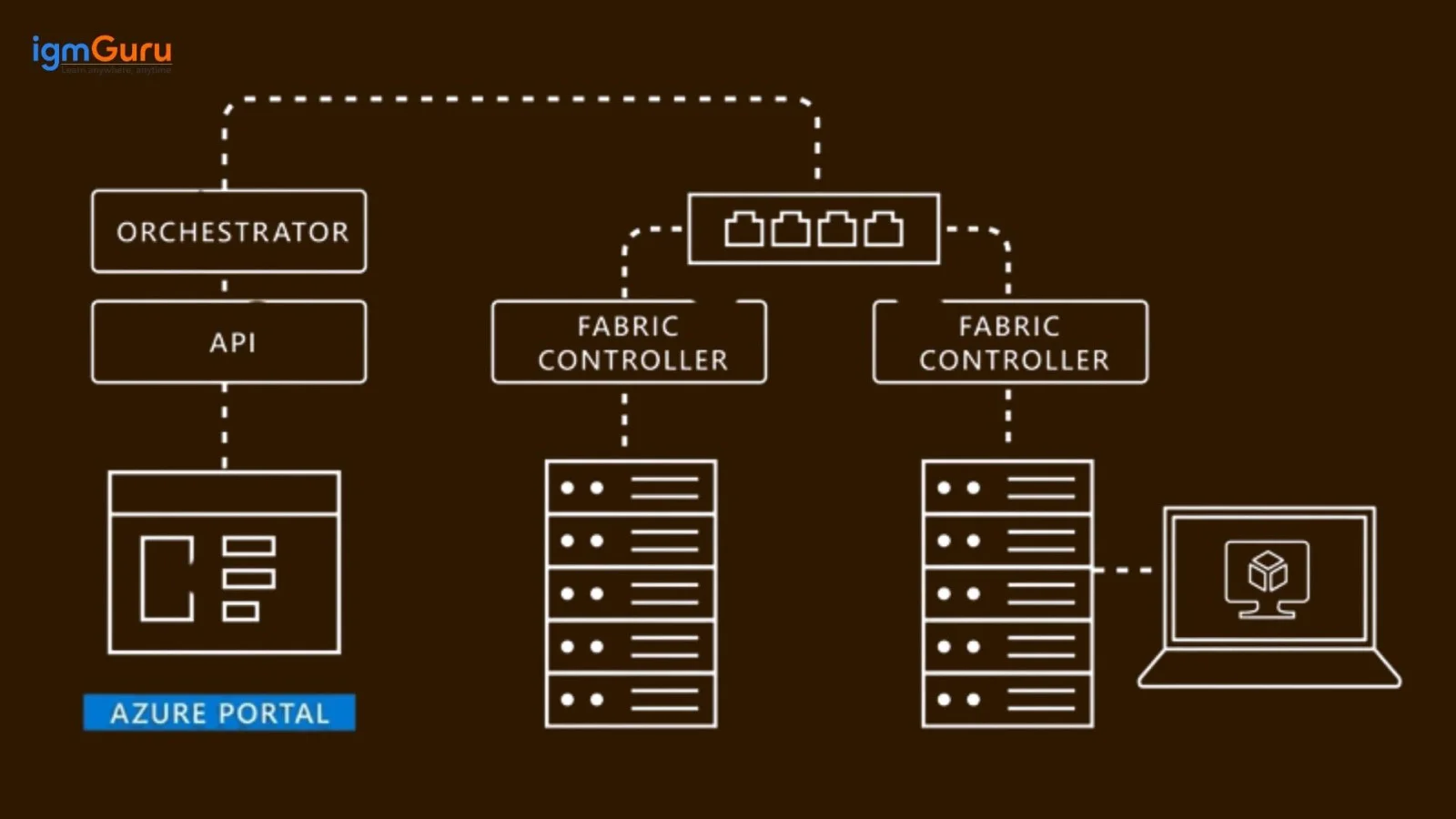
Microsoft Azure employs a technology called virtualization. It is used to separate the tight coupling present between the CPU and the OS of a computer with a hypervisor, an abstraction layer. The hypervisor imitates real computer and CPU functions in a Virtual Machine (VM). This in turn enables various VMs to work on one physical machine.
These VMs are managed by the Azure infrastructure. This delivers services like storage and computing power that help the business in scaling. This virtualization mechanism is what allows Azure to offer computing resources on-demand to millions of users globally.
There are around two dozen Azure products and services available. This list has the names to look for. These services are categorized to simplify solution building for developers and architects.
Related Article - Microsoft Azure Tutorial for Beginners
This section discusses the top features of Microsoft Azure to equip you with a better understanding of the platform. Let's get into it. These features contribute to Azure's standing as a leading enterprise cloud solution.
Users are offered a variety of services like management services and data storage services along with other options. Services like Azure SQL Database gives out a reliable and managed relational DB service. Azure Blob Storage enables businesses in securely storing and retrieving gigantic amounts of unstructured data.
It offers SQL Data Warehouse, a data warehousing service which makes data-intensive queries manageable. Besides, Azure search lets its users do text searches and utilize a fragment of Odata's structured filters through SDK APIs or REST. This range of options supports everything from simple file hosting to complex big data analytics.
This feature offers a unified view of all the hybrid environments via the OMS or the operation management suite. It is a management as a service (MaaS) that enables seamless management and monitoring of various data sources. This centralized management is key for operational efficiency.
One of the most prominent features of Microsoft Azure is IaaS. Computational services like this allow users to set up virtual machines for both Windows and Linux easily. They also receive pre configured software for many software. The PasS feature simplifies the publishing process of websites and applications for developers. Azure's compute power is highly scalable and available globally.
Azure integrates with Artificial Intelligence and Machine Learning services to empower businesses into leveraging advanced automation and analytics capabilities. Azure Machine Learning Studio facilitates enterprises in building, deploying and training Machine Learning models, which help in gaining exceptional insights from the data in hand.
Businesses are able to adopt a hybrid approach with Azure as it allows flawless integration with on-premises infrastructure. With hybrid capabilities, businesses get better flexibility and access over their IT environment. Azure Stack and Azure Arc are key tools that extend Azure services and management to any infrastructure.
Microsoft Azure's mobile engagement features equip users with real-time data on how users interact with your app and can send push notifications right to their phones. Azure also offers services that help with content protection, encoding, streaming and analytics. This makes Azure an excellent platform for streaming and mobile app backend development.
Azure's file service allows you to store data in the cloud and access it through REST APIs and SMB protocols. With Queue Services, programs can send messages to each other without waiting, using queries to communicate. This provides multiple durable and highly available storage options.
Related Article - Top Azure Interview Questions
Many organizations in different sectors are using this platform for different purposes. Here are some applications of Azure.
Successfully developing software is Azure's key spot. It does so by assisting with testing apps, software development kits, code sharing, troubleshooting, etc. The vast toolset accelerates the development lifecycle.
Azure platform for Kubernetes (Azure Kubernetes Service - AKS) and Docker implementation to help create and orchestrate humongous volumes of containers. AKS is one of the most popular managed Kubernetes services available.
It identifies and responds to the IT security in the cloud. Additionally, this platform aids in managing encryption keys and sensitive assets. Azure Active Directory (Azure AD) is the industry-leading identity and access management solution.
Azure DevOps provides a wide set of services and tools to implement DevOps. This includes test labs for build testing, Visual Studio Team Services, app diagnostics, experimentation, etc. It facilitates continuous integration and continuous delivery (CI/CD).
Various services are used to capture, analyze and monitor the IoT data emanated from sensors and various devices. Issue notifications are analyzed and monitored to support IoT implementation. Azure IoT Hub acts as a central message hub for bidirectional communication between IoT devices and the cloud.
Related Article- What is MLOps In Azure
Azure is being used by 95% of the Fortune 500 companies. This means that different sectors are utilizing it and here are some industries where it's used. Azure's strong compliance and security features make it preferred by regulated industries.
Azure is used by governments around the world (US and UK here) to manage top projects like aerospace and military. It promotes secure remote collaboration, protects against cyber attacks and protects citizen data. Azure Government provides specialized services for compliance with government security requirements.
Azure features like AI and mixed reality prove beneficial for both private and public healthcare providers. It's apt for storing staff credentials, enhancing patient privacy and outcomes or moving within organizations. It adheres to critical regulations like HIPAA.
Customer relationship management enables enterprises to manage their relationship with its existing and potential customers. Azure is used by Salesforce, the top CRM software globally. Many other major enterprise applications also run on Azure's robust infrastructure.
Privacy is such an important must-tick for every business and especially for those companies that provide financial services. Azure's AI is useful in various cases that are prone to human error and bias. It automates repetitive processes and leaves space for employees to focus on skill-driven tasks. Azure meets stringent financial industry compliance standards.
Azure helps enterprises in personalizing customer experiences and driving sales automatically via analytics. This keeps agility in supply chains, ensuring there's always enough stock to stay updated with the demand. This digital transformation capacity is crucial for modern retail success.
Related Article- What Is Azure Blueprint?
There are various different services offered by Azure, which have been mentioned previously in this blog. These can be consumed on-premises, hybrid or in public cloud implementations. Depending upon the services picked and their consumption, there are different Azure pricing and costs.
Despite all the amazing features offered by Azure, it might not be suitable for everyone. It could emerge as an unappealing and complicated platform for some users. This section brings some of the best Azure alternatives to choose from. The cloud computing market offers several competitive options.
Oracle Cloud is a service from Oracle Corporation that offers cloud computing solutions. It provides things like servers, storage, and applications through a network of data centers managed by Oracle. You can access these services online whenever you need them. OCI is gaining traction due to its competitive pricing and strong focus on autonomous databases.
Cloud Guard - It is a security tool for OCI that helps with Identity Access Management (IAM), protects against DDoS attacks, and offers other cloud security features.
OCI Cloud - Users can handle all their business needs in one place. It has everything from computing and storage to Kubernetes and web hosting.
AI and ML - Oracle Cloud offers strong data analytics and business intelligence solutions along with AI and ML features.
Enterprise app development - Oracle offers a bunch of custom app development services, along with SaaS products that are similar to what Azure and Salesforce provide. One can also go for their PaaS options to build their own solutions.
Oracle Cloud services use a Pay-as-you-Go pricing model. Users can save a good amount if they offer commitment to their services for one or three years.
Rackspace Hosting Inc started offering cloud computing services called Rackspace Cloud back in 1998, and it has grown to be one of the top names in the industry. They offer services like Cloud Files, Cloud Block Storage, and Cloud Backup, which are great for businesses of all sizes. Rackspace is often preferred for its high level of managed service support.
App Deploy - With app deploy, one get a simple platform for building, launching, and managing cloud-based and SaaS apps.
Rackspace provides public and private cloud options, plus it works well with other cloud services too.
OpenStack Private Cloud equips users with everything they need to set up and manage your own private cloud.
Managed hosting gives you dedicated and secure servers to handle your heavy cloud needs.
Rackspace offers dedicated servers starting at $499 a month, with a maximum price of $1,249. The cost depends on the server space you need. Their account managers will look at your business needs and suggest a reasonable hourly rate for your plan.
Alibaba Cloud, or Aliyun, is a cloud computing company that's part of Alibaba Group. It offers cloud services to online businesses and supports Alibaba's e-commerce platform. The company is based in Singapore for its international operations. Alibaba Cloud is the leading cloud provider in the Asia-Pacific region.
Hybrid and multi-cloud support - Just like Azure, GCP, and AWS, this service lets you run your workloads on a combination of private and public clouds.
Alibaba Cloud is a great alternative to Azure, with more than 100 cloud services across 16 categories, including computing, storage, containers, AI/ML, and database management.
Alibaba's DCDN is a service that helps speed up content delivery.
Elastic Compute Service - Just like Microsoft Azure, Alibaba Cloud provides powerful virtual servers.
Like Azure, Alibaba Cloud charges you based on what you actually use. You only pay for what you need, and there are some free options and discounts if you commit to using it for a longer time.
Amazon Web Services, or AWS, is a part of Amazon that offers cloud computing services and APIs for people, businesses, and government agencies whenever they need them. AWS is the global market leader in cloud infrastructure.
AWS Outposts lets you use the same tools and services in your own location as you would in the AWS cloud.
AWS has a full range of services, from computing and storage to machine learning, AI, data warehousing, IoT, and serverless options.
With serverless computing, like AWS Lambda, you don't have to worry about setting up infrastructure or paying for more than you need.
Auto-scaling is a neat feature that adjusts your cloud resources automatically based on what you need, helping you save on unnecessary costs.
AWS uses a pay-as-you-go pricing model, so you only pay for what you use. If you sign up for a year or three years, you can save a lot - up to 72% compared to hourly rates.
Google Cloud Platform (GCP) is a bunch of cloud services from Google. It includes options for computing, storing data, analyzing data, and using machine learning, plus some handy management tools. GCP excels in machine learning and data analytics capabilities.
Workspace - This virtual desktop service works like Azure's Windows 365 and comes with popular business tools like Google Docs, Sheets, Gmail, Meet, and Drive.
Google Kubernetes Engine - GKE is a strong managed service for running Kubernetes containers. GCP is considered the originator and leader in Kubernetes technology.
Data Analytics - With its background in Internet Search, Google has really advanced its data analytics, warehousing, and business intelligence tools.
Open-Source Support - Google is big on open-source projects and is one of the top contributors, creating tools like Kubernetes for container management and Istio for service mesh.
Google Cloud Platform (GCP) has a free trial that gives you credits to use and a free tier that lets you access some products with limits. This way, you can check out the platform and try things out without spending any money, as long as you stay within the usage limits.
There are two pivotal names when it comes to cloud services, AWS and Microsoft Azure. Each platform has distinct features to align with various business needs. This section brings out the main points to highlight the differences shared between these two platforms.
AWS and Azure have different ways to charge customers -
Both providers support hybrid cloud setups, but Azure leans more towards these solutions -
AWS boasts a larger and more developed ecosystem:
After earning an Azure certification, many different job opportunities open up. These opportunities depend highly on the Azure certifications earned, along with years of experience, existing skill set and nature of expertise. A career in Azure is highly lucrative and offers strong growth potential.
Here are the top Azure jobs to consider along with their average yearly pay on the junior level (0-3 years) -
Now that the fundamentals around 'what is Microsoft Azure' is out of the way, the path to further exploration opens up. It's possible to learn more about the world of Azure by enrolling in a good course after deciding which certification is your goal.
There are endless opportunities and future scope in this field since cloud computing is expanding its roots too. Microsoft Azure's continued innovation ensures it will remain a cornerstone of enterprise IT for decades to come.
The basic use of Azure is to utilize it as a platform that hosts databases (DBs) in the cloud. It can be used for various things like app development, data & analytics, IoT, AI, hybrid cloud, etc. Its primary function is to provide on-demand, scalable, and secure computing, networking, and storage resources via the internet.
No, there is no need to have any coding knowledge to start a career in this field. Automated ML and pre-built ML models are used to create AI models. However, specialized roles like Azure Developer or Azure Data Scientist require proficiency in languages like Python, C#, or Java.
A big benefit of using Azure is the minimal expense incurred by organizations. It's PAYG pricing plan helps organizations save money and still get their work done. Other major benefits include deep integration with existing Microsoft products, strong hybrid cloud support, and superior enterprise-grade security and compliance.
This platform supports various programming languages such as Python, JavaScript, Node.js and .NET. Azure is highly flexible, supporting the most popular languages, including Java, C#, and Go, allowing developers to use their preferred environment.
The five pillars of Azure include compute, storage, networking, databases and security. Together they form the foundation for building and managing cloud solutions.
Explore Our Trending Articles-
Course Schedule
| Course Name | Batch Type | Details |
| Microsoft Azure Training | Every Weekday | View Details |
| Microsoft Azure Training | Every Weekend | View Details |