Technology trends are changing or rather improving constantly. One recent change that has taken the world by storm is automation. Companies benefit immensely by automating time-consuming repetitive tasks associated with marketing campaigns by using CRM (Customer Relationship Management) or Marketing Automation Software.
Even in this trend, there are many marketing automation software out there that are stealing all the limelight for many reasons. These tools not only save time but also enhance customer engagement through personalized and timely communication. With data-driven insights and seamless integration, businesses can now make smarter decisions and scale faster than ever before. Let's understand what is marketing automation and how it works. We will also discuss the popular marketing automation software in this guide.
Let's get started.
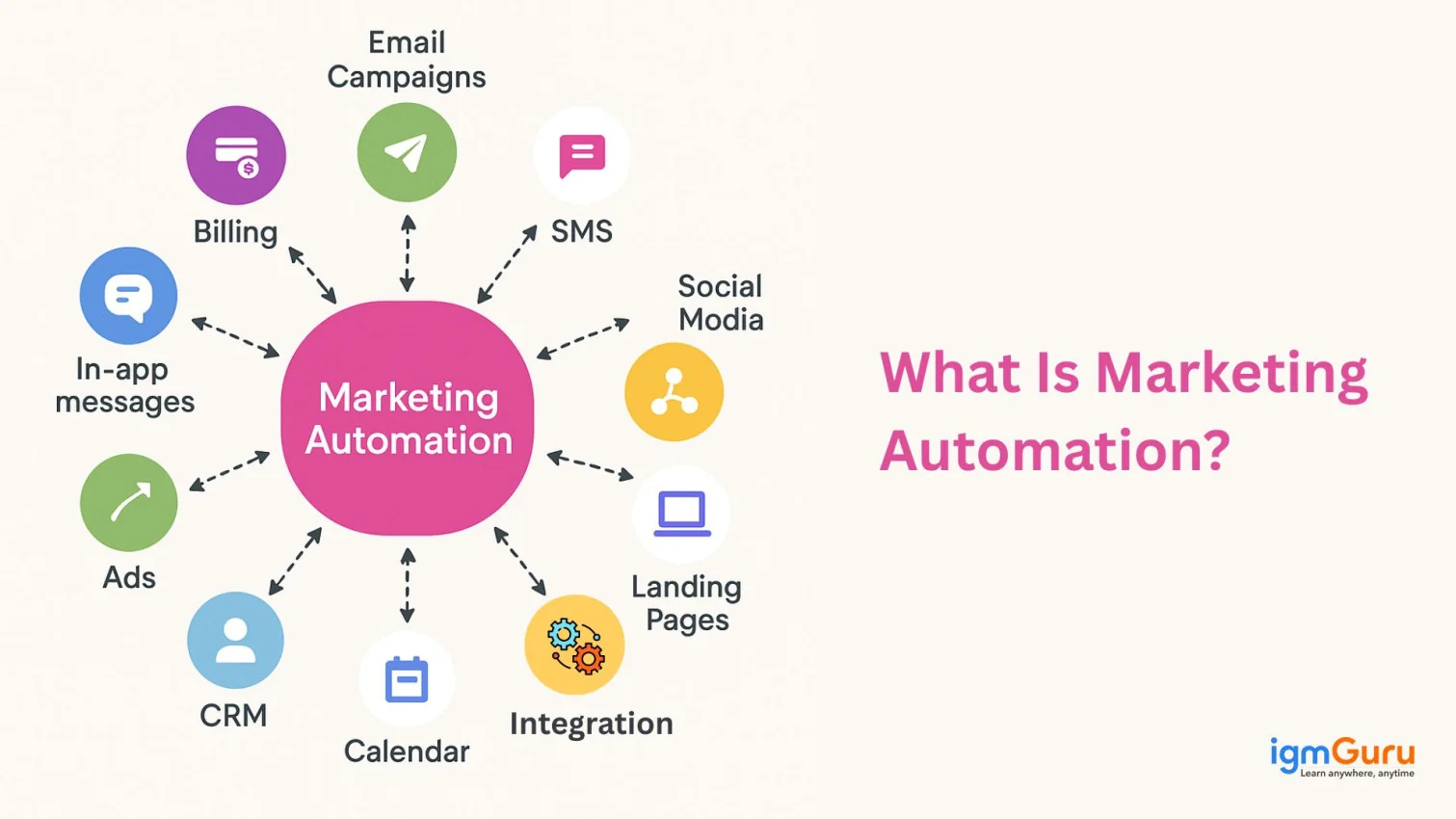
CRM marketing automation refers to a technology that is used to manage marketing processes as well as multifunctional campaigns automatically across various channels.
Marketing automation comprises a lot of tools that are used by businesses for targeting customers. This is done through a lot of ways, including social media, texts, emails, and websites. Since customers are inclined towards a digital-first approach, companies are abiding by it too.
Messages are automatically sent via a set of instructions known as workflows. These workflows can either be custom-built from scratch, modified during the campaigns for better results, or defined by templates. Workflow automation plays a huge role in helping marketers.
Marketing automation platforms are used widely by both the sales and marketing departments. The goals are simple. It aids in automating online sales activities and marketing campaigns to enhance personalization, efficiency, and revenue. Employing automation to take care of the repetitive tasks leaves efficient employees with ample energy to deal with higher-order problems. There is also a decline in human error.
There are numerous marketing automation tools on the market. But how exactly do they work to help professionals reach their goals? Let's find out.
Enroll in igmGuru's Salesforce Training program to start your career in marketing automation.
This section equips readers with an understanding of how marketing automation functions.
Before you jumped into automation, you were doing things manually. You likely sent emails one at a time and shared social media posts every day. You might even have held focus group discussions to gather customer feedback.
When you're looking at Marketing Automation, start by figuring out what you're trying to achieve. Ask yourself, "What do I want to get out of this?"
You can automate tasks like surveys, data analysis, or scheduling blog posts. Plus, you can manage lead generation, content, and even research more easily.
It's important to really understand who your customers are. These are the people already using your products or services, and they are the ones who will gain from automating your marketing.
First off, figure out who your audience is and where you can find them.
Getting a handle on their behavior will let you know what marketing tasks you need to automate. Plus, knowing where to reach your customers is key. This step will help you choose the right marketing automation tools to use. Here are some factors to consider.
Next, you need to figure out the right tool for your needs. What are you planning to use to reach your goals? Get to know what each tool can do and think about how you can make the most of it. Once you've looked everything over, you can choose the best tool to help you succeed.
When you start using new strategies like Marketing Automation, things at work can shift a bit. It might shake things up for a while, but change can spark fresh ideas and new ways of doing stuff. Here are some things to think about during this process:
To kick things off on the right foot, you need a solid plan. As an Entrepreneur says, "Strategy is hard - but it's worth the effort. Execution is tough too, but if your plan is off, it's not worth the trouble at best."
The folks who carry out these strategies are crucial. This group includes everyone from management to regular staff. The skills and attitudes of those leading the charge can really impact how well the implementation goes.
Good communication makes a huge difference. With Marketing Automation, it's important to explain new roles and tasks clearly. It's also good to discuss policies and be open to questions from everyone involved.
Bringing something new into your workplace means dealing with changes in how things are done. This can include:
If there's no commitment from everyone involved, plans are likely to fall flat. To get results from your marketing automation, sticking with it is essential.
It's important to check in on how things are going. Measure your results and see how effective you are in digital marketing. Look at how you measure up against your competitors too.
Also Read- Top 5 Features Of Salesforce Marketing Cloud
Most of the business owners probably know how hard it is to scale a business and it's really tough to keep up with customers, leads, emails, data, and everything in between. That's where marketing automation steps in - and trust me, it's a game changer.
As we all know, marketing automation helps you work smarter, not harder. It takes repetitive marketing tasks off your plate (like sending follow-up emails or tagging leads) and handles them for you - so you can focus on what really matters: building relationships and growing your business.
Here's how marketing automation can seriously boost your business:
A personalized customer journey is very important for any business that serves directly to end customers. People want to feel like you're speaking directly to them - not just blasting out generic messages. With marketing automation, businesses can send the right message at the right time, based on how people interact with their website, emails, or social media.
Clicked on a product page? They get a helpful email about that product.
Abandoned a cart? A gentle reminder shows up.
Signed up for a webinar? They're guided toward relevant content.
It's like having a smart assistant that knows exactly what each customer wants - without you lifting a finger.
Let's face it, not everyone who visits your products or services is ready to buy right away. Marketing automation helps you nurture leads by sending them helpful, relevant content over time. You warm them up gently, earning trust instead of going straight for the hard sell.
By the time your sales team steps in, they're not talking to strangers - they're talking to informed and interested prospects.
Marketing automation breaks down the walls between your marketing, sales, and customer service teams. Everyone works from the same data, and everything is tracked in one place. No more missed messages, no more duplicate efforts.
It means your entire business moves together, making it easy to give customers a smooth and consistent experience from first visit to repeat purchase.
Imagine setting up a campaign once and letting it run while you focus on other priorities. That's what automation does. It reduces manual errors, keeps things consistent, and saves you tons of time in the long run.
Whether it's sending emails, updating contact records, or scoring leads, automation makes it all seamless.
You're collecting tons of data, but are you really using it? Marketing automation tools take that data and actually do something with it. They trigger actions, segment your audience, and help you make smarter marketing decisions.
So instead of being overwhelmed by spreadsheets, you get clear insights and can respond to your customers' real needs in real time.
Related Article- Salesforce Marketing Cloud Interview Questions (2026)
Marketing automation comes in different forms to suit different business needs and audiences. The two main types are B2B Marketing Automation and B2C Marketing Automation.
Marketing automation has mostly focused on the business-to-business (B2B) world. This is because B2B prospects are a smaller, more specific market that usually deals with longer buying processes and keeps ongoing relationships with other businesses.
In the B2B space, the marketing strategy leans heavily on educating potential customers and raising awareness. Unlike business-to-consumer (B2C) situations, where buying decisions can be quick, B2B choices are often thought out and involve several people. This longer decision-making time, which can take weeks or even months, shows why it's important to have a good system in place to nurture leads effectively.
B2C marketing automation is all about reaching individual customers instead of businesses. It's important here to really focus on personalization and use data to make smart decisions that will appeal to people directly.
In B2C, marketing needs to be adjusted to match what customers like and how they act. Since people often make quicker decisions when shopping for themselves, the automation strategies should be quick and flexible to keep up with those changes.
Here are some benefits of marketing automation -
When it comes to marketing, there's a lot that can be done to make things run smoothly. Automation plays a big role in this. Sending out well-crafted emails can really help connect with potential customers and guide them right up to the point of making a purchase. But to get the most out of this, you need to put in some work upfront to set up a solid email strategy that ensures your automation can deliver the right messages effectively.
Thanking people for their actions can really help build lasting relationships and make users feel valued. In a survey from 2024, more than 80% of participants said that personalized experiences matter. A simple thank-you note, like one for signing up for a newsletter, can really boost how someone feels about your brand. That's why marketing automation is so helpful now - it lets you create different templates so that whenever someone does something, they get the right message.
Finding leads can be tough, and managing them is even more challenging. Fortunately, automation tools make these marketing tasks easier. They let you step in right when a customer is about to make a decision, which can help close the deal. Many successful brands use a point system to group people based on their lead scores. The more points a person gets for actions like opening an email or clicking a link, the more likely they are to be a good fit for your service, so it's important to engage with them.
There are many perks to marketing automation. It saves time, cuts down on manual work, and gives you organized data for analysis. This means you get clearer reports and accurate details about things like open rates and bounce rates. Plus, you can dig into customer behavior to see what they tend to click on in your emails and what promotional materials they respond to the most.
Related Article- Top 70+ Salesforce Interview Questions And Answers in 2026
Let's explore some important tools that are widely used for marketing automation.
Best all-in-one Marketing Automation Platforms-
| Tool | Best For |
| HubSpot | Inbound marketing, CRM integration, lead nurturing |
| Marketo (by Adobe) | Enterprise-level automation, B2B marketing |
| ActiveCampaign | Email automation + CRM for SMBs |
| Salesforce Marketing Cloud | Enterprise marketing automation with deep CRM integration |
| Mailchimp | Email campaigns, ideal for small to medium businesses |
Email marketing automation is a key part of using automation for marketing:
Best Tools-
| Tool | Notable Features |
| MailerLite | Simplicity, cost-effective for beginners |
| ConvertKit | Creators and bloggers, automation + tagging |
| Drip | E-commerce-focused automation |
| Sendinblue | Email, SMS, and marketing automation workflows |
Lead scoring and nurturing are another big area for marketing automation:
Best Tools-
| Tool | Use Case |
| Google Analytics with GA4 | Behavior tracking and marketing funnel analysis |
| Hotjar | Heatmaps and user behavior tracking |
| Clearbit | Enrich lead data and personalize outreach |
Social media automation is essential for marketing:
Best Tools-
What Is Marketing Automation and How Does It Work? | Functionality |
| Buffer | Post scheduling, analytics |
| Hootsuite | Social media management + team collaboration |
| Sprout Social | Engagement, publishing, and reporting |
| Later | Instagram-first scheduling and automation |
CRM automation is another crucial part of marketing automation:
Best Tools-
| Tool | Best For |
| Zoho CRM | Small to medium-sized businesses |
| Pipedrive | Sales-focused automation |
| Keap (formerly Infusionsoft) | All-in-one for small businesses |
| Freshsales | CRM and sales automation integration |
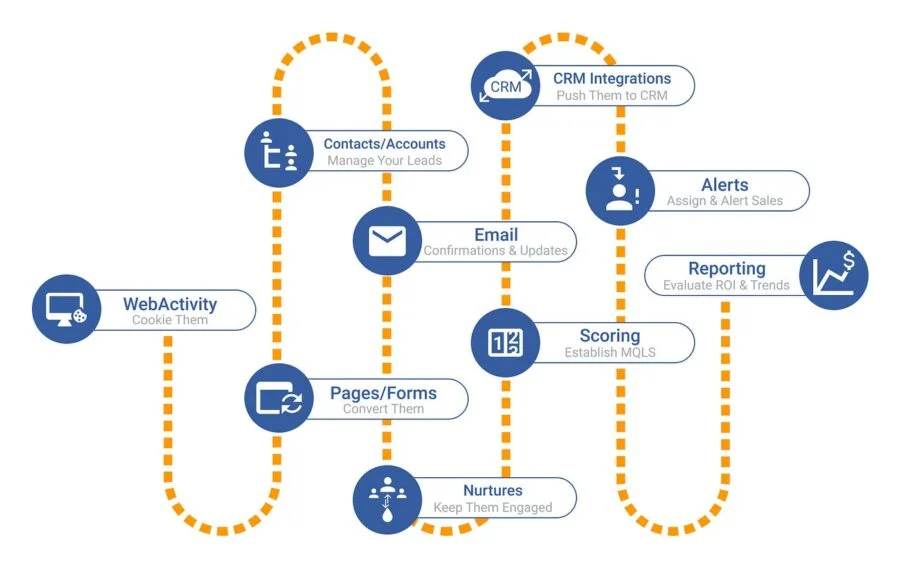
Companies or more precisely the marketing cloud experts collect customer data through various means. This includes website visits, social media, emails, app usage, and much more. This data is raw and not all of it is efficient to give you the insights you need. Thus, this data is integrated through a CRM after collection, which finally lets the company get a 360-degree view of every single customer.
From this point on, marketing automation software takes care of everything-
Also Read- Salesforce Marketing Cloud Integration Roadmap
Marketing automation is all about the transformation that we experience every time. It transforms how you engage with your audience, saving time, increasing efficiency, and boosting results. But to make the most of it, it's not just about using the right tools- it's about using them smartly.
Below are tried-and-tested marketing automation best practices that can help you scale your marketing efforts the right way.
One must be aware of who they are delivering their services to, before they automate anything. The best way to build meaningful automation flows is to curate detailed buyer personas on several factors. These factors include their age, profession, buying behaviour and other similar points. Another way to understand the audience better is through website analytics, CRM data and surveys.
One must begin their journey with simple workflows such as abandoned cart reminders, welcome emails and lead nurturing. Avoid seeking to automate everything altogether and test these simple workflows before building complicated automations. Automation isn't a one-size-fits-all—and improves over time.
The growing expectations of modern consumers have moved beyond just "Hi [First Name]". Personalized automation takes trust and engagement to a higher level. One must achieve it through utilizing behavioural data (downloads, time on site or pages visited) to curate content that aligns with the customers.
One must deliver action-driven and relevant content to their audience. Make sure to segment the email lists by purchase history, interests and engagement level to achieve that. It is best to avoid sending similar messages to everyone.
Automation does not necessarily equate to being robotic. One's messages and emails must sound conversational in the first place to reflect the brand's voice through a comprehensive and humane language.
One must perform a thorough testing on everything including timing, call-to-actions, subject lines and email formats. Marketing automation platforms make this easy and small tweaks can lead to big results.
Clean data will lead to better targeting which will result in effective results. One must ensure to maintain the data by fixing duplicates, getting rid of inactive contacts and updating information on a regular basis.
One must sketch their customer's journey from awareness to decision, before setting up automation. This will provide great assistance with creating logical workflows that gently guide leads through the funnel.
Don't "set and forget" your automation. Check metrics like open rates, click-through rates, and conversions. Use this data to tweak your messaging, timing, and strategy.
Users must be provided with an option to unsubscribe and respect their options. Avoid shady practices and ensure security to keep your automation compliant build trust.
Explore These Trending Articles:
What Is AMPscript In Salesforce Marketing Cloud in 2026
What is Salesforce Commerce Cloud? A Complete Guide
What is a Salesforce Developer? Everything You Need To Know
What Is Salesforce Architecture in 2026?
What is Salesforce? Everything You Need To Know in 2026
This article effectively outlines all the essential things one should know to leverage marketing automation capabilities. One can use it to deliver personalized customer journeys, ensuring the right message reaches the right person at the right time. This fosters trust and engagement that transforms casual visitors into warm leads. Adapt this technology today and achieve stronger customer relationships and sustainable business success.
In any CRM, marketing automation plays an important role as it automates various tasks and personalizes customer interactions based on their behavior and data. It also helps in customer engagement and triggers automated actions, like sending emails, nurturing leads or assigning tasks.
It streamlines digital marketing efforts by automating tasks, which enable personalized experiences and improve efficiency. This leads to better lead nurturing, increased conversions and improved customer retention.
These platforms are software or environments used for implementing marketing strategies. They provide different features for the same, like email marketing, lead generation, analytics, reporting and more.
Course Schedule
| Course Name | Batch Type | Details |
| Salesforce Marketing Cloud Training | Every Weekday | View Details |
| Salesforce Marketing Cloud Training | Every Weekend | View Details |