Explore the detailed comparison of Salesforce vs. ServiceNow to understand how these cloud platforms fit in different aspects of a business.
Salesforce and ServiceNow are both popular cloud platforms used by businesses everywhere. However, are you aware of what differentiates them from one another and how they suit different aspects of a business's work? Let's explore it all in this Salesforce vs ServiceNow blog.
Before we begin, here is a quick example to help you better understand their underlying disparity. Think of both as bikes, but one is a road bike perfect for city roads, while the other is a dirt bike better fit for rocky terrain. In spite of both of them falling under the same tag, their best selves shine in different scenarios.
Salesforce is a globally used customer relationship management (CRM) app. It manages all the key aspects of the relationship between an organization and its customers. This includes customer deals, support requests, contact details, purchase details, etc.
It basically makes the everyday customer-oriented activities easier, leading to better customer relationships and more satisfaction. Many enterprises are using it because of its multi-platform support. The Salesforce services market size is expected to grow at a CAGR of 15.6% between 2024 and 2034, reaching $73.29 billion USD by the end of this tenure.
This section explains the major benefits and drawbacks of Salesforce, giving you a balanced view of its suitability for customer relationship management needs.
| Advantages of Salesforce | Disadvantages of Salesforce |
| Highly customizable CRM platform suitable for businesses of all sizes | High licensing and implementation costs, especially for advanced editions |
| Strong ecosystem with AppExchange offering thousands of ready-made integrations | Steep learning curve for beginners and non-technical users |
| Powerful automation, reporting, and analytics capabilities | Customization often requires skilled developers or consultants |
| Excellent scalability and cloud reliability with high uptime | Performance can slow down with excessive custom objects and workflows |
| Supports sales, marketing, service, and analytics on a single platform | Ongoing maintenance and upgrades can increase operational costs |
Related Article- Salesforce Tutorial
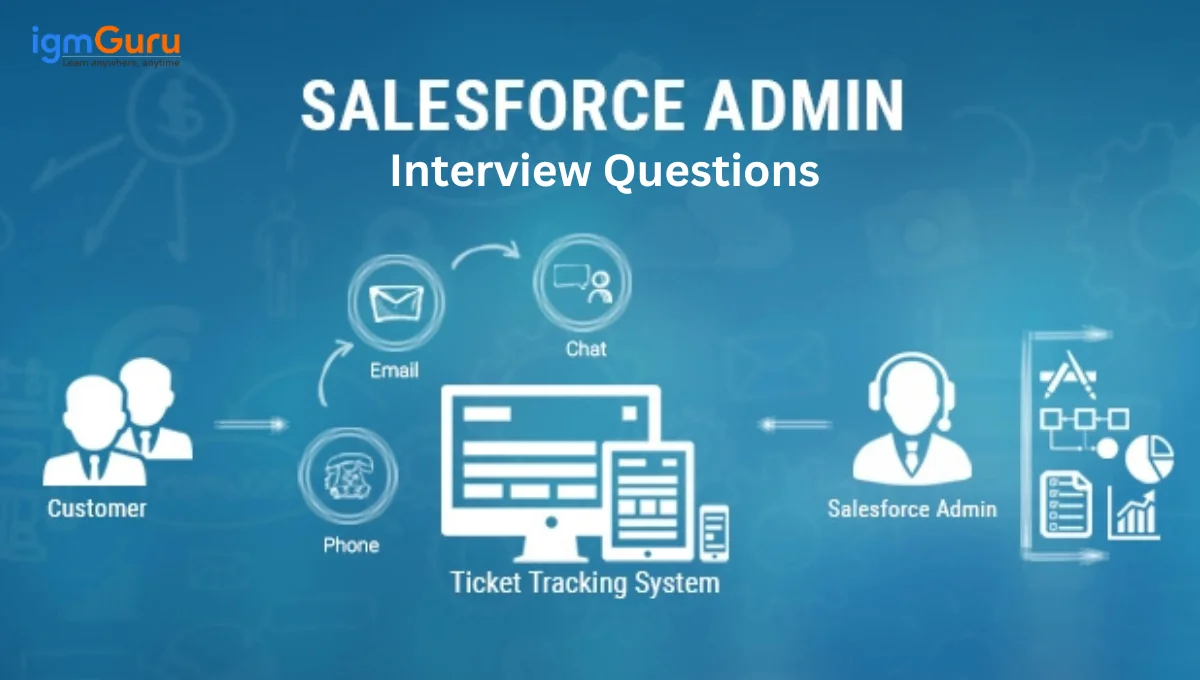
ServiceNow, on the other hand, is an IT service management (ITSM) tool. It offers an expansive suite of legacy systems and fragmented tools, which are used to automate the process of service management.
This one tool provides a great experience to customers, users, and employees through its plenty of services. Some of the services it offers are software development, customer service, HR, and IT. One record system is created to automate all enterprise IT operations within an organization.
The ServiceNow store apps market size is expected to grow at a CAGR of 32.96% between 2024 and 2032, reaching $65.78 billion USD by the end of this tenure.
Related Article- ServiceNow Tutorial For Beginners
This section highlights the key strengths and limitations of ServiceNow to help you understand where it excels and where it may not be the ideal fit.
| Advantages of ServiceNow | Disadvantages of ServiceNow |
| Powerful ITSM and workflow automation capabilities | High licensing and implementation costs |
| Centralized platform for IT, HR, and enterprise service management | Steep learning curve for non-IT users |
| Strong automation with low-code and no-code workflow tools | Customization often requires skilled ServiceNow developers |
| Robust CMDB and incident, problem, and change management | Complex integrations with third-party tools |
| High scalability and reliability for large enterprises | Overkill for small organizations with simple requirements |
CRM focuses on managing customer relationships, sales pipelines, and marketing interactions. It is used to boost revenue, loyalty, and personalization across customer-facing teams using data-driven insights and automation tools platforms globally today effectively.
ITSM centers on delivering reliable IT services by managing incidents, changes, assets, and workflows to ensure system stability, compliance, and operational efficiency for internal users and business continuity across organizations.
Here is the quick verdict based on what I experienced.
| Decision Factor | Salesforce | ServiceNow |
| Primary Focus | Sales, marketing, and customer relationship management | IT service management and enterprise workflow automation |
| Best For | Managing leads, opportunities, customer journeys, and CRM customization | Handling incidents, change management, IT operations, and internal services |
| Target Users | Sales teams, marketing teams, customer support, and business users | IT teams, service desk professionals, and operations teams |
| Core Strength | Customer-facing processes and revenue-driven workflows | Backend IT workflows and process automation |
| Typical Use Case | Improving customer engagement and sales productivity | Streamlining IT infrastructure and service delivery |
| Platform Identity | CRM-first cloud platform | ITSM-first enterprise workflow platform |
Also Read: Jira vs ServiceNow
It's time to get started towards an answer to Salesforce vs. ServiceNow. This detailed comparison will help you tap into their diverse purposes, respectively.
| BASIS | Salesforce | ServiceNow |
| Performance | Salesforce performs exceptionally well as a CRM solution. With an uptime of 99.9% and a page load time of 2.5 seconds, it is fast and efficient. | ServiceNow performs exceptionally well as an ITSM and automation solution. With an uptime of 99.99% and a page load time of 1.5 seconds, it has minimal downtimes. |
| Usability | Salesforce is mainly for CRM users. It is scalable, easy-to-use, customizable, and has an intuitive user interface. | ServiceNow is mainly for IT professionals and those who are familiar with ITSM software. Its key purpose is to deliver tools for automation processes and technical operations. |
| Customer Support | Salesforce provides 'Service Cloud' software to resolve customer inquiries. Live chat, phone support, social media, and email support are available 24/7. Large-scale organizations benefit more. | ServiceNow's customer service management provides 24/7 customer support via email, FAQ, live chat, and phone. SMEs benefit more with ServiceNow's internal support. |
| Pricing | Its pricing starts at only $25 per month, but the cost can go up to $1000/month. It all depends on which version and how upgraded services you seek. | ITSM service cost in ServiceNow is around $70/user. There are different pricing plans that can be obtained by contacting their representative. |
| Implementation | It is used for many businesses, but mainly for CRM. It's a little on the expensive side since it's implemented both in the cloud and on-premises. | It is primarily used for ITSM, but can also be used for additional tasks like HR and project management. It is only available in the cloud. |
| Integration | Salesforce is full of pre-existing integrations and built-in features. Salesforce Connector and Salesforce AppExchange make integration easier. | Integration in ServiceNow is a complex process because third-party tools are used. |
| Security | Salesforce encrypts complete data, offers real-time alerts to track changes and activities & provides two-factor authentication. Data is stored in 3 structures in Salesforce security modules. These are objects, records & fields. | ServiceNow has a multi-tenant architecture. It provides security by role-oriented access control and regular scans to detect vulnerabilities. |
| Future Scope | Salesforce will continue to be a leading name in the field of CRM. Its market size is expected to reach $73.29 billion USD by 2034. | ServiceNow is becoming more employable with ML, AI & customizable workflows. Its market size is expected to reach $65.78 USD by 2032. |
You May Also Read- Servicenow Tutorial- Learn Servicenow From Scratch
Both Salesforce and ServiceNow are great options with their own set of uniqueness and strengths. In spite of that, their usability is not interchangeable. Let's find out more about when to use which one.
| Use Cases | Salesforce | ServiceNow |
| Customer Relationship Management | YES | NO |
| IT Operations | NO | YES |
| Sales & Marketing | YES | NO |
| Field Service Management | YES | YES |
| Workflow Automation | YES | YES |
| Customer Services | YES | YES |
| Enterprise-level Management | YES | YES |
| Custom Application Development | YES | NO |
The competition between Salesforce Vs ServiceNow is not ending here. They both are introducing new features each year to remain the favorite tools in the industry. Look into the table given to explore the latest features and updates (according to 2025) in both tools.
| Features | Salesforce | ServiceNow |
| AI Capabilities | Agentforce 2.0 and 3 (Spring/Summer '25): Autonomous AI agents for sales, service, and marketing with Atlas Reasoning Engine for enhanced decision-making and human-AI collaboration. | ServiceNow AI Platform (Knowledge 2025): Unified AI system with Agent Fabric for custom AI agents and AI Control Tower for governance and monitoring of AI deployments. |
| Data Management | Data Cloud (Summer '25): Real-time customer data unification with AI-driven insights for personalized engagement and analytics. | Workflow Data Fabric (2025): Seamless data orchestration across IT, HR, and customer service for end-to-end automation. |
| Developer Tools | Salesforce Go mobile app and Flow Builder (Summer '25): Streamlined app development and legacy tool deprecation (e.g., Workflow Rules). Dashboard Widget Refresh for real-time updates. | Studio Q2 2025 and Yokohama Release: Full-screen Create Experience and Now Assist Skill Kit for AI-assisted coding and workflow customization. |
| CRM/ITSM Overlaps | ITSM integrations via MuleSoft for incident management and service requests, expanding beyond CRM. | CRM expansions with AI-driven customer service tools, integrating sales and support for unified customer journey automation. |
| HR and Employee Services | Enhanced HR Service Cloud with AI for employee engagement and analytics (Summer '25). | HR Service Delivery (July 2025): AI-powered knowledge bases, virtual agents, and lifecycle automation for onboarding/offboarding. |
| Release Cadence | Quarterly updates (e.g., Spring '25, Summer '25) with hundreds of new features. | Event-driven (Knowledge 2025, May 6-8) and quarterly updates (e.g., Yokohama, Q2 Studio). |
After reading this blog on Salesforce vs. ServiceNow, you must have realized that there is simply no comparison between these two. Salesforce should be your go-to for managing workflows across various teams. On the contrary, ServiceNow should be picked for streamlining workflows in relation to IT infrastructure management and back-end IT operations.
Also Read: Salesforce Interview Questions
There is no question of ServiceNow overtaking Salesforce as businesses pick either, depending on their requirements. The former is used for IT service management, while the latter is a great CRM platform.
Integrating Salesforce and ServiceNow provides sales and support teams with complete visibility into each other's priorities and work. This increases coordination and increases the ROI for the company.
The demand for the ServiceNow tool among companies is growing, and so is the demand for associated experts. The market size is expected to reach a staggering number in the coming years, and that means a great future.