Blockchain is one of the fastest-growing technologies today. Its demand has surged among various organizations, and they are now seeking talented blockchain developers for this platform. This is why we have curated this blog for individuals eager to benefit from this opportunity. It includes the top 30 blockchain interview questions and answers that can assist them.
This article is focused on giving valuable insights into the questions asked by interviewers. Experts can successfully clear an interview by understanding these well-thought-out answers. It covers a myriad of topics, including its components, features, algorithms, security, and many more. One can easily show their skills to the panel with this information.
Explore igmGuru's Blockchain developer course program to learn with the industry experts.
This technology has created a number of job opportunities for aspirants in this field. Each of these job roles requires a certain level of expertise, knowledge, and experience. The question is how one can understand which concepts should be prepared for a particular role. It is not a big concern anymore, as we have divided these blockchain interview questions and answers according to different job requirements.
This section consists of the top blockchain interview questions for beginners. It revolves around the basic concepts and terminology of this technology. This knowledge can assist experts in kick-starting their careers.
Blockchain is an advanced technology that builds databases and distributes them to different computer nodes. These databases consist of the information or value of particular assets, both physical and online. This technology is widely popular for its use in cryptocurrency but can perform various other operations.
The best part of using this technology is that it gives a secure environment to the users. The information and assets stored in these blocks will be secured and cannot be accessed by anyone else. This technology is mainly used by MNCs for their business transactions.
Blocks are the data banks of blockchain technology. These store the data of the particular transactions, which can only be accessed by authorized individuals. These work in a ladder pattern. The block will be added to the chain once the transaction has been completed. Then the second one will work on the new transaction, and so on.
The wallet is a segment of software that tracks, records, and stores the private and public keys. This data does not include the cryptocurrency. Theoretically, all the information of these keys are stored on the blockchain where the wallet is hosted.
The public keys are just like an email address that can be shared. It is generated with the creation of the wallet. It is shared with others to perform transactions. The private keys remain secure and are not shared with others. It is just like a password that is only authorized to the users.
A smart contract is an online agreement between two individuals. This agreement includes all the information, like clauses and rules of the transaction. It is publicly available, but cannot be modified once written. The whole transaction will be performed under this agreement only.
Let's understand its working with an example. Barry wants to sell his house to Kara. They will need third-party involvement, such as a real estate agent, attorney, bank, etc. It will cost them additional expenses. They can perform this process via a smart contract without requiring any third party. This contract will state that once Kara pays all the money to Barry, the ownership will transfer to her.
A blockchain explorer is an online solution that shows all the information regarding the transaction, block address, etc. This data also includes network transaction growth indexes and hash rate. It reports the failed transaction and the state of mining difficulty. All this information may be used for predicting network congestion and rising fees.
There are four kinds of blockchains available, including Consortium, Public, Private, and Hybrid.
This technology is used for various reasons. The following are some of the main advantages of this tech -
There are various kinds of platforms available that can support these apps. Listed below are some the instances of these platforms -
Cryptocurrency is a digital payment system that does not involve any physical currency. The payments done with this system do not require any confirmation from the banks. It will be an end-to-end transaction that involves the identity of the receiver and the sender.
Whole data like track records, smart contracts, and other information will be securely stored on a public ledger. This information can only be read by authorized persons. The money that is in transit will be stored in a digital wallet only in code format.
The table given below includes some of the main differences between these two systems -
| S.N. | Criteria | RDMS | Blockchain |
| 1. | Data unit | Table | Block |
| 2. | Data modification | Possible | Not possible |
| 3. | Centralized control | Exists | Does not exist |
| 4. | Chance of failure | Yes | No |
Also Explore: Blockchain Tutorial
Going further in your career needs more in-depth knowledge and expertise. This means that going for the intermediate-level job roles will require more in-depth knowledge. We will discuss the top blockchain interview questions for the intermediate level that can be asked by the panel. It will include an understanding of some advanced concepts.
Encryption is a technique to encode the information before sending it. This information can only be decoded by the sender and receiver. It is one of the secure ways of data sharing. These encrypted blocks are more stable and cannot be modified ever. It is used in this DLT technology to achieve secure and stable blocks.
Removing a block depends on the need and situation of the system. It is not possible to remove it manually. No one can destroy it as the blockchain will automatically restore it. There is only one way to remove it called pruning. This method removes the block by creating more storage. However, blockchain will automatically restore if required.
Secret sharing is used to secure data sharing in a transaction. It is a secure method that separates the personal information into small packages while sharing it. This blockchain can only be accessed by the individuals decided by the sender. DLT technology gets various benefits from this method.
Block identifiers are unique elements that are assigned to blocks. These are made of the hash value that gives them uniqueness. This means no identifiers can be the same. A block is identified by the header hash or height.
It is a blockchain computing platform where developers can deploy their decentralized applications. These applications are free to the centralized authorities. Only participants or developers can make decisions for these types of applications.
It is a malicious activity in which an individual tries to own more than 50% of the blockchain. They have the advantage of terminating, reverting, or stopping confirmation of a transaction. They will have major control over the mining power of the network, which leads to double-spending problems.
There are multiple consensus algorithms that exist during the transactions. Proof-of-work in an instance of Bitcoin transactions. Listed below are some of the common instances of these algorithms -
DApps are specially developed to run on the decentralized network, whereas Normal applications are not supported in these environments. Decentralized applications are particularly designed to get benefits from blockchain technology. These are futuristic apps. The table mentioned below gives some additional differences between these.
| S.N. | Decentralized Apps | Normal Apps |
| 1. | These applications are deployed using smart contracts. | These applications are hosted and deployed using a central network. |
| 2. | Its backend program runs on a decentralized server. | Its backend program runs on a central server. |
| 3. | This includes smart contract, front-end and blockchain. | This includes database, front-end and API. |
Given below are the steps to consider for implementing a project using this technology -
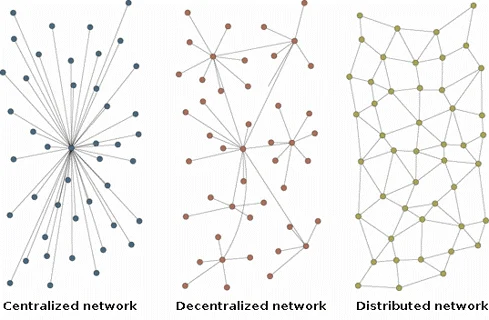
A ledger is a file that contains the information of all the deals happening on the blockchain. It is one-time saved data that cannot be removed or altered by any users. There are three different types of ledgers used in this tech, including -
Also Explore: How to get Blockchain Jobs
Let's come to expert-level job roles. It is obvious that organizations want the best ones to be in the superior positions. This means these types of interviews are hard to crack. They will test the skills of the candidates on an advanced level. We have included the top blockchain interview questions for the expert level that will assist you in this process.
Double-spending is a malicious activity in cryptocurrency. It occurs when a particular value of cryptocurrency is manipulated to be used twice. It is not just related to cryptocurrencies, as there are various other blockchain-based transactions that might face this issue.
This activity can be mitigated by timestamping and chaining the transaction together with cryptographic techniques. Using these techniques requires a large network to monitor transactions to detect the ill intentions of users. Many digital currencies like Bitcoin use this technique.
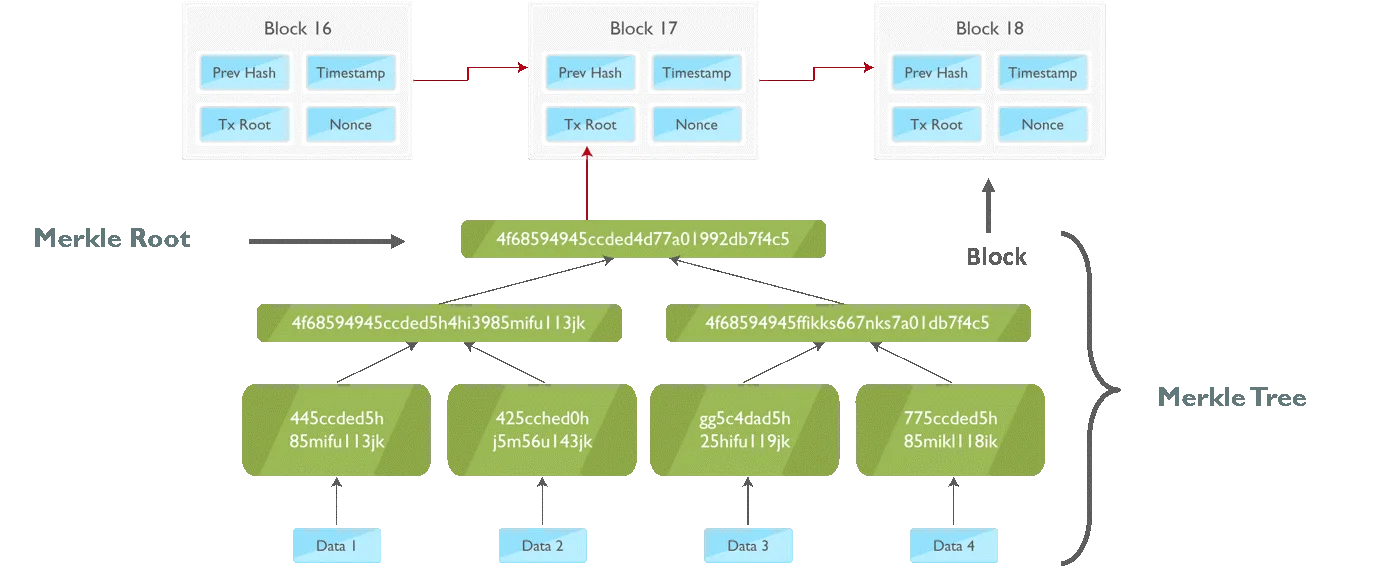
Markle trees are a kind of data structure that represents the contents contained in a file using hashes. These hashes are built from the other hashes. This data structure is an easy way to compare information, as it only takes milliseconds. It gives verification that the data is identical.
These trees are also a part of mechanisms that link the blocks with blockchains. In case of data modification, the resultant hash will be different. It will block and reject the proposal by the consensus mechanism.
DAO is both an autonomous and decentralized organization that only follows the rules of the computerized and stakeholders. There is no influence of the central government on these types of organizations. It is like a smart contract that is available online and cannot be modified in any condition. It does need a third person to complete some of the tasks.
Forking is a method to manipulate the contract regarding a cryptocurrency transaction. It is required when one end is not satisfied with the transaction rules and wants to alter them. It leads to the separation of the blockchain into two branches. There are three types of forks available, including -
It is a mathematical function that can be performed easily in one direction. One might require additional information, called a trapdoor, in order to perform this function in another direction. These are basically a part of cryptography that is meant to work in one direction only. Here is an instance of this using this function -
A product is a mathematical function that can multiply two numbers to find their product. It is simple in this direction. If we have the product and want to find the numbers. It is not possible without knowing those numbers. The number we have to know is the Trapdoor, and the multiplication is the Trapdoor function.
Tokens are the digital elements that implement the modifications between the stats. There are chances that stats will be changed during the transactions due to the coin transfer. Technically, this technology does not exactly need a coin for this purpose. It just needs an element that can show that the stat has been changed.
Off-chain transactions that include cryptocurrency. These types of deals are performed without requiring a third-party involvement. This is why off-chains are now most appropriate and favorite for business these days. Listed below are features of this transaction -
It can be achieved with a simple program. Given below is an instance of the Python code that is written to fulfill these conditions.
import hashlib import datetime class Block: def __init__(self, data, previous_hash): self.timestamp = datetime.datetime.now() self.data = data self.previous_hash = previous_hash self.hash = self.calculate_hash() def calculate_hash(self): sha = hashlib.sha256() sha.update((str(self.timestamp) + str(self.data) + str(self.previous_hash)).encode()) return sha.hexdigest() class Blockchain: def __init__(self): self.chain = [self.create_genesis_block()] def create_genesis_block(self): return Block("Genesis Block", "0") def add_block(self, data): previous_block = self.chain[-1] new_block = Block(data, previous_block.hash) self.chain.append(new_block) def is_chain_valid(self): for i in range(1, len(self.chain)): current_block = self.chain[i] previous_block = self.chain[i - 1] if current_block.hash != current_block.calculate_hash(): return False if current_block.previous_hash != previous_block.hash: return False return True def get_last_block(self): return self.chain[-1] |
pragma solidity ^0.8.0; contract SimpleStorage { uint256 private value; function setValue(uint256 _newValue) public { value = _newValue; } function getValue() public view returns (uint256) { return value; } } |
// SPDX-License-Identifier: MIT pragma solidity ^0.8.0; contract SimpleToken { mapping (address => uint256) private _balances; function transfer(address recipient, uint256 amount) public { require(_balances[msg.sender] >= amount, "Insufficient balance.");
_balances[msg.sender] -= amount; _balances[recipient] += amount; } function balanceOf(address account) public view returns (uint256) { return _balances[account]; } } |
Once you are a blockchain expert with rich experience, you will need significant proficiency in advanced concepts. Here are some of the most asked advanced blockchain interview questions with answers. It will help you to know which types of questions you should prepare for.
Zero-knowledge proofs are cryptographic methods that allow one party to prove the validity of a statement to another. The best part is that no underlying data will be revealed in this process. ZKPs in Blockchain enable private transactions by verifying details like account balances or identities without exposing them on-chain. The zk-SNARKs in protocols like Zcash or Ethereum's rollups are such examples.
This addresses privacy concerns in public ledgers, reduces data exposure risks, and supports scalable applications like private DeFi or voting systems. They are increasingly important with rising regulatory scrutiny on data protection.
Blockchain interoperability is the ability that allows different blockchain networks to communicate, share data, and execute transactions without any intermediaries. It does include some challenges, like differing consensus mechanisms and data formats. The best solutions to these challenges are:
This is also a hot topic in 2025 due to the growth of multi-chain ecosystems, which enable efficient DeFi composability and reduce silos.
Oracles are third-party services that feed external, off-chain data (e.g., real-world prices, weather, or API results) into blockchain smart contracts. This data cannot be accessed outside information natively. Chainlink's decentralized oracle networks or Band Protocol is among the most used ones.
They are important for DeFi (e.g., price feeds for lending), insurance (e.g., triggering payouts based on events) and prediction markets. However, they introduce centralization risks, addressed through multi-oracle aggregation and proof-of-stake incentives. Web3's expansion is the reason why oracles are key for real-world blockchain integration.
Layer 2 solutions are protocols built on top of base blockchains to improve transaction speed and cost without altering the underlying network. Some of its common types are:
They batch transactions off-chain and settle on Layer 1, which reduces congestion and fees while maintaining security. They also solve the "blockchain trilemma" by boosting throughput to thousands of TPS, enabling mass adoption in gaming and DeFi.
Flash loans are uncollateralized loans in decentralized finance (DeFi) protocols like Aave or Uniswap. Here, borrowers can access large sums instantly, execute trades, and repay within the same transaction block. (Note - If not repaid, the loan reverts)
They enable arbitrage, liquidations or leveraged trading without upfront capital. They also have their own risks of using exploits (e.g., oracle manipulation leading to multimillion-dollar drains) and market volatility. The Mitigation are robust smart contract audits and rate limits.
Blockchain developers are in great demand these days. You can prepare for the most asked Blockchain Developer interview questions to get this job role. Here are some of them:
Proof of Work and Proof of Stake are fundamental blockchain consensus algorithms. Their role is to ensure network security and transaction validation. PoW is used in Bitcoin and requires miners to solve computationally intensive cryptographic puzzles to add blocks. They consume high energy and are vulnerable to 51% attacks but provide strong immutability.
PoS is used in Ethereum 2.0 to select validators based on staked cryptocurrency. They promote energy efficiency, faster transaction throughput and reduced centralization risks.
The Ethereum Virtual Machine (EVM) is a Turing-complete, stack-based runtime environment for executing smart contracts on the Ethereum blockchain. It is used to process bytecodes compiled from Solidity or Vyper. It manages state transitions, gas fees for computational steps and ensures deterministic execution across nodes.
A reentrancy attack exploits recursive calls in Solidity smart contracts. This allows malicious contracts to drain funds by re-entering vulnerable functions before state updates, as seen in the DAO hack. It can be prevented using the Checks-Effects-Interactions (CEI) pattern, mutex locks or OpenZeppelin’s ReentrancyGuard modifier. Here are some examples:
Vulnerable:
contract Vulnerable {
    mapping(address => uint) public balances;
    function withdraw() public {
        uint bal = balances[msg.sender];
        (bool sent,) = msg.sender.call{value: bal}("");
        require(sent, "Failed to send Ether");
        balances[msg.sender] = 0;
    }
}
|
Secure with CEI:
contract Secure {
    mapping(address => uint) public balances;
    function withdraw() public {
        uint bal = balances[msg.sender];
        balances[msg.sender] = 0; // Effects first
        (bool sent,) = msg.sender.call{value: bal}(""); // Interactions last
        require(sent, "Failed to send Ether");
    }
}
|
Merkle Trees are binary hash trees enabling efficient data verification in blockchains like Bitcoin and Ethereum. Here, leaf nodes hold transaction data hashed upwards to a Merkle root stored in block headers. They allow light clients (SPV) to verify transaction inclusion without downloading the full chain via Merkle proofs.
ERC-20 is a standard interface for fungible tokens on Ethereum that defines functions like totalSupply, balanceOf, transfer, approve, and events. Their implementation requires Solidity pragmas, interfaces and safe math to prevent overflows. Here is an example:
pragma solidity ^0.8.0;
import "@openzeppelin/contracts/token/ERC20/ERC20.sol";
contract MyToken is ERC20 {
    constructor(uint256 initialSupply) ERC20("MyToken", "MTK") {
        _mint(msg.sender, initialSupply); // Mint initial supply to deployer
    }
    // Key components: Inherits ERC20 for standard functions, uses _mint for supply control
}
|
Blockchain can help the fintech company by creating a transparent and immutable transaction record. Every payment made on the network is verified through consensus mechanisms and stored securely in blocks. This reduces the chances of unauthorized modifications and fraudulent transactions. Smart contracts can also automate verification processes, ensuring secure and faster international transfers.
Blockchain can track every stage of a product’s journey, from manufacturing to delivery. Each transaction or movement is recorded on the distributed ledger and cannot be changed later. Customers can verify product authenticity, shipment status, and source details in real time. This improves trust and reduces counterfeit product risks.
Blockchain provides encrypted and decentralized storage for healthcare records. Authorized hospitals and doctors can access patient information securely using cryptographic keys. Since records cannot be altered without network validation, data integrity is maintained. This also reduces the risk of data breaches and unauthorized access.
The startup can implement Layer 2 scaling solutions such as Optimistic Rollups or zk-Rollups to reduce congestion on the main blockchain network. These solutions process transactions off-chain and later settle them on the main chain. This improves transaction speed, lowers gas fees, and enhances scalability without compromising security.
This situation represents a reentrancy attack. It occurs when attackers repeatedly call a vulnerable smart contract function before the balance is updated. The issue can be prevented by following the Checks-Effects-Interactions (CEI) pattern, using mutex locks, or implementing OpenZeppelin’s ReentrancyGuard for secure smart contract execution.
I would consider using account abstraction to provide a more flexible wallet experience. I would use a standard like ERC-4337 so the application can use smart contract wallets and UserOperation objects instead of relying only on traditional externally owned accounts.
For example, a user could approve a token and execute a swap as part of a single user experience instead of manually submitting multiple transactions. A paymaster could also sponsor the user's gas fees or allow the application to cover transaction costs.
I would carefully design the validation and authorization rules of the smart contract wallet and test the complete flow for replay attacks, unauthorized operations, gas-related failures, and malicious UserOperations. This approach can significantly improve Web3 UX while retaining programmable security controls.
It is very evident that blockchain technology and cryptocurrency are advancing day by day. This is why various companies are now in search of experts in this field to implement this tech. This is the right time for you to start a career in this field. We hope that these blockchain interview questions and answers have given enough knowledge to impress the panel. All the best!
Also Explore: Top 20+ New Technology Trends
Understanding decentralization, immutability, and consensus mechanisms (e.g., Proof of Work, Proof of Stake) is key. Be ready to explain how these ensure trust and security in a distributed system without a central authority.
Describe blockchain as a secure, shared digital ledger, like a tamper-proof Google Doc, where transactions are recorded transparently by a network of computers, eliminating the need for a middleman.
Yes, languages like Solidity (for Ethereum), Rust (for Solana), or Go (for Hyperledger) are often required. Python or JavaScript can also be useful for scripting or blockchain API integration.
Very important, especially for developers. Be prepared to discuss how smart contracts automate agreements, their use cases, and how to write or audit them for security.
The 6 main characteristics of blockchain are decentralization, transparency, immutability, security, consensus-driven and traceability of all transactions.
The biggest mistakes include memorizing definitions without understanding concepts, ignoring consensus mechanisms, confusing blockchain with cryptocurrency, overlooking smart contract security, and lacking practical experience. You should also be prepared to explain real-world use cases, discuss scalability solutions like Layer 2, and solve scenario-based problems instead of relying only on theoretical knowledge.
Course Schedule
| Course Name | Batch Type | Details |
| Blockchain Developer Training | Every Weekday | View Details |
| Blockchain Developer Training | Every Weekend | View Details |