Application programming interfaces (APIs) power almost every modern app. They connect mobile apps, websites, cloud services, and IoT devices. They also move a huge amount of sensitive data every second. That makes them a favorite target for attackers.
API penetration testing is a security test where experts attack your API the way a real hacker would. The goal is simple. They find weak spots first, so you can fix them before anyone abuses them. This process is also called API pentesting or an API pen test.
In this guide, you will learn what API penetration testing is, why it matters, which vulnerabilities it finds, how the process works, and which tools testers use.
An API is a set of rules that lets two software systems talk to each other. It defines how one app can ask for data and how another app should respond.
The two most common API styles are:
Developers use APIs to reuse features and data from other apps. This saves time because they do not have to build everything from scratch. However, every API also adds a new door into your system. If you leave that door unlocked, attackers will walk in.
APIs often handle logins, payments, personal data, and business logic. A single weak endpoint can expose all of it.
Poor API security can lead to:
API security testing helps you avoid these problems. It also helps you meet standards such as PCI DSS, HIPAA, SOC 2, ISO 27001, and GDPR. Auditors often ask for proof of regular testing.
| NOTE |
| Did you know that APIs can expose sensitive information if they are not properly secured? Regular API security testing, including penetration testing, helps organizations identify vulnerabilities and reduce the risk of data breaches. |
Learn API testing concepts, test automation, request validation, and API performance testing through practical training.
Read Also: The Role of Artificial Intelligence (AI) in Cybersecurity
The main goal is to find security flaws before attackers find them. A tester reviews your API endpoints, authentication, authorization, input handling, and business logic. Then the tester tries to exploit each weakness in a safe and controlled way.
A good API pen test helps you:
Many people think these two tests are the same. They are not. A web app test focuses on the user interface, such as forms, pages, and sessions. An API test focuses on the data layer behind the interface.
| Aspect | API Penetration Testing | Web App Penetration Testing |
| Main focus | Endpoints, requests, and responses | Pages, forms, and user sessions |
| Common flaws | BOLA, broken authentication, excessive data exposure | XSS, CSRF, clickjacking |
| Main tools | Postman, Burp Suite, Swagger | Burp Suite, OWASP ZAP, browsers |
| Documentation | Needs API specs such as OpenAPI | Often has no formal documentation |
If you run both a web app and an API, you should test both.
You cannot fix what you do not know. So here are the most common API vulnerabilities that a tester will look for. Many of them appear in the OWASP API Security Top 10, which we cover later.
Weak login systems let attackers pretend to be real users. Examples include weak passwords, leaked tokens, and missing multi-factor authentication. Once inside, attackers can reach accounts, data, and other systems.
BOLA is the top API risk today. It happens when an API does not check if a user owns the object they request. IDOR is a closely related flaw. An attacker changes an ID in the request, such as /orders/1001 to /orders/1002, and sees another user's data.
Some APIs do not check user roles properly. A normal user may call an admin function, such as deleting accounts, just by guessing the endpoint.
Attackers send malicious code through API requests. SQL injection and command injection are the most common types. These attacks can lead to data theft, system takeover, and unauthorized actions.
Some APIs return more data than the client needs. For example, an API may send a full user record when the app only needs a name. Attackers can read the extra fields directly from the response. A lack of encryption in transit also exposes data.
Without rate limits, an attacker can send thousands of requests in a short time. This enables brute-force attacks, credential stuffing, and denial of service (DoS) attacks.
Poor settings leave APIs open to attack. Examples include default passwords, verbose error messages, open cloud storage, and weak CORS rules. Misconfiguration can also support attacks such as XSS and CSRF on connected web apps.
In an SSRF attack, the attacker tricks the server into sending requests to places it should not reach. This can expose internal services, cloud metadata, and sensitive data.
Old API versions, forgotten test endpoints, and undocumented "shadow APIs" often stay online without protection. Attackers love these because teams rarely monitor them.
Also Explore: What Is Tokenization?
The Open Worldwide Application Security Project (OWASP) identifies the most common and critical security risks in APIs. Security testers use this list as a guide when checking APIs for vulnerabilities. The 2023 list covers the following risks:
An effective API penetration testing checklist should include all these risks to help identify security weaknesses and protect APIs from potential attacks.
API penetration testing follows the same logic as general pentesting. Many teams base their process on the Penetration Testing Execution Standard (PTES). Here are the main steps.
First, the tester and your team agree on the rules. You decide which APIs to test, which environments to use, and what the testing window will be. You also sign legal permission. This step keeps the test safe and legal.
The tester gathers information about your API. This includes endpoints, data formats, authentication methods, and public documentation. Testers often read Swagger or OpenAPI files to understand how the API works.
Next, the tester maps every endpoint, parameter, and API version. This step also finds hidden and undocumented endpoints.
Now the tester looks for weaknesses. They check authentication, authorization, input validation, rate limits, and error handling. They use both automated scanners and manual testing in this phase.
The tester then runs controlled attacks to confirm each flaw. This shows how deep an attacker could go and what data they could reach.
Finally, the tester writes a detailed report. It lists each finding, its severity, proof of the exploit, and clear fix steps. Good testers also explain the findings to your developers.
After your team fixes the issues, the tester checks again. This confirms that each fix works and that no new problems appeared.
| NOTE |
| Did you know that cybercriminals and API penetration testers can use similar techniques to identify and exploit vulnerabilities? The key difference is that cybercriminals act without authorization for malicious purposes, while penetration testers work with permission to identify security weaknesses and help organizations strengthen their defenses. |
Also Explore: What Is Password Salting and How Does It Work?
Testers use three main approaches. Each one gives the tester a different level of knowledge.
Black-box testing involves a tester with no information regarding the API implementation. The methods of discovery of the API endpoints and the API responses are discoverable, and the testers check for things such as authentication failures and injection attacks.
Example: A tester receives a public API of an online store and checks whether the exposed endpoints provide access to customer exfiltration without any authentication.
In the case of white-box testing, the tester is provided with complete information about the API that may include source codes, API specifications, and architectural graphs. This information allows the tester to understand the weaknesses that may be present in the system.
Example: A tester finds that one endpoint has no logic for verifying whether the user requesting the order indeed owns the order.
In the gray-box case, the tester is provided with some limited information, which may include testing accounts, API documentation, or authorization variables for users. In this technique of assessment, it is possible to determine the performance of the API while working with trusted users.
Example: A tester uses a standard account and checks
The proper method depends on the security goals, resources, and the extent of your testing. Black-box testing will provide you with an evaluation of the external attack surface, while the white-box method will allow for a complete analysis of the code and configuration process. The gray-box testing strategy will serve the purpose of evaluating the authenticated access and authorization. Companies may take advantage of these methods depending on their needs.
Learn vulnerability assessment, ethical hacking techniques, and security testing through practical penetration testing training.
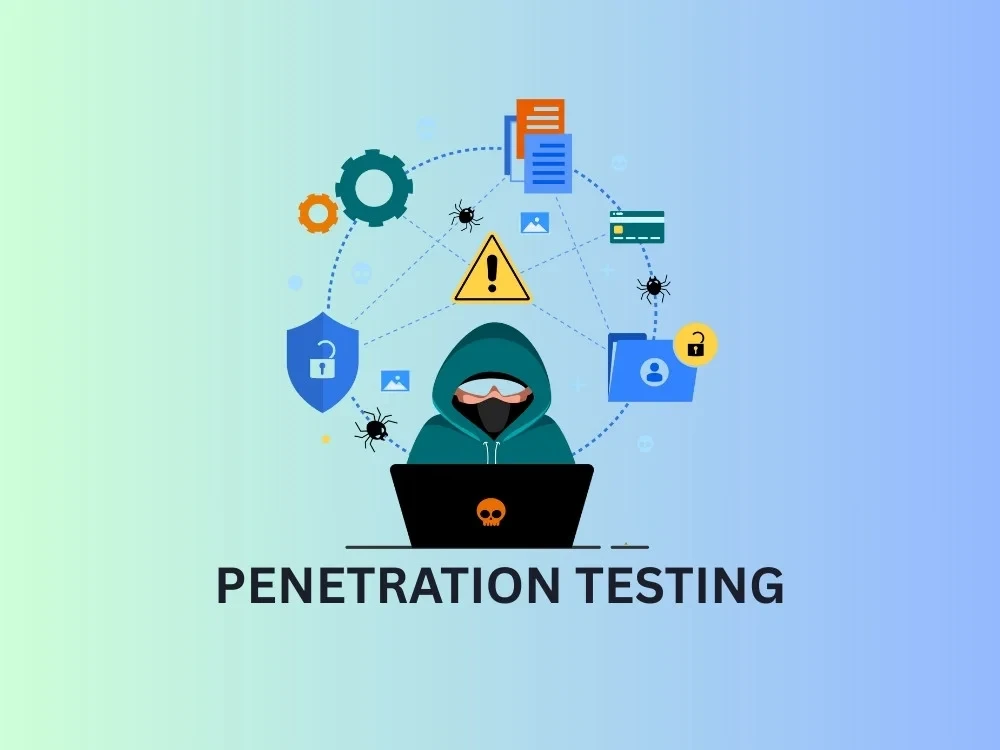
Testers mix automated tools with manual work. Tools find common issues fast. Manual testing finds complex logic flaws that scanners miss.
Read Also: What Is Security Operations Center (SOC) Analyst?
Regular testing gives you a clear and lasting benefits.
You should test your APIs:
Many teams also add security checks into their CI/CD pipeline. This catches simple issues early, while manual pen tests handle deeper risks.
API testing is not always easy. You may face these challenges:
Testing is only one part of the plan. These habits will make your APIs safer every day:
Read Also: Cyber Security Tutorial
When you hire penetration testing services, look for these points:
API penetration testing helps you find and fix security flaws before attackers do. It protects your data, your customers and your reputation. It also helps you meet compliance rules and avoid costly breaches.
Start by listing all your APIs. Then test them against the OWASP API Security Top 10. Repeat the test at least once a year and after every major change. Attackers keep improving, so your security must keep improving too.
Test at least once a year. Also test after major changes, new releases, or security incidents.
Penetration testing services are third-party providers that find and help fix vulnerabilities in your systems, including APIs.
The time depends on the number of endpoints and the complexity of your API. A small API may take a few days. A large one can take several weeks.