Identity Access Management (IAM) has become one of the crucial aspects for organizations to manage who has access to what. It is a framework that ensures only the right individual can access a particular database, application or system. But how do enterprises achieve IAM? There are a variety of IAM platforms out there and SailPoint is one of the most popular amongst them.
This SailPoint tutorial explains everything one should know about it, including what it is, its features, prerequisites to learn, components, core concepts, certifications available, etc. It also includes how to get started with SailPoint. Let's start with a basic introduction to SailPoint.
SailPoint is an AI-powered identity and access management platform. It comes with an extensive suite of solutions to manage digital identities. These solutions provide seamless control over access to applications and data, ensuring security and compliance.
It also provides artificial intelligence (AI) and machine learning (ML) capabilities that help enterprises to mitigate data breaches and match modern needs. But do you know how? It is because of the comprehensive features and capabilities it provides.

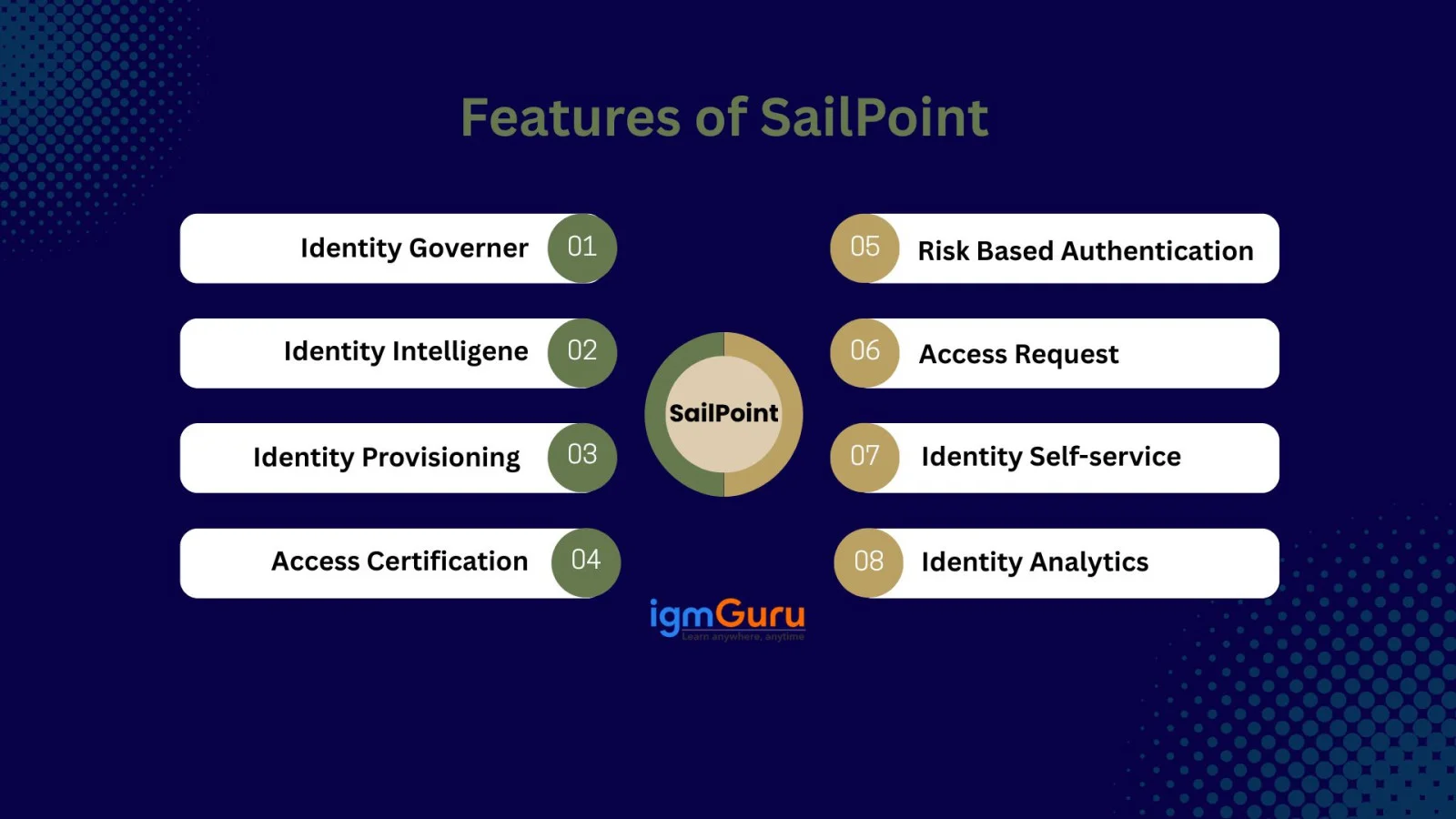
SailPoint provides a range of different features and capabilities to support the above-mentioned use cases. These make it a valuable identity and access platform for various industries.
This feature allows enterprises to keep a secure, reliable and comprehensive view of identities available in their system. It also enables the capability of automating and managing access to the same systems.
With this feature, enterprises can examine identification data and detect any unusual activity that might result in a data breach or security threat.
This capability allows them to create and manage user accounts automatically. It also helps to access different privileges across multiple programs and systems.
This function allows businesses to systematically test user access privileges, detect security issues and even decide the essential countermeasures.
This feature offers an additional layer of authentication, which mandates users to go through further verification to access the system.
This functionality helps users to request access to any specific applications or systems.
This feature helps users to manage and customize their identification data by their own. They can change passwords, contact details and addresses.
This capability enables enterprises to test identity data to detect trends and potentially security threats.
Now that you know what is SailPoint and how it can benefit your work, let's get started to master it. The first step of this journey is to understand the prerequisites. While there are no necessary prerequisites to learn SailPoint, it will be beneficial to consider the following points:
Learning SailPoint can be a valuable investment for anyone want to build a career in identity and access management (IAM). Over the years, I have seen organizations struggle with managing user identities, access permissions, compliance requirements, and security risks across multiple applications. SailPoint helps solve these challenges by automating identity governance and access control processes. As a result, professionals with SailPoint skills are increasingly in demand across industries such as banking, healthcare, government, retail, and technology. SailPoint is particularly suitable for:
Setting up SailPoint is the first to master this AI-powered identity and access management platform. It involves three key steps, including understanding the system requirements, downloading the installer package and setting up the environment.
Here is a table summarizing the system requirements for SailPoint:
| Category | SailPoint IdentityIQ (On-Premise) | SailPoint Identity Security Cloud (IdentityNow) |
| Operating Systems | Windows Server (2016, 2019, 2022), Linux (RHEL, SuSe), AIX or Solaris. | Virtual Appliances (VAs): Deployed on Hypervisor OS (e.g., vSphere, Hyper-V, AWS, Azure, GCP) <br> IQService: Windows Server (2012, 2012 R2, 2016, 2019). |
| Application Servers | Apache Tomcat (9.0), Oracle WebLogic (14c), JBoss EAP (7.3, 7.4) or IBM WebSphere Liberty (21.0, 22.0). | N/A |
| Databases | IBM DB2 (11.5), MySQL (8.0), Microsoft SQL Server, Oracle DB, PostgreSQL or Sybase. | N/A |
| Java Platform (JDK) | JDK 11 & 17 (Oracle, IBM, OpenJDK - Adopt, Red Hat, Eclipse Temurin or IBM Semeru). | N/A |
| Virtualization | vSphere 7.0+ or Microsoft Hyper-V Server 2016+. | VAs: vSphere, Hyper-V, AWS, Azure or GCP. |
| Hardware (General) | Server: Varies greatly by scale, typically multi-core CPUs, significant RAM and fast storage. <br> IQService: Min. 4-Core CPU, 8GB RAM, 250MB Disk (recommended 8-Core, 16GB RAM, 50GB Disk). | VAs: Min. 2 Processors, 16GB RAM, 128GB Storage <br> IQService: Min. 4-Core CPU, 8GB RAM, 250MB Disk (recommended 8-Core, 16GB RAM, 50GB Disk). |
| Network | DNS, NTP, Connectivity to managed systems, Firewall rules for open ports. | Connectivity to SailPoint Cloud (outbound), DNS, NTP, Firewall rules for VA communication to managed systems. |
| Browsers | Chrome, Firefox, Edge or Safari (latest stable versions). | Chrome, Firefox, Edge or Safari (latest stable versions). |
| .NET Framework | Not directly for IdentityIQ core. Maybe for some connectors/integrations. | IQService: .NET Framework 4.8 (recommended). |
| High Availability | Database clustering, Application server clustering, Load balancing or Redundant network paths. | VA clustering (min. 2 VAs per cluster for resilience). |
| Security | TLS 1.2+, Secure communication, Access controls or Firewall rules. | TLS 1.2+, Secure communication, Access controls orFirewall rules. |
Go to the official SailPoint website and download the installation package. Then, extract the configuration package of the downloaded file to the server directory.
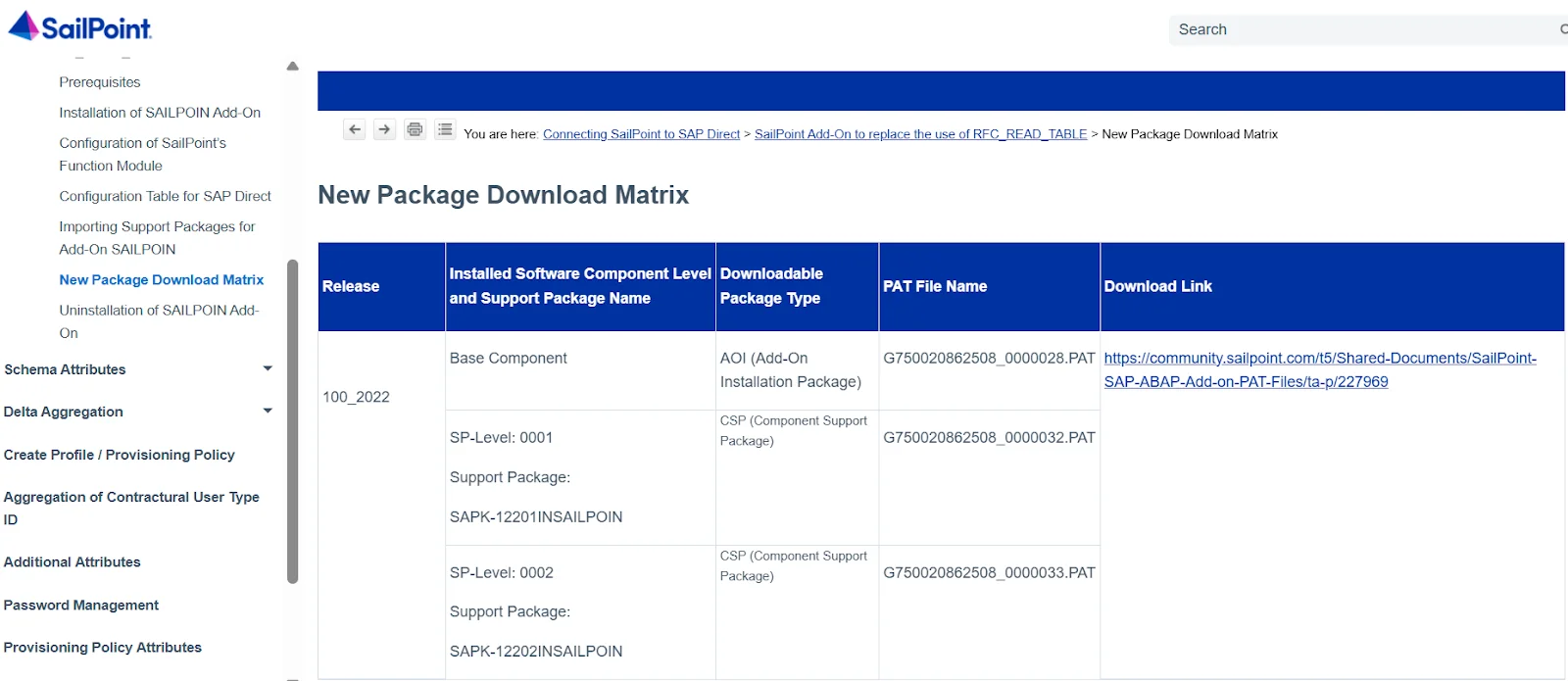
Setting up the environment involves the following steps:
SailPoint IdentityIQ consists of four main components including Compliance Manager, Governance Platform, Lifecycle Manager and User Provisioning. These components work together to manage and govern user access rights and ensure compliance. Here is a detailed overview of these components:
Compliance Manager automates and streamlines multiple aspects of compliance management like access certification, audit reporting, automated policy management and analytics. This feature helps enterprises to enforce policies, prevent unauthorized access, follow guided compliance requirements, and ensure audit readiness.
The Governance Platform is a key component of the Identity Security Cloud that provides visibility, management and automation for user access lifecycle to entire data and application. It helps enterprises organize identities, access privileges and even ensure compliance with the right regulations and policies.
Lifecycle Manager is a component that manages user entitlements and access throughout their lifecycle within an organization. It facilitates user requests, controls access provisioning and leverages the SailPoint platform for compliance, security and risk reduction.
User provisioning is the automated process of creating, modifying and removing user accounts. It also access privileges across multiple systems and applications. It is a core function of IAM that ensures users always have the appropriate access according to their roles and business requirements.
It is also important to understand all the core concepts to master this platform. The core concepts of SailPoint include:
Identity Cube represents a comprehensive view of a managed user (identity) within an organization. It is a central repository that consolidates all relevant information about an identity including its attributes, accounts, entitlements, risk scores, policy violations and historical access data. It is basically a unified view of one's access and compliance status.
Role-Based Access Control is a core component of the IAM solution. It is responsible for managing user permissions. It does so by assigning roles to users, rather than individually assigning entitlements. This approach simplifies administration, improves scalability and enables a more structured way to access management.
Access Reviews and Certifications are responsible for maintaining compliance and security by regularly verifying user access to systems and data. Designated reviewers, like managers or application owners, assess whether users' access privileges are appropriate and take action to revoke or modify access as needed. These reviews are organized into certification campaigns where each review focusing on a specific set of access rights
Lifecycle Management (LCM) refers to the processes and tools used to manage the entire lifecycle of an identity, from onboarding to offboarding. It includes the automation of provisioning, access changes and other identity-related tasks. It manages user access to applications, entitlements and other resources based on their role and organizational status.
IGA helps organizations in managing and controlling user identities and their access rights across various systems and applications. It provides a holistic view of all user identities and access privileges. This enables them to enforce controls, manage risks and ensure compliance.
SailPoint offers a variety of certifications that cater to different roles and skill levels within identity and access management and identity security. Some of the most demanding certifications are:
This SailPoint Tutorial has explained various components, key concepts and features along with a detailed guide to get started with the platform. It will play as the first ladder to master for you in the journey of mastering this platform. Continue with additional resources like books, blogs or online courses to solidify your knowledge and skills.
The difficulty of learning this platform depends on various aspects, including your educational background, learning skills, computer expertise, etc. Having all these things as your skill can help you learn it better.
Yes, the SaliPoint Tutorial is the right source to learn it for both beginners and experienced professionals.
Mastering this platform is not a matter of days; it will take around four to five weeks based on your learning skills.
The salary of a SailPoint developer in India typically ranges from INR 4.46 Lakhs to INR 12.17 Lakhs per year. USA-based developers earn up to $106,180 to $167,594 annually, with an average of $132,655.
SailPoint mainly uses Java for development and customization. It also uses XML and scripting to manage identity workflows and configurations.