If you are preparing for interviews in the evolving field of artificial intelligence (AI), you have probably come across the term Agentic AI and wondered what exactly it involves. It is completely normal to feel a bit unsure at first, especially since this area is still growing and many professionals are just starting to explore it.
Agentic AI focuses on systems that can make decisions, take actions and operate with a certain level of autonomy. Because of this, interview questions are not limited to theory; they often test your understanding of real-world applications, reasoning, and how these systems behave in dynamic environments.
That’s exactly why this guide is created. In this article, we’ll walk through the most commonly asked Agentic AI interview questions, covering everything from basic concepts to more advanced topics. Whether you are just starting out or looking to deepen your knowledge, this will help you build clarity, confidence, and a strong foundation for your interviews.
If you are a beginner in Agentic AI, from my experience, the following basic interview questions will help you build confidence, especially when you have little or no experience.
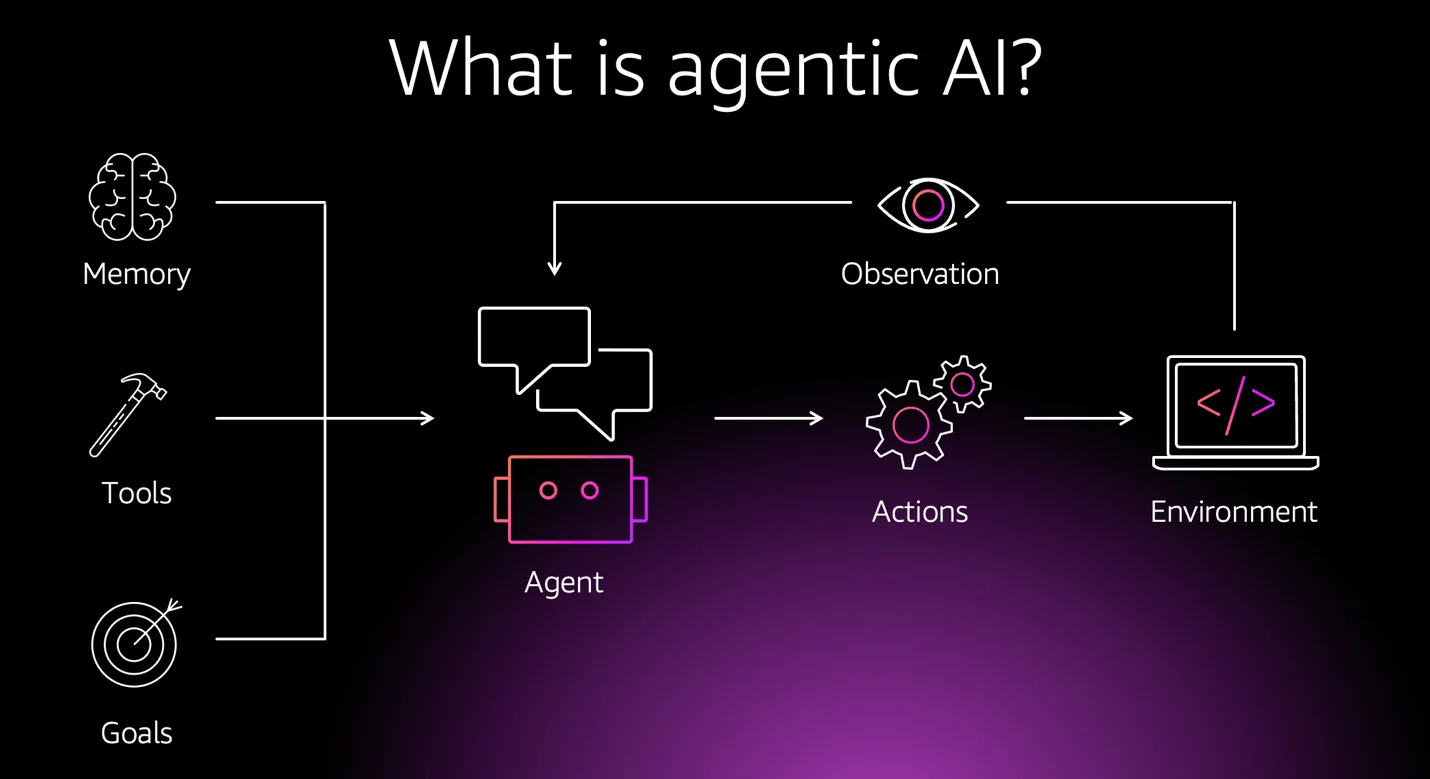
Agentic AI refers to such AI systems that behave like autonomous agents. They are often powered by large language models (LLMs) that can make decisions, remember past interactions, adapt over time, and take actions toward a goal with minimal or no human prompting. These systems are goal-driven, capable of planning, reasoning, learning from context, and even interacting with humans in dynamic environments.
Unlike traditional AI models, Agentic AI can not only predict, but it can also act. Traditional AI usually performs single and static tasks, such as identifying objects in images or generating text, based on predefined inputs and outputs. These models do not usually possess memory or long-term goal orientation.
Data preprocessing plays a critical role in the success of any AI project. According to me, even the most advanced models can fail if the data going in is not clean or well prepared.
Data preprocessing involves cleaning, transforming, and organizing raw data to make it usable for AI algorithms. This step helps in handling missing values, standardizing formats, etc., which ensures the consistency and quality of the data.
Proper preprocessing not only improves the accuracy of the model but also boosts training efficiency. It is always said that a model is only as good as the data it learns from. Therefore, I give significant attention to this phase before moving into modeling.
For example, during one of my projects on customer churn prediction, preprocessing helped me eliminate duplicate records and detect missing transaction data, which created a noticeable improvement in model performance.
What excites me about Agentic AI is how it does not just follow commands, but it actually takes initiative. The idea that AI can plan, adapt, and act on goals feels like a major advancement from traditional systems. As someone learning in this space, I find it exciting that we are moving towards a more human-like, decision-making AI that can truly collaborate a lot with us.
Note: This is a common, general question, which is just to understand your motivation and interests. This question lets you answer in any direction you genuinely want to talk about to the interviewer. Therefore, I suggest you have an explanation ready for this from your own perspective.
A modern example of Agentic AI is an autonomous AI research assistant that can browse the web, retrieve documents, reason across multiple sources, use tools, and generate structured reports with minimal human intervention. It does not just follow fixed instructions, but it makes real-time decisions based on its surroundings. It uses sensors and cameras to perceive the environment, a planning module to figure out routes, and memory to learn from past driving experiences. It also communicates with the driver or other systems when needed. All these parts work together so that the car can act independently, safely, and smartly.
From what I have explored and used, some of the most popular tools for building Agentic AI are LangChain, LangGraph, LlamaIndex, CrewAI, AutoGen, and Semantic Kernel, which are great for creating agent workflows.
AutoGen by Microsoft is powerful when it comes to multi-agent collaboration. CrewAI, LangGraph, and AutoGen are widely adopted for orchestrating multi-agent workflows in production environments. For debugging and tracking, LangSmith is really helpful and of course, OpenAI’s tools API and structured tool-calling capabilities adds smart tool-use capabilities within agents. These tools together make it easier to build flexible, real-world Agentic AI systems.
Model Context Protocol (MCP) is also becoming an important standard for connecting AI agents with tools, APIs, databases, and external systems in a more structured and interoperable way.
The curse of dimensionality refers to the challenges that arise when the number of features or input variables in a dataset becomes very large. As the number of dimensions increases, the data becomes sparse, and the distance between points grows, which makes it hard for machine learning models to find patterns or make accurate predictions.
Activation functions play an important role in neural networks with the help of nonlinearity in their model. If they are not there, the network would behave just like a simple linear regression model, no matter how many layers we add, which limits its ability to learn complex patterns. In my experience, activation functions help neural networks learn and model complicated data like images, text, or speech. They decide whether a neuron should be activated or not, based on the weighted input.
Yes, I have used reasoning models while working with Agentic AI. These models just work like humans, helping you break down complex problems and think step-by-step. I have worked with reasoning-focused models like OpenAI o-series models and DeepSeek R1, using structured reasoning techniques such as chain-of-thought, reflection, and tool-assisted reasoning.
RAG is a method where a language model retrieves relevant information from external sources (like documents or vector databases) before generating a response. This helps the model go beyond its training data and stay accurate and up-to-date.
In Agentic AI, RAG is key because agents often need real-time and factual information to make smart decisions. Instead of guessing, they can pull exact answers from trusted sources like company docs or tools and respond with context-aware output. It makes agents more reliable, especially for complex or domain-specific tasks.
Modern RAG systems also include techniques such as hybrid search, reranking, agentic RAG, contextual retrieval, memory-aware retrieval, and graph-based retrieval systems to improve reasoning accuracy and reduce hallucinations.
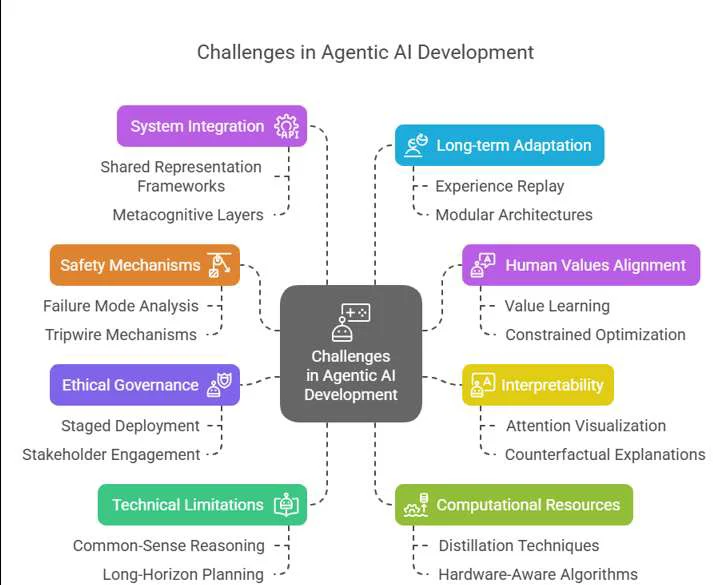
I believe ethics is a core part of working with Agentic AI. Since these systems make decisions and act independently, they must be designed with transparency, fairness, and safety in mind. I feel responsible as a developer to ensure that these tools do not harm users or misuse data, and I support building AI that aligns with human values.
Till today, I have worked with some LLMs, which are often used in AI Agent projects, including:
Tools allow AI agents to interact with external systems and perform actions beyond simply generating text. An agent can use tools to search for information, query databases, call APIs, execute code, retrieve documents, or perform other tasks required to achieve its goal.
For example, a customer-support agent can use a CRM tool to check a customer's order status and then provide an updated response. Tool usage makes Agentic AI more capable because the agent can take real-world actions instead of only providing suggestions or answers.
If you have some hands-on experience in Agentic AI, then these intermediate-level Agentic AI interview questions can help you reflect on your practical knowledge. From my personal experience, such questions are frequently asked.
In my experience, I have worked on a few AI-based projects across different domains. One of the most interesting was a chatbot for customer support, where we used NLP models to understand queries and generate appropriate responses. I also worked on a predictive analytics model that helped in forecasting product demand using historical sales data and external market trends.
Note: In these types of questions, interviewers only want to hear about your experience in a detailed manner. Here, they do not just want to hear the list of projects you have worked on; they have your resume for that. They will be looking for a clarifying explanation and the role you played in it.
Therefore, make sure to prepare in advance for these types of responses according to your skills.
I have worked primarily with OpenAI’s GPT-4.1/GPT-4o, Google’s Gemini models, and Meta’s Llama 3 and Llama 4 models. My experience has mostly been around prompt engineering, API integration, and using these models in agentic AI workflows.
For example, with GPT-4, I built a task automation agent using function calling. With the help of LLaMA, I have explored running models locally using lightweight frameworks like Ollama for data-sensitive tasks. Each of the models has its strengths, like GPT-4 is very reliable for reasoning and conversation, and open-source LLMs like LLaMA offer more flexibility for customization and deployment.
Note: This is for your reference; you can share your own experience.
AI agents for image and art generation typically use generative models like GANs (Generative Adversarial Networks) or diffusion models. These agents are trained on large datasets of images and learn patterns, textures, and styles to generate new visuals.
For data augmentation, agents apply transformations like rotation, scaling, cropping, or noise injection to expand training data. The agents often integrate deep learning frameworks like TensorFlow or PyTorch, and may include feedback loops to refine outputs based on human or model critique. This helps improve realism, creativity, and utility across applications.
Yes, I regularly use LLMs like GPT-4 and Claude for tasks, such as content generation, code assistance, summarization, and data extraction. They help me in brainstorming faster, automate repetitive work, and enhance productivity. Therefore, I felt that integrating LLMs into my workflow saves my time and also allows me to focus on more strategic or creative tasks.
Note: Here, you can show off your expertise and talk about all the tools you have used so far.
The challenge that I faced a lot when working on an AI application was data quality. Sometimes the data is incomplete, noisy, which the training model becomes difficult. Another challenge I faced is model tuning, finding the best accuracy, as sometimes it is required to repeatedly tune the algorithms, which takes a lot of time.
Yes, transfer learning is a technique where a model trained on one task is reused or fine-tuned for a different but related task. It is especially useful in AI, as it saves time and computational resources. By leveraging pre-trained models instead of starting from scratch. For example, in image recognition, models like ResNet or VGG trained on large datasets like ImageNet can be fine-tuned for smaller, domain-specific tasks. It improves performance, especially when labeled data is limited.
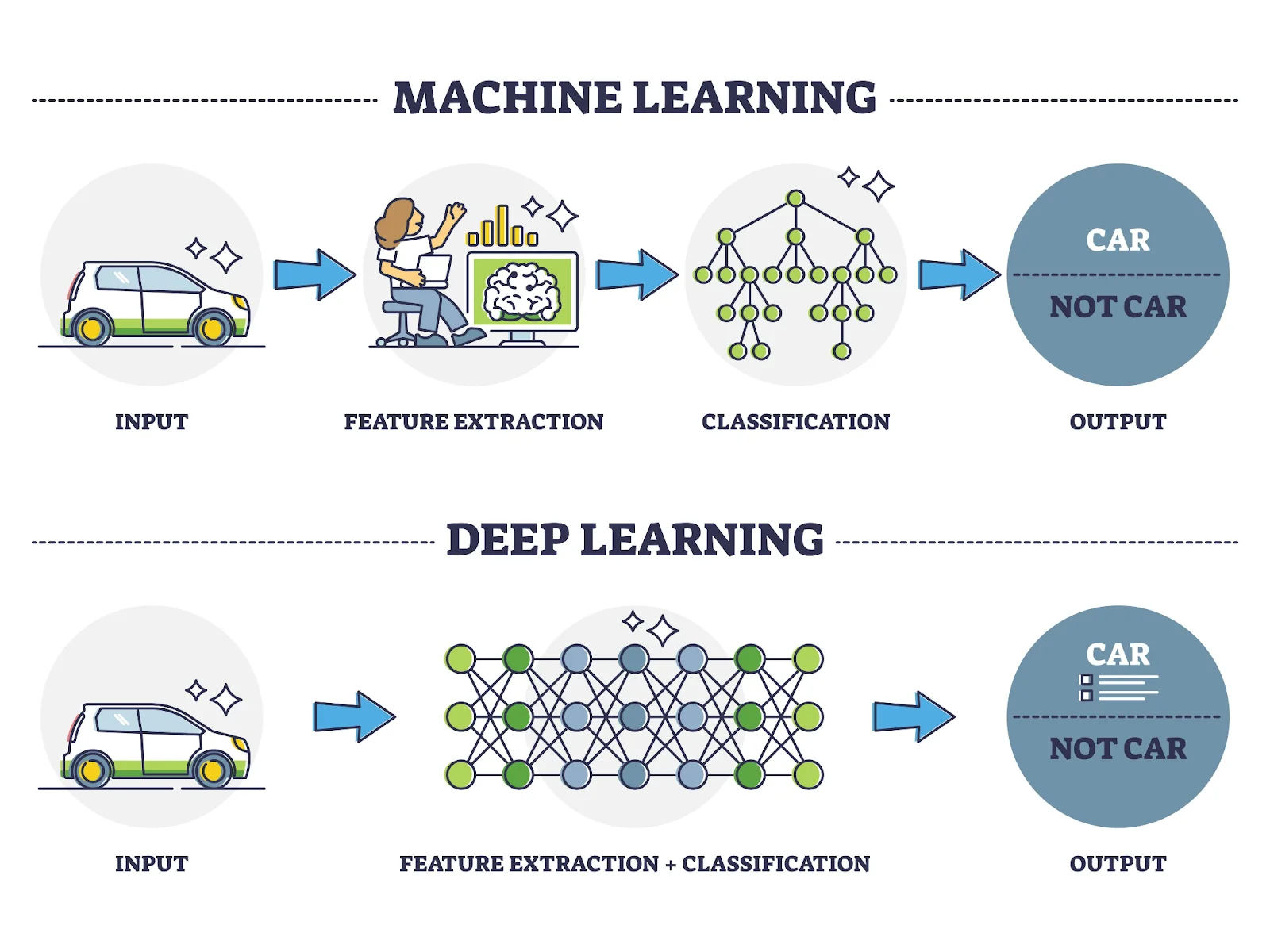
From my experience, machine learning is a broader concept where algorithms learn from data for predictions or decision-making without requiring programming. Deep learning, on the other hand, is a subpart of ML. It uses multi-layered artificial neural networks to model complicated patterns in data. Machine learning works well with structured data, and deep learning excels in tasks like image recognition, natural language processing, and speech, especially when large volumes of unstructured data are involved.
Reinforcement learning (RL) works like a trial-and-error process where an agent learns by interacting with its environment. The agent performs actions, and based on the outcome, it receives rewards or penalties. Over time, it learns to take actions that maximize the total reward. The key components in RL are the agent, environment, actions, states, and rewards. It is commonly used in applications like robotics, gaming (like AlphaGo), and autonomous systems where learning from dynamic feedback is essential.
AI plays a game-changing role in robotics and automation. According to me, it adds intelligence to machines, enabling them to perform complex tasks that go beyond basic automation. With the help of AI, robots can perceive their environment, make decisions in real time, and adapt to changing conditions, whether it is in manufacturing, healthcare, or home automation. It is not just about replacing humans but about augmenting human capabilities, making processes faster, safer, and more efficient.
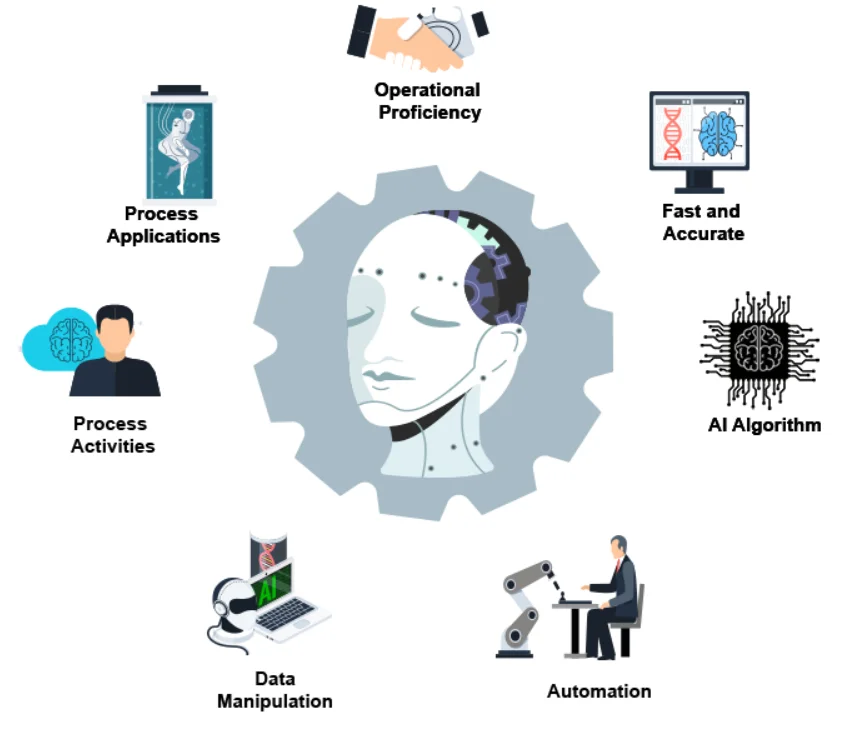
Yes, I have worked on a few projects where AI was integrated into fraud detection systems. In such applications, machine learning models were trained to identify anomalies in user behavior, transactions, or login patterns. For instance, we used supervised learning to classify legitimate vs. suspicious activity and unsupervised techniques to detect unknown threats. AI helped us predict and flag potential fraud in real-time, which significantly improved the accuracy and response time in cybersecurity operations.
Observability refers to monitoring and tracing how AI agents think, reason, call tools, retrieve memory, and make decisions during execution. Tools like LangSmith, Helicone, OpenTelemetry, and Weights & Biases help developers debug, evaluate, and optimize agent workflows.
AI agents reduce hallucinations by using techniques like Retrieval-Augmented Generation (RAG), external tool usage, memory systems, and human feedback. Instead of relying only on pre-trained knowledge, the agent retrieves real-time information from trusted sources before generating responses. Developers also use guardrails, validation layers, and observability tools to monitor outputs and improve reliability.
When you are at the advanced level, the interviewers expect you to think strategically, handle complex architectures, and make critical decisions. Based on my experience, these questions are designed to evaluate deep technical understanding in Agentic AI.
Whenever I work on an AI Agent project, I follow a structured approach to make sure the agent is smart, reliable, and useful. Here is how I usually build it, step-by-step:
Therefore, this whole flow helps me build AI agents that are not just intelligent but also reliable and useful in real scenarios.
Yes, I do understand the core types of specialized AI agents. In Agentic AI systems, there are different types of specialized agents, each with a specific role to play in achieving a larger goal. Let me explain them individually:
Memory stores help the Agentic AI in remembering past interactions. It makes its responses smarter and more relevant. They allow the AI to retain important details, whether they are in the form of the same session or long-term, to improve personalization and continuity.
For instance, short-term memory lets an agent keep track of the current task while long-term memory helps it learn from past interactions over time. Some systems also use vector databases or knowledge graphs to quickly retrieve complex information and maintain context.
In simple words, memory stores help the agent behave more like humans by learning, adapting, and delivering better decisions and experiences over time.
Chain-of-Thought reasoning is a method where the AI breaks down a problem into smaller and logical steps instead of jumping directly to the answer. It mimics how humans think step by step and helps the model in explaining why it is making a decision.
In Agentic AI, CoT is very useful because agents are required to perform complex tasks, make decisions, and solve multi-step problems. It improves the accuracy, transparency, and reliability of the outputs by letting them think out loud.
For better understanding, you can think of it like, instead of just giving the result of a math question, the agent explains each step it took to reach that result. This makes the AI's reasoning easier to trace and correct if needed.
In my experience, Agentic AI systems use different task execution patterns based on the complexity and goal of the task. These patterns help in defining how the agent decides what to do and when. They also allow agents to handle both simple and complex tasks effectively. The different task execution patterns include:
In Agentic AI systems, the most important design choices are how to run tasks sequentially or in parallel. It depends on how dependent the tasks are.
Sometimes, we also need to adopt the hybrid approach. In that, both methods are used smartly based on workload and priorities. For instance, a finance AI can analyze market trends in parallel, yet it can check risky stocks one by one using a sequential strategy.
Yes, the transformer architecture is the core of most modern language models like GPT. It works using a mechanism called self-attention, which helps the model understand the relationship between all words in a sentence at once. It can capture context globally, making transformers extremely powerful for Agentic AI.
For instance, when I was working with an agent designed to help with legal document analysis, the transformer model helped it understand the full context of complex paragraphs. That is why it plays a significant role in Agentic AI to mimic just like human understanding and decision-making. Modern transformer systems are also multimodal, capable of understanding and generating text, images, audio, and video within the same architecture.
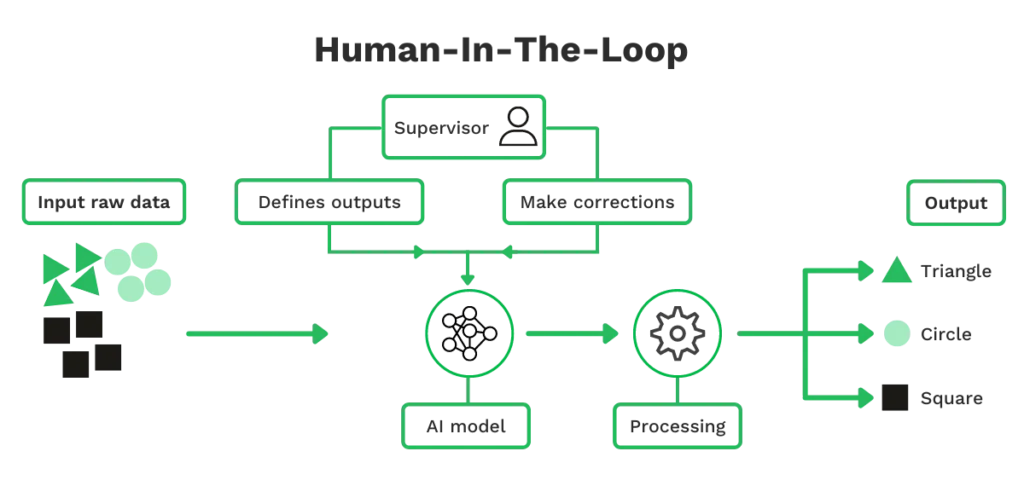
In my opinion, the Human-in-the-Loop (HITL) approach is extremely important for Agentic AI because it brings human oversight into the system where full automation might not be safe or optimal.
For instance, in critical domains like healthcare, finance, or legal, the smartest agents can misinterpret edge cases. That is where human feedback ensures better decisions. I have worked on systems where human reviewers guide agents during sensitive tasks, especially when ethical or contextual understanding is required.
HITL also helps during training, especially with techniques like Reinforcement Learning from Human Feedback (RLHF). I find it very effective in improving the model's alignment with human expectations. Overall, HITL enhances safety, accuracy, and trust in agent-based systems.
I feel fine-tuning and distillation are both important in case you want to optimize AI models for specific tasks.
Model fine-tuning means that we take a pre-trained model, which is already trained on large data, and then train it on new or any specific domain data. Through this, the model performs better in the new context. You can think of it like: if you want a general language model for the medical domain, then you can fine-tune according to the medical data.
Model distillation is a bit different from this. In this, we take a big, powerful model and use its output to train a small model. Its main goal is to retain performance, yet keep the speed and efficiency better. Like after Deepseek R1, the small models are distilled through their responses, and despite their size, their quality was good.
Today, organizations often prefer parameter-efficient fine-tuning (PEFT) methods such as LoRA and QLoRA because they reduce computational cost while adapting large models effectively.
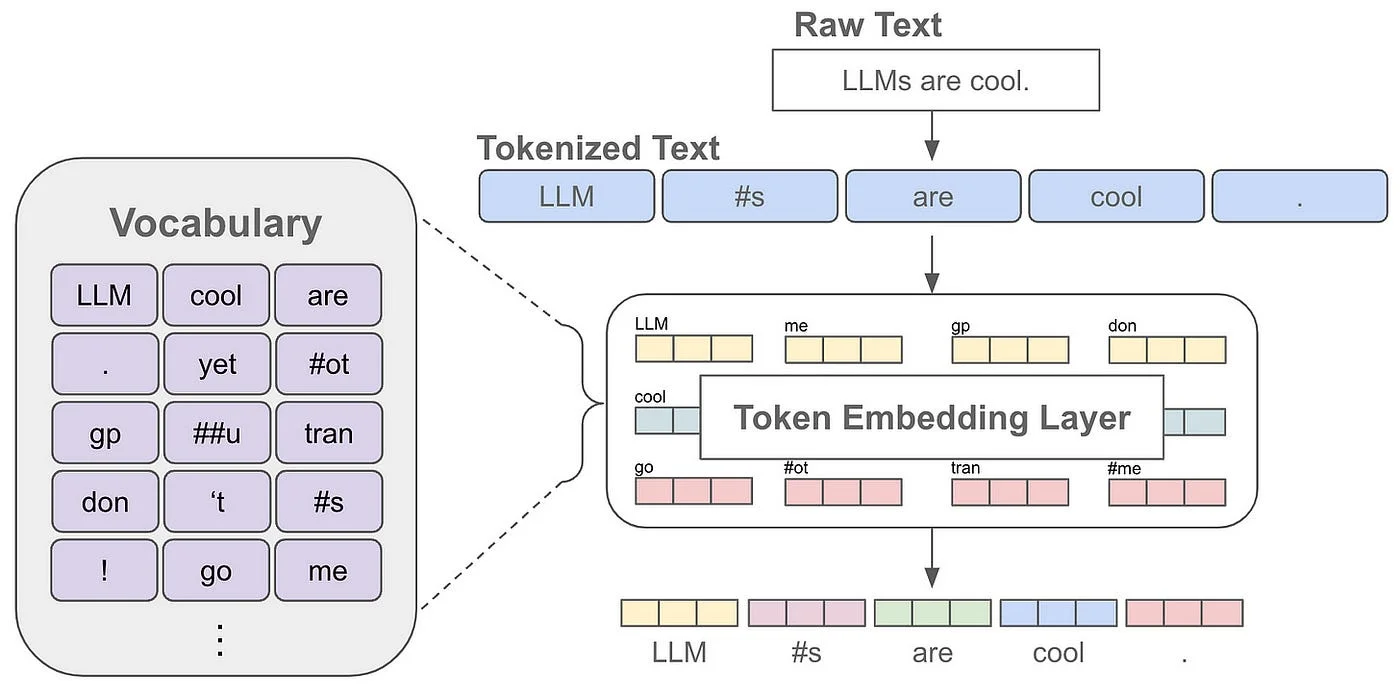
Yes, the next token prediction task is the core concept of how large language models work.
In simple terms, it means the model is trained to predict the next word or character (called a token) based on the previous ones. Therefore, if I type AI is changing the…, the model tries to guess what comes next, like the world, future, or industry. It depends on the context it has learned from training data.
This task helps the model in learning grammar, sentence structure, and even reasoning by just predicting what comes next. Through time, with the help of massive training data, the model becomes good at generating human-like text, answering questions, and can even write code. Modern reasoning models also use reinforcement learning and post-training optimization techniques beyond simple next-token prediction to improve planning and reasoning performance.
Both AI Agents and Agentic AI are closely related but represent different levels of capability in artificial intelligence systems. An AI agent usually refers to a single autonomous program that can perform a specific task, such as answering questions, recommending products or scheduling meetings. It observes inputs, processes information and takes actions based on predefined logic or models.
Agentic AI represents a more advanced concept where multiple AI agents work together in a coordinated system to achieve broader goals. These systems can plan tasks, reason about problems, use external tools and adapt their actions dynamically based on changing situations. Here are some of the common differences you should know:
| Feature | AI Agents | Agentic AI |
| Definition | A single AI system designed to perform a specific task. | A broader AI system where multiple agents collaborate to achieve complex goals. |
| Autonomy | Limited autonomy focused on a particular function. | Higher autonomy with planning, reasoning, and decision-making capabilities. |
| Task Scope | Usually handles one task or a narrow workflow. | Handles multi-step workflows and complex objectives. |
| Architecture | Typically built around a single model or agent. | Often composed of multiple specialized agents working together. |
| Example | A chatbot answering customer questions. | A system where one agent plans tasks, another retrieves data, and another executes actions. |
AI agent frameworks are development platforms or toolkits that help developers build, manage and deploy AI agents more efficiently. These frameworks provide the infrastructure needed to connect large language models with tools, memory systems, APIs and workflows so that agents can perform real-world tasks.
These frameworks to design structured agent workflows without starting from scratch every time. They make it easier to create systems where agents can plan tasks, retrieve information, interact with external services and execute actions automatically.
Some frameworks also support multi-agent systems, where different agents collaborate to complete a larger objective. For example, one agent may focus on planning tasks, another retrieves relevant data and another performs the final execution.
Popular AI agent frameworks now include LangChain, LangGraph, CrewAI, AutoGen, Semantic Kernel, OpenAI Agents SDK, and LlamaIndex. These frameworks simplify orchestration, memory handling, tool integration, observability, and multi-agent collaboration in modern AI systems.
AI guardrails are safety mechanisms that help AI agents operate within predefined ethical, legal, and operational boundaries. They help prevent hallucinations, prompt injection attacks, harmful outputs, unauthorized tool usage, and data leakage. Modern agent systems often use policy engines, moderation layers, access control, and human oversight to maintain safe execution.
Model Context Protocol (MCP) is an open standard that allows AI agents to communicate with external tools, APIs, databases, file systems, and business applications in a consistent way. Instead of building separate integrations for every service, developers can use MCP to provide a standardized interface that AI agents understand.
From my experience, MCP is becoming increasingly important because modern AI agents rarely work in isolation. They need to retrieve documents, query databases, send emails, interact with CRMs, or execute workflows. MCP simplifies these integrations, improves interoperability between different AI systems, and makes agent development much more scalable.
Evaluating an AI agent goes beyond checking whether it produces the correct answer. I usually look at several metrics, including task completion rate, reasoning quality, tool usage accuracy, latency, cost per task, hallucination rate, and user satisfaction. These metrics help determine whether the agent is reliable in production.
For more complex systems, I also use evaluation datasets, automated test cases, human reviews, and observability platforms to compare different prompts, models, and workflows. Continuous evaluation allows me to improve the agent over time while maintaining high reliability and performance.
Prompt injection is a security attack where a user attempts to manipulate an AI agent into ignoring its original instructions or revealing sensitive information. Since modern AI agents can access tools, APIs, and confidential data, prompt injection has become one of the biggest security concerns in Agentic AI.
To reduce this risk, I separate system prompts from user inputs, validate tool permissions, apply input filtering, implement access controls, and use AI guardrails to restrict sensitive operations. I also monitor agent behavior through observability tools and test against known attack scenarios before deploying the system into production.
Scenario-based questions test how you apply your knowledge in real-world situations. From my experience, when the interviewer asks you such questions, they want you to reveal your decision-making, adaptability, and hands-on understanding of Agentic AI in the working environment.
At the time of deployment of AI agents, security risks are very common, like unauthorized access, data leakage, or malicious inputs. For handling these risks, I follow some key steps:
These are all the preventive steps, and they are useful for real-time protection and for post-analysis. I also implement protections against prompt injection attacks, tool misuse, jailbreak attempts, and unauthorized retrieval access by validating tool permissions and isolating sensitive system instructions.
Definitely, building an AI Agent end-to-end comes with multiple challenges at different stages. Based on my experience, here are a few common ones:
Therefore, it is critical to plan for each of these and test in a modular, iterative way. That really helps ensure smooth and safe deployment.
Yes, absolutely. Agentic AI improves operational flexibility by allowing systems to work more independently and adapt in real time. For example, agents can analyze tasks, break them into sub-tasks, and choose the best way to complete them, whether sequentially or in parallel, without needing constant human instructions. They can also switch strategies based on the context or data they receive during execution.
This makes them useful in dynamic environments like customer support, logistics, or even finance, where goals, inputs, and conditions keep changing. Therefore, instead of waiting for fixed rules, these agents respond smartly, which brings greater speed and agility to operations.
Yes, I am quite comfortable with prompting and prompt engineering. I have used it in different projects, especially while working with LLMs like GPT-4 or Claude. I usually follow structured prompting, zero-shot, and few-shot techniques depending on the task.
Sometimes, I also apply chain-of-thought prompting to help the model think step by step. I have also explored using system prompts and tool-calling formats when designing agents.
Yes, I have worked on debugging workflows in LangChain. My approach usually starts with using tools like LangSmith or built-in tracing tools to track where the prompt or tool usage goes wrong. I look at the full chain from inputs, outputs, intermediate steps, everything, and try to isolate which part is failing.
If the issue is with prompt logic, I test it separately and continuously. If it is with tool calls or API responses, I do log and validate them. I also check for edge cases or missing memory context, especially in multi-step agents. The goal is to trace the agent's thinking and fix any bottlenecks step-by-step.
If an AI agent starts generating hallucinated or incorrect responses in production, the first thing I would do is identify where the issue is coming from. I would trace the workflow using observability tools like LangSmith or logs to check whether the problem is caused by the prompt, memory retrieval, tool calling, or the LLM itself.
Then, I would improve the retrieval pipeline by using better RAG strategies, reranking, or trusted knowledge sources so the agent relies more on factual data instead of assumptions. I would also add validation layers, output guardrails, and fallback responses for uncertain situations.
In addition, I would test the agent with edge cases and real user queries to reproduce the issue consistently. If required, I would refine prompts, adjust temperature settings, or even switch to a more reliable reasoning model. My focus would always be on improving accuracy, safety, and user trust while continuously monitoring the system after deployment.
Agentic AI is being used in many real-world areas now. For example:
Agentic AI supports cost reduction by automating complex, repetitive, and time-consuming tasks that would have required human effort. It reduces dependency on large teams for tasks like customer support, data analysis, and content generation. These agents can work 24/7 without tiredness, which boosts overall operational efficiency. Additionally, they optimize resource usage by making intelligent decisions in real-time, whether it is scheduling operations or managing workflows. By minimizing errors and improving speed, Agentic AI helps businesses save money on labor, infrastructure, and downtime towards a more scalable and cost-effective solution.
When working with AI agents, I usually evaluate their performance based on a few key factors:
To design an AI agent that can manage multiple or conflicting goals, I will first define each goal and assign priority based on urgency and importance. Then, I will use a simple scoring or rule-based system to help the agent decide which task to focus on first. According to me, context plays a key role; therefore, the agent should adjust priorities based on current conditions. After that, a planning module will break tasks down and schedule them efficiently. Finally, a feedback loop would help the agent learn from outcomes and improve its decision-making over time.
To ensure prompt robustness in production, I make sure the instructions in my prompts are clear, direct, and free of ambiguity. Then, I test them using diverse and edge case inputs to check how the AI responds in different scenarios. After that, if it is necessary, I include fallback instructions that guide the AI on what to do if something goes wrong or if it does not understand the query. I also handle dynamic variables carefully to avoid any formatting or logic issues. After the agent is live, I also monitor its outputs closely and continuously refine the prompts based on real-world interactions. Doing all these things helps me maintain stability and performance even under changing user inputs.
I would design the system by assigning each agent a specialized responsibility while keeping a central orchestrator responsible for coordinating the workflow. The Research Agent would retrieve information from trusted sources using tools such as RAG, web search, or enterprise knowledge bases. The Writing Agent would then generate a structured report using the retrieved context, ensuring that the content remains grounded in factual information. Finally, the Review Agent would validate the report for accuracy, completeness, formatting, policy compliance, and hallucinations before approving it for delivery.
To make the workflow reliable, I would implement shared memory for passing context between agents, logging and observability tools to trace every decision, guardrails to prevent unsafe outputs, and human approval for high-risk tasks. This architecture improves scalability, allows each agent to specialize in its own task, and produces more accurate and trustworthy results than relying on a single AI agent.
Q1. What is the defining characteristic of Agentic AI's functionality?
Q2. Which framework supports multi-agent collaboration in Agentic AI systems?
Q3. What is the primary goal of hyperautomation in Agentic AI?
Q4. Which component of Agentic AI enables interaction with external environments?
Q5. What is a key benefit of using LangChain in Agentic AI applications?
Q6. How does an Agentic AI system handle ethical considerations?
Q7. What role does reinforcement learning play in Agentic AI's development?
Q8. Which platform enhances Agentic AI with cloud-based orchestration?
Q9. What is a key feature of multi-agent systems in Agentic AI?
Q10. How does process discovery contribute to Agentic AI's effectiveness?
Agentic AI is not just a buzzword; this is a real game-changer for the future, and it is constantly working on that. If you prepare for these interview questions, which are basic to scenario-based, then you are not just ready, you can stand out in your interview. You can download the complete document of these interview questions from here.
In today's real world, understanding and deploying agentic systems is a great skill, and you are already on that journey. Conceptual clarity, practical application, and a problem-solving mindset, the three things that will help you perform confidently in your interview.
Currently, tech giants like OpenAI, Microsoft, and Google are leading in this field. Their tools, like GPT-4, AutoGen, and Gemini, can implement their agentic capabilities into real-world workflows.
Agentic AI systems can think, decide, and act. Therefore, they are one step ahead of automation. They handle the dynamic tasks where traditional AI fails.
Sometimes, Agentic AI's behaviour is still hallucinatory, with memory errors, and unpredictable. For this, we require strong oversight, testing, and human-in-the-loop approaches.
Generative AI creates content like text, images or code based on prompts, while agentic AI can plan, make decisions and take actions on its own to complete tasks with minimal human input.
| Course Name | Batch Type | Details |
| Agentic AI Course | Every Weekday | View Details |
| Agentic AI Course | Every Weekend | View Details |