When I started working with SAP, one thing became very clear very quickly: managing users and access is not simple. In big companies, a number of users access different SAP systems every day. People work in finance, procurement, HR and everyone needs different levels of access.
Just imagine where an employee accidentally gets higher-level permissions than what is needed, or the same person has the authority to both create and approve payments. At first, these may seem like small mistakes, but in reality, they can open the door to fraud, security breaches and serious financial risks. For example, in the banking industry, we have heard of such cases where they faced huge financial losses.
This is exactly where SAP GRC plays a major role.
This platform helps companies control user access, reduce security risks and maintain compliance in a smarter and organized way. This platform automates processes like approvals, audits and risk checks. This gives better visibility across the entire SAP system.
While working with SAP systems and security, I realized how important GRC is for managing real business operations. It is like a control center that helps companies to keep their SAP systems secure and well-managed.
In this blog, we will understand what SAP GRC is, how it works, its major components, modules and the benefits to know how it is an important part of modern SAP systems.
SAP GRC (Governance, Risk, and Compliance) is a solution designed to facilitate enterprise risk management, ensure regulatory compliance and increase security. It is developed to integrate GRC into the overall business workflow, to make sure that organizations meet regulatory requirements while managing risks efficiently.
It helps to manage access control, identify segregation of duties (SoD) conflicts, automate approval workflows, support audits and monitor risks in the enterprise SAP system. This paltform helps organizations automate and simplify these processes instead of handling security and compliance activities manually.
Read Also: What is SAP EWM
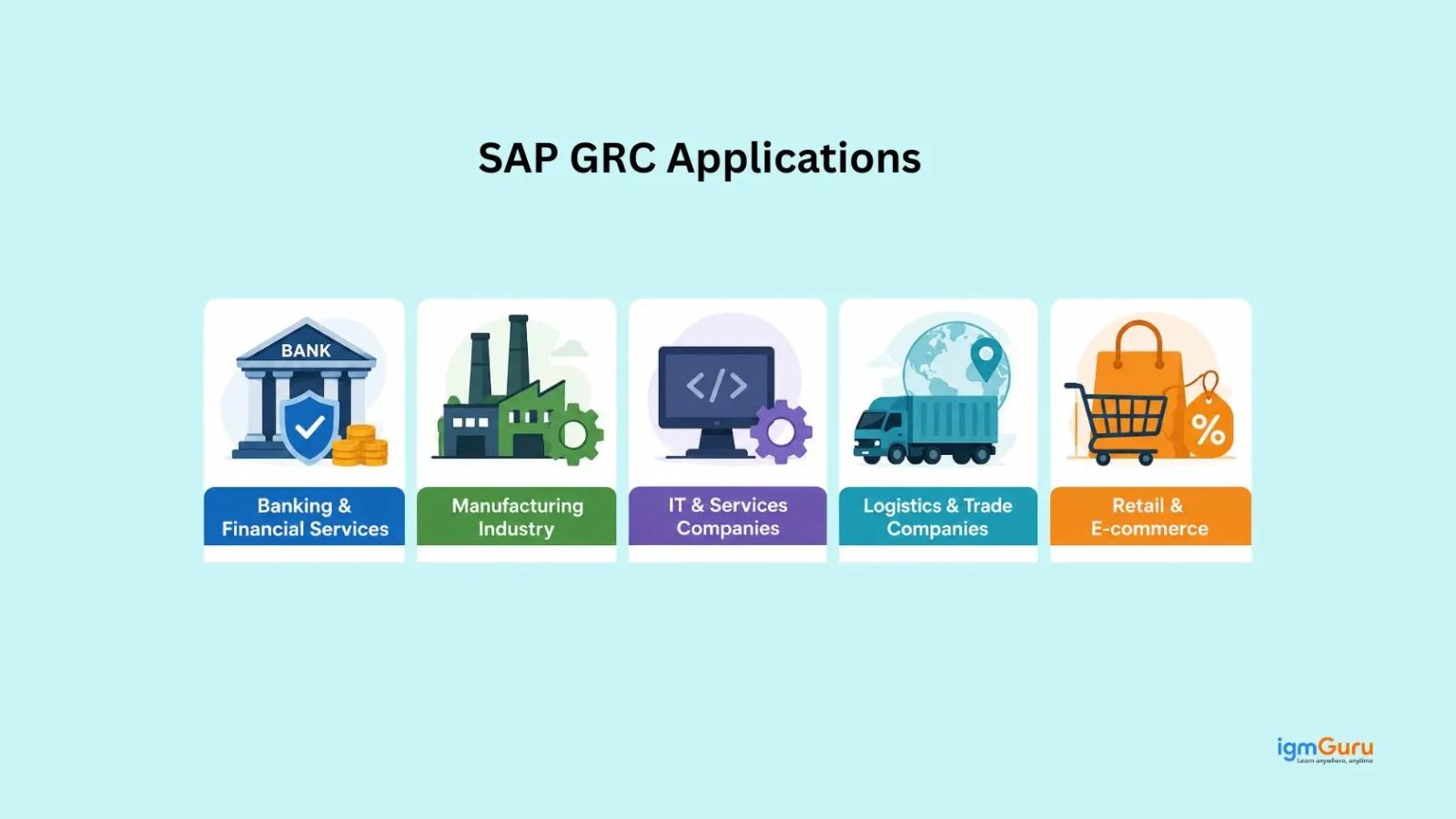
From my understanding of enterprise SAP system, handling tasks like access control and compliance manually can create confusion, delays and security risks. This is where SAP GRC becomes really helpful. It allows organizations to simplify and automate many important security and compliance processes across SAP systems. Below are some of the major applications in real business operations.
Read Also: Top SAP MM Interview Questions and Answers
Many people initially think SAP GRC is only a security tool. But as I explored it, I came to understand that this platform covers more than just access management. It helps to manage governance, monitor risks, maintain compliance, support audits and improve overall control across SAP systems.
This platform mainly focuses on 3 Key components:
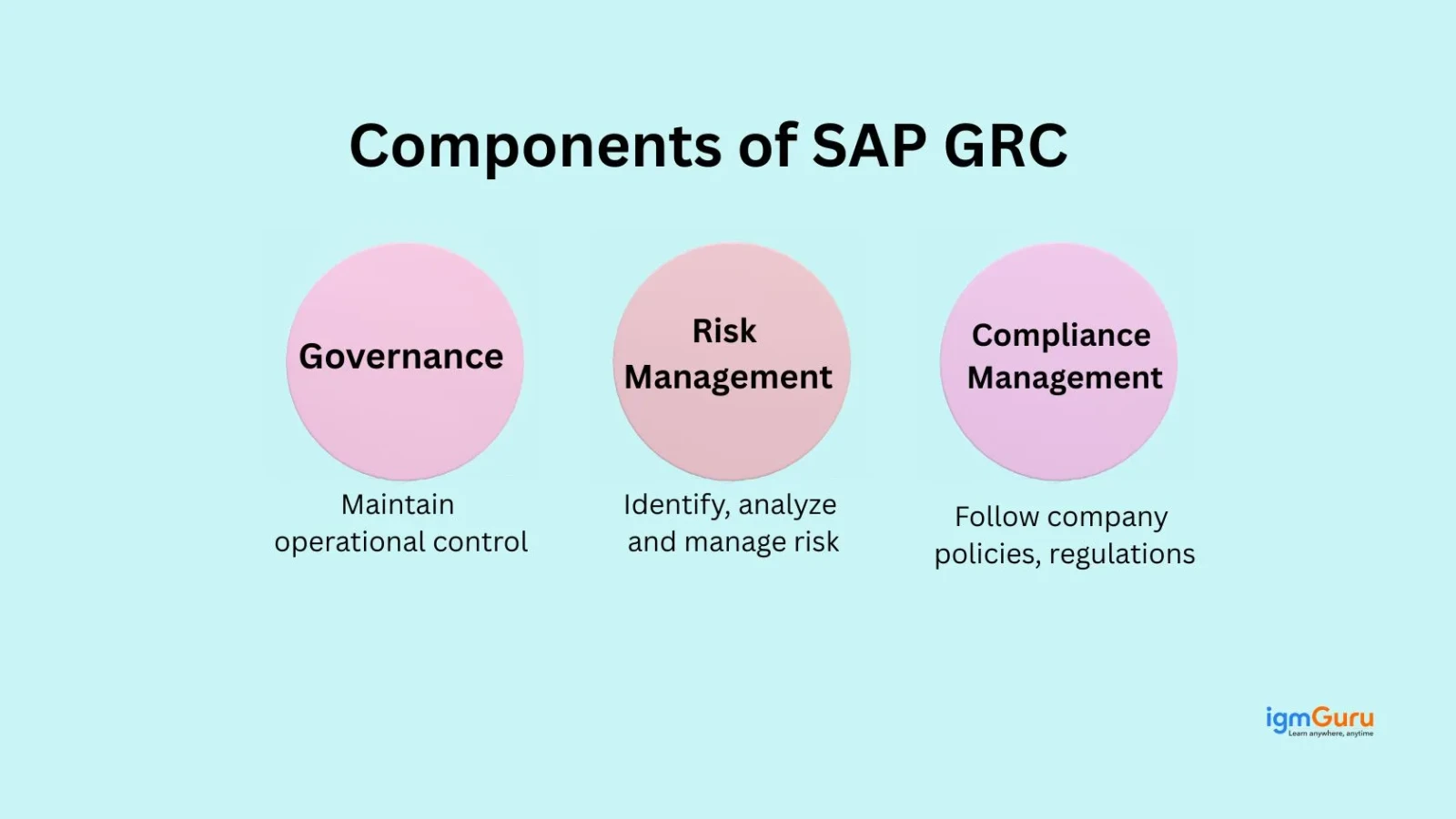
These components work together for overall management and compliance activities across business operations. Below are the major components of SAP GRC in detail:
Governance helps to maintain proper control, accountability and transparency across business operations. It mainly focuses on creating policies, rules and processes so that employees and departments follow company standards properly.
This component helps organizations:
It also helps to monitor activities and maintain accountability across the organization.
Risk Management helps to identify, analyze and manage different business and security risks. Risks related to user access, security and compliance also increase with growing businesses.
This component helps organizations:
It also helps businesses take safety actions before risks create major issues.
Also Read: SAP GRC Interview Questions and Answers
Compliance Management helps to follow company policies, regulations and industry standards. It makes sure that business activities and SAP processes are performed as per the required compliance rules.
This component helps organizations:
SAP GRC helps to simplify compliance management through automation, monitoring and centralized reporting.
Read Also: Top SAP Security Interview Questions and Answers
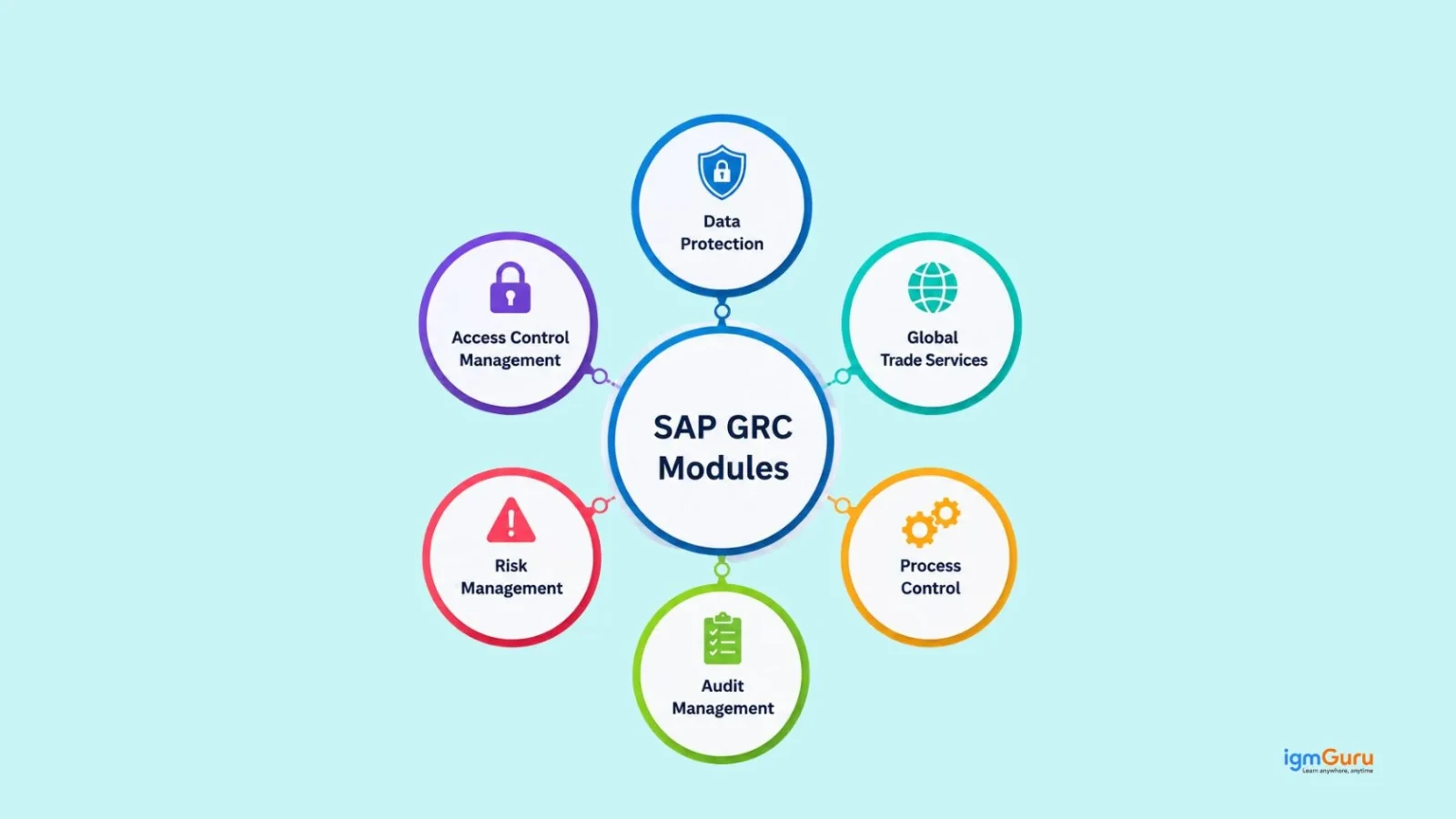
SAP GRC includes different important modules that help organizations to manage security, risks and compliance. These modules support businesses in managing access, controlling risks, maintaining compliance and handling audit activities in SAP systems in an efficient way. The most used modules are:
Access Control is one of the most commonly used SAP GRC modules. It helps organizations manage user access across SAP systems. Integrates with SAP IAM and checks user access before giving permissions.
This module helps organizations:
I noticed that in many enterprise environments, managing access manually becomes difficult. This module helps to make the entire process more organized and controlled. This module uses tools like ARA, ARM, BRM and EAM for user access management and SoD checks.
This module helps organizations identify, analyze and monitor business risks related to access and security. It gives detailed data on business risk factors and their impact on organizations. Checks possible risks before business actions are performed.
It helps companies:
It allows businesses to plan a strong risk strategy. It uses risk assessment, KRI monitoring, mitigation and reporting tools to manage business risks.
It helps organizations to handle audit activities more easily. This module allows teams to manage audit planning, track issues, record findings and monitor compliance activities from one central system.
It supports:
This module helps businesses centralize audit-related activities in a more structured way. It manages audits using audit planning, execution, issue tracking and reporting tools.
The Process Control module helps to manage compliance-related activities and internal business processes more smoothly. It supports features like workflow management, automatic monitoring and process management.
With this module, organizations can:
Overall, it helps organizations in compliance management, reduces manual effort and maintains better control over business processes. This module uses control monitoring, test management, issue management and CCM tools for compliance control.
The Global Trade Services module helps to manage international trade and maintain compliance with global trade regulations. SAP GTS confirms international trade follows legal and compliance rules before processing any transaction.
It supports:
This module is mainly useful for organizations involved in global business operations. Compliance screening, customs management, sanction checks and trade control tools are mainly used by this module.
In many organizations, multiple users access financial data, employee information, vendor records and other important business information. Managing and securing this data manually can become difficult.
This module helps organizations to control user access, track activities and helps identify unauthorized access before it creates security risk. It implements role-based access control with logging and monitoring of sensitive data access activities.
It helps businesses:
Data protection is very important because even small security gaps can create major operational and compliance risks. It allows organizations to maintain a secure and well-managed SAP environment.
Read Also: Top Network Security Certifications
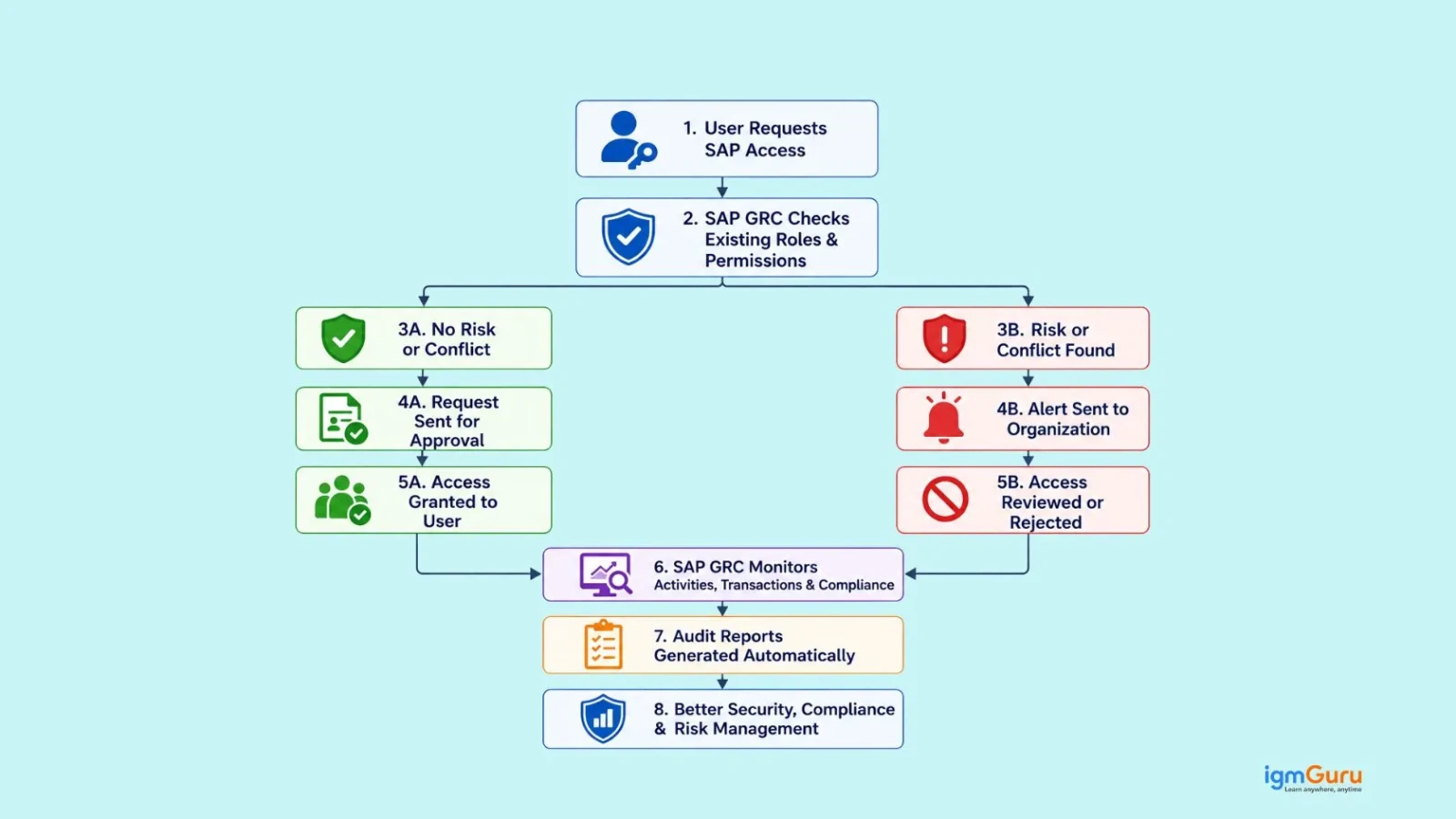
To understand the platform better, it is important to see how it works in real business environments. It works by integrating with SAP systems and monitors business activities. It ensures that business activities follow company policies and compliance rules.
To understand how SAP GRC works, let me explain this with a simple example. Suppose a user requests access to approve vendor payments in a SAP system. Before giving access, this platform checks the user’s existing roles and permissions to see if there is any security risk.
If the requested access is valid as per company rules, then the request goes for approval and the required access is given to the user. If the system finds any risky or conflicting access, it sends alerts to the organization before granting access.
This platform also monitors user activities, sensitive transactions and compliance processes across SAP systems. It keeps records, tracks activities and generates audit reports automatically. This helps organizations improve security, reduce risks and manage the SAP system easily.
By reducing manual work and monitoring activities, SAP GRC helps to keep business operations secure and properly managed.
SAP GRC is used by integrating it with SAP systems to manage activities from a single central platform. Organizations configure different modules as per their business and security requirements. Different modules are used together to improve daily business operations.
The process starts within the system by defining user roles, access policies, compliance rules and risk controls. Once the setup is completed, users can request access through the SAP system and the platform automatically checks whether the requested access follows company rules or creates any security or compliance risks. If no issues are detected, then request is sent for approval and the required access is given to the user.
In an organization, different teams use different modules based on their responsibilities. For example:
These modules work together to improve security, compliance and risk management across SAP systems.
Read Also: SAP ABAP Tutorial
While exploring SAP GRC, you will find that the platform offers more than just compliance and security. It not only improves security and compliance but also helps businesses to manage risks and daily operations more easily. By automating many manual processes, this platform improves overall governance across SAP system. Some of the benefits are listed below:
Overall, this platform helps organizations to maintain a secure, compliant and well-managed SAP system by reducing risks and improving business operations.
Also Explore: What is SAP ABAP?
Even after SAP GRC offers many benefits, organizations may still face some challenges while implementing and managing daily operations. Since SAP systems are large and complex, managing all activities can sometimes become difficult and time-consuming. Below are some common challenges faced in SAP environments:
In this blog, we explored everything about SAP GRC, like how it works, its modules, applications, benefits and some common challenges organizations may face while using the platform. This plays an important role in maintaining a secure and well-controlled SAP system.
As businesses continue to adopt digital technologies and handle huge amounts of sensitive data, the need for strong security, governance and compliance solutions is increasing. Because of this, the future scope of this solution is expected to grow even more across industries such as banking, healthcare, manufacturing, retail and IT services.
With increasing focus on cybersecurity, risk management and regulatory compliance, SAP GRC will continue to be an important solution for organizations to maintain secure and well-managed business operations.
Explore our Trending Articles:-
Learning this platform may feel complex at first, but with basic SAP knowledge and regular practice, it becomes easier to understand.
As per AmbitionBox, in India, salary is around ₹16–18 LPA based on experience, while in the USA, it is about $120,000–$145,000 per year.
The demand for this platform is increasing due to focus on cybersecurity, risk management and regulatory compliance.
It can be learned through SAP training, hands-on practice in SAP systems, online tutorials and real-time project experience.
Common tools include Access Control, Risk Management, Process Control, Audit Management and Global Trade Services (GTS).