Do you know how companies manage large warehouses with thousands of products every day without stopping? These warehouses handle a large number of products moving from one place to another. Goods are received in those warehouses, stored, picked, packed, and shipped properly to keep businesses running. Managing all these activities manually can be very difficult when operations become larger and more complex.
To handle this challenge, SAP developed SAP Extended Warehouse Management, an advanced software system. It is a powerful warehouse management solution that helps businesses manage warehouses, track inventory in real time, reduce errors, and improve supply chain operations. Want to get started with SAP EWM? This guide here will explain you what is SAP EWM, its features, architecture, working, communication methods, uses, benefits and much more. Let’s Start!
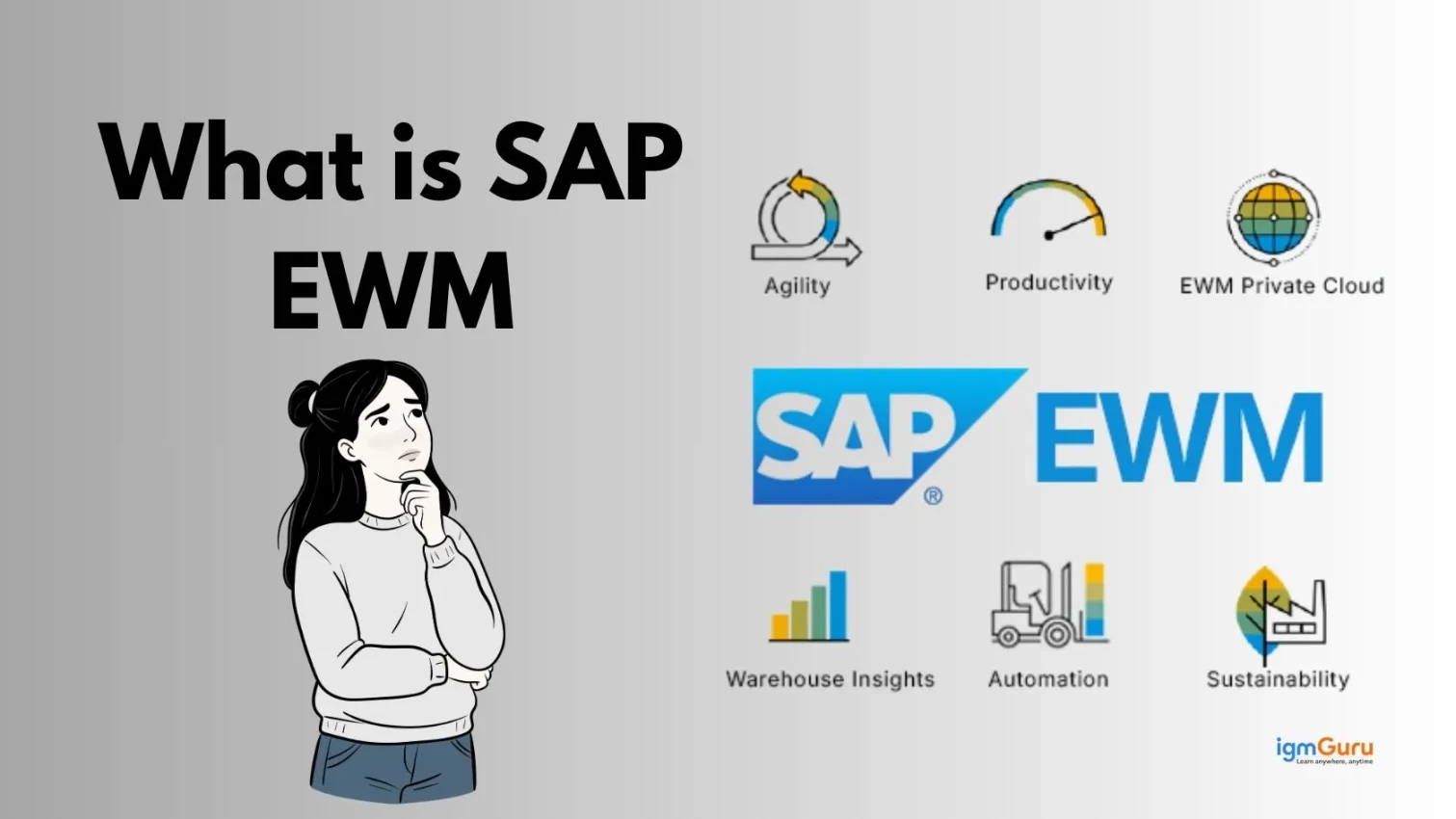
SAP EWM is an advanced warehouse management system developed by SAP. It helps the businesses in controlling and optimising the warehouse operations in real time. It provides control over warehouse operations, such as inventory tracking, storage bin management, labor management and warehouse task management.
As businesses need faster deliveries and better supply chain management, SAP provides a software solution that focuses on managing and controlling operations and procedures in warehouses. EWM helps to increase warehouse performance, smooth logistics operations and improve inventory management. Hence, businesses can manage warehouse operations more accurately, save time and deliver products easily.
SAP Extended Warehouse Management offers many useful features that help businesses manage warehouse operations easily. These features improve productivity, reduce errors and make warehouse operations faster and smoother. Let’s look at some important features:
| Features | Description |
| Inventory management |
|
| Automated Warehouse |
|
| Workplace Administration |
|
| Storage Management |
|
| Integrated Quality Inspection |
|
| Wave Control |
|
| Cross-Docking |
|
Read Also: What is SAP MM
SAP Extended Warehouse Management architecture is the structural design that shows how all EWM components work together to support warehouse operations. EWM architecture is divided into three different layers:
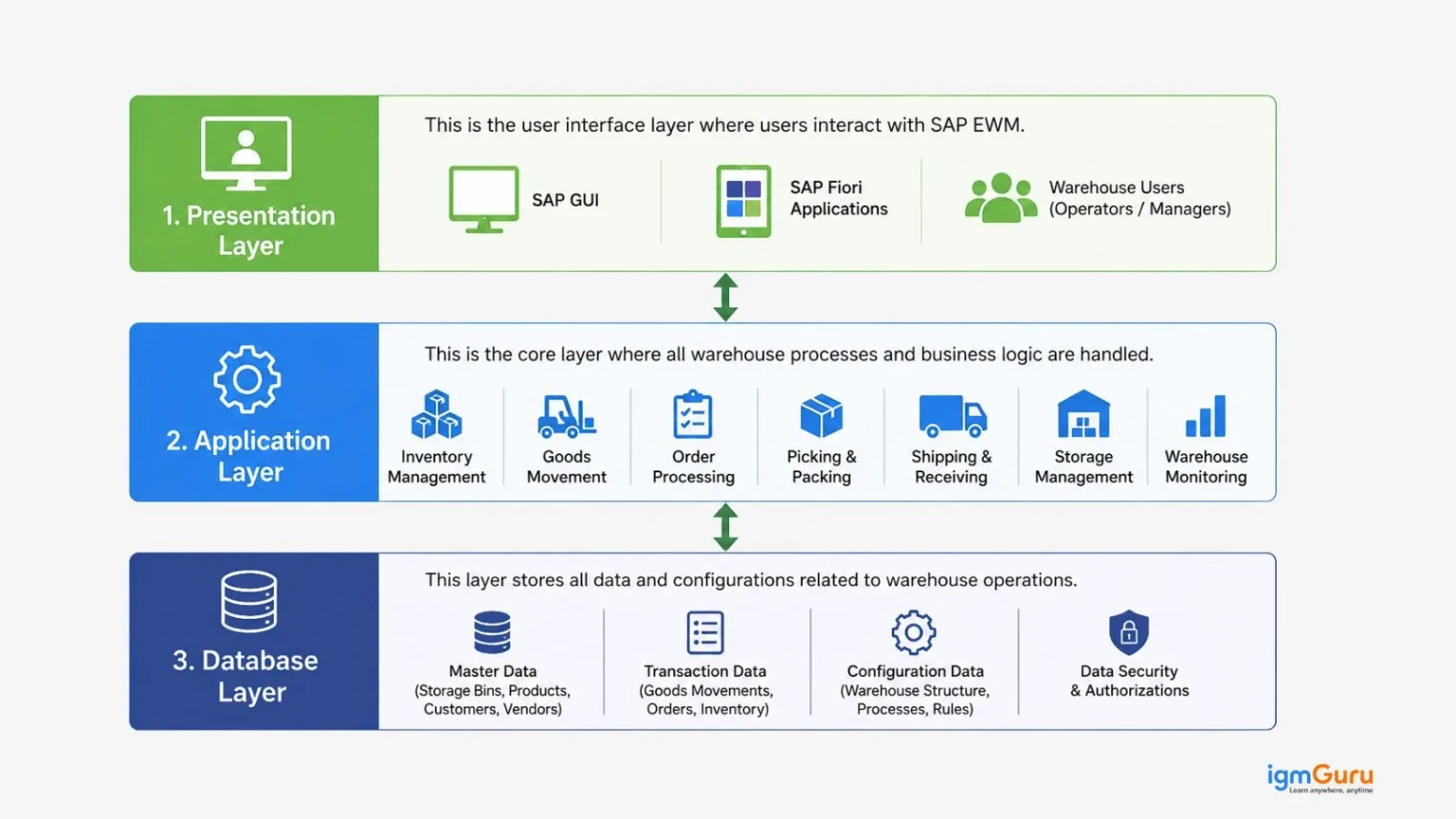
The Application Layer is the main layer of SAP Extended Warehouse Management. All warehouse operations and business logic are managed here. It manages all important warehouse activities in real time.
When a user performs a task, like moving inventory, confirming picking or processing shipping activities, this layer processes the request and updates the system. It manages workflows, checks data and confirms that warehouse operations run smoothly.
It also integrates with the database layer to store and retrieve data, and with the presentation layer to show information to users. The application layer manages several warehouse functions, including:
This layer confirms that the right material is stored, picked and shipped at the right time.
All transaction data and configuration settings are stored here. It works as a storage unit and keeps information safe, organized and always available when needed. Without this layer, the system would not be able to track inventory or manage warehouse processes.
It confirms that all warehouse tasks are properly recorded for auditing and control.
The database keeps track of:
This layer is important because it keeps data safe, accurate and organized. When inventory changes, the new data is saved. It also helps in reporting and decision-making. SAP HANA is the top choice database for EWM due to its high-speed performance and real-time analytics.
It is the user interface of the system. This is the layer where users directly interact with the system like screens, dashboards and mobile interfaces. It does not process data itself but only presents information received from the application layer. The presentation layer is important because it makes the system easy to use and helps users to complete their work easily.
EWM provides different user interfaces:
With the help of this layer, warehouse workers can check stock and confirm a picking order. It improves productivity by providing an organized and user-friendly interface for managing warehouse activities.
SAP Extended Warehouse Management architecture may sound complex, but it’s all about making warehouses work smarter and more efficiently. It creates a smooth and transparent logistics process by connecting ERP systems, automation tools and real-time analytics. This architecture is the first step to understanding how modern supply chains work.
Read Also: SAP ABAP Tutorial
SAP EWM controls and manages all warehouse work in a structured and automated way, from the moment goods enter the warehouse until they are shipped out to the customer.
It gets data from the ERP system about incoming and outgoing goods. Based on this, it creates warehouse activities such as putaway, picking, packing and goods movement. These tasks are then given to warehouse workers or automation systems.
As the process is completed, EWM updates inventory in real time, confirm accurate stock visibility. It also manages storage space, increases order fulfillment speed and reduces human errors by following predefined processes.
Simply, SAP EWM is the “brain” of the warehouse. It manages every activity to confirm smooth, fast and accurate operations.
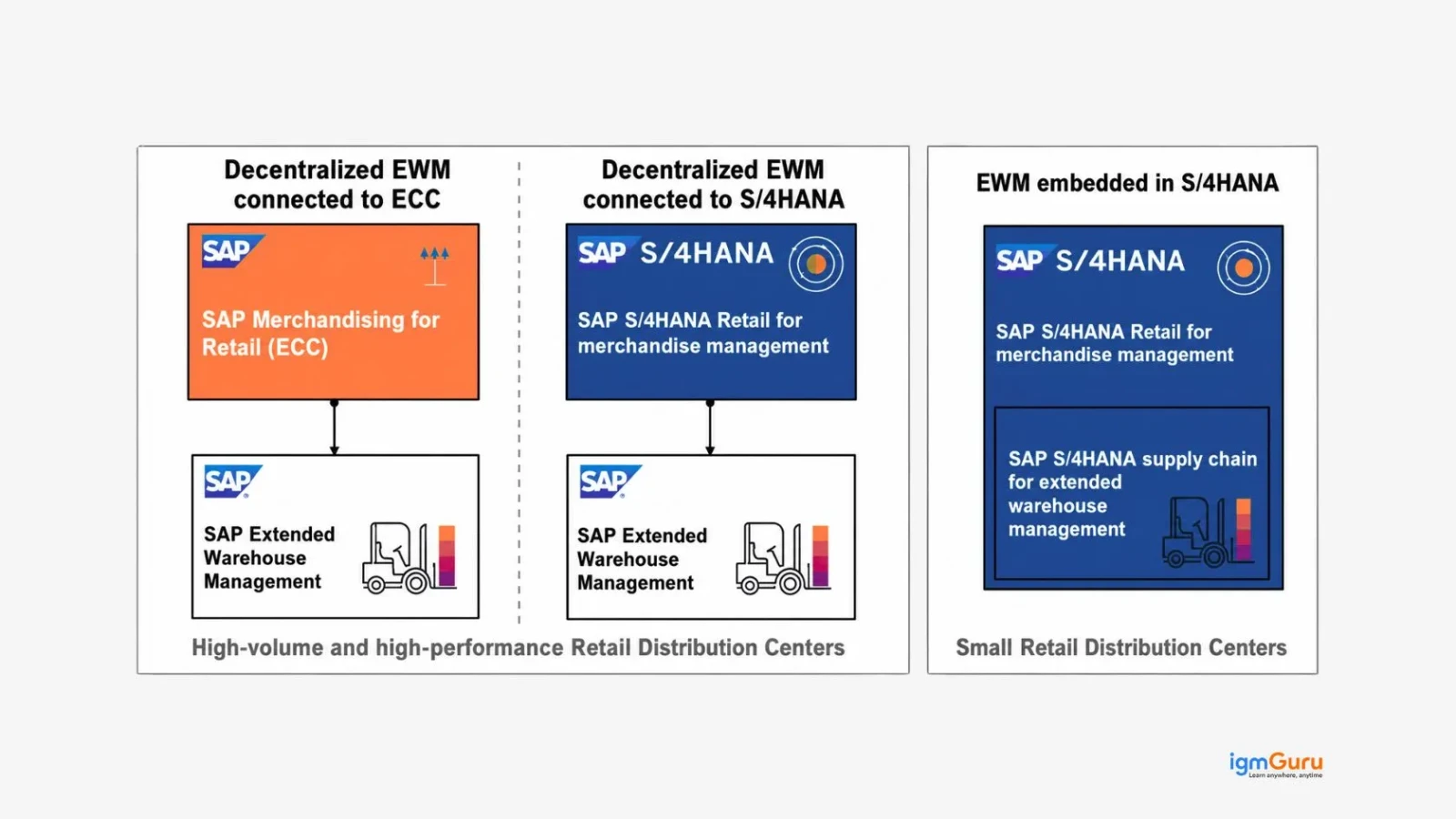
It is also important to learn about its deployment options. Different businesses have different requirements. SAP Extended Warehouse Management offers different deployment models. It helps businesses to choose a suitable model to manage warehouse operations smoothly.
SAP Extended Warehouse Management uses different communication methods to exchange data with SAP systems, automation tools and process integration. These communication methods keep warehouse operations connected, automated and efficient. Key communication methods include:
1. Application Programming Interfaces (APIs): APIs help this module to connect with third-party systems, automation tools, and mobile applications for smooth data exchange.
2. IDoc (Intermediate Document): IDocs are used to transfer data between SAP systems. It is commonly used for sending order data or receiving inventory updates.
3. RFC (Remote Function Call): RFC helps one SAP system to communicate directly with another SAP system in real time. It helps SAP EWM connect with SAP ERP or SAP S/4HANA.
4. E-Mail Notifications: It helps to generate automated e-mail notifications, such as delivery status, stock alerts, or system messages.
5. EWM MFS (Material Flow System): It connects EWM with automated warehouse equipment like conveyors, robots and automated storage systems.
6. qRFC (Queued Remote Function Call): This version of RFC that processes data in sequence using queues. It confirms that warehouse transactions are completed in the correct order.
Read Also: SAP FICO Interview Questions and Answers
It is used in large-scale, automated supply chains. It handles large inventories, warehouse operations and fast product movement. It helps businesses improve inventory accuracy and speed up warehouse processes more effectively.
Some of the real-world applications include:
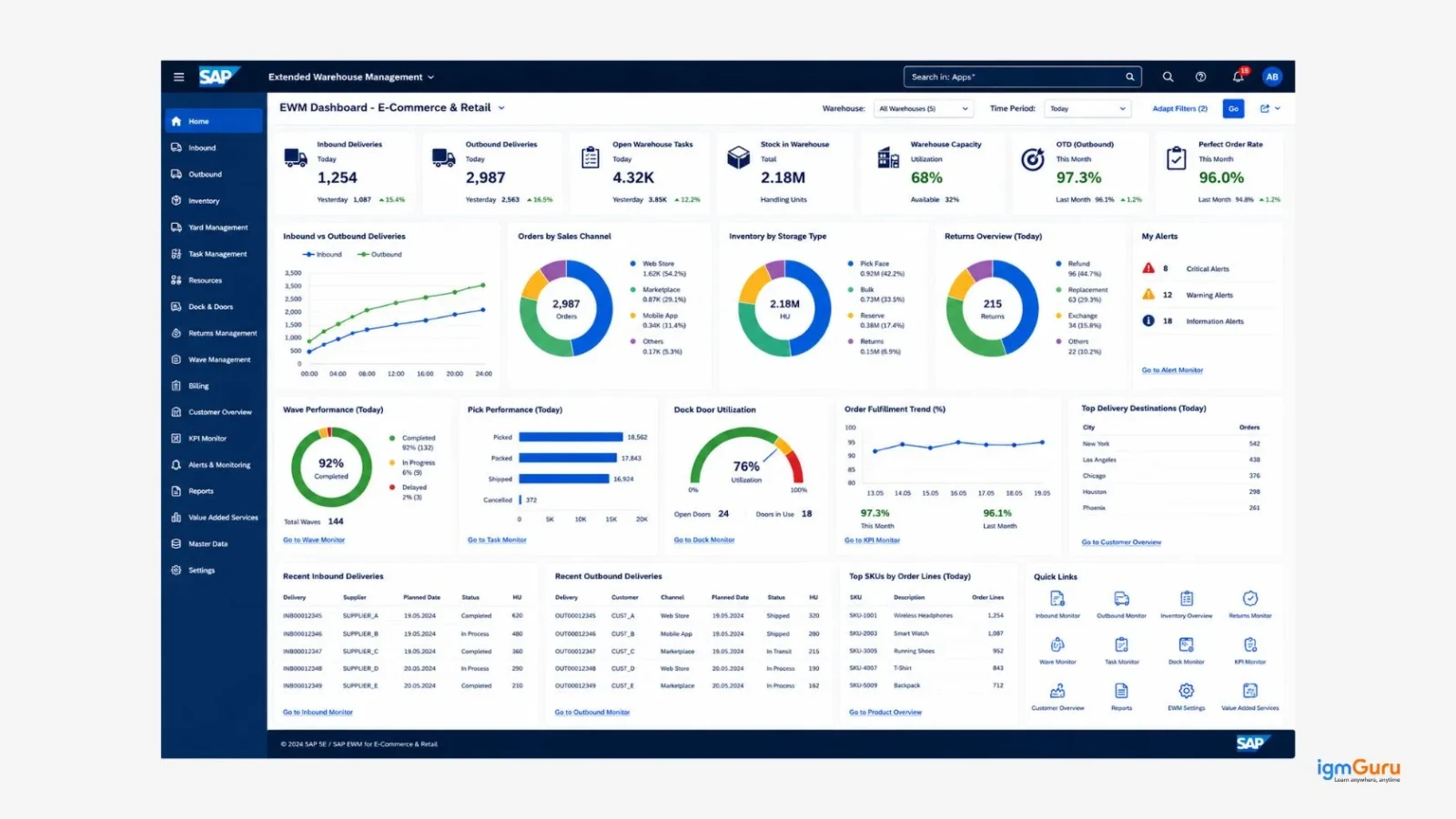
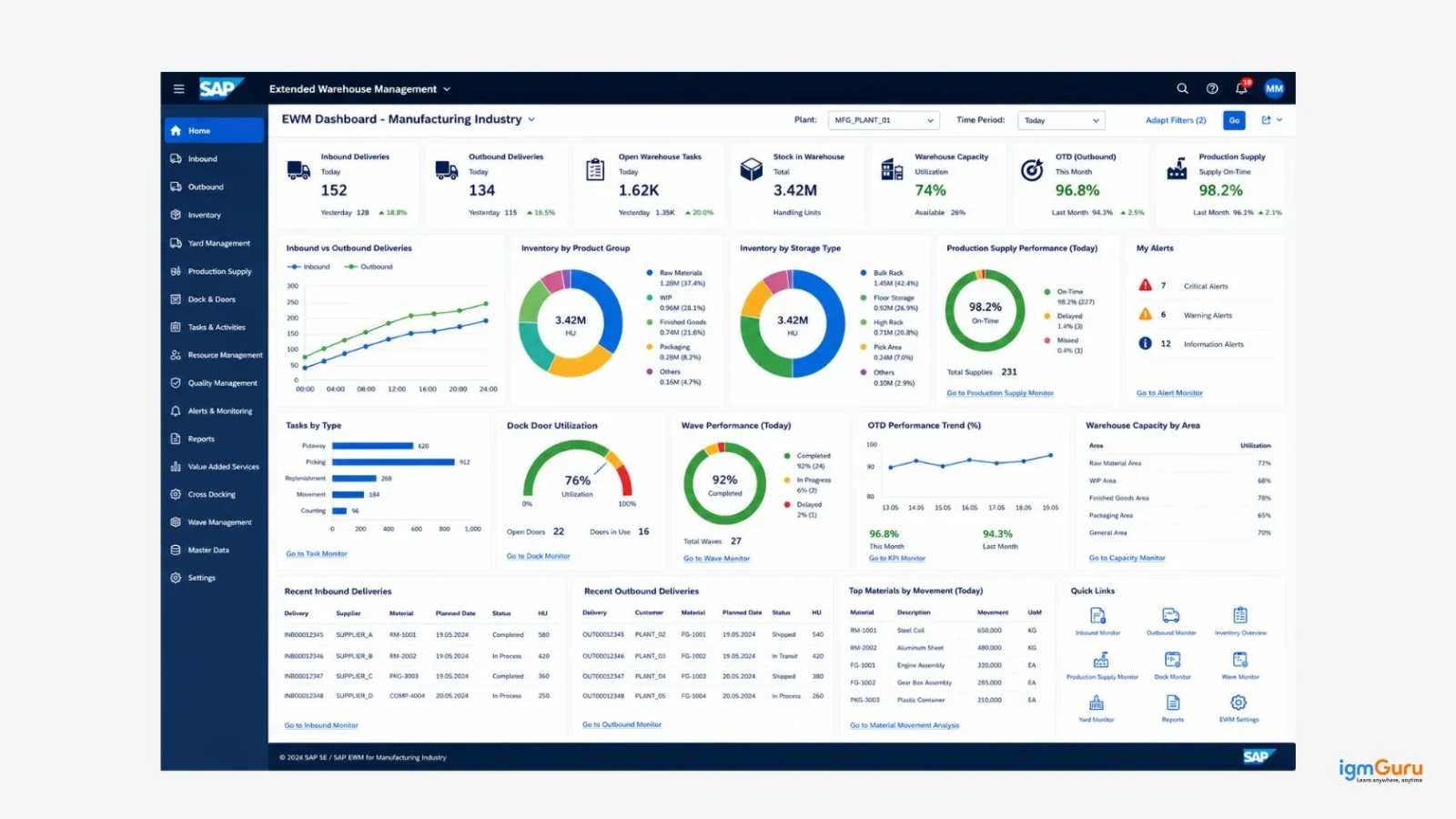
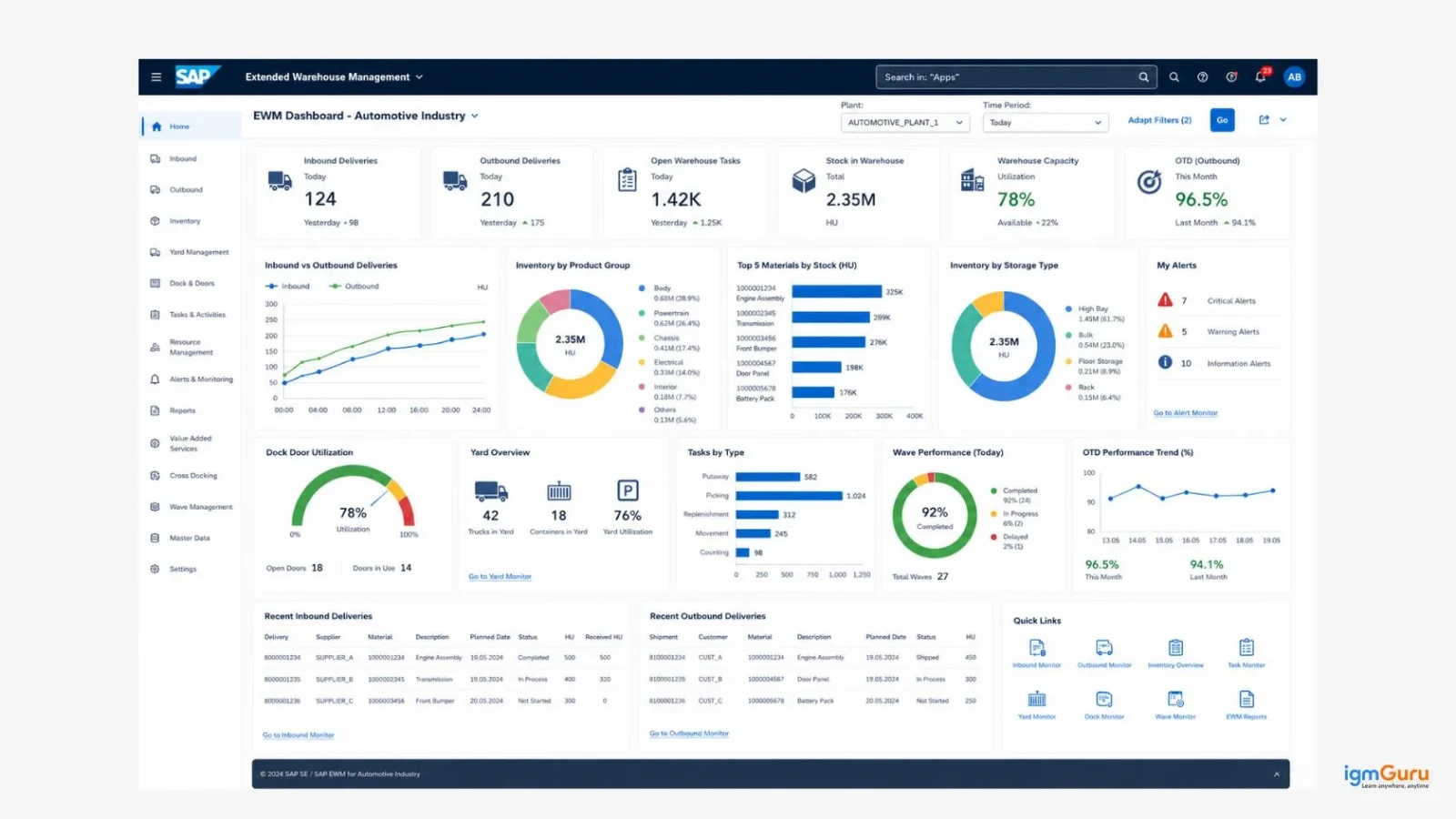
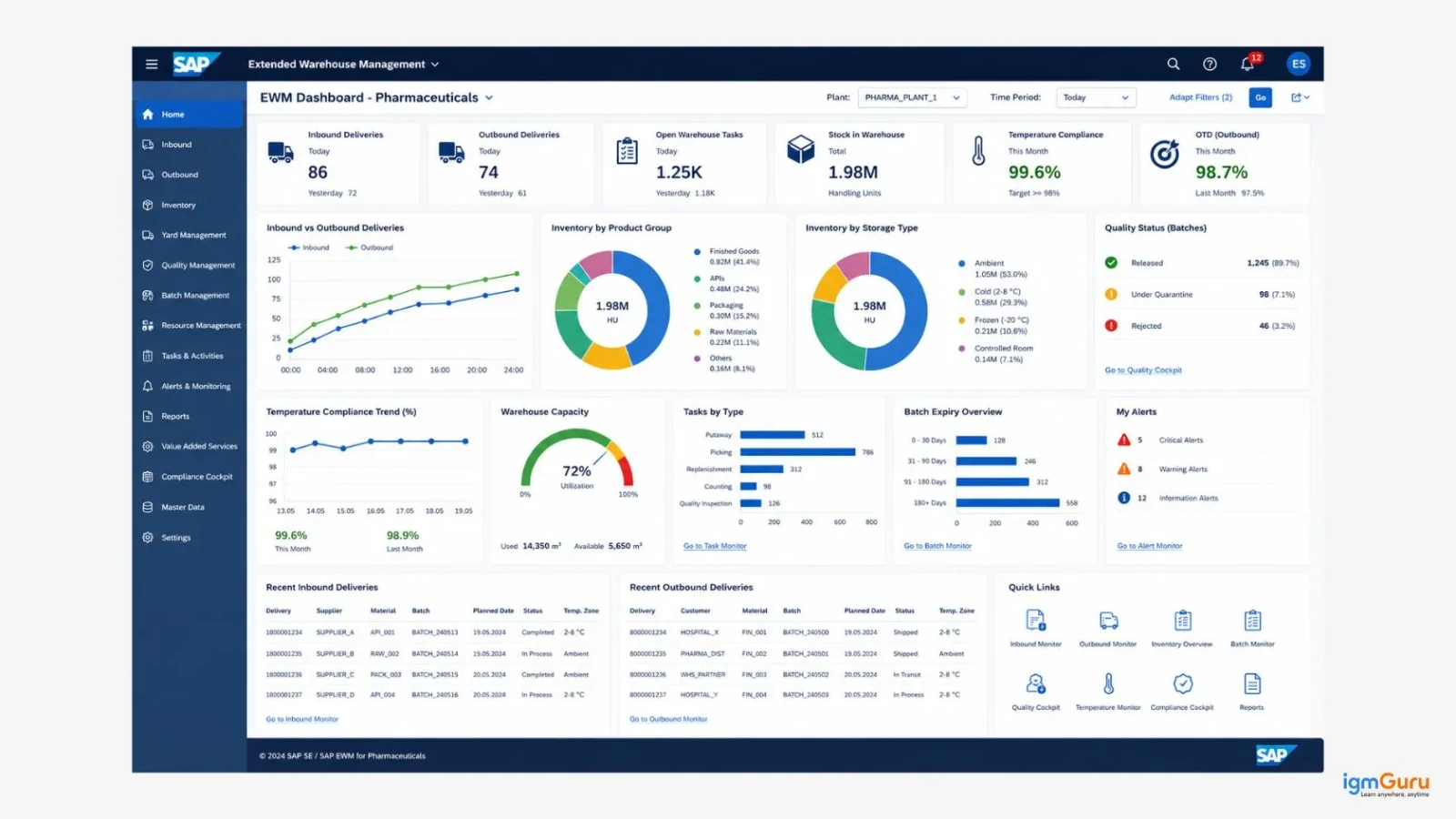
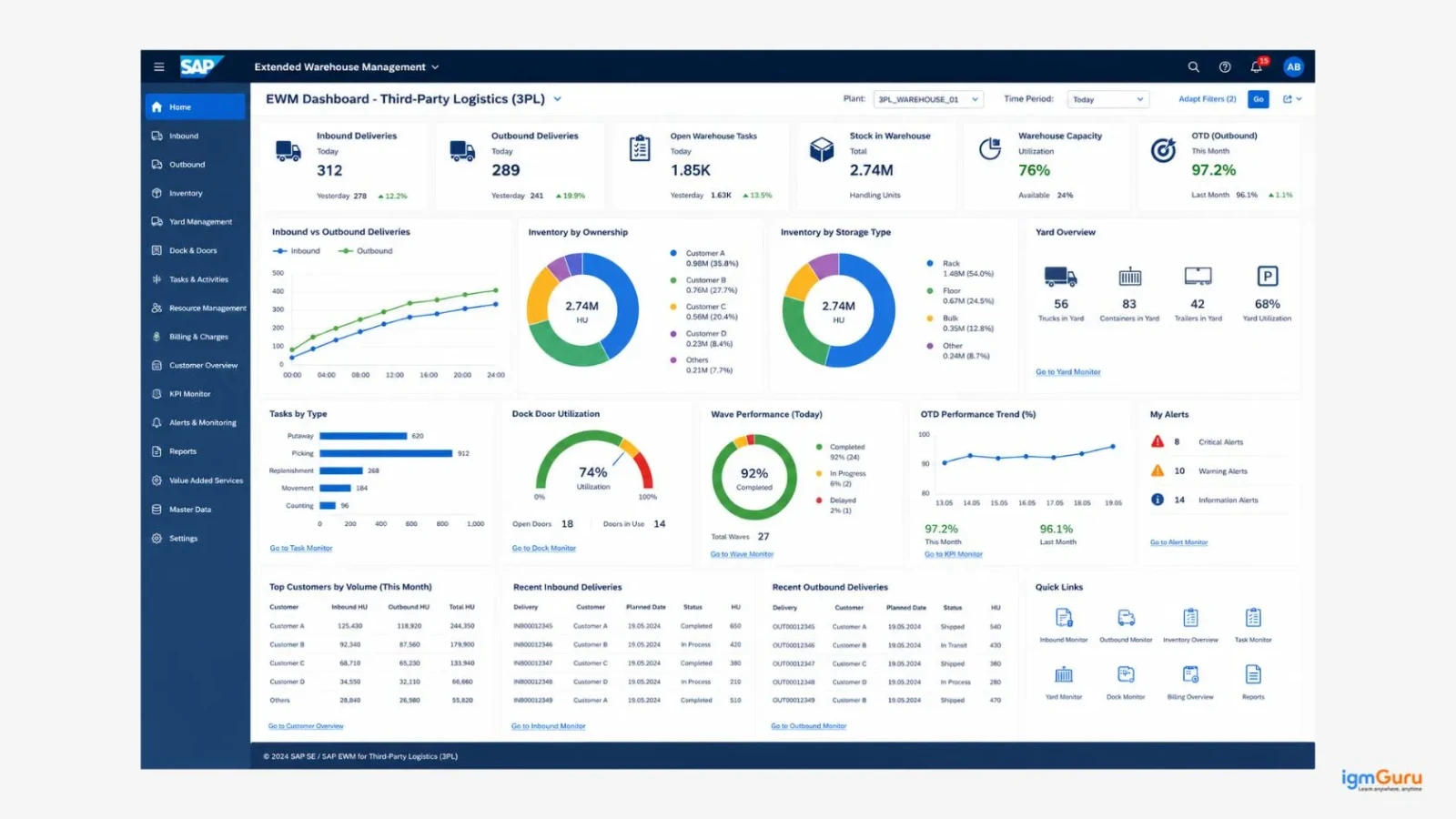
SAP Extended Warehouse Management is used in all the above cases for better warehouse control, faster logistics operations and accurate inventory management.
Read Also: Top SAP MM Interview Questions and Answers
Companies which are using SAP Extended Warehouse Management get many operational and strategic benefits. It helps companies manage warehouses more accurately, quickly and efficiently.
In SAP supply chain management, two important warehouse management solutions are SAP EWM and SAP WM. Both are used for managing warehouse operations. SAP WM is an older warehouse management system, while EWM is a more advanced system. Knowing the differences between these modules helps businesses choose the right warehouse management solution.
| Feature | SAP EWM | SAP WM |
| Type | Advanced warehouse management system | Traditional, basic warehouse processes |
| Flexibility | Highly flexible | Limited flexibility |
| Process Automation | Advanced automation and optimization | Basic automation features |
| Scalability | Supports large-scale warehouse operations | Best for smaller operations |
| Value added services | Advanced support for services like labeling, packing, assembly and kitting | Not directly supported |
| Labor Management | Advanced labor and resource management | Limited features |
| RFID and IoT Integration | Strong support | Limited support |
| AI & Machine Learning | Intelligent slotting, predictive analytics | None |
| Cross-Docking Support | Yes | Limited |
| Handling of Complex Processes | Yes | Limited, suitable for simpler processes |
| Integration | Seamless integration with other SAP modules | Integrated, but may require additional effort |
Also Explore: SAP EWM Interview Questions and Answers
As a Supply Chain and Warehouse Management professional, I worked with SAP Extended Warehouse Management in the automotive industry. This experience helped me gain knowledge in warehouse and inventory operations.
Earlier, in the automotive industry, warehouse operations faced issues such as manual tracking of inventory, delays in material movement, and picking errors, etc. These issues affected order accuracy, warehouse productivity and timely delivery of materials.
There, I used the EWM module to track material movements and manage warehouse tasks for automotive spare parts and production materials. I used this module in inventory and warehouse task management.
I worked with features such as warehouse monitoring, stock overview, wave management and resource management to confirm smooth operations. The system helped improve picking accuracy, reduce delays and maintain real-time stock across the warehouse.
I also used EWM dashboards and reports to monitor warehouse capacity, order fulfillment, dock utilization and task completion rates.
These helped to identify the problem quickly and improve overall efficiency. The real-time alerts and analytics available in this system were useful in handling high-volume automotive warehouse tasks.
Overall, my experience with SAP EWM in the automotive industry was very smooth and practical. It helped me to understand how big warehouses run in a simple and organized way.
Read Also: Top SAP SD Interview Questions and Answers
The future of SAP EWM looks very bright, as today many businesses are turning towards digital and automated supply chain systems. With the fast growth of e-commerce, companies need advanced warehouse management systems that can handle complex operations quickly and smoothly.
With technologies like AI, robotics and cloud computing, it helps businesses to build smarter warehouses. AI helps this module to make warehouse operations smarter, faster and more efficient.
Nowadays, more companies are adopting digital supply chain and smart warehouse solutions, hence the demand for EWM professionals is expected to grow in the future. It is not only an important technology for businesses but also a great career option for IT and supply chain professionals.
Simply, SAP Extended Warehouse Management is going to play a major role in the future of smart, automated and efficient warehouse management systems.
Through this blog, we explored how SAP Extended Warehouse Management is a strong system that helps manage warehouse processes in a better and more structured way. It plays an important role in improving supply chain performance by making daily work more organized, fast and accurate.
Therefore, the demand for professionals with SAP EWM skills in manufacturing, retail, logistics and e-commerce industries is on the rise. This means understanding this module can open the door to many future opportunities in the world of logistics and warehouse management.
Explore Our Trending Articles:-
Warehouse Management System is software used to manage inventory and warehouse operations.
You can check menu structures using SAP GUI or SAP Fiori.
It helps to improve warehouse efficiency and inventory management. Also supports automation and real-time tracking.
Yes, SAP EWM can be integrated with SAP S/4HANA to support real-time warehouse management.
SAP EWM Consultant helps businesses set up and manage SAP Extended Warehouse Management systems.