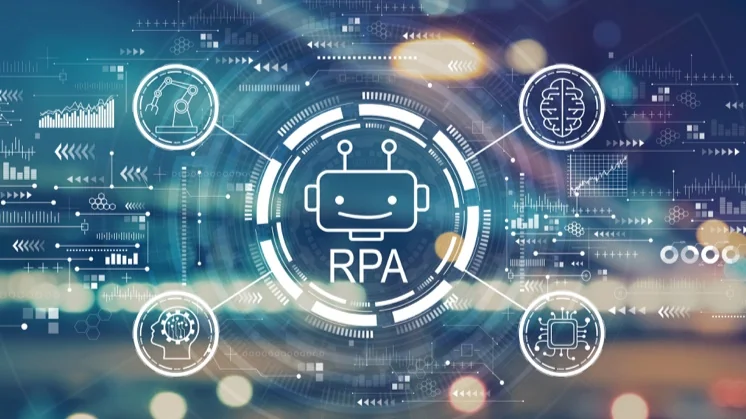
As automation becomes more important and adopted in organizations everywhere, understanding RPA's graph line gains imperativeness. RPA or Robotic Process Automation has become a key aspect of many organizations today. But what is the future of RPA or Robotic Process Automation? What are the changes it's expected to bring about in the coming years? Let's find out.
Related Article- How To Learn RPA UiPath?
The future for RPA seems bright with many trends shaping the picture. Here' are some changes and transformations that we're going to see in the coming years in relation to robotic process automation.
No-code RPA platforms are the epitome of democratizing automation. These platforms enable different kinds of users to automate tasks and processes without having any programming skills. Thus proving useful for citizen developers, power users, business analysts and more.
These platforms have intuitive drag-and-drop interfaces, and pre-built templates and connectors. This makes automation more adaptable and agile.
Very soon, RPA bots will gain prowess to handle more complex jobs that too without any human intervention. This will give employees the chance to focus more intently utilizing their skills where they're actually needed. Similarly, enterprises will save money, time and resources. For instance, a bot understanding an email about a parcel delivery dispute and automatically replying accordingly.
RPA is switching into RPA-as-Service as it provides a subscription-oriented model to access automation capabilities. It's a great model that makes RPA accessible to enterprises by eliminating the requirement of any heavy upfront investment.
RaaS providers are available for organizations at a monthly or annual fee. This gives companies space to scale their RPA usage as per their needs.
You May Also Read - How to Become a Robotic Process Automation (RPA) Developer
A Statista report estimated the RPA market (globally) to reach 81.8 billion USD by 2032. In 2022, it was valued at 3.7 billion USD. Thus, the CAGR between this period for RPA is expected to be 36.6%. These numbers are a clear testament to the steady growth that the field of robotic process automation is showcasing.
Attended automation is certainly on the cards for the coming years. Also called desktop automation, attended automation extends a bot's functionality further. It lives on the desktop and acts as a digital personal assistant for the employees. It guides them on the how-to's of ensuring better customer experiences.
For a long time, RPA bots were used for only a couple of use cases. These include connecting to legacy systems and automating tasks. As artificial intelligence shapes up further, bots will become more resilient. Bots are forecast to gain efficiency in carrying out more human-like activities and with lesser human intervention.
Related Article- What Is Blue Prism? A Guide For Beginners
The future of RPA seems bright as its associated technologies like artificial intelligence evolve too. It'll become more affordable which will lead to more adoption in the coming years. Studying RPA today opens up many job opportunities in different sectors, promoting career growth.
You can also read: DevOps Interview Questions with Answers
The future of RPA in business operations involves the integration and advancement of AI and ML. It will automate more complicated business operations with advancements of these two technologies.
AI has a significant role in the future of RPA. It transforms traditional RPA into Intelligent Process Automation (IPA). This gives better management of unstructured data, adaptive learning and improved decision-making capabilities.
AI will not replace RPA as RPA handles structured tasks and AI handles unstructured or cognitive tasks. Artificial intelligence can complement robotic process automation with its capabilities.
Basic RPA skills can be learned in 2–3 months with regular practice. Hands-on projects and real-time examples help speed up learning.
Popular RPA tools include UiPath, Automation Anywhere and Blue Prism. These tools are widely used and continue to evolve with AI integration.
Explore These Trending Articles:
What Is UiPath: Features, Components, and Architecture
What Is Artificial Intelligence (AI)?
Course Schedule
| Course Name | Batch Type | Details |
| RPA Automation Anywhere Training | Every Weekday | View Details |
| RPA Automation Anywhere Training | Every Weekend | View Details |