Are you preparing for the Pega interview? Well it can be very beneficial for you as Pega experts are earning an average salary of ₹ 98,07,384 in India and $171,500 in the USA. But the question is how? You will need to prepare for the best Pega interview questions and answers and this interview predation guide is all about it.
It is curated by experts for professionals of all levels to help them successfully land a job with a high salary package. It covers various sessions dedicated to different experience levels of candidates from beginners to intermediate and experienced levels. Then why wait? Let’s get started.
Pega is one of the best low-code platforms for developing and deploying enterprise-level applications. This platform is known for its extensive set of features that help individuals build web and enterprise-level applications with ease. Apart from that, it helps businesses automate business processes, improve customer engagement, and build applications with minimal coding. Pega is widely recognized for its strong emphasis on business process management (BPM) and customer relationship management (CRM) solutions. Therefore, demand for this tool and its client experience is higher than ever.
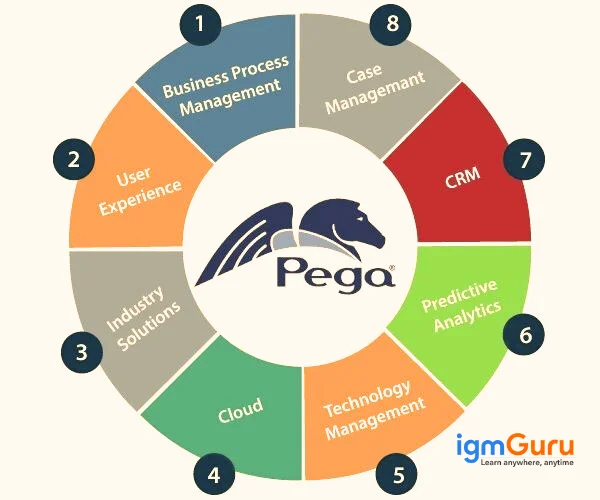
This platform is designed using Java and uses Java and Oops concepts for app development. It also has some in-buit functions that means developers do not have to start from scratch. This tool performs changes quicker than the others due to its Java-driven solution. It is apt for performing different operations including -
To give you a better understanding, we have divided the Pega interview questions and answers in multiple sections. Each section includes the specific types of questions based on experience level and job role.
The first ladder of preparation is to understand basic concepts of relevant technology. Here are some frequently asked Pega interview questions for freshers that will give you a good start in your preparation. It includes concepts like PRPC, data pages, Property-validate and Page-validate methods.
It has various use cases for both individuals and companies like -
Listed below are the classes available on PRPC -
The property-validate technique imposes limitations on property value. These limitations are imposed by the edit validate rule. One can validate multiple properties using this method.
The page-validate technique validates all the properties available on a page. If a page has embedded pages, it will work recursively for validating all the properties. It takes a lot of system resources and time to perform applications. Rule-Obj-Validate rule and Obj-Validate method are employed for validating multiple properties.
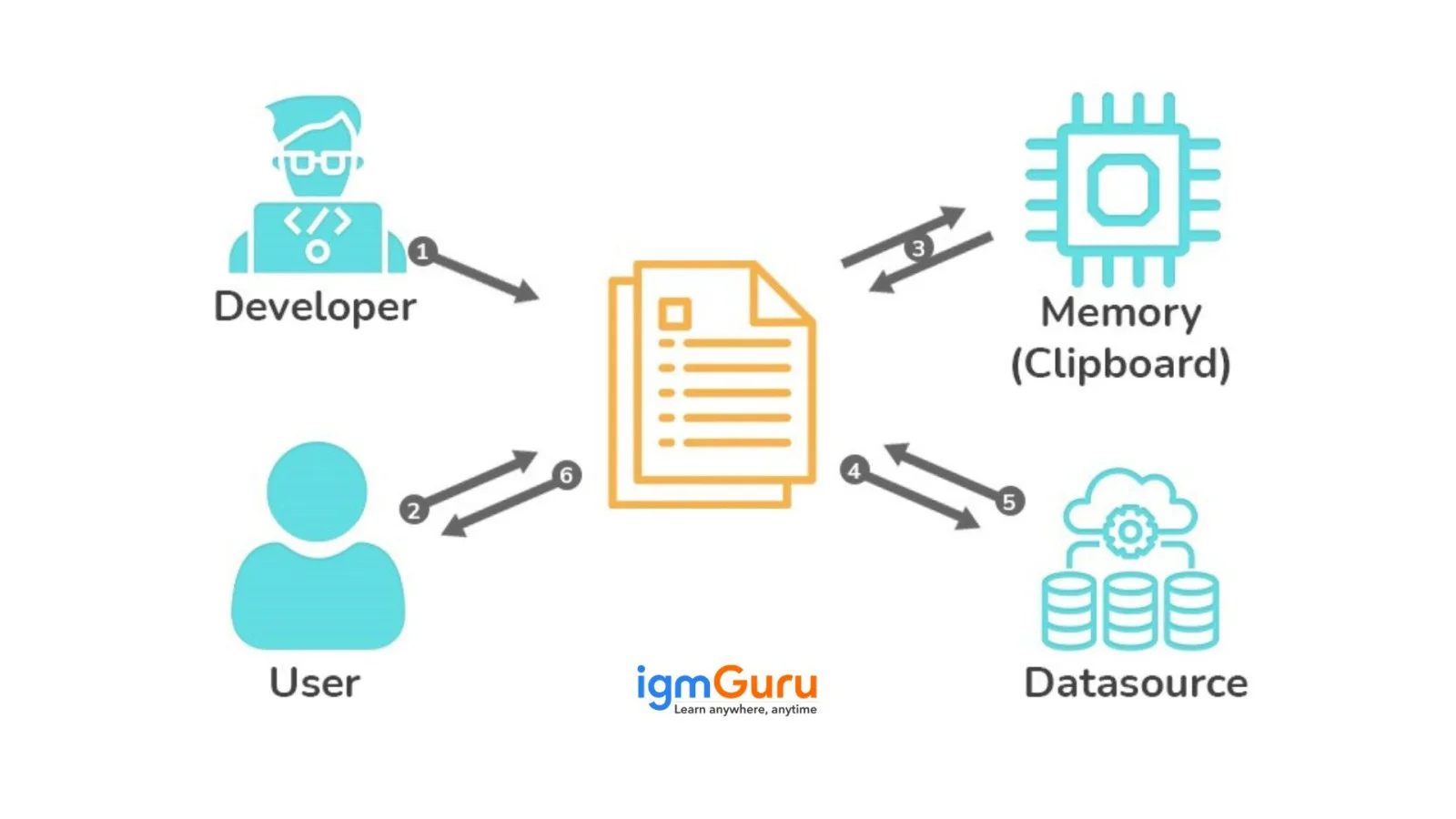
Data pages are key components that retrieves information from a particular data source and caches it in storage. This component manages the integration of data sources which divides business acts from any integration details. This feature facilitates developers to employ supplied information in their application without requiring to understand the connection or data source specifications.
Agents are the internal processes that run in the background of a server to perform regular actions. These are asynchronous and self-contained for executing activities on their own schedules. They can even start a second one before the previous activity is completed.
These are defined according to specific rules (Rule-Agent-Queue rules type). Agent Queue data instances are used to schedule and enable agents (Data-Agent-Queue class). Agents perform many system functions including -
Improving one's career requires more in-depth knowledge. Here we are going to discuss the top Pega interview questions for intermediates to boost your career. This information assists individuals to become capable of higher job roles with good salary packages.
Work objects are the main piece of work completed in an application. It is also the primary source of information that maintains workflow. Users of an application create, edit and then resolve work objects. Each work object is assigned with an unique ID (property pyID), an urgency number and an associated status (property statusWork, pyStatusWork).
Directly Capture Objectives is a way to collaborate from start to finish. It manages alignment among stakeholders for high-quality engagement between IT and business. It is an approach to working which forms a cycle of collaboration, validation and iteration.
There are various types of DCOs available on this platform including -
A service-level agreement (SLA) specifies the deadline of task completion. Businesses frequently create service-level agreements to ensure on-time performance. These commitments vary from informal response-time assurances to written contracts. It is a system for specifying and enforcing the expected response or resolution time for a certain job or scenario. SLAs aid in evaluating and controlling the effectiveness and accuracy of different processes inside an application.
There are total three types of SLA (service level agreements) available including -
To create a workbasket (now called a Work Queue) in Pega, I follow these steps:
The following Pega interview questions for experienced are apt for the individuals who have a rich experience in this field. These will assist them to successfully get a high job position in a well-known company. These job roles include senior system architect, principal application engineer, decisioning consultant, etc.
Flow action is a choice of users to perform the given work in an interim or final disposition. It is an instance of Rule-Obj-FlowAction rule type. There are two types of flow actions available on this platform including -
Listview is a Rule-Obj-ListView rule type that determines a report. The listview reports are personalized according to user requirements. Report wizards define and link listview reports on the portal.
Summaryview is a part of Rule-Obj-SummaryView rule type. It presents a double level report display of summary counts, totals and averages. Individuals can select a row and drill down their supporting details with this feature. It is also used to visualize trend reports and interactive charts.
The inheritance concept is a method to maximize the use of rules and classes. This method reduces the time of developers that leads to improved productivity. Pattern and directed are the two inheritance available on this platform.
HashStringMapactivityKeys = new HashStringMap(); activityKeys.putString("pxObjClass", "Rule-Obj-Activity"); activityKeys.putString("pyClassName", workclass); activityKeys.putString("pyActivityName", "HistoryAndAttachments"); tools.doActivity(activityKeys, workpage, tools.getParameterPage()); |
Prediction studio is a workspace for developers to create, update and monitor predictions and models. It is designed to optimize the customer interaction. It facilitates developers with various features like real time decisioning, centralized AI and personalized experience.
Some job roles require specific knowledge of this platform like integrations, ISA and testing. These roles include analyst, manager, developer who are dedicated to performing special operations. Let's discuss the frequently asked Pega integration interview question.
SSO authentication is implemented to SAML integration through a step by step process. It includes determining the app to be part of SSO structure > selecting a protocol for connecting to the IdP > testing the integration to IdP > verifying user information > deciding the users and roles for app access > ensuring system security.
CORS policy is an access control method to choose users who can access the application. It maintains the security for users when dealing with cross-domain requests. For instance we see various advertisements while using web applications. Clicking on an advertisement redirects users to different websites. CORS policy maintains security of our information in this process.
Service and connect request processors are data instances that give integration options for processing requests. Service request processors specify how to handle queued service request objects. It includes which queue to use and how many times to run requests if they fail. Connect request processors aids asynchronous HTTP or SOAP connectors to define queuing and dequeuing options for the connector.
REST is a web service policy based on resources which is used to build web application APIs. REST is lightweight, easy to understand, highly scalable and does not require high maintenance. This protocol reveals APIs in a uniform, stateless and secure way to consumers. There are four methods to implement this protocol including GET, PUT, POST and DELETE.
Web service description language (WSDL) gives the detailed overview of SOAP services. It describes the entire functionalities of SOAP services and builds assertions, test and mock services. It defines various aspects like attributes and elements that emerge multiple times, optional elements and attributes, and special order of elements.
Pega admin or architect is one of the highly paid job roles in this field. They earn up to ₹32,48,691 per year in India and $187,781 per year in the USA. Here are some frequently asked Pega admin interview questions and answers that will assist individuals to get this job.
The architecture of this platform has disadvantages while integrating with legacy systems. It is a complicated process that may result in reduced scalability and performance. This challenge is mitigated through a hybrid architecture solution for BPM and decisioning. It interfaces with legacy systems with many service layers. Some additional approaches like modular design and rigorous performance testing, are also helpful.
Security is one of the main concerns for any platform. The security concerns in a project can be dealt with a layered strategy. It includes checking if the app design incorporates security features like privilege settings, secure socket layers and access control lists.
It is done by regular security audits to find faults or threats in the development lifecycle. Implement encryption strategies to protect the information for both at rest and in transit.
Managing technical debts is important in software development. Various legacy codes may require refactoring while working on a project. Businesses need rapid development to add new features. All these factors cause high technical debts. This is why managing them is important.
These debts are reduced by managing trade-offs, performing incremental refactoring and aligning technical improvements with business priorities. This technique immediately balances business requirements with long-term system health. This will result in a sustainable development pace.
The process to recover an app from disaster needs a structured architecture. We can employ distributed processing capabilities and a multi-node architecture for designing systems to manage such failures. The external backup strategies, built-in tools and regular testing is also a great option for disaster recovery. It recovers the system immediately after a disaster or outage occurs.
It requires structured planning while working on huge and complicated data sets. This technique manages the scalability and performance of the system. Start by finding entities of core data and relationships between them.
Then build optimized data tables with modeling tools to normalize or denormalize the reduced redundancy whenever required. Use report definitions and data pages to effectively control access and retrieval of information.
Testing is an important aspect of the development life cycle. Interviewers may ask some Pega testing interview questions to check your testing skills. Given below are some best testing questions you should know to become a Pega developer.
Developers in this field are responsible for designing, developing, and maintaining web applications. Their working profile is to understand the requirements of business stakeholders and build solutions according to them. Listed below are the main responsibilities of these developers -
Declarative development is a key feature of this platform. This feature defines the operation needs to be rather than how to do it. It has a drag-and-drop visual interface for building rules and modifying applications. All this process is performed using the low-code development method. This method removes the need for complicated development with a code reusability feature.
ClipboardPageworkpage = tools.findPage(pagename); String propername = workpage.getProperty(".pxResults.Risk").toString(); Or String propertyname= tools.findPage("WorkListPage").getProperty(".pxResults.Risk").toString(); |
Trace tools are useful to test and debug apps by real-time rule execution monitoring. It is done through a step-by-step procedure which includes opening the tracer tool > configuration of settings to manage specific rules > starting the tracer > performing actions on apps > analyzing the tracer output > using information to test and debug apps.
Clipboard is a tool of this platform that visualizes an organized view of data presented in memory. It represents all the properties of pages and the values of properties. It is also responsible for evaluating and configuring data during the execution of the process. Its significance includes debugging, data validation, rule execution, and performance monitoring.
This section lists the most asked Pega interview questions and answers on trending topics in 2026. This knowledge will boost your credibility for the job interviews.
Pegasystems has teamed up with AWS to integrate Amazon Bedrock's LLMs and AWS Transform's agentic AI into Pega Blueprint and the Pega Platform. This boosts modernization, AI-driven workflows, and tackling legacy technical debt more effectively.
Moving from VM-based deployments to containerized architecture on OpenShift enhances scalability, resilience, performance, and modernization. It enables modular components like Kafka and Elasticsearch while ensuring seamless migration with zero business disruption.
As of July 2025, Blueprint uses AI to analyze legacy app UIs (screenshots, videos) and source code to auto-generate data models, logic, and workflows—dramatically accelerating transformation and discovery.
The GenAI suite includes:
Pega blends low-code development with generative AI (via Blueprint, Knowledge Buddy, etc.), enabling citizen developers to rapidly build intelligent, personalized workflows. The platform supports hyperautomation, predictive decisioning, and seamless cloud-native deployment.
Pega GenAI Blueprint is an AI-powered tool that accelerates application development by automatically generating case types, data models, UI forms, and workflows from natural language descriptions or legacy system screenshots. It significantly reduces development time and helps bridge the gap between business requirements and technical implementation.
Pega GenAI Coach provides real-time, context-aware guidance to users while they work inside Pega applications. It suggests next best actions, explains complex processes, and helps users make better decisions. It is especially useful for improving agent productivity in customer service and operations teams.
Pega Robotic Automation (attended automation) works on the user’s desktop to assist employees with repetitive tasks. Pega RPA (unattended automation) runs in the background on servers to automate end-to-end business processes without human intervention. Both are now part of Pega’s intelligent automation suite.
Pega Customer Decision Hub (CDH) uses real-time decisioning powered by adaptive and predictive models. It analyzes customer data, context, and behavior to deliver the Next-Best-Action (NBA) across channels (web, mobile, email, call center). This helps businesses personalize customer experiences and increase conversion rates.
Pega Infinity brings major improvements, such as:
It enables faster development, easier maintenance, and better performance for enterprise applications.
Pega's traditional UI architecture primarily uses sections, harnesses and dynamic layouts to build application interfaces. In contrast, Constellation architecture uses a modern, view-based approach designed around reusable components and APIs.
Constellation separates the presentation layer from application logic and uses the Constellation Design System to provide consistent user experiences. It is designed for modern, cloud-ready Pega applications and can help developers build responsive interfaces while reducing the amount of custom UI configuration required.
Many candidates fail Pega interviews not due to a lack of knowledge but because of conceptual mistakes and poor explanations. You might also make these mistakes in your first attempt. Let’s understand how you can avoid these mistakes:
Avoiding these common mistakes and explaining your answers with practical examples can greatly improve your interview performance and confidence.
Pega offers a unique combination of low-code development capabilities, robust CRM features and AI-powered decisioning. This makes it a popular choice among many organizations looking to automate processes, improve customer experiences and drive digital transformation. Here are some of them:
| Company Name | Website | Employee Size | Revenue |
|---|---|---|---|
| Verizon | verizon.com | > 110,000 | $135B |
| Bank of America | bankofamerica.com | > 200,000 | $94B |
| Blue Shield of California | blueshieldca.com | 7,500 | $17B |
| Highmark Inc. | highmark.com | 35,000 | $34B |
| Accenture | accenture.com | 720,000 | $60B |
We have covered the most frequently asked Pega interview questions and answers in this blog post. These questions include various concepts of this platform, including SLA, DCO, object, testing and more. Understanding these can help you start your career as a Pega developer, Pega Admin or any other related job role.
Ans. Yes. Pega is definitely a good choice for freshers due to its extensive range of features like low-code development. This helps them quickly learn and start their career.
Ans. Pega certification is a proof of your proficiency in using this platform. Having this certification can improve the credibility of holders in interviews.
Pega supports both frontend and backend development. It can be used to build user interfaces (front-end) as well as manage business data and logic (back-end).
The average salary for a Pega Developer is ₹6.8 lakh–7.5 lakh per year in India as per Ambitionbox and around $108,000–$130,000+ per year in the USA depending on experience.
Basic programming knowledge, understanding of business processes and familiarity with Pega rules are helpful.