Artificial Intelligence (AI) is no longer an unfamiliar terminology, it's an intrinsic part of our lives now and it has been encapsulated across all kinds of industries at an extraordinary pace. Artificial intelligence is transforming the globe with its evolutionary capabilities and a broad spectrum of AI technologies exist within this.
This article is curated to highlight the concept of 'Agentic AI' in a comprehensive manner. By the end of this blog, you all will be familiar with all the essential topics including, what is agentic ai, functions, architecture, advantages, examples and use cases of Agentic AI. Let's dive in.
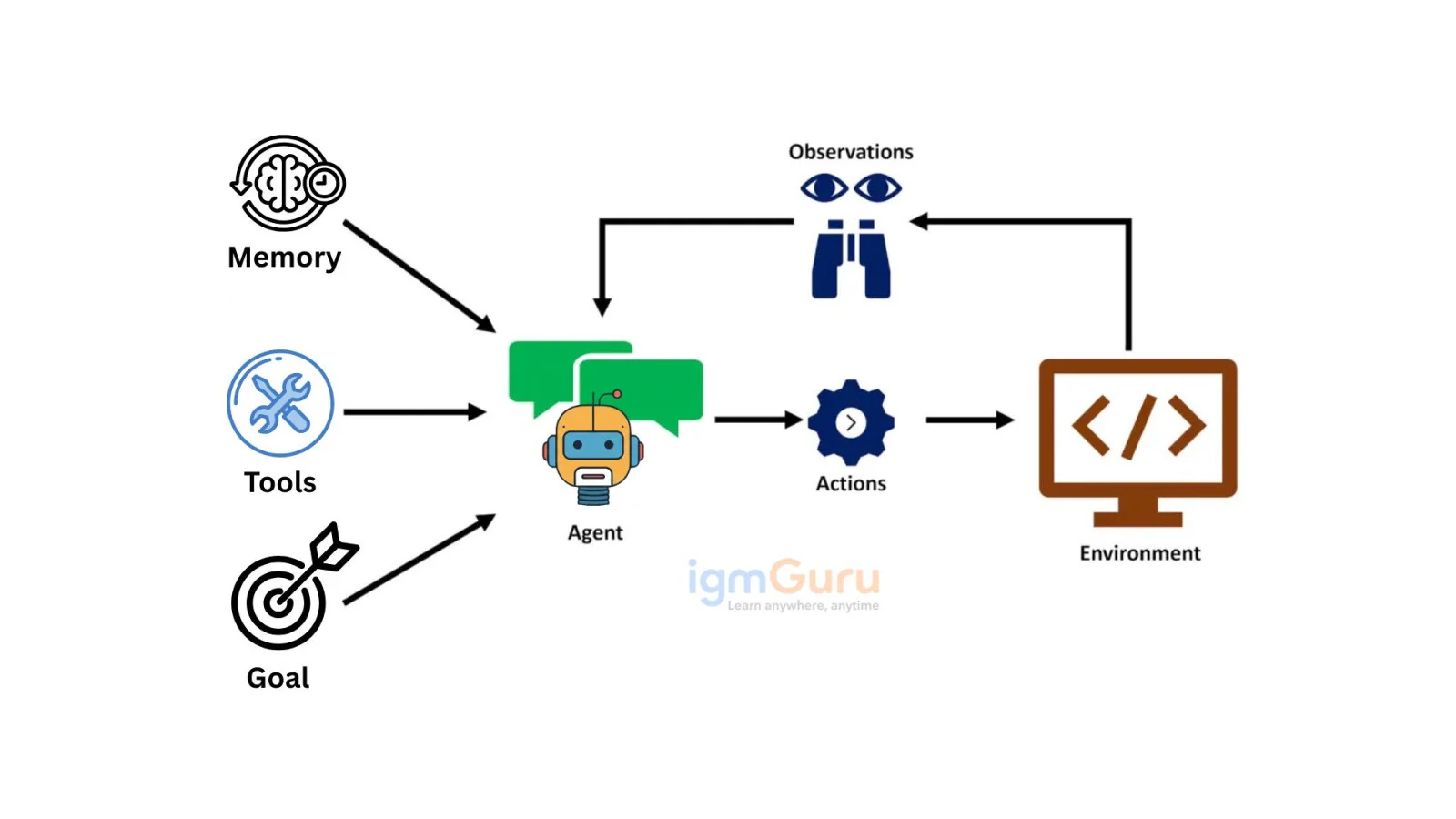
Agentic AI is quite different from traditional AI, it's independent and does not require human participation. It utilizes its internal models to traverse and make empowered choices. The way it operates is through AI agents or machine learning models. These models are capable of imitating the decision-making ability of humans to resolve real-time problems.
It takes on generative AI methods through large language models (LLMs) to work in changing settings. The capabilities of this technology are a step ahead of generative models. While generative models create outcomes based on what they've learnt, agentic AI utilizes that content to attain specified goals.
For instance, ChatGPT can generate everything from texts to code. On the other hand, an agentic AI is capable of handling complex tasks like flight or hotel booking independently by utilizing the generated data. These agents will not only update you about the best time of the year to visit Paris, your flight and hotel will be booked according to your given work schedule.
Agentic AI emphasizes on the ability of artificial intelligence to work autonomously as compared to usual models. This section covers how agentic AI works step by step.
One must keep in mind that an agentic AI is not single model but a collection of models. These models mingle together, different models are assigned with distinct roles. This modular approach simplifies the workflows which might not be possible to achieve with a single model handling it or processing everything sequentially.
For instance, one model serves the role of simplifying complex problems and assigning other subtasks to other models. Once the subtasks are completed, the task manager model will evaluate and integrate the assigned work. In other words, this approach aims at turning the system more responsive and efficient.
The access to external tools is required to make agentic AI function beyond image generation. This could be anything from utilizing databases to keep data or access to APIs for extracting information. Frameworks like LangChain make it easier to connect LLMs to these tools. This allows them to retrieve search results, query databases and interact with software applications.
The ability of agentic AI to function in an asynchronous manner is what makes it unique. This refers to multiple models working on different aspects of a problem at the same time. Unlike usual AI applications which operate in a linear manner, the asynchronous element of agentic AI gives it a decentralized block-chain-like feel.
For instance, one model might analyze contents, another synthesizes a summary or fetch necessary data, all at the same time. This sort of processing brings efficiency but also results in challenges regarding consistency and coordination of outputs.
Read Also - How To Start A Career in Artificial Intelligence
The agentic AI tools landscape is rapidly evolving, with major tech companies and startups competing to dominate the market. Here are the leading platforms reshaping how enterprises automate complex workflows:
What it does: Autonomously completes web-based tasks (booking flights, managing emails, research)
Key capability: Computer use - can see, understand, and interact with web interfaces
Enterprise focus: Task automation at scale
Status: Available to ChatGPT Pro subscribers (2026)
Best for: Web-based workflow automation
Example Use Case: "Book me a flight from Delhi to Mumbai next Friday, then reserve a hotel near the airport within ₹5,000/night budget" → Operator searches, compares, and books automatically.
What it does: Uses vision to understand screens, click elements, type text
Key capability: Multi-step planning and reasoning
Enterprise focus: Secure, enterprise-grade automation
Status: Available via Claude API (claude-opus-4)
Best for: Internal business automation, data analysis workflows
Example Use Case: "Analyze Q3 sales data from our CRM, create visualization and email report to management" → Claude reads the system, extracts data, visualizes it, and sends the report.
What it does: Google's agentic AI for browser automation
Key capability: Understands user intent and completes multi-step tasks
Enterprise focus: Integrated with Google Workspace
Status: Limited rollout in 2026
Best for: Google Workspace automation, search-integrated tasks
Example Use Case: "Find competitive pricing for our product, update our pricing sheet" → Mariner searches competitors, scrapes data, updates sheets automatically.
What it does: Multi-step research with transparency
Key capability: Shows its reasoning chain while researching
Enterprise focus: Research, analysis, data synthesis
Status: Available to pro users
Best for: Market research, competitive analysis
Also Explore: Best AI Agent Frameworks
Agentic AI Architecture
Agentic architecture is set up with core ideas that make it effective and flexible in today's fast-changing tech world. Here's a rundown of these ideas.
This lets AI agents increase their computing power to handle more data and complexity. By using cloud resources and scalable computing, models can grow and keep up with demands without losing performance, which helps companies stay agile.
This helps models learn and improve over time. Unlike older AI methods, RL adapts by interacting with its surroundings and learning from feedback, leading to better decision-making. This means solutions can respond quickly to user needs, which increases satisfaction and engagement.
This means breaking down complex jobs into smaller parts, each focused on specific tasks like sensing or acting. It makes developing and fixing things easier and allows for upgrades without causing major disruptions. By going this route, companies can be more flexible and adapt to new tech as it comes along.
This ensures that different parts can work together smoothly. By using common communication methods and data formats, organizations can blend various technologies and services with ease, boosting efficiency and overall performance.
When combined, these ideas create a solid framework that promotes innovation, flexibility, and efficiency, helping organizations thrive in a constantly changing environment.
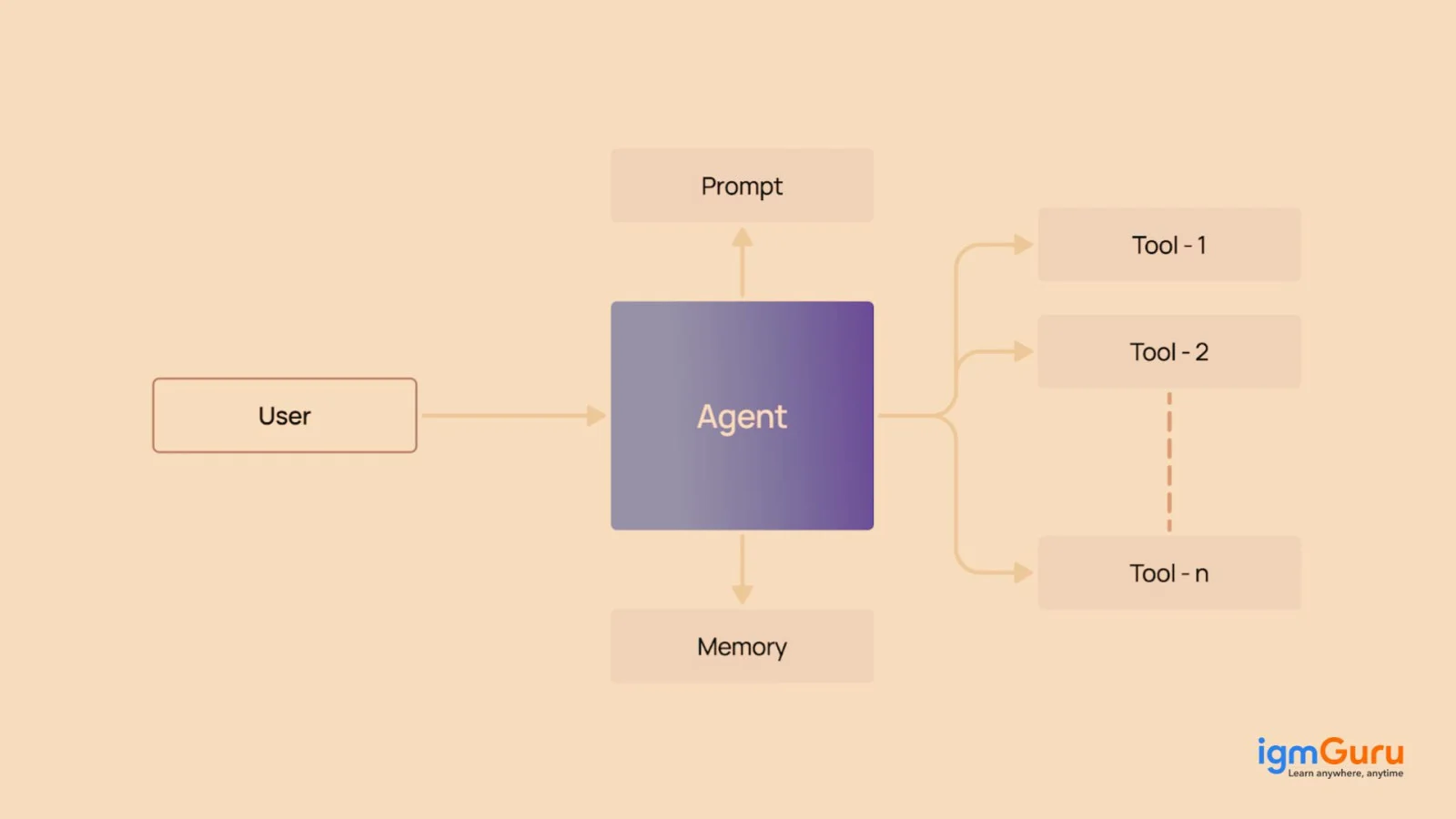
A single-agent system has one AI agent that comes with different tools to solve problems. It works on its own, combining the tools it has with its own reasoning to create and follow a plan step by step. The agent figures out how to reach the user's goals, whether they're simple or complicated, and uses the right tools for each part of the job. As it moves through the steps, it gathers the results to give the final outcome.
How the agent goes about reaching a user's goal can change depending on the tools available, the goals set, and any limits in place. That's why it's important to set up the prompt carefully so that it guides the agent's actions and makes the best use of resources to get the job done.
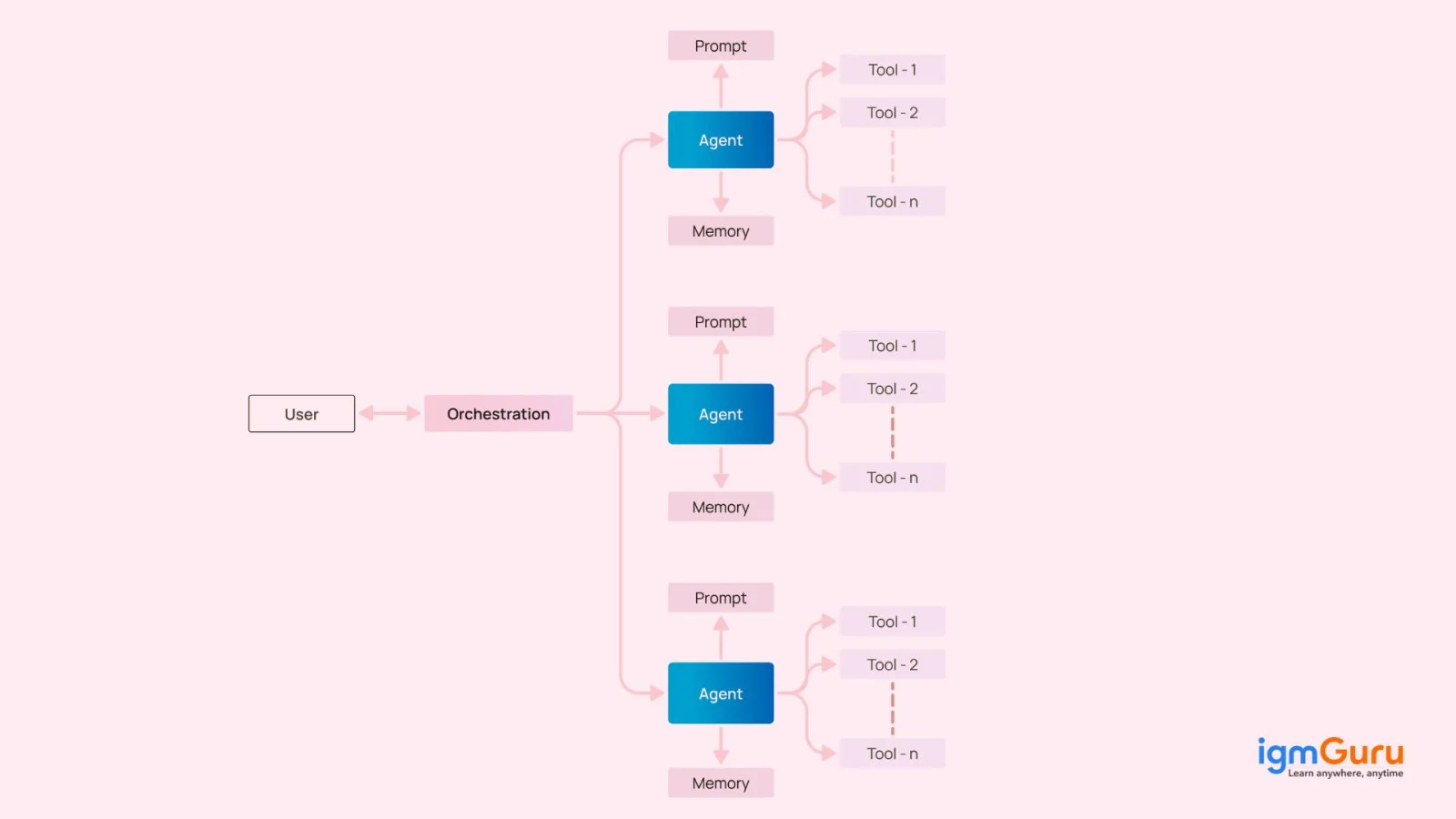
In a multi-agent system (MAS), a bunch of independent agents - each with its own language models - work together to tackle tough tasks. This is different from a single-agent system, where just one agent does all the work. In MAS, each agent has its own role and skills, which makes the whole process more efficient and helps with decision-making. With their different viewpoints and expertise, these agents can team up easily to solve problems better.
One big plus of this setup is that it can easily grow. If more demands come in or new tasks pop up, you can add more agents to the system without having to redesign everything.
Read Also- Types of Artificial Intelligence
Agentic AI doesn't just follow commands- it thinks ahead. It analyzes data, understands situations, and makes smart calls on its own. The best part? It still keeps humans in the loop. Think of it as a reliable co-worker that takes initiative but always checks in when it matters.
This AI actually gets what you mean, not just what you say. It reads tone, context, and intent to respond naturally like a person who's paying attention. Whether you're giving complex instructions or having a quick chat, Agentic AI keeps the flow smooth and meaningful.
Agentic AI keeps learning from every move. It studies patterns, listens to feedback, and improves with time- just like people do. Each interaction helps it perform better, adapt faster, and stay ahead of new challenges. It's the kind of system that never gets stuck in old habits.
You don't have to rebuild your tech stack to use it. Agentic AI plugs right into your existing tools- CRM, ERP, automation software, and more. It connects everything behind the scenes so work flows faster, data stays in sync, and teams get more done with less hassle.
Agentic AI takes security seriously. It locks down sensitive data with encryption, strict access controls, and full transparency. Every action is tracked and accountable. It's built to be trustworthy-protecting your information while making sure AI decisions stay ethical, fair, and totally aligned with your goals.
Agentic AI is getting its recognition across various industries. It's packed with numerous plus points to transform business processes and help organizations prevail. There are both benefits and challenges of implementing agentic AI, but let us first discuss some of its key advantages.
Using an automation system can really help improve how people work by cutting down the time spent on repetitive tasks. This makes everything run smoother, helps with data analysis, improves communication, and offers tailored support.
With AI stepping in for routine jobs, employees can focus on tasks that need human skills like creativity and emotional understanding. When people and AI team up, it not only makes work more productive but also creates a better and more innovative workplace.
It's also worth mentioning that while AI can handle tasks on its own, it's important to keep some human oversight. This way, we make sure everything aligns with company goals and ethical standards.
Now, industries are maximizing productivity with agentic AI solutions. Software agents can handle tough tasks that used to be too complicated for machines. This lets people spend more time on important things like strategic planning, creative solutions, and building better relationships with customers - things that really help businesses grow.
When operational needs grow, regular automation models often need manual updates or hands-on help. But using agentic AI makes things easier, tapping into the perks of cloud platforms, APIs, and LLMs, allowing it to keep up with rising workloads without slowing down.
It gets a boost from a multi-agent setup, where several AI agents work together on linked tasks. For instance, in healthcare, one agent might look at patient data, while another takes care of scheduling - all within a system that cuts down on the need for human involvement.
What really sets agentic AI apart is how quickly it can make decisions and adapt. It can read real-time data, evaluate changing situations, and adjust its actions on the fly - without needing someone to step in all the time.
By mixing fast responses with the ability to learn and adapt, this technology helps keep things agile and simplifies decision-making. For example, an agentic AI helper managing supply chain logistics can look at new info, like shipping delays or changes in demand, and tweak delivery schedules on the spot.
Here are some drawbacks of agentic AI.
AI technology can be hard to figure out. When these models make decisions, it's often not clear how they got there, which can leave users and stakeholders confused about why things happen the way they do. This lack of clarity can shake people's trust and lead to worries about whether the results are fair or trustworthy.
Giving AI the ability to make decisions has its perks, but we need to think about what it really means. Finding the right balance between letting AI do its thing and keeping human oversight is key to avoiding problems and making sure AI acts in a way that's ethical and follows the law.
Bringing AI into business models that hold sensitive information comes with real worries about security and privacy. As these models get more linked and independent, the chances of data leaks and cyberattacks go up.
To get a better understanding of Agentic AI and Generative AI, it's important to know what each one means.
Generative AI is a type of artificial intelligence that creates content like text, images, videos, audio, or software code based on what a user asks for. It uses machine learning models, particularly deep learning models, which imitate how our brains learn and make choices. These models analyze large sets of data to find patterns and relationships, allowing them to comprehend and respond to users' requests in natural language. Then, they can produce high-quality content based on what they've learned.
On the other hand, agentic AI refers to AI models that can make decisions and take actions on their own, working towards complex goals without needing much supervision. This type of AI combines the flexibility of large language models with the precision of traditional programming. It uses tools like natural language processing and machine learning to operate independently and respond to varying situations. Agentic AI is proactive, aiming to fulfill tasks, while generative AI mainly responds to user input. You'll find agentic AI in areas that need smart, autonomous operations, like robotics, data analysis, and virtual assistants.
Let's now look at the differences through a table mentioned below.
| FACTOR | AGENTIC AI | GENERATIVE AI |
| Function | Autonomous, decision-making, task execution. | Content Generation based on input. |
| Interaction Style | A proactive partner. | Human-Like responses. |
| Scope | Automating tasks, making tough decisions, and taking quick action. | Idea generation, content creation and pattern recognition. |
| Workflow | Handles multi-step tasks on its own and adjusts to changes as needed. | It gives results but needs a person to take the next steps. |
Read Also- Top 10 Artificial Intelligence (AI) Jobs You Can Pursue in 2026
Let's now discuss some agentic AI use cases across distinct industries.
Manufacturing is another area where agentic AI shows its potential. This tech can make decisions and take actions on its own across long workflows that involve different functions and IT systems. An agentic AI process might start from ordering materials and go all the way to the actual manufacturing, linking up with various IT systems and using narrow AI for smaller tasks. The AI could manage a detailed workflow like this:
In healthcare, an AI system could gather and keep an eye on patient information, spot odd patterns, and recommend potential treatments for doctors. This wouldn't take over the work of medical professionals but could ease their workload and help with decision-making. There are already AI tools for diagnostics and monitoring, and as these tools get better, they might handle more complicated tasks.
AI can help improve security operations and lower risks for businesses. For instance, AI tools in a security center can look out for new threats, check for any weird activity, and even take action on their own without needing a human to step in. In terms of risk management, these AI agents can spot unusual behavior, dig into those patterns to see if they're really suspicious, and respond automatically if necessary.
Agentic AI can also improve every aspect of customer service, not only in call centers. AI agents can provide human employees with assistance to get quick responses and serve the customers immediately. These agents serve as a supportive tool for employees to serve their customers efficiently.
Agentic AI can serve customers, competing with human employees or traditional AI. For instance, a utility company could use AI to spot customers who might get big bills. They'd reach out to those customers, explain why the bills are high, and offer tips on how to save money in the future.
Agentic AI in 2026 is not just a buzzword; it's set to completely change how we operate. The spending on AI tech is projected to hit $300 billion by 2026, growing at a solid rate of 26.5% each year.
Here are some trends in agentic AI for 2026 that are worth paying attention to:
AI will take the initiative in business operations without needing constant input. Forget about micromanaging. Your AI can spot supplier issues, finalize deals, and adjust logistics without you even being aware it's happening.
AI agents will work together across different teams.
Now, businesses won't have to babysit AI tools. AI will learn and adapt by itself from real-time data.
Companies are becoming more cautious about deploying AI without considering its implications. New regulations mean they need to focus on ethics and accountability.
Industries are looking for AI tailored to their needs.
With the rise of misinformation, companies need frameworks to detect and counteract false narratives.
As technology evolves, organizations must shift to secure their data against future threats. New cryptographic methods will be key to safeguarding sensitive information.
Smart sensors are turning physical spaces into self-optimizing environments. These systems provide useful insights to streamline daily operations.
Sustainability is becoming a big deal. AI workloads will merge with smarter energy-saving tech to cut down carbon footprints.
Different jobs require different computing power. Hybrid computing blends various technologies, directing tasks to the right tools based on needs.
Read Also: Agentic AI Interview Questions and Answers
In this guide What is agentic AI, we have discussed important things about it. Agentic AI is moving fast, and it's just starting to change how businesses and industries operate. It's designed to take action on its own, learn through interactions, and work well with other systems. This kind of AI is really changing the way we do things at work, making processes more efficient, improving decision-making, and even creating new job roles.
AI, or artificial intelligence, is all about teaching computers to do things that usually need human smarts, like learning, solving problems, and making choices. Agentic AI is built to act on its own, make decisions based on what's happening around it, and learn from its experiences.
Agentic AI uses different tools to help smart agents do tasks, talk to users, and adjust to changing situations. These tools include things like information retrieval, communication in multiple languages, automating workflows, and analytical tools.
A bunch of companies are really making strides in agentic AI, like Microsoft, Anthropic, Perplexity AI, NVIDIA, SAP, and Wipro. They're either leading the charge, providing a variety of solutions, or have proven themselves in this area.
Agentic AI is used for performing tasks autonomously by making decisions, setting goals, and taking actions without constant human input.
It is best for autonomously planning and executing tasks, making decisions, and adapting actions to achieve complex goals with minimal human oversight.
It can streamline processes, reduce manual work, and enhance decision-making, helping businesses improve productivity and innovation.
Course Schedule
| Course Name | Batch Type | Details |
| Agentic AI Training | Every Weekday/Weekend | View Details |
| Every Weekday/Weekend | View Details |