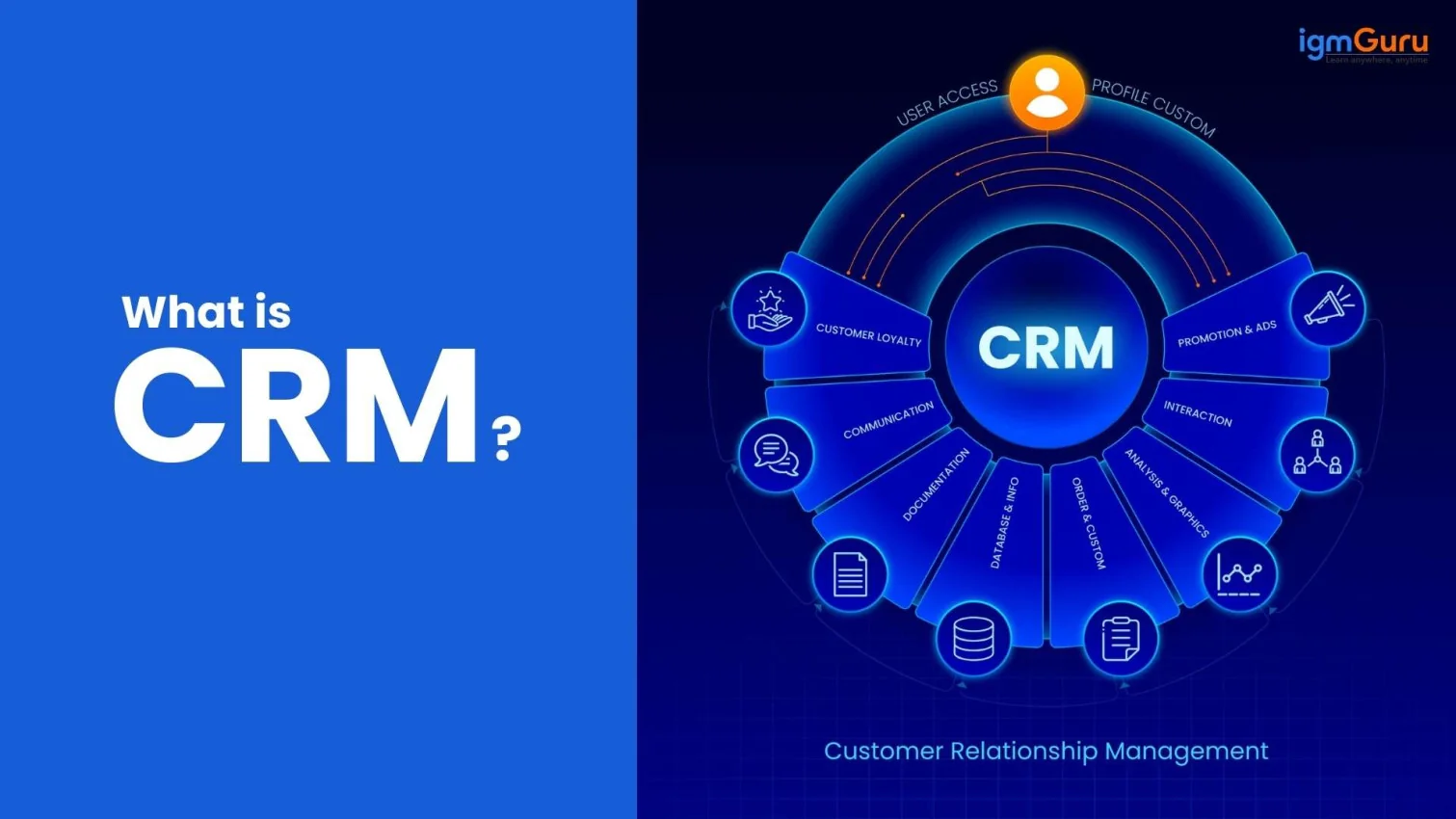
Customer Relationship Management (CRM) refers to the strategies, technologies, and practices used by businesses for managing interactions and relations with new and existing customers. CRM helps SMEs (small and medium-sized enterprises) organize, automate, and synchronize in-house business operations such as sales, marketing, inventory, and more to drive growth.
The main goal of CRM is to improve customer satisfaction and loyalty by knowing about the needs of its customers. This article will dive deep into what is CRM, why it is important for businesses, how it works and more.
Let's start
So, what is CRM? Let's break it down. Customer Relationship Management (CRM) is a business approach supported by technology to manage and analyze customer interactions and data throughout the customer journey. The goal of CRM is to improve business relationships, enhance customer satisfaction, and drive sales growth by organizing customer information in a centralized system. Most modern CRM systems help businesses streamline communication, track leads, automate tasks, and gain insights into customer behavior, ultimately leading to better decision-making and long-term customer loyalty.
Explore igmGuru's Salesforce training program to master Salesforce CRM.
CRM gives a range of features made for managing customer relations and supporting many business functions. So how does CRM work? At the most basic level, this software permits marketers and salespeople to handle and analyze relations with the company's customers. It authorizes tracking each interaction with the company. Through this, while talking to a customer, the marketer always knows who they are and looks at their history with the company. With this, the interaction is more personalized and raises the chances of conversion and reinforces customer trust and loyalty.
We know customers are important as no business continues without a customer base. The way an organization handles its customer database determines the success of a business. So why is CRM important for business? It is important for businesses as it centralizes customer information, smoothens procedures and improves relations with customers.
CRM merges customer information in one database. This makes it easier to access and handle contact details, purchase history and interaction records. This makes sure that everybody in the company has the updated information, lessening errors and enhancing communication.
Through offering tools for tracking customer interactions and preferences it helps businesses make stronger relationships. Sales and support teams can provide personalized service, talking about customer needs and promoting loyalty.
It supports sales teams through managing leads, keeping a track of sales pipelines and automating routine tasks. These features aid teams to focus on high-value activities, following up on leads properly and closing deals faster.
For a better data analysis, the CRM provides tools for tracking performance metrics, customer trends and campaign results. Businesses can make use of these insights to create informed decisions, utilize strategies and recognize growth opportunities.
Automating tasks like data entry, follow-ups and reporting gives a rise to operational efficiency. CRM smoothens workflows, lessens manual work and permits employees to concentrate more on strategic activities.
CRMs can adapt to meet the rising demands of growing businesses. It supports expanding teams, huge customer bases and more complicated procedures. This makes sure that the businesses can handle growth properly.
Related Article - Top Salesforce Developer Skills You Should Learn In 2026
Now, let us take the key benefits and challenges of implementing CRM software.
Successfully implementing a CRM system requires balancing these benefits and challenges by choosing the right software, investing in training, and maintaining a customer-focused approach.
Related Article - Salesforce Career Opportunities
Large organizations leverage CRM systems as strategic assets that connect every department — from marketing to logistics. Modern enterprise-grade CRMs are powered by artificial intelligence, cloud scalability, and advanced analytics to drive performance at scale.
In short, enterprise CRMs transform massive, scattered data into actionable insights — empowering organizations to make smarter decisions, predict market shifts, and maintain customer satisfaction at scale.
Not every business needs a high-cost enterprise CRM. Many startups and SMBs prefer open-source or quick-deployment CRMs that offer flexibility, cost savings, and easy customization without technical complexity. Here are some of the best open-source and accessible CRMs available today:
Odoo CRM is a modular, open-source suite offering everything from sales tracking to invoicing. It’s ideal for startups needing an all-in-one business solution. With community and enterprise editions, it supports ERP and e-commerce integration easily.
SuiteCRM is one of the most popular free alternatives to Salesforce. It’s open-source, customizable, and suitable for businesses that require complete data ownership and flexibility.
Bitrix24 combines CRM, project management, and communication tools in one platform. It offers both cloud and on-premise options, making it great for teams wanting collaboration plus automation.
EspoCRM is lightweight and simple to set up, perfect for small teams. It supports sales automation, email integration, and reporting, with an easy learning curve and strong API support.
Vtiger CRM offers a free community edition and focuses on customer engagement and automation. It’s ideal for startups wanting scalability and integration with cloud telephony or email marketing tools.
These CRMs are great for businesses that value transparency, quick setup, and lower operational costs — while still maintaining strong customer management and analytics capabilities.
CRM is a vital tool for modern businesses seeking to build meaningful relationships with their customers. CRM systems help organizations centralize customer data and streamline communication across departments to enhance customer satisfaction, improve operational efficiency, and drive long-term growth. As customer expectations continue to evolve, adopting a robust CRM strategy is no longer optional — it's essential for staying competitive in today's dynamic market.
Yes, SAP provides CRM functionality via SAP Customer Experience.
Salesforce Sales Cloud, Oracle CRM, and Microsoft 365 are some examples of CRM software.
Industries like real estate, banking, legal, e-commerce, education, and charity organizations make use of CRM systems.
The main three types of CRM are Operational CRM, Analytical CRM and Collaborative CRM.
Basic CRM tools include contact management, sales tracking, customer support, reporting and workflow automation.
Course Schedule
| Course Name | Batch Type | Details |
| Salesforce Certification Courses | Every Weekday | View Details |
| Salesforce Certification Courses | Every Weekend | View Details |