SAP is one of the best emerging technologies that various big companies like HCL, IBM and Accenture are implementing these days. It is helping them to integrate their core business process into one single system. Therefore, careers like SAP FICO Consultants are in humongous demand. Are you preparing for one such role?
Dive into the most asked SAP FICO interview questions and answers in this guide. These are prepared by the top experienced working professionals, who have sat on both sides of the interview table. It will be a perfect SAP FICO interview preparation guide whether you are a beginner, intermediate or experienced professional.
Read Also: SAP EWM Interview Questions and Answers
Let’s begin with the most asked basic SAP FICO interview questions and answers. These questions test your fundamental knowledge.
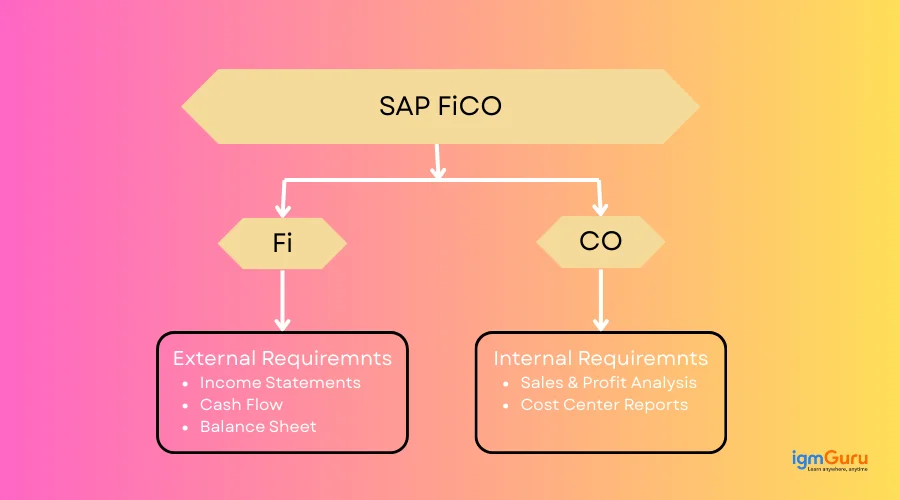
SAP FICO (Financial Accounting and Controlling) is a core SAP module used for financial accounting and management reporting. It is used for recording financial transactions, generating statutory reports, and analyzing internal costs and profitability.
This provides better decision-making capabilities and improves overall financial health. You can use it to manage everything from daily accounts payable/receivable to complex profitability analysis to real-time financial insights.
A Company Code is the smallest organizational unit in SAP for which a complete set of financial statements can be generated.
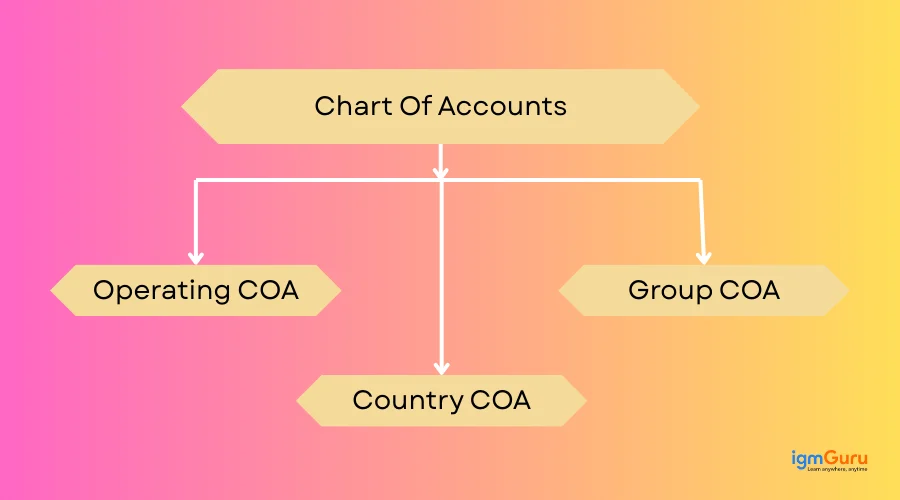
A Chart of Accounts (COA) is a structured list of all general ledger accounts used by a company for recording transactions. The types of COA are:
The General Ledger is the main accounting record that contains all balance sheet and profit & loss accounts.
A Fiscal Year is the accounting period used by a company for financial reporting, which may or may not match the calendar year.
Also Read: SAP ABAP Tutorial for Beginners
A Posting Period defines the time frame in which financial transactions can be posted in SAP.
The main types are:
| Account Type | Description | Examples |
| Asset Accounts | Record what the company owns | Cash, Bank, Machinery, Inventory |
| Liability Accounts | Record what the company owes | Loans, Vendor Payables, Taxes Payable |
| Equity Accounts | Represent the owner’s interest in the company | Share Capital, Retained Earnings |
| Revenue Accounts | Record the income earned by the business | Sales Revenue, Service Income |
| Expense Accounts | Record the costs incurred to run the business | Salary Expense, Rent Expense |
The two main types are Simple posting and Complex posting involving multiple debit and credit lines.
A Posting Key is basically a two-digit code used to control how financial transactions are recorded. It defines if an entry is a debit or credit, the type of account, and the screen layout for data entry.
Think of them as a fundamental guide for the system to process financial line items accurately. They are also used to automate and standardize data entry that ensures correct account determination and processing for various transactions like invoices or payments.
The most important organizational elements are:
Read Also- SAP MM Interview Questions and Answers
Once you master the fundamentals, it is time to become job-ready. Here are some of the most asked SAP FICO interview questions and answers asked to freshers.
Fiscal Year (FY) is the complete 12-month accounting period for financial reporting of a company. It is controlled using a Fiscal Year Variant, which dictates start/end dates, periods, and special periods for adjustments. This ensures legal compliance and accurate financial statements by segmenting transactions into relevant periods for posting and reporting.
It is used by configuring a variant (e.g., Calendar Year or Apr-Mar) in SAP (T-code OB29) and assigning it to your Company Code (T-code OB37). Doing this will enable financial postings within defined periods and manage year-end closing.
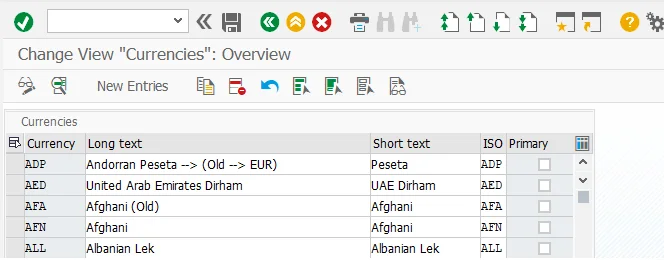
Credit Control is a practice of minimizing financial risk by automatically checking customer credit limits against their outstanding orders, deliveries, and invoices. This practice prevents sales to risky customers, ensures liquidity, and streamlines credit management across company codes for better cash flow and fewer bad debts. It automates creditworthiness checks, blocks problematic sales, and offers flexible setups to align with business needs.
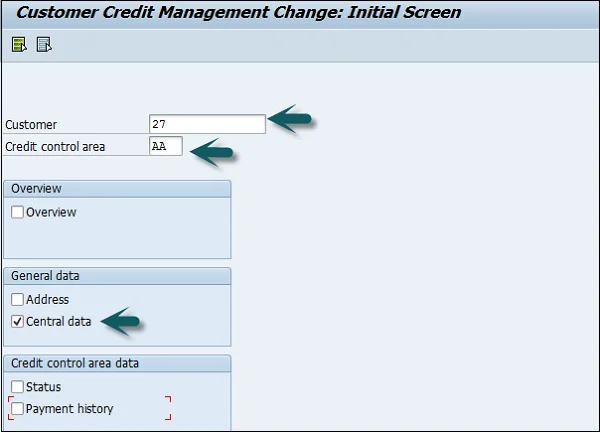
There is only one primary local currency for a standard company code. It is also possible to configure three parallel currencies, including one base local, and two additional for financial reporting. You can also add more via Universal Journal/Ledgers in S/4HANA.
This will allow for different views like group, hard, or index-based reporting. This flexibility supports different accounting needs, such as managing high inflation or specific industry requirements, by adding currencies like hard currency, group currency, or custom types.
A Field Status Group (FSG) controls specific fields like Cost Center, Profit Center for individual General Ledger (G/L) accounts. They also set them as Required, Optional, Suppressed (hidden), or Display during transaction entry.
A Field Status Variant (FSV) is a collection of these FSGs, which is assigned to a Company Code that applies consistent field control rules across many accounts. This ensures uniformity and guides users to input necessary data when posting financial documents.
A Year Shift is an important setting in Fiscal Year Variants. These are used to adjust dates when a company's financial year doesn't align perfectly with the standard calendar year. This allows periods that cross calendar years to map correctly into one fiscal year, using +1, -1, or 0 to shift calendar dates into the right fiscal period. This way you can get accurate financial reporting.
Read Also: What is SAP Analytics Cloud (SAC)?
FI acts as the central financial hub in SAP. Any business transaction that affects money, sales, purchases, payroll, or assets, automatically posts accounting entries in FI using one of these integration methods:
| Integration Method | Description | Example |
| Real-time Integration | Financial postings are created automatically at the time of transaction execution | Goods receipt in MM creates accounting entries in FI |
| Periodic Integration | Data is transferred to FI at regular intervals | Payroll posting from HR to FI |
| External System Integration | FI integrates with non-SAP systems using interfaces | Bank statements imported into FI |
| SAP Module | Integration Area |
| MM (Materials Management) | Inventory valuation, goods receipt, invoice verification |
| SD (Sales and Distribution) | Billing, customer receivables, revenue posting |
| HR / HCM | Payroll accounting |
| CO (Controlling) | Cost and profit analysis |
| AA (Asset Accounting) | Asset capitalization and depreciation |
| Banking Systems | Electronic bank statements |
Substitution and Validation are powerful data management tools. These are used to automate business rules. They both enforce data quality and consistency by acting at the point of entry, saving manual effort and preventing errors before they become permanent.
Substitution automatically replaces or derives data as it's entered. E.g. setting a default cost center. Validation checks entered data against rules, issuing errors or warnings if conditions aren't met. E.g., ensuring mandatory fields are filled or specific codes match.
Validation is used to check and restrict incorrect postings, while substitution is used to automatically derive or replace values during FI document posting. Here is a detailed view into their use cases:
| Aspect | Validation | Substitution |
| Purpose | To check the correctness of data entered | To automatically change or derive field values |
| When Used | During FI document posting | During FI document posting |
| Posting Stage | Before the document is saved | Before the document is saved |
| Effect on Posting | Can stop posting if conditions fail | Does not stop posting, only modifies values |
| Usage Level | Header level, line item level, complete document | Header level, line item level |
| Common Use Cases | Mandatory field checks, blocking wrong postings | Auto-deriving profit center, cost center |
| Modules | FI-GL, FI-AP, FI-AR, MM-FI, SD-FI | FI-GL, FI-AP, FI-AR, CO |
| Real-life Example | Prevent posting without cost center | Assign profit center based on cost center |
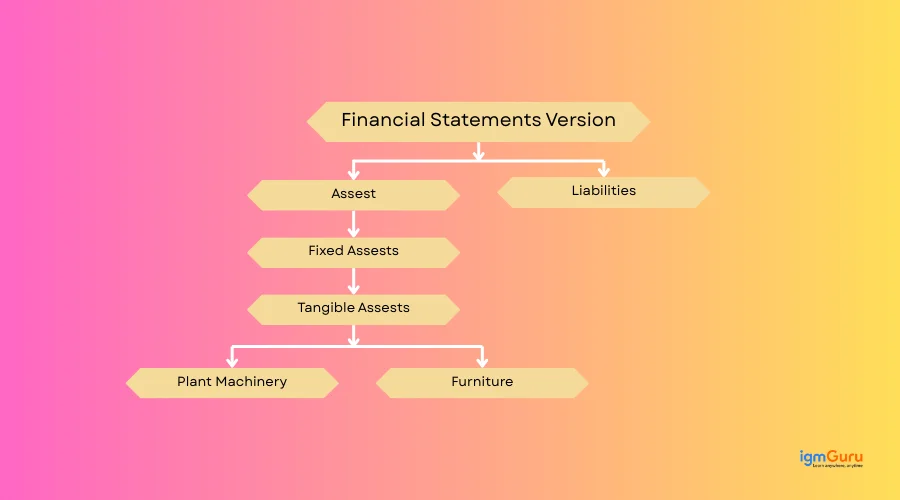
FSV is used to structure and present financial data in a standardized format. It shows how G/L accounts are grouped and displayed in financial reports such as the Balance Sheet and Profit & Loss statement. FSV helps organizations generate legally compliant and management-friendly financial statements.’
Read Also: SAP Analytics Cloud Tutorial For Beginners
Common G/L reports and the purpose of their use:
| Report Name | T-Code | Purpose |
| G/L Account Balance Display | FS10N | Displays balances of G/L accounts by period |
| G/L Account Line Item Display | FBL3N | Shows individual line items posted to a G/L account |
| Trial Balance | S_ALR_87012277 | Displays debit and credit balances of all G/L accounts |
| Balance Sheet | S_ALR_87012284 | Shows assets, liabilities, and equity using FSV |
| Profit & Loss Statement | S_ALR_87012279 | Displays income and expenses based on FSV |
| Document Journal | S_ALR_87012287 | Lists all FI documents posted in a period |
| G/L Account Totals Report | S_ALR_87012301 | Shows summarized G/L postings |
| Financial Statements (Classic) | F.01 | Generates Balance Sheet and P&L |
| Account Analysis | FAGLL03 | New G/L line item display with real-time data |
| Audit Trail Report | S_ALR_87012291 | Helps track document changes for auditing |
This list includes some of the most asked SAP FICO interview questions and answers for intermediates. These questions are asked to check what you learn in your previous job role.
Business areas are organizational units that track specific operations for internal reporting. This helps to generate separate financial statements for better performance analysis, decision-making, and management of diverse business segments. It is especially useful in large companies using systems like SAP FI.
They offer segmented financial clarity, improve strategic insights, and enable focused resource allocation. This helps them move beyond just company-wide reports to detailed operational views.
Both Company Code and Controlling Area are organizational units, but they serve different purposes and belong to different modules. Here are some differences between them:
| Aspect | Company Code | Controlling Area |
| Module | FI (Financial Accounting) | CO (Controlling) |
| Purpose | Legal & statutory reporting | Internal cost control |
| Represents | Legal entity | Cost accounting entity |
| Reporting type | External | Internal |
| Financial statements | Mandatory | Not generated |
| Relationship | Assigned to one controlling area | Can include multiple company codes |
| Currency | Company code currency | Controlling area currency |
FI-GL (Financial Accounting - General Ledger) is the core system for recording all business transactions. It acts like the central hub for a company's financial data that provides a complete financial picture through integrated sub-ledgers and enables accurate reporting for compliance and decision-making. Its importance lies in ensuring data accuracy, providing real-time insights, supporting statutory/management reporting, and forming the foundation for all other financial processes.
A One-Time Vendor (OTV) is a special collective vendor master record for infrequent, non-repetitive purchases. This helps to avoid clutter from many individual vendors; instead of storing full details upfront (XK01/BP).
It is essential to enter address info directly into purchase orders (PO) or invoices when needed, using a specific account group (like CPD). This suppresses master data fields until transaction time to simplify data entry for single-use suppliers.
The organizational structure forms the backbone for financial reporting. It represents a company's legal and financial setup in the SAP system, with key elements like the Client, Company Code, Chart of Accounts, Business Area, Chart of Depreciation, and Profit Center. This ensures the integration with other modules like Controlling for comprehensive financial management.
Read Also: What is SAP GRC (Governance, Risk, and Compliance)?
These three terms are closely related but serve different accounting purposes. Here are some common differences between them:
| Aspect | G/L Account | Reconciliation Account | Sub-ledger |
| Type | Main accounting account | Special G/L account | Detailed ledger |
| Posting allowed | Yes | No (automatic only) | Yes |
| Purpose | Financial statements | Link sub-ledger to G/L | Detailed tracking |
| Level of detail | Summary | Summary | Detailed |
| Used in | FI-GL | FI-AR / FI-AP / FI-AA | AR, AP, Asset Accounting |
| Example | Rent Expense | Vendor Recon Account | Individual vendor record |
Document splitting is an accounting feature that breaks down a single financial document into multiple smaller line items. It helps in balancing debits and credits at a more granular level, such as by profit center or segment. It is crucial for accurate and transparent financial reporting.
Companies with complex structures or those needing to report across different business segments or accounting principles (like IFRS or GAAP) mostly use this feature. This functionality automatically creates additional line items based on predefined rules to ensure that each segment's financial statements are balanced. They make segment-level reporting possible without manual intervention.
Primary costs directly link to Financial Accounting via G/L accounts for external reporting, while Secondary costs are internal to Controlling for allocating costs between departments. Secondary cost does not appear in external reports, which act as cost carriers within the CO module to manage internal cost flows.
| Aspect | Primary Costs | Secondary Costs |
| Origin | External (FI) | Internal (CO) |
| Module | FI + CO | CO only |
| G/L impact | Yes | No |
| Used for | Actual expenses | Internal allocations |
| Financial statements | Appear | Do not appear |
| Cost element type | Primary cost element | Secondary cost element |
Parallel accounting is a special accounting approach where a company maintains separate sets of financial records simultaneously to satisfy the reporting requirements of different accounting standards. A single company may have to report financials under:
I have worked with parallel accounting in my project. We used the leading ledger for Local GAAP reporting and a non-leading ledger for IFRS. Depreciation differences were handled using separate depreciation areas in Asset Accounting, and valuation differences were posted automatically to the respective ledgers. This helped us generate statutory and group financial statements from the same system.
Document types categorize information like invoices, contracts, medical records by their structure and purpose. This means it defines fields and rules, which is crucial for automation, organization, compliance, and efficient data management. This enables systems to process, store, and retrieve specific data accurately, ensuring consistency and meeting legal requirements.
Read Also: SAP GRC Interview Questions and Answers
Now, we will discuss the most frequently asked advanced SAP FICO interview questions and answers. These are apt for professionals with more than 3 years of experience.
A Credit Control Area is an organizational unit in SAP used to manage and monitor customer credit limits. It helps control customer risk by tracking credit exposure, open orders, deliveries, and receivables. One Credit Control Area can be assigned to one or multiple company codes. Here are the steps to create a Credit Control Area:
To create a Credit Control Area:
You can use exchange rates to define and manage the relationship between two currencies. It also helps translate an amount into another currency. Exchange rates are defined for the following reasons:
Field Status Groups control the surface structure and behavior of fields during document entry in SAP. They determine whether a field is required, optional, display-only, or suppressed when posting to a G/L account. Field status groups help ensure correct and consistent data entry in financial transactions.
A customer may be blocked for different reasons, like overdue payments, credit limit breaches, high credit risk, legal disputes, or inactive accounts to prevent further financial exposure. The ultimate goal is to secure the company's financial assets. Blocking them includes the following steps:
Depreciation to the day is a method of calculating asset depreciation based on the exact number of days the asset is in use. It is useful when assets are capitalized or retired mid-month to ensure accurate and fair depreciation. Calculating it involves the following steps:
A GR/IR clearing account is a temporary G/L account used to record the difference between goods receipt (GR) and invoice receipt (IR) in the procure-to-pay process. It is used when goods receipt and invoice receipt occur at different times. It is automatically posted during GR and IR transactions, and open balances are cleared once both goods receipt and invoice receipt are posted.
Read Also: How To Get A Workday HCM Certification?
A one-time vendor is a special vendor master used for occasional or non-recurring suppliers. It does not require to create a separate master record for each vendor. This is mostly used to reduce master data maintenance and avoid creating multiple vendor records for infrequent transactions. It is configured by creating a one-time vendor account and entering vendor details manually during document posting.
FI-GL Accounting is a core component of this platform. It is used to record and summarize all financial transactions of a company. It helps to provide a complete and real-time view of financial position for reporting, compliance, and decision-making. It works by posting entries from sub-modules like AP, AR, and AA into G/L accounts to generate financial statements such as the balance sheet and profit & loss account.
Posting Period Variants (PPVs) are important control tools that define which accounting periods are open or closed for financial postings. This helps to ensure data integrity during month/year-end closing by restricting entries to specific times for different account types.
They allow for flexibility, using intervals for normal transactions and special adjustments, with the latter supporting authorization groups to limit user access. This prevents errors and reconciles statements accurately.
Terms of Payment are basically the payment conditions agreed with customers or vendors. They are used to determine due dates, cash discounts, and payment schedules during invoice posting. You can define them in OBB8 and assign them to customer/vendor masters. Here SAP automatically calculates due dates based on the maintained rules. These terms are company specific and can be configured whenever required.
A SAP FICO Consultant is among the most in-demand job roles in today’s industry. They are getting up to 13.4 to 14.8 LPA in India and $136,779 to $151,105 in the USA.
The Universal Journal (table ACDOCA) merges FI and CO data into a single line-item table. Earlier FI and CO were used with separate tables, which required reconciliation. Now, every financial and controlling posting is stored in one place. This helps to eliminate reconciliation issues and enables real-time reporting. This significantly improves data consistency, speed, and transparency across finance.
The biggest challenges are data consistency, custom code adaptation, and document splitting conflicts. I worked closely with my team to resolve these issues. We validated balances using reconciliation reports, adapted custom Z programs to ACDOCA-compatible logic, and resolved document splitting errors by adjusting zero-balance settings. We also ran pre-checks and multiple test cycles keys for a smooth transition.
This type of issue requires CDS Views and embedded analytics. Using custom CDS views allows real-time reporting directly on ACDOCA without performance issues. These reports can be consumed in Fiori apps or SAP Analytics Cloud. This approach avoids heavy ABAP reports and uses HANA’s in-memory capabilities.
Asset Accounting is fully integrated with the Universal Journal. There are no separate reconciliation postings. This means asset transactions post directly to G/L in real time. Classic asset tables like ANEK and ANEP are then replaced with ACDOCA entries. This simplifies reporting, improves transparency, and ensures parallel accounting works seamlessly across ledgers.
Parallel accounting is managed using leading and non-leading ledgers or extension ledgers. The leading ledger handles local GAAP, while non-leading ledgers handle IFRS or group reporting. Different valuation methods and depreciation areas post automatically to the relevant ledger. Since everything is stored in ACDOCA, reconciliation issues are eliminated.
Performance issues are usually caused by legacy reports using SELECT statements on removed index tables. I replace them with CDS-based reporting and ensure filters are pushed down to the database layer. I also avoid aggregation in ABAP and rely on HANA’s in-memory processing. This results in faster execution and scalable reporting.
Also Read: Workday Tutorial For Beginners
Business Partner (BP) unifies customer and vendor master data into a single object. The biggest issues during conversion are number mapping, missing roles, and CVI errors. These are resolved by proper BP role assignment, cleansing master data before migration, and running CVI reconciliation. After the stabilization, BP simplifies master data governance significantly.
I ensure compliance through document flow visibility, change logs, audit trails, and strict authorization controls. The S/4HANA provides real-time reporting for auditors via Fiori apps and CDS views. We also use validation rules and approval workflows to prevent incorrect postings. This ensures audit readiness at any point in time.
The bank integration requires the use of Electronic Bank Statements (EBS) with automated posting rules and exception handling. Tax platforms require the use of APIs or middleware like CPI. You can manage error handling through monitoring tools and reprocessing mechanisms to ensure financial postings remain accurate and traceable.
I start by identifying bottlenecks using reconciliation reports, open item analysis, and ledger consistency checks. Then I prioritize critical issues such as unposted depreciation, blocked invoices, or reconciliation differences. Using the Financial Closing Cockpit, I standardize tasks and timelines to stabilize and accelerate future closing cycles.
Year-end closing is a structured process that ensures financial statements are accurate and compliant before the new fiscal year begins. I start by verifying that all business transactions have been posted and reconciled across Accounts Payable, Accounts Receivable, Asset Accounting, and General Ledger.
Next, I execute foreign currency valuation, depreciation posting, accruals, and provisions where applicable. I reconcile FI and CO balances, clear open items, and review the trial balance for inconsistencies. Once all validations are complete, I use the Financial Closing Cockpit to execute and monitor closing tasks, generate the Balance Sheet and Profit & Loss reports, and finally carry forward balances to the new fiscal year. Proper documentation and reconciliation reports are maintained throughout the process to ensure audit compliance.
Here are some of the most asked SAP FICO interview questions and answers, mostly asked to check your problem-solving skills. Preparing with these can help you showcase your skills and establish your credibility.
I would first check the Field Status Group and Posting Key configuration to verify whether the Cost Center field is set as required. Then I would analyze validations configured through OB28 to see if any custom logic exists. If the issue occurs only for certain document types or users, I would also verify document type settings and user exits/BAdIs. After identifying the root cause, I would update the configuration and test postings in QA before moving changes to production.
I would begin by running reconciliation reports between FI and CO to identify the mismatch source. Then I would check whether all CO assessments, distributions, and settlement cycles were completed successfully. I would also verify if any direct FI postings bypassed CO objects. After identifying missing or incorrect postings, I would repost or adjust entries and validate balances again before completing the closing process.
I would recommend using Profit Centers, Business Areas, or Segment Reporting, depending on reporting requirements. Profit Centers are generally preferred in S/4HANA because they provide detailed internal reporting and integrate well with Universal Journal reporting. I would configure the required organizational structure, assign master data accordingly, and ensure document splitting is enabled if segment-level balancing is needed.
First, I would verify whether the posting period should temporarily be reopened using the Posting Period Variant configuration. If business approval is available, I would reopen the required period in a controlled manner, reverse the incorrect posting, and repost the document in the correct fiscal period. I would also maintain proper audit documentation to ensure compliance and transparency.
I would first analyze all custom reports to identify dependencies on old aggregate or index tables that are no longer used in S/4HANA. Then I would redesign critical reports using CDS Views and ACDOCA-compatible logic. I would also perform testing in the sandbox and QA systems to validate performance, reconciliation, and reporting accuracy before production deployment.
Read Also: How To Learn WorkDay?
I would start by using the Vendor Line Item Report (FBL1N) to identify duplicate postings against the same vendor and invoice reference number. Once confirmed, I would check whether the payment has already been cleared or is still open.
If the payment is open, I would reverse the duplicate document using FB08 (individual reversal) with the appropriate reversal reason and posting date. If it has already been cleared against the vendor account, I would first reset the clearing using FBRA, then reverse the original document.
To recover the amount, a debit memo or adjustment posting would be raised, and the vendor would be informed for reconciliation. Going forward, I would recommend activating Duplicate Invoice Check in the vendor master and document type configuration to prevent such entries automatically.
I would first identify the affected documents in the Universal Journal (ACDOCA) and compare the incorrect profit center with the expected derivation. Then I would check the relevant master data, substitution rules, document types, and account assignments to determine where the incorrect value was derived.
If the issue is caused by incorrect master data, I would correct the relevant profit center assignment and validate the impact on subsequent postings. If a substitution or derivation rule is responsible, I would review the configuration and adjust the rule after testing it in the QA environment.
Finally, I would identify all affected documents, make the required correction or reversal postings according to the business process, and reconcile the FI and CO balances. I would also add validation checks and regression testing to prevent the same issue from occurring after future migrations or configuration changes.
This article has covered a comprehensive list of SAP FICO interview questions with detailed answers. Exploring them will make you ready to tackle your next SAP FI interview. Keep practicing and exploring new trending technologies to stay updated with the real-time knowledge. It will help you get your dream job.
An SAP FICO Consultant varies significantly with experience, location and company. They get 13.4 to 14.8 LPA in India and $70k to $180k per annum in the USA.
The demand of SAP FICO consultants is growing rapidly with the global shift from SAP ECC to S/4HANA. This means it will be a great career choice in 2026 and beyond.
Explore Our Trending Articles-
Course Schedule
| Course Name | Batch Type | Details |
| SAP FICO Training | Every Weekday | View Details |
| SAP FICO Training | Every Weekend | View Details |