Entering digital advertising with Google Ads can be exhilarating and overwhelming. I have been through this new hiring process and can vouch for the amount of knowledge needed and confidence required to make the cut. In this blog, I have collected comprehensive Google Ads interview questions that are based on my experiences and knowledge to give you the best chance at success.
Whether just starting, working on new techniques or cutting-edge approaches, you can use this guide as a reference for every level of the Google Ads space to give you clarity, build your confidence and provide you with the tools to prepare to be a successful candidate in your next Google Ads interview.
Here are some questions designed to test a candidate’s basic knowledge and understanding of Google Ads concepts to make sure that they have a strong foundation.
Google Ads is a tool by Google that helps individuals and businesses show their ads to others on the internet. These ads can appear when someone searches on Google, watches videos on YouTube or visits other websites that work with Google.
In simple words, you can say that it helps you promote your product or service online to the right people. It operates through an auction system that considers both bid amount and ad quality (Ad Rank) to determine which ads to show.
There are so many types of Google ad campaigns, such as:
Keyword match types define how closely a user’s search query must match a keyword for an ad to appear. There are mainly three types:
Click-Through Rate is the percentage of users who click on an ad after seeing it. It is calculated as Clicks ÷ Impressions × 100. When you have a higher CTR, that means the ad was relevant and engaging.
Ad extensions are additional information added to ads to improve visibility and performance. They make ads more informative and can increase CTR. For example:
Negative keywords are those types of words or phrases that stop ads from showing for certain searches. They help avoid irrelevant traffic and save money by preventing clicks from people who are not interested. This ensures ads are shown only to the right audience. For example, adding "jobs" to skip job seekers or "cheap" for luxury services.
Cost Per Click is the amount paid each time a user clicks on an ad. It is influenced by competition, bidding strategy, and quality score. Efficient campaigns aim for lower CPC with strong performance.
Google Display Network is a group of websites, apps, and YouTube where ads can appear in the form of images, banners or videos. It helps reach people while they are browsing online, not just searching on Google.
Conversion is when a user completes a desired action after clicking an ad. This action can be a purchase, sign-up, download or any goal set by the advertiser.
A landing page is the webpage where users go after clicking an ad. It should match the ad content and help users take the desired action, like buying a product or filling a form.
Also Explore: Technical Interview Questions and Answers
The following are some intermediate-level Google Ads interview questions and answers designed to assess a candidate’s hands-on experience with campaign management, optimization techniques and performance-driven strategies.
Keyword research starts with understanding the business goal and user intent. Tools like Google Keyword Planner are used to find relevant keywords based on search volume, competition and cost-per-click. Competitor analysis and search term reports help identify additional opportunities. A mix of broad, phrase, and exact match keywords is selected, along with negative keywords to filter irrelevant traffic. The focus remains on choosing keywords that align with high-intent user queries.
Effective ad copy includes a strong headline with the main keyword, a clear value proposition and a compelling call-to-action such as “Buy Now” or “Get a Quote.” Benefits are emphasized over features and the messaging is aligned with the user’s intent. Ad extensions like sitelinks and callouts are used to improve visibility and CTR. Consistency between the keyword, ad copy and landing page is maintained to improve performance.
Quality Score is improved by optimizing three key factors: expected CTR, ad relevance and landing page experience. Ads are made highly relevant to keywords and tightly themed ad groups are created. Landing pages are optimized for speed, mobile responsiveness and content relevance. Continuous testing of ad variations helps improve CTR, which directly impacts Quality Score.
Campaign optimization involves regularly analyzing performance data. Underperforming keywords and ads are paused or refined. Search term reports are reviewed to add new keywords and negatives. Bids are adjusted based on performance and budgets are allocated to high-performing areas. Optimization is also done based on device, location and time of day. Continuous A/B testing is used to improve results.
Key metrics include Click-Through Rate (CTR), Cost Per Click (CPC), Conversion Rate, Cost Per Acquisition (CPA) and Return on Ad Spend (ROAS). Impression Share and Quality Score are also monitored to evaluate visibility and ad relevance. These metrics help measure campaign performance and profitability.
Conversion tracking measures important user actions such as purchases, form submissions or sign-ups. It is set up by creating a conversion action in Google Ads and installing a tracking tag on the website, either directly or via Google Tag Manager. Once implemented, the setup is verified to ensure accurate tracking. This data helps evaluate campaign success and optimize performance.
A/B testing involves running multiple versions of an ad to determine which performs better. Variations can include different headlines, descriptions or calls-to-action. Only one element is changed at a time to ensure accurate results. Performance is measured using metrics like CTR, conversion rate and CPA and the best-performing version is scaled.
Remarketing targets users who have previously interacted with a website or app. Audience lists are created using tracking tags and tailored ads are shown to these users across search, display or YouTube. Segmentation is important, such as targeting cart abandoners or past customers differently. Dynamic remarketing can be used to show personalized product ads, increasing the chances of conversion.
Bid strategy is chosen based on campaign goals. For traffic, Maximize Clicks is suitable. For conversions, strategies like Maximize Conversions or Target CPA are used. For revenue-focused campaigns, Target ROAS is preferred. The decision also depends on available data, as automated strategies perform better with sufficient historical data. Continuous monitoring and adjustments are necessary.
Audience targeting is done using a combination of demographics, location and audience segments such as in-market and affinity audiences. Keywords are used to capture user intent, while remarketing lists help re-engage previous visitors. Custom audiences can also be created for more precise targeting. The goal is to reach users who are most likely to convert while minimizing wasted spend.
Related Article: Digital Marketing Interview Questions and Answers
The following are some interview questions for those who have 5+ years of work experience in this relevant field.
I focus on aligning campaign goals with business KPIs (revenue, profit, LTV). I optimize by refining targeting, improving Quality Score, testing creatives and reallocating budget toward high-converting segments. Continuous A/B testing, conversion tracking accuracy and bid strategy adjustments (like tROAS) are critical.
I built a funnel-based structure:
Each stage uses tailored messaging, audiences and bidding strategies to guide users toward conversion.
I scale by increasing budgets gradually, expanding keyword match types, testing new audiences and duplicating winning campaigns into new geographies or devices. I also leverage automation (Smart Bidding) and ensure conversion tracking can handle increased volume.
I improve Quality Score through better ad relevance, CTR and landing page experience. I also refine keyword targeting, use negative keywords, test long-tail queries and optimize bidding strategies. Audience layering helps reduce wasted spend.
I use tools like Auction Insights, SEMrush and SpyFu to analyze competitors’ impression share, ad copy and keyword strategies. I identify gaps, differentiate messaging and capitalize on missed opportunities or weak areas in competitor campaigns.
I rely on data-driven attribution to understand the full customer journey. I analyze assisted conversions and adjust bids and budgets across touchpoints. This helps prioritize campaigns that contribute earlier in the funnel but influence final conversions.
I use a scalable and logical structure:
This ensures easier optimization, reporting and scalability.
Automated bidding uses machine learning to adjust bids in real time based on signals like device, location, time and user behavior. Strategies like tCPA and tROAS optimize for conversions or revenue, using historical data to predict performance.
I segment audiences based on behavior, intent, demographics and engagement level. For example, I separate new users, returning users and high-value customers, then tailor bids and creatives to each segment for better performance.
I integrate CRM data, customer lists and website behavior into Google Ads. Using audience signals in Performance Max and Smart Bidding improves targeting accuracy. First-party data helps create high-value segments and improves personalization and conversion rates.
Also Explore: SEO Interview Questions and Answers
Scenario-based Google Ads interview questions evaluate a candidate’s ability to handle real advertising challenges through practical problem-solving and strategic decision-making.
I would start by checking conversion tracking accuracy and analyzing asset group performance. Then I’d review audience signals, search term insights and product feed quality. I would improve creatives, add stronger audience signals, exclude irrelevant traffic and shift focus to high-performing products. Also, I’d evaluate bidding strategy and ensure enough conversion data is feeding the algorithm.
I would explain that Smart Bidding uses real-time signals like device, location and user intent, which manual bidding cannot handle effectively. I would choose tCPA for lead generation where cost per lead matters and tROAS for eCommerce, where revenue and return are the priority. I’d also suggest running an experiment to prove performance improvements.
I would analyze search term reports to check intent mismatch, review audience segments and add first-party data for better targeting and evaluate landing page metrics like bounce rate and conversion rate. If needed, I’d align ad messaging with user intent and improve landing page relevance and speed.
I would import offline conversions or CRM data to train the algorithm on quality leads. Then I’d refine audience targeting, add negative keywords and adjust bidding to focus on high-value conversions. I’d also improve ad messaging to pre-qualify users and optimize landing pages to filter low-intent traffic.
I would break down performance by asset, audience segment and placement. If CTR is low, the issue is likely creative. If engagement is high but conversions are low, it may be the landing page or targeting. I would test new creatives, refine audience segments and ensure messaging matches user intent across YouTube and Gmail placements.
Also Explore: What is Digital Marketing?
I interviewed for a role doing Google Ads recently and it was an information-packed experience. The interviews were done very well and it was clear that they had a process in place that focused on both the technical aspect of Google Ads and how to utilize Google Ads in a practical way.
I was asked questions related to campaign types, keyword strategies, bidding methods and how to optimize overall ad performance. Some questions were even hypothetical in nature, such as how I would go about improving a struggling campaign or how I would effectively allocate ad budget.
The part that stood out the most to me was the emphasis on analytical thinking and interpreting data. For example, I talked about how I use metrics such as CTR, conversion rate and ROAS to make decisions. The interviewers were all professional in their demeanor and encouraged me to strive for clarity and structure within my answers. It felt more like a conversation than an interview.
Overall, this experience allowed me to re-evaluate my strengths and weaknesses as they relate to my career. It also reinforced the need for continued education when it comes to digital marketing and the need to utilize data to support any strategies.
Related Article: What is SEO?
I would first verify that conversion tracking is working correctly. Then, I would review the search terms report to ensure the traffic matches user intent and add negative keywords to eliminate irrelevant clicks. Next, I would analyze the landing page for relevance, loading speed, mobile responsiveness and user experience. I would also compare ad copy with the landing page to ensure message consistency. Finally, I would evaluate audience targeting, bidding strategy and device performance, then run A/B tests on landing pages and ads to improve conversion rates while maintaining a strong CTR.
This guide covers key learnings from basics to advanced concepts that will help you build confidence at every level. Focus on strong fundamentals, practice real scenarios and stay updated with trends. With consistent preparation and clear thinking, you will be well-equipped to handle interviews and stand out as a capable Google Ads professional.
Additional Resources:-
Strong analytical skills, keyword research, campaign management, bidding strategies, ad copywriting and data interpretation (CTR, CPC, ROAS). Basic knowledge of marketing and audience targeting is also important.
Yes, certifications (like Google Ads Certification) help validate your knowledge, build credibility and improve your chances of getting shortlisted.
Understand campaign types, metrics and optimization techniques. Practice real scenarios (like improving a campaign), revise key concepts and be ready to explain your strategy clearly with examples.


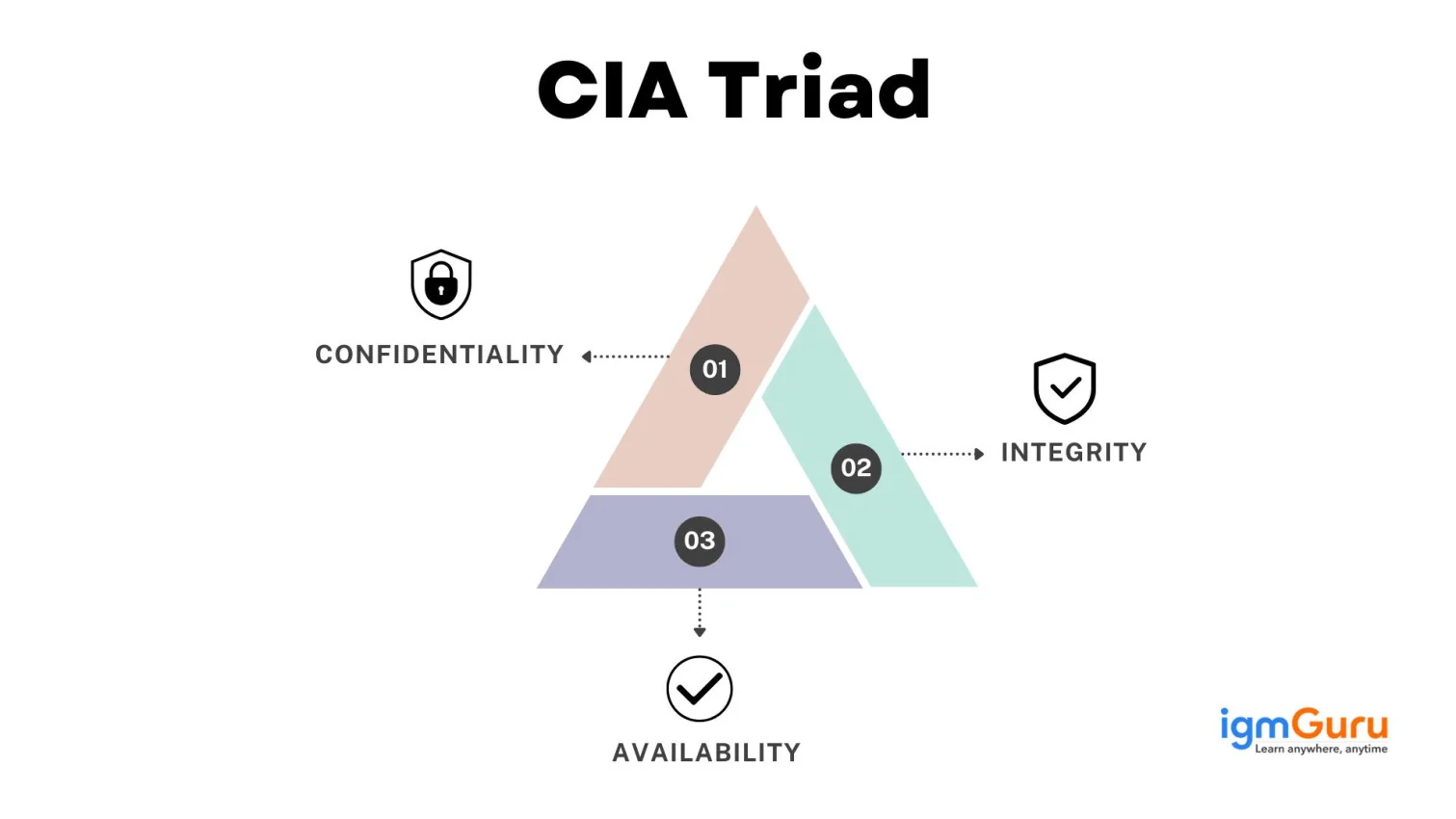
What is the CIA Triad? Definition, Importance and Examples 2026
September 18th, 2026