Want to showcase your skills in SAP SD, the best logistics management module in SAP? Prepare with the most asked SAP SD interview questions and answers listed in this article. These help you to make your concept clear with the best answers to crack your next interview.
These questions dive into different topics from the very basics to intermediate and advanced levels. Just keep focus and answer with confidence and you will get a placement in the top tech company. Let’s begin with the basic SAP SD interview questions and answers.
SAP S/4HANA uses SAP Fiori as its primary user interface, providing role-based and user-friendly applications for managing sales orders, deliveries and billing processes. Here are some of the most asked basic SAP Sales and Distribution interview questions and answers for beginners. These include fundamental definition, type and comparison-based questions.
SAP Sales and Distribution (SD) is a core functional module primarily running on SAP S/4HANA today. SAP ECC mainstream maintenance ends December 2027, making S/4HANA the only forward-looking platform for SD implementations. Today, most organizations are moving to SAP S/4HANA, which offers a simplified data model, faster performance and real-time processing capabilities. It is used by organizations to store and manage customer and product-related data.
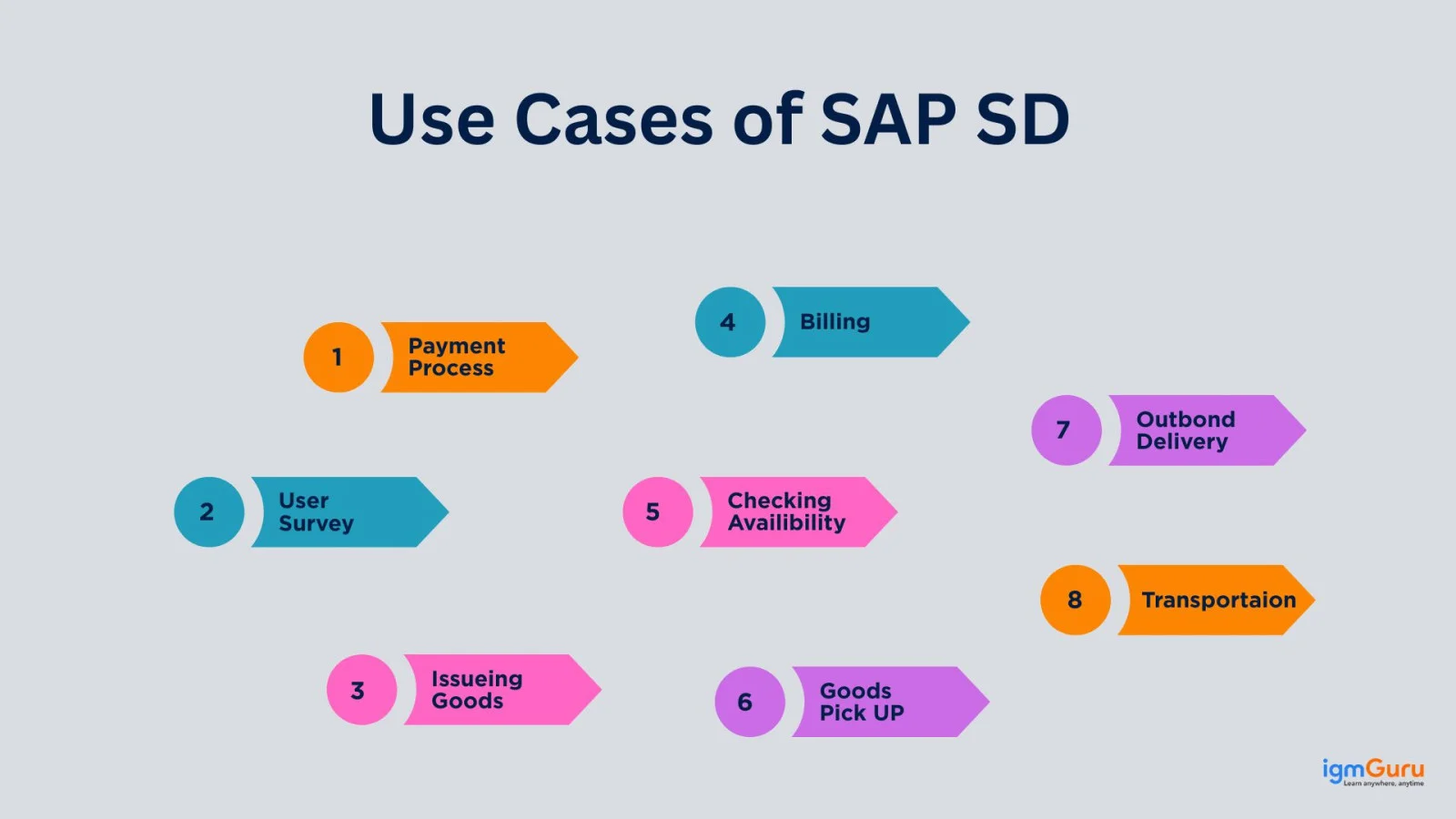
In SAP S/4HANA, customer master data is managed using the Business Partner (BP) approach. It unifies customer, vendor and contact data into a single object, improving consistency and integration across modules. They also use the data to manage all ordering, shipping, billing and invoicing of their goods and services. Here are some of the most common applications of SAP SD:
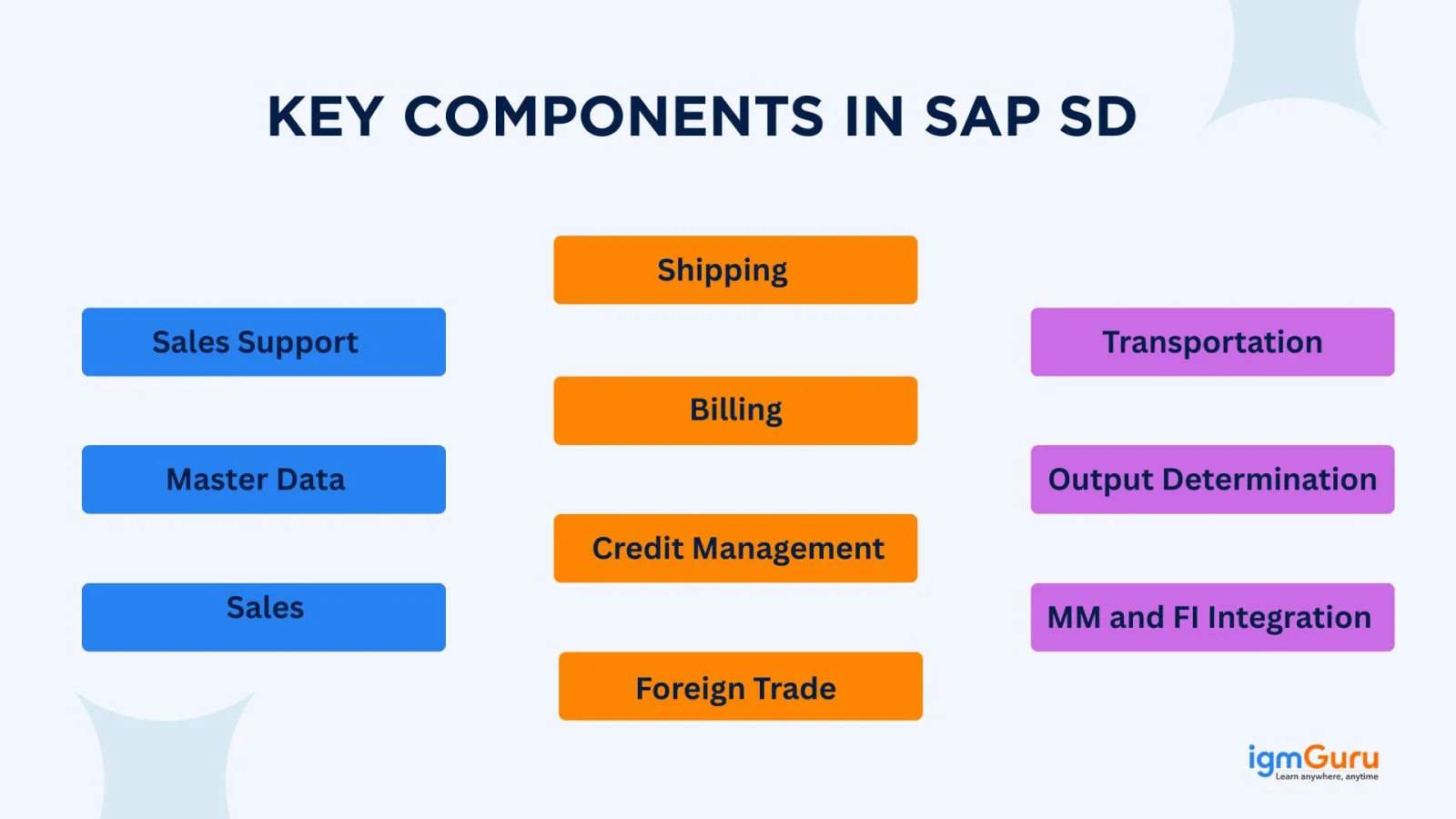
It has the following key components:
The 5 steps of the Condition Technique in Pricing are:
Organizational structure is the hierarchical framework. It represents your company's legal and sales setup and defines units like Sales Organization, Distribution Channels and Divisions. These combine to form a Sales Area for processing sales transactions. It is crucial for the Order-to-Cash process, linking with Finance and Logistics for seamless operations.
SAP Material Management (MM) is another core module of SAP that manages the entire material flow, from procurement to inventory and warehousing of an organization.
It ensures materials are available at the right time, place and cost. It integrates closely with finance (FI), production (PP) and sales (SD) to streamline the supply chain, reduce costs and optimize stock levels. This helps to manage everything from purchase requisitions (PR) to purchase orders (PO), goods receipts (GR), invoice verification and supplier management. This all supports efficient logistics and production.
SAP SD and MM are closely related through the order-to-cash process. SD handles the sales and logistics flow, while MM manages inventory and stock movements. This means both of them work together to ensure accurate fulfillment. Here is how it works:
Note: Explore SAP MM interview questions and answers for more information.
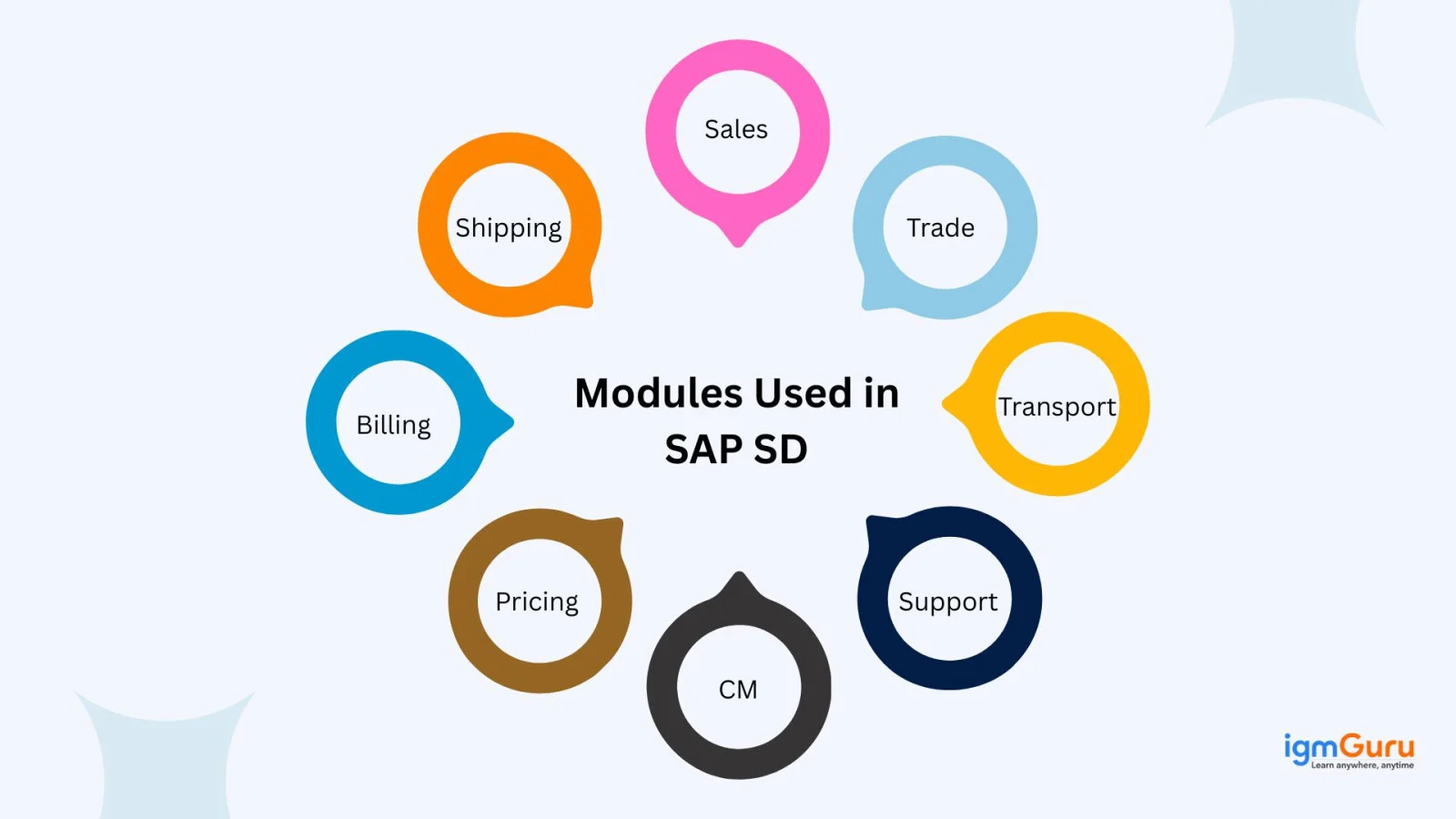
The main modules used on this platform are:
Types of Sales Orders in SAP SD:
| Sales Order Type | Description |
| Standard Order (OR) | Normal sales order used for most sales scenarios |
| Cash Sales (CS) | Order where payment is received immediately |
| Rush Order (RO) | Order with immediate delivery, invoice created later |
| Consignment Fill-up (CF) | Stock is delivered to customer consignment |
| Consignment Issue (CI) | Goods issued from consignment stock |
| Free of Charge (FOC) | Goods delivered without billing |
| Debit Memo Request (DR) | Request to debit the customer |
| Credit Memo Request (CR) | Request to credit the customer |
| Return Order (RE) | Used for returning goods from customer |
Functions of Sales Orders in SAP SD:
| Function | Purpose |
| Captures customer demand | Records what the customer wants to buy |
| Triggers pricing | Determines price, discounts and taxes |
| Checks availability | Performs ATP check with MM |
| Initiates delivery | Drives shipping and logistics processes |
| Controls billing | Determines how and when billing happens |
| Enables credit check | Validates customer credit limits |
| Supports reporting | Provides data for sales and revenue analysis |
A distribution channel in SAP SD represents how a company sells and delivers its products to customers. It defines the sales path, such as direct sales, wholesale, retail or online sales. The distribution channel helps control pricing, discounts, output determination and customer-specific sales conditions.
It is a key part of the Sales Area along with Sales Organization and Division. It also allows the business to manage the same product differently across different selling channels.
Partner functions define the different roles a business partner plays in a sales transaction. They determine who orders the goods, who receives them, who gets billed and who makes the payment.
Partner functions are maintained in the customer master and automatically copied into sales documents to control logistics, billing and accounting processes. Types of Partner Functions:
Now we will discuss the most asked SAP SD interview questions and answers for intermediate professionals. These will take you through some important topics best for cracking intermediate level interviews.
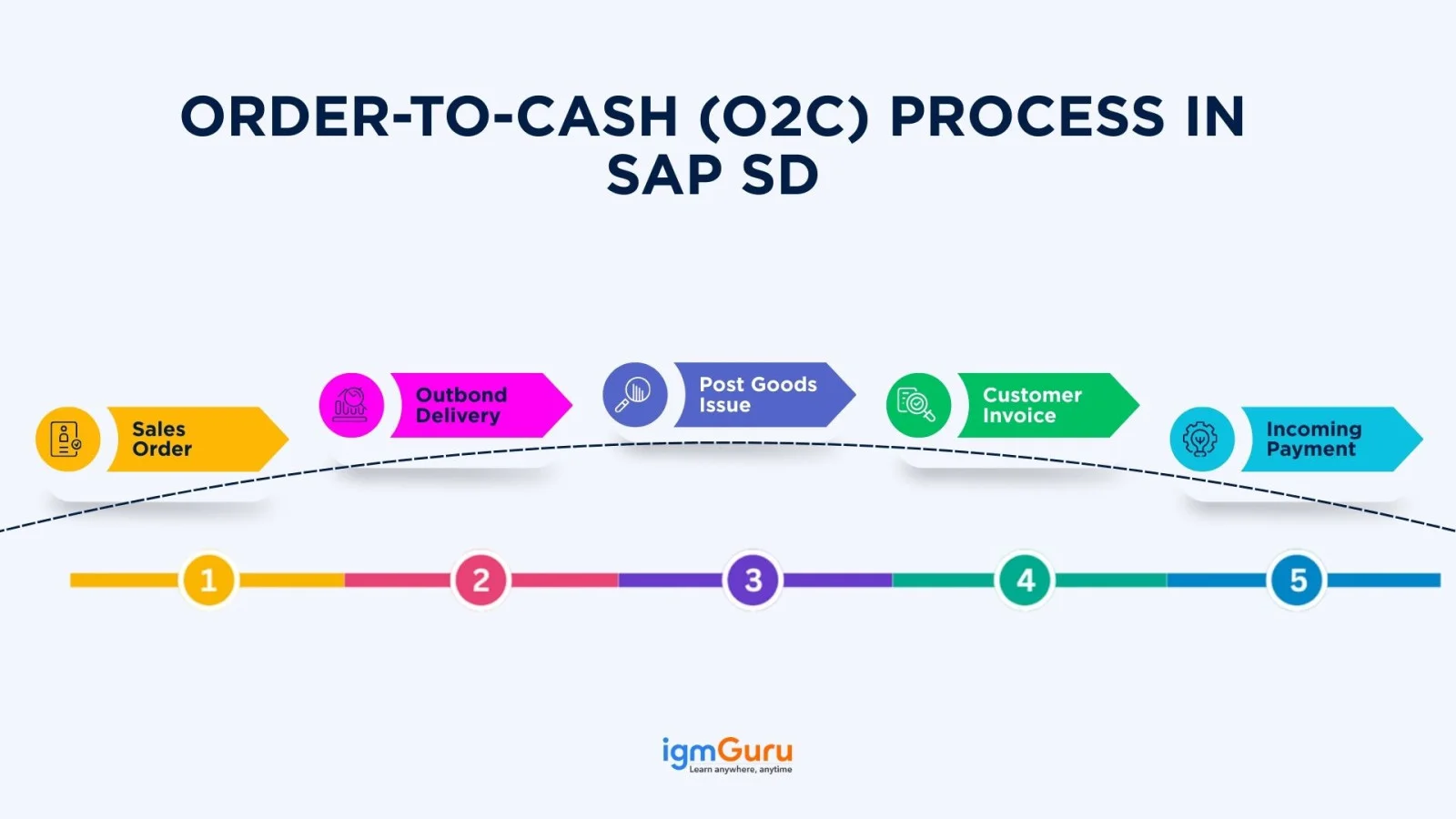
The Order-to-Cash (O2C) process starts from the customer request and ends with payment collection. The steps are given below:
When the invoice is posted, it integrates with FI by creating an accounting document for customer receivables and revenue. Finally, payment is collected in FI, completing the O2C cycle.
I would check this issue in a logical sequence that includes the following steps:
The pricing procedure is determined based on a combination of following three elements.
1) Sales Area from the sales order
2) Document Pricing Procedure
3)Customer Pricing Procedure
The system uses these three to find the correct pricing procedure through pricing procedure determination configuration. If any one of these elements is missing or incorrect, the pricing procedure will not be determined. As a result, no pricing or incomplete pricing appears in the sales order and the net value may show as zero or partially calculated.
There are multiple reasons that can cause this kind of delivery issue. I would check for the following common reasons:
ATP (Availability Check) is used to verify whether the required quantity of a material is available on the requested delivery date. In SAP S/4HANA, Advanced ATP (aATP) enhances this process with features like Product Allocation, Backorder Processing (BOP) and Supply Protection for better supply chain control.
When a sales order is created, ATP checks available stock, planned receipts and existing commitments from MM to confirm quantities and delivery dates. Based on this, the system proposes confirmed quantities and dates in the schedule line.
Transfer of Requirements (TOR) works alongside ATP. Once the sales order is saved, TOR passes the sales order demand from SD to MM/PP so that the system can plan procurement or production. This ensures future requirements are considered during MRP, which helps maintain accurate supply planning.
There are multiple reasons that can block the creation of an accounting document after PGI. I would check the causes with the following steps:
Shipping point determination is used to decide from where the goods will be shipped. It is an automatic process that takes place during sales order or delivery creation. It is based on the shipping conditions from the customer master, loading group from the material master and the delivering plant.
Route determination defines how the goods will be transported and the transit time. It is determined using shipping conditions, transportation group and departure and destination zones.
Real-World Example: If a customer orders laptops with an express delivery requirement, SAP determines the shipping point as the nearest warehouse that can handle express loading. The route is then determined as an air or fast road route with shorter transit time to meet the delivery date.
A missing billing document after PGI can happen for many reasons. Here are some of the common ones I would check:
Credit management is used to control customer credit risk and prevent overexposure. In SAP S/4HANA, classic credit management is replaced by FSCM Credit Management, which works on Business Partner and credit segments. It calculates credit exposure in real time by considering open orders, deliveries and invoices.
In SAP S/4HANA, each business partner is assigned a credit limit under a credit segment (in classic ECC, this was done under a credit control area).
When a sales order is created, SAP checks the customer’s credit exposure, which includes open orders, deliveries and invoices, against the assigned credit limit. A sales order gets credit blocked when the customer exceeds their credit limit, has overdue invoices, a high risk category or when a static or dynamic credit check fails based on configuration. The order remains blocked until credit is released or limits are adjusted.
A few issues come up repeatedly in SAP SD projects. Here are some of them:
An Incompletion Log in SAP SD is used to identify missing mandatory data in sales documents that is required to continue processing, like delivery or billing. It shows which fields are incomplete and blocks the document from moving to the next stage until those fields are filled. It can be configured at three levels:
This helps ensure data consistency and avoids downstream issues in delivery and billing.
Copy control explains how data is copied from one document to another during the sales process. This means it controls everything from which fields are transferred to how quantities are copied and whether documents are linked correctly. It is important to ensure consistency between sales order, delivery and billing documents.
It is configured at header, item and schedule line levels and also controls things like reference flow, pricing copy and quantity checks.
The T-Code for Order-to-Delivery copy control is VTLA. Other commonly used copy control T-Codes are VTAA (sales order to sales order), VTFL (delivery to billing) and VTFA (sales order to billing).
This section includes the most asked SAP SD interview questions and answers for experienced professionals. These will help candidates with 5 + years of experience to get their dream job.
The best way to ensure performance, pricing accuracy and minimal delivery delays for a high-volume business is focusing on standardization and performance first. I use simple, standardized sales document types, minimize custom logic in pricing and avoid unnecessary user exits. Then I optimize pricing by reducing condition records, using proper access sequences and avoiding redundant condition tables.
I ensure the logistics side by clean shipping determination, correct ATP configuration and scheduling background jobs for delivery creation and billing. I also use batch jobs, parallel processing and S/4HANA capabilities to keep O2C fast and scalable.
I would start by analyzing pricing using the pricing analysis screen to see which condition is missing or overwritten. Next step is to check access sequences, condition exclusions and calculation formulas.
To avoid impacting live orders, I would not change the active pricing procedure directly. This requires testing the fix using simulation, new condition records or a copied pricing procedure in QA. Only after validation would I transport the fix and ensure it applies only to new documents, not existing ones.
I would start by checking billing blocks and billing relevance at item category level. Since the failure is intermittent, I usually suspect master data issues first, such as a missing payer, missing tax data or pricing incompleteness for specific customers or materials.
I would also review copy control from delivery to billing. If everything is fine, I check FI integration, especially account determination and tax configuration. System logs and failed billing documents usually indicate whether it’s config, master data or FI-related.
Most integration issues come from incorrect valuation classes or account determination. I handle this by validating material master accounting views, OBYC settings and VKOA mappings.
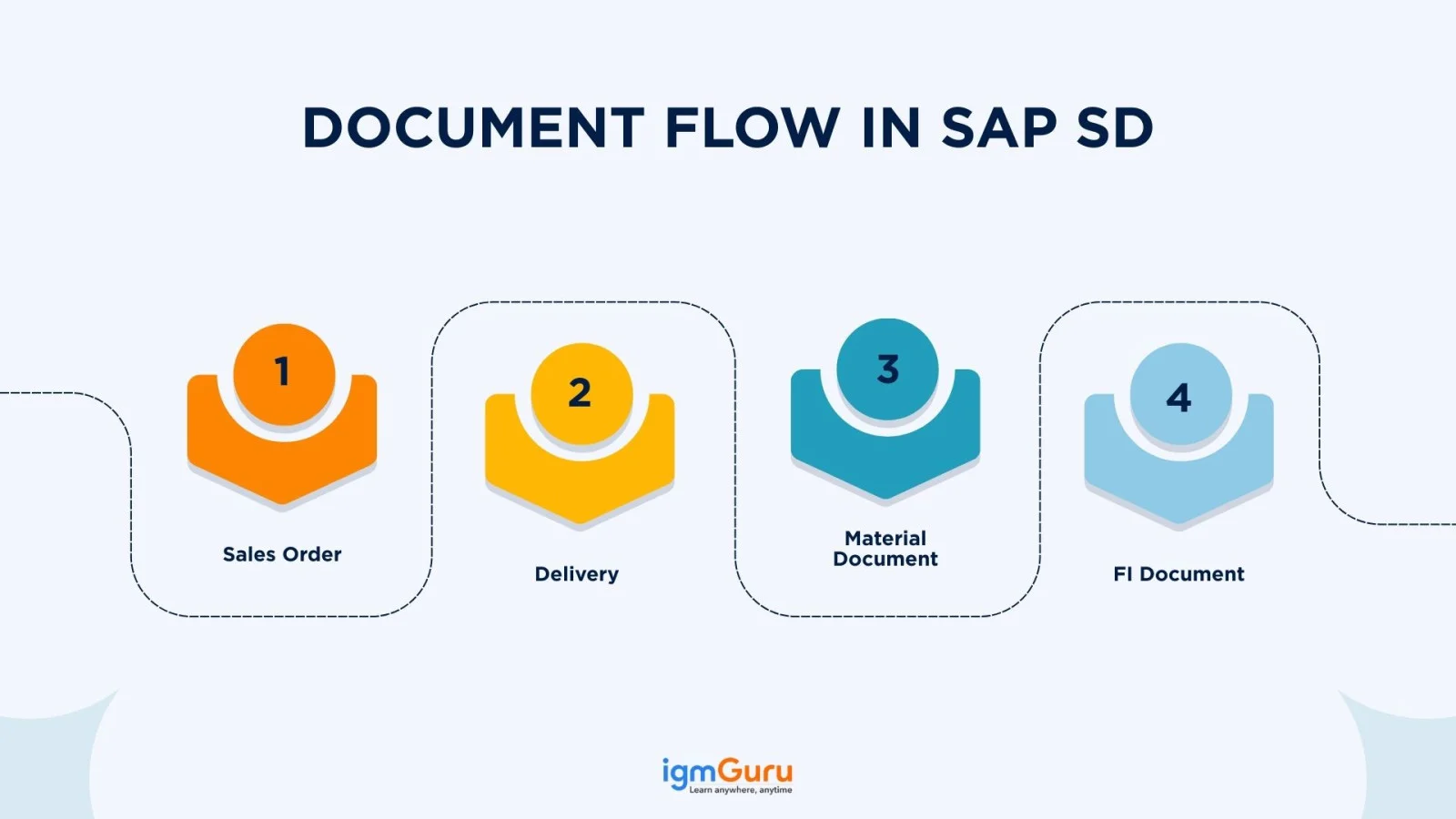
The stock inconsistencies require checking movement types, PGI posting errors and backdated postings. Close coordination with MM and FI teams is also an important factor. I always resolve issues by tracing the document flow:
The biggest change is moving credit control from SD to Business Partner–based FSCM Credit Management. Credit segments replace credit control areas and exposure is calculated in real time.
Risks include incorrect migration of credit limits and exposure. Best practice is to run classic and FSCM in parallel during testing, migrate data carefully and train users properly.
Classic ATP only checks basic stock and receipts. aATP goes further with Product Allocation, Supply Protection and Backorder Processing (BOP). I would use Product Allocation when limited stock must be distributed fairly across key customers.
BOP is useful when supply changes and priorities shift. It automatically reallocates confirmed quantities to high-priority customers.
In SAP S/4HANA, Output Management is primarily handled using BRF+ (Business Rule Framework Plus), which replaces the traditional NACE-based approach. However, some legacy outputs may still use NACE depending on system configuration and migration approach.
Instead of condition records, output determination is rule-based. BRF+ is more flexible, supports modern channels like email and EDI and aligns better with S/4HANA architecture. It is also easier to extend without heavy customization compared to classic NACE.
FSCM Credit Management works at the Business Partner level and uses credit segments. It calculates exposure in real time and supports automated credit decisions. FSCM is more accurate, scalable and better suited for complex businesses when compared to classic SD credit management. It also integrates well with workflows and analytics.
Settlement Management replaces classic rebate processing. Instead of condition-based rebates tied to billing documents, it uses condition contracts. It supports complex scenarios like multi-level incentives, accruals and flexible settlements. It is easier to manage, more transparent and avoids many limitations of the old rebate functionality.
S/4HANA simplified the data model by removing aggregates and redundant tables. Pricing and billing now run on HANA-optimized structures, improving performance. Billing processing is faster, reporting is real-time, and custom indexes are mostly unnecessary. Overall, it reduces data footprint and improves system responsiveness.
Here are some of the most asked scenario-based SAP SD interview questions and answers you need to prepare before appearing for the interview. These will help you get a senior-level job role:
In SAP S/4HANA, many aggregate and index tables have been removed or replaced to simplify the data model and improve performance. For example, the SD index tables (VAKPA, VAPMA, VLKPA, VLPMA, VRKPA and VRPMA) are replaced by CDS views and the LIS statistics tables are no longer updated by default. Core transactional tables like VBAK, VBAP, LIKP, LIPS, VBRK and VBRP remain the primary sources of data.
The document status tables VBUK and VBUP are no longer used as physical tables. Their status fields have been moved into the main document tables, such as VBAK, VBAP, LIKP and LIPS. VBUK and VBUP remain only as compatibility views, so older custom reports that read them still work.
Most reporting is now done in real time without the need for pre-calculated totals.
In classic SAP ECC, customers are maintained separately using customer master records (XD01) and vendors using vendor master records (XK01). In SAP S/4HANA, Business Partner (BP) is the single master for customers, vendors and contacts, and it is maintained using transaction BP.
BP centralizes data, reduces redundancy and supports integration with FSCM and other modules. The customer master still exists logically, but BP is the leading object. Customer Vendor Integration (CVI) keeps the BP in sync with the customer and vendor master records, so existing SD and MM processes continue to work.
I would first identify whether the issue is caused by custom code, pricing logic, ATP checks or database performance. Then I would analyze long-running SQL statements using ST05 and review custom user exits or BADIs that execute during order creation.
I would also optimize pricing procedures by reducing unnecessary condition records and access sequences. If ATP or credit checks are slowing down processing, I would review the configuration and batch strategies. In S/4HANA, I would leverage HANA-optimized logic, CDS views and parallel processing wherever possible to improve performance.
I would start by checking the account determination configuration in VKOA because revenue postings in SAP SD are controlled there. Then I would verify the sales organization, account assignment group, customer master, and material master settings involved in the billing process.
I would also review the billing document and accounting document flow to identify which condition triggered the incorrect posting. If the issue is configuration-related, I would correct the VKOA mapping and validate the changes in QA before transporting them to production.
I would separate the process using different sales areas, customer groups or sales document types depending on the business requirement. Pricing differences would be handled through separate pricing procedures and condition records, while tax determination would use customer and material tax classifications.
For delivery processing, I would configure different shipping conditions, route determination and delivery priorities. This approach keeps the process scalable, avoids unnecessary customization and allows both B2B and B2C operations to run efficiently within the same SAP SD environment.
I would use Advanced Available-to-Promise (aATP) capabilities to manage the limited supply based on business priorities. Product Allocation can be configured to reserve or distribute available quantities according to criteria such as customer groups, regions or sales channels. Supply Protection can also help protect quantities for important business segments.
If sales orders have already been confirmed and supply conditions change, I would use Backorder Processing (BOP) to re-evaluate existing confirmations based on predefined priorities. This allows the business to redistribute available stock so that high-priority customers or strategically important orders receive appropriate confirmation while maintaining better control over scarce inventory.
I would first identify whether the reports are using deprecated tables, custom ABAP code, or outdated database logic that is incompatible with the simplified S/4HANA data model. Using tools such as the SAP Readiness Check and Custom Code Migration app, I would analyze affected objects and determine the required remediation.
Next, I would replace obsolete tables with supported S/4HANA data sources, such as CDS Views where appropriate, validate custom enhancements, and thoroughly test all Order-to-Cash scenarios including sales orders, deliveries, billing, pricing, and FI integration. Before deployment, I would perform regression testing in the QA environment to ensure business processes continue to work correctly while taking advantage of S/4HANA's improved performance and simplified architecture.
I would first check the ATP results in the sales order to understand how the confirmed quantity was calculated. Then I would verify the current stock, planned receipts, existing reservations and other sales orders that may be consuming the available quantity.
Next, I would check whether the issue is related to plant determination, storage location, batch restrictions or ATP configuration. I would also review the schedule line category to make sure the correct availability check is being performed.
If the available stock is correct but the confirmation is still incorrect, I would analyze the ATP configuration and any custom logic affecting the availability check. After identifying the root cause, I would test the correction in the QA system before applying it to production.
I would first check how the plant is being determined in the sales order. I would review the customer master, material master and customer-material information to identify whether the required master data is maintained correctly.
Next, I would check the relevant configuration for plant determination and verify the priority sequence used by the system. I would also confirm whether the sales area, delivering plant and material combination are correctly maintained.
If the master data and configuration are correct, I would check whether any user exit, BAdI or custom enhancement is overriding the standard plant determination logic. After identifying the issue, I would correct the relevant configuration or master data and test the complete order-to-delivery process in QA.
I would first compare a correct invoice with an incorrect invoice and analyze the pricing conditions to identify where the tax calculation is different. Then I would check the customer and material tax classifications used during tax determination.
Next, I would review the relevant tax condition types, access sequences and tax determination configuration. I would also verify whether the customer's country, region, departure country and destination information are maintained correctly.
If the configuration and master data appear correct, I would check whether the issue is limited to specific sales organizations, plants, materials or customer groups. I would reproduce the issue in the QA environment, identify the root cause and validate the correction before transporting it to production.
We have explored the most asked SAP SD interview questions and answers for each level of candidate from beginner to intermediates and experienced professionals. This is your guide to crack your next interview and update your current industry standard knowledge. Just keep learning and attempt interviews with confidence, the job will be yours.
It is a strong, lucrative and future-proof career choice. It offers high demand, good salaries and stability due to ongoing S/4HANA migrations and core business relevance in order-to-cash processes across many industries.
The salary of a SAP SD Consultant varies between ₹6-15 Lakhs per year in India $100,000 to $135,000 per year in the USA based on their experience level.
You have to master the SAP SD module and prepare with the best SAP SD interview questions to become a consultant.
Explore Our Trending Articles-
Course Schedule
| Course Name | Batch Type | Details |
| SAP SD Training | Every Weekday | View Details |
| SAP SD Training | Every Weekend | View Details |