Ever wondered why your inbox is still full of brand emails, even in the age of Instagram and TikTok? That's email marketing at work: sending targeted messages, like newsletters or promotions, straight to your subscribers, no algorithm required. Once someone joins your list, you own that connection.
In this guide, you'll learn how email marketing works, its types, and how to build a strategy that actually converts.
Read Also: What is GEO? Generative Engine Optimization Guide
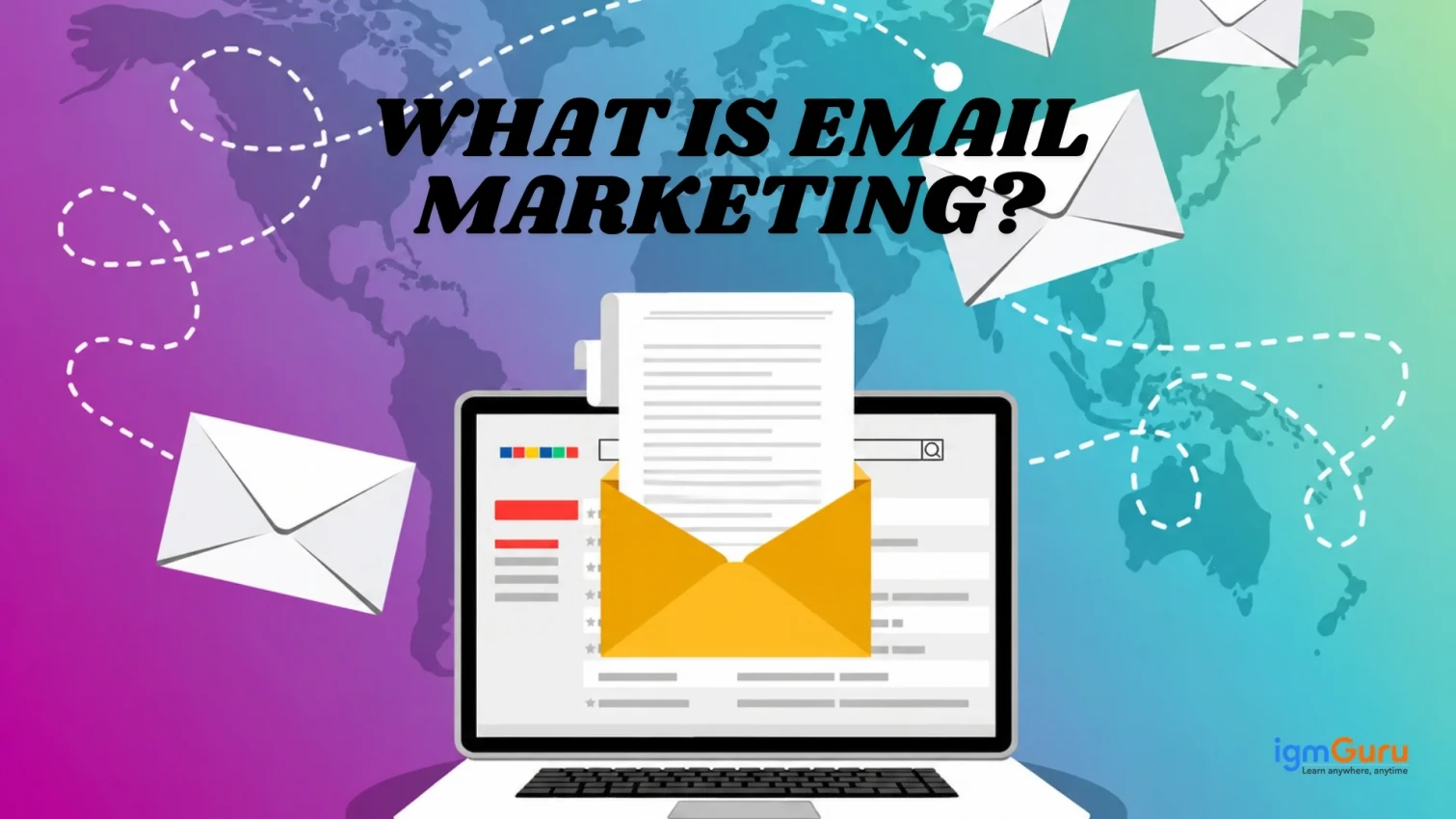
Email marketing is a digital strategy that involves sending commercial messages, like newsletters or promotions, directly to a targeted list of subscribers. It is highly effective for building brand loyalty, driving sales and maintaining direct communication with both potential and existing customers.
It is one of the oldest forms of digital marketing, but it is still one of the most effective. Email lets you talk to your audience without relying on a search engine or a social media algorithm. When someone joins your email list, they are permitting you to reach them directly. That is a big deal and it is why email marketing continues to deliver a strong return on investment for businesses of every size.
A single marketing email can include a discount, a product update, a newsletter or a simple thank you message. The goal is always the same. You want to inform, engage or convert the person reading it.
Email marketing works through three simple parts. Once you understand these, the rest becomes easy to follow.
This is your database of subscribers. These are people who have agreed to receive emails from you. A good list is built when you have real, interested people, not purchased contacts.
An ESP is the software you use to design, send and track your emails. It also helps you manage your list and automate your campaigns. Mailchimp, Brevo and Klaviyo are common examples.
Every email campaign should have a purpose. You may want more sales, more website visits or better brand recall. Once your goal is clear, you can write content, design the email and measure whether it worked.
When you put these three parts together, you get a full email marketing campaign. You collect subscribers, use a platform to send them relevant emails and track the results to improve your next send.
Also Read: What is SMM (Social Media Marketing)?
Not every marketing email serves the same purpose. The following are the most common types you should know:
Sent right after someone joins your list. This is your first impression, so keep it warm and simple.
Example: If you have to subscribe to an online clothing store, you might receive an email saying, "Welcome to StyleHub! Thanks for joining us. Here's a 10% discount on your first purchase. Stay tuned for exclusive fashion updates and styling tips."
Regular emails that share updates, tips or company news. These help you stay in touch with your audience without always selling something.
Example: A digital marketing agency sends a monthly newsletter featuring "Top SEO Trends for 2026," recent success stories and links to newly published blog articles to educate subscribers.
These emails highlight a discount, a sale or a new product. Their main goal is to drive a purchase.
Example: An electronics retailer sends an email saying, "Weekend Flash Sale! Get up to 40% off laptops and accessories. Offer ends Sunday at midnight."
These are triggered by an action, like an order confirmation or a password reset. They are not promotional, but they still build trust.
Example: After ordering a smartphone online, you receive an email confirming your purchase, payment details, estimated delivery date and a tracking link.
Related Article: How To Learn Digital Marketing?
Sent to subscribers who have gone quiet. These emails try to bring inactive users back before you remove them from your list.
Example: A streaming service notices you haven't logged in for three months and sends an email saying, "We miss you! Come back and enjoy one month of premium access at 50% off."
These are tied to holidays or specific events, like Black Friday or New Year. They usually see higher engagement due to timing.
Example: An online gift store launches a "Diwali Mega Sale" campaign offering special festive discounts, while another retailer sends a "Black Friday Deal" email featuring limited-time offers on popular products.
Your email list is the foundation of your entire strategy. Without a strong list, even the best email content will not perform well. Here is how you can build one the right way:
1. Add sign-up forms on your website: Place them on your homepage, blog and checkout pages.
2. Offer something valuable: A free ebook, discount code or checklist can encourage visitors to subscribe.
3. Use pop-ups wisely: A well-timed pop-up can convert visitors, but too many pop-ups will annoy them.
4. Promote your list on social media: Let your followers know what they will get by subscribing.
5. Avoid buying email lists. Purchased lists are full of uninterested contacts and they can hurt your sender reputation.
The key is to attract people who genuinely want to hear from you. A smaller list of engaged subscribers always performs better than a large list of people who never open your emails.
A strategy gives your email marketing direction. Without one, you are just sending random emails and hoping something works. Here is how you can build a simple, effective strategy:
1. Define Your Goal: Decide what you want from your email marketing. It could be sales, sign-ups or brand awareness.
2. Know Your Audience: Understand who your subscribers are and what they care about. This helps you write content that actually connects.
3. Segment Your List: Group your subscribers based on their interests, behavior or purchase history. Segmented emails perform far better than generic ones sent to everyone.
4. Plan Your Content: Decide what type of emails you will send and how often. Consistency matters more than frequency.
5. Personalize Your Emails: Use the subscriber's name and tailor the content to their preferences. Personalized emails feel less like spam and more like a real conversation.
6. Test and Improve: Track your results regularly and test different subject lines, designs and send times. Small changes can lead to noticeably better performance.
Also Read: Top 10 Social Media Management Tools in 2026
An email marketer plans, builds and manages email campaigns for a business. Their work sits at the meeting point of creativity and data.
Here are some of the core responsibilities:
Building and managing the email list
Writing subject lines and email copy
Designing emails using templates or an ESP
Segmenting audiences for targeted campaigns
Setting up automated email flows
Tracking metrics like open rate and CTR
Testing and optimizing campaigns for better results
A good email marketer understands both the creative side, like writing and design and the technical side, like automation and analytics.
You cannot improve what you do not measure. Following are the metrics that matter the most in 2026:
| Metric | What It Tells You |
| Open Rate | Percentage of people who opened your email. It shows how well your subject line performed. |
| Click-Through Rate (CTR) | Percentage of recipients who clicked a link inside your email. |
| Click-to-Open Rate (CTOR) | The percentage of people who clicked after opening. This shows how relevant your content is. |
| Conversion Rate | The percentage of recipients who completed your goal, like a purchase or sign-up. |
| Bounce Rate | Percentage of emails that were not delivered. A high bounce rate can hurt your sender reputation. |
| Unsubscribe Rate | The percentage of people who opted out after receiving your email. |
| List Growth Rate | How fast your email list is growing. |
Because of privacy tools like Apple Mail Privacy Protection, open rate is no longer fully reliable on its own. Many marketers now rely more on CTR and CTOR to understand real engagement.
Email marketing is powerful, but it comes with its own set of challenges. Being aware of them helps you avoid common mistakes.
1. Low Open Rates Weak subject lines or an unengaged list can lead to poor open rates. Regular list cleaning and better subject lines can help.
2. Deliverability Issues If your emails land in spam, your entire campaign fails. Proper authentication, like SPF, DKIM and DMARC, helps fix this.
3. List Fatigue Sending too many emails can annoy your subscribers and increase unsubscribes. Balance is important.
4. Poor Segmentation Sending the same email to your entire list reduces relevance. Segmentation solves this problem.
5. Compliance Risks Not following privacy laws like GDPR or CAN-SPAM can lead to penalties. Always keep consent and privacy in mind.
Read Also: Top 15 Benefits of Digital Marketing in 2026
Artificial intelligence is reshaping how businesses plan and manage email marketing campaigns. What was once mainly used by large companies is now becoming increasingly accessible to small businesses as well.
Here is how AI is being used in email marketing today:
Subject line optimization: AI can generate and test subject lines that get higher open rates.
Send-time optimization: AI predicts the best time to send an email to each subscriber.
Content personalization: AI tailors email content based on subscriber behavior and preferences.
Predictive segmentation: AI groups subscribers based on their likelihood to engage or purchase.
Automated A/B testing: AI can run and analyze tests faster than manual methods.
AI does not replace the marketer. It helps you make smarter, faster decisions and removes a lot of the guesswork from your campaigns.
Choosing the right email service provider makes your job much easier. The following are some of the most popular tools used today:
| Tool | Best For | Description |
| Mailchimp | Beginners and small businesses | Easy to use with a free plan for smaller lists. |
| Brevo | All-in-one marketing | Combines email, SMS and automation in one platform. |
| Klaviyo | E-commerce brands | Deep integration with online stores and strong segmentation. |
| ActiveCampaign | Automation-heavy teams | Advanced workflows and CRM features. |
| Constant Contact | Small business owners | Simple templates and easy list management. |
| MailerLite | Budget-friendly needs | Clean interface with solid automation features. |
| HubSpot | Full marketing suite | Combines email marketing with CRM and sales tools. |
The right tool depends on your budget, the size of your list and how advanced your automation needs are.
Following email regulations is not optional. It protects your subscribers and your business. Following are the main rules you should know:
1. CAN-SPAM Act: This U.S. law requires you to include a clear unsubscribe link, avoid misleading subject lines and honor opt-out requests quickly.
2. GDPR: If you have subscribers in the European Union, you must get clear consent before emailing them and allow them to access or delete their data.
3. CASL: Canada's Anti-Spam Legislation requires explicit consent before sending commercial emails to Canadian recipients.
4. Double Opt-In: Many businesses now use double opt-in, where subscribers confirm their email address after signing up. It improves list quality and reduces spam complaints.
Staying compliant protects your sender reputation and keeps your emails out of the spam folder.
Related Article: What is Social Media Optimization (SMO)?
There are several reasons why email marketing remains a top choice for businesses. Here are the main benefits:
1. High Return on Investment: Email marketing consistently delivers one of the highest ROI figures among all digital channels.
2. Direct Communication: Your message lands directly in the subscriber's inbox, without depending on an algorithm.
3. Personalization at Scale: You can send tailored content to thousands of subscribers based on their behavior and interests.
4. Cost-Effective: Compared to paid ads or traditional media, email marketing costs much less to run.
5. Measurable Results: Every open, click and conversion can be tracked, so you always know what is working.
6. Builds Long-Term Relationships: Regular, valuable emails help you stay connected with your audience over time.
Once you understand the basics, following good practices will help you get better results. Keep these in mind:
Write subject lines that are clear and honest, not clickbait.
Keep your emails mobile-friendly, since most people check email on their phone.
Segment your list instead of sending the same email to everyone.
Personalize your content whenever possible.
Do not overload subscribers with too many emails.
Always include a clear call to action.
Always clean your list daily to remove inactive subscribers.
Always test your emails before sending them to your full list.
Many well-known companies use email marketing to build customer relationships, increase sales and encourage repeat purchases. Here are some real-world examples that show how different brands use email effectively.
Amazon analyzes customers' browsing history and previous purchases to send personalized product recommendations.
Example:
If you recently searched for wireless headphones, Amazon may send an email with the subject line:
"Recommended for You: Top-Rated Wireless Headphones"
The email may also include related products such as headphone cases, Bluetooth speakers or charging accessories.
Why it works:
Personalized content increases relevance.
Customers are more likely to click on products they are already interested in.
It encourages repeat purchases.
Netflix uses customer viewing history to recommend movies and TV shows that match individual preferences.
Example:
If you regularly watch crime dramas, you may receive an email saying:
"New Crime Thrillers You Might Love"
The email contains posters, trailers and a direct Watch Now button.
Why it works:
Keeps subscribers engaged.
Reduces the time spent searching for content.
Encourages users to continue their subscription.
Spotify is well known for sending personalized emails based on listening habits.
Example:
Subscribers receive emails such as:
Your Discover Weekly Playlist
Your Top Songs This Month
New Releases From Artists You Follow
At the end of every year, Spotify also sends its famous personalized music summary.
Why it works:
Every email feels unique to the user.
It creates excitement and encourages users to return to the app.
Personalized experiences strengthen customer loyalty.
Read Also: How To Learn Digital Marketing?
Airbnb sends emails based on destinations users have searched for or shown interest in.
Example:
If someone searches for accommodations in NYC but doesn't complete a booking, Airbnb may send:
“NYC Trip on Your Mind? These Incredible Stays Are Worth Exploring”
The email often includes recommended properties, travel tips and nearby experiences.
Why it works:
Reminds users about unfinished bookings.
Encourages them to complete their purchase.
Provides helpful suggestions instead of being overly promotional.
Duolingo sends friendly reminder emails when users stop practicing for a few days.
Example:
A user who hasn't opened the app recently might receive:
"Your Spanish lesson is waiting! Practice for just 15 minutes today."
Some emails also include progress updates or streak reminders.
Why it works:
Uses simple, motivating language.
It motivates the users to return without being pushy.
Helps improve long-term user retention.
Across these examples, successful email marketing campaigns share a few common characteristics:
Personalization: Emails are tailored to each user's interests or behavior.
Relevant timing: Messages are sent when users are most likely to take action.
Clear call-to-action (CTA): Each email tells readers exactly what to do next, such as Shop Now, Watch Now or Continue Learning.
Valuable content: The emails offer useful recommendations, reminders or exclusive deals instead of generic promotions.
Simple design: Clean layouts, engaging visuals and concise text make the emails easy to read on both desktop and mobile devices.
These examples demonstrate that effective email marketing isn't just about sending promotional messages—it's about delivering the right content to the right person at the right time, making emails more relevant, engaging and likely to achieve business goals.
Also Read: Impact of Social Media: What It Really Does to People, Business and Society
Email marketing keeps evolving every year. Here is what to expect going forward:
1. AI-Driven Personalization: Emails will become more tailored, with AI adjusting content, subject lines and send times for each subscriber.
2. Interactive Emails: Emails featuring embedded polls, swipeable content, or in-email forms allow subscribers to interact and respond directly from their inbox.
3. Stronger Authentication Requirements: As inbox providers tighten their spam filters, proper email authentication will become even more important.
4. Privacy-First Metrics: With open rates becoming less reliable, marketers will lean more on click-based and conversion-based metrics.
5. Omnichannel Integration: Email will work more closely with SMS, push notifications and social media to create a connected customer experience.
This article explained what email marketing is, how it works and why it remains one of the most reliable digital marketing channels. It covered the types of email marketing, how to build a list, how to create a strategy and the role of an email marketer. It also touched on metrics, common challenges, the growing role of AI, popular tools, compliance rules and where the industry is heading.
If you are just getting started, focus on building a genuine email list, sending relevant content and tracking your results. Small, consistent improvements will help you build a strategy that keeps delivering results over time.
Yes. Email marketing continues to deliver one of the highest returns on investment among digital marketing channels, especially when paired with segmentation and personalization.
It depends on your audience, but most businesses send between one and four emails per month to avoid overwhelming subscribers.
A good open rate usually falls between 17 percent and 28 percent, though this varies by industry.
No. Most email service providers offer drag-and-drop editors, so you can create professional emails without any coding knowledge.
Email marketing is sent to subscribers who have given consent, while spam is sent without permission. Following compliance rules keeps your emails from being marked as spam.