Social media has changed almost everything about how we communicate, work, learn, and even how we feel about ourselves. As of April 2026, there are 5.79 billion social media user identities worldwide, more than two in three people on Earth. People spend an average of 2 hours and 21 minutes on social platforms every single day.
These numbers tell you one thing clearly: social media is not just a tool anymore. It is a major force shaping modern life.
But the impact of social media is not one-sided. It brings real benefits to individuals, communities, and businesses. At the same time, it creates serious challenges that we cannot ignore. This article breaks down both sides in a way that is easy to understand and useful for everyone.
Let’s begin!
Read Also: What is Digital Marketing?
The impact of social media refers to the influence social networking platforms have on communication, education, business, mental health, relationships and society. Social media creates both positive outcomes such as connectivity and learning and negative effects such as misinformation, privacy concerns and addiction.
When people ask about the impact of social media, they are usually asking about one of three things: how it affects people personally, how it affects society as a whole, or how it affects business. The honest answer is that it affects all three at once and often in very different ways depending on how you use it.
Let us start with the numbers that frame the conversation. By 2027, the number of social media users is projected to reach 5.85 billion, according to Statista data. Facebook and YouTube remain the most widely used platforms globally, with Facebook crossing 3 billion monthly active users in 2025. Gen Z users tend to spend the most time on social media, while older generations are joining platforms at a growing rate to stay connected with family and friends.
Social media started as a way for people to share updates with friends. Today, it drives elections, builds brands, launches careers, and shapes the mental health of an entire generation. Understanding its effects is not optional anymore. It is essential.
The positive effects of social media are real and significant. Here is how social media has genuinely improved life for millions of people.
Social media has made it easy to stay connected with family, friends and colleagues no matter where they are in the world. You can share life updates, photos and messages in real time. It has helped reconnect people who lost touch and maintain relationships that distance would have otherwise ended.
This global connectivity has been especially valuable during crises. During the COVID-19 pandemic, social media became one of the primary ways people maintained their social lives, checked in on loved ones and accessed support networks.
Social media's impact on business has been transformative. Small businesses can now reach thousands of potential customers without spending a fortune on traditional advertising. Platforms like Facebook, Instagram and LinkedIn allow businesses to run targeted ad campaigns that reach exactly the right audience based on age, location, interests and behavior.
For entrepreneurs and startups, social media has leveled the playing field. A well-executed Instagram strategy or a viral TikTok video can bring in more customers than a traditional TV commercial. Businesses that use social media effectively have seen real growth in brand awareness, customer engagement and sales.
YouTube has become one of the most powerful educational tools on the planet. LinkedIn Learning, online tutorials and communities of professionals sharing knowledge have made skill development more accessible than ever before. Students and working professionals both use platforms like LinkedIn, Reddit and X (formerly Twitter) to stay updated on industry trends, discover new ideas and learn from experts.
The impact of social media on education is especially visible in developing countries, where social platforms have given students access to world-class content that would otherwise be out of reach.
Related Article: What is SMM (Social Media Marketing)?
Social media has given a voice to people and causes that traditional media often ignored. Movements like #MeToo and Black Lives Matter gained global momentum through social media. Advocacy groups have used platforms to raise awareness, organize protests and fundraise in ways that were impossible before.
This democratization of voice is one of the most powerful positives of social media. It lets ordinary people spark meaningful conversations on a global scale.
Whether you are a parent looking for support, a freelancer building a network, or someone navigating a chronic illness, social media helps you find your people. Online communities encourage practical advice and a sense of belonging that makes a real difference in people's lives.
Research shows that when people use social media to genuinely connect with others and build real relationships, it reduces feelings of loneliness and improves overall well-being.
LinkedIn has changed how professionals find jobs and companies find talent. Social media platforms now enable job seekers to build personal brands, showcase their work and connect directly with decision-makers. For content creators, influencers and digital marketers, social media has created entirely new career paths that did not exist 15 years ago.
The negative effects of social media are just as significant. And in many cases, they hit the most vulnerable people the hardest. Here is what the research and real-world evidence show.
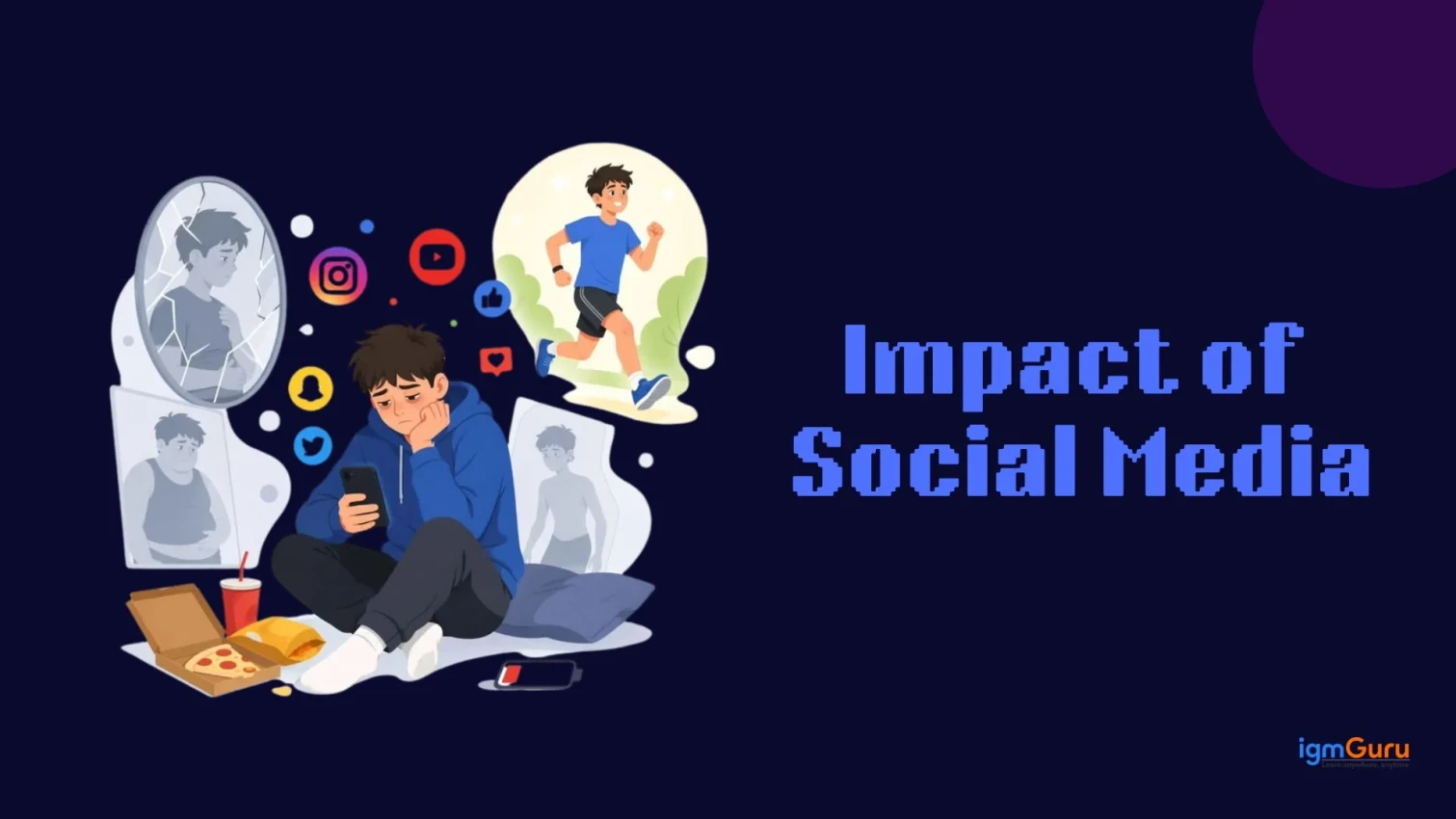
The impact of social media on mental health is one of the most talked-about issues in public health right now. Multiple studies link high levels of social media use with increased symptoms of anxiety and depression, especially among teenagers and young adults.
The reasons are not hard to see. Constant exposure to curated, filtered highlights of other people's lives creates unrealistic comparisons. The need for validation through likes and comments triggers anxiety. Passive scrolling through a feed has been linked to lower mood and higher feelings of inadequacy.
Research from the Brain and Behavior Research Foundation suggests that the way people use social media has a greater impact on mental health than simply the amount of time spent on it. People who use social media actively to connect and engage tend to do better than those who passively scroll and compare.
One of the most serious negative effects of social media is how fast false information travels. Social media algorithms prioritize content that gets high engagement. Outrage and shock drive more clicks than calm, accurate reporting. This creates an environment where misinformation can spread faster than the truth.
During elections, public health crises and major news events, the spread of misinformation on social media has had real-world consequences. It has influenced public opinion, undermined trust in institutions and in some cases contributed to violence.
Every time you use a social media platform, you are sharing data. This data is collected, analyzed and used to target you with ads and content. Often, users have little control over how their personal information is used.
The Facebook-Cambridge Analytica scandal exposed how data from millions of users was harvested without consent and used for political advertising. These incidents have made privacy one of the biggest concerns around social media use today.
Also Read: What is Social Media Optimization (SMO)?
Social media can be a hostile place. Cyberbullying is a documented problem affecting children, teens and adults. The anonymity that some platforms allow can encourage harmful behavior that people would never engage in face to face. Research consistently shows that cyberbullying has a significant negative impact on mental health, including increased anxiety and depression rates.
Young people are especially vulnerable. Several states in the US are now passing laws to better protect minors on social media platforms, but regulation has struggled to keep up with the pace of platform growth.
Social media platforms are designed to keep you coming back. Features like infinite scroll, notification alerts and algorithmic content recommendations are built to maximize engagement. This design creates compulsive usage patterns that many users struggle to control.
Social media addiction is characterized by compulsive scrolling, feeling anxious when you cannot check your phone and letting platform use interfere with work, sleep and relationships. The dopamine-driven feedback loops built into these platforms are well-documented.
Social media algorithms tend to show you content that confirms what you already believe. This creates filter bubbles where people mainly interact with views similar to their own. Over time, this can make society more polarized and make it harder for people to have productive conversations across different perspectives.
Researchers and policymakers have raised concerns about how algorithmic amplification can push people toward increasingly extreme content in some cases.
Read Also: How To Become A Social Media Specialist?
The impact of social media on youth deserves its own attention. Young people spend more time on social platforms than any other age group and their brains and coping mechanisms are still developing. This makes them more susceptible to both benefits and risks.
On the positive side, social media helps young people explore their identities, connect with peers who share their interests and access information about mental health, career development and global events. Platforms like YouTube and TikTok have become genuine learning tools for many students.
On the negative side, excessive social media use among teenagers has been linked to lower self-esteem, disrupted sleep patterns and higher rates of anxiety and depression. The pressure to maintain a perfect online image, the fear of missing out and exposure to cyberbullying all take a toll.
For parents, setting healthy boundaries around screen time, having open conversations about online risks and monitoring platform use are practical steps that make a real difference.
The impact of social media on business has been one of the most significant economic stories of the past decade. Social media marketing has created an entirely new industry, reshaped how brands build relationships with customers and opened global markets to businesses of all sizes.
93% of marketers have reported acquiring new customers through short video advertisements on social platforms. Businesses that invest in social media marketing consistently report improvements in brand awareness, customer engagement and revenue.
For e-commerce, social commerce has become a major growth driver. Instagram Shops, TikTok Shopping and Facebook Marketplace have integrated purchasing directly into the social media experience, shortening the path from discovery to purchase.
Social media has also changed customer service. Companies now handle complaints, answer questions and build customer loyalty in real time through their social channels, often using social media management tools to schedule content, monitor engagement and manage multiple platforms.
A responsive social media presence has become a basic expectation for modern businesses.
Key Stat: Social media advertising spend is projected to reach $317.33 billion in 2026, and is expected to grow at 11.86% annually through 2030, potentially hitting $530 billion by 2030 — per Statista's Social Media Advertising Outlook. Brands that build authentic communities on social media consistently outperform those that only push promotional content.
Social media has fundamentally changed how political information spreads and how political movements form. It has given citizens tools to hold governments accountable, organize campaigns and amplify causes that traditional media ignored.
At the same time, it has created serious challenges for democracy. The rapid spread of misinformation during elections, the use of social media by foreign actors to interfere in political processes and the polarizing effect of algorithmic content bubbles are all documented problems.
The relationship between social media and politics is complex. It has enabled social progress and enabled disinformation in equal measure. Media literacy, critical thinking and regulation are all part of how society is beginning to respond.
Related Article: What is SEO (Search Engine Optimization)?
Understanding the impact of social media is not just an academic exercise. It is practical knowledge that helps you make better choices about how you engage with these platforms. Here are concrete steps that make a real difference.
If social media is negatively affecting your mood, sleep, or relationships, reaching out to a mental health professional is a worthwhile step. The platforms are designed to be compelling. Recognizing that is the first step to using them on your own terms.
The impact of social media is neither entirely good nor entirely bad. It is one of the most powerful tools humans have ever created. Like any powerful tool, the outcome depends entirely on how you use it.
Social media has connected people across continents, given small businesses a global stage, amplified justice movements and made education more accessible than at any point in history. Those are real, meaningful benefits that have changed millions of lives for the better.
At the same time, the effects of social media on mental health, privacy, spreading misinformation and social division are real problems that deserve serious attention. Pretending otherwise does not help anyone.
The smartest approach is to stay informed, set intentional boundaries and use these platforms with awareness. When you understand both the positive and negative effects of social media, you can make choices that serve you rather than the algorithm.
Social media is here to stay. Understanding its impact puts the power back in your hands.
Also Read: Why Choose A Career In Digital Marketing?
Social media has reshaped communication, business, politics and mental health globally. It has improved connectivity and access to information while also introducing challenges like misinformation, privacy risks and mental health concerns. The net impact depends largely on how individuals and institutions choose to engage with it.
Research links excessive social media use to higher rates of anxiety, depression and low self-esteem, particularly in teenagers and young adults. Passive scrolling and social comparison are key factors. Active, meaningful engagement tends to have a less harmful or even positive effect on well-being.
Social media gives businesses of all sizes a cost-effective way to reach targeted audiences, build brand awareness, drive traffic and engage directly with customers. It has also enabled entirely new business models built around content creation, influencer marketing and social commerce.
Social media gives youth tools to learn, connect and express themselves. But it also exposes them to cyberbullying, unrealistic body image standards and addictive platform design. Parental guidance, media literacy and healthy usage habits are important protections.
Social media algorithms reward high-engagement content. False or emotionally charged information tends to travel faster than accurate reporting because it drives more reactions. This creates conditions where misinformation can go viral before it can be fact-checked or corrected.
Yes, absolutely. Social media is a powerful tool for connection, learning, activism and business growth. The key is intentional use. Setting time boundaries, curating your feed and engaging actively rather than passively are all practices that help you get the benefits while limiting the drawbacks.