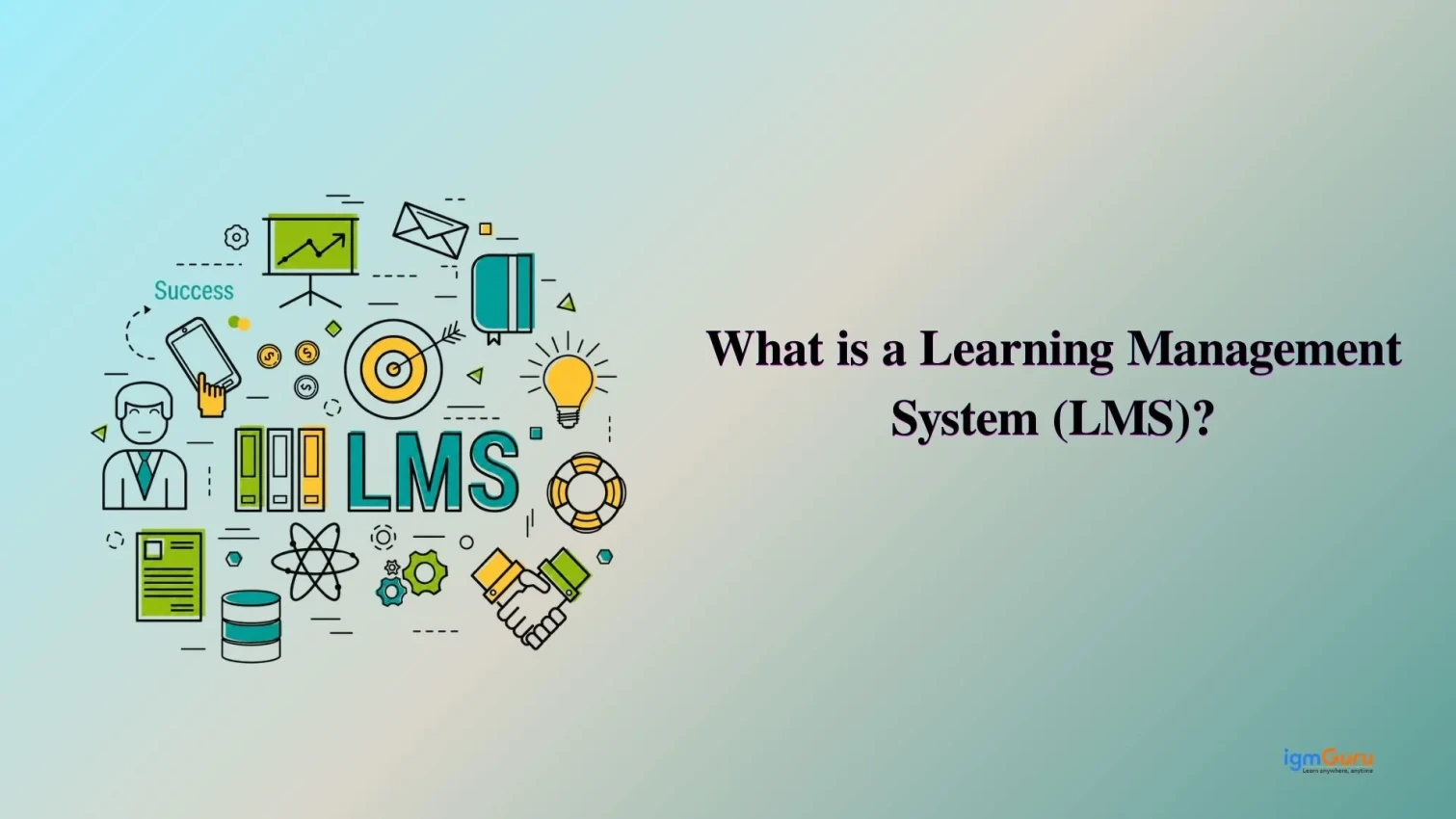
A Learning Management System (LMS) is a popular software application type used to build, monitor, deliver, and track educational courses or training programs. Think of it as a centralized digital hub that allows instructors to upload course materials, take assessments, and monitor the performance of learners. It is a handy tool for modern educators, including schools, colleges, and corporate trainers.
The global LMS market was valued at approximately $22 billion in 2023 and is projected to reach $52 billion by 2032, a compound annual growth rate of over 10%. Meanwhile, the World Economic Forum estimates that 44% of workplace skills will be disrupted in the next five years, making structured digital learning no longer optional for organizations of any size.
Yet most people searching "what is an LMS" are still getting the same recycled definitions. This guide goes further. You'll understand not just what a Learning Management System is, but how it works under the hood, what separates a good LMS from a great one, and exactly how to choose the right platform for your specific situation.
Also Read: What is Command Prompt?
A Learning Management System (LMS) is a software application used to create, deliver, manage, track, and report on educational courses and training programs. It acts as a centralized digital environment where administrators or instructors build learning content, enroll learners, run assessments, and monitor progress.
The simplest way to think about it: an LMS is the infrastructure that makes organized, scalable learning possible without requiring a physical classroom or a full-time training team on-site.
The primary goal of an LMS is to simplify the learning process for both administrators and learners. Instead of relying on traditional classroom-based methods, organizations can use an LMS to deliver training and educational programs online. This makes learning more flexible, accessible and easier to manage.
Today, learning management systems are widely used across various industries. Educational institutions use them to manage online classes and student assessments, while businesses use them to train employees, onboard new hires, and ensure compliance with industry regulations. Government agencies, healthcare organizations, and professional training providers also rely on LMS platforms to deliver learning programs efficiently.
Related Source: Software Testing Basics: A Simple Guide for Beginners
These terms are often confused. eLearning refers to the content itself, the videos, courses, modules, and interactive lessons. An LMS is the platform that hosts, delivers, and tracks that content. You need an LMS to deploy eLearning at scale, but the LMS is not the content itself.
Similarly, many people confuse an LMS with a content authoring tool (like Articulate Storyline or Adobe Captivate). Authoring tools are used to build the course content. The LMS is used to deliver and manage it.
As the market evolves, a newer category called the Learning Experience Platform (LXP) has emerged. Here's how they differ:
| Feature | LMS | LXP |
|---|---|---|
| Primary focus | Admin-driven course delivery | Learner-driven content discovery |
| Content structure | Structured, assigned courses | Curated + user-generated content |
| Control | Top-down (admin assigns) | Bottom-up (learner chooses) |
| Best for | Compliance, onboarding, certifications | Continuous development, upskilling |
| Analytics | Completion and compliance tracking | Engagement and skill-gap analytics |
| Examples | Moodle, TalentLMS, Blackboard | Degreed, EdCast, Cornerstone |
Many modern platforms now blend both, offering structured LMS capabilities alongside personalized LXP-style recommendations.
Read Also: Technical Interview Questions and Answers
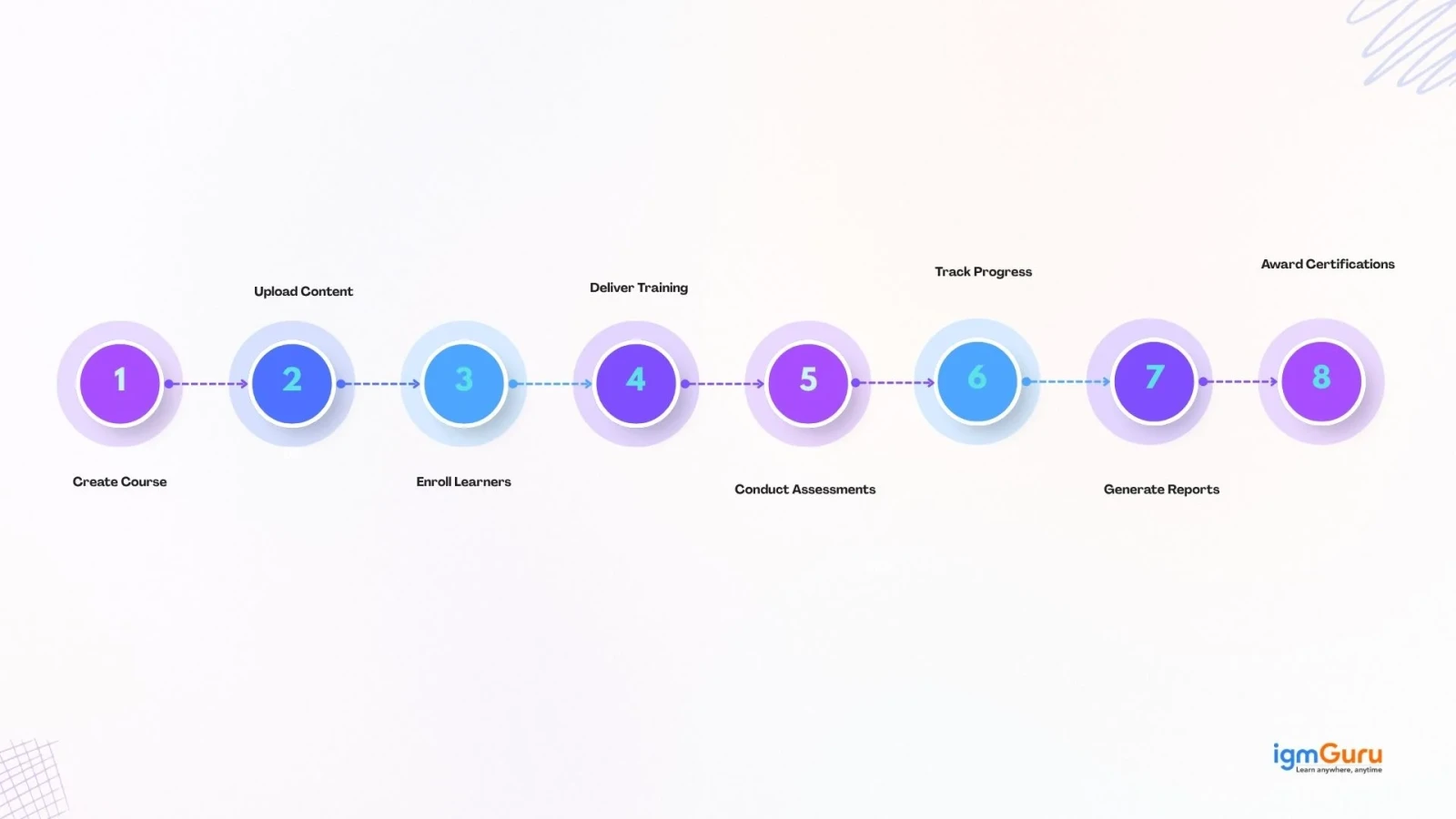
A Learning Management System streamlines the entire learning process by bringing course creation, content delivery, learner management, assessments, and reporting into a single platform. Each LMS platform may offer unique features, but most follow a similar workflow that helps organizations manage learning efficiently.
The process typically begins with administrators or instructors creating courses and uploading learning materials. Learners are then enrolled in relevant courses, where they can access content, complete assignments, take assessments and track their progress. Meanwhile, administrators can monitor performance through reports and analytics.
Let's look at the key stages involved in how an LMS works.
I. Creating and Uploading Learning ContentThe first step in using an LMS is creating learning materials. Instructors or administrators can develop courses using various types of content, including:
Most modern LMS platforms allow content to be organized into lessons, modules, or learning paths, making it easier for learners to follow a structured learning journey.
Related Source: Cybersecurity Interview Questions and Answers
Once the content is ready, administrators can enroll learners into specific courses. Depending on the LMS, enrollment can be done manually or automatically based on user roles, departments, skill levels, or learning requirements.
For example:
This ensures that each learner receives training relevant to their role and objectives.
After enrollment, learners can log in to the LMS and access their assigned courses through a personalized dashboard. They can study at their own pace and revisit learning materials whenever needed.
Many LMS platforms support multiple devices, allowing users to continue learning through desktops, laptops, tablets, and smartphones. This flexibility makes learning accessible from virtually anywhere with an internet connection.
To measure understanding and knowledge retention, LMS platforms often include built-in assessment tools. Instructors can create:
Some systems automatically grade assessments and provide instant feedback, helping learners identify areas for improvement.
One of the most valuable features of an LMS is its ability to track learner activity. The platform records important metrics such as:
This information allows instructors and organizations to monitor engagement levels and ensure learners stay on track.
Read Also: System Design Interview Questions and Answers
Learning management systems provide detailed reports that help administrators evaluate training effectiveness. These reports can reveal:
Organizations can use these insights to improve their training programs and make data-driven decisions about future learning initiatives.
Many LMS platforms include certification features that automatically generate certificates when learners complete a course or assessment. These certificates can be used to:
This automation reduces administrative workload while ensuring accurate record-keeping.
Also Read: Manual Testing Interview Questions and Answers
The main reason behind why learning management systems is the increasing adoption of digital learning methods. An LMS not only simplifies content delivery but also helps organizations monitor learner performance, improve engagement, and scale training programs without significantly increasing costs.
Whether used in schools, universities, or businesses, an LMS creates a structured learning environment that benefits both learners and administrators. Here are some of the additional key reasons:
Learning management systems provide a wide range of features and some of them are listed below:
Related Article: What is an AI Engineer?
Learning management systems come in different forms, each designed to meet specific organizational requirements. Here are their diffrent categories:
Cloud-based LMS platforms are hosted online and accessed through web browsers. They require minimal maintenance and typically operate on a subscription model.
Advantages:
On-premise LMS solutions are installed and managed on an organization's own servers.
Advantages:
Open-source LMS platforms provide access to source code, allowing organizations to customize the software according to their needs.
Advantages:
Read Also: How to Become an AWS Data Engineer in 2026?
Enterprise LMS solutions are designed for large organizations with complex training requirements, multiple departments, and large user bases.
Academic LMS platforms are specifically developed for schools, colleges, and universities to support classroom and online learning.
Artificial intelligence is increasingly being integrated into LMS platforms to deliver personalized learning recommendations, automate administrative tasks, and improve learner engagement.
Learning management systems are versatile platforms used across multiple industries and learning environments.
Also Read: What is a Software Engineer? What Do They Do?
Organizations adopt LMS platforms because they offer numerous advantages compared to traditional learning methods.
Also Read: Machine Learning Vs. Artificial Intelligence
| Feature | Learning Management System | Traditional Training |
|---|---|---|
| Accessibility | Available anytime online | Limited to scheduled sessions |
| Cost | Lower long-term costs | Higher recurring costs |
| Scalability | Supports large audiences | Difficult to scale |
| Progress Tracking | Automated tracking | Manual tracking |
| Content Updates | Easy and immediate | Time-consuming |
| Learning Flexibility | Self-paced learning | Fixed schedule |
| Reporting | Detailed analytics | Limited reporting |
While traditional training still has value in certain situations, LMS platforms offer greater flexibility, scalability, and efficiency.
Read Also: AI Engineer Salary in 2026
Numerous LMS platforms are available today, each serving different educational and business requirements.
| Platform | Best For | Pricing (approx.) | G2 Rating | Free Trial |
|---|---|---|---|---|
| Moodle | Academic + SMB (open-source) | Free (self-hosted); hosting from ~$80/mo | 4.1 / 5 | Yes |
| Canvas | K-12 and higher education | Custom pricing for institutions | 4.4 / 5 | Yes |
| Blackboard Learn | Large universities | Custom enterprise pricing | 3.9 / 5 | No |
| TalentLMS | SMB to mid-market corporate | From $69/mo (up to 40 users) | 4.6 / 5 | Yes (free tier) |
| Docebo | Enterprise corporate L&D | From ~$25,000/year | 4.4 / 5 | Yes |
| LearnUpon | Mid-market + customer training | Custom pricing | 4.6 / 5 | Yes |
| Cornerstone | Large enterprise + compliance | Custom enterprise pricing | 4.1 / 5 | No |
| 360Learning | Collaborative team learning | From $8/user/month | 4.6 / 5 | Yes |
Although LMS platforms offer significant benefits, organizations may encounter challenges during implementation.
Related Source: How To Become A Generative AI Engineer?
When I first started exploring Learning Management Systems, I realized that choosing the right LMS is not about finding the platform with the most features. Instead, it's about finding one that fits your learning goals and audience.
Start by identifying your requirements. For example, schools may need tools for managing classes and assignments, while businesses often focus on employee training and onboarding. Next, pay attention to usability. An LMS should be easy for both administrators and learners to navigate.
I also recommend checking essential features such as course management, assessments, reporting, mobile access, and integrations with existing tools. Scalability is another important factor, especially if you expect your learner base to grow over time.
Finally, compare pricing carefully and take advantage of free trials or demos. In my experience, testing a platform before making a commitment is the best way to determine whether it truly meets your needs. A well-chosen LMS can save time, improve learning outcomes, and support long-term growth.
Also Read: How To Become A DevOps Engineer?
Learning management systems continue to evolve as organizations look for more engaging, personalized, and data-driven learning experiences. The following trends are expected to shape the future of LMS platforms in the coming years.
| Trend | Description | Impact on Learning |
|---|---|---|
| AI-Powered Learning | Uses artificial intelligence to recommend courses and personalize learning paths. | Improves learner engagement and skill development. |
| Microlearning | Delivers training in short, focused lessons. | Increases knowledge retention and course completion rates. |
| Mobile Learning | Enables learners to access courses through smartphones and tablets. | Supports learning anytime and anywhere. |
| Social Learning | Encourages collaboration through discussion forums, peer learning, and communities. | Creates a more interactive learning environment. |
| Learning Experience Platforms (LXP) | Combines structured learning with personalized content recommendations. | Offers a learner-centric experience. |
| Gamification | Incorporates badges, points, and leaderboards into training programs. | Boosts learner motivation and participation. |
| Virtual and Augmented Reality | Creates immersive learning simulations and hands-on training experiences. | Enhances practical skill development. |
| Advanced Learning Analytics | Provides deeper insights into learner behavior and performance. | Helps organizations make data-driven training decisions. |
Read Also: How To Become A Prompt Engineer
A Learning Management System (LMS) has become an essential tool for delivering, managing, and tracking learning in today's digital world. From schools and universities to businesses and government organizations, LMS platforms help simplify education and training while improving accessibility, scalability, and learner engagement.
By understanding how an LMS works, its key features, benefits, and applications, organizations can make informed decisions when selecting a platform that aligns with their learning objectives.
As technologies such as artificial intelligence, mobile learning, and personalized learning continue to evolve, learning management systems will play an even greater role in shaping the future of education and professional development.
Schools, universities, businesses, government agencies, healthcare organizations, and training providers commonly use LMS platforms.
An LMS focuses on managing and delivering structured learning, while an LXP emphasizes personalized and learner-driven experiences.
Yes. Moodle is one of the most popular open-source learning management systems available today.
The best LMS depends on individual requirements, but platforms such as Moodle, Canvas, and TalentLMS are often considered beginner-friendly.