Generative AI has changed how we interact and think about artificial intelligence. In conversational AI like ChatGPT, one needs to type in a few prompts in the tool and the AI responds with the relevant answer. Now, the question is, who are these experts making these exceptional AI models. Prompt engineers, ML engineers, data scientists, and AI engineers are always researching and bringing new ideas to the table.
This guide is for all passionate artificial intelligence enthusiasts. Starting a career as a prompt engineer could be the next big thing. This guide will give step-by-step directions on how to become a prompt engineer.
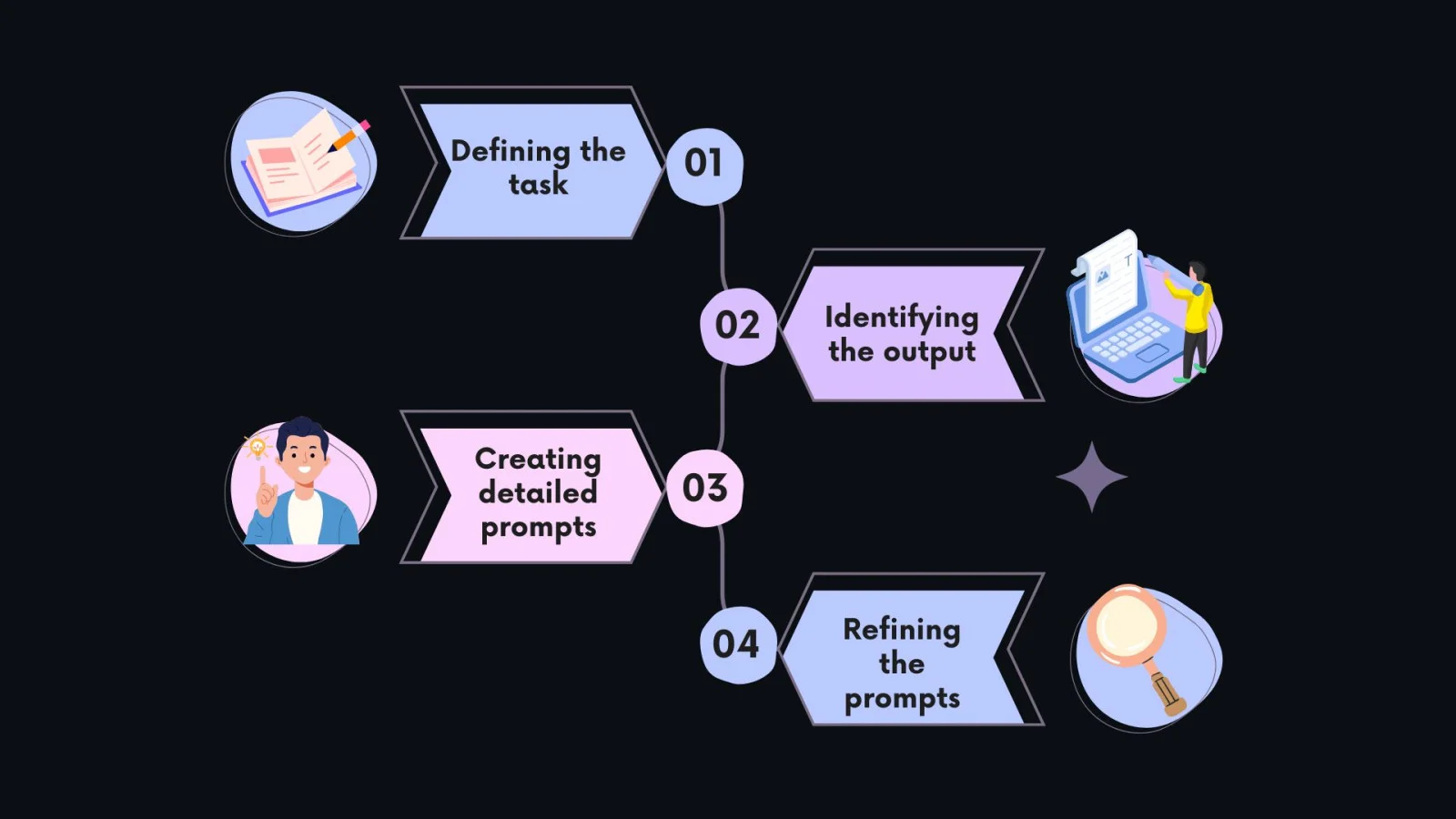
The common question that's asked is what is prompt engineering. It is the procedure of designing and crafting effective prompts for language models like ChatGPT or Microsoft Copilot. This is basically relevant in large language models (LLMs) and generative AI. Here, the quality and selectivity of the input notably influence the relevance, accuracy, and creativity of the AI's output.
Prompt engineering is all about asking a language model finer questions, giving finer instructions, and even assigning it a role. Then the language model generates the output one wants, like a list of product descriptions, blog topics and coding documentation. Quality prompts connect what a human wants to develop with what a machine can create. Because the better the prompts will be the better result. This brings us to our next question: What is a prompt engineer? Let's get into it.
Explore all Artificial Intelligence Certification Courses by igmGuru for complete learning.
Today, many people use ChatGPT, Gemini, and other AI tools to ask questions. However, most of them don't know how to phrase their queries effectively to get precise and accurate answers. This is where the role of a prompt engineer becomes essential. A prompt engineer understands how AI models work and crafts queries (prompts) in a way that guides the model to produce the desired output. They are experts in designing effective prompts to maximize the usefulness of AI responses. They are also called AI/LLM prompt engineers.
This is a fairly new field that has emerged next to generative AI. The global prompt engineering market size was valued at $222.1 million in 2023. The growth for the same is projected at a CAGR of 32.8% between the years 2024 and 2030.
Prompt engineers can work in industries like marketing, education, finance, human resources, and healthcare. On how to become a prompt engineer, first, we need to understand what prompt engineers do.
Definitely, yes. Prompt engineering is a real and growing skill, but it is still evolving as a job title. In 2026, prompt engineering exists more as a capability-driven role rather than a universally standardized designation. Understanding this reality helps set the right expectations and career strategy.
When companies hire for prompt engineering skills, the job title may vary. You might see roles such as:
Rather than focusing only on titles, companies evaluate hands-on ability. They look for professionals who can design effective prompts, test and refine AI outputs, understand model limitations, and align AI responses with business goals. In many cases, prompt engineering is assessed as a core skill, not just a separate position.
Read Also- 14 Best AI Tools For Coding in 2026 [Free & Paid]
Here are the real-time examples of real prompt engineering:
| Use Case | Bad Prompt (Before) | Optimized Prompt (After) | Why the Optimized Prompt Works |
| Blog Generation | Write a blog on prompt engineering. | Act as an AI content strategist. Write a beginner-friendly blog of 800 words on “How to Become a Prompt Engineer”, with clear headings, simple examples, and a conversational tone for non-technical readers. | The optimized prompt assigns a role, defines the audience, tone, length, and structure. This gives the model clarity on what to write and how to write it, resulting in more relevant and usable content. |
| Customer Support Chatbot | Answer customer questions. | You are a customer support assistant for an e-commerce platform. Respond politely and clearly to user queries about order status, refunds, and delivery timelines. If information is missing, ask a follow-up question before answering. | This prompt provides context, scope, tone, and behavior rules. The model understands its responsibility and avoids generic or misleading responses. |
| Code Explanation | Explain this Python code. | Explain the following Python code line by line in simple language, as if teaching a beginner with no programming background. Also include a short real-world example of where this code could be used. | By defining the audience and explanation depth, the prompt ensures the output is educational rather than overly technical, improving clarity and learning value. |
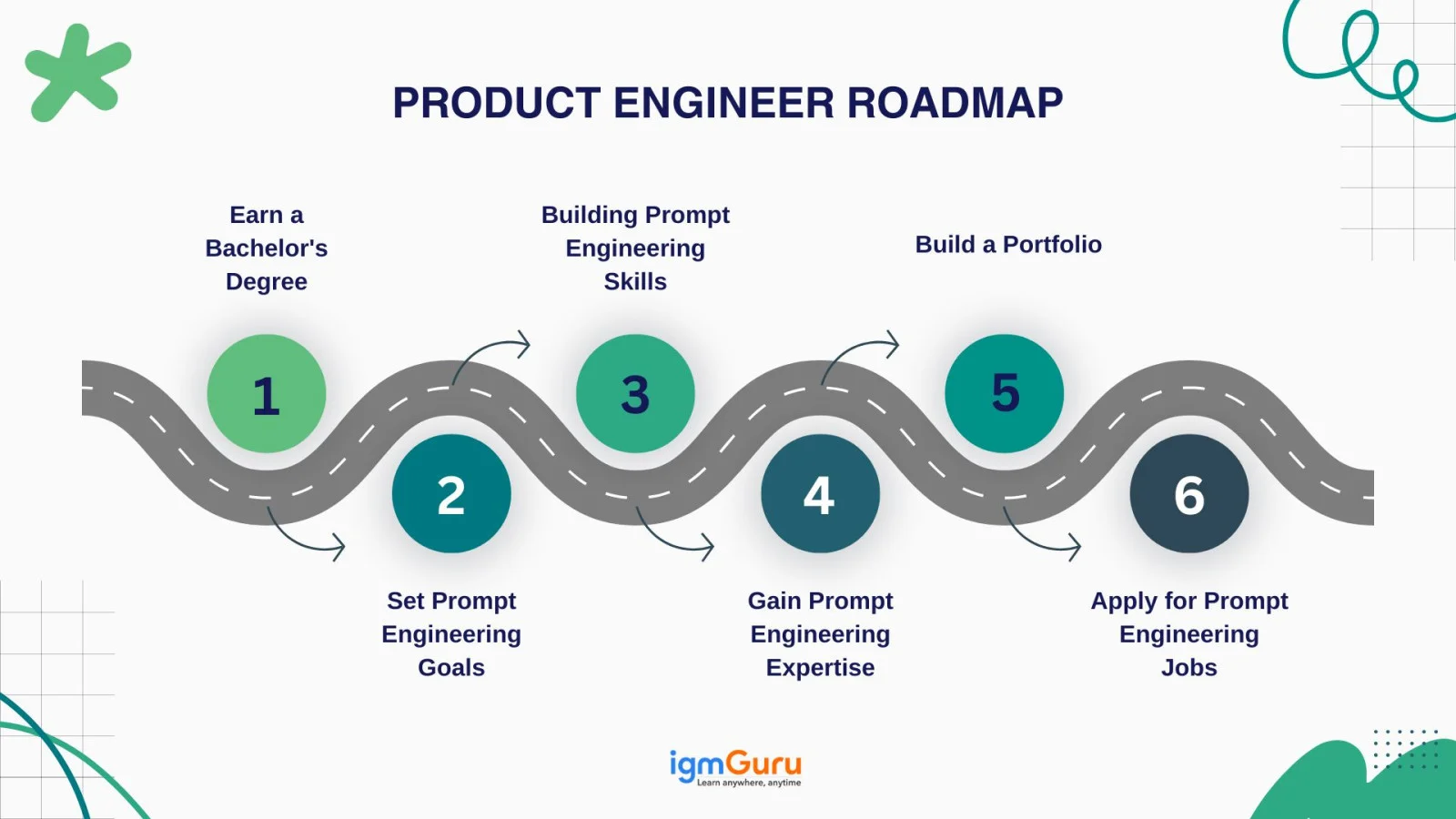
Becoming a prompt engineer can be a very exciting career path. One can explore AI language models and technology in general. Grasping the existing skills or interest in writing and supporting companies in achieving their business goals. To get started on how to become a prompt engineer, follow the steps given below.
If the goal is to get a job as a prompt engineer, getting relevant credentials will be helpful in the job search as they have a reputable impact on employers. This will show one's commitment to professionalism and mastering the latest techniques. A prompt engineering course to get relevant credentials is a great way to learn all the in-demand skills. The credentials for the prompt engineering role require:
Before switching fields or starting a career, reflect on the career goals for focusing on the efforts and on actions that lead to success. Look at some of the examples of goals.
These engineers require diverse abilities for succeeding, this includes creativity, proficiency with technology and even knowledge of human psychology. Here are some of the skills required to become a prompt engineer.
Understand how to make use of different language models like ChatGPT-3.5, ChatGPT-4, Google Gemini and Microsoft Copilot. This will be beneficial in a prompt engineering role in many ways like -
Being able to empathize with the user and knowing their needs is important for crafting effective prompts. For example, while building a chatbot for a company's customer support portal, understanding users' purchase behavior, product challenges and prior interactions with customer support will assist in crafting better prompts.
Technical knowledge of programming languages like Python, Java, R and C++ will allow a prompt engineer to personalize and interact with different LLMs for uses like -
As this career path is still new, it might be the easiest way to gain experience in prompt engineering. Prior to employment is to develop one's own experience to sharpen skills and apply them to real-life situations. Get started with some of these ideas -
Keeping in mind that experience in engineering, developing, and coding will make a strong candidate for a prompt engineering role.
It's important to build a portfolio to show your prompt engineering work. This helps you explain how your prompts made AI responses better and more accurate.
Start prompt engineering job hunting in a desired company. After finding many desired job openings, update application materials, including-
Related Article - Copilot vs ChatGPT
The prompt engineers make use of AI for creating prompts that guide the AI models for producing desired outputs. They require a variety of skills like programming, data analysis and problem-solving.
Experience or skills in machine learning will be beneficial for a prompt engineer. For example, machine learning can be used for predicting user behavior according to users who have interacted with the system in the past. Prompt engineers can then expertise how they prompt an LLM to generate material for user experience.
Writing skills will make sure that the written prompts are clear to the language model and natural to the user. Consider practicing the best ChatGPT prompts or questions in a conversational tone. Refining prompts in a 'chat' to teach the AI how to create better outputs. Changing words and sentences around in a follow-up prompt will make prompts more accurate.
Understanding specific prompting techniques is also important in the prompt engineering role. Some of the examples are -
Context in this field refers to the information, background, or situation related to a task for an LLM to perform. A prompt engineer needs to provide contextual information in the prompt itself so that the LLM can protect the desired result.
Here are some of the widely used tools by prompt engineers, including:
In this table, I have explained the salary bar and job demand for prompt engineers across experience levels in India and the USA. However, actual compensation may vary based on company, location, and how prompt engineering skills are combined with AI, product, or domain expertise.
| Category | India | USA |
| Entry-level Salary (0-2 years) | ₹6 - 10 LPA | $85k - $110k per year |
| Mid-level Salary (2-5 years) | ₹12 - 20 LPA | $120k - $160k per year |
| Senior / Expert Level (5+ years) | ₹22 - 40+ LPA | $170k - $220k+ per year |
| Freelance / Contract Rates | ₹2,000 - ₹6,000 per hour | $50 - $150 per hour |
Being a prompt engineer will open up a world of possibilities and opportunities in this fast-changing climate of artificial intelligence. AI mastery unifies technical knowledge, creative thinking, and continuous learning. These steps are only a few on the journey to finding out how to become a prompt engineer. The actual path may change over time, as prompt engineering is still relatively new in its early stages.
Explore Our Trending Articles:
How to Become a Cloud Architect - Roles, Skills, and Certifications
How To Become A Generative AI Engineer in 2026?
How To Be A Certified Artificial Intelligence Engineer
Focus on gaining knowledge of the fundamentals of AI, NLP and Python programming. Take online courses, practice daily with available AI models like ChatGPT. Take part in relevant projects like hackathons and build a portfolio.
One must bring prompt engineering in the current role, utilize prompt engineering for growth, get a job as an in-house prompt engineer for a company and master prompt engineering skills.
Yes, basic knowledge of coding in languages like Python is profitable for prompt engineering.
Course Schedule
| Course Name | Batch Type | Details |
| Generative AI Training | Every Weekday | View Details |
| Generative AI Training | Every Weekend | View Details |