Data collection involves the systematic gathering of observations or measurements to answer questions and solve problems. For example, John watched his favourite app crash for the third time this week and there are no logs or feedback. What now? He needs real information to detect that issue.
It is reported that up to 73 percent of data goes unused for analytics. It shows the importance of not only collecting but also utilizing data properly to make informed decisions. I have created this blog to help people like John understand what is data collection, its importance, and how to use it wisely.
This guide breaks down data collection in a clear and practical way, covering its meaning, importance, steps, methods, challenges, and real-world use cases.
Data collection refers to the structured process of gathering information from various sources for analysis and interpretation. The main goal of data collection is to transform raw information (data) into insights that help answer questions, predict outcomes, identify new technology trends, guide decisions, and more. It plays a critical role across fields such as business, healthcare, education, technology, and social sciences.
Data collection is not limited to researchers or analysts. It is part of everyday life, whether it involves tracking daily steps, monitoring expenses, reviewing customer feedback, or measuring website performance. When data is collected thoughtfully and analyzed correctly, it helps replace assumptions with facts and enables more confident, informed decisions in both personal and professional contexts.
Understanding the importance of data collection matters is just as important as knowing how it works. You can not bake a cake without a proper recipe and ingredients, can you? Definitely not. Similarly, no industry can make decisions without accurate data. Here are a few points highlighting why it matters:
Read Also: Data Science Tutorial for Beginners
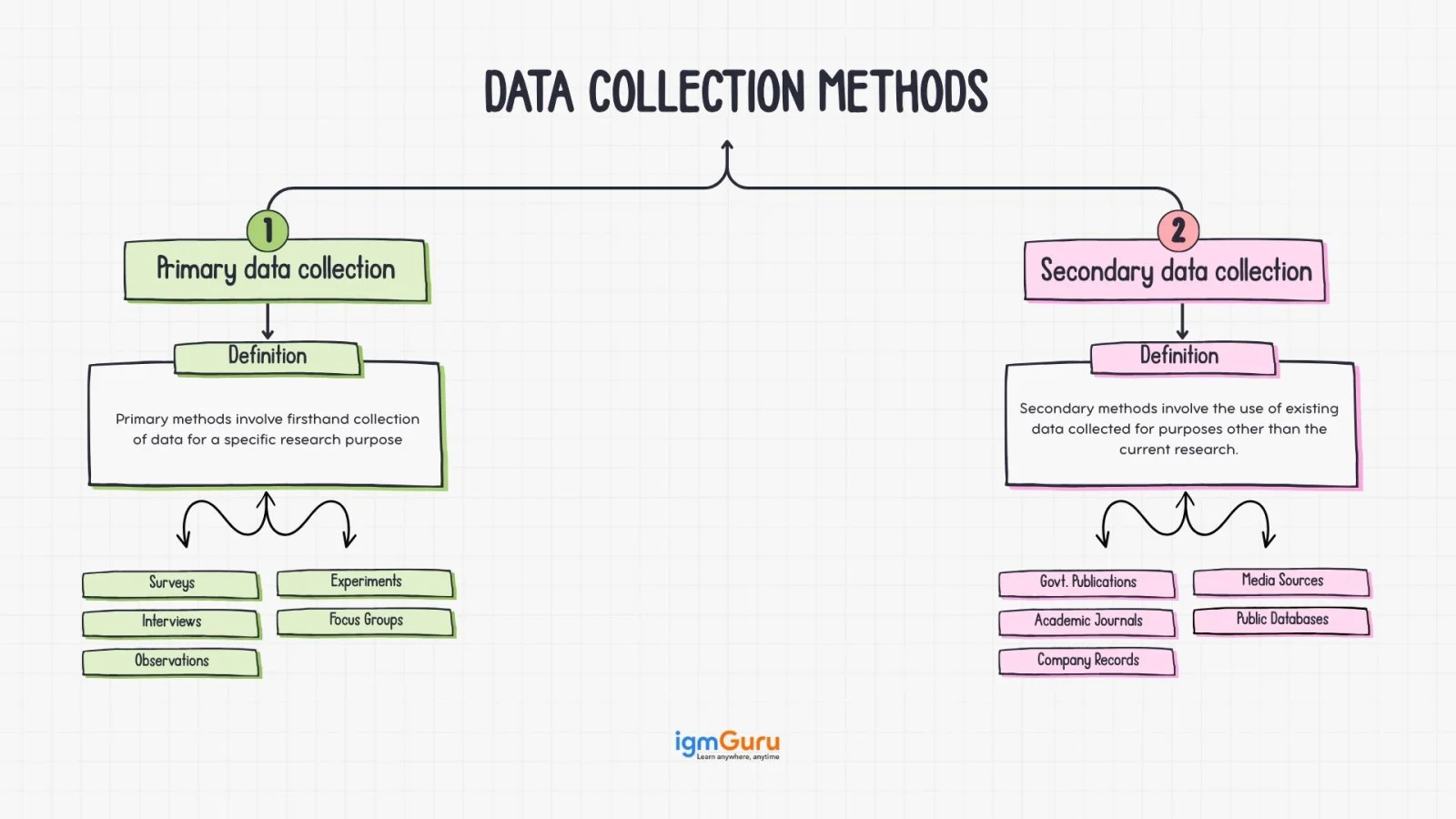
Different data collection methods serve different purposes, and choosing the right one depends on what you want to achieve.
Primary methods involve firsthand collection of data for a specific research purpose. This method is important for data accuracy and relevance for the study. Here are some examples:
Secondary methods involve the use of existing data collected for purposes other than the current research. This approach is cost-effective and time-saving. Here are a few examples:
When we talk about data collection, it involves gathering different kinds of information that can later be analyzed to draw meaningful conclusions. Broadly, this information is grouped into two main categories based on its nature and purpose: qualitative data (which focuses on descriptions and characteristics) and quantitative data (which deals with numbers and measurable values).
Qualitative data collection is used to collect non-numeric information that focuses on understanding opinions and behaviours. Here are some examples to better understand:
Quantitative data collection is all about evaluating numerical data to quantify variables. Here are some examples:
This method is a blend of qualitative and quantitative methods for a comprehensive analysis. Here are some examples:
Here are a few examples of experimental methods in data collection:
In this section, we will discuss some amazing data collection tools. Go through the given table and pick the one that suits your needs or requirements.
| Tools | What it is | Pros |
| GoSurvey | It is a mobile and web tool for making surveys. You can use it offline and sync it when online. GPS, capturing photos or videos are some key features of GoSurvey. | It is best for customer feedback, market research, and even field work in areas with bad internet connections. |
| Kobo Toolbox | It is free of cost and accessible for all tools for mobile and browser-based forms. It has export and visualization options for you. | Kobo Toolbox is best for humanitarian and research settings, especially when cost matters. |
| Open Data Kit (ODK) | This is an accessible platform for mobile data collection. You can fill out forms offline and upload them when you have access to the internet. | ODK is great for NGOs, surveys in remote areas, and development work due to its flexible and free nature. |
| Fulcrum | It comes with features like photos, custom forms, GPS, etc, for mobile data collection. | It is best for audits, inspections, and infrastructure surveys. |
| KNIME | This is a data analytics and reporting platform that supports data integration from many sources. | It is useful when you have collected data from different tools or sources that you need to clean and visualize. |
| Formplus | You can make online forms and surveys with ease through Formplus. It supports both qualitative and quantitative questions. | It is good for any team that requires flexible surveys with moderate complications. |
| Zond Feedback | This survey tool gives you offline support along with supporting multiple languages, a variety of questions, and real-time results. | Zonda Feedback helps get customer feedback. |
A structured data collection process usually follows five key steps, which help ensure accuracy and consistency. This is followed by a practical example I have made up for you to understand how it works. Let's begin:
Our first step is to define a clear and concise goal for our research. So, sit back and think over what you want to gain from your research. For example, your goal is to study customer satisfaction in a restaurant. You need to assess customer satisfaction level regarding food quality, ambiance, etc, to detect areas for betterment.
It is time to get started with the second step once you have defined your goal. This step involves choosing the right data collection method that suits your intention or goal. There are many options like interviews, surveys, experiments and more. For studying customer satisfaction in our restaurant, we can distribute short questionnaires to customers after their meal.
You need to plan how to collect the data after choosing your desired method. This includes setting a timeline, who will manage collected data, assigning responsibilities, when and where you will collect the data, etc. For example, a restaurant measuring customer satisfaction may plan sampling, timing, and resources.
The most exciting step in the data collection process is collecting data itself. Now get ready to collect your data once you have defined the goal, chosen your method and planned the process. This step is interlinked with step 2 as collecting data varies based on the method you have chosen. For example, I would hand out surveys to customers after their meals and encourage them to give honest feedback.
Congratulations on reaching the final step of this process. You must review and organize your data once you have collected it to improve data accuracy. For example, I would regularly review collected data for consistency and completeness to reach customer satisfaction in my restaurant.
Gathering data is not as easy as it sounds and many issues can affect the reliability of your data. I am going to highlight some common challenges in data collection so that you can avoid mistakes that could affect your findings.
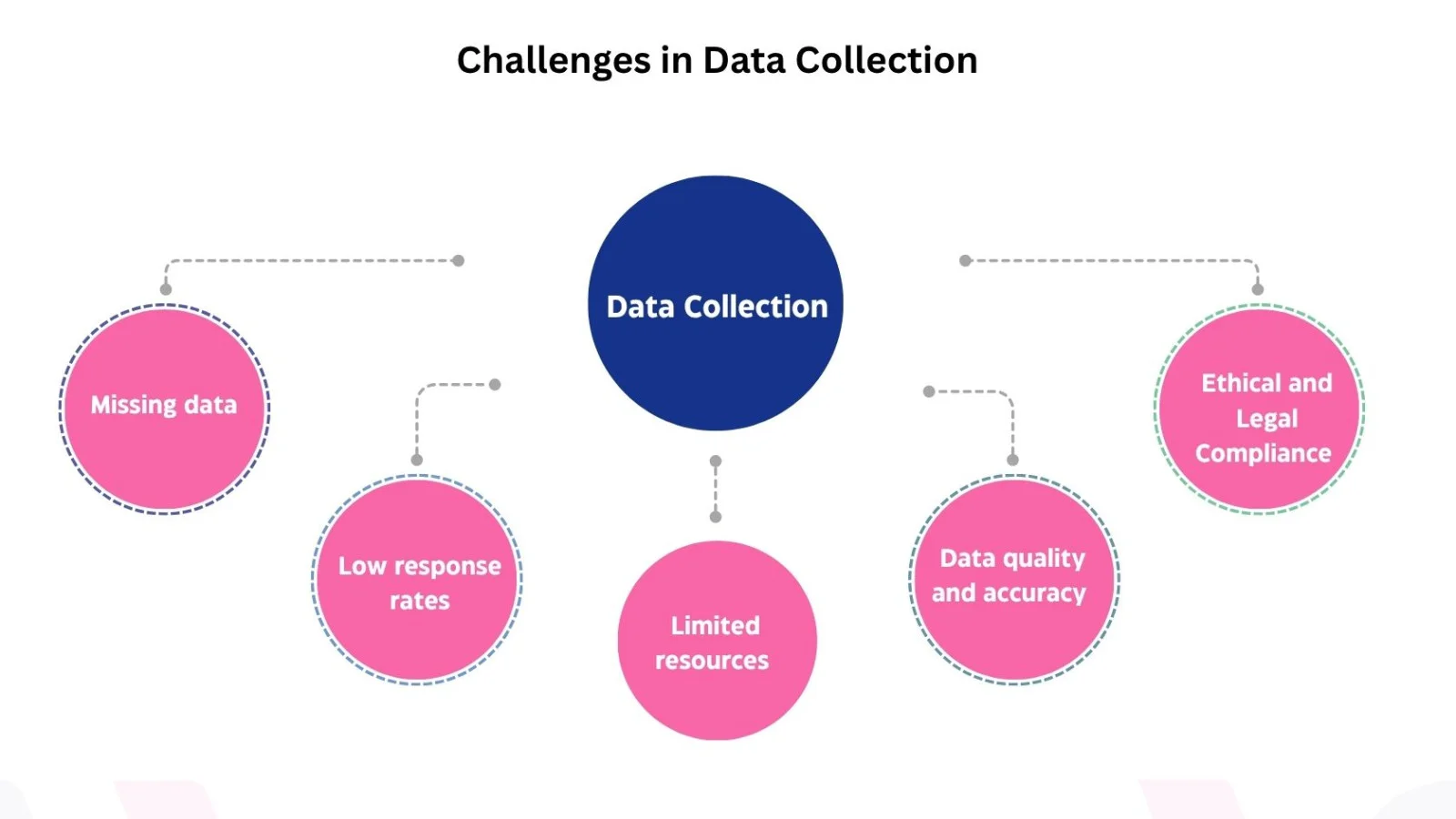
Technologies can sometimes fail, participants may skip questions in your survey or records may get lost. Many such cases can happen and result in missing information. This situation reduces validity and may bias results. You must design mandatory fields in your survey and monitor data in real time to overcome such challenges.
Low response rates from people may not represent the whole group, leading to insufficient or incorrect information. You can use reminders, make shorter questions, offer incentives and use channels to reach more people to prevent this challenge.
Gathering accurate and sufficient data is not as smooth and effective without sufficient resources. It includes skilled people, time and money to perform an effective data collection process. Make sure that you plan carefully, reach out to people for partnerships and set a realistic budget for your purpose.
This is one of the most common challenges faced by individuals while collecting data. This could happen for multiple reasons like inconsistent instruments, mistakes in data entry or people misremembering things. You must make sure that you are using validated tools and check on data quality regularly to prevent these problems from early on.
Data collection involves gathering sensitive or personal information that could be risky if not handled properly. You must be responsible enough not to violate laws or anyone's trust by being transparent with the participants. Ensure secure storage and follow all the data protection laws to avoid any legal issues.
Read Also: Top 35 Data Science Interview Questions and Answers
Finally, let's go through some real-time data collection use cases.
Patients report symptoms, side effects, or health status through electronic methods (smartphones, tablets) rather than paper. This data helps clinicians monitor treatments, assess drug effects in trials, and improve patient care.
Organizations collect data on key health indicators (e.g., HIV incidence, access to services) at the community level to inform program decisions. For example, MEASURE Evaluation documented how data collected locally led to resource reallocation and improvements in health outcomes.
Data from mobile phones (location data) is used to monitor population movements, travel patterns, or daily mobility. Such data helps fill gaps where traditional survey data may be sparse or delayed. It's useful for urban planning, traffic management, and disaster responses.
Businesses track user behaviour on their websites: page visits, clicks, time spent, cart additions, and purchases. This helps them understand what features are working, what is causing drop-offs, and to optimize conversion funnels (e.g, improving “Buy Now” button design).
Brands monitor what people are saying about them (or their products) on social platforms to gauge sentiment, spot brand image problems, track trends, or adjust marketing. For instance, tracking mentions & images of Coca-Cola drinks posted online to understand preferences in different regions.
It is safe to conclude that data collection is quite the same as collecting puzzle pieces that give us a bigger picture after putting them together. This foundation is important to turn assumptions into information and guesses into strategies. Every piece of accurate data helps you in making smarter decisions.
Related Articles:
It is important to use unbiased instruments, pilot test tools, check for inconsistent data and implement ethical safeguards to ensure quality in your collected data.
Some parts of this process can be automated with the help of sensors, tools and scripts. It cannot be automated entirely as the reliability depends on your proper setup, error handling and monitoring skills,
You may be required to pay for the designing tools, software or sensors to efficiently collect data. You may even have to pay for data storage, cleaning, along with incentives for respondents and other enumerator wages.
Course Schedule
| Course Name | Batch Type | Details |
| Data Science Courses | Every Weekday | View Details |
| Data Science Courses | Every Weekend | View Details |