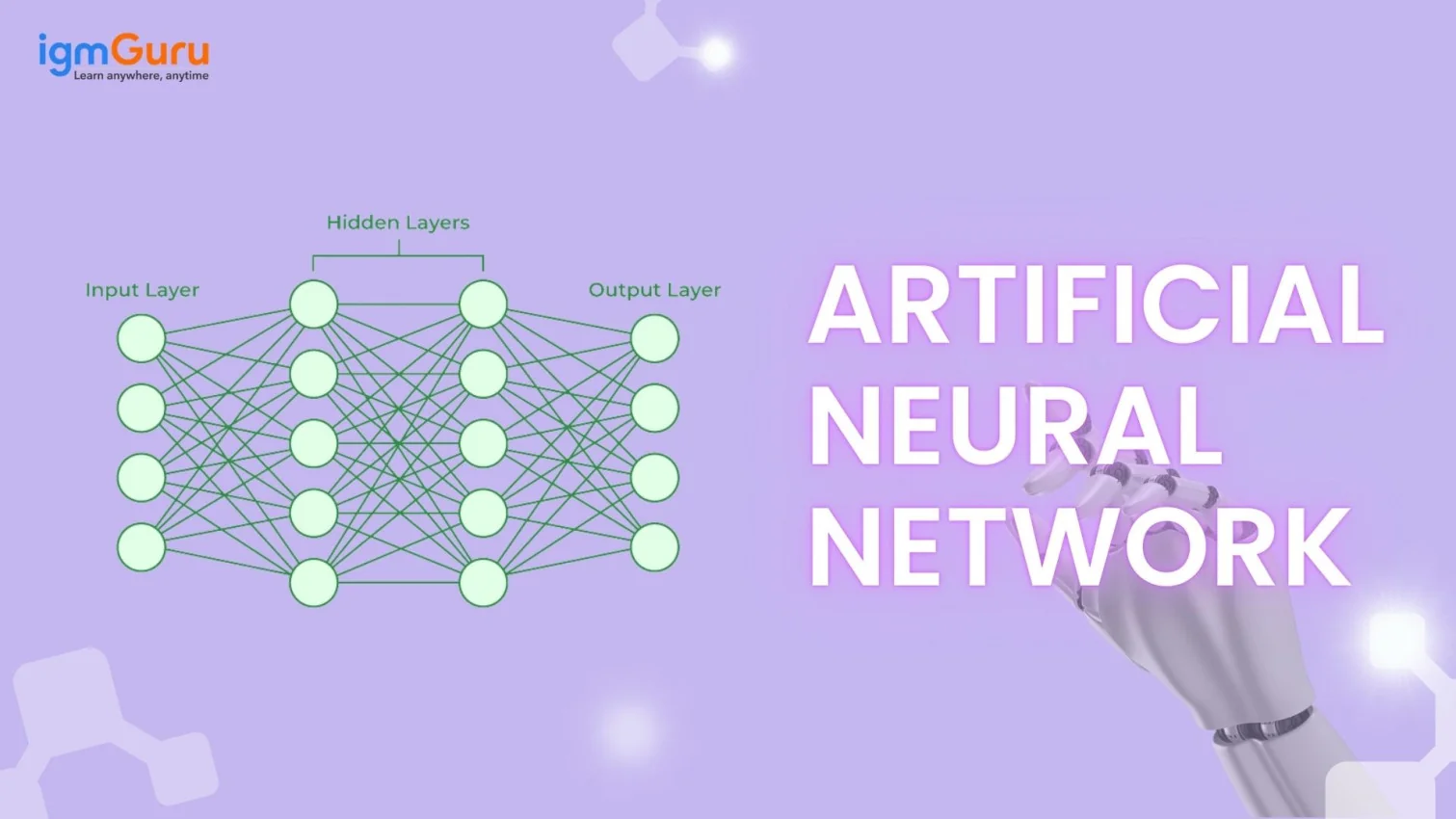
An Artificial Neural Network (ANN) is a computing system that mimics the structure and functionality of the human brain, using interconnected layers of artificial neurons (nodes) to learn patterns from data and make predictions. That's the short version, now let's get into why it matters.
These are trained through the assistance of huge datasets for identifying hidden patterns and forecasting possible outcomes. Now these layers learn, adapt and solve tough problems in sectors like image recognition, speech processing and financial forecasting, making them a key part of new technology trends.
After knowing these things, you might be wondering how it works? Where is it used and when to apply? Don't worry! This article has you covered. We will get to know everything about it. Let's start with the architecture: What is an Artificial Neural Network?
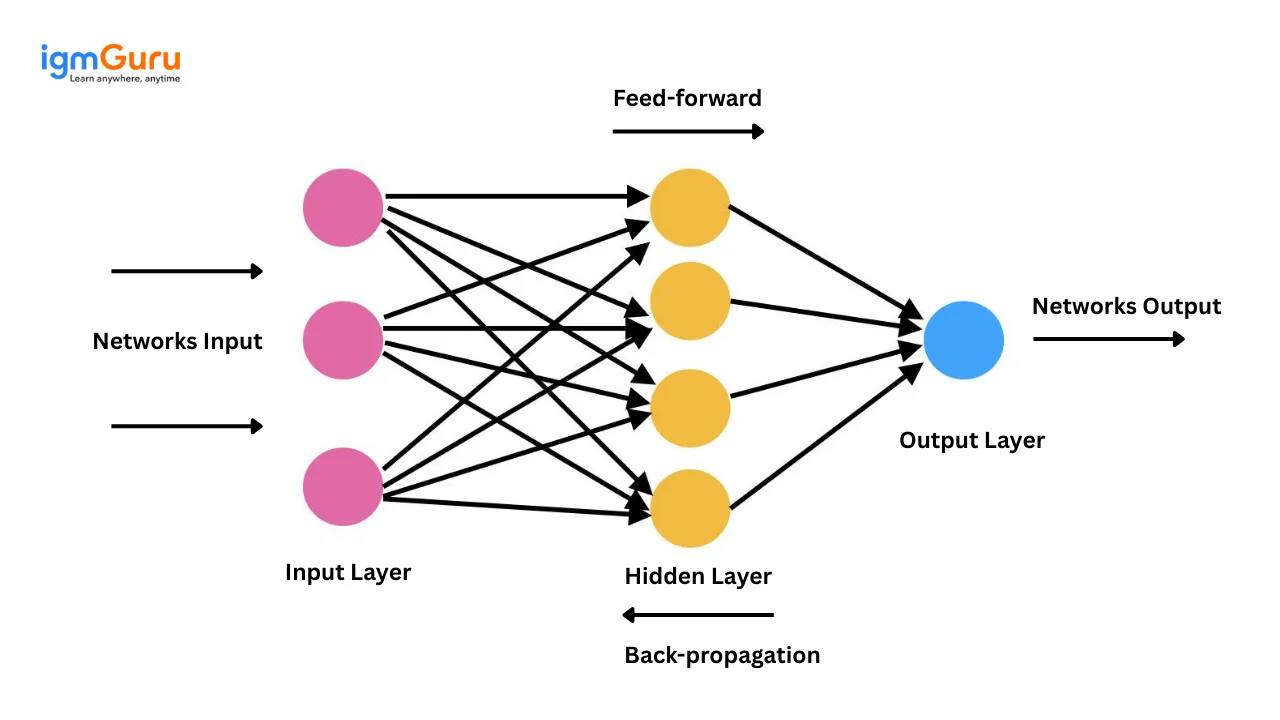
An Artificial Neural Network (ANN) is a computational model inspired by the human brain. It consists of interconnected processing units called neurons that learn to recognize patterns, process complex data, and make predictions. ANNs serve as the backbone for modern machine learning and artificial intelligence. These networks have input, hidden and output layers.
Information moves through them and gets processed because of weighted connections between neurons. These networks are trained to alter these weights to cut down on mistakes. This lets them do things like image recognition, understanding language and spotting patterns.

It is important to see how actual neural networks function in the human brain to get a handle on how artificial neural networks work. ANNs are actually based on biology, arising from a lot of research on how our brains handle information.
A single neuron is a cell that takes inputs and gives outputs. Dendrites make up the input part as they pick up signals from other nerve cells. Then, the axon that branches off the main cell acts like the output. It links to other neurons' dendrites through a synapse to pass along information. Neurons use electrochemical signals to communicate with one another, and they only send an output if the input signal is powerful enough within a particular time frame.
Artificial neural networks or ANNs, work in the same way. They get input signals, and if those signals hit some level based on sigmoid functions, they process things and make an output. Same as real neurons, these take many inputs, add them all together, and then put the total through a sigmoid function. The result from the sigmoid function turns into the ANN's output if it passes a certain point.
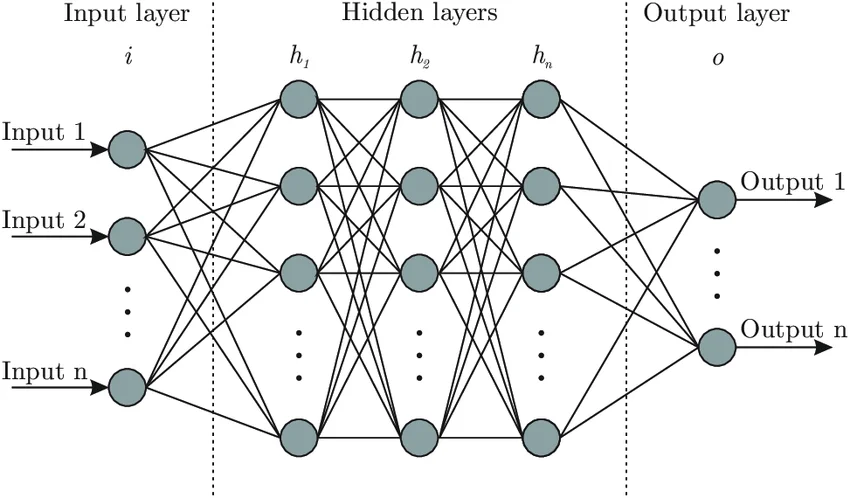
Artificial neural network architecture is made up of layers and lots of neurons.
Deep neural networks are made use in deep learning and they are pretty much like basic neural networks. The major change is that they use a lot of hidden layers. This means they require a lot more time and data to learn things.
Read Also- Artificial Intelligence vs Cyber Security: Which Career Is Better?
ANNs are for assisting computers to learn from data, just like how our brains learn from experience. They are great at locating patterns and making decisions without being told exactly what to do. Here are some simple examples of what ANNs are used for -
These systems automatically answer multiple types of questions like definitions, biographical questions and questions in different languages that people usually ask in their day-to-day life. ANNs can make really good question-answering systems.
This is about knowing if two sentences mean the same thing. It's helpful for question-answering systems because people can ask the same question in different ways.
ANNs are used a lot in speech recognition. It's about using computers to turn spoken words into text.
Natural language generation (NLG) can be used for reports. NLGs are for writing reports, making text from data, summing up medical records and creating weather forecasts from weather data.
This can be made use for things like receipts, invoices, checks and legal papers. Through ANNs, it can even work on handwriting with pretty good accuracy (around 85%).
This is common in text editors to let people know if they've made a spelling mistake. Many spell-checkers now use ANNs.
Text classification is key in areas such as web search, spam filtering, language detection, readability scoring, and sentiment analysis. Neural networks are usually used for these things.
NER is all about putting names into groups like people, companies, places, dates and times. Neural networks often power the best NER systems.
This is helpful for parsing, text-to-speech and pulling information from text and a lot of other things. It means tagging words as adjectives, verbs, nouns and so on.
Even though it is common but isn't perfect. Some translations aren't that good. To get better results, experts are trying out neural networks.
Read Also- What are Generative Adversarial Networks (GANs)
As we read about what ANN is, they are of different types as well. Let us take a look at them.
These are a kind of artificial neural network where data moves in one direction. Input gets processed through hidden layers which leads to an output. There are no loops between layers or nodes here.
They are made for managing grid-style info like images and videos. CNNs make use of convolutional layers to filter and find out patterns and spatial arrangements.
RNNs are good at processing sequential data, where the present output depends on the prior inputs. They loop on themselves to get back their internal state, which is memory.
These are a type of RNN which makes use of the memory cells to solve the gradient issue and hold long-term info.
GRUs are other common RNNs that use a gating system. They are like LSTMs but with fewer settings.
Read Also- Top 25 Generative AI Interview Questions And Answers
ANN has a lot of advantages, like it has the ability to learn and improve over time, is amazing at pattern recognition, managing nonlinear relationships and so much more. Below are the advantages of ANNs given in detail.
ANNs learn from examples and not hard-coded rules. The more data they're trained on, the better they become at forecasting or identifying patterns. This means they can improve their accuracy over time, just like how practice makes us better.
ANNs is pretty great at spotting patterns and trends in data that humans might miss, and is known for it. It makes them useful for complicated work like image and speech recognition, medical diagnosis and fraud detection.
Unlike traditional models, ANNs can work with complicated relationships between inputs and outputs even when those relationships aren't easy to describe with math.
They are used for a wide range of industries from finance and healthcare to entertainment and marketing. As they can be trained for multiple kinds of data like text, images and audio and they are super versatile.
These are surprisingly good at making sense of messy or missing data. Even though they aren't perfect but still can function and give decent results even when the input isn't completely clean.
Everything has its own advantages and disadvantages. We read about its advantages, now let us read its disadvantages too.
For an ANN to make good forecasts, it needs to be trained on a large and diverse dataset. Without enough data, the network might perform poorly or make wrong predictions.
Training an ANN, especially deep learning models, takes time, energy and high-end hardware like GPUs. This makes them expensive and not perfect for low-resource environments.
Unlike traditional programs, where you can trace how your answer was calculated, they don't explain why they made a decision. This lack of transparency can be a major problem in sectors like medicine, law or finance.
They can sometimes 'memorize' the training data way too well, meaning they do great on the data they've seen before but poorly on new/unseen data.
Opting for the correct neural network architecture (like how many layers or neurons to use) can be tough. It usually includes trial and error, and tuning the model's parameters which can be time-consuming and needs expertise.
Read Also- Top Advantages And Disadvantages of Artificial Intelligence
Neural networks are useful in many fields and are applied in multiple industries. Here are some of the industries given below where these are applied.
The year 2026 has brought various advancements in artificial neural networks (ANNs). It is advancing rapidly along multiple fronts like architecture, training methods, hardware, and hybrid systems. All this is making it a great time for beginners to pay attention to what’s changing. Below are some of the key developments you should know before stepping into 2026.
| Area | Key Development (2026) | Description | Why It Matters (for Beginners) |
|---|---|---|---|
| 1. Efficient Architectures & Training | Algorithms for symmetric data; few-shot & self-supervised learning | New methods reduce compute and data needs, plus stronger few-shot and self-supervised approaches for small datasets. | Allows beginners to build models without needing huge datasets or high-end GPUs. |
| 2. Hybrid & Specialized Models | Neural-symbolic systems; quantum-inspired hybrids; reservoir computing | Combines symbolic reasoning with neural learning; emerging quantum and spiking models mimic brain-like behavior. | Gives exposure to future-ready hybrid models that merge AI, logic, and physics concepts. |
| 3. Hardware & Edge Deployment | Superconducting neural hardware; low-power ML chips | Superconducting devices achieve faster learning with less energy; focus on model compression for mobile devices. | Teaches how neural networks are optimized for real-world devices and edge applications. |
| 4. Explainability & Domain-Specific Models | Interpretable networks; domain-tailored architectures | Efforts to make neural networks more transparent and customized for domains like healthcare and physics. | Helps beginners understand how AI decisions are made and how to specialize models by industry. |
| 5. Multi-Modal, Graph & Transformer Advances | Graph Neural Networks (GNNs); transformer expansion beyond text; efficient attention (FlashAttention) | Transformers now handle text, vision, and multimodal data; GNNs efficiently manage relational and structured data. | Learning these models prepares beginners for modern AI applications across multiple data types. |
Artificial Neural Networks are a strong tool that helps computers learn from data and make smart decisions, just like how our brains learn from experiences. These are amazing at identifying patterns and solving complicated problems in areas like healthcare, finance and technology. But as they have many strengths, they also come with a lot of obstacles and challenges like needing multiple data and are tough to understand.
Artificial intelligence is a broad concept of machines performing tasks that require human intelligence. Artificial neural networks are considered a special method in AI that copies how the human brain is structured.
Not exactly; deep learning is a subset of machine learning that uses ANNs with many layers to deal with complicated datasets.
ANNs need large amounts of data and high computing power, which makes the decision-making process hard to interpret.
Artificial Neural Networks are important because they enable machines to learn and make intelligent decisions.
An Artificial Neural Network is used for tasks like image recognition, speech processing, and predictive analytics.