How to Become a Product Manager

How to Become a Product Manager?

Jaya
April 7th, 2026
1865
10:00 Minutes

Want to become a Product Manager, but don't know how? It is a common question among professionals who want to build their career by combining business strategy and technology. If there is one thing I have learned as a Product Manager, it's that behind every great product, there is someone quietly making decisions and shaping direction. And, this is the truth. Isn't it?

We sit between what users dream of, what the business expects, and what technology can realistically build. That's exactly why Product Manager is considered one of the most rewarding roles today. Almost every startup and established organization relies on Product Managers to turn ideas into meaningful, scalable products that drive real impact in the long run.

In this article, I will explain all the skills, steps, and pathways that can help you begin your own journey into Product Management.

Let's get started.

What is Product Management?

Product management is a profession where you take care of a product from start to finish. Where you turn an idea into something useful that people enjoy using. A product manager helps decide what the product should do and how it should solve real problems.

This profession is about understanding users first. The product manager works with designers and developers to make sure the product is simple, helpful, and ready on time.

The most important part for a product manager is to build the right product, not just any product, but a product that creates value for users and helps the company grow naturally.
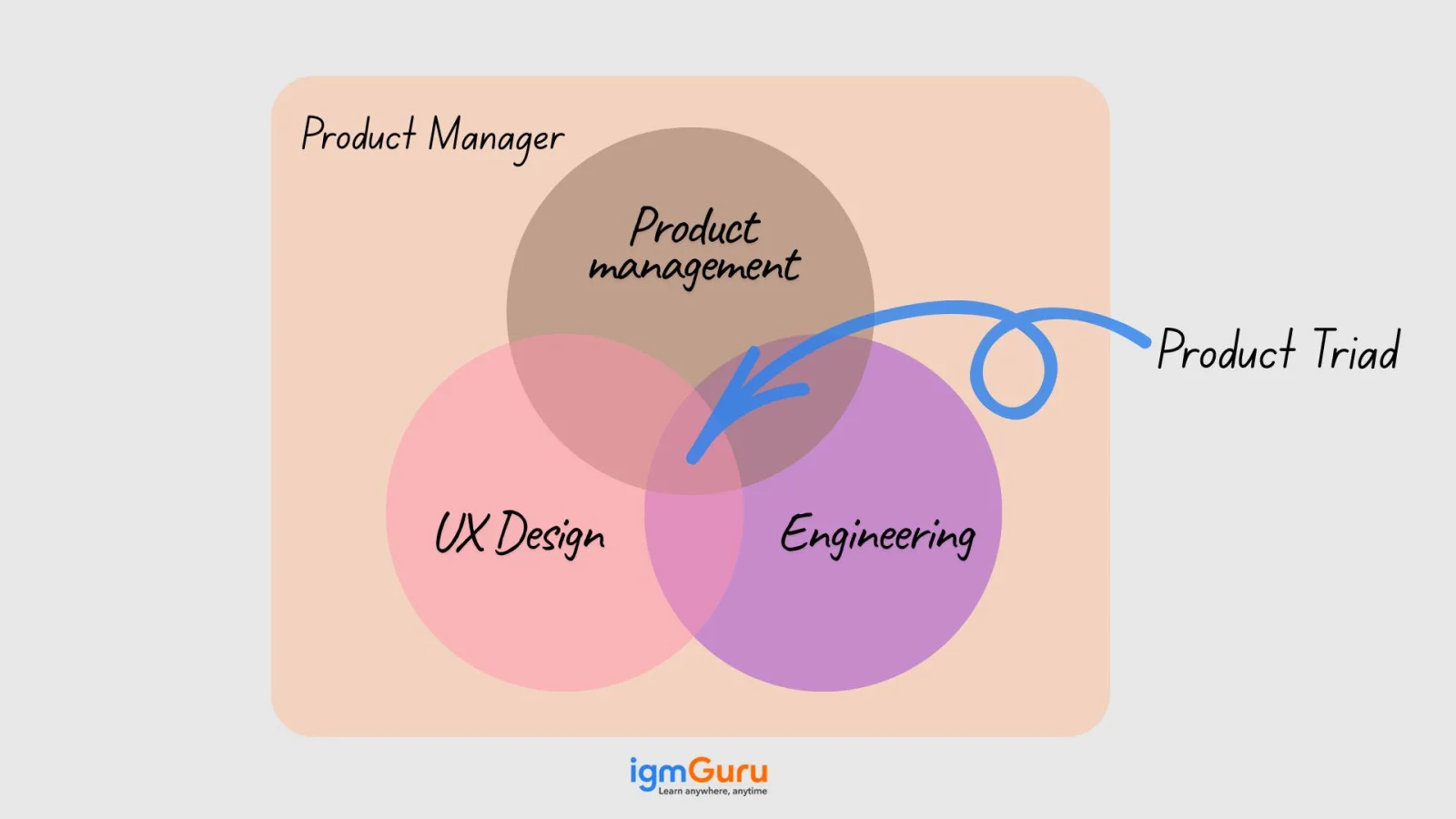
Who is a Product Manager?

Who is a Product Manager

A product manager is a profession where a person plans everything from making the product to launching and improving while keeping customer needs in mind.

Being a Product Manager means ensuring all parts come together smoothly. This job role does not require designing the product or writing the code, but you help decide what needs to be built.

Global brands like Airbnb and Uber rely heavily on Product Managers to deeply understand and fulfill customer needs. Airbnb focuses on offering simple yet premium property, room, and hotel options for travelers, while Uber provides flexible and customizable ride choices to users. These product-driven decisions help both brands deliver consistent value and build long-term customer loyalty.

What Does A Product Manager Do? Understanding the Role

Before you start, it's essential to understand what a product manager actually does. As the name suggests, a product manager oversees the entire product lifecycle, from ideation to development to launch. A PM takes care of the entire front-end and back-end development. However, they don't write code. That responsibility belongs to engineering teams.

In startups or established enterprises, a product manager typically works under the guidance of a senior product leader, such as a Head of Product, Chief Product Officer (CPO), Chief Technology Officer (CTO), or sometimes directly with the Founder/CEO. Often referred to as product owners or, in some contexts, project managers, they play a key role in managing the product backlog, conducting user research, and shaping the overall product direction. By continuously analyzing customer feedback, they help the development team prioritize and deliver features that align closely with market needs and business goals.

Primary Roles and Responsibilities include:

Some of the day-to-day work a Product Manager handles includes:

  • Understand users and their problems
  • Study competitors and market needs
  • Decide which features to build first
  • Work closely with designers (front-end) and developers (back-end)
  • Communicate and plan work every day

  • Adjust quickly when requirements change

  • Manage the product marketing and sales team
  • Sharing updates with stakeholders and following their feedback into actionable product strategies

Product Manager: Skills & Qualifications

When I was learning what a Product Manager really does, I realised I do not need to be perfect. All it needs is the right mix of skills and some basic qualifications. Let me break it down for you to understand it better:

Product Manager Qualifications

1. Bachelor's Degree in Business, Engineering, IT, or Related Field: An undergraduate degree will help you understand basic management, technology, and problem-solving.

2. Master's degree: Companies prefer candidates with an MBA or a similar master's degree, especially for higher positions.

3. Basic Knowledge of Data and Market Research: That person should know what is going on in the market and all its trends, and should know how to understand customer data.

4. Product management certifications: Certifications make your profile and resume strong as a Product Manager. They help you gain practical, hands-on knowledge and make your day-to-day work easier. Some of the best product management certifications include:

  • Certified Scrum Product Owner (CSPO)
  • Product Management Professional (PMP)
  • AIPMM Certified Product Manager

Entry-Level Product Manager Skills

Skills Description
Communication I have to interact with many people, including designers, developers, marketing, and sometimes customers. If I am not able to explain ideas clearly, then the product becomes very confusing. So, for a product manager, communication is very important.
Strategic thinking With a strategic thinking approach, a product manager makes the product successful. When you plan to make a product, it should be practical. It should also solve user problems.
User Engagement For a PM, user engagement is essential to know what to add to a product or offer to end customers. Make a survey or do a poll on social media. To check if your user finds your product nice or if it requires some changes.
Working with people A PM closely works with several teams/departments in an organization to make the product strong. I work with many people, like designers, developers, and marketing teams. Where I learned how to listen to everyone and explain ideas clearly so we could work well together.
Understanding market trends User preferences can change anytime due to social media influence. Make sure to check the market trends for your product to gain market dominance.
Competitive advantage Always check what your competitors are doing, as you will get the info on what user problems they cannot solve. Now you can use this to gain a competitive advantage.
Tool usage Tools like Jira, Asana, Trello, etc., will help in breaking down ideas into actionable tasks and keep teams aligned from planning to delivery.
Deep knowledge of Front-end and back-end A Product Manager has a strong understanding of front-end and back-end technologies such as JavaScript, React.js, Angular.js, CSS, Node.js, Python, Java, or C++. This helps in better planning, realistic decision-making, and smoother collaboration with engineering teams.

Read Also: 40 Best Product Manager Interview Questions

How to Become a Product Manager: A Step-by-Step Guide

Becoming a Product Manager requires dedication, patience, and a willingness to continuously learn. It is not a role you step into overnight, but rather a journey where you slowly build the right mix of skills, mindset, and real-world understanding.

When I started my career, I did not even know what a Product Manager was. I only knew that I liked solving problems and understanding how apps and websites work. Then, I realized that Product Management is about building the right product for users.

If you are planning to become a Product Manager, you do not need to feel scared or confused. Let me share a simple way to begin:

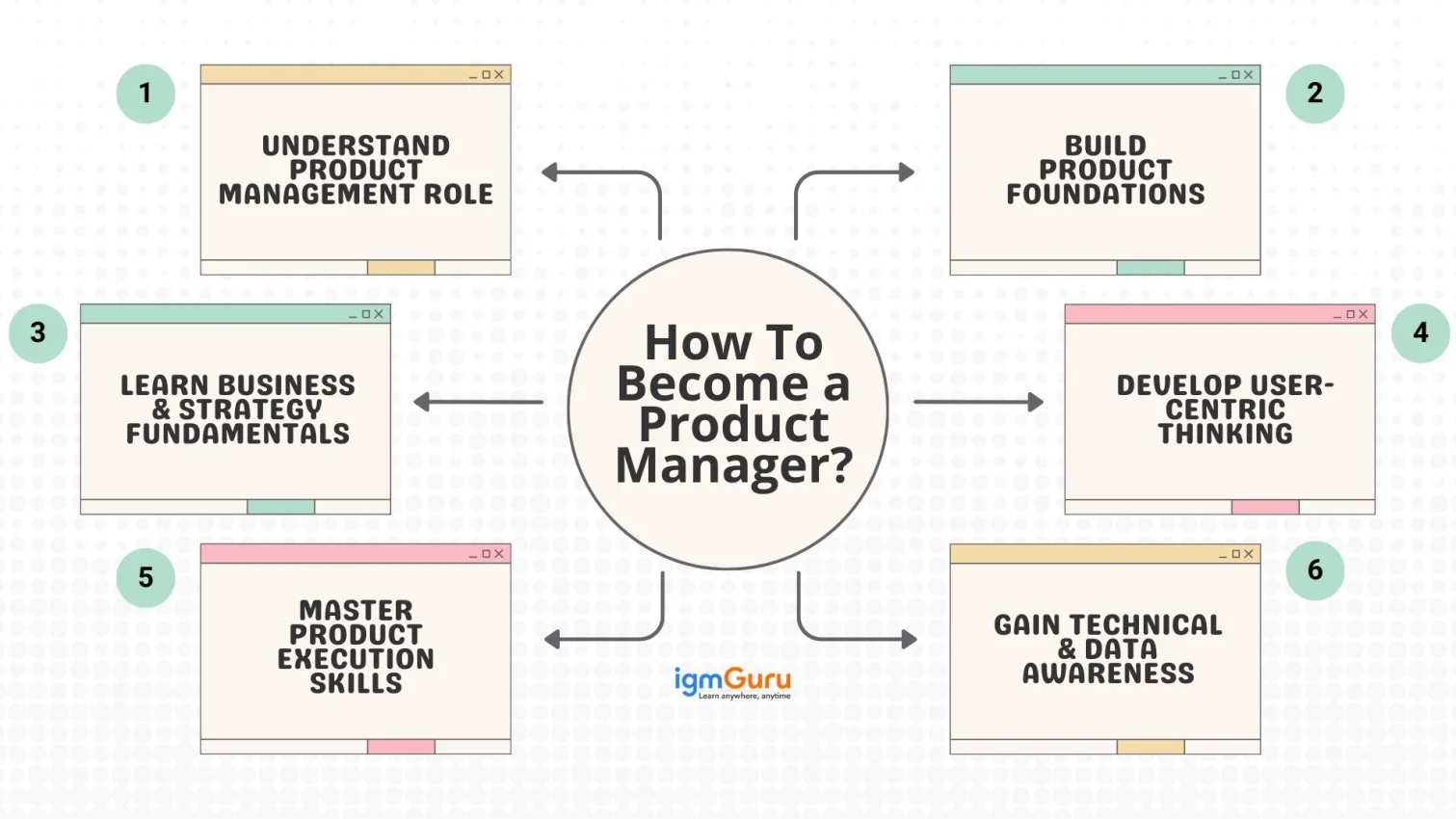
Step 1. Master the Product Management Roadmap & Fundamentals

  • Get Familiar With the Product Management Process

A product manager plays an important role in making the product successful.

What Does a Product Manager Do

A Product Manager decides what to build, why it should be built, and who it is for. They understand user problems, work with teams to create solutions, and make sure the product is useful and helps the business grow.

i) Product Strategy Development

This involves defining the product’s vision and long-term goals based on business objectives and user needs. A product manager ensures the strategy clearly answers what problem the product solves and why it matters.

ii) Road Mapping and Prioritization

Here, you plan what to build and when by organizing features into a realistic roadmap. Prioritization helps focus on high-impact tasks that deliver the most value to users and the business.

iii) Cross-Functional Leadership

A product manager works closely with engineering, design, marketing, and sales teams to keep everyone aligned. The goal is to ensure smooth collaboration and avoid gaps between planning and execution.

iv) Stakeholder Management

This process involves communicating progress, challenges, and decisions to stakeholders. Their feedback is carefully evaluated and incorporated without losing focus on the product vision.

v) Project Management

Product managers track timelines, dependencies, and risks to keep development on schedule. They help teams stay organized while adapting plans when priorities or constraints change.

vi) Market Research and Customer Insights

Understanding user behavior, market trends, and competitors is key to building the right product. Insights gathered from research guide feature decisions and improve overall product fit.

Step 2. Build Core Product Foundations

A Product Manager needs strong basics. These basics help in making clear decisions, avoiding confusion, and building products that actually solve real problems.

  • Product Lifecycle Stages:

Product Lifecycle Stages

1. Introduction: When you first create a blueprint of your idea and plan things for it.

2. Launch: In this stage, you put all your ideas in one place, and then you launch your product into the market.

3. Growth: In this stage, your product will gain profit and grow into different markets. Even your feedback will also increase.

4. Maturity: As soon as your competition increases in the market, your product becomes mature, or you can say stable. Now your Demand drops.

5. Decline or Renewal: Either you learn from your maturity stage and get your product back into the market with renewed features, or else your product will be out of the market race.

  • Agile, Scrum, and Kanban Basics

These are ways of working that help teams move fast and stay flexible.

1. Agile: Working slowly and smartly instead of trying to finish everything at once.

2. Scrum: Breaks work into short time blocks called sprints

3. Kanban: Tasks are written on a board to track progress and avoid overload.

  • Lean Product Development

It means building products without overdoing things. You do not have to add tons of features to your product as it can sometimes be very complex for your users. Try keeping it user-friendly.

  • MVP and experimentation mindset

An MVP is just the simplest version of a product that people can actually use.

You do not have to make everything perfect. Launch something small and see how users react. It is ok if some of your ideas do not work.

Step 3. Learn Business & Strategy Fundamentals

Before managing a product, it is very important for you to understand the basics. This helps in making smarter decisions that actually work in the real world.

  • Market research and competitor analysis

Understanding what problems your users are facing and what they need. At the same time, studying your competitors to gain maximum competitive advantages.

  • User personas and segmentation

You will never have users with the same perspective. Some use the product often, some only sometimes, and some for very specific reasons. When you segment your target audience based on their behavior, gender or even their income. Then you will be able to sell your products to your target audience.

  • Value and positioning

Your product should hold a value that users buy only your product, for example for skincare, it is always Rhode because it has the value in the users' eyes that makes them feel unique and authentic. Positioning is about how the product is seen by users, which makes it feel useful, special, or different in their minds.

  • Pricing and monetization basics

This is about how your product will get monetized and how much you want your users to pay. The price should feel fair to users and also help the business grow.

  • Go-to-market strategy

Having a perfect market strategy will help you in deciding: to whom you will sell, where you will sell, and lastly, it will explain the product in a simple and clear way.

Step 4. Develop User-Centric Thinking

User-centric thinking means putting your user first and not the company. A good product manager always tries to understand what the user truly needs and builds the product around that.

  • User research

Start listening and understanding your users. Try to interact with them using online surveys or polls on social media. This helps in understanding what are the best features of your product and where it needs improvement.

  • User journey and experience

How your users are using those products tells everything you want to know. It will tell where users feel confused, stuck, or happy.

  • Choosing what to fix first

Prioritise which problem is important as compared to others, so that your users do not face any problem.

Step 5. Master Product Execution Skills

I have learned that getting ideas is easy. The main part is turning those ideas into real products that people can use.

  • Writing PRDs and User Stories

PRD means Product Requirement Document. Before starting any new feature, writing a PRD is very important. It will clear all your questions on what you wanna build, why we are building, and how to make it successful.

  • Backlogs

Backlog list that needs regular cleaning. It should not be a place where we add every idea. If everything feels important, the team gets confused. I review the backlog often and remove or delay items that are not needed right now.

  • Sprint Planning and Reviews

Sprint planning means that the team decides what work to do in the next few days or weeks. After the sprint ends, reviewing is being done to check what works best and what needs more improvements.

  • Feature Prioritization Frameworks

It is one of the hardest parts of my job that I cannot say the word "not now". We cannot build everything at the same time. Prioritization frameworks help me decide what should be done first and what can wait.

  • Release Planning

Releasing a feature at the right time matters as much as building it well. When we rush, mistakes happen, bugs increase, and users get unhappy.

By planning releases properly, the team stays calm and prepared. Everyone knows what to expect, and we can deliver something we feel confident about, not something we need to fix later.

Step 6. Gain Technical & Data Awareness

If you are from a non-engineering background, it is all ok as you don't have to code, but you need to know some basics of it as it will help you understand how things work behind the scenes.

  • Basics of software development

I have learned that knowing the basics of how software is built makes my life much easier. When I understand how features are developed. I can plan better, ask the right questions, and avoid unrealistic timelines.

  • APIs, databases, and system concepts

APIs let systems talk to each other, databases store information, and system concepts mean understanding how the app, APIs, servers, and databases work together to deliver the product.

  • Working with engineering teams

Good products are built together. When engineers and non-engineers are on the same page, then conversations become smoother. It builds more teamwork and trust between each other.

  • Product analytics fundamentals

I simply use some basic analytics to understand how my users behave, what they use, what they ignore, and where they get stuck.

  • Internal dashboards

Dashboards help show whether the product is healthy and if the changes being made are they actually improving things for users.

Step 7. Improve Communication & Stakeholder Skills

As I have already discussed above, communication is essential because every day you have to interact and express your ideas to your team. Even a minor miscommunication can cause problems.

  • Cross-functional collaboration

I work with design, engineering, marketing, sales, and support every day. The better I understand their perspectives, the easier it is to build products together without friction.

  • Roadmap presentations

It is a simple story about where we are going. When I explain to my team why we are building rather than telling them what we are building, they understand everything better as they get connected more deeply.

  • Stakeholders

In a company, everyone will have their own opinion. As a PM, balancing those needs and aligning everyone around a common goal, even when opinions don't match.

  • Feedback management

Feedback is essential. Take it as an example: You launched a Payment App, but your customers are giving you feedback that transactions are taking longer than expected. Now, by analyzing this feedback, you can identify performance issues, improve processing speed, and enhance the overall user experience.

Listening to them carefully, filtering what truly matters, and making thoughtful decisions instead of reacting emotionally.

  • Decision-making frameworks

Frameworks help me stay calm and logical. They don't replace judgment, but they help me explain decisions clearly and confidently.

Step 8. Learn Tools Used by Product Managers

tools for product manager

When you become a product manager, you will work with different teams, and handling their data gets very difficult. To reduce work pressure, there are so many tools for each task:

  • Roadmapping tools

These help in planning, prioritizing, and communicating the product's direction without confusion. There are widely used tools by a product manager: Notion, Roadmunk, and Productboard.

  • User research tools

I use these to understand real users through interviews, surveys, and testing. You can use: Google Form, Maze, and Hotjar.

  • Analytics platforms

Analytics tools show me how users actually behave, not how I think they behave. The tools used in this are: Google Analytics, Mixpanel, and Amplitude. You can use tools such as Notion, Confluence, and Slack.

  • Collaboration and documentation tools

Clear docs and shared workspaces reduce chaos. When everything is written down, teams move faster and with fewer misunderstandings.

  • Wireframing and prototyping tools

I don't design final screens, but rough wireframes help me explain ideas quickly and get early feedback before development starts. The tools used are: Figma, Balsamiq, and Miro.

Step 9. Build Real-World Product Experience

Theory is important, but practicality is way more important as it will give you confidence and the ability to think more.

  • Case studies

I used to study a lot of case studies as it helped me to understand more about user preferences.

I will share with you one of the major case studies of the most famous OTT platform, "NETFLIX", for you to understand better.

Netflix: A Simple Product Management Case Study

Netflix was not always an online streaming platform. Back then, it used to rent DVDs. Their main idea was that users would choose any movie from the website and then Netflix would deliver it to their home via post. This business was going very well as it was solving users' problems to go to the store and then get DVDs.

Netflix used technology to track DVDs, manage users, and understand what people like to watch. As time passed, internet speed was getting better, laptops and smartphones were becoming common, and users were slowly changing their habits. People did not want to wait for DVDs anymore. Waiting for the delivery felt slow. DVDs could break, get lost, or arrive late. From a product point of view, DVDs were becoming the biggest limitation of the product.

Then Netflix decided to do something new and authentic. Netflix asked themself "What would users want in the future?" The answer was simple that users want to watch everything instantly. In 2007, Netflix introduced its streaming platform. At first, it was not that perfect as the content was limited and there were some users who preferred DVDs. They did not force users to switch. It kept DVDs running and treated streaming like a new experiment.

Product managers and engineers worked closely together. They improved video quality, reduced buffering, and made the app work on many devices. They also used data to learn what users were watching and built recommendations to help users find content easily. Slowly, users started spending more time on streaming than on DVDs. The product metrics made the direction very clear. There were mistakes they made. Some changes confused users, and some decisions caused backlash. But Netflix learned from these failures. Instead of giving up, the company simplified its product by listening to users.

Later, Netflix started making its own shows and movies. This made it different from other platforms. People began using Netflix mainly for its own content. Over time, DVDs disappeared and streaming became the main service. Netflix’s story shows that good product teams listen to users, accept change, and are not afraid to move on when old ideas stop working.

i) Side projects

Small side projects can teach you a lot of things about how products come together from idea to launch.

ii) Mock product roadmaps

Creating fake roadmaps is going to help in practicing prioritization and long-term thinking.

iii) User problem breakdowns

I practice breaking big user problems into smaller, solvable pieces. This is a core Product management skill.

iv) Product testing

Analyse the product and try to understand what works, what doesn’t, and how you can modify its features into something new.

Step 10. Choose Your Product Management Specialization

There are mainly 4 specializations in this profession, where you can work according to your interests:

  • Technical Product Manager

If you love enjoying technical work and how systems work, then it is for you, as working closely with engineers and handling technical products will become enjoyable for you.

  • Growth Product Manager

When you love trying new things or experiments, numbers, and improving conversion and retention. You can definitely go for this specialization.

  • Platform / B2B Product Manager

In this specialization, you are more stakeholder-oriented and not customer-oriented, as you are building products for companies, not for normal users. These products can be Payroll software or internal dashboards.

  • Consumer / B2C Product Manager

These products are made for everyday users. They focus on creating products that users feel comfortable with and that are fast to use, with a unique design. For example, Sony is providing you with the best noise cancellation headphones with sleek designs.

Step 11. Build Profile & Job Strategy

I always tell aspiring Product managers this one thing: First, being good is not enough. You also need to present yourself correctly and apply smartly; you will be neglected even if you are capable.

  • Resume building

Your resume should tell a small story. It should show how you think and what impact you made.

  • Portfolio or case study deck

It's ok if it is not that fancy. You just need to show that you think like a product manager and care about users.

  • Networking and referrals

Every day, I have to interact with others and ask questions, then I try to learn from their journey, and slowly build connections. Building connections is essential as people remember you and help you when opportunities come.

  • Entry-level vs lateral transition strategy

When you are just starting your job. They give you associate job roles. If you are switching jobs, then I must suggest you look for roles where your current skills already match a bit.

Step 12. Continuous Learning & Career Growth

Product management is a long journey. It requires you to learn more as market trends and user preferences can change anytime.

  • Advanced product frameworks

I only advanced product framework as it helps me solve bigger and more complex problems.

  • Leadership and people management

Back then, my focus was on features, tasks, and deadlines. But as I become more senior, people look to me for guidance, decisions, and clarity.

  • Scaling products and teams

From building products for thousands of users to creating them for millions of people. Growth brings new challenges, and as a product manager, you should know how to deal with this.

  • Transition to Senior Product Manager

Growth never happens overnight; you need to take accountability and influence others to create long-term impact to move to the next level.


Tips and Tricks to Prepare for a Product Manager Interview

Now you know all the steps on how to become a Product Manager, let me explain to you how you can appear for this job role interview by giving you tips and tricks:

Spend time with the company's product

Use the product before the interview. Explore features and think about what can be better. This shows interest and effort.

Explain your thoughts step by step

Take your time and break your answer into clear steps and explain them calmly.

Put users at the center of every answer

Start with your user's problem and how you can solve it, which shows that you are more concerned about users and not for your profit.

Give examples from everyday life

Try giving more real-life examples that will make it more natural and not any textbook-based theories.

It's okay to say you don't know

Be honest if you don't know something, but make sure you tell them that yes, you are ready to learn more, which will give you an advantage, as it will show that you are open to learning.

Prepare stories from your own journey

Be ready to talk about teamwork, challenges, and mistakes. College projects or work experience are completely fine.

Product Manager Career Growth and Salary

According to recent industry data, Product Management hiring has grown significantly, with some reports showing as much as a 42% increase in PM hiring year-on-year. In the United States, Product Managers earn an average salary of around $147 K per year, reflecting strong compensation trends in this field. Even in India, entry-level Product Manager roles typically start around ₹10-15 LPA and can rise substantially with experience.

Here is a basic representation of their salaries across different countries.

Experience Level India (Annual Salary) USA (Annual Salary)
Entry Level (0-2 years) ₹8 - ₹15 LPA $80,000 - $95,000
Mid Level (3-5 years) ₹18 - ₹30 LPA $100,000 - $130,000
Senior Level (6-9 years) ₹35 - ₹60 LPA $140,000 - $180,000
Lead / Principal PM (10-14 years) ₹60 - ₹85 LPA $180,000 - $220,000
Director / Head of Product (15+ years) ₹90 LPA - ₹1 Cr+ $220,000 - $300,000+

Future Scope for Product Managers

If you are learning how to become a product manager, you should know that this role offers strong career growth and a bright future, with chances to move into senior and leadership positions over time.

Starting Phase

It starts as an Associate or Junior Product Manager. At this stage, you will not handle big data, but your focus will be on learning how products are planned, built, and improved while working closely with experienced teams.

Mid-Level Growth

When you gain experience and learn something, you take ownership of features or products. Where you interact with users, coordinate with teams, and make decisions that balance user needs and business goals.

Senior Roles

As you get a higher position, you start handling complex products and guiding junior managers. You start focusing more on product vision, strategy, and long-term planning.

Leadership Level

It is a higher authority position. At this level, you make big decisions about where the product is going. You focus less on daily work and more on long-term plans.

Future Scope

Product Managers are in high demand across industries. New technology and AI, human judgment, and user understanding will always remain essential.

Wrapping Up

The above article has given all the details on how to become a product manager. As you start your journey as a product manager in any company, you start working with people, solving real problems, and helping build useful products. When you have the right attitude and patience, this job becomes very satisfying and a long-term career.

Explore Our Trending Articles-

FAQs on How to Become a Product Manager

Q1. What is the difference between a Project Manager and a Product Manager?

Product management is a profession where you take care of a product from start to finish. A project manager ensures that everything flows with a dedicated timeline that involves project feasibility.

Q2. What skills are most important for a Product Manager?

There is one important skill that you must have as a product manager: being user-oriented and thinking about their needs and desires, as well as how to solve their problems while maintaining effective communication with your stakeholders.

Q3. What will a day as a product manager look like?

Your day will involve working with your team, where you study your users and ensure that your product is going in the right direction.

Q4. How long does it take to become a Product Manager?

When you put all your efforts into both the practical and theoretical parts, you can easily become a product manager within 6-7 months.

Course Schedule

Course NameBatch TypeDetails
AI Product Manager TrainingEvery WeekdayView Details
AI Product Manager TrainingEvery WeekendView Details
About the Author
Jaya | igmGuru
About the Author

Jaya is a versatile technology writer specializing in DevOps, Quality Management, Project Management, Big Data, IT Service, Architecture, and Digital Marketing. She simplifies complex concepts into practical insights, bridging theory and real-world application, and helps both beginners and professionals build skills and stay ahead in the evolving digital landscape.

Drop Us a Query
Fields marked * are mandatory
×

Your Shopping Cart


Your shopping cart is empty.