Python is a general-purpose programming language known for its readable syntax and broad range of applications. It is open-source, freely available, and maintained by the Python community. Python is everywhere. It powers web applications, data analysis, automation scripts, artificial intelligence systems, scientific software, and many other types of applications.
Understanding what is Python, how it works, what it is used for, and why it is so popular is the first thing a beginner starts with. This guide will give you a brief tour of its definition, working, and key features to common uses, advantages and disadvantages, and how you can start learning it.
Python is a general-purpose programming language used to build software, automate tasks, analyze data, create websites, develop AI and machine learning applications, and perform many other computing tasks.
One of the main reasons Python is approachable is its relatively simple and readable syntax. Instead of requiring large amounts of complex code for basic operations, it allows developers to express many tasks in a concise way.
It is also open-source and available free of charge, including for commercial use. The Python Software Foundation (PSF) supports and advances the language and its community.
Python has been around for more than three decades, but its design philosophy still fits modern software development remarkably well. It was created by Guido van Rossum in the early 1990s in the Netherlands. The language was developed as a successor to the ABC programming language, with the first public version appearing in 1991.
The name "Python" does not come from the snake. While developing the language, Guido van Rossum was reading scripts from the British comedy series Monty Python’s Flying Circus. He wanted a name that was short, unique, and slightly mysterious, which led to the name Python.
Over the years, Python developed from a relatively small programming language into a large ecosystem used across software development, science, data, education, automation, and artificial intelligence. The Python Software Foundation was established in 2001 and now plays an important role in supporting the Python language and community.
Python's popularity comes from more than just its simple syntax. It combines ease of use with a broad set of programming capabilities.
Python syntax is designed to be relatively easy to read and write. For example, displaying a message requires only one line:
| print("Hello, World!") |
The straightforward syntax can make Python easier for beginners to understand compared with languages that require more boilerplate code for basic tasks.
Python is commonly described as an interpreted language because Python programs are executed through an interpreter rather than being used in the same way as a traditionally compiled language such as C++.
For a beginner, the practical idea is simple: you write Python code, and the Python interpreter runs it.
The underlying implementation involves additional steps, but you do not need to understand those details to begin writing Python programs.
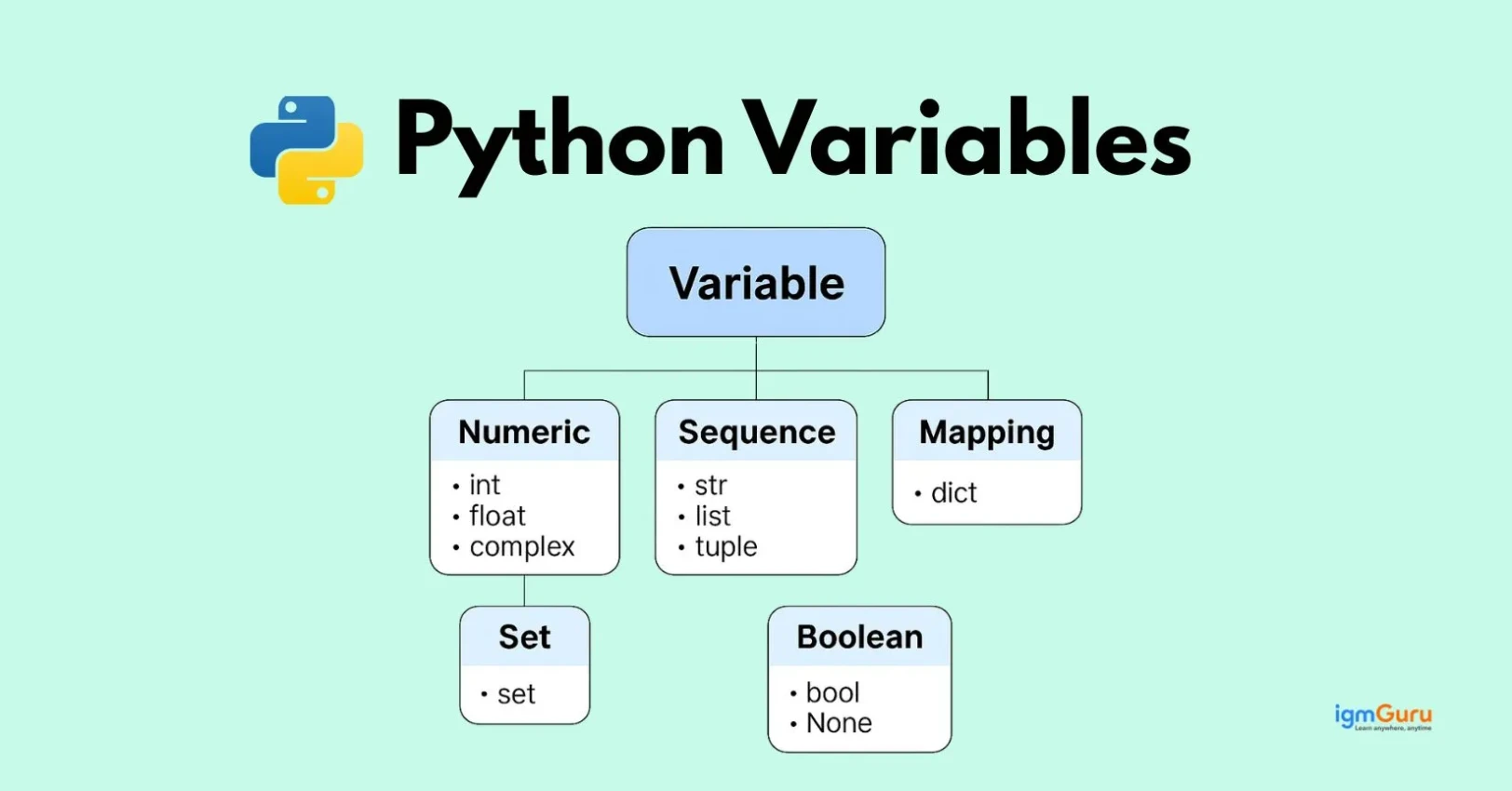
Python is dynamically typed, meaning you generally do not have to declare the data type of a variable before using it. For example:
|
name = "Sanjay" age = 25 |
Python determines the types of these values at runtime. This can make the language convenient for beginners, although developers still need to understand how different data types behave.
Python supports object-oriented programming, which allows developers to organize programs around objects and classes. At the same time, it is not limited to one programming style. It also supports procedural and functional programming approaches. This flexibility allows developers to choose an approach that fits the problem they are solving.
Python comes with a large standard library containing modules for tasks such as working with files, dates, mathematics, networking, data formats, and more. You can also install thousands of third-party packages through the Python ecosystem. This means you often do not need to build common functionality completely from scratch.
Python can run on major operating systems, including Windows, macOS, and Linux. This makes it useful when developers need to create software that works across different environments.
Python has a large global community that contributes libraries, frameworks, documentation, tutorials, tools, and open-source projects. This ecosystem is particularly valuable to beginners because many common programming problems already have documented solutions and established tools.
At a high level, Python works by taking the source code you write and using a Python interpreter to execute it. A simplified view looks like this:
Python source code → Python interpreter → Program execution → Output
Here is a complete Python Hello World Program you can copy and run on a compiler:
| print("Hello, World!") |
Save it in a file such as hello.py and run it using a Python installation. The program should produce:
| Hello, World! |
This small example demonstrates one of the reasons Python is approachable: you can write a useful program with a single line of code.
It is a general-purpose language, so it is not limited to one type of software development. Some of its most common Python uses include web development, data science, artificial intelligence, automation, testing, and scientific computing.
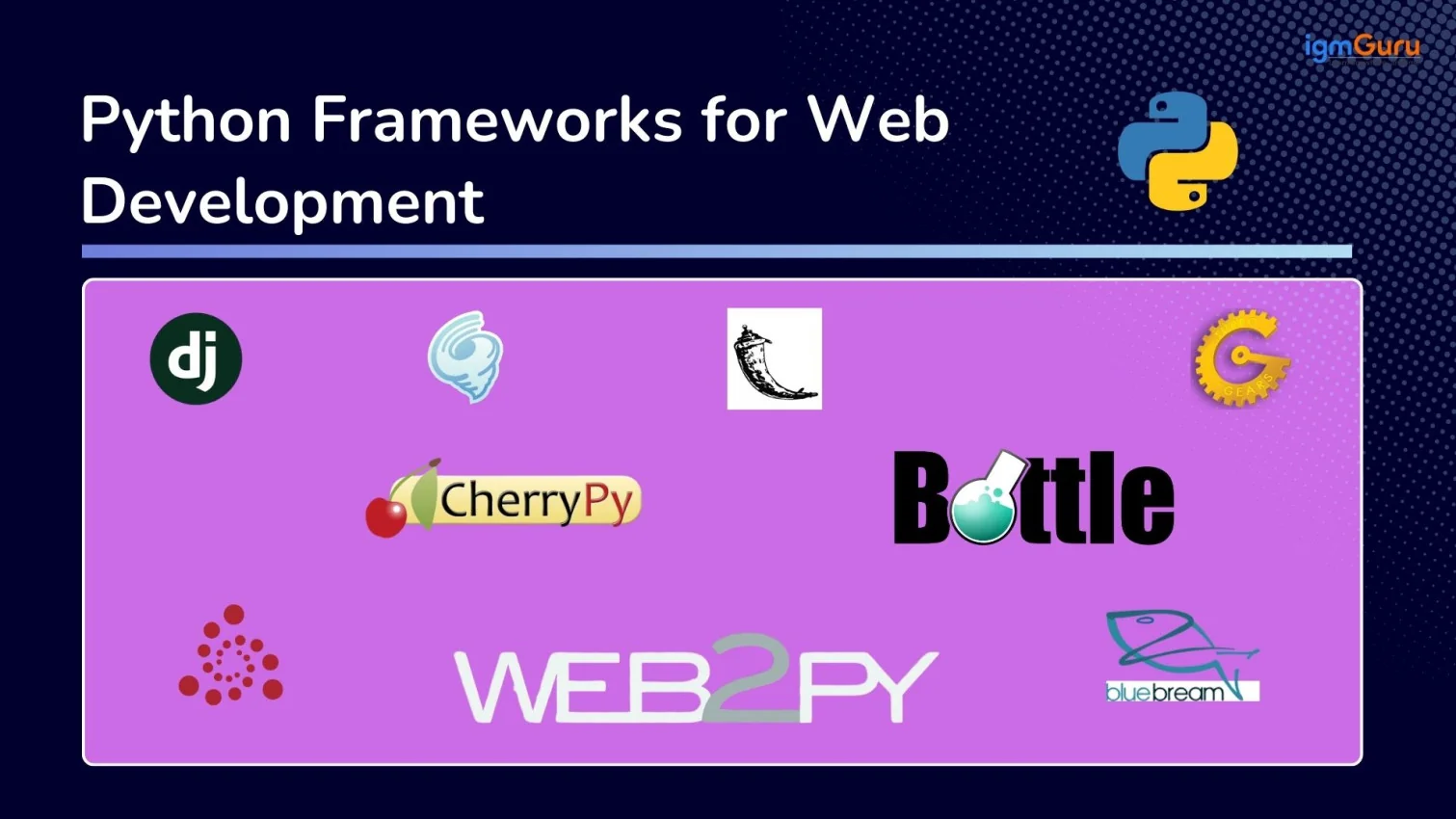
Python is widely used for developing websites and web applications. It has many popular web frameworks like:
Django: a full-featured web framework for building web applications
Flask: a lightweight framework often used when developers want greater control over application structure
Python can be used for everything from smaller web projects to complex backend systems.
Python is heavily used for data science. It can help you to:
Clean and transform datasets
Analyze large amounts of information
Perform statistical calculations
Create visualizations
Build data processing workflows
Develop analytical models
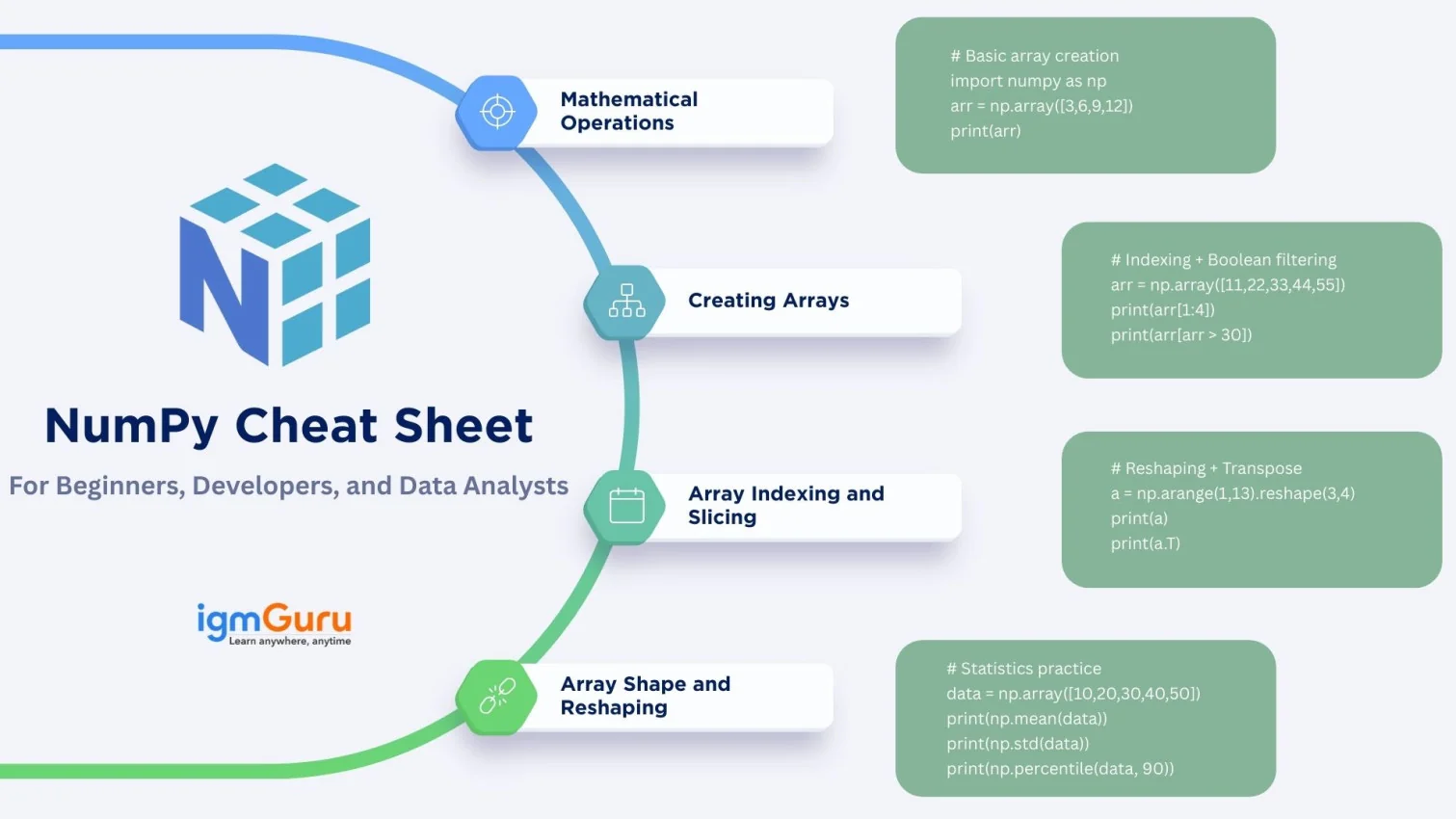
Libraries such as NumPy, Pandas, Matplotlib, and SciPy are important parts of the Python data ecosystem.
Python has become an important language for artificial intelligence and machine learning development. It provides different libraries and frameworks such as PyTorch, TensorFlow, and scikit-learn to develop and train ML models. Python is also widely used for tasks surrounding AI systems, including data preparation, experimentation, model evaluation, and automation.
Python can automate repetitive tasks that would otherwise require manual work. For example, a Python script can be used to:
Rename or organize files
Process spreadsheets
Extract information from files
Automate repetitive calculations
Send automated reports
Interact with APIs
Perform routine system administration tasks
This makes Python useful even when you are not building a large software application.
Python is also used for software testing and quality assurance. This feature allows you to create automated tests that check whether software behaves as expected. The automation helps you to reduce repetitive manual testing and makes it easier to identify problems as applications change.
Python can be used for game development, particularly for learning, prototyping, and smaller projects. It also has different libraries, such as Pygame, which provide tools for creating games and interactive applications.
However, Python is not generally the first choice for high-performance commercial game engines, where languages such as C++ and C# are more common.
Python is widely used in finance for tasks such as data analysis, quantitative research, financial modeling, automation, and risk analysis. Its combination of numerical libraries, data-processing capabilities, visualization tools, and relatively simple syntax makes it useful for financial applications.
One of Python's biggest strengths is its ecosystem of libraries and frameworks.
| Library/Framework | Category | What It's Used For |
| Django | Web framework | Building full-featured web applications |
| Flask | Web framework | Building lightweight and flexible web applications |
| NumPy | Numerical computing | Working with arrays and numerical operations |
| Pandas | Data analysis | Cleaning, analyzing, and manipulating structured data |
| TensorFlow | Machine learning | Building and training machine learning models |
| PyTorch | Machine learning | Deep learning and machine learning development |
| Scikit-learn | Machine learning | Classical machine learning and predictive modeling |
| Matplotlib | Data visualization | Creating charts and graphs |
| Requests | HTTP library | Sending HTTP requests and interacting with web services |
| Beautiful Soup | Web scraping | Extracting information from HTML and XML documents |
The right library depends on the task. A web developer may spend most of their time with Django or Flask, while a data scientist may work primarily with Pandas, NumPy, and visualization libraries.
Python is not automatically the best language for every project. Every programming language has different strengths, and the right choice depends on what you are building.
Python and Java are both general-purpose languages, but they have different design philosophies and common use cases.
Python generally emphasizes concise, readable code and is widely used in data science, automation, AI, scripting, and web development.
Java is commonly used for large-scale enterprise applications, backend systems, Android-related development, and systems where its mature ecosystem and strong static typing are useful.
Python and JavaScript are both popular, but they are commonly used in different areas.
JavaScript is fundamental to interactive web development and runs directly in web browsers. It is also used on servers through environments such as Node.js.
Python is commonly used for backend development, data science, automation, scientific computing, and AI.
C++ is designed for high performance and gives developers considerably more low-level control over memory and system resources. Python, on the other hand, prioritizes developer productivity and readability.
As a result, Python is often more convenient for scripting, data analysis, automation, and rapid application development, while C++ is frequently chosen for performance-critical software, game engines, embedded systems, and systems programming.
| Language | Typing | Typical Use Case | Learning Curve |
| Python | Dynamic | AI, data science, automation, web development, scripting | Relatively gentle |
| Java | Static | Enterprise software, backend systems, large applications | Moderate |
| JavaScript | Dynamic | Web development, frontend and backend applications | Moderate |
| C++ | Static | Systems programming, game engines, performance-critical software | Steeper |
The learning curve depends heavily on your background and what you are trying to build. A language that is easy to start with may still take considerable time to master.
Python has many strengths, but it also has limitations. Understanding both sides can help you decide whether it is the right language for your goals.
1. Readable syntax: Python code is generally easy to read, which can make it easier for beginners to understand programming concepts.
2. Large ecosystem: Python has a broad collection of libraries and frameworks for web development, data science, AI, automation, testing, and other areas.
3. Beginner-friendly: The language's relatively simple syntax makes it a common starting point for people learning programming.
4. Versatile: Python can be used for many different types of applications instead of being restricted to one specific domain.
5. Strong community: A large community provides documentation, open-source projects, educational resources, libraries, and support.
1. Slower execution for some workloads: Python generally does not match languages such as C or C++ for raw execution speed. For performance-critical workloads, developers may use optimized libraries or another language for specific components.
2. Threading limitations in traditional CPython builds: Traditional CPython execution has been affected by the Global Interpreter Lock (GIL), which limits how multiple threads execute Python code for CPU-bound workloads.
3. Mobile development is not its strongest area: Python can be used in some mobile development scenarios, but it does not have the same dominant mobile development ecosystem as languages and frameworks specifically designed around Android and iOS development.
4. Resource usage can matter: Python's convenience can come with higher memory or runtime overhead compared with lower-level languages in some workloads.
The key takeaway is that Python's limitations do not make it a poor language. They simply mean that developers should select it based on the requirements of the project.
It is a common question among beginners, and the answer is yes. One of its biggest advantages for new programmers is that you can focus on programming concepts without dealing with excessive syntax. Then you can gradually learn variables, conditions, loops, functions, data structures, classes, modules, and other concepts.
Python also has a large ecosystem of learning resources and practical applications. Once you learn the fundamentals, you can apply them to areas such as web development, automation, data analysis, or AI.
However, "easy to start" does not mean "easy to master." Becoming proficient in Python still requires practice, problem-solving, debugging, and experience building real projects.
Getting started with Python does not require a complicated setup.
First, download Python from the official Python website and install a current stable Python 3 release. For most beginners, the stable Python 3.x release is the appropriate choice. Release candidates such as Python 3.15.0rc2 are intended for testing and development rather than normal production use.
You can write Python code in a basic text editor, but a dedicated code editor or IDE can make development easier. Common options include:
Visual Studio Code
PyCharm
IDLE, which is included with Python
Jupyter Notebook for interactive data and analytical work
Beginners do not need to spend too much time choosing the "perfect" editor. Pick one that is comfortable and start writing code.
Once Python is installed, start with a simple program:
| print("Hello, World!") |
Then gradually move toward small practical projects. For example, you could create a calculator, number-guessing game, file organizer, simple web application, or data analysis script. The goal at this stage is not to memorize every Python feature. It is to become comfortable solving problems with code.
Python has remained relevant because it combines a relatively approachable syntax with an extensive ecosystem and the flexibility to work across many areas of technology.
For beginners, it provides a practical way to learn fundamental programming concepts. For experienced developers, it offers libraries and frameworks for everything from web applications and automation to data science and artificial intelligence.
Whether you want to write your first program, automate repetitive tasks, analyze data, or move toward a career in software development, understanding Python gives you a useful foundation. If you are ready to start learning, begin with the fundamentals, write small programs regularly, and gradually move toward projects that match your interests.
Yes, it is an open-source programming language.
Yes, Python is a strictly case-sensitive programming language. It treats uppercase and lowercase letters as completely separate characters.
Python is mainly used for artificial intelligence and machine learning, data analysis and visualization, web development, and task automation.
Neither language is universally better. The right choice depends entirely on your project requirements and goals.
Learning the basics of Python generally takes two to six months of consistent daily or weekly practice.
It is both compiled and interpreted.