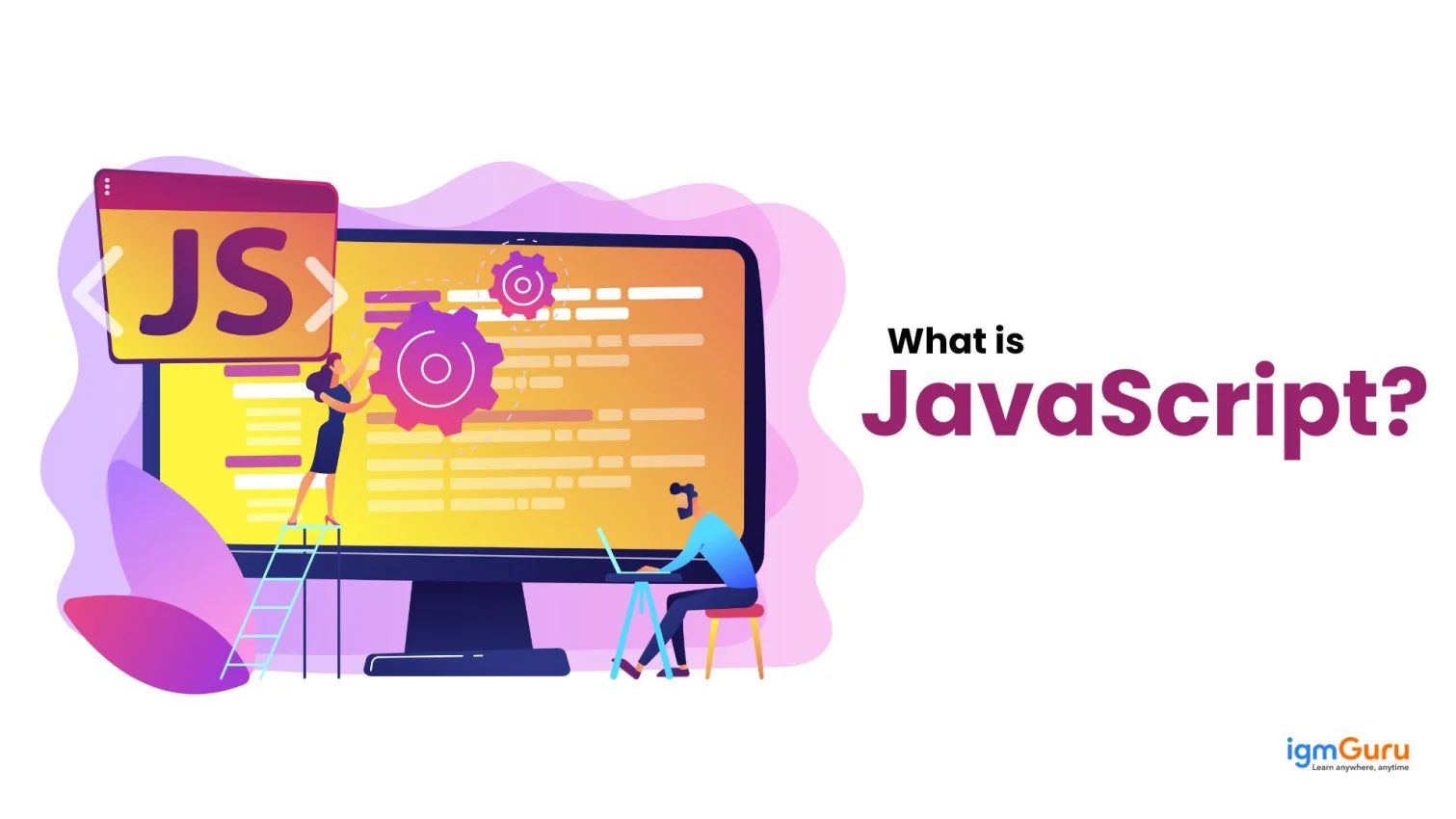
JavaScript (JS) is an interpreted and versatile programming language which is used to create interactive elements or content on web applications. JS supports both client and server side development. This client-side programming language integrates flawlessly with HTML, CSS and a rich standard library. Read on to know more about what is JavaScript, how does it works, its uses and more.
Let's discuss what is JavaScript. Basically, JavaScript (JS) is a powerful, high-level programming language primarily used to enhance web pages and make them interactive. It works seamlessly with HTML and CSS to enable dynamic content updates, multimedia control, form validation, animations, and much more. These features help developers or software engineers build rich user interfaces and enhance the overall user experience.
Originally developed for browsers, JS now powers full-scale applications with the help of frameworks and environments like Node.js. From simple pop-ups to complex web applications, JavaScript is essential in modern web development. Its flexibility, ease of learning, and vast community support make it one of the most popular and widely used programming languages in the world.
Enroll in igmGuru's Java Training Program to become a Java Developer successfully.
It is important to have a deep knowledge of specific concepts about JS that will let us understand code better. So how does JavaScript work? Let us look at the steps on how does it works.
It always runs in a particular environment and some of the most well known ones are -
Node.js is a runtime environment which permits JS to operate outside the browser, mostly in servers.
While writing code in JS, one writes in a syntax which is easier for humans to read, with numbers and alphabets. Machines can't understand this kind of code. So, the engine's work is to take that code and change it into machine code. It can be operated by the computer processor eventually. Every environment has its own engine like Chrome V8, FireFox SpiderMonkey, JavaScriptCore by Safari and Chakra by IE. All these engines work in the same way but there are differences between every engine.
It knows the JS syntax and rules and its work is to go over the code line by line and see whether the syntax of the code is right or not. If the parser sees an error, it stops working and sends out an error. If there is an invalid code, it makes something known as Abstract Syntax Tree.
This is a data structure which is not as special to JS but is actually used by many other languages. Programming languages like Java, C#, Python, Ruby and more. It is a simple tree representation of the code. The engine makes an Abstract Syntax Tree rather than compiling directly to the machine code which is easier to change into machine code.
Its main work is to take the AST which has been made and converted into an Intermediate Representation (IR) of the code.
The Intermediate Representation is a data structure or code that represents the source code. It is an intermediate step between code which is written in an abstract language like JavaScript and machine code. IR is like an abstraction of machine code. There are 2 major reasons why engines use IR between high level coding and machine code and they are -
There are many programming languages like C#, Ruby, Java and more which use Bytecode as an IR.
The compiler takes the IR created by the interpreter, which is Bytecode and changes it into a machine code with some optimizations.
Also Read- A Comprehensive Guide to Learn React Native
This versatile tool adds interactivity with web pages and makes animations, surrounded by other uses. But the question is what is JavaScript used for. It is used in different applications like web and mobile development, game development, virtual reality (VR) and artificial intelligence (AI). Let us take a detailed look at its uses.
It adds interactive behavior to websites. Through JS, developers can develop dynamic, interactive websites responding to user input. Animations, drop-down menus and popup windows make use of JS.
This scripting language is used by web developers for developing web applications and mobile developers use frameworks like React Native to develop mobile applications. Through this developers develop responsive and interactive user interfaces for their web and mobile applications.
It is also used by game developers. Through the help of frameworks like Phaser, web developers can develop complicated and interactive games which operate on websites. The JS based games can be used freely on desktops, laptops and mobile phones.
It can also be used in virtual reality and AI applications. Through frameworks like A-Frame and Babylon.js, developers can develop virtual reality experiences and machine learning models operating on websites. It also supports creating chatbots, natural language processing and AI applications.
JavaScript libraries are a bunch of classes, methods and pre-written functions which are used by developers for their web development projects. These libraries make code reusable and eases the development procedure. These are recommended for their cross-browser compatibility, this saves developers' effort and time. Let us take a look at the famous JavaScript libraries.
| JavaScript Libraries | Launched | Introduction | Applications |
| ReactJS | This library was launched in 2013. | It is a freely accessible JavaScript library used to develop user interfaces in an efficient and declarative way. ReactJS is a component based on the front-end library. It is responsible only for the view layer of an MVC architecture. | It makes easy views for every state in the application. This library efficiently updates and gives just the right component after data changes. |
| jQuery | This library was launched in 2006. | jQuery is a JS library which is fast, small and rich in features. It helps in DOM manipulation and event management in web applications. | It gives cross-browser compatibility. jQuery library makes the code easier. |
| Lodash | This library was in 2012. | Lodash is a JavaScript library which has huge amount of functions. This library has built-in functions. | Lodash gives modularity and fast web application through its in-built functions. |
| Moment.js | This library was launched in 2011. | Moment.js is a JavaScript package which makes it easier to validate, parse, manipulate and display date and time in JS. This library permits displaying dates in a format which is easier for humans to read based on the location. | This library is used in a browser through the script approach. It is compatible with Node.js and it can be installed through npm. |
| Tensorflow.js | This library was launched in 2015. | Tensorflow.js is a JavaScript library for deployment and training machine learning models on Node.js and web applications. | This library creates the ML models from scratch or can make use of the APIs given for training the existing models in the web page or on the Node.js server. |
This programming language has many features. And some of the main features of JavaScript are event handling, DOM manipulation, interactivity and has the support of many frameworks and libraries. Let us take a look at the features of JavaScript.
It makes use of an interpreter for executing code, which means converting and running the code line-by-line. This permits faster development cycles and simpler debugging, as errors are recognized and displayed after code's execution. The presence of the interpreter in the website authorizes the sudden rendering of dynamic content. This makes websites more interactive and accessible.
Programmers don't require specifying the type of a variable before designating a data type to it. The JS is extremely versatile and can change according to the situation as its variables can change their types during runtime. This feature authorizes developers to write more pliable and dense codes leading to faster development and easier management.
This programming language is lightweight, which means that it has minimal runtime and less resource needs. This makes loading and executing faster, which leads to faster web page performance and enhanced user experience. JavaScript's lightweight nature is profitable for client-side operations as it decreases the strain on the user's device and the bandwidth.
JS permits for the detection and managing of user interactions or system events like form submissions, clicks or key presses. Through explaining event listeners, it can execute particular blocks of code in response to these events. This authorizes updates and interactive features on the websites. This ability is fundamental for making dynamic and interactive user experiences.
This platform is completely independent and can operate on any operating system and is supported by the latest websites. It makes it very versatile for web development. With this developers can write code once and expect it to function constantly all over different devices and platforms.
It has in-built objects and methods for managing date and time. JavaScript permits functionalities like calendars, timers and scheduling without depending on the server-side processing. Its abilities authorize dynamic features like countdowns or actions based on time, improving user interactivity and engagement.
In the object literals, if the property name is similar to the variable name used as its value, the property shorthand can be of use. {x,y} can be written instead of {x: x, y:y}. As this makes the code more short and easy for reading, lessening the chance of errors and creating the object's structure more up to the mark for understanding.
Also Read- Top 50 React Native Interview Questions
JavaScript falls among the most vastly used programming languages, especially for web development. Here are some of the advantages of JavaScript.
JavaScript has an easy syntax as compared to other programming languages, making it beginner-friendly. If one has a basic understanding of programming concepts, one can pick it up easily.
One of JavaScript's biggest advantages is that it runs directly in web browsers. There's no need to install extra software. We just need to write the script, and the browser takes care of execution. This makes it perfect for interactive web applications.
JS runs in the browser, it lessens the need for server-side processing. This leads to faster response times. Features like asynchronous programming and event-driven architecture make JavaScript even more efficient.
JS is not just for front-end development. With technologies like Node.js, it can be used for backend development as well. One can make everything from simple websites to full-scale applications using just JavaScript.
There are numerous JS libraries and frameworks (React, Angular, Vue, etc.) that help developers develop strong applications faster. The accessible community continuously contributes new tools. This makes JS more strong and flexible.
It works on all major browsers and operating systems. Whether building a web app, mobile app, or even desktop applications, JavaScript has you covered.
It is adaptable, permitting developers to use different programming paradigms like object-oriented programming (OOP) or functional programming, depending on their project needs.
Through JS, one can make dynamic web elements. Dynamic web elements like animations, pop-ups, sliders, and interactive forms, making websites more engaging for users.
JS has one of the largest developer communities in the world. This means tons of tutorials, documentation, and forums where you can get help if you're stuck.
It is continuously improving with its new features being added regularly. Technologies like ES6+ have launched improvements like arrow functions, template literals, and async/await, making coding even more efficient.
Also Read- Python Vs R Programming - A Detailed Comparison
There is no doubt that JS is a powerful and widely used language. But like any technology, it has its downsides. Let us take a look at some of the disadvantages of JavaScript.
Since JS operates directly in the browser. It is weaker to security threats like cross-site scripting (XSS) and code injection. Hackers can exploit weak JavaScript code to manipulate websites or steal user data.
Not all websites interpret JS in the exact same way. Some features work perfectly in one browser but might not function properly in another. This leads to inconsistencies, requiring developers to test and tweak their code for different browsers.
It is dynamically typed, which means variables can transform their data types at runtime. While this provides adaptability, it might lead to unexpected errors that are harder to debug compared to statically typed languages like Java or C#.
Since JS operates on the website. It's not as fast as languages like C++ or Java for heavy computations. Complicated tasks can slow down execution, especially while dealing with huge datasets or graphics-intensive applications.
Even though JavaScript has debugging tools like the console in Chrome Developer Tools. It doesn't provide as strong debugging capabilities as some other programming languages. Discovering and fixing errors can sometimes be tricky.
Poorly written JS codes can cause memory leaks, slowing down web pages and consuming extra system resources. It is especially noticeable in long-running applications that aren't properly optimized.
Overall, JavaScript is a powerful and adaptable language which plays a major role in modern web development. Its speed, versatility, and ease of use makes it a perfect choice for developers all over the world.
Related Resources:
Java is flexible and an object oriented language which is used for making a vast range of applications. Whereas, JavaScript is used for developing interactive websites and applications.
JS as a programming language offers basic data types which are - Number, String, Boolean, Null, Undefined, BigInt, Object and Symbol.
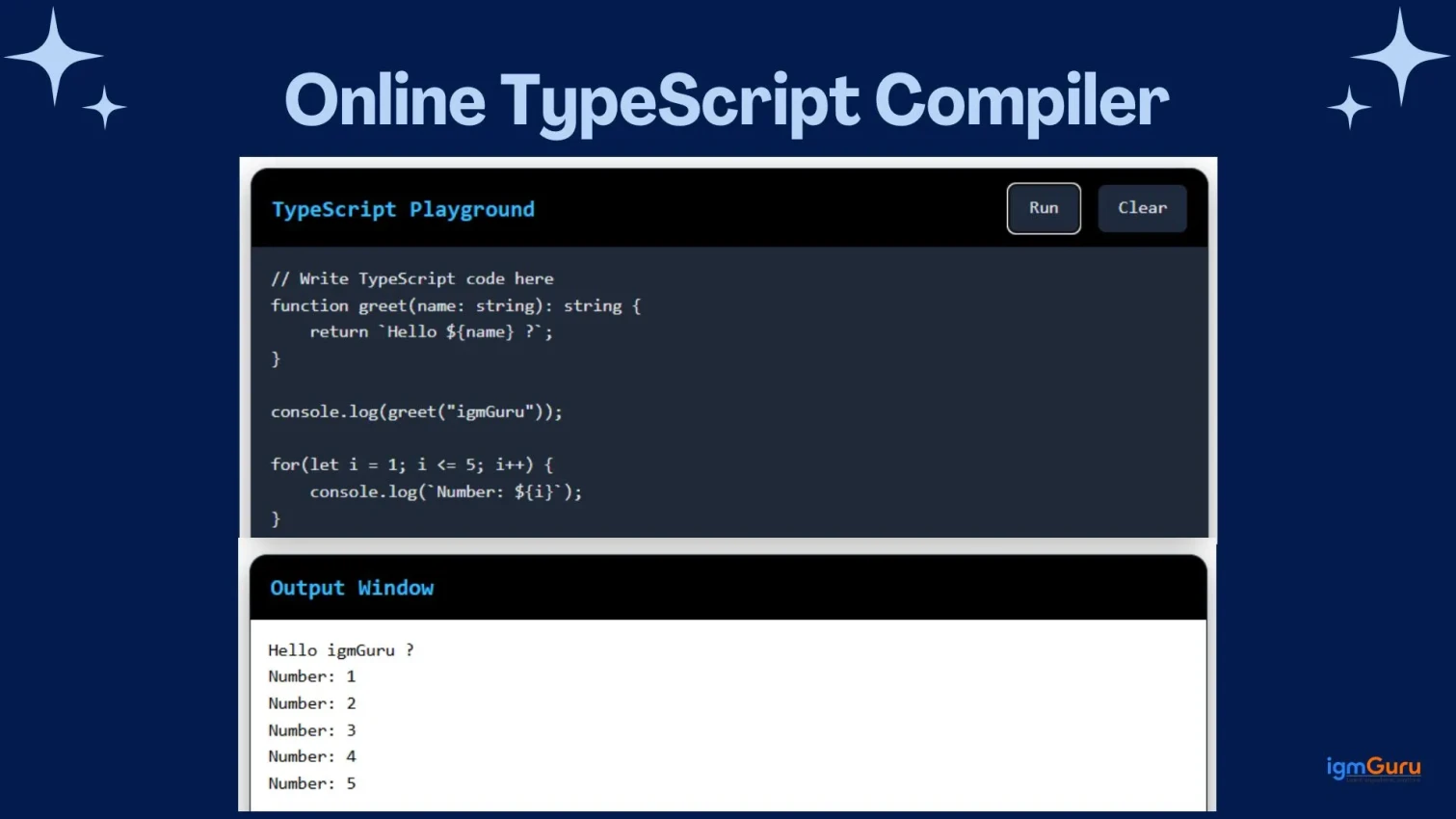
In JS the ${} syntax is used in template literals which are also called template strings.
Course Schedule
| Course Name | Batch Type | Details |
| Programming Courses | Every Weekday | View Details |
| Programming Courses | Every Weekend | View Details |