Data science and machine learning are two data-using technologies that are high in demand and still expanding. Data is highly relevant in the way these work to give an answer around creating and innovating services, infrastructural systems, products and more. There are plenty of ML and data science career paths that one can explore for high earning and career advancement.
Data science and machine learning roles remain among the fastest-growing and highest-paying careers in tech, with demand continuing to outpace the supply of qualified professionals across most industries.
They are also related but the number of differences outweigh the similarities. This article covers everything one has to know about the relation and distinction between these two. It also taps into a few examples to better understand how they are linked to one another. The ideal way is to begin with introductions to each of these before moving forward with other details.
Enrol in igmGuru's Machine Learning course online program to learn ML from basic to advanced level.
It is primarily important to get an answer to what is data science. This is a multidisciplinary sector that extracts insights from gigantic data sets. It has many advanced tools for looking at raw data, gathering data sets, processing data and developing insights for useful insights. Machine learning modeling, programming, data analytics, statistics, mining and data modeling make up this field.
This defines new business problems that are then solved by statistical analysis and machine learning techniques. It understands the business problem, highlights the data required and then analyzes it to solve it completely.
The next thing to uncover is an answer to what is machine learning. It is an important branch to artificial intelligence that is intently focused on gaining insights from what data science brings to the table. ML uses different data science tools for cleaning, preparing and analyzing unstructured and messy big data. It then learns from this data to create highly impactful insights that make better predictions.
It works on a given problem through different machine learning tools and techniques that ultimately create algorithms. These algorithms make the machine learn from data through experiences and with minimum human intervention. It has a huge amount of data that a human would never be able to work through.
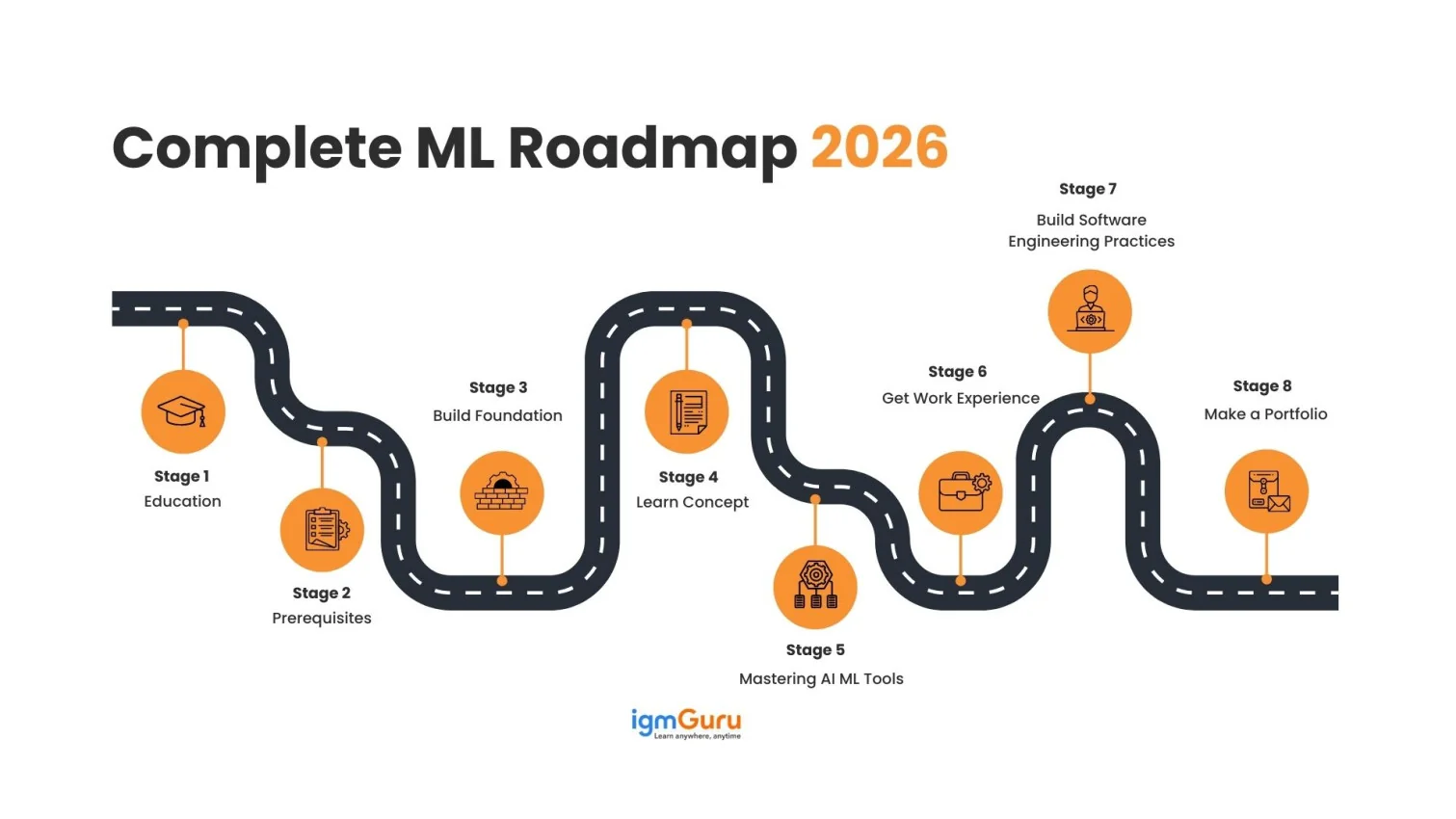
Take a closer look at this Machine Learning Roadmap for Beginners to get started.
The only way to get a complete picture about these two technologies individually is by comparing them side by side. This table has five points of comparison between them for a more collective understanding about them.
BASIS | DATA SCIENCE | MACHINE LEARNING |
Scope | It is a much broader field with different activities like data cleaning, data visualization, data collection, developing data-driven solutions and data analysis. It derives workable outcomes from data for supporting the process of making decisions. | It is a specialized aspect that falls within AI. It develops machine learning models that extract findings for forecasting according to data but without explicit programming. |
Techniques | It has many diverse techniques like exploratory data analysis, machine learning, statistical analysis and visualization. It also includes data integration, domain expertise and data engineering. | It has fewer techniques but supervised, reinforcement and unsupervised learning are the most prominent ones. It is mostly focused on training models on gigantic data quantities to optimize their performance. |
Application | Some of its main applications are report generation, predictive model development, dashboard creation and trend identification. A data scientist works intently on different tasks related to data. | It is linked to tasks like natural language processing, fraud detection, image recognition, autonomous decision-making systems and recommendation systems. |
Goal | Its goal is to extract valuable information for data for solving complicated, real world problems. | It builds models that automatically learn patterns for making predictions. It is used heavily in automation and predictive analytics. |
Skills | A huge skill set is the key. It includes having domain-specific knowledge, data cleaning, statistical analysis and data visualization. | ML engineers must have in-depth knowledge of feature engineering, hyperparameter tuning, model selection and machine learning algorithms. They also need good programming skills. |
The relation between data science and machine learning can only be understood completely with time. One has to learn and uncover new things to get to an understanding about what links these two. The first joining point here is that both are highly dependent on data for bringing out the desired chances and benefits to the company.
Data science is the foundational layer for ML and artificial intelligence as it supplies important data to their models to learn from. It also integrates different ML algorithms. It borrows ideas from various traditional domain expertise, mathematics and statistics for developing solutions. Going by these lines, one could conclude that data science is an all-encompassing umbrella term for different machine learning's functionality aspects.
Most artificial intelligence specialists and ML engineers stay focused on developing algorithms throughout the duration of a project. This is not true for data scientists. They are highly adaptable and keep shifting their focus on different roles and tasks according to project requirements. Both can be concluded to be very important today but in their own way.
Related Article - Data Scientist vs Machine Learning Engineer
Understanding the relation between data science and machine learning means exploring a few real world examples. These examples will throw light on how these two technologies stand together and apart.
Both technologies are important in fraud detection. Detecting the wrongs in a system or transaction means going through gigantic quantities of data. This sifting further brings forth identification of anomalies and patterns that may be an indication of fraudulent activities. Machine learning algorithms are also important here for identification of such patterns and anomalies. Data science collects and prepares huge amounts of data for analysis.
A very common example is PayPal. It combines approaches and methods of both for pinning fraudulent actions and activities. The system identifies abnormalities and patterns for any off behavior like suspicious IP locations and atypical expenditure habits. Different strategies and tools help PayPal in safeguarding its users, averting fraud transactions and upkeep its trustworthiness.
This is where artificial intelligence, ML and data science. It is a kind of algorithm using personalized recommendations according to user data. Gigantic data amounts are collected and analyzed while ML works to develop algorithms for powering these systems.
Amazon's personalized product recommendation algorithm is one of the best examples of such recommendation systems. These use different ML algorithms and techniques for understanding user behavior in depth and suggesting products accordingly. These include browsing history, product ratings and past transactions. Netflix is another high end name using such recommendation systems.
Natural language processing analyzes human language for digging out hidden meaning and insights. Data science does its job of collecting and preparing data. ML develops algorithms for the same while AI powers NLP systems.
Many chatbots are developed with NLP techniques for simulating human-like conversations. ChatGPT is one of the biggest examples that use NLP techniques and ML algorithms for understanding natural language queries and delivering highly personalized and accurate responses.
You can also read- AI and Machine Learning Trends
Data science and machine learning are not in a race with one another but rather share a supportive outlook. These two share a unique relationship and their growth has been quite similar as well. Both are dependent on statistics, algorithms and math for extracting insights and necessary meaning from data. These buzzwords are garnering a high level of attention today and for all the right reasons.
Related Article - Data Science Tutorial
Data scientists with good knowledge of machine learning earn around 14 LPA in India.
An AI engineer earns around $101.7k per annum in the USA. The number is affected by one's knowledge, skills, experience, current company and many other factors.
Deciding the better one depends on one's career goals since they are intertwined but with different focal points. Data science has more options as compared to ML.
Course Schedule
| Course Name | Batch Type | Details |
| Data Science Courses | Every Weekday | View Details |
| Data Science Courses | Every Weekend | View Details |