Cybersecurity refers to the practice and process of protecting programs, networks and systems from virtual attacks. Cyber attacks are often targeted at changing, destroying or accessing sensitive information. The goal can also be to extort money or interrupt business processes. The increasing interconnectivity has led to an increased need for cybersecurity. In this article we will discuss 'Introduction to Cybersecurity' and many important facts related to it.
"According to research from the Bureau of Labor Statistics, computer and IT jobs are expected to grow much faster than average from 2023 to 2033, with a projected 356,700 job openings annually."
Let's get started with the 'Cybersecurity Introduction'.
This blog is a composition of a crisp introduction to cyber security. It comprises an overview of 'what is cyber security', its history, importance, types and future trends. It also covers how to start a career in cyber security, along with their average salary.
TL;DR
Cybersecurity is the practice of protecting networks, systems, and data from digital attacks. As a core field of information security, it covers cybersecurity fundamentals, key goals, common threats, future trends, security measures, career paths, and the skills needed to succeed in this rapidly growing domain.
Cyber security pertains to a practice initiated to protect networks, data and systems from all sorts of digital attacks. These attacks are often done with the goal of altering, destroying or stealing sensitive information, disrupting operations or extorting money. Key aspects of cyber security incorporate network security, application security and information security.
The field of cyber security is evolving rapidly and without any signs of stopping. It is driven by plenty of technological advancements, along with the ingenuity of cybercriminals. Top expanding technologies like artificial intelligence and the Internet of Things bring forth new vulnerabilities and problems. Consequently, these professionals have to update their skills and knowledge continually to stay alert and aware of potential threats.

Cybersecurity's history goes back to the 1960s. It is around this time that researchers at Bell Labs, MIT and many other institutions commenced developing the very first computers as well as networks. Cybersecurity's concept appeared along with ARPANET, which is the precursor to the internet. It faced the first ever known attack in 1971, which was executed by the Creeper, a program crafted to test all security vulnerabilities.
Personal computers became more common during the 1980s, which increased the appearance of malicious software and viruses. Robert Tappan Morris created The Morris Worm of 1988. It was an event of high significance that infected around 10% of the total internet. It highlighted the imperativeness around adopting better network security measures.
The World Wide Web rose to fame in the 1990s. It brought an increase in the number of cyber threats with it. These included hacking, more sophisticated viruses and email scams. To battle these threats, firewalls and antivirus software became the standard and most commonly used cybersecurity tools.
Cybercrime witnessed a significant increase in the 2000s. Many high-profile breaches came into the limelight that affected governments, individuals and corporations. Many notable incidents took place during this time including the Stuxnet worm in 2010 and the attacks on Estonia in 2007. Both these were targeted towards Iran's nuclear facilities.
Today, however, cyber security has grown into a significant field that addresses complex threats. It has spread its roots and wings to tackle phishing, state-sponsored cyber attacks and ransomware. Plenty of ongoing advancements in technology has led to better strategies. The goal of each of these is to protect an organization against the continuously evolving digital dangers.
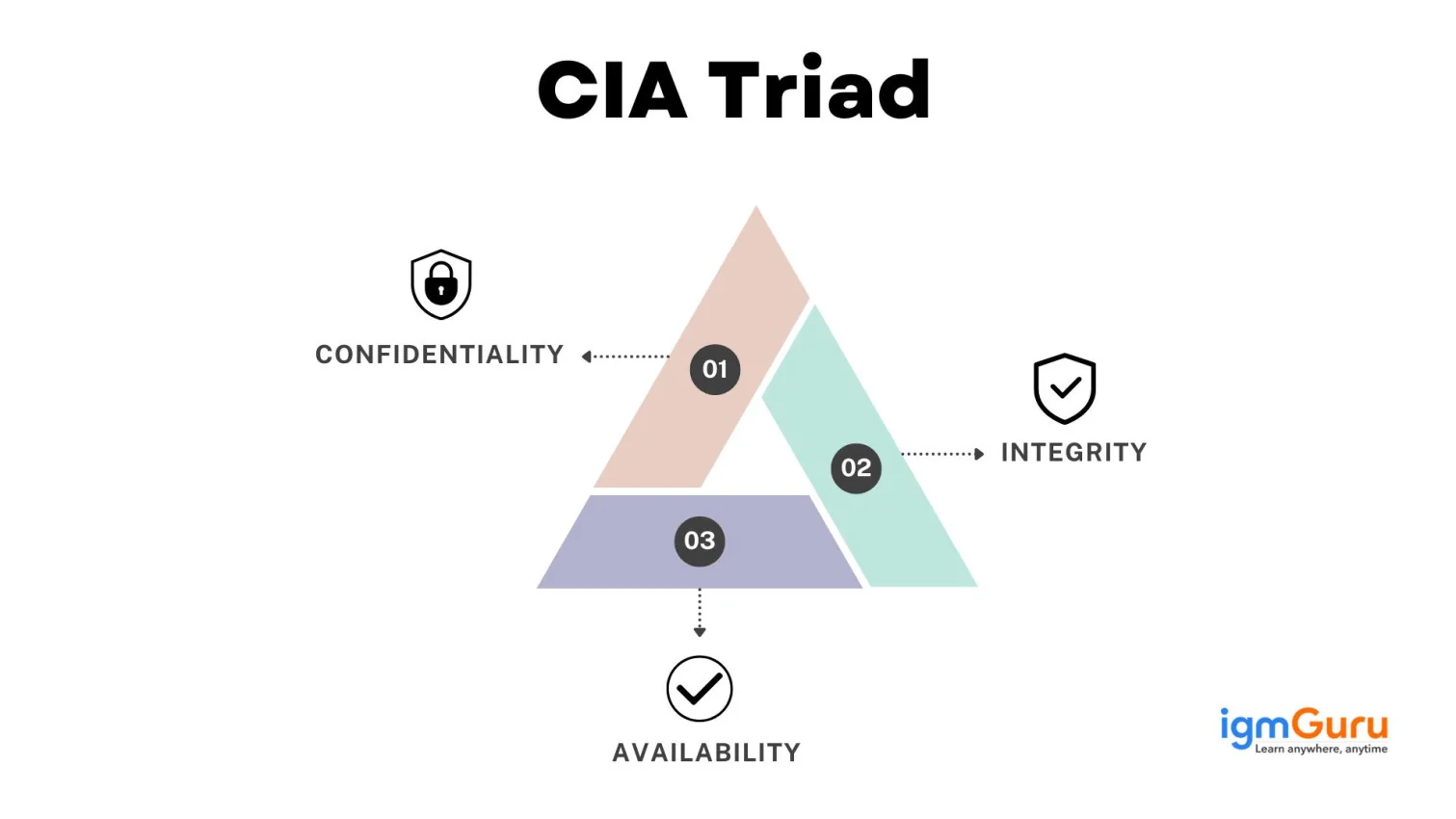
Cybersecurity has three main goals to tend to. These are generally referred to as the CIA triad. The C stands for Confidentiality, the I stands for Integrity and the A stands for Availability. These are the foundational principles that guide the entire development and implementation of all key security measures taken to safeguard systems and data from cyber threats.
Confidentiality is in charge of making sure that all the sensitive information is only accessible by authorized individuals. These measures encompass access controls, authentication protocols and encryption. Organizations maintain confidentiality to protect their private data from any unauthorized breaches and access. This is important to maintain compliance and trust with the regulatory requirements.
Integrity includes maintenance of completeness and accuracy of the data. This ensures that none of the information is corrupted, deleted or altered in any unauthorized manner. It includes various techniques such as digital signatures, version control and checksums.
These techniques are utilized for verifying data integrity. Protecting integrity is extremely important. It ensures that the data remains trustworthy and reliable. Both these factors are imperative for medical records, financial transactions and other related critical information.
Availability is a key goal that makes sure that systems and data are readily available to be accessed by authorized users whenever needed. This goal includes highlighting and utilizing various measures to ensure protection against disruptions. Some common challenges are hardware failures, natural disasters and cyberattacks.
Strategies that are most commonly implemented to maintain availability include regular backups, disaster recovery plans and high availability systems. It is vital for operational efficiency and business continuity to ensure availability at all times.
Cyber attackers are never limited to a single type. In fact, they come in different forms. Each has their own set of methods, targets and motives. It is very important to understand the types of cyber attackers to develop an effective cyber security strategy. The primary categories of cyber attackers are-
This is a broad category that groups or individuals having varying intentions and skills. Hackers are of different kinds. The most common ones are white hat, black hat and gray hat.
White hats are ethical hackers who intend to only test and enhance a company's security. Black hat hackers are malicious hackers who are there to exploit the organization's vulnerabilities for personal gain. Then there are gray hat hackers who lie somewhere between these two and perform both ethical and malicious activities.
Explore the complete types of Cyber Attackers in this article here!
Cybersecurity is extremely important in this interconnected world that we live in. The existing and increasing dependency on digital systems, along with the growing sophistication of cyber threats has led to more need for cybersecurity. Here are some of the key reasons why cybersecurity is said to be important for everyone-
Cyber security protects financial, proprietary and personal data from all unauthorized breaches and access. This protection is imperative to maintain security and privacy, which fosters trust in digital interactions.
Cyber crime includes fraud, intellectual property theft and ransomware. Each of these can easily lead to highly substantial financial impact and damage. Implementing effective cyber security is how these risks can be minimized. It also reduces potential financial harm and protects assets for businesses and individuals alike.
Cyber attacks have the potential to cripple business operations. This can lead to major financial losses and even reputational damage. Investing in strong cyber security measures ensures least impact on operations and services, even during a cyber threat. This enables businesses to remain dependable and resilient.
Customers always expect businesses to keep their personal information secure. Robust cyber security strategies and practices help in building confidence and trust among customers. This enhances the brand's reputation and fosters long-term loyalty.
State-sponsored cyber attacks are mainly targeted towards government agencies, defense systems and critical infrastructure. These pose major threats to the nation's security. Good cyber security measures are essential to ensure protection of national interests, ensure the resilience of vital services and maintenance of public safety.
Every business is subject to the stringent data protection regulations such as GDPR, HIPAA, and PCI-DSS. To comply with these, they require strong cyber security practices in place. These help in avoiding legal penalties, meeting the regulatory standards and safeguarding data.
Highly reliable and accurate data is imperative for decision-making throughout industries like finance, government and healthcare. Cyber security helps maintain data integrity by avoiding unauthorized alterations. This ensures the trustworthiness of information systems is intact and supports informed decision-making.
Explore our comprehensive guide on Best Cybersecurity Certifications.
Cyber security includes a wide number of technologies, processes and practices. Each of these are crafted to protect networks, data and systems from all sorts of cyber threats. It also has many layers of defense that are spread across networks, programs and computers. These make sure that if even a single line of defense is compromised, there are others in place to completely protect the system.
Cybersecurity still faces various challenges in spite of the highly extensive measures set in place. These challenges have the potential to complicate tasks related to protection of data and systems.
Cyber threats are evolving at a constant pace. Attackers are developing new tools and techniques to bypass security measures. Hence, continuous vigilance and adaptation from cyber security professionals is required.
Want to explore the completed challenges of Cyber Security? Read the full article here!
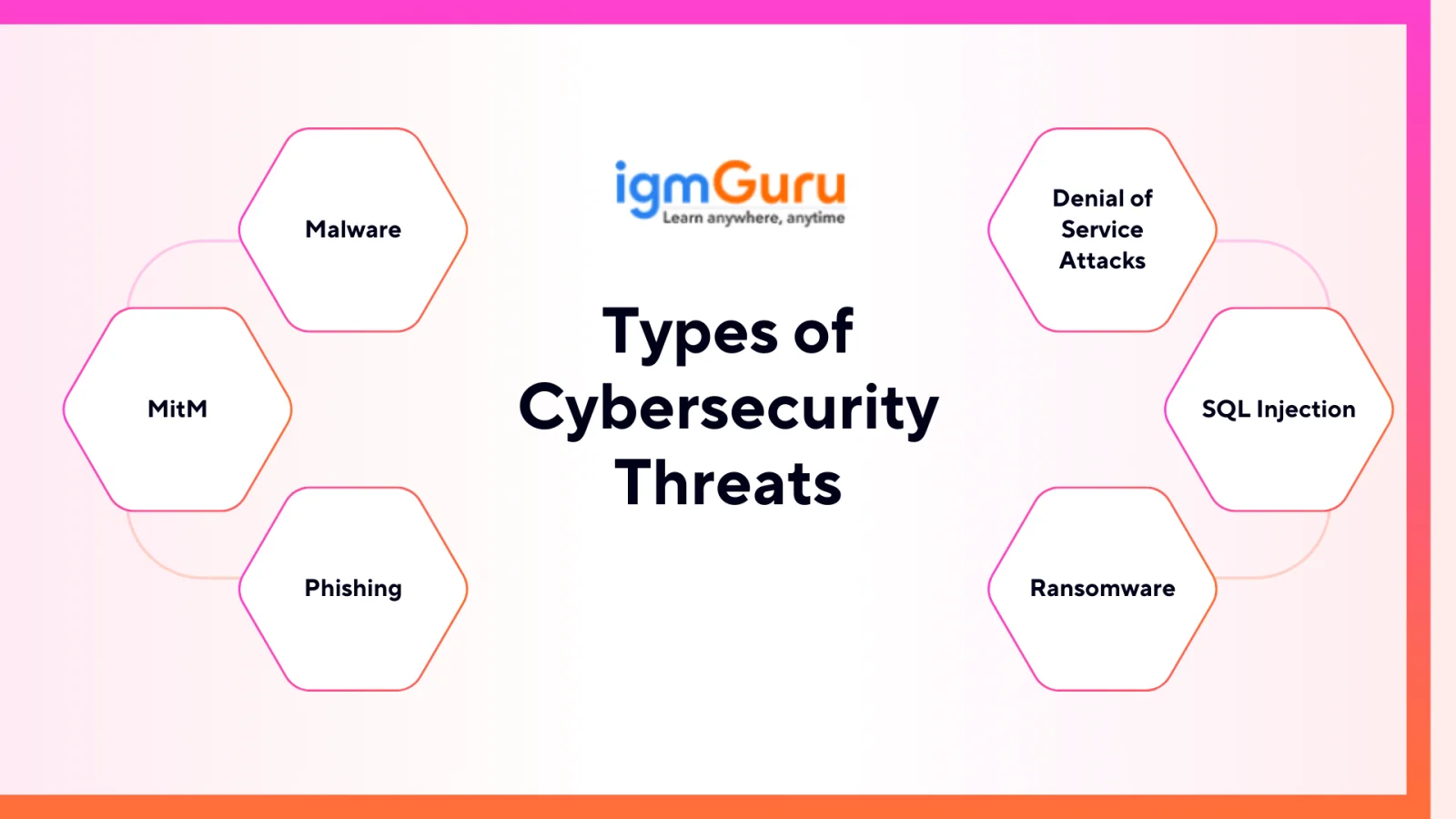
Cyber security threats refers to the acts that are performed by individuals or groups with a harmful intent. The goal could be to cause damage, disrupt computing systems or even steal data. There are many categories within cyber threats. Some of the common ones are social engineering, malware, man in the middle attacks, injection attacks and denial of service.
Cyber threats can sprout from many different sources. These can either be from terrorist groups, individual hackers, trusted employees or contractors, or hostile nation states. Thus, it is always best to stay prepared as any source could be a threat.
Let's discuss some common sources of cyber threats that prevail today. There are too many to sum up here and hence, we'll be discussing the most common ones.
A hostile country may launch a cyber attack against local institutions or companies. The goal is to interfere with their communications, cause damage and create disorder.
Terrorists have often resorted to conducting cyber attacks that threaten national security, target critical infrastructure, cause bodily harm to citizens and disrupt economies.
Many organized hacker groups intend to get into a computing system for monetary gain. They utilize different techniques like spam, phishing, malware and spyware. The goal is to steal private information, execute online scams and extort.
Individual hackers often make organizations their target. For this, they use different attack techniques. Their key motive is revenge, personal gain, political agendas or financial profit. They usually create new threats to heighten their criminal capabilities as well as make their standing stronger within the hacker community.
Employees who have access to a company's assets may also misuse their privileges. They could easily damage systems or steal information for personal or monetary gain. These persons could be contractors, employees, partners or suppliers. Outsiders having compromised privileged accounts can also impersonate the account owner and pose significant threats.
Related Article- Cyber Security Tutorial
There are many types of cyber security threats that are constantly evolving. Each of these target a different side of information technology to exploit its vulnerabilities. It is important to understand the different types of cyber security threats to develop robust defenses. The key types of cyber security threats are-
Malware refers to a malicious software that is crafted to exploit, compromise or harm a computer system. It has multiple subtypes, including-
Man-in-the-Middle attacks, also referred to as MitM, take place when an attacker seizes and alters the communication happening between two parties. These parties do not get any whiff about this attack. It results in the theft of sensitive information. This usually includes financial data and login credentials.
There are many examples of MitM attacks. Common ones are session hijacking, wi-fi eavesdropping, DNS spoofing, HTTPS spoofing and IP spoofing.
Explore complete types of Cybersecurity Threats here in this article!
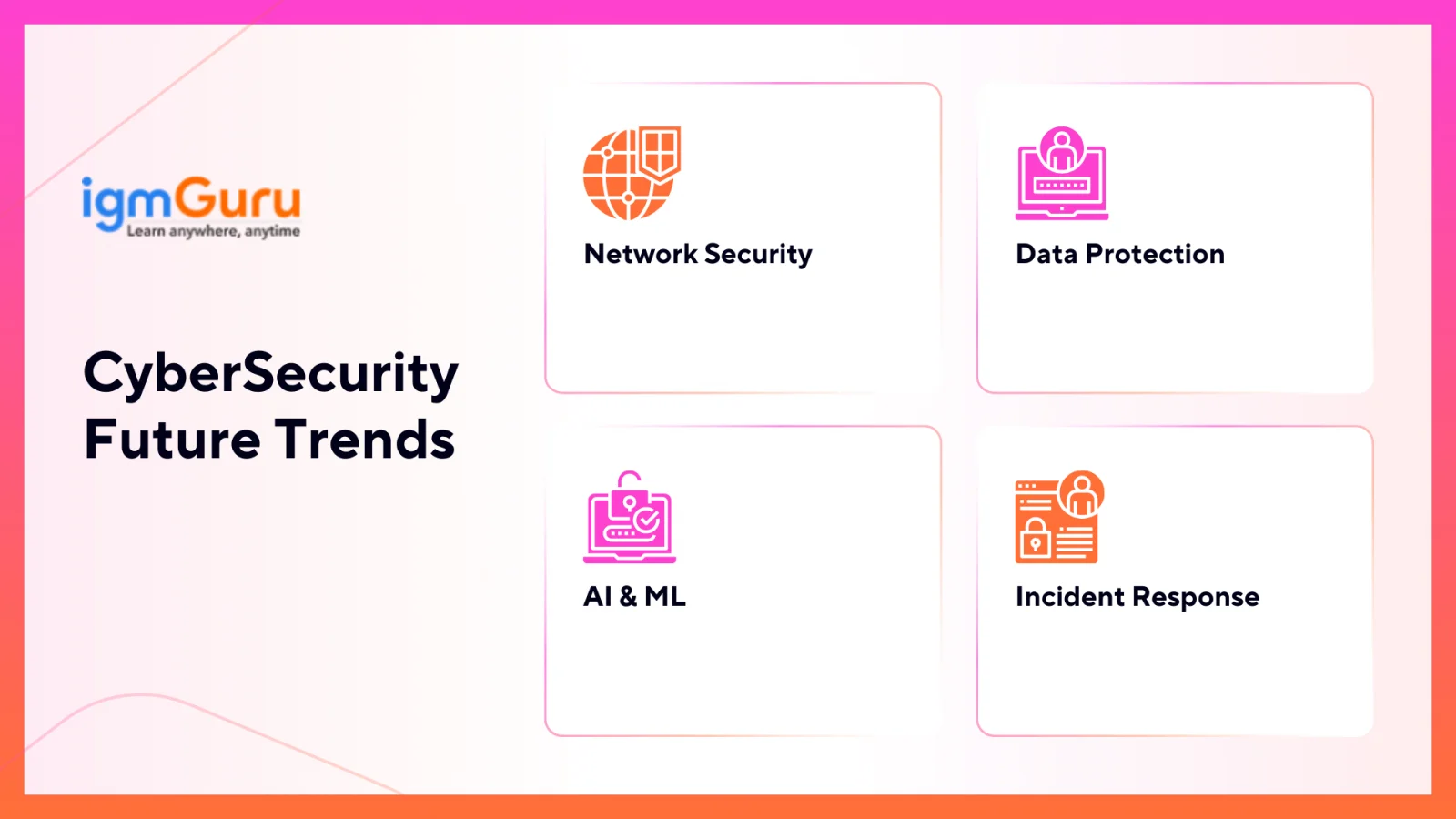
Cyber security is evolving constantly as per the changing scope of technological advancements and threats. Looking into the future, it is obvious that many trends are expected to reshape the way cyber security pans out in the coming years. Getting a better understanding of these trends is the only way to help individuals and organizations prepare for all emerging opportunities and challenges.
Here is a list of some of the top cyber security future trends. These ten trends are among the ones that are expected to greatly influence how this domain expands and shapes up.
Artificial intelligence and machine learning are two technologies that are rapidly becoming central to cyber security. Both these technologies have the ability to analyze gigantic amounts of data rapidly. These further identify anomalies and patterns that may point towards a cyber threat. AI and ML are often used to-
Quantum Computing brings forth both an opportunity and a threat for cyber security. These have the ability to potentially break away traditional encryption methods. This makes the existing security measures completely obsolete. They also have what it takes to develop new and more secure encryption techniques. To preparing for the quantum era, one must understand-
Explore our Cybersecurity Interview Questions to prepare interview rounds.
The Zero Trust model works smoothly on the 'never trust, always verify' principle. This approach takes into account that threats can easily be found both inside as well as outside the network. Thus, every access request must be thoroughly verified. Its key components are as follows-
Want to know the Cybersecurity future trends? Read the full article here!

Getting started in cyber security includes following a structured approach. This comprises combining skills development, education, hands-on experience and certifications. This in-depth guide will help aspirants embark on a journey to enjoy a successful career in cyber security.
Start by exploring the different domains within cyber security. Information security, network security, application security, ethical hacking and cloud security are among the top ones. Each aspect offers a different set of opportunities and challenges.
It is important to stay updated with all the latest threats, technologies and trends happening in cyber security. This can be done via reputable sources such as news sites, industry reports and cybersecurity blogs.
Earning a bachelor's degree in information technology, computer science, or any related field is the best beginning. These courses offer a great foundation in programming, networking and computer systems. Specialized degrees are also available in cybersecurity.
Online learning platforms can also be utilized. These platforms bring different courses on various topics like ethical hacking, cybersecurity fundamentals, cryptography, etc. These are often taught by seasoned industry experts and render practical, hands-on understanding experiences.
Ace the protocols and concepts of fundamental networking like DNS, TCP/IP, SSL/TLS and HTTP. Gain an understanding of how data flows through networks. Learn how various components interact. All this is great for identifying vulnerabilities and consequently defending against attacks.
Gain high level proficiency in multiple OS, especially Windows and Linux. Learn about system administration, security features and command-line interfaces of these OSs. Programming languages like Python, JavaScript and Bash are relevant to cyber security. Coding skills are essential for automating tasks, analyzing malicious code and creating security tools.
Begin with a foundational level certification. The common one is CompTIA Security+. It renders risk management, incident response and essential cybersecurity principles. It's highly regarded and offers a strong base for the future.
Go on to more advanced credentials like CISSP. It is apt for those having experience and covers many cyber security topics. These include asset security and software development security. Certified Ethical Hacker is also a valuable one with a focus on penetration testing and ethical hacking techniques.
Specialized roles require certifications like Certified Information Security Manager (CISM), Offensive Security Certified Professional (OSCP), and Certified Information Systems Auditor (CISA).
Also Read: Top Career Options in Cybersecurity
Getting into an internship or beginning an entry-level position is a great step. Internships offer close industry exposure. This enables the application of theoretical knowledge to real-time problems. Great networking opportunities are also a part of this.
One can also set up a complete home lab environment to gain practical experience. This can be done by using virtualization software like VMware or VirtualBox. These help in creating various VMs and simulating network environments. It is also possible to experiment with various security techniques and tools for enhanced understanding and proficiency.
Strong communication skills are among the most important soft skills to explain complicated tech issues to non-tech stakeholders. One should practice writing reports, collaborating with team members and presenting findings. Cyber security professionals should have the ability to think creatively and critically. This helps in solving many problems. Perform activities challenging problem-solving abilities. These include puzzles, challenges and capture-the-flag (CTF) competitions.
It is important to attend cyber security seminars, workshops and conferences. Black Hat, RSA Conference and DEFCON are great events to learn everything about latest developments. These places also offer great networking opportunities. Joining online communities and forums is also helpful. Participating in discussions, seeking advice, and sharing knowledge is also facilitated.
Forming a strong cyber security strategy is the essence of true protection. It includes many layers of protection across networks, data, computers and programs. Key tools to combat cyber threats include intrusion detection systems, firewalls, encryption and antivirus software. However, cyber security is the one field that showcases that technology alone is not sufficient.
Cyber security depends heavily on the people who are working in it. Effective cybersecurity is highly dependent on its people as well as its processes. Human factors play an integral role here. This includes education, training and awareness. Each of these play an imperative role in ensuring maintenance of a secure environment.
Want to explore Cybersecurity Professional Salary? Read the full article here!
The growing scope of cyber security has made it clear that this field is essential and multifaceted. The goals of cyber security, which includes protecting integrity, availability and confidentiality, are the fundamentals of maintaining security and trust in this digital world.
Becoming a part of this sector means understanding the different types of cyber attackers. The list is long and continuously growing. Nation-states, individual hackers and internal threats can be equally damaging. It directs focus on the different motivations that drive cyber threats. Also, it showcases the imperativeness for robust defenses.
Cybersecurity challenges are substantial and encompass organizational, human and technical factors. The imperativeness of cyber security cannot be stressed upon enough. It not only protects financial assets and personal data, but also works on public safety and national security. Cyber threats are becoming more sophisticated, which has led to an increase in the demand for skilled cybersecurity professionals. This rising demand gets reflected in the competitive salaries they earn across various industries and roles.
All in all, cyber security is a growing field that demands adaptability, continuous learning and vigilance. Staying proactive and informed is what can protect everyone's digital lives in a better way.
To learn cybersecurity, you should have a basic understanding of computer networks, operating systems (especially Windows and Linux), networking protocols, and fundamental programming concepts. Knowledge of networking, problem-solving skills, and familiarity with security tools provide a strong foundation for advanced cybersecurity topics.
Yes. Cybersecurity continues to be one of the fastest-growing career fields in 2026 due to the increasing number of cyber threats and stricter security regulations. Organizations across industries actively hire cybersecurity professionals for roles such as Security Analyst, Penetration Tester, SOC Analyst, Cloud Security Engineer, and Security Consultant.
Cybersecurity focuses on protecting digital systems, networks, applications, and devices from cyber attacks, while information security protects all forms of information, whether digital or physical, from unauthorized access, modification, or disclosure. Cybersecurity is considered a subset of the broader field of information security.