Cybersecurity has become much more complicated than simply installing antivirus software and putting a firewall around a network. Businesses now have applications running in the cloud, employees working from different locations, sensitive data moving across multiple systems, and more devices connected to their environments. At the same time, attackers are finding new ways to exploit vulnerabilities, steal credentials, spread malware, and gain access to valuable business data.
This has made cybersecurity a continuous process rather than a one-time activity. Security teams need to monitor networks, identify vulnerabilities, protect endpoints, manage user access, investigate suspicious activity, test applications, and respond quickly when something goes wrong. No single tool can effectively handle all of these responsibilities, which is why organizations use different cybersecurity tools for different layers of their security strategy.
The problem is that there are now hundreds of security tools available, and they are not designed for the same purpose. A penetration tester may need tools such as Nmap, Burp Suite, or Metasploit, while a security operations team may rely on SIEM and EDR platforms. Developers may need application security tools, whereas IT teams may focus more on vulnerability scanning, identity management, and endpoint protection.
Choosing the right tool therefore depends on what you are trying to protect and how your security team operates. You also need to consider factors such as deployment, integrations, scalability, automation, ease of use, security requirements, and cost. A free open-source tool may be perfect for learning or a specific security task, while an enterprise may need a commercial platform with centralized monitoring and vendor support.
In this article, I will explain the 20 best cybersecurity tools to know in 2026, covering network analysis, penetration testing, vulnerability management, endpoint security, SIEM, identity management, application security, and threat intelligence. I will also explain the key features, pricing, and best use cases of each tool so you can understand where it fits into a cybersecurity workflow. Let’s begin!
Read Also: What is Ethical Hacking?
Cybersecurity refers to a practice wherein an organization's information or data is secured from cybercriminals. More technologies get adopted in personal and professional lives, which has made it easier for such people to steal data. But changing technology also means better technology and that is exactly what cybersecurity does.
It's a cat and mouse game wherein the attacker tries to get through the network but is stopped by professionals. But these attacks and defenses happen in a virtual world, where cybersecurity tools are used. There are plenty of existing and emerging tools out there, each with brilliant use cases.
The cybersecurity path is increasingly becoming more lucrative. Better technological advancements mean more career opportunities and growth scope. This has directly impacted the popularity of this sector. More and more individuals are getting attracted to this field and there is no dearth of opportunities for any of those.
Want to become a cybersecurity professional? Explore our Cybersecurity certification course program and learn with the industry experts.
Before this blog moves to the best tools for cybersecurity, let's first understand their types. There are dozens of tools and each of those are based on a certain area or domain of interest. Here are certain types-
As mentioned above, there are dozens of tools for cybersecurity in the market. While not every tool is apt for every organization, here are the top ones. Learning about these tools is sure to benefit companies and the skilled professionals.
Wireshark is used globally to analyze network protocol. It aids in capturing with pcap, along with storing and analyzing every packet thoroughly. Various OS platforms like macOS, Linux, Windows and Solaris are supported by Wireshark. It's an open-source tool.
One of its key features is that it analyzes real-time data from various types of protocols. Color coding is used to showcase the packets when they match a specific rule. Packets are captured from the pcap-supported networks only.
Pricing
Aircrack-ng is a free and open-source network security and wireless network auditing tool. Multiple independent sources (its own GitHub/site, CISA, Bugcrowd, TrustRadius, and eSecurityPlanet) agree there is no licensing fee at all. Your blog's "$65 per user" pricing is incorrect and should be corrected, just like the Nmap pricing.
It's a commercial tool and is used for vulnerability assessment. It's used to find security vulnerabilities, misconfiguration of systems, security flaws, network devices and servers. It is also usable for auditing and compliance purposes. Being an advanced tool, all these features are automated.
Pricing
Related Article- Cybersecurity Future Trends
Network Mapper or NMAP is an open-source tool that's used to scan networks. It's a great pick for discovering hosts, identifying security vulnerabilities and gathering information about different network devices. This tool supports all major operating system platforms like MAC OS, Linux and Windows. It's free, flexible, portable and has well-documented steps.
Pricing: Free / Open-source.
Intruder's actual 2026 pricing is $149/month (Essential), $299/month (Cloud), $499/month (Pro), and custom Enterprise — per Gartner Peer Insights, which lines up with several other independent sources. Your blog's "$113 / $181 per license" figures are stale and structured wrong (per-license vs. per-month).
Hashcat itself is free and open-source under the MIT license. The $0.63–$2,112.52 figure on your blog looks like it's actually pulled from a third-party "online password recovery" service (similarly named, charging per GPU-hour), not from Hashcat the tool. That's a meaningful mix-up, not just a stale number.
Linux is an advanced, open-source penetration testing tool that acts as an ethical hacker and a cyber attacker. It has 600+ tools like WPScan, Burp Suite, Hydra, NMAP, Autopsy, Maltego, etc. It's a Debian-based Linux distribution tool.
Pricing
Also Read: Types of Cybersecurity Threats
Metasploit is a popular free/open-source penetration testing tool in the cybersecurity sector. Both cyber attackers and defenders utilize this tool depending upon their intentions. It has many inbuilt modules used for payload executions, encoding, executing shell codes, exploiting, listening, Nops and auxiliary functions. A company's security posture can be improved by performing security assessments with this tool.
Pricing: $15k per year on average (Metasploit Pro).
Burp Suite is an amalgamated platform containing multiple tools used in penetration testing. It's a favorite amongst bug bounty hunters and pen testers. Some popular tools in it include Sequencer, Spider, Repeater, Decoder, Scanner, Proxy and Intruder. All these are used for various security testing processes.
Pricing
Snort is a leading IDS/ IPD tool that uses a certain rule set to identify malicious activities and generate security alerts. It can be deployed and functioned for official and personal purposes both. It was developed by CISCO Systems.
Pricing
CrowdStrike Falcon is a cloud-native endpoint detection and response (EDR) platform used by enterprises to detect and stop breaches in real time. It uses AI and behavioral analytics instead of relying only on known malware signatures, which helps it catch new and unknown threats. It supports Windows, macOS and Linux, and is delivered through a single lightweight agent.
One of its key features is real-time threat detection across endpoints, combined with automated response that can isolate a compromised device instantly. It also provides full visibility into an organization's entire endpoint fleet from one dashboard.
Pricing
Splunk is a widely used Security Information and Event Management (SIEM) tool that collects, correlates and analyzes log data from across an organization's network, applications and systems. It helps security teams detect suspicious activity, investigate incidents and meet compliance reporting requirements. It supports cloud, on-premises and hybrid environments.
One of its key features is its ability to correlate massive volumes of log data in real time to surface anomalies that would be nearly impossible to spot manually. It's also highly customizable with dashboards and alerting rules tailored to an organization's needs.
Pricing
Okta is a leading identity and access management (IAM) tool used to secure logins, manage user permissions and enforce multi-factor authentication across an organization's apps and systems. It helps prevent unauthorized access, which remains one of the most common entry points for cyberattacks. It integrates with thousands of third-party applications.
One of its key features is single sign-on (SSO), which lets users securely access multiple applications with one login, reducing password fatigue and the risk of weak or reused passwords. It also offers adaptive MFA that adjusts security checks based on login risk.
Pricing
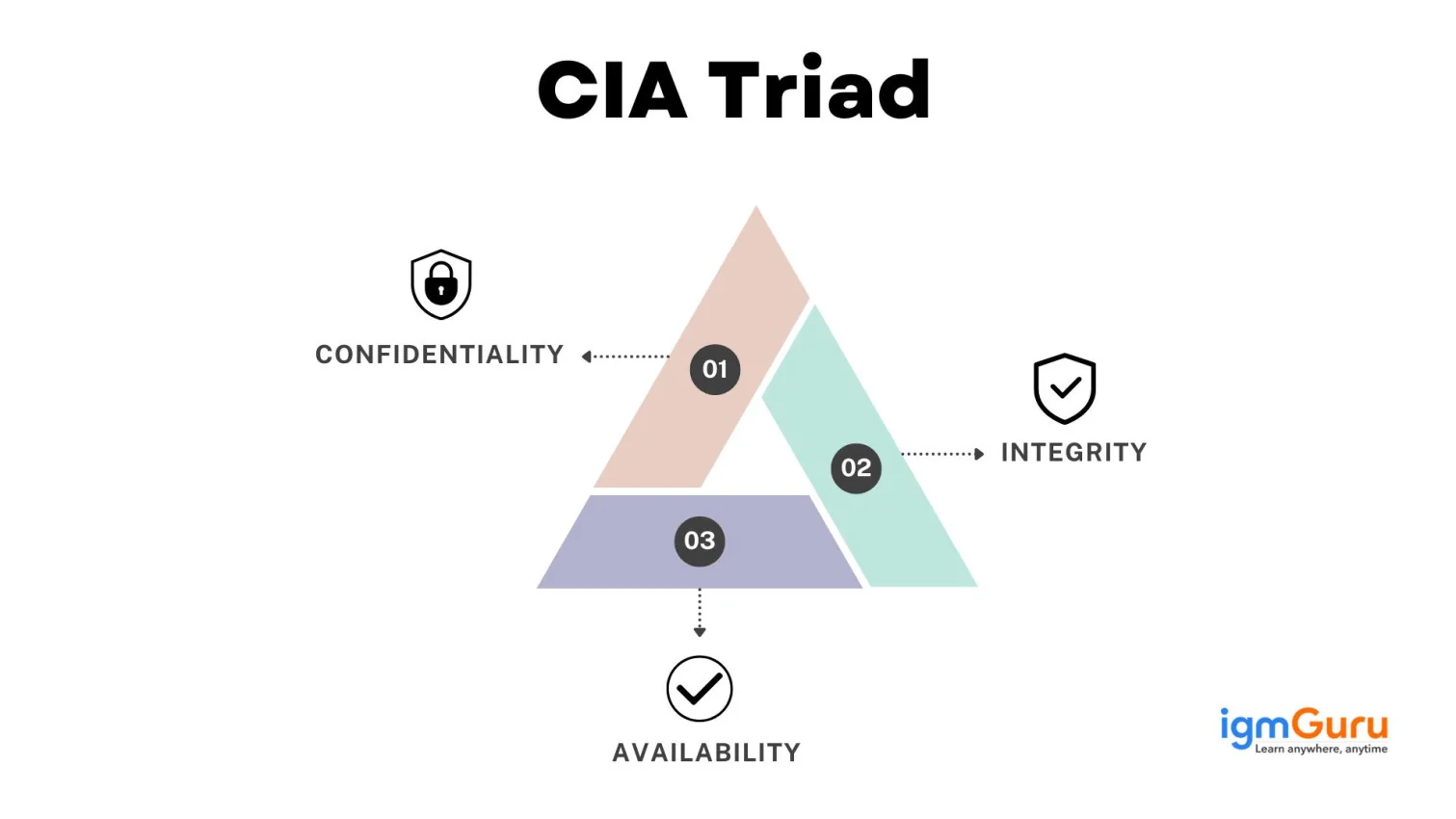
Read Also: CIA Triad: What Is It and Why Does It Matter?
A note on these: unlike your existing tools, CrowdStrike, Splunk, and Okta don't publish flat public pricing — it's quote-based, tied to endpoints/data volume/users. I've written that honestly above rather than inventing numbers, since that's exactly the kind of fabricated-pricing mistake we just caught in your draft. If you want, I can also do SentinelOne, Microsoft Sentinel/Entra ID, Cortex XDR, Zscaler, or Fortinet in the same format — just say which ones you want in the final ten.
Microsoft Sentinel is a cloud-native Security Information and Event Management (SIEM) and Security Orchestration, Automation and Response (SOAR) platform. It collects and analyses security data from users, devices, applications and cloud services to detect threats in real time. It integrates seamlessly with Microsoft Azure and supports third-party security solutions.
One of its key features is AI-driven threat detection and automated incident response through built-in playbooks. It also provides centralized visibility into security events across hybrid and multi-cloud environments.
Pricing
Qualys VMDR (Vulnerability Management, Detection and Response) is a cloud-based vulnerability management platform that continuously scans systems to identify vulnerabilities, misconfigurations and missing patches. It also helps organisations prioritise risks based on threat intelligence.
One of its key features is real-time asset discovery combined with automated vulnerability assessment and patch management. This enables security teams to quickly identify and remediate critical security issues.
Pricing
OpenVAS, now maintained as Greenbone Community Edition, is a free and open-source vulnerability assessment tool used to identify security weaknesses in networks, servers and applications. It performs comprehensive security scans using an extensive database of vulnerability tests.
One of its key features is regularly updated vulnerability feeds that allow users to detect newly discovered security issues. It is widely used as a free alternative to commercial vulnerability scanners.
Pricing
OWASP Zed Attack Proxy (ZAP) is a free and open-source web application security testing tool developed by the Open Worldwide Application Security Project (OWASP). It is widely used by developers and penetration testers to identify vulnerabilities such as SQL injection, cross-site scripting (XSS) and insecure authentication.
One of its key features is its automated vulnerability scanner along with an intercepting proxy that allows users to inspect and modify web traffic during security testing.
Pricing
IBM QRadar is an enterprise Security Information and Event Management (SIEM) platform that collects, analyses and correlates security logs from networks, endpoints and applications. It helps security teams detect threats, investigate incidents and maintain compliance.
One of its key features is intelligent event correlation, which reduces false positives by combining threat intelligence with behavioural analytics. It also provides centralized dashboards for security monitoring.
Pricing
Snyk is a developer-first application security platform that helps identify and fix vulnerabilities in source code, open-source dependencies, containers and Infrastructure as Code (IaC). It integrates with popular development tools and CI/CD pipelines to improve application security throughout the software development lifecycle.
One of its key features is continuous vulnerability scanning with automated remediation suggestions, enabling developers to resolve security issues before deployment.
Pricing
Paid plans available with custom enterprise pricing.
VirusTotal is an online threat intelligence platform that analyses files, URLs, IP addresses and domains using dozens of antivirus engines and security services. It helps security professionals quickly identify malicious files and investigate potential cyber threats.
One of its key features is multi-engine malware analysis, allowing users to compare results from numerous security vendors in a single report. It also provides threat intelligence data for security investigations.
Pricing
Read Also: Information Security vs Cybersecurity
So, in this article, we discussed the top cybersecurity tools. And these top cybersecurity tools are a must-know for anyone who's looking to begin their career here. It's a lucrative job space with plenty of opportunities for those with the right skills and knowledge. Get started today for amazing job prospects.
Cybersecurity tools include firewalls, antivirus software, intrusion detection systems (IDS), encryption tools, vulnerability scanners, SIEM solutions, and endpoint protection platforms.
The best cybersecurity tool depends on specific needs/requirements, but SIEM solutions like Splunk and endpoint protection tools like CrowdStrike are widely regarded.
Yes, you can learn cybersecurity tools through online courses, hands-on practice, and certifications tailored to each tool.


Top Advantages And Disadvantages of Artificial Intelligence (AI)
October 16th, 2026
File Handling in Python: Understand Step-by-Step With Examples
October 16th, 2026