'Hacking' is not only one of the most heard names but a misunderstood term as well. Generally, this term is associated with illegal actions of anyone trying to break into people's systems. What if we add the word 'ethical' with 'hacking'? That's right, ethical hacking exists to enhance cybersecurity and this blog is curated to discuss exactly that in detail.
With the growing number of cyberattacks in this technology-driven world, sensitive data is prone to being threatened by a number of factors. Ethical hacking prevents such situations from occurring by ensuring data safety. Let's understand what it actually is by discussing its meaning, the professionals who work in this field, its types, phases, benefits and much more.
Ethical hacking is quite different from usual hacking as it requires the consent of organizations to get hacked to detect problems within them. It is also known as penetration testing, which involves intentionally testing computer systems, networks, and apps to find weak spots that malicious hackers could exploit.
Ethical hackers, or white-hat hackers, have permission from the company they're testing. Their goal is to improve security and protect important data from cyber threats. Several hacking techniques are utilized by certain professionals to reveal and resolve possible vulnerabilities in a computer system or network.
Explore igmGuru's Cybersecurity course to advance your career for a better growth.
An ethical hacker is a professional hired by organizations or individuals to utilize their skills in order to break through a system and resolve its vulnerabilities. A system could be anything, such as an application, organization, network or website. Approval of the specific organization or individual before their system is hacked plays a primary role in making the entire process legal.
These professionals aim at tracking weaknesses to detect possibilities of breaches, exploits or any other kind of cyberattack. These experts tend to collaborate with security teams to provide their clients with detailed reports regarding the concern. This entire process has to be legal by gaining consent to avoid conflicts and ensure the security of clients.
Becoming a skilled ethical hacker requires building a strong foundation across multiple technical areas. The good news is that each skill builds naturally on the next — you do not need to master everything at once.
All hackers are seeking to locate the weak spots, but their goals may vary. This section highlights the different types of hackers.
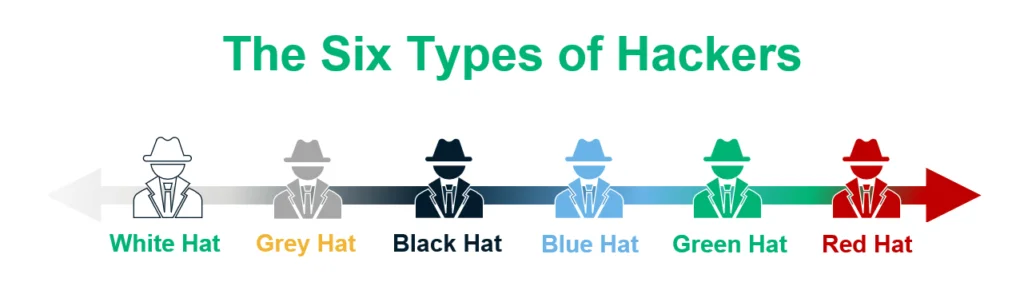
As mentioned above, ethical hackers are also called white hat hackers. They differ from other hackers in terms of their tasks being legal. They have the consent from the owners of systems required to get hacked to detect security flaws. They discover these vulnerabilities through anti-phishing simulation, hacking and penetration testing. They are familiar with the methods of malicious hackers and can perform the same to simulate attacks legally.
These hackers are the ones we need to protect our systems from. They are malicious hackers who seek to break into networks and systems in illegal ways. Their main goal usually revolves around stealing sensitive data such as credit card details, passwords or addresses. They look for causing damage in systems and spy on things.
Gray hat hackers aren't looking to cause trouble, but they do work outside the law. They might break into systems without asking the owner first. Sometimes, they search for weaknesses just to point them out. While some of these hackers may invade systems to show off, they typically won't steal anything or cause damage.
These hackers are new to the field but want to learn. They genuinely care about hacking and aspire to become experts. They often seek advice from experienced hackers and pay close attention to their answers.
Similar to white hat hackers, blue hat hackers are hired by companies to test software security before release. The key difference is that blue hat hackers are typically external consultants, while white hat hackers are usually company employees.
Also known as eagle-eyed hackers, red hat hackers, like white hat hackers, aim to stop black hat hackers. What sets them apart is their approach. They are very aggressive in dealing with black hat hackers' malware attacks, relentlessly targeting the attacker until they may have to replace their entire system.
Read Also: Top Cybersecurity Interview Questions and Answers
Today, there exists a multitude of opportunities for exploitation through malware analysis.
Companies should assess whether their software can withstand an onslaught from cyberterrorists - ethical hacking plays a vital role in protecting every aspect of an organisation from threats of all types. Cyberattacks on organisations are continuing to grow - large organisations are often no longer safe. An example of this is Uber who fell victim to a cyber-attack in 2016 where sensitive information belonging to approximately 57 million drivers/riders was accessed by malicious actors using compromised credentials of a private GitHub repository.
Uber did not disclose the breach until a year later and subsequently paid the attackers $100k to delete the breached information. Ultimately, the total cost incurred by Uber due to this breach was approximately $148 million in regulatory fines. By employing regular ethical hacking methods, Uber would have discovered the exposed credentials before the malicious actor did - at a fraction of the cost.
Many successful bug bounty programs are operating within industry - Google's Bug Bounty Programme is one of the world's largest bug bounty programs, which has paid over $50 million to ethical hackers since its inception in 2010 for discovering vulnerabilities in Google products before malicious actors have exploited them. In one of the most recent examples, an independent researcher received a $36,337 bounty for disclosing a critical flaw in Google Cloud that could have been exploited by a malicious actor had the flaw been made public.
Companies are implementing various security measures to remain on the safe side. However, the key to protecting data is by constantly updating the security as hackers are always on the verge to cause trouble. Ethical hacking is the best weapon to take care of these bad guys.
Ethical hackers are the protagonists of the cybersecurity world who keep client's data safe by ensuring effective security through hacking into systems. Early actions in these situations can prevent important data from being stolen inside an organization. With ethical hacking, companies can see where their software security is weak and work on it accordingly.
Ethical hacking is a tricky process, revolving around evaluating computer security using different skills and methods. There are a few kinds of hacking in cybersecurity -
With black-box testing, the hacker doesn't know anything about the system beforehand and tries to break in via a brute force approach. For instance, one does not know what server is being utilized in a website they are testing and how it was coded.
This kind of hacking can be risky and is used to find security holes that real attackers could use to steal stuff like credit card numbers or bank info, which they might then sell or use for identity theft or fraud. For example, a black box test can see if someone can log in, see their account details, change their password, and log out.
In white-box testing, the hacker knows everything about the system, how it works, and where it's weak before attempting to break in. Developers often do this to check their systems before releasing them to the public, where bad guys might target them.
These testers team up with IT and follow company rules to see what's happening inside without breaking the law. They also make sure no one's hacking their company's system. Some white-box tests involve things like design reviews, statement coverage code inspections and data-flow analysis.
Gray-box testing combines both black and white-box testing. In this case, the tester has some knowledge about the system but not everything. They utilize what they are familiar with to detect weak spots. Gray hats sometimes use their skills for both good and bad causes, like writing viruses to steal from banks. Gray-box testing can be seen in these areas:
Web application hacking involves taking advantage of security problems in web-based applications. These applications are usually made with languages like HTML, CSS, and JavaScript, but can also be written in languages such as PHP and Ruby on Rails. The characteristics of these languages and how web browsers understand them make it possible to do certain things on a website even without proper authorization.
For example, cross-site scripting (XSS) introduces harmful code into a website's HTML. With a well-crafted XSS attack, one might be able to take over a browser's session with the server, without needing the user's login information.
This involves coaxing people into revealing their confidential information. This case usually involves attackers persuading people who trust them or do not have enough knowledge. The three types of social engineering include mobile-based, human-based and computer-based. It's tough to spot social engineering attacks when security rules aren't strict and we lack proper tools to guard against them.
This type of hacking means getting into a computer network without permission, usually by taking advantage of weak security spots.
An example is wardriving, where someone drives around with a laptop or similar device to find wireless networks that aren't well-protected.
System hacking attacks a computer's software to get to sensitive data. The hacker uses weak spots in the system to get information and data unfairly. The goal is to get access, get more control, and hide files.
Web content is created live on the server-side. This lets hackers target the web server to steal private info, data, passwords, and business details using attacks like DoS, port scans, SYN floods, and Sniffing. Hackers target web servers for money through theft, sabotage, blackmail, and more.
Read Also: What is Confidential Computing?
Ethical hacking usually consists of the following phases, from initial authorization through final reporting.
Getting the right written authorization is the first step to take before carrying out any hacking activities. By receiving this written approval, a hacker will know that he/she is legally allowed to perform hacking activities as an ethical hacker. It is usually this first step in the process of ethical hacking that is omitted from most discussions on this topic.
There are a few things that are included within this step (Preparation and Authorization) that will allow the hacker to carry out his/her test in an ethical manner. These include:
This f step involves a would-be attacker gathering details about their target. This could mean figuring out the target's identity, IP addresses, network layout, and DNS records. Imagine someone trying to get into a website's contacts.
They might use search engines to dig up information on the website, like checking links, job postings, employee titles, emails and news items. They might even use a tool to download the whole site for later examination. With this, they could learn staff names, positions, and email addresses.
Next, the attacker uses tools to scan for data. They're looking for anything that can help them attack, like computer names, IP addresses, and user accounts. Now armed with some basic information, the attacker starts testing the network to find more ways in.
They might use methods to map the network and try to find out what email server is being used. They might look for an automated email or send a job inquiry email to HR, based on the information they have gathered.
At this point, the attacker uses the information gathered in the first two steps to create a network map. They have finished checking the network and now think they have a few ways to get in.
For example, they might try a simple phishing attack focused on the IT department, they might send a phishing email that looks like it is from the CTO, complete with a fake website to steal logins and passwords. They could use various methods to send this email, asking users to log in to a phony Google portal.
Other options could include putting a reverse TCP/IP shell in a PDF using a tool or, by looking at the event calendar, they might set up a fake Wi-Fi router and try a Man in the Middle attack to intercept user data. A denial-of-service attack or exploiting vulnerabilities may also work.
Once inside, the attacker wants to stay there for future attacks. They can use the compromised system as a launchpad. With so many email accounts now at their disposal, the attacker begins testing them on the domain. From there, they create a new administrator account for themselves, mimicking the naming structure to blend in.
They also look for old, unused accounts, change their passwords, and grant them administrator privileges as a backup. Additionally, they might send emails with infected files to other users to expand their access. To avoid detection, the attacker will wait, letting the victim believe nothing has been compromised. With access to an IT account, the attacker starts copying all emails, appointments, contacts, messages and files for later use.
To hide their identity, the attacker would change their MAC address and route their traffic through a VPN before the attack. They avoid direct attacks or noisy scanning methods.
Once they have access and increased privileges, they try to hide their actions by deleting sent emails, clearing server logs and temp files. They also look for any signs that the email provider has alerted the user to unauthorized logins.
The final phase of ethical hacking provides the greatest benefit to the organization. Breaking into a system without explaining how, or fixing it, gives no benefit whatsoever to the organization. The reporting phase takes the raw data and identifies it in a manner that allows for a prioritized plan of action. A professional report (for the ethical hacker) contains:
A non-technical summary for an organization that describes what was tested, the overall risk of the organization is based on the vulnerabilities found, and the top critical vulnerabilities discovered (no technical jargon). This summary is intended for business leaders to assess the business risk and not to obtain specific technical information.
A detailed breakdown on every vulnerability discovered, including:
Recommendations are provided for each vulnerability. Each recommendation should include a clear, prioritized fix for each vulnerability discovered. For example: "Upgrade Apache version 2.4.29 to the latest stable release and disable directory listing." Recommendations are prioritized based on vulnerability severity to help the security team select the first vulnerabilities to fix.
The ethical hacker assigns a risk rating to each vulnerability identified by using the Common Vulnerability Scoring System (CVSS).
NOTE: For many organizations, they are surprised to learn that the hacking activity is the easy part of this whole evaluation process. The Written Report-yours is a Key Component of any long-term Security Improvement.
When the Report Shows You a Clear Picture of the Risks And Prioritizes the Various Steps Needed To Address The Vulnerabilities Found, Your Organization Will Achieve Its Long-Term Security Goals.
Inadequate Reporting Is the Most Frequently Heard Complaint From Organizations About Their Penetration Testing Engagements.
The ethical hacking code of conduct is built on a strong set of rules. They create the groundwork for doing things the right way. Ethical hackers perform a complicated job by juggling what's right for their clients and considering how their actions affect everyone else, always adhering to the rules for ethical hacking. Here are some crucial concepts of ethical hacking -
These rules help ethical hackers do their jobs honestly in the cybersecurity world. They also protect what's important to clients. It's really important to respect client ideas and have permission before you start working.
Ethical hackers have big responsibilities to both clients and society. They keep private information safe and do not share it without approval. These experts quickly report any security risks that could affect clients or the public. Keeping trust in the cybersecurity world is a must. Ethical hackers push approaches that put client interests first. This also makes information security stronger overall.
Keeping things private is a big deal for ethical hacking. Ethical hackers should stick to the rules when handling client data, making sure they:
Being upfront lets clients know how their information is handled. This creates trust, which you need for good cybersecurity work. Keeping private information safe is a major thing that an ethical hacker does.
Here are some useful tools for ethical hacking -
One way Artificial Intelligence changes how Ethical Hackers work in Cybersecurity is that it makes them faster, smarter and more effective. Ethical Hackers now have AI-powered software tools for identifying security issues (vulnerabilities) in applications, monitoring for suspicious behavior or activity, and detecting Cybersecurity threats before they result in damage to an organization. Through the ability of AI to process vast amounts of information at high rates of speed in real time, Security Professionals can quickly identify anomalous behavior and detect Cyber threats faster than they would be able to do so using conventional methods.
In addition to improving the speed at which Ethical Hackers can detect and respond to Cybersecurity threats, AI has also helped to automate many of the repetitive tasks associated with Cybersecurity such as network scanning, password cracking, and Malware detection. This enables Ethical Hackers to spend more time on developing advanced methods of cybersecurity mitigation and addressing the more sophisticated Cybersecurity threats that exist today. The AI-driven System will also simulate Cyber attacks on the organization's security infrastructure to assess the organization's ability to defend itself against real-live hacking episodes.
On the other hand, cyber-criminals are also leveraging AI to create more sophisticated phishing schemes as well as new forms of Malware and automated hacking techniques. As a result, Ethical Hackers must continually refresh their skill set and utilize AI responsibly to remain ahead of the continually changing Cyber Threat Environment. The combined capabilities of AI and Ethical Hacking have a significant impact on the continued enhancement of traditional Cybersecurity solutions.
Ethical hacking is critical for enhancing cybersecurity by assisting organizations with recognizing and addressing issues with security prior cybercriminals can take advantage of. Ethical hacking will safeguard your organization's sensitive data and systems, build trust in your organization, maintain compliance with applicable laws, and help you develop an overall improved security strategy. The following are a few of the primary benefits of ethical hacking.
Ethical hackers look at security the way actual hackers do, but they stay within the bounds of the law. This way, they can find weak spots in a system that standard security checks might miss.
By figuring out how attackers might get in, ethical hackers give useful advice that leads to better security plans. This means problems are found fast, which makes the whole system safer. Asking the correct questions during an ethical hacker interview is important to find the correct person for these kinds of security jobs.
Ethical hacking stops problems before they start by fixing weak spots. This keeps companies from having big security leaks that could cost a lot of money or hurt their image.
By spotting and fixing security issues early, ethical hacking keeps company data safe and keeps customers and partners trusting the business. This security method lowers the chances of incidents that could mess up the company's work and plans.
Many industries have rules that say they need to do regular security checks, like penetration testing. Ethical hacking helps companies do these checks and follow the rules, so they don't get in trouble for not following the law.
Conducting ethical hacking often smooths out the audit process and demonstrates compliance with these rules, making it easier for companies to keep up with industry standards.
Besides testing security, ethical hacking is a key part of teaching people in a company. It tells workers about the newest dangers and why it's important to follow good security habits.
This education helps workers identify and address security risks effectively, which ultimately enhances the company's overall security. It also promotes constant learning and adaptation, which is essential since cyber threats keep evolving fast.
Doing ethical hacking often shows customers that a company is trying to protect their data. This focus on security can really make customers trust the brand more. Having a good security reputation can help beat the competition, keep customers coming back, and maybe even get new customers.
While ethical hacking does cost some money at the start, it's not much compared to the money lost from data breaches. Breaches can lead to direct money losses, fines, legal costs, and damage to the company's image for a long time. Putting money into ethical hacking can really lower these risks.
One of the most exciting opportunities in modern ethical hacking is the rise of bug bounty programs. These are formal programs where companies invite ethical hackers from around the world to find and responsibly disclose vulnerabilities in their systems — and pay a cash reward for doing so.
The terms 'ethical hacking' and 'penetration testing' are often used interchangeably, but they are not exactly the same. Understanding the distinction helps both job-seekers and organizations choose the right service.
| Aspect | Ethical Hacking | Penetration Testing |
|---|---|---|
| Definition | Authorized practice of identifying and fixing security vulnerabilities in systems and networks. | Simulated cyberattack performed to exploit vulnerabilities and test system security. |
| Scope | Broad and continuous security assessment across multiple systems. | Specific and focused assessment of a particular target or application. |
| Goal | Improve overall cybersecurity and prevent attacks. | Demonstrate how attackers can exploit weaknesses. |
| Approach | Includes vulnerability scanning, audits, monitoring, and security analysis. | Primarily involves real-world attack simulation and exploitation techniques. |
| Outcome | Enhances long-term security posture and risk management. | Provides detailed reports on exploitable vulnerabilities and attack impact. |
It is safe to conclude that not all hackers are bad and some exist to serve us as protectors of our data. Ethical hackers assist companies with resolving their most vital problems. Different ways of assessing cybersecurity are there, but ethical hacking is the most effective one to provide insights for understanding network vulnerabilities from an attacker's point of view.
Yes, a career in ethical hacking is usually a solid pick. Ethical hackers play a key role in keeping organizations safe from cyber attacks, making it an essential job role.
In India, the typical annual salary for ethical hackers is around INR 5,52,500. In the US, the average yearly salary for an ethical hacker is approximately USD 1,23,705, with experienced professionals earning upwards of USD 1,65,000 annually.
Ethical hacking may look tough initially. Though, with structured training, real-world work, and commitment, it gets simpler. The key is to focus on networks, practical exercises, certifications and security tools.
Basic coding knowledge is helpful but freshers can start with networking and security basics.
Career roles include:
Course Schedule
| Course Name | Batch Type | Details |
| Ethical Hacking Training | Every Weekday | View Details |
| Ethical Hacking Training | Every Weekend | View Details |