There are plenty of programming languages in the cloud to choose from. But to develop applications fastly, with clean and understandable code, developers run to Ruby. This programming language is a famous general purpose programming language. You must've heard of it in relation to Ruby on Rails, among the most popular web development frameworks in any programming language.
Even though much of Ruby's fame comes from this connection. It has multiple uses like web scraping, static site generation, command-line, automation, data processing and DevOps. This blog will give detailed information on what is Ruby programming language, its uses, why learn Ruby and more. So, let's begin.
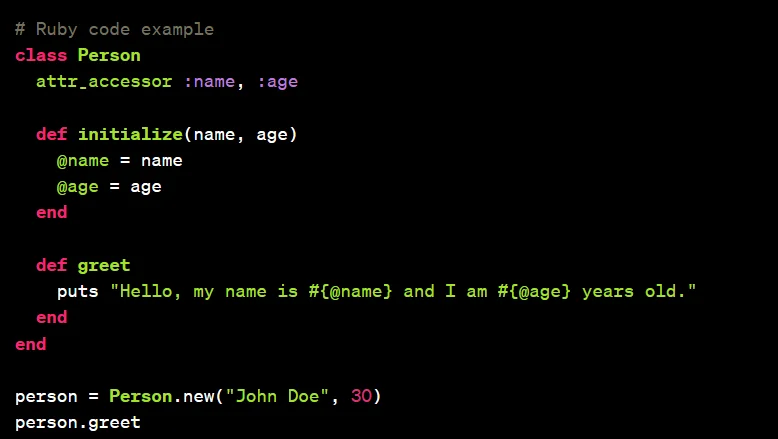
Ruby is a pure object oriented scripting and an open-source programming language, which was founded in the mid 90s by Yukihiro Matsumoto. It is not like other languages like C and C++, these scripting languages do not talk directly to hardware. Ruby is written to a text file and then studied by an interpreter and changed into code. These programs are usually procedural in character, which means that they are read from top to ground.
Whereas, object oriented languages can break out the pieces of code into objects which can be made and used as required. These objects can be reused in other parts of the program or other applications too.
Yukihiro wanted to make a scripting language which used object oriented programming and boost code reuse to fasten the development. And that's how Ruby programming language was born, through simple language and syntax to manage data and logic for problem solving.
Enroll in igmGuru's Ruby on Rails course program to learn with industry experts.
Ruby is a lone wolf in between other high level programming languages, but we can't talk about Ruby without mentioning the Rails.
Ruby on Rails is the reason why Ruby is in the spotlight and increased its fame and made it an amazing language for the cloud.
According to the citizens of Ruby on Rails, it is "an open-source web framework which is optimized for programmer happiness and sustainable productivity."
This flat has pre-written Ruby codes for stuff like communication, database connection, file management. One of the major concepts of Rails is DRY which stands for Don't Repeat Yourself, it is the key to the framework's effectiveness.
Millions of websites are written in Ruby on Rails, a vast chain of giant businesses and entertainment sites like GitHub, Airbnb, Twitter, SoundCloud, The Weather Channel, Square, Basecamp, Bloomberg and Instacart.
Ruby on Rails is a framework and was inspired by Django. It is written in the Ruby programming language, and is used for data driven web apps, marketplaces.
Whereas, Ruby is a programming language, which was inspired by Perl and Smalltalk. It was written in C language. It is taken in use for desktop apps, static sites and much more which we are going to read about.
Regardless of whether you are a fresher or an expert developer, learning Ruby programming language is a good idea for a promissing career growth. And let us know why one should learn Ruby.
Basically, Ruby programming skills will make you a workable and valuable programmer. Also it is an amazing choice for developing applications fastly and has an edge over Python when its about web development. But if you are a fresher, then you might be overwhelmed. The internet is full of programming knowledge, but not all of it is useful. Then where do the freshers begin? Read on to know more about Ruby, its uses and benefits, and more.
This programming language is a highly movable general purpose language which serves us in many ways. Developers also use it for building desktop applications, static websites, scripting, data processing, and more. Its simple syntax makes it beginner-friendly, while still powerful enough for startups, enterprises, and anyone looking to create scalable applications. Below, I have explained its uses in detail.
This is one of the major reasons why Ruby is so famous and thanks to Ruby on Rails platform which changed web development. Prior to when the Rails platform popped up in 2005, developers spent a lot of their time writing repetitive boilerplate code to make web apps. The Rails platform revolutionised this because it comes with everything a developer requires to develop an extensible website. We can run an easy command to make boilerplate code, develop a database model or create a proper file construction. These kinds of automations allow developers to concentrate more on coding a web app's logic rather than putting a lot of their time on low value work. Many renowned websites and applications make use of Ruby on Rails, some of them are-
Ruby is a pretty famous programming language in DevOps, automation and web deployment. You can consider the famous web app deployment framework Heroku. This platform got a lot of fame due to its allowance for testing, deploying and staging web applications without DevOps engineers. At first, Heroku only supported the Ruby programming language.
Vagrant is a famous virtual machine management system which is also written in Ruby. Through this, developers can operate operating system-specific software on any operating system. Like, a developer can change a Linux-only service into a Mac-executable format.
Whenever someone visits a typical web page, the website makes use of the server-side code that makes the HTML content it serves them to the browser. Meaning, there is no HTML file behind the URL they visit. This kind of HTML generation is not really the fastest way to serve web files to the clients. This is way more effective to use a state website generator like Jekyll, it is among the most famous static site generators which was written in Ruby.
Static website generators use codes to make all the web pages at once. Those pages will then be on a server and after visiting the site we get a static HTML file. It makes the website efficient, safe and easier to deploy. This is perfect for websites whose content does not change often.
Ruby is a perfect language for data processing, thanks to the part where the language has a readable syntax. It also has many other strong in-built functions like map, reduce and select. These functions are amazing for easy cleaning, filtering and data processing.
This programming language is famous for developing web servers. The famous web application servers like Puma and Passenger both support Ruby. These servers process HTTP requests, handle processes and resources, and permit for diagnosing and monitoring problems.
This famous programming language comes with packages like Vessel, making parsing web data easier. Through Vessel, one can write Ruby scripts which crawl and download web pages in a second. To then analyze the crawled HTML content, one can make use of other famous Ruby libraries like Nokogiri. Through Nokogiri, one can prepare the crawled data for latest HTML or XML objects or for performing data analysis like developing a machine learning model relevant to the crawled data.
This language is an easy method for writing programs you execute from the command line or the terminal. The macOS users likely have used Homebrew to install applications. Homebrew is totally based on Ruby, mostly like the prominent security framework, Metasploit, which is used for pen-testing.
Ruby allows the creation of games playable on multiple platforms. Imagine being able to write the whole game in just a few lines of code. Through this language, it is entirely doable. Gosu or Ruby2D are among the Ruby gems which can help make easy games which are compatible with macOS, Linus and Windows.
Ruby permits you to connect to databases and operate queries on them. It can connect SQL, MySQL, Oracle, MongoDB and other databases. Thanks to the 'gems' which are important libraries or modules which are installed in your computer.
Read Also: Ruby on Rails Interview Questions and Answers
Learning Ruby or Ruby on Rails won't take much time programming language, as both of these are pretty famous. Ruby's authorized site says that it balances imperative and functional programming. It is very much natural and intuitive, even though it's not that simple to work. It is a "beautiful, artistic language."
Learning Ruby or Ruby on Rails won't take much time programming language, as both of these are pretty famous. Ruby's authorized site says that it balances imperative and functional programming. It is very much natural and intuitive, even though it's not that simple to work. It is a "beautiful, artistic language."
This programming language was made for front and back end web development. It is typed extremely well and is object oriented with a high level syntax. Some people believe that they can understand Ruby code before learning to code. Like, learning Ruby may take a month only for freshers. Even the programmers just need to learn Ruby syntax to start with coding.
Ruby on Rails is a very famous web development platform. It is well known for web development, even though it has additional applications.
Ruby is portable and very much pliable. Many operating systems such as macOS, Linus, UNIX, Windows and DOS make use of it. It can accomplish almost each and every programming task.
Far from Python, Ruby offers a variety of ways for solving problems. It provides programmers more customization and control. It hides things from programmers for simplicity and efficiency. Whereas, C/C++ creates multiple things visible and so it makes the job even more complicated.
Ruby runs smoothly on major operating systems like Windows, Linux, and macOS, offering flexibility for development.
With thousands of gems and frameworks such as Ruby on Rails, developers can build powerful applications quickly.
The recent update of Ruby - 4.0.0-preview2 has brought various features and changes. These changes are really impressive, and anyone who really wants to master the Ruby programming language should be aware of them. Here’s a snapshot of the latest updates in Ruby with new releases, important changes, and what they mean for developers. If you use Ruby, this quick overview helps you stay up to date before upgrading or starting a new project.
| Version / Release | Ruby 4.0.0-preview2 |
|---|---|
| Release Date | November 17, 2025 |
| What’s New / Key Changes |
• Updated Unicode support — Ruby now uses Unicode version 17.0.0. :contentReference[oaicite:1]{index=1} • Changes in nil handling: with this release, `*nil` no longer calls `nil.to_a`, matching behavior of `**nil` not calling `nil.to_hash`. :contentReference[oaicite:2]{index=2} • Removal of the built-in `--rjit` flag: the in-language JIT API is being moved to a separate repository, so projects relying on that will need adjustments. :contentReference[oaicite:3]{index=3} • Note: As of this preview release, JIT via ZJIT / RJIT is not yet ready for speeding up most benchmarks — so performance gains remain experimental for now. :contentReference[oaicite:4]{index=4} |
| Other Recent Stable Releases |
• Ruby 3.4.7 (Oct 2025) :contentReference[oaicite:5]{index=5} • Ruby 3.3.10 (Oct 2025) :contentReference[oaicite:6]{index=6} |
| Notes / What to Keep in Mind |
Since Ruby 4.0.0-preview2 is a preview release, it's not yet recommended for production — especially if you rely on performance-critical code or JIT. However, it’s worth testing soon to stay ahead of changes in nil-handling, Unicode support, and JIT migration. For stable production use now, Ruby 3.4.7 (or 3.3.10) remain safe choices. |
There is one famous language which always gets compared with Ruby and that language is none other than Python, as they both have a lot in common. They can be taken in use for many similar purposes, making it a tough choice for developers who are deciding which language they should learn or use and which not to. Both of these programming languages are high level server-side scripting languages which have a clear and easy to read syntax. But they both have a lot of important technical differences. And below is a table given to make you understand the differences in a much easier way.
| Python | Ruby |
| It supports many IDEs. | It only supports EclipseIDE. |
| Users are limited to the Django platform. | Users are limited to Ruby on Rails. |
| It offers more libraries. | Makes use of powerful blocks feature. |
| Has more traction among data scientists. | Is a true object oriented language. |
| Some developers find it easier to learn Python but more suffocating in the long run. | Some developers find Ruby more tough to debug but more flexible usually. |
So, in many ways it comes down to a basic philosophical difference between Ruby and Python which is:
As you now know what is Ruby programming language, in synopsis it is a strong and flexible language which can be used for a number of tasks. Tasks like building web applications to automating tasks and processing data. As it's easy to use and has a powerful community support makes it a famous choice for both freshers and professional developers.
They have many similarities like in both Ruby and C++, public, private and protected works the same.
The free Ruby IDE provides efficiency for developers to work without licensing fees. These tools improve productivity with features such as code suggestions, community support and debugging.
We can locate and install the Ruby LSP extension from inside the VS Code through the Extensions view (ctrl+shift+x) and search for 'Ruby LSP'.
Ruby is generally not very hard to learn for beginners. Its clear and readable syntax makes it easier to understand compared to many other programming languages.
Ruby is the programming language, while Ruby on Rails is a web framework built using Ruby to simplify web application development.
Course Schedule
| Course Name | Batch Type | Details |
| Ruby Training | Every Weekday | View Details |
| Ruby Training | Every Weekend | View Details |