A dynamic website is the perfect balance between the front end and the backend. The interface that the user appreciates can only look flawless when backend languages do their work well. The backend is the aspect that handles security, server operations and data processing. Different programming languages serve different purposes and this article talks about the best ones.
One must get a clear understanding of what backend is before learning about the best backend languages. As simply suggested by the name, these are the activities that are at the backend of programs. These cover all the server-side web app integration, activities and logic. The list encompasses working with system components, writing APIs and creating libraries.
Backend developers are in charge of building code for communication between an app and a database. They control the unseen aspects of a website by managing the website's backend. This unlocks the question of what are backend languages.
Backend languages are computer languages that have a unique syntax. Programmers build a system for powering a web application with these languages. There is a long list of their names but in spite of being so many and so different, their purpose is the same. They ease the way for developers to connect a website to the server and database while building web APIs.
Each of these comes with a different set of features and benefits. They obtain data from the database that contains the information. Sending and receiving information from the server also becomes simpler. There are two main types for different applications and uses.
These programming languages are split into two types: object-oriented and functional. The basis for their division is their focal point and goal. Here is a bit more about each of these types.
It is an approach with a focus on the data formations or objects rather than using logic. The object here is a data field in functional programming and has uncommon characteristics. Developers who work in teams to tackle huge and complicated projects prefer this type. The most common examples of OOP backend programming are Python, Java, Ruby and PHP.
Functional programming takes results and declarations into account instead of the programming procedure. It supports immutable and parallel data without any side effects. It sorts out scripting issues linearly and makes the modularity better. SQL, F#, Haskell and R are the best names here.
Related Article - Golang vs Java: What Should You Choose?
The table given below provides you a quick overview og the best backend languages to learn in 2026. It highlights where each language performs best, how difficult it is to learn, its current demand, and whether it is suitable for beginners. Use it to shortlist the language that best matches your career goals before exploring each option in detail below.
| Backend Language | Best For | Difficulty | Job Demand (2026) | Beginner Friendly |
| Python | AI, Machine Learning, APIs, Web Development | Easy | ★★★★★ | ✅ |
| Java | Enterprise Applications, Banking, Android Backend | Medium | ★★★★★ | ✅ |
| Golang | Cloud Computing, Microservices, High-Performance Systems | Medium | ★★★★★ | ✅ |
| PHP | CMS, WordPress, Business Websites | Easy | ★★★★☆ | ✅ |
| C# | .NET Applications, Enterprise Software, Cloud | Medium | ★★★★★ | ✅ |
| JavaScript (Node.js) | Full-Stack Development, Real-Time Applications | Easy | ★★★★★ | ✅ |
| SQL | Database Management, Data Processing | Easy | ★★★★★ | ✅ |
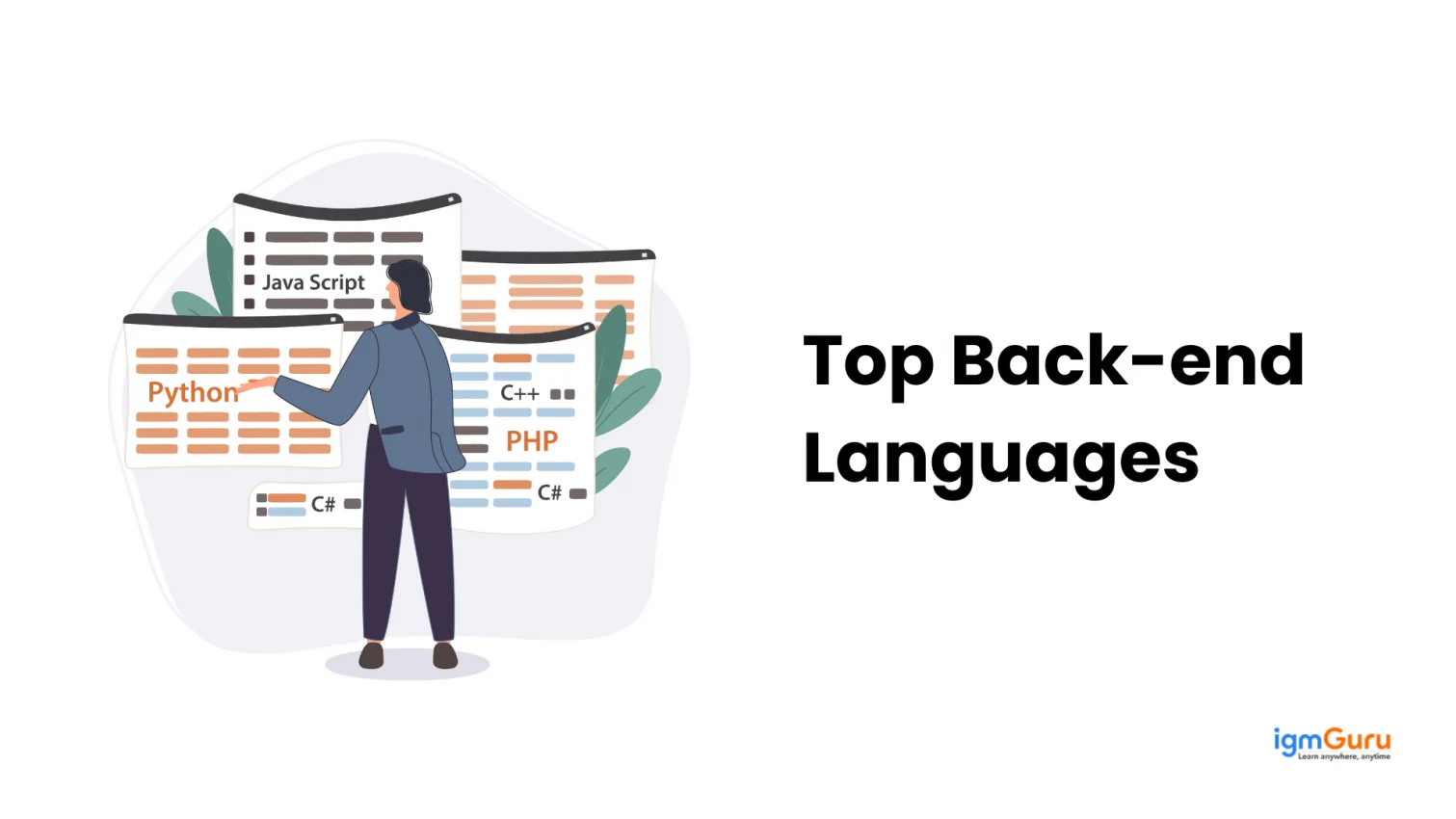
There is a long list of the top backend languages swirling around the globe. Not all of these languages are known to the common man and some are not even known to most developers. Only the best ones are found in common use. They have become so widely popular because of the assets that they bring to the table.
Python is a widely known name on a global level, with over 51% of developers using it. This object-oriented programming language supports GUI programming, easy integration and code readability. Most aspirants in this field prefer to begin with this one because of its English-like syntax and smooth learning curve. But that does not mean that it's only for beginners.
Becoming a Python pro is a task of a lifetime. It has also found a place for itself in many other industries like machine learning, data science, automation and artificial intelligence. Django and Flask are two of its most shiny frameworks.
Java is a big asset when developing the server side of an enterprise-scale, desktop or mobile web application. This is another object oriented programming one with multithreading. Two or more threads can run simultaneously to make the CPU's efficiency better. There is a long list of reasons as to why developers are such big fans of this one.
It is a good option for cross-platform development because of its 'Write Once, Run Anywhere' capability. Java has many C++ features for both simplified and advanced capabilities. Apache, Spring, JSF, Hibernate and Struts are top Java frameworks. One can build chatbots with it along with Internet of Things and AI system devices.
Golang is Google's efficient and simple programming language with a clean syntax. It focuses mostly on keeping up the performance that makes it a great use for scalable, modern apps. Golang is still on the top 10 list of the programming languages list in the TIOBE index.
It works wonderfully with microservice architecture and modern cloud infrastructure. It supports concurrent programming for handling different tasks at the same time. Its garbage collection is another important feature for autonomous memory management. Its important frameworks are Play, Echo and Gin.
PHP or Hypertext Preprocessor is a server side scripting language for creating an application, CRM or website's backend. This open source language is highly versatile and is chosen by both beginners and experts alike. It follows the latest technological trends. PHP code embeds easily into HTML for web app building. It also ignores minute errors for smooth app functioning.
It is a practical pick with headless architecture and unprecedented hosting support. Small and medium sized businesses are its biggest clients as it works with most web hosting.
C# (pronunciation -C Sharp) is again object oriented and general purpose. This Microsoft language is an increment of C++ that was mostly in use for the Windows .NET framework. Software engineers prefer C# for creating different applications and programs. The list encompasses cloud-based services, enterprise software, desktop and mobile apps, games, and websites.
Its scalability is a big advantage towards its growth. Developers maintain and adjust its static code with ease. It has error proof commands to alert the developers about the errors before testing. The list of libraries and frameworks it comes with is quite impressive and includes Selenium, .NET and ASP.NET.
JavaScript is web development's lingua franca since it is one of the top frontend languages and backend languages too. The logic and code for both sides is very different and a JavaScript developer knows it all. JS is the top name with around 62.3% developers using it. There are many benefits of making it the main language for a project and developers know them all too well.
It has lightweight scripting, rich interfaces, dynamic programming and OOPs. Amazon and Meta are two of its biggest customers. JS is a cost effective pick and one that is highly versatile. Real time applications are the perfect ones to build with JS.
SQL or Structured Query Language, is a language that manages relational databases. These databases track data points and make them available. Data processing is a big reason to learn SQL. It has centralized database control, DB security management, data recovery, and restore capabilities. This standardized programming language carries out many different operations and offers variables, logic directives, looping, etc.
It is better for retrieving client data or updating corporate databases. Developers do not lay down the groundwork for a software's functionality within it. They instead carry out different administrative tasks for operations with SQL.
Choosing the best backend language is not about finding the language with the most features. It is about finding the one that matches your goals, interests, and the type of applications you want to build. Many beginners spend weeks comparing languages when they would benefit more from simply picking one and starting.
From experience, the best backend language is often the one that helps you build projects consistently. A language with a huge ecosystem, strong community support, and plenty of learning resources can make the journey much easier than chasing the latest trend.
Think about the type of developer you want to become.
Your target industry often determines which language will give you the most opportunities.
Some backend languages are easier to learn than others.
Python and JavaScript are usually beginner-friendly because of their simple syntax and large number of tutorials. Languages such as Java or C# may require more time to understand concepts like object-oriented programming, but they provide a strong foundation for professional software development.
A language that keeps you motivated is often better than a language that feels overwhelming.
Before investing months into learning a language, spend some time reviewing job descriptions in your region or target market.
Notice which technologies appear repeatedly. If companies around you frequently hire Java, Python or .NET developers, learning those technologies can improve your chances of finding relevant opportunities faster.
Different projects have different needs.
A startup building a scalable microservices platform may prefer Golang. A company developing financial software might choose Java. A content-driven website may work perfectly with PHP. Real-time applications often benefit from JavaScript and Node.js.
The best backend language for one project may not be the best choice for another.
One mistake many learners make is switching languages every few weeks after reading about a new framework or technology. Backend development principles such as APIs, databases, authentication, caching and server architecture remain largely the same across languages.
Focus on mastering one language first. Once you understand backend fundamentals, learning a second language becomes significantly easier.
If you are completely new to backend development, Python is often the safest starting point because of its readability, learning resources and versatility. If your goal is full-stack web development, JavaScript with Node.js is another excellent choice.
The most important step is to pick one language, build real projects, and gain practical experience. Employers value problem-solving ability and project experience far more than knowing a long list of programming languages.
There are many different backend languages that one can learn to begin a career in development. Each programming language brings along its own set of advantages, features and characteristics to the project. Frontend developers with an interest in becoming full-stack developers should begin learning backend languages. The first pick for many is Python and even Golang is a good one.
Highest paid backend languages include Python, Ruby, Rust, and Solidity.
Golang is said to be the fastest one as per the current benchmarks.
C++ is often thought of as the hardest one.
Course Schedule
| Course Name | Batch Type | Details |
| Programming Courses | Every Weekday | View Details |
| Programming Courses | Every Weekend | View Details |