A few months ago, I was asked to manage the complete digital marketing team, and I was so excited about it. But it wasn’t an easy thing. As a leader, I was managing marketing tasks, analyzing audience data, and building strategies, optimizing online content, etc, to help businesses reach customers across websites, social media, and email.
It looked like quite an impossible job until I started to explore the best digital marketing tools. Now I am managing all the tasks and responsibilities easily with the help of these tools.
Are you looking for such tools that can help you in the same way? Well, there are many options out there, and you have to choose the best one to outshine your competitors. In this article, I will explain the pros, cons, features, and pricing of the best digital marketing tools available today. By the end of the article, you will know what tool you should use.
| Tool Name | Best For | Unique Features | Pricing (as of 2026) |
| Semrush | SEO, keyword research, and competitor analysis | Keyword Gap, Position Tracking, Site Audit, and competitor traffic analysis | Paid plans start at approximately $117.33/month with annual billing. Free trial available. |
| Google Analytics 4 | Website traffic and user behavior analysis | Event-based tracking, traffic acquisition reports, audience insights, and conversion measurement | Free standard version; paid Analytics 360 plans available. |
| HubSpot Marketing Hub | Marketing automation, lead generation, and CRM | Integrated CRM, email automation, lead scoring, and campaign analytics | Free tools available; paid plans vary by tier and marketing contact volume. |
| Ahrefs | Backlink analysis, keyword research, and SEO audits | Site Explorer, Keywords Explorer, Content Explorer, and backlink monitoring | Free Webmaster Tools available; paid plans start at approximately $29/month for Starter and $129/month for Lite. |
| Google Search Console | Organic search performance and website indexing | Search performance reports, URL Inspection, indexing reports, and Core Web Vitals | Completely free. |
| Canva | Graphic design and marketing creatives | Drag-and-drop editor, brand kits, templates, and AI-powered design tools | Free plan available; paid plans require a subscription. |
| Mailchimp | Email marketing and audience management | Email automation, audience segmentation, campaign analytics, and email templates | Free or entry-level options depend on current eligibility; paid plans vary by contacts and features. |
| Hootsuite | Social media management and scheduling | Unified social inbox, post scheduling, social listening, and analytics | Paid plans; Standard starts at approximately $99/user/month with annual billing. |
| Buffer | Social media publishing and engagement | Multi-platform scheduling, AI Assistant, content calendar, and engagement analytics | Free plan available for up to 3 channels; paid plans start at $5/channel/month with annual billing. |
| Sprout Social | Social media analytics and customer engagement | Smart Inbox, social listening, engagement reports, and team collaboration | Paid subscription; pricing varies by plan and billing terms. |
| Google Ads | Paid search advertising and lead generation | Keyword Planner, bidding strategies, audience targeting, and conversion tracking | Free to create an account; advertising costs depend on bids, competition, and campaign settings. |
| Meta Ads Manager | Facebook and Instagram advertising | Custom audiences, lookalike audiences, campaign testing, and cross-platform ad management | Free to use; advertisers pay for campaign delivery. |
Read Also: Why Choose a Career in Digital Marketing?
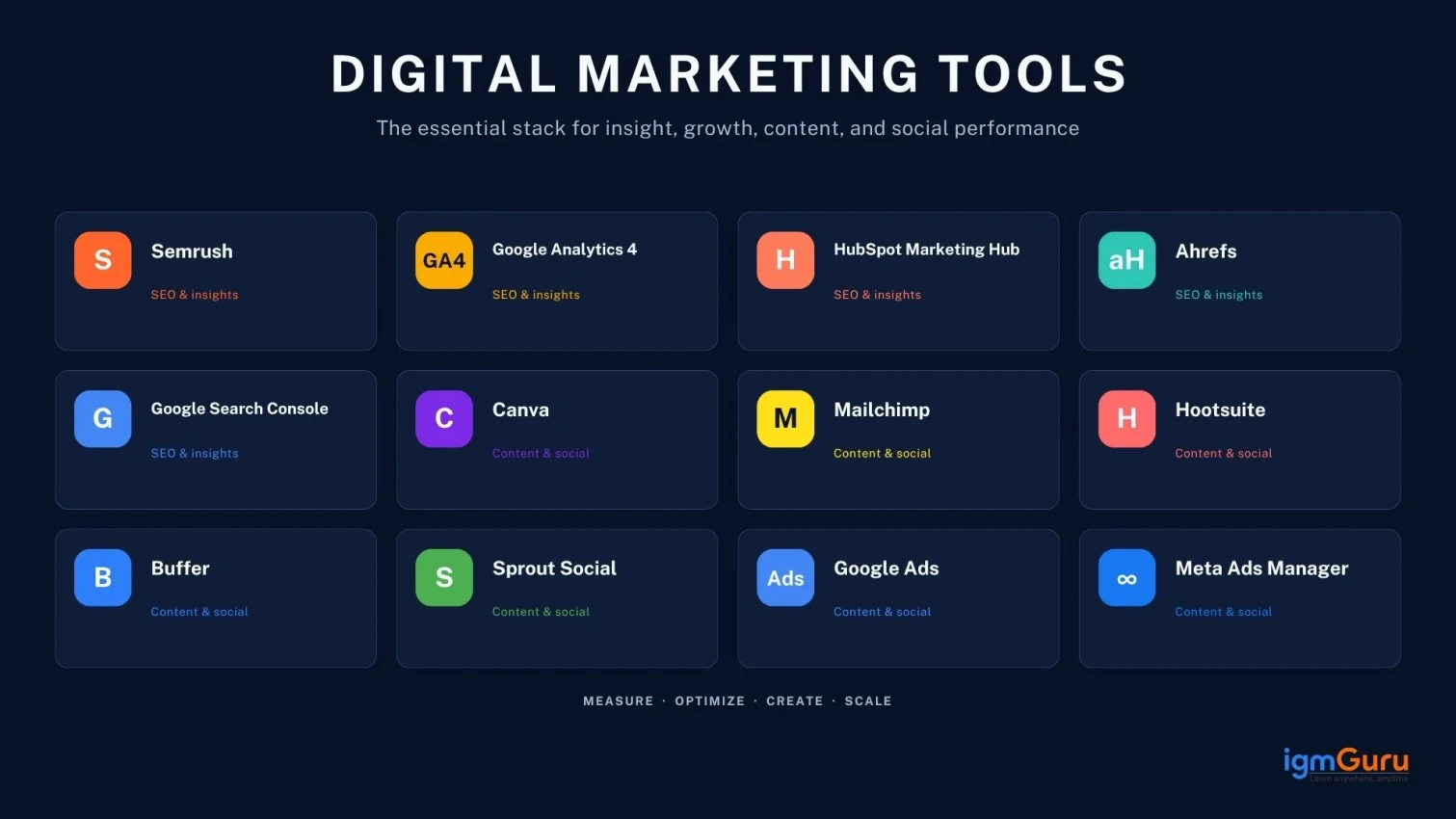
Digital marketing tools are software applications and online platforms used to plan, execute, automate, analyze, and optimize marketing campaigns across digital channels. They can help you improve your website’s visibility, reach targeted audiences, and measure performance in real time. They ultimately help to streamline the processes and strategies for business expansion. Some of the most popular examples of the best digital marketing tools are:
Apart from these four, there are many options out there. We are going to explore the best 12 among them in the upcoming section. Before that, let me tell you how I have evaluated the best digital marketing tools.
Also Read: How to Learn Digital Marketing?
As I have said earlier, I was struggling to meet all my responsibilities and was looking for the best solution. In that journey, I found these tools through different blogs, pages, reports, etc.
One major problem was that each source was giving different recommendations that actually caused confusion. Then I tried a different approach. I tested the common tools from the sources and found that each of them are best for different tasks. That is why each source had different recommendations based on their recommendations.
This helped me to create my own tested list. The section will explain that list with the best area of each tool, so you can choose according to your requirement.
The following are the best digital marketing tools you can consider using in 2027.
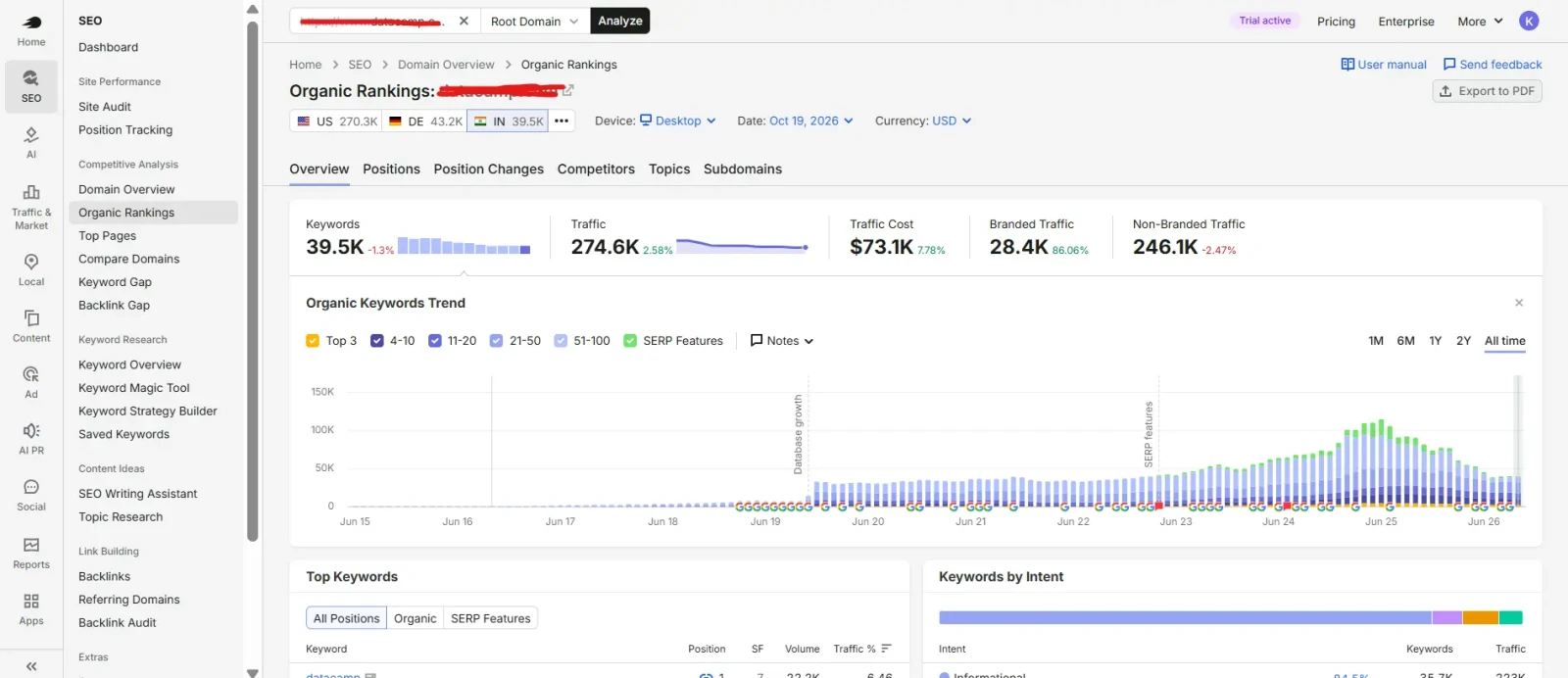
Semrush is one of the best all-in-one digital marketing and online visibility platforms. It is mostly to manage and improve search engine optimization, paid advertising, content marketing and competitive intelligence.
It has helped me transform how I handle multi-channel campaigns. It was basically an ultimate command center for my growth strategy. It was a great assistance when I was launching a new product line last quarter. It helped me in with its:
Semrush has a slight learning curve for newcomers, and the subscription cost is steep. However, the comprehensive actionable data, from tracking daily rank fluctuations to generating automated stakeholder reports, makes it a prominent asset that consistently justifies its ROI.
Explore The Best SEO Tools With Our Best SEO Tools Guide
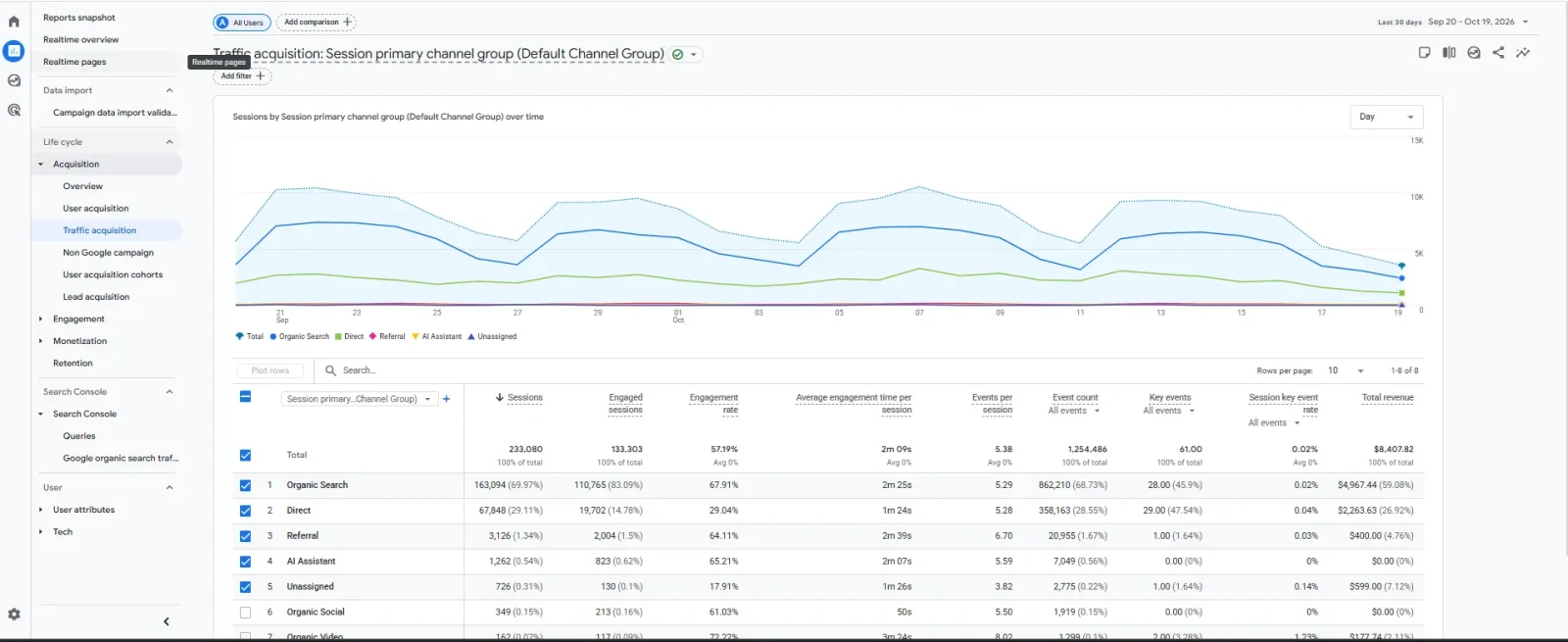
Google Analytics 4 (GA4) is the latest generation of Google's analytics platform that tracks and measures website and mobile app traffic, user engagement, and customer journeys. It was released as the full replacement for the older Universal Analytics (UA), which officially stopped processing data on July 1, 2023. I rely on GA4 for tracking the complete user journey across both our website and mobile app. I have used it for:
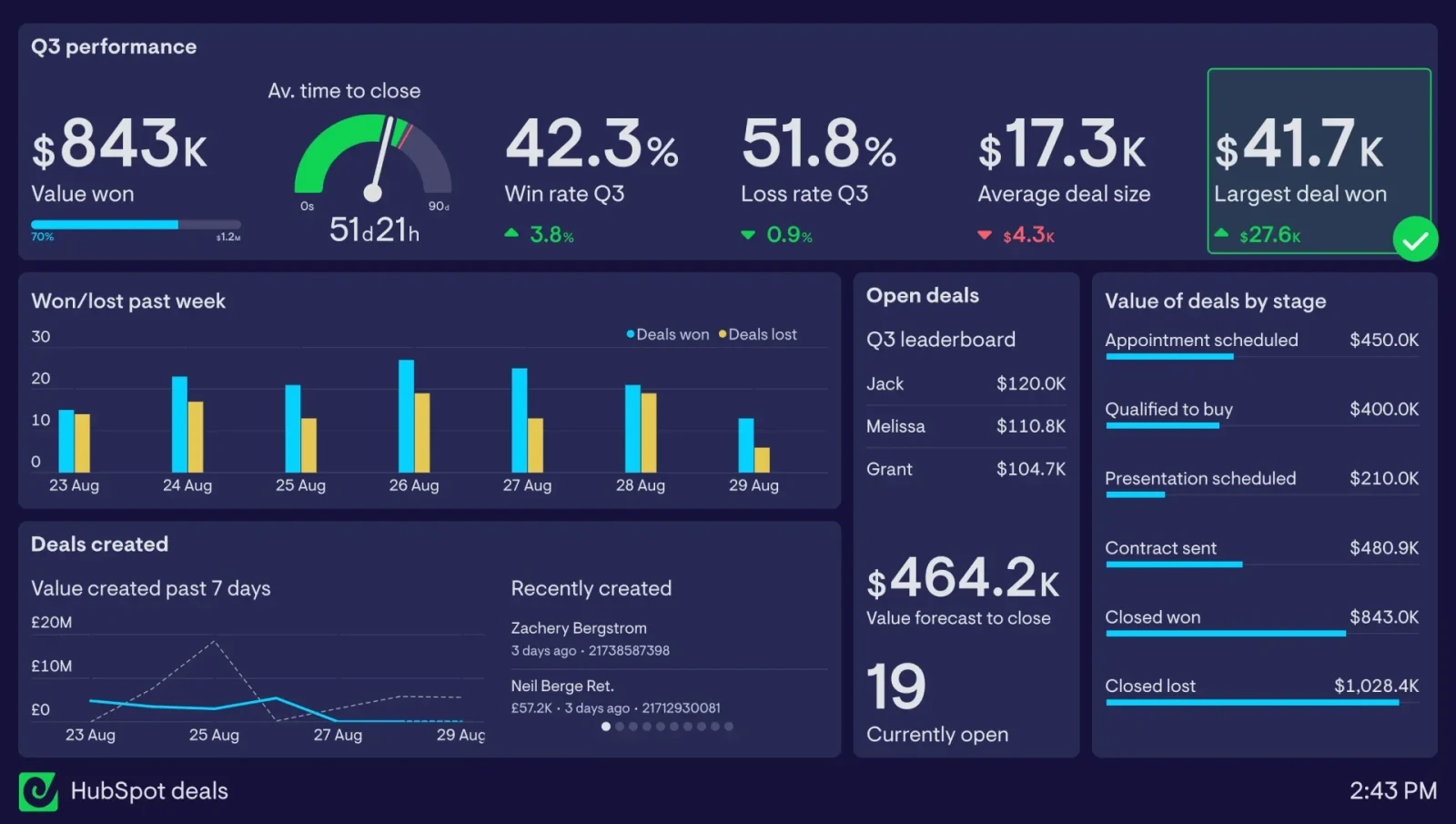
HubSpot Marketing Hub, is a multifunctional marketing automation tool. It is a CRM platform which is suitable for the growth of small to medium scale businesses, measuring marketing teams and organizations focusing on Revops. These are the companies that want their email, landing pages, social media and customer data, all in one place. One of the reasons HubSpot Marketing Hub falls among the best digital marketing tools. Let us know more about this tool:
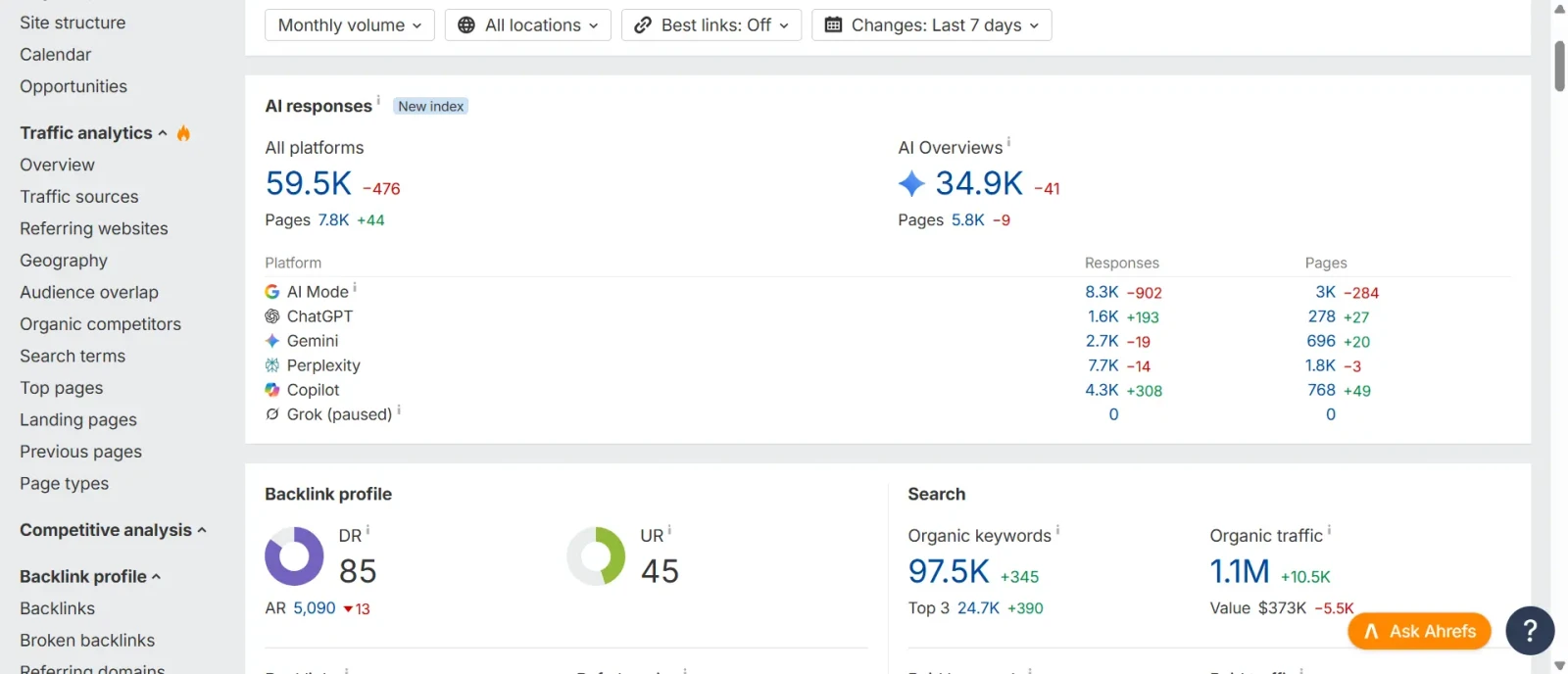
The Ahrefs digital marketing tool is a complete SaaS (Software-as-a-service) SEO and digital marketing platform. It is used for improving website visibility, researching competitors, keeping a track on search rankings and keeping an eye on the competitors. It is among the best digital marketing tools which is used by brands, marketers and organizations. Let us know more about Ahrefs:
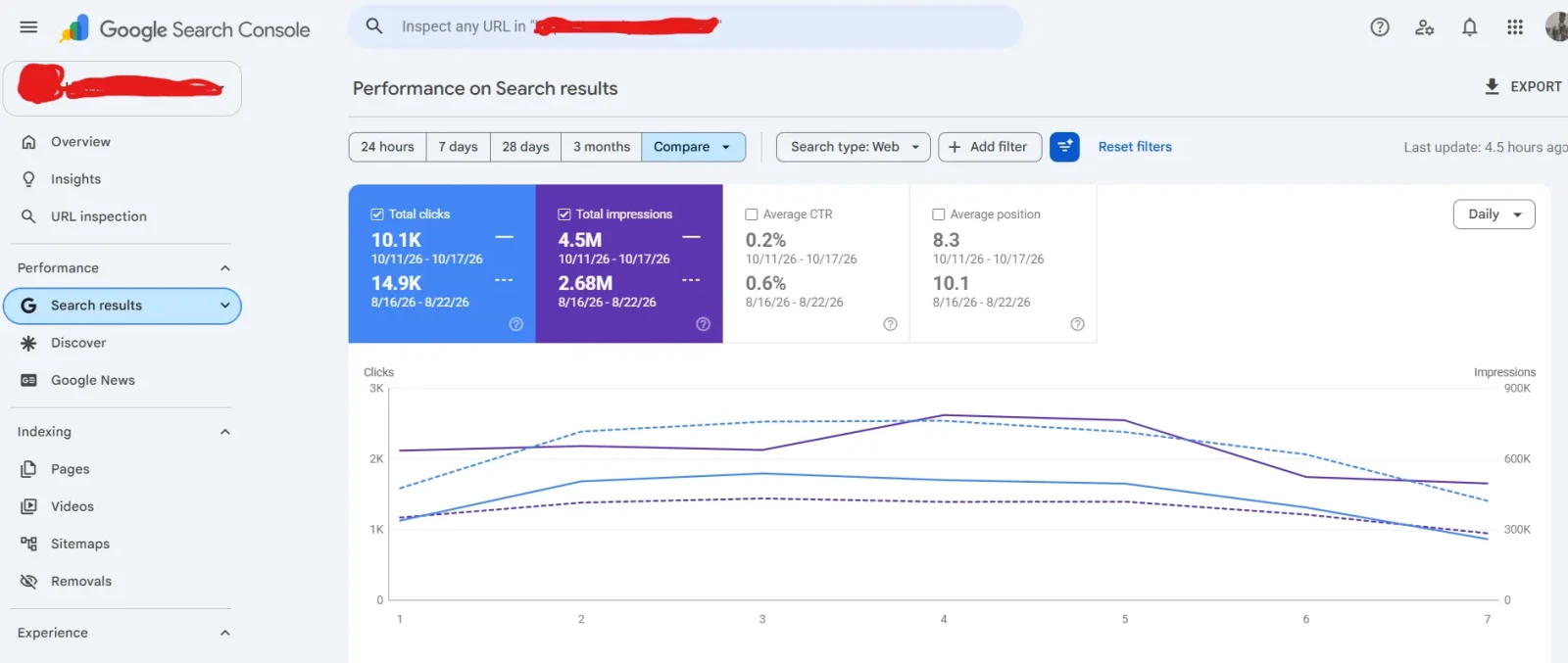
Google Search Console is a complete set of tools which is made for helping teams develop better and faster content. The reason why this tool falls in the best digital marketing tools is because it lets you monitor, manage and track obstacles in your website through Google Search results. Now, let us know more about the Google Search Console.
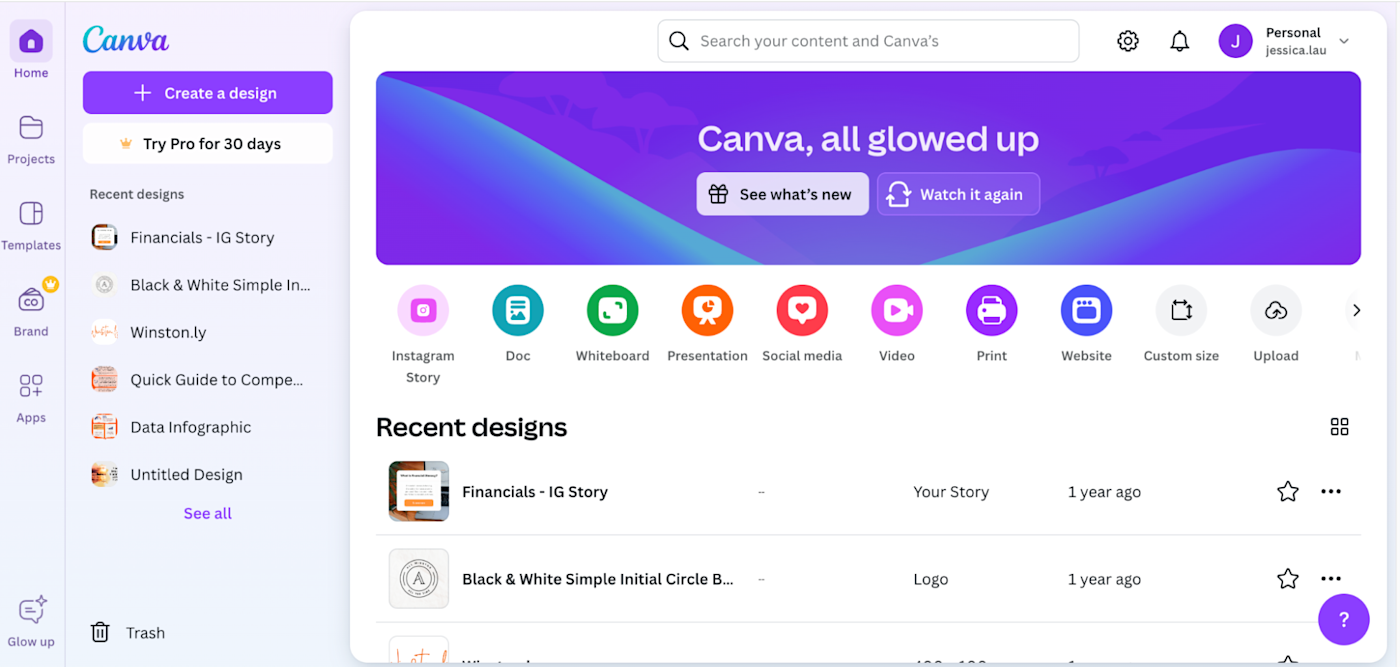
Canva is among the most used and among the best digital marketing tools which was made for graphic design and digital marketing. This platform is user-friendly and lets its users create visual content like presentations, social media graphics, short-form videos, email banners and essential web pages. You can create your own designs without needing formal design experience. Let us know more about Canva:
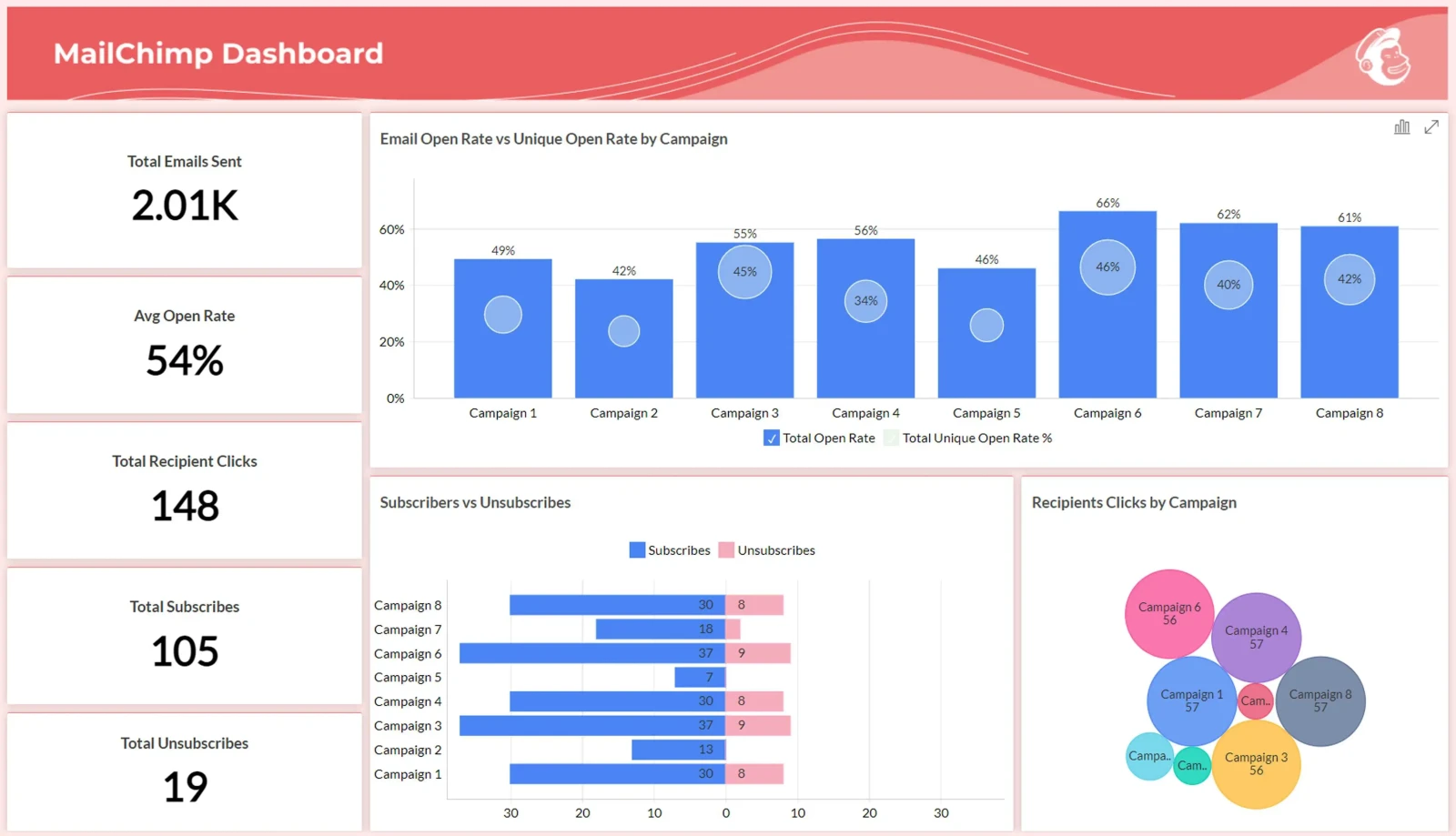
Mailchimp, a popular multifunctional marketing and automation platform. This tool lays among the best digital marketing tools, which started as an email marketing tool and now has grown to involve building websites, landing pages, basic customer bond management (CRM), management of social media and digital ad integrations. Mailchimp is usually famous for having user-friendly designs, drag and drop editors and a vast template library. Thus, its more like a go to choice for small scale businesses, marketers and creators.
Hootsuite, a leading multifunctional social media platform made for helping businesses, creators and digital marketers for handling various social media channels through one dashboard. It stands among the best digital marketing tools. This tool supports planning, scheduling, tracking and examining content all over networks like Facebook, Instagram, LinkedIn, YouTube, and X (Twitter). Hootsuite also collaborates with creation tools such as Canva and AI assistants like Claude & ChatGPT for creating flawless content.
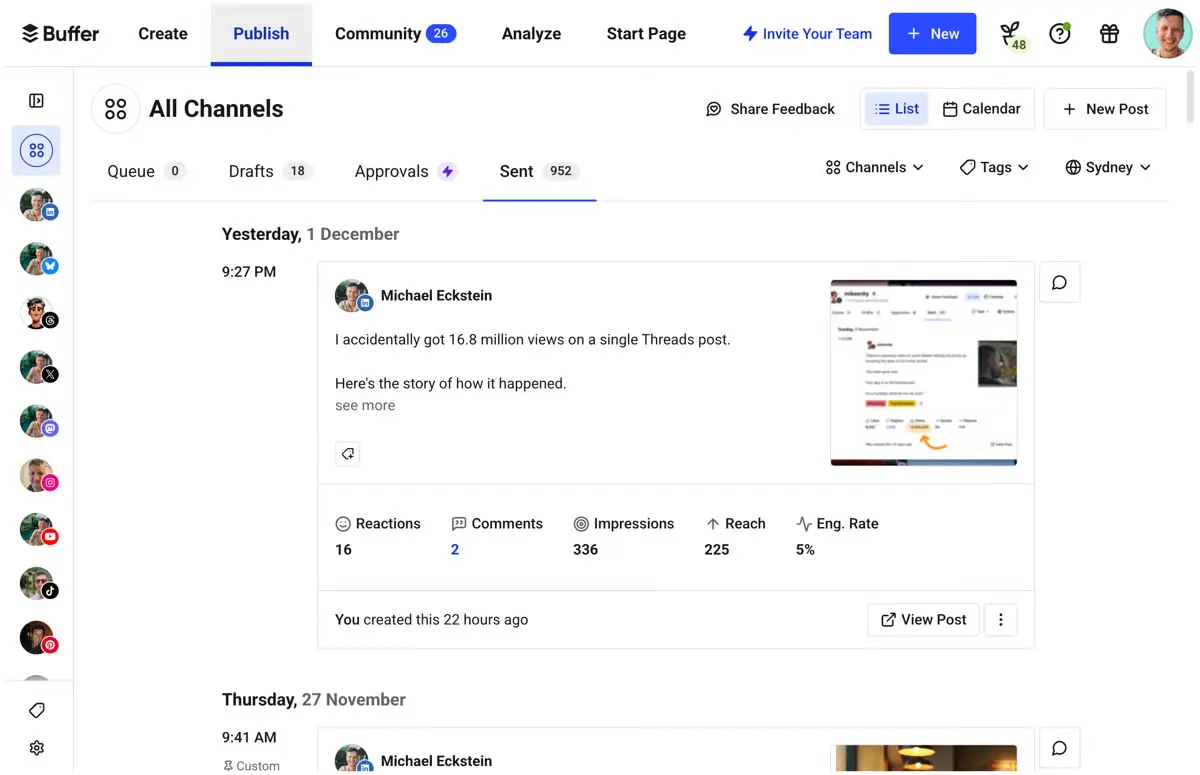
This tool is mainly famous for having a user-friendly social media management and publishing tool. The reason why Buffer comes in one of the best digital marketing tools is because it helps individuals, small scale businesses and creators plan, schedule and examine content all over various social media platforms. Platforms like Instagram, X, Facebook, LinkedIn, TikTok and Youtube, all of them through one dashboard.
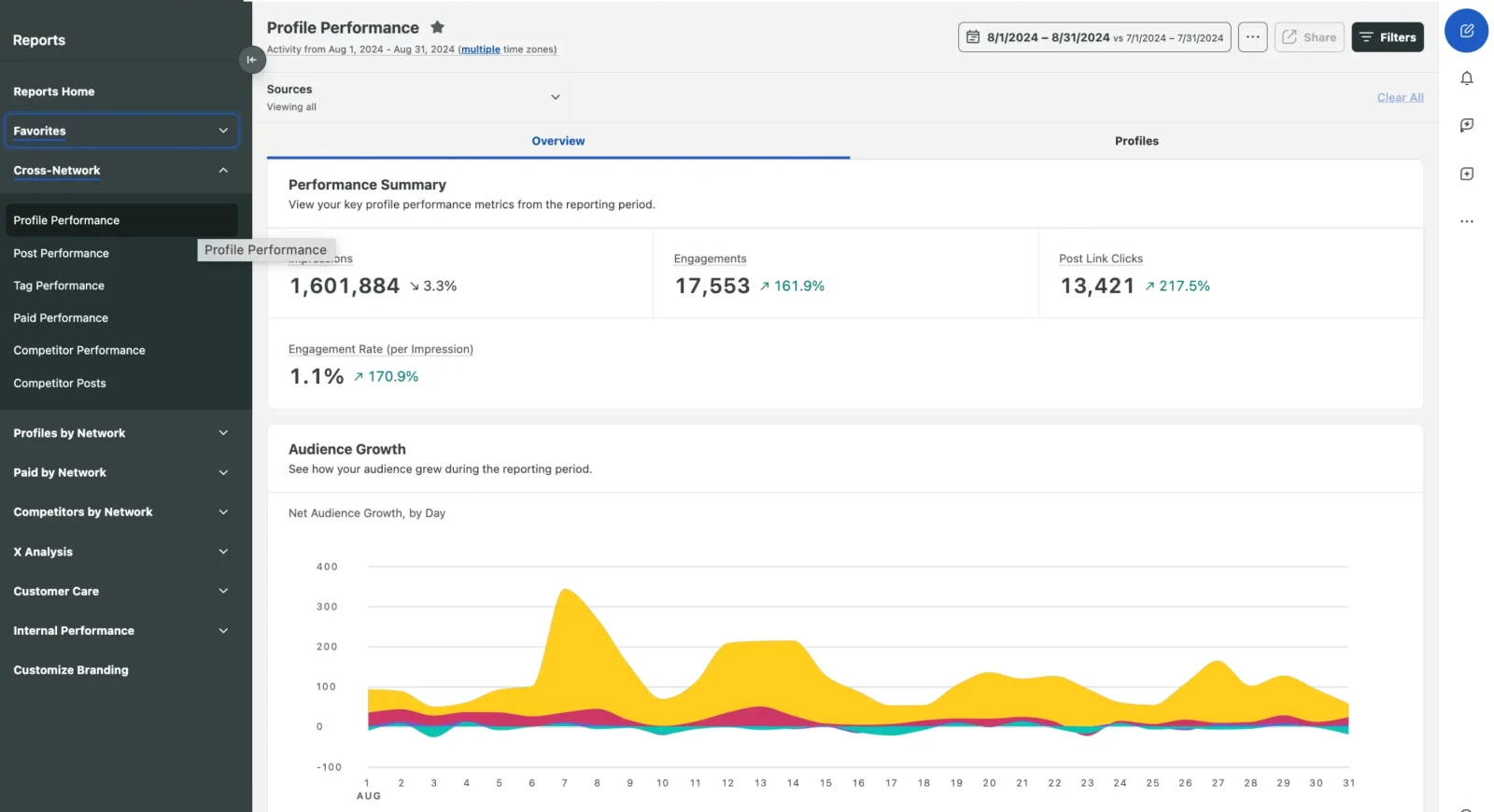
Sprout Social, a multifunctional, team centered social media management platform. Why is this tool among the best digital marketing tools? Sprout Social aids businesses plan, examine and manage conversations all over various social platforms.
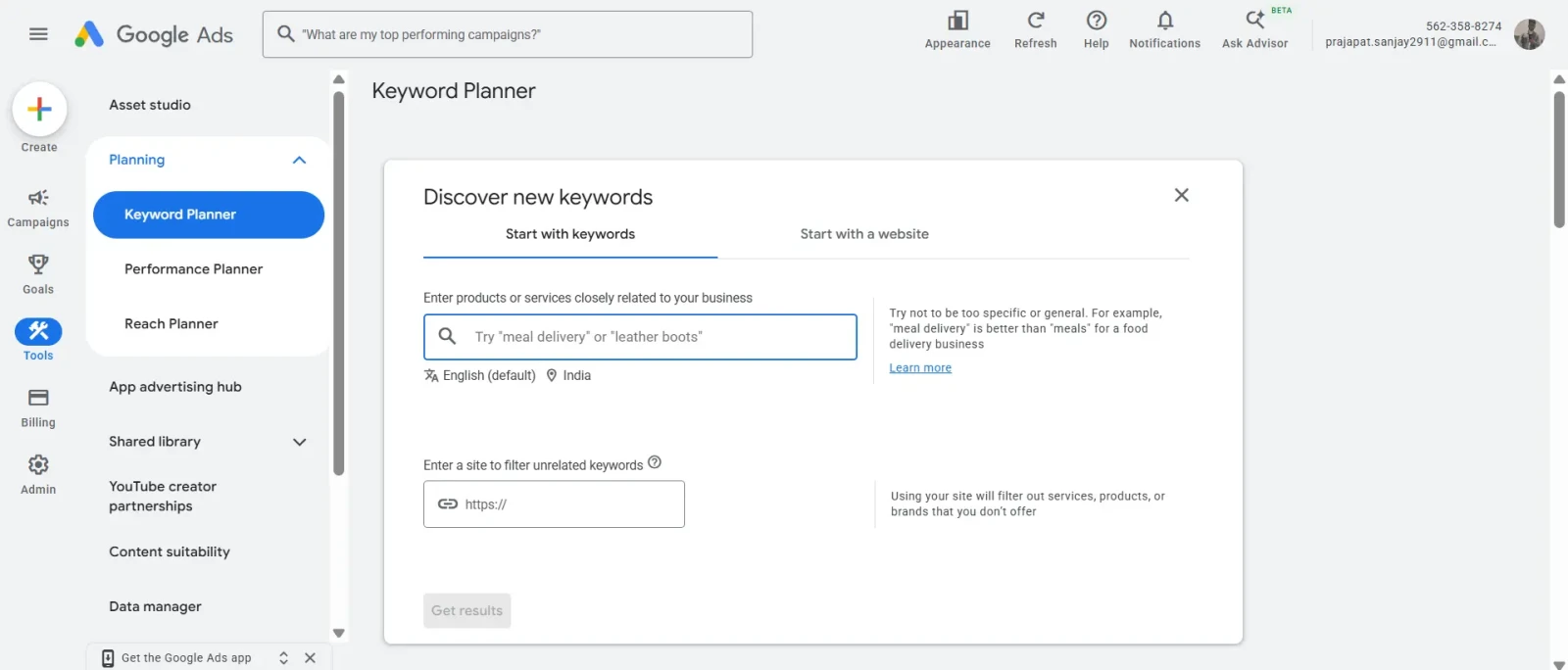
Google ads is among Google’s online platforms letting businesses pay to show concise ads, service offerings, product listings and even videos to web users. This tool lies in the best digital marketing tools because it operates primarily on a ‘Pay Per Click’ (PPC) model, which means that you can only pay when someone actually clicks on your ad.
Google Ads have no fixed amount or any compulsory minimum fee per month. Since users can choose their own budget according to their own will to spend.
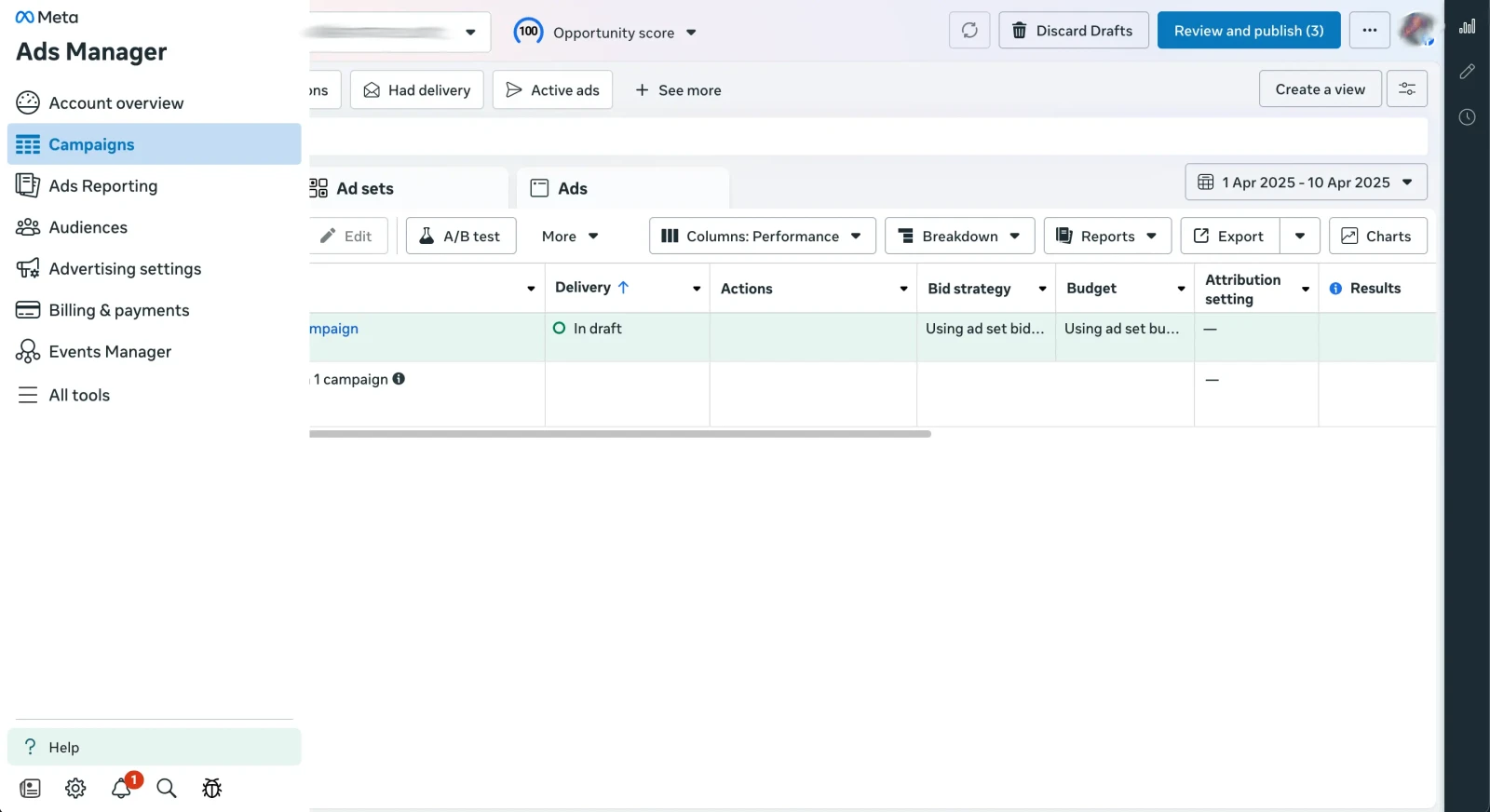
The Meta Ads Manager, a central digital marketing and advertising platform for creating, managing and tracking paid ad campaigns across Facebook, Instagram. Messenger, WhatsApp and the Audience Network. Now, let us know why Meta Ads Manager is among the best digital marketing tools.
This platform is 100% free to use; it doesn’t charge a subscription fee or software cost for running ad campaigns in Ads Manager.
Also Explore: Digital Marketing Trends
| Tools | Best For | Advantages | Major Limitations | Pricing (USD) |
| Semrush | SEO, PPC, content marketing, competitor research | Keyword research, site audits, competitor insights | Expensive plans, learning curve | Free, and Pro $139 monthly |
| Google Analytics 4 (GA4) | Website and app analytics | Funnel analysis, conversion tracking, Google Ads integration | Complex reporting, setup requirements | Free |
| HubSpot Marketing Hub | Marketing automation and CRM | Integrated CRM, email marketing, easy automation | High costs, onboarding fees | Free and Starter $20 monthly |
| Ahrefs | SEO, backlinks, competitor research | Strong backlink data, keyword and content research | Expensive plans, limited lower-tier features | Free tools and the Starter Plan $29 monthly |
| Google Search Console | Organic search performance and technical SEO | Free search data, indexing tools, security alerts | No competitor data, reporting delays | Free |
| Canva | Graphic design and marketing creatives | Easy-to-use templates, AI tools, team collaboration | Repetitive designs, limited advanced controls | Free and the Pro Plan costs for $15–$18 monthly. |
| Mailchimp | Email marketing and automation | Email templates, beginner-friendly editor, free plan | Rising costs, limited advanced automation | Free and the Essential plan is $13 monthly |
| Hootsuite | Social media management | Scheduling, social listening, unified inbox | Expensive, learning curve | $99 monthly |
| Buffer | Social media scheduling | Simple interface, AI assistant, flexible pricing | Limited analytics, extra costs per channel | Free; Essentials $6 per channel monthly |
| Sprout Social | Social media analytics and team management | Detailed reporting, unified inbox, security | Expensive plans and add-ons | $79 monthly per seat |
| Google Ads | Paid search and online advertising | Targeted traffic, flexible budgets, measurable results | Ongoing optimization, rising ad costs | No fixed subscription fee |
| Meta Ads Manager | Facebook and Instagram advertising | Audience targeting, multiple ad formats, budget control | Complex interface, ad fatigue, platform restrictions | Free to use but, ad spend extra |
Also Explore: Benefits of Digital Marketing
So, as we read about these best digital marketing tools in this article, I have even added a quick comparison table among these tools. And according to my experience, the tools which are freely accessible are good for beginners and the small scale businesses. Whereas, the ones which are a bit costly are mainly suitable for big organizations and large-scale industries/businesses.
Our Trending Guides on Digital Marketing:-
Digital marketing tools automate marketing tasks, analyze audience data, and optimize online content to help businesses reach customers across websites, social media, and email.
The 7 kinds of digital marketing are:
The 3-3-3 rule is apparently a strategic planning framework which aids businesses to avoid spreading their resources too thin.