DevOps is basically a blend of two words: 'Development' and 'Operations'. When combined, they form a modern approach where software developers and software operations teams collaborate throughout the entire software lifecycle. Get into the world of DevOps with this complete tutorial and understand DevOps fundamentals. You'll learn the main concepts, tools, and practices to smooth the workflow, improving efficiency and so much more. So let's begin!
What is DevOps?
DevOps is a modern approach that brings together software development and IT operations to deliver applications and services faster, with better quality and more reliability. Instead of working in isolated teams, developers and operations collaborate throughout the entire lifecycle of a project from planning and coding to testing, deployment and maintenance. This culture of shared responsibility, automation and continuous improvement helps organizations respond quickly to changing customer needs. It is not just a set of tools but also a mindset that encourages communication, efficiency, and innovation, making it a key practice for building scalable and high-performing digital solutions.
DevOps breaks down the native barriers, combining these disciplines into a continuous procedure via automation, continuous integration/continuous delivery (CI/CD) and fast feedback loops for improving operational efficiency and fostering innovation.
Features of DevOps
Let's explore some of the most important features of DevOps:
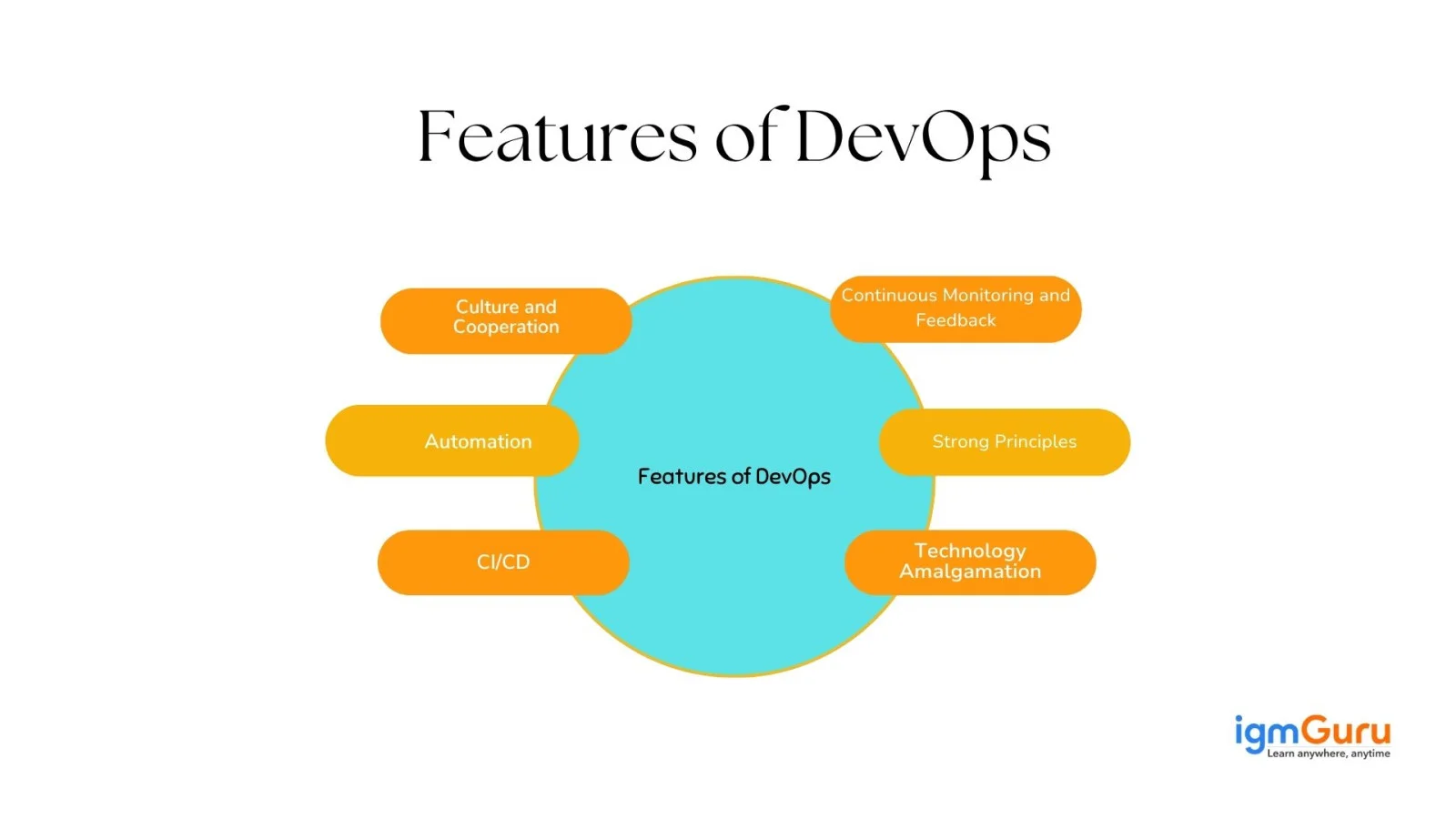
Culture and Cooperation
It promotes a diverse culture where development operations, quality and security teams work together flawlessly to attain common goals, lessening friction and enhancing responsiveness to the customer's requirements and needs.
Automation
DevOps automates manual and repetitive tasks all over the software development lifecycle, whether it's coding or testing, to deployment and monitoring, for increasing speed, consistency and lessening errors.
CI/CD
DevOps mixes code changes frequently (CI) and automatically releases them (CD), allowing for faster and more frequent software releases with built-in quality.
Continuous Monitoring and Feedback
DevOps applies consistent monitoring of applications and systems to detect and resolve issues quickly, giving fast feedback to development teams for ongoing enhancements.
Strong Principles
DevOps extends strong principles beyond code to the whole service delivery process, ensuring constant improvement and faster iteration cycles.
Technology Amalgamation
This platform leverages cloud AI and other emerging technologies and a variety of tools for supporting automated workflows and well-organized operations.
Read Also: DevOps Tutorial For Beginners
Why is DevOps Important?
DevOps became the highest quality level in present-day IT, even though it applies to multiple things for multiple individuals. So, what exactly is DevOps and why has its interest expanded so fast? It is a coordinated effort between improvement and activity groups that allows persistent conveyance of services and administrations to our end clients.
So why is DevOps important? It's important because it quickens software delivery, leading to faster time-to-market and greater competition. It accomplishes this through enhancing collaboration between development and operations, promoting a shared culture of communication and accountability. The automation of tasks like testing and deployment lessens manual effort and errors, resulting in higher-quality and more dependable software.
This blend of speed, quality and efficiency lets companies innovate faster, manage increased extensibility and eventually deliver a furnished customer experience. Let us take on the reasons why DevOps is important, as it has both business and operational benefits, as follows:
Business Advantages
- Quick Time to Market- Smooth procedures, automation and improved collaboration permit for faster development and release cycles, letting businesses deliver the latest features and fixes to customers more swiftly.
- Growing Competitiveness- Through launching products and updates quicker and more frequently, companies can lead the competition and respond faster to market demands.
- Improved Innovation- Quicker delivery pipeline and enhanced communication frees up teams to concentrate on creating new inventive ideas and solutions.
- Extensibility- The DevOps practices and automation makes systems more extensive, permitting businesses to manage large amounts of data and user traffic without any pause.
- Value for Money- automating tasks and lessening errors leads to less time and resources spent on manual labor and troubleshooting, consuming both time and money.
Operational Benefits
- Enhanced Alliance and Communication- DevOps classifies native silos between development and operations. Making a unified, collaborative ecosystem where teams share information and work towards similar goals.
- Expanded Productivity- The automation of repetitive, manual tasks lessens human error and raises overall productivity all over the software development ecosystem.
- High Quality and Dependability- CI and automated testing assist in locating and resolving defects earlier, following a more stable, reliable and higher quality software.
- Constant Feedback and Improvement- This platform highlights a recurring procedure of continuous feedback, allowing for ongoing enhancement, fast problem resolution and proactive security measures.
As DevOps is considered a mindset first, many tools of DevOps are used for automating multiple stages in the DevOps procedure. So let us take a look at the tools of DevOps given below across different stages:
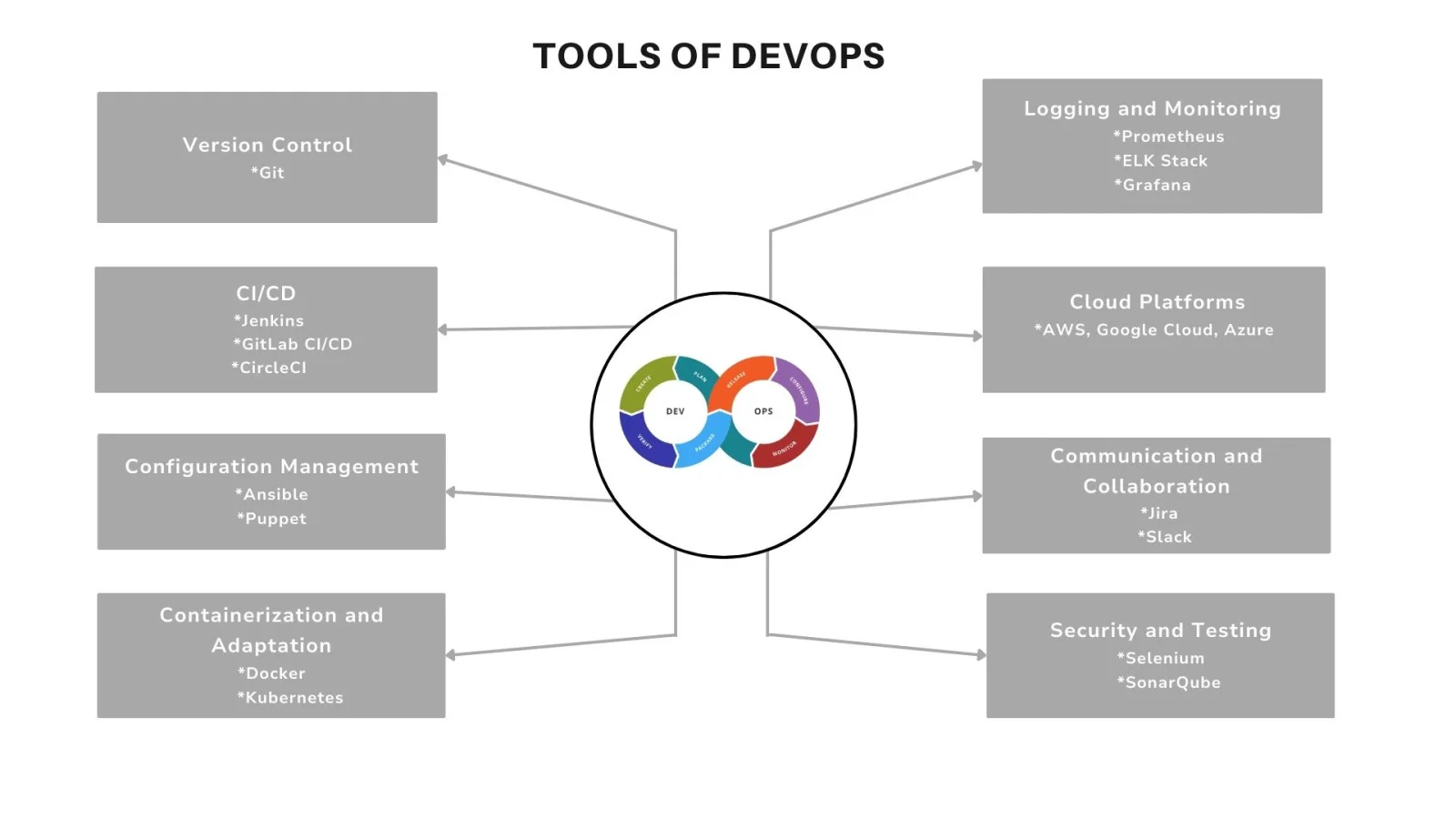
1. Version Control
- Git: It is a version control system. In DevOps, it's for tracking code and is useful for team members to collaborate on projects and update the existing ones. For instance, GitHub, GitLab, Bitbucket and more.
2. CI/CD
- Jenkins: It is an open source automation server for developing, testing and deploying code. This tool is used for building CI/CD pipelines where the developers can build, test and deploy software.
- GitLab CI/CD: It is blended with the CI/CD pipelines in GitLab for automated workflows.
- CircleCI: It is a net-based CI/CD tool for fast, extensible build and deployment procedures.
3. Configuration Management
- Ansible: This automates server configuration and application deployment through simple YAML scripts.
- Puppet/Chef: These tools are for handling infrastructure as code, making sure of continuous ecosystems.
4. Containerization and Adaptation
- Docker: In DevOps, Docker is used for containerizing applications; it turns an application into a single software package.
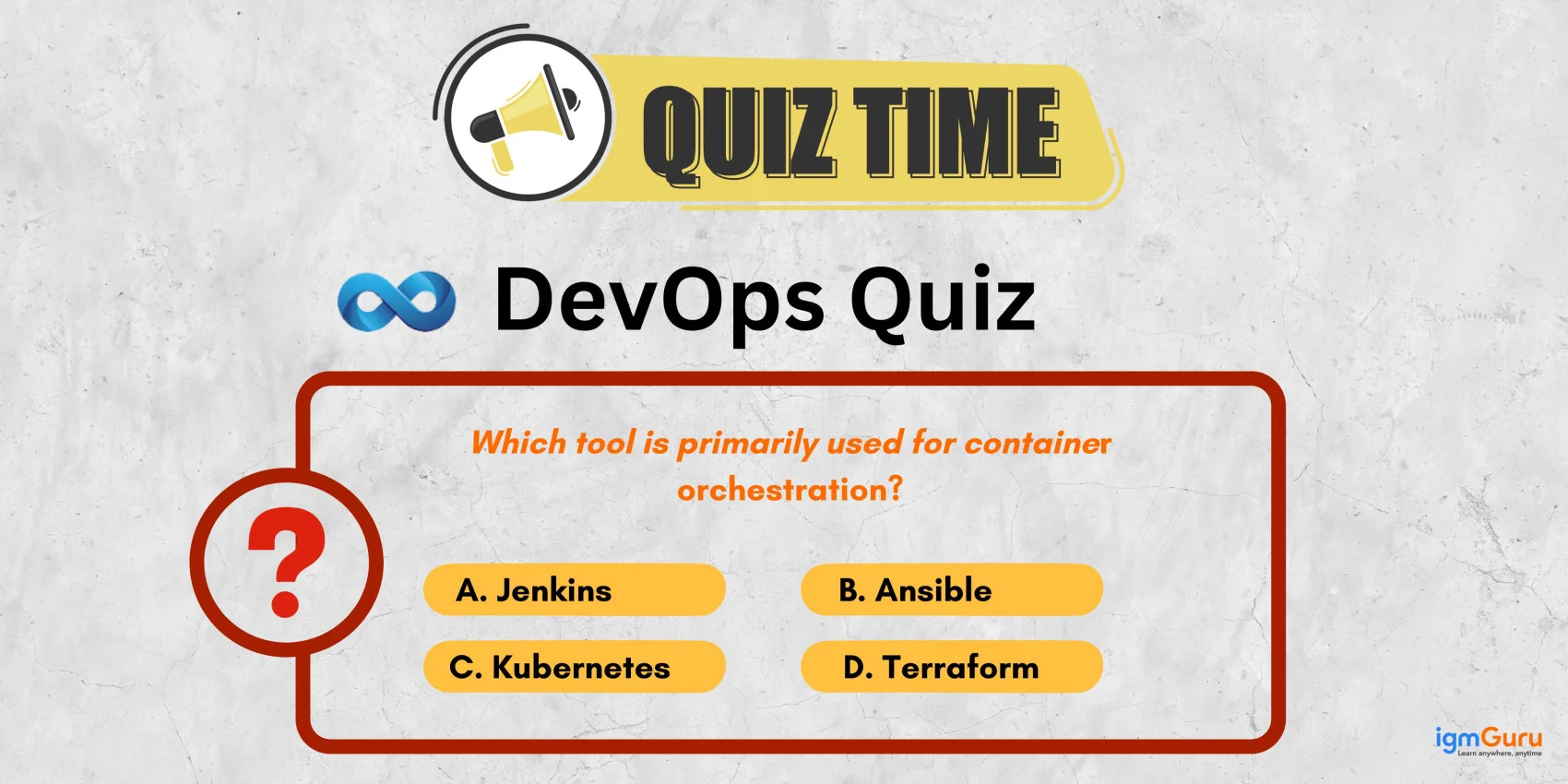
- Kubernetes: It is a container organizer that is frequently put to use in DevOps. This orchestrates and handles containerized applications at scale.
5. Logging and Monitoring
- Prometheus: It monitors systems and applications with strong querying and alerting.
- ELK Stack (Elastic, Logstash, Kibana): It collects and visualizes logs for system insights.
- Grafana: This gives dashboards for real-time monitoring and analytics.
- AWS, Google Cloud, Azure: This gives infrastructure for hosting, scaling and deploying applications.
7. Communication and Collaboration
- Jira: It tracks tasks and project progress for agile workflows.
- Slack: Whereas, this tracks tasks and project progress for active workflow.
8. Security and Testing
- Selenium: It automates testing for web applications.
- SonarQube: This tool analyzes code for quality and security vulnerabilities.
The tools given above improve automation, collaboration and organization, lessening errors and quickening delivery.
Understanding DevOps Fundamentals
So far, we've learnt that DevOps is a cultural and technical movement that removes the gap between software development (Dev) and IT operations (Ops). This highlights collaboration, shared responsibility, and automation for delivering software skillfully and devotedly. Unlike native conservative approaches, DevOps promotes a unified workflow, allowing teams to iterate rapidly while managing stability. DevOps core is all about breaking down obstacles, aligning goals and making a culture of continuous learning and refinements. Now, let us understand the fundamentals of DevOps in depth.
Core Principles and Values of DevOps
DevOps is a grounded platform in many major principles, usually summarized by the acronym CALMS, read on to know about them in detail:
- Culture: It fosters a collaborative culture where the developers, operations teams and other stakeholders work together flawlessly. DevOps cheers up the shared ownership of the software lifecycle, whether it's coding or deployment.
- Automation: Automating repeated tasks like testing, building and deployment, lessens human error and pushes up the delivery. It is practically the heartbeat of DevOps, allowing fast, reliable releases.
- Lean: It is inspired by lean methods. DevOps concentrates on removing waste, improving procedures and delivering value to customers expertly.
- Measurement: Constant monitoring and data-driven insights make sure that teams can track performance, locate bottlenecks and refine systems proactively.
- Sharing: Knowledge sharing and transparency all over teams steer innovation and problem-solving, making a feedback loop for constant improvement.
These core DevOps principles basically form the base of a DevOps organization, coordinating people, procedures and technologies towards a common goal.
Lifecycle of DevOps
The lifecycle of DevOps is way more integrative than a traditional software delivery procedure. Deploying products and updates takes place constantly and less in a rigid, linear procedure. As they work as a unit, every team member must be comfortable with every lifecycle stage, whether it is the initial idea to assess software quality or understanding the user experience. This lifecycle is a constant loop with multiple stages, every single one of them is supported by the specialized tools and practices. Here, take a look at them:
1. Planning
In this stage, the team figures out the issues they wish to solve and how they might solve them.
- Objective: The team defines project goals, develops roadmaps, and prioritizes tasks.
- Tools: The tools put to use are Jira, Trello or Confluence for agile project management and collaboration.
- Practices: Graceful methods such as Scrum or Kanban ensure iterative planning and adaptability.
2. Coding
- Objective: The team writes clean, manageable code in a collaborative ecosystem.
- Tools: The tools that are put to use here are Git through platforms such as GitHub, GitLab or Bitbucket for version control and collaborating on code.
- Practices: They divide strategies like GitFlow and code reviews to ensure quality and consistency.
3. Building
- Objective: They compile and package code into executable artifacts.
- Tools: The tools put to use are Jenkins, GitLab CI/CD or CircleCI for automated builds.
- Practices: They are automated build pipelines, validating code changes and ensuring reliability.
4. Testing
The next step is they'll develop their product through a testing or production terrain, either a simulated ecosystem or a sampling of real-world users to try the updates prior to they're widely deployed for building the best possible product.
- Objective: It is to verify code functionality and quality through automated testing.
- Tools: Tools put to use are Selenium, JUnit or TestNG for functional and unit testing, whereas SonarQube is for coding quality analysis.
- Practices: Constant testing involving unit, integration and performance tests, making sure of strong software.
5. Releasing
- Objective: Their aim is to prepare and deploy validated code for production or staging ecosystems.
- Tools: The tools needed here are Jenkins, ArgoCD or Spinnaker for release automation.
- Practices: They are Blue-green deployments and canary releases lessen the risks during deployment.
6. Deploying
Then, the teams will deliver the product to their more complete audience.
- Objective: It is, delivering applications to production with minimum downtime.
- Tools: The tools put to use here are Docker for containerization, Kubernetes for balance and cloud platforms such as AWS, Azure or Google Cloud.
- Practices: The Infrastructure as Code (IaC) through Terraform or Ansible makes sure of a consistent ecosystem.
7. Operating
- Objective: They manage and maintain applications in production.
- Tools: The tools put to use here are Ansible, Chef or Puppet for managing configuration.
- Practices: The automated scaling and self-healing systems make sure of uptime and performance.
8. Monitoring
At last, they will continuously monitor performance and feedback to incorporate into later iterations and product updates, while moving them back to the planning stage.
- Objective: Track application performance and user experience in real time.
- Tools: The tools put to use here are Prometheus, Grafana or ELK Stack for logging and monitoring.
- Practices: The continuous monitoring and alerting allow proactive issue resolution.
This recurring procedure ensures whether the software is developed, tested, deployed and monitored iteratively, and it delivers value at each and every step.
DevOps Challenges and Best Practices
As DevOps provides immense value, challenges such as cultural resistance, tool complexity and security concerns can come up. The best practices to overcome these obstacles and challenges are:
- Fostering a DevOps Culture: This can be done through encouraging collaboration and shared responsibility across teams.
- Starting Small, Scale Gradually: Start with a single pipeline or project for testing DevOps practices.
- Prioritizing Security (DevSecOps): This can be done through integrating security tools such as Snyk or OWASP ZAP earlier in the pipeline.
- Investing in Training: Upskilling teams on tools and practices to make sure of adoption.
- Making Use of Metrics: Make use of KPIs like deployment frequency, mean time to recovery (MTTR) and error rates for measuring success.
Read Also: Top DevOps Interview Questions and Answers
Wrapping Up
DevOps is more than just a set of tools or practices; it's a mindset that redefines how software is made, delivered and maintained. Through clinging to its principles of collaboration, automation and continuous improvement, companies can accomplish unparalleled agility and reliability. Whether you're a developer, operations engineer or a business leader, understanding DevOps fundamentals empowers you to guide innovation in this constantly changing world. Start small, experiment with tools like Jenkins or Docker, and join the DevOps mutiny for shaping the future of software delivery.
FAQs: DevOps Fundamentals
Q1. What are the basic CI/CD principles in DevOps Fundamentals?
The basic principles of CI/CD are to commit code changes frequently.
Q2. What are the main 3 P's of DevOps?
The major 3 P's of DevOps are bringing Product, Process and People together.
Q3. Can I learn DevOps without coding?
Absolutely, yes! You can learn and work in DevOps with limited or no coding experience, especially non-coding roles such as DevOps Project Management, DevOps Consulting or DevOps Evangelism.
Q4. Why learn DevOps Fundamentals?
Learning DevOps Fundamentals helps improve collaboration, automation, and software deployment speed.
DevOps Fundamentals cover tools like Git, Jenkins, Docker, Kubernetes, and Ansible.
Course Schedule