In case you’re a developer that creates APIs with Flask or FastAPI, you may not know about Sanic. From building high concurrency APIs and applying best practices for optimizing async work flows, I have firsthand knowledge of how much latency is reduced and throughput improved with Sanic. It has an async-first design; it has a lightweight core; and it's ready for production use. This makes Sanic the best fit for real-time systems, microservices and other high performance Python apps where speed, scalability and control are important.
In this article, you will learn everything about the Sanic Python framework, from what it is to how it works, and whether it fits your next project.
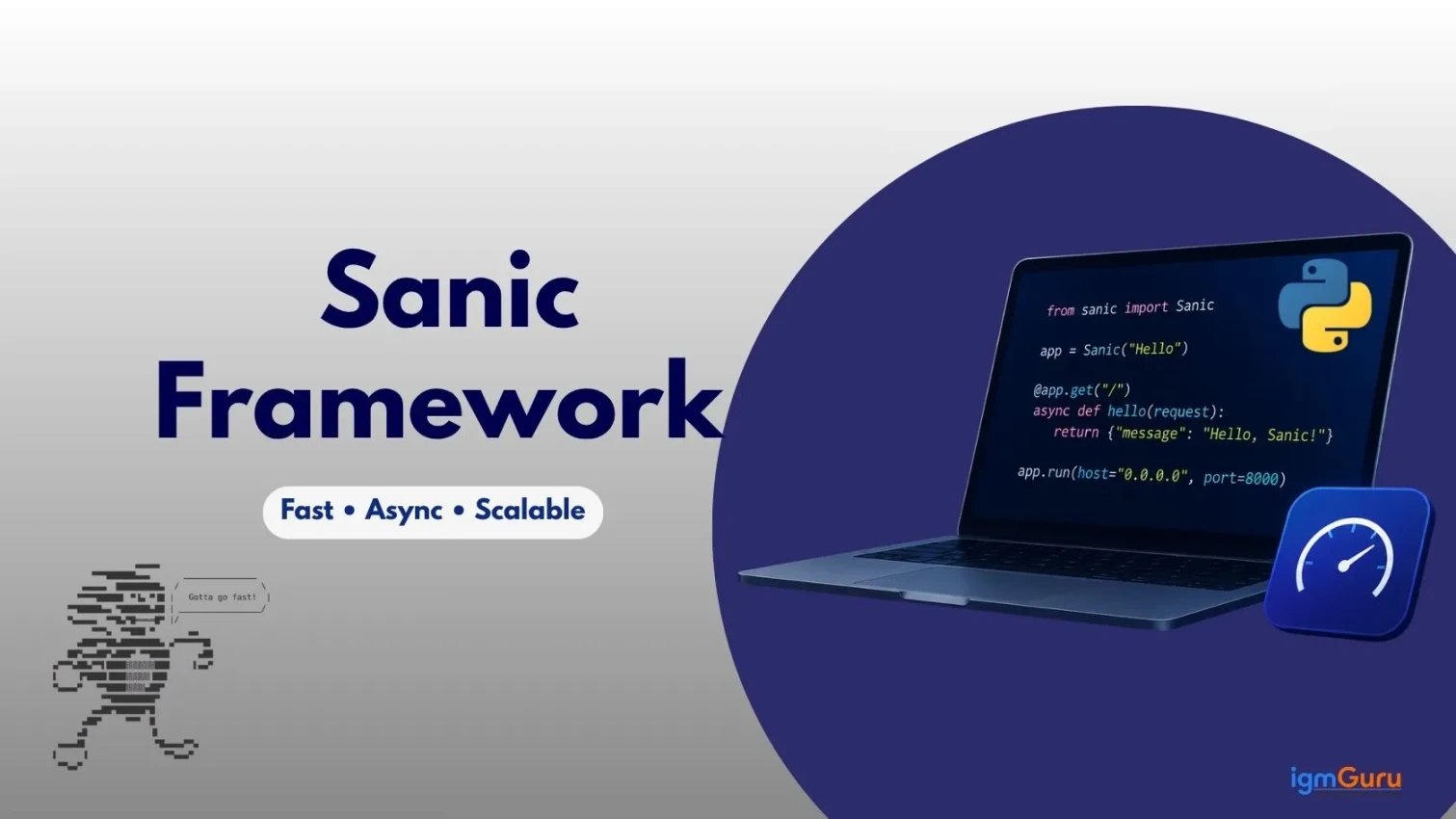
Sanic is an open-source, asynchronous Python web framework and web server. It is designed to handle HTTP requests fast. Unlike traditional Python frameworks that process one request at a time, Sanic uses Python's asyncio library to handle multiple requests concurrently.
The name says it all. Sanic is built to be sonic fast. It supports async/await syntax out of the box, which means you can write non-blocking code without extra effort. Sanic also acts as both a framework and a web server, so you do not always need a separate WSGI server like Gunicorn to run it.
It is a great choice for building REST APIs, microservices, and real-time applications where speed and concurrency matter.
Every great tool has a story behind it. Understanding where Sanic came from helps you appreciate why it was built the way it was.
Sanic was created in 2016 by Channel Cat and Eli Uriegas. The goal was simple: build a Python web framework that could compete with the speed of Node.js. At that time, frameworks like Flask were synchronous, and developers had limited options for async web development in Python.
The project was inspired by the aiohttp library. It followed a Flask-like API design so developers could switch easily without a steep learning curve.
Over the years, Sanic gained a strong community. The Sanic Community Organization took over maintenance and continues to release regular updates. As of recent versions, Sanic supports HTTP/1.1, HTTP/2, and WebSockets natively, making it a full-featured async web framework for Python developers.
Read Also: Python Tutorial for Beginners
Knowing what a framework offers before you use it saves you a lot of time. Here is a look at what makes Sanic worth your attention.
Sanic comes packed with features that make it stand out from other Python web frameworks.
1. Async/Await Support: Sanic is built on top of Python's asyncio. You write handlers using async def, and Sanic handles concurrency for you without extra configuration.
2. Built-in Web Server: You do not need Gunicorn or uWSGI to run Sanic. It ships with its own high-performance web server.
3. HTTP/2 and WebSocket Support: Sanic handles modern protocols out of the box. You can build real-time features without adding third-party libraries.
4. Blueprints: Just like Flask, Sanic supports blueprints to organize your routes and handlers into separate modules.
5. Middleware Support: You can add request and response middleware to handle things like authentication, logging, and CORS.
6. Streaming: Sanic supports request and response streaming. This is useful for file uploads and large data transfers.
7. Extensibility: Sanic has an active extension ecosystem. You can add plugins for things like database access, authentication, and templating.
8. Signal Framework: Sanic's signal system lets different parts of your application communicate through events, which helps keep code clean and decoupled.
Getting Sanic up and running is straightforward. This section walks you through everything you need, from system requirements to your first running app.
Before you install Sanic, make sure you have the following ready:
You should also be comfortable with basic Python and ideally have some understanding of async/await syntax.
Read Also: Python Interview Questions and Answers
|
|
|
Create a file called app.py and add the following code:
|
|
Open your browser and go to http://localhost:8000. You will see the JSON response right away.
Read Also: The Pyramid Web Framework
Speed does not happen by accident. Sanic's performance comes from a specific design that is worth understanding before you start building with it.
Sanic works differently from traditional synchronous Python frameworks. Here is what happens under the hood.
When Sanic starts, it creates an event loop using Python's asyncio. This loop handles all incoming requests. When a request comes in, Sanic passes it to the correct route handler. Because the handlers are async functions, they do not block the event loop while waiting for I/O tasks like database queries or API calls.
This means Sanic can handle hundreds of concurrent connections without creating a new thread for each one. Traditional frameworks like Flask create a blocking call for every request, which limits throughput.
Here is a simple breakdown of the request lifecycle in Sanic:
1. A client sends an HTTP request.
2. Sanic's server receives the request and passes it through any request middleware.
3. The router matches the URL to a handler function.
4. The async handler processes the request (without blocking the event loop).
5. The response passes through any response middleware.
6. Sanic sends the response back to the client.
This model makes Sanic extremely efficient for I/O-bound tasks. If your application spends most of its time waiting on databases, external APIs, or file reads, Sanic can handle many more requests per second compared to synchronous alternatives.
A framework is only as good as what you can build with it. Sanic shines in several practical scenarios that developers face every day.
1. Building REST APIs: Sanic's async nature makes it perfect for APIs that need to handle many concurrent requests. Backend services for mobile apps and SaaS products benefit the most.
2. Microservices Architecture: Teams building microservices use Sanic because it is lightweight and starts up fast. Each service can run independently with its own Sanic instance.
3. Real-Time Applications: With built-in WebSocket support, Sanic works well for chat applications, live dashboards, and notification systems.
4. Proxy and Gateway Services: API gateways that forward requests to multiple services perform well on Sanic because non-blocking I/O reduces wait times dramatically.
5. IoT Data Ingestion: Systems that collect data from thousands of IoT devices need high-throughput endpoints. Sanic handles that kind of load efficiently.
6. File Upload and Streaming Services: Sanic's streaming support makes it a good fit for applications that handle large file uploads or stream content to users.
Read Also: Tornado Framework
Choosing the right Python web framework can be tricky when several good options exist. This comparison breaks down the key differences so you can make a confident decision.
Here is a clear comparison to help you choose the right framework.
| Feature | Sanic | Flask | FastAPI |
| Async Support | Native (async/await) | No (requires extensions) | Native (async/await) |
| Performance | Very High | Moderate | Very High |
| Built-in Web Server | Yes | No | No |
| WebSocket Support | Yes | Limited | Yes |
| Auto API Docs | No | No | Yes (OpenAPI) |
| Data Validation | Manual | Manual | Built-in (Pydantic) |
| Learning Curve | Moderate | Low | Moderate |
| Community Size | Medium | Very Large | Large and Growing |
| Best For | High-performance APIs, microservices | Small apps, prototypes | APIs with validation and docs |
Before you commit to a framework, it helps to know what it does well. Sanic has some genuine strengths that make it a strong pick for the right kind of project.
1. High Performance: Sanic consistently benchmarks among the fastest Python web frameworks. Its async architecture handles thousands of requests per second on modest hardware.
2. Async by Default: You do not need to add plugins or wrappers to use async. Everything in Sanic works with async/await natively.
3. Self-Contained: Sanic comes with its own web server. You can deploy it without Nginx or Gunicorn if needed, which simplifies your setup.
4. WebSocket and HTTP/2 Support: These are built in. You do not need extra packages.
5. Flexible Routing: Sanic supports dynamic routes, URL parameters, and blueprint-based modular routing out of the box.
6. Active Development: The Sanic Community Organization maintains regular releases and responds actively to issues and pull requests.
No framework is perfect. Sanic has real limitations you should know about before you start building your next project on it.
1. No Built-in ORM: Sanic does not ship with database support. You have to choose and configure your own async ORM like Tortoise ORM or SQLAlchemy with async support.
2. Smaller Ecosystem than Flask: Flask has been around longer and has thousands of extensions. Sanic's plugin ecosystem is growing but not as large.
3. No Auto Documentation: Unlike FastAPI, Sanic does not generate OpenAPI docs automatically. You have to set that up yourself with a third-party package.
4. Async Complexity: If your team is not familiar with async programming, there is a learning curve. Mistakes in async code can lead to hard-to-debug issues.
5. Less Beginner Friendly: Sanic targets developers who already understand Python web development. It is not the best starting point for complete beginners.
Sanic is a powerful, async Python web framework that delivers serious performance. It is built for developers who need speed, concurrency, and modern protocol support without the overhead of heavier frameworks.
If you are building high-traffic REST APIs, microservices, or real-time applications, Sanic is absolutely worth considering. It gives you low-level control, async-first design, and a clean Flask-inspired API that makes it easy to get started.
That said, if you need built-in data validation and auto-generated API docs, FastAPI might serve you better. And if you are just prototyping or building something small, Flask still works great.
The best framework is the one that fits your project's needs. Sanic fits best when performance is your top priority.
Explore Our Trending Articles:-
Sanic is better suited for developers who already know Python web development. Beginners are better off starting with Flask before moving to Sanic.
Sanic does not include a built-in ORM. You can use async-compatible libraries like Tortoise ORM, Databases, or SQLAlchemy with async support.
Yes, Sanic is production-ready and is used in production by various companies. It has built-in support for TLS, worker processes, and graceful shutdown.
Sanic requires Python 3.8 or higher. For the best experience, use Python 3.10 or later.