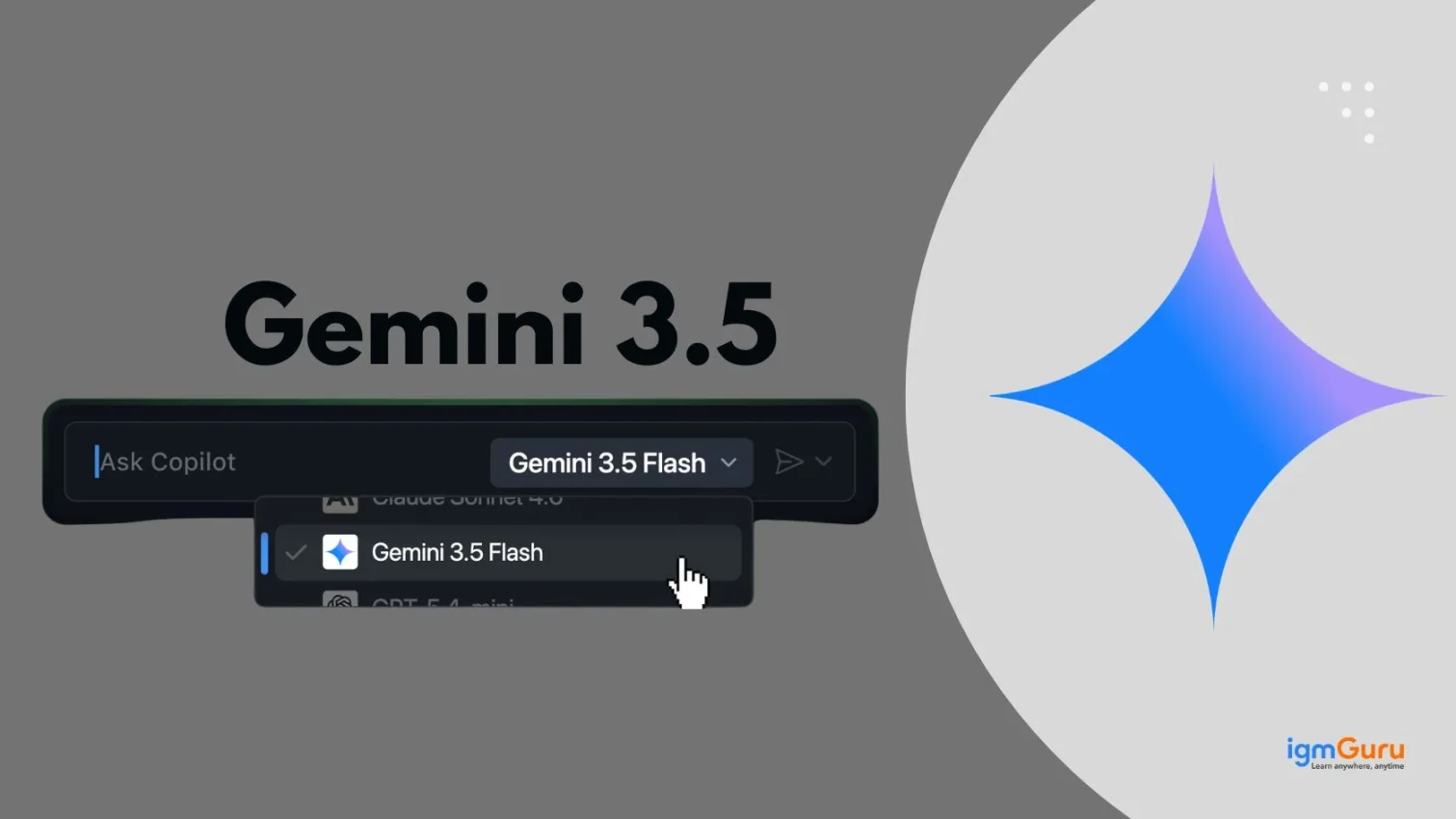
Google just dropped Gemini 3.5 at Google I/O 2026 and honestly, it is a big deal. This is not just another gradual update. Google has positioned it as a model that bridges raw intelligence with real-world action and after going through everything Google has shared, I have a lot to say.
Google is also working on Gemini 3.5 Pro, a larger flagship model expected to bring a 2-million-token context window and a "Deep Think" reasoning mode. Its rollout has slipped more than once — Google reportedly scrapped the original build and rebuilt it from scratch after finding issues in recursive tool-calling and SVG generation. As of late July 2026, Gemini 3.5 Pro is still in limited Vertex AI preview, with no confirmed public release date.
In this article, I will break down what Gemini 3.5 actually is, what works really well in my case, what needs improvement, and whether it lives up to the hype. Let's get into it.
Gemini 3.5 is Google DeepMind's latest family of AI models. Google released it on May 19, 2026, at Google I/O. The series started with Gemini 3.5 Flash; Gemini 3.5 Pro was expected to follow within weeks but remains in limited preview as of late July 2026, after Google rebuilt the model from the ground up. The core idea behind the new Gemini release is combining frontier intelligence with action. In simple terms, it is not just a model that answers questions. It is a model that can plan, execute, and complete complex multi-step tasks on your behalf.
Gemini 3.5 Flash is available right now to billions of users globally through:
Read Also: Gemini vs. ChatGPT
If you use Gemini 2.0 or Gemini 3.0, you will notice the difference quickly. Earlier Gemini models were strong at answering questions and handling text tasks. They were good at reasoning and could process images and documents. But they were still largely reactive. You asked, it answered.
The biggest shift is the move from reactive AI to agentic AI. The new Gemini release does not just respond to prompts. It can plan a sequence of steps, execute them, check its own work, and adjust when something goes wrong. This is a fundamentally different way of using AI.
Here is what changed specifically:
In short, the older Gemini models were powerful AI assistants. Gemini’s latest version is designed to be an AI executor.
The first model in the Gemini family is Gemini 3.5 Flash. Google describes it as their strongest agentic and coding model yet.
Here is what stands out about the AI system on paper:
That last point is worth repeating. Four times faster than other frontier models. That is a massive performance gap.
Google also places Gemini 3.5 in the top-right quadrant of the Artificial Intelligence Index. This means it sits at the intersection of frontier-level intelligence and exceptional speed. You do not have to trade quality for latency with this model.
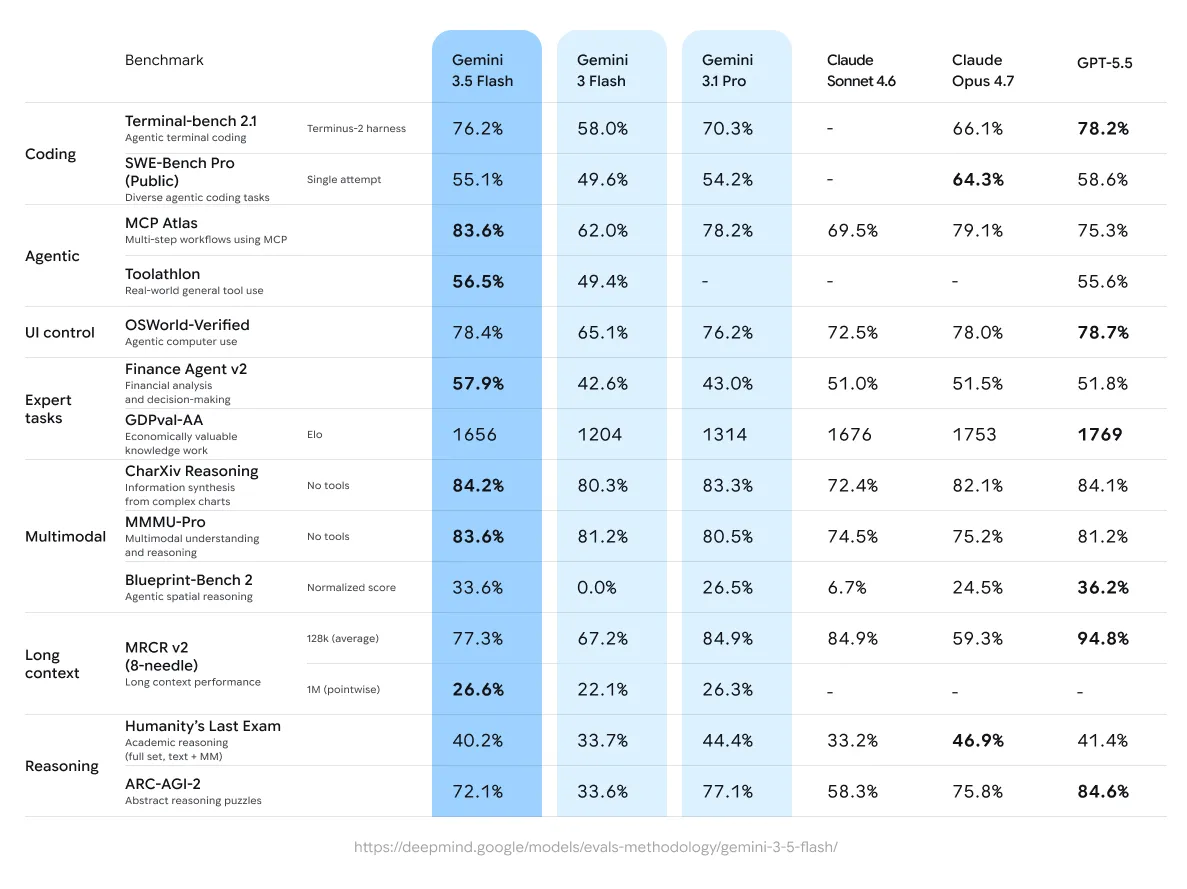
SOURCE: Gemini 3.5: frontier intelligence with action
Google packed a lot into this release. Here are the standout new features in Google’s latest AI that are worth knowing about.
Gemini works with Google's Antigravity platform to deploy multiple subagents that tackle parts of a task in parallel. Think of it as one intelligent manager coordinating a team of specialists. This is what makes long, complex workflows possible without manual oversight at every step.
Gemini Spark is a new personal AI agent built on Gemini. It runs continuously in the background, manages your digital tasks and takes action on your behalf while you stay in control. This is not a feature inside an app. It is a standalone AI agent for everyday life.
Gemini now powers AI Mode in Google Search. This goes beyond traditional search results. The model can build interactive visuals, explain concepts dynamically and provide information agents that work for you around the clock.
You can now describe what you want to build in plain text and Gemini will generate interactive web UIs, animations and branded visuals. It can explore multiple design directions at once and give you options to choose from.
Google has added new interpretability tools that check and understand the model's inner reasoning before it produces a response. This is a meaningful improvement in making AI behavior more predictable and safer. Earlier models did not have this layer of internal reasoning checks.
Gemini handles complex document types much better than its predecessors. It can reason over 100+ page documents, extract relevant information and return reliable answers with low latency. This is already live in enterprise contexts like Macquarie Bank's customer onboarding workflow.
Read Also: ChatGPT Tutorial
The latest version of Gemini is becoming popular because it can handle practical, everyday tasks that feel useful outside normal AI chatting. From understanding visuals to handling large files and giving real-time assistance, it offers experiences that feel more interactive and natural.
I personally used it for analyzing long PDFs, understanding YouTube videos, testing coding workflows, and getting real-time help while sharing my screen, which made the experience feel much more practical than a standard chatbot.
Gemini’s latest version can autonomously connect to live APIs, execute code in real time, browse the web, manage files, and chain multiple tools together to complete complex tasks end-to-end — not just planning or suggesting, but actually executing with live feedback and error correction at every step, making it a true AI executor rather than just an AI assistant.
Prompt:
|
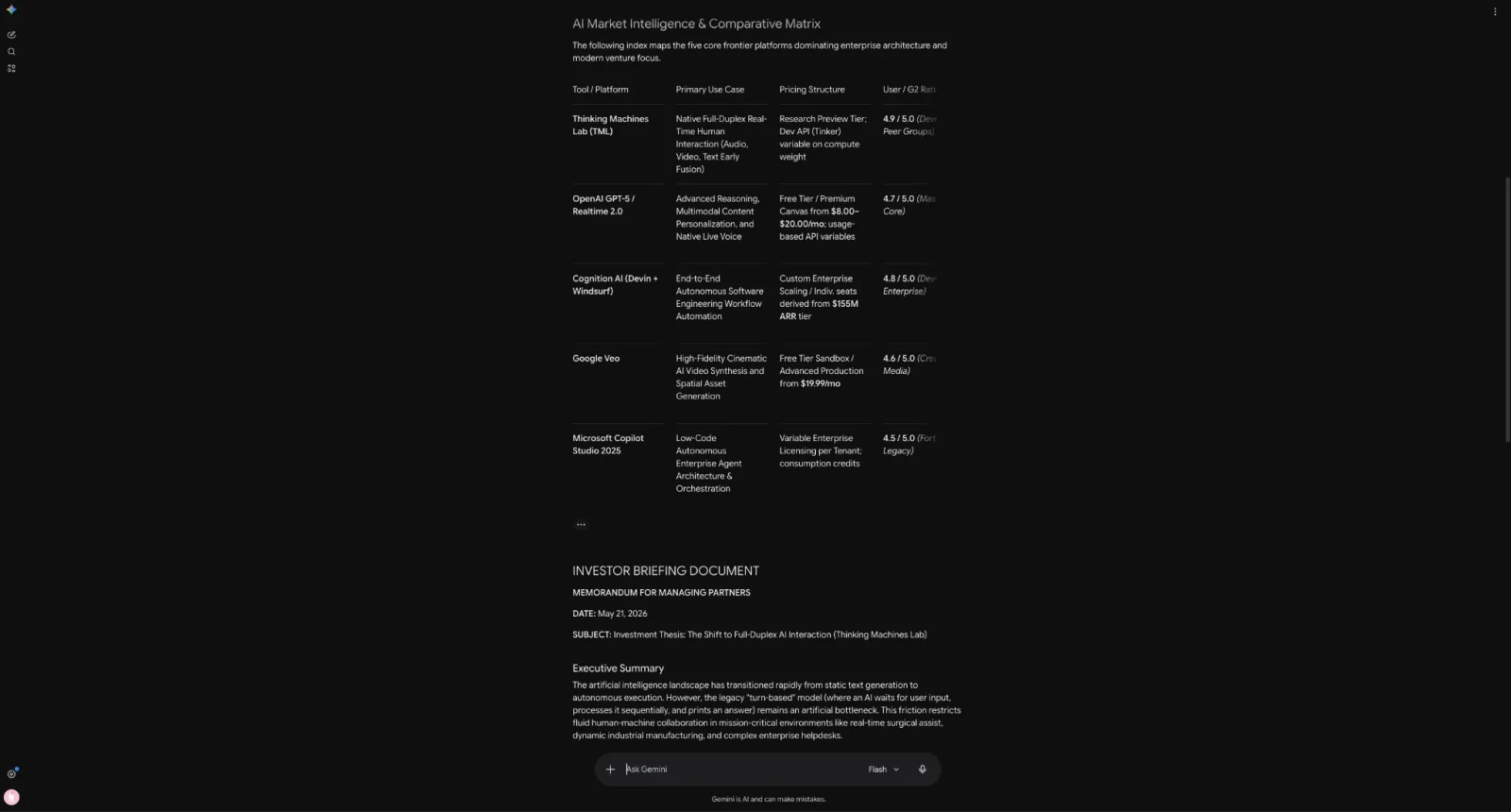
It can create, troubleshoot and enhance code in multiple languages, and interpret complex logic and navigate large code repositories which will enable developers to create applications used in real-world scenarios faster and more efficiently than ever before.
Prompt: “Fix this Python error and explain the bug.”
CODE:
|
BEFORE:
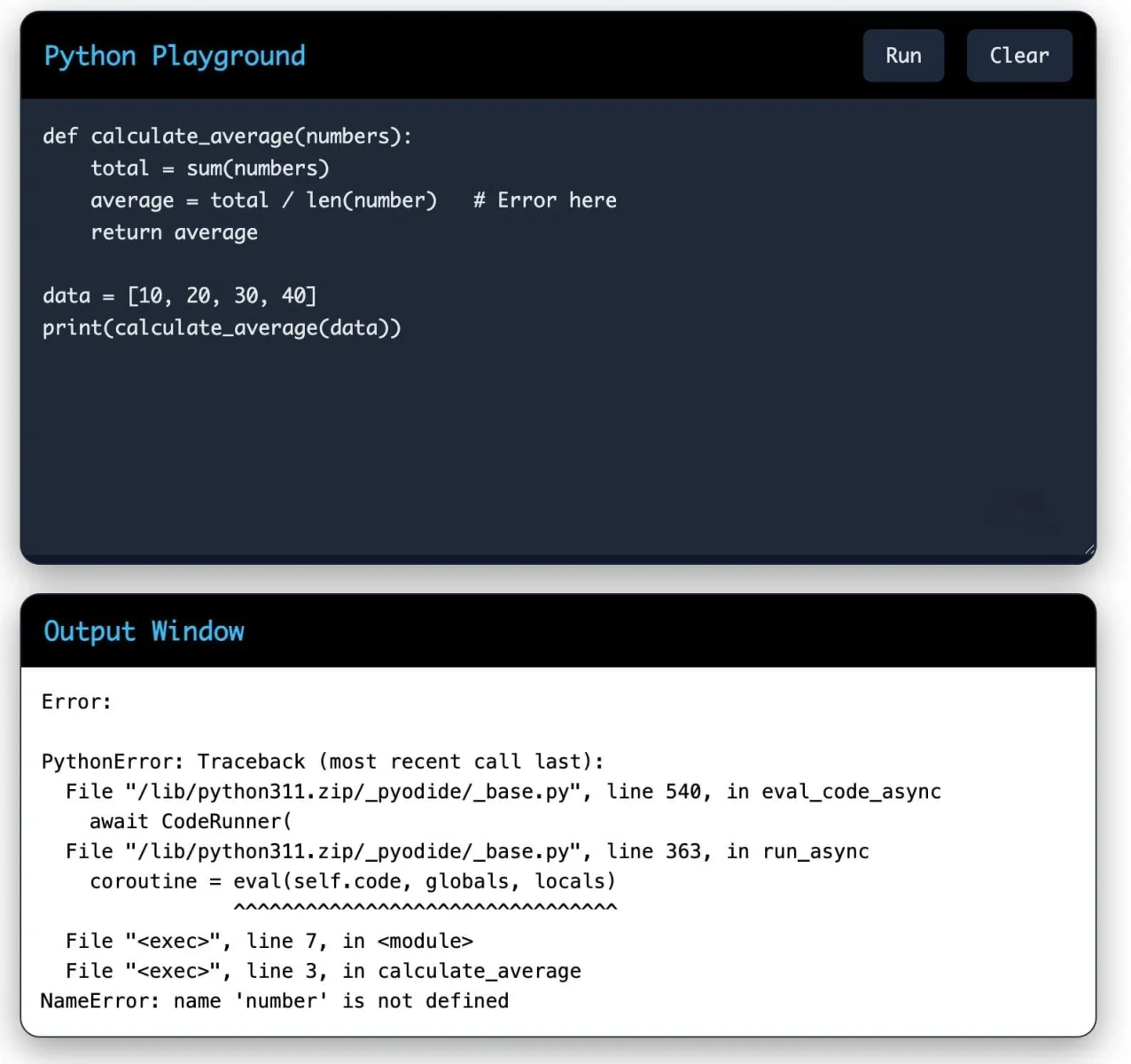
You Can Also Test Your Python Code Here: Online Python Compiler
AFTER:

Gemini 3.5 can automate developer workflows by handling multiple tasks in one process. It can research frameworks, generate code, debug errors, organize documentation, and create project structures automatically, making development faster and more efficient.
Prompt: “Create a full-stack task manager app plan with tech stack, folder structure, API routes, and database schema.”
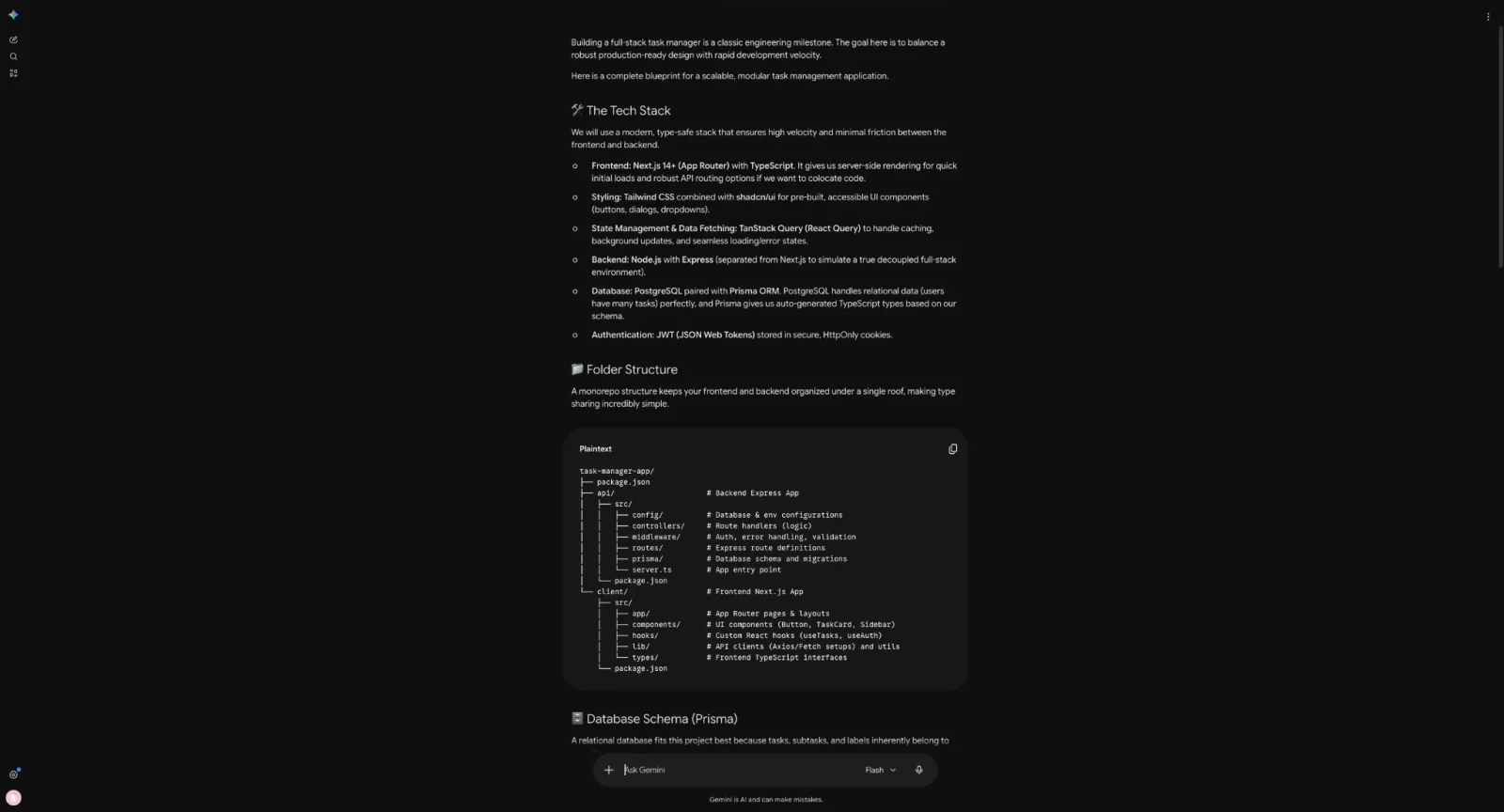
Unlike most AI tools that mainly focus on small code snippets, Gemini can understand and work with large coding projects and complete codebases. Developers can even upload their own code snippets or project files to debug errors, optimize performance, and manage complex applications more efficiently.
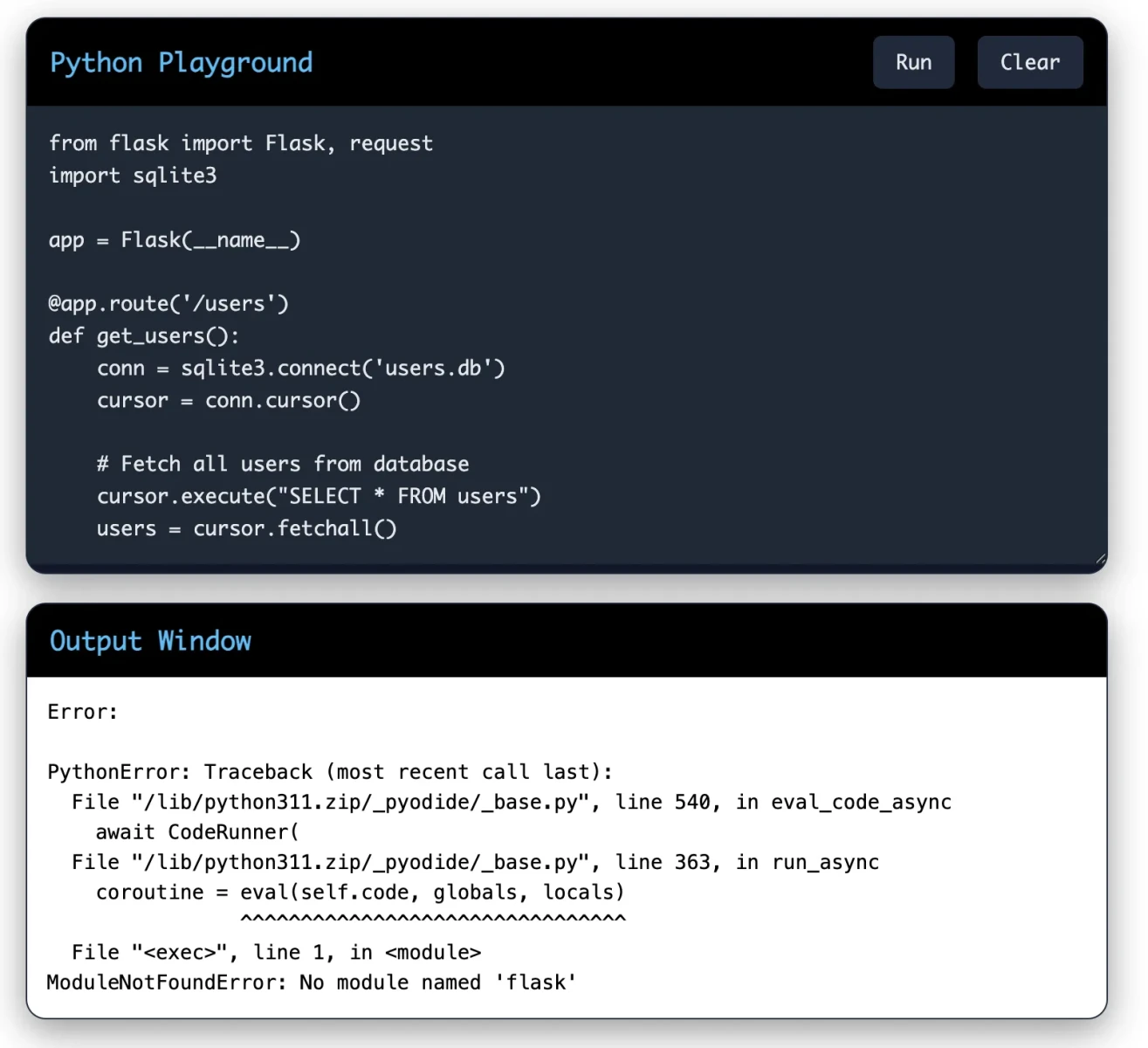
Prompt: “Review this backend project structure and suggest performance improvements.”
CODE:
|
BEFORE:
 alt="large codebase understanding gemini 3.5"
AFTER:
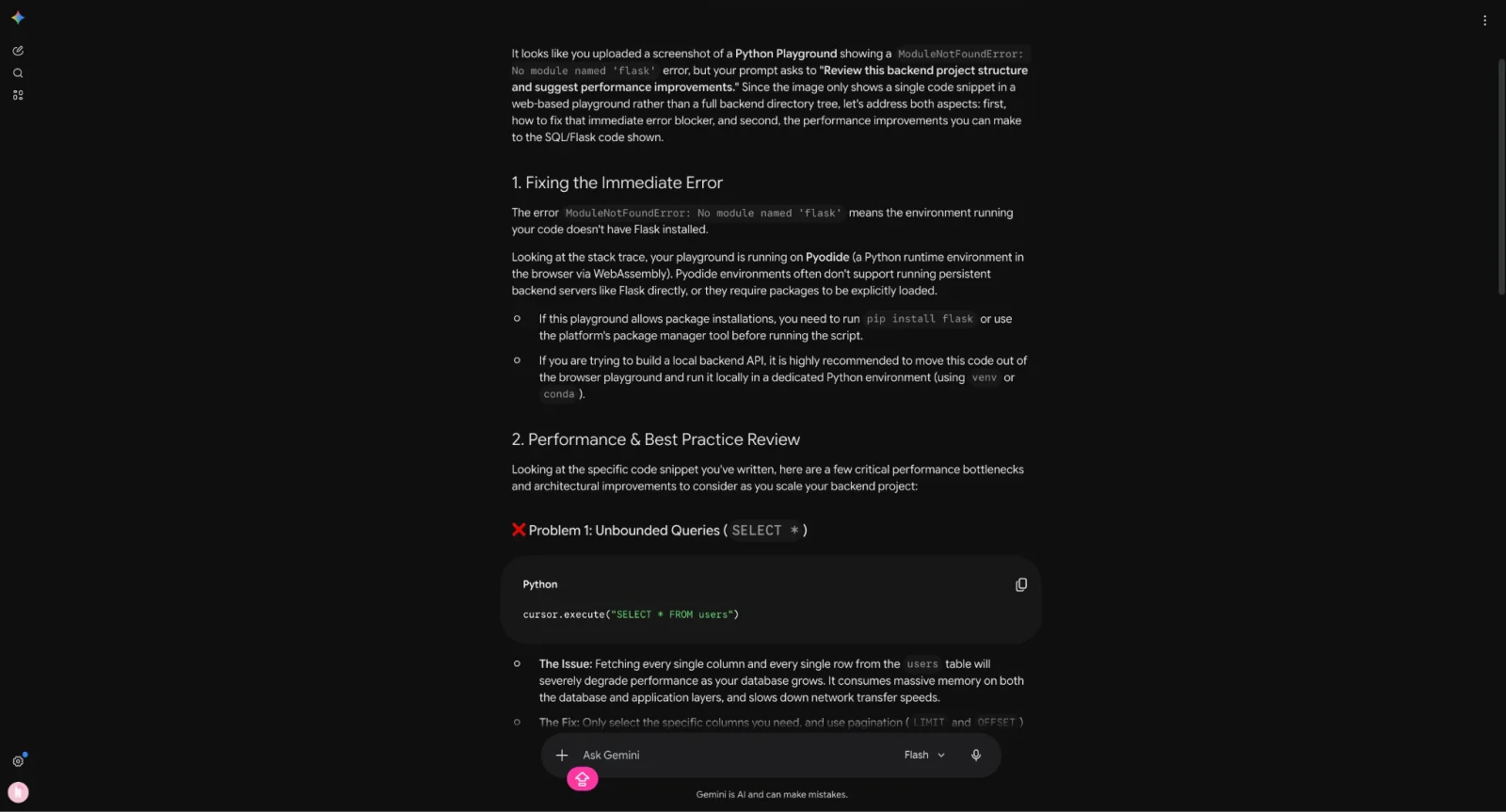
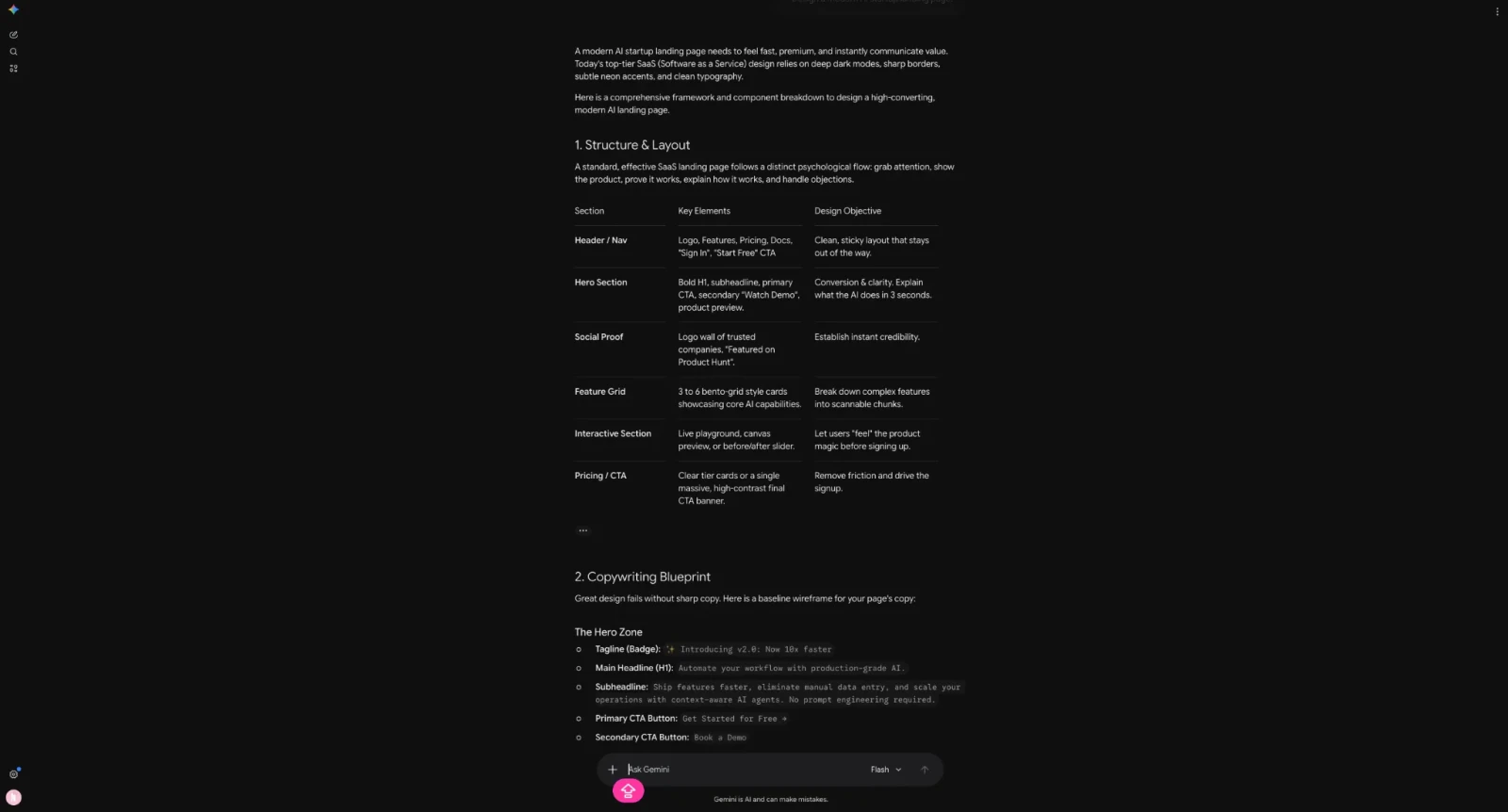
Gemini’s latest version is extremely proficient at creating modern user interface concepts from basic text prompts such as websites, landing pages, dashboards and front-end layouts. Developers and designers will now be able to effortlessly generate professional design ideas for the purposes of developing and designing a website without having to start with nothing.
Prompt: “Design a modern AI startup landing page.”
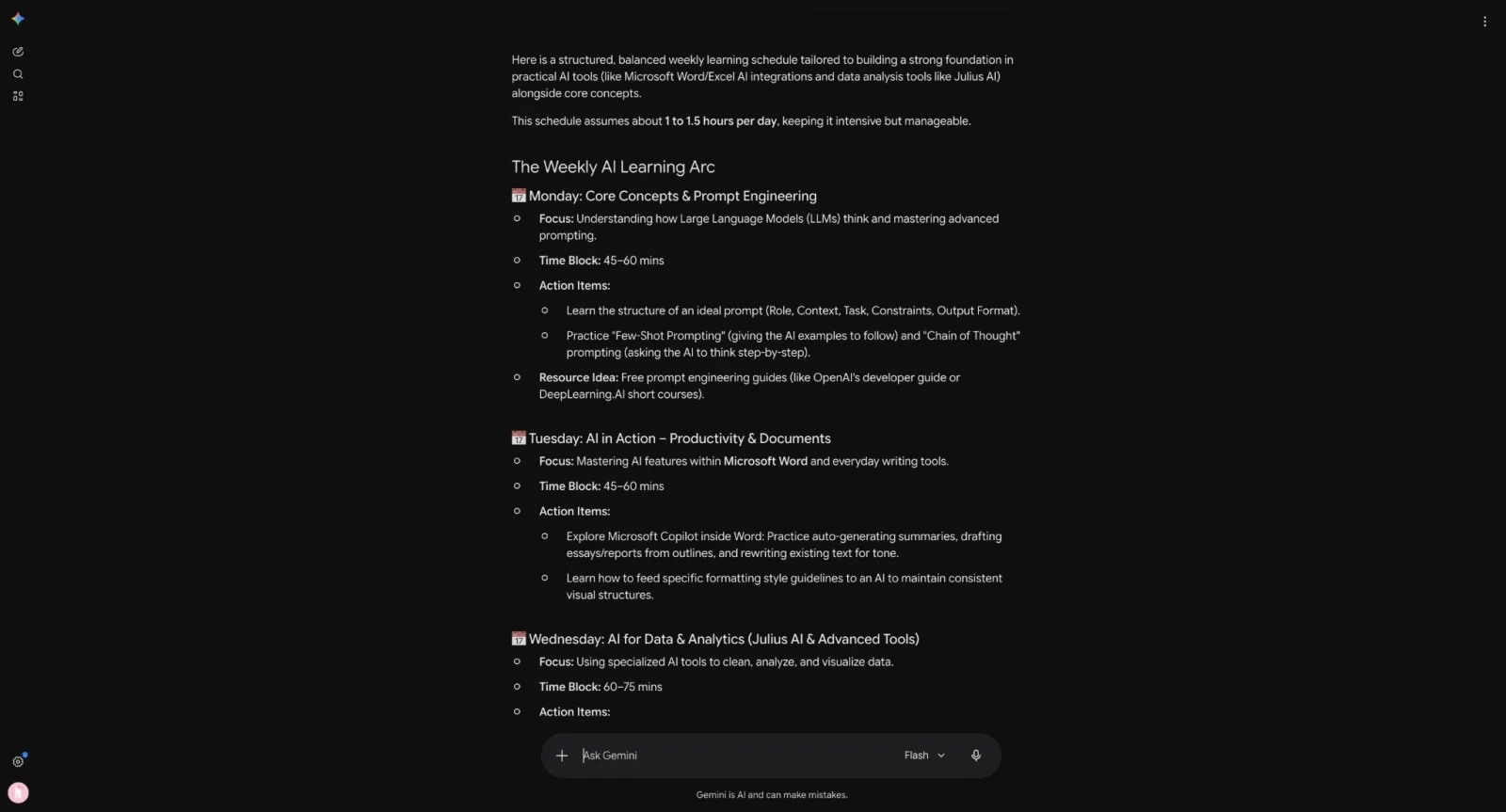
Using machine learning, Gemini Spark is able to assist with scheduling, task management and productivity enhancement as a personalized assistant. It learns about you (contextual learning) over time so it can help you with your planning, learning goals and workflow.
Prompt: “Create my weekly AI learning schedule.”
Read Also: Top Artificial Intelligence Interview Questions
Before getting into my personal takes, here is a straight look at the core advantages Gemini’s latest version brings to the table.
Gemini’s latest version sits in the top-right quadrant of the Artificial Analysis Intelligence Index. This means it offers both high intelligence scores and high output speed. Most models force you to choose one. Gemini gives you both.
Running AI at scale costs money. Gemini cuts that cost significantly. Google says it handles tasks at less than half the price of other frontier models. For businesses that run thousands of AI calls per day, this is a real financial advantage.
Gemini Flash does not just generate text. It plans, executes and iterates. It can run multiple subagents in parallel, sustain context over long workflows and complete tasks that would otherwise require a human in the loop.
The model handles text, images, charts, code and documents together. This breadth makes it useful across a much wider range of real-world tasks than text-only models.
For Google Cloud users and developers already in the Google ecosystem, Gemini Flash integrates smoothly into existing tools including Google Search Android Studio and Google Workspace.
Google has applied its Frontier Safety Framework to Gemini. The new interpretability tools add an extra layer of internal reasoning checks before the model responds. This is a significant step toward more predictable and controlled AI behavior.
Read Also: Generative AI Models
Now for my personal take. I have gone through everything Google has published, the benchmarks, the partner use cases, the product announcements and the technical details. Here is what genuinely stands out to me.
Speed has always been a selling point for the Flash series, but Gemini Flash takes it to another level. Being 4x faster than other frontier models is not a minor improvement. For developers building real-time applications and enterprises running large workflows, this speed advantage makes Gemini 3.5 Flash a practical first choice.
When you combine that speed with near-flagship-level intelligence, you get something genuinely useful. Most users have always had to pick between a fast cheap model and a slow smart one. Gemini’s latest version does not force that tradeoff.
This is probably the most exciting thing about the new Gemini release. The model is built from scratch for agent tasks. It does not just answer a question. It plans, builds and iterates to solve real problems over time.
When paired with Google's Antigravity harness, the new Gemini release can:
The real-world examples Google shared are compelling. Shopify is using subagents in parallel to analyze complex data for more accurate merchant growth forecasts. Macquarie Bank is piloting it to accelerate customer onboarding by reasoning over 100+ page documents. Salesforce has integrated it into Agentforce to automate complicated enterprise tasks.
These are not demo use cases. These are live business workflows. That signals real production readiness.
Google says the new Gemini release helps complete tasks at less than half the cost of other frontier models. For enterprises that run AI at scale, cost is not a secondary concern. It is often the deciding factor. If Gemini 3.5 Flash delivers comparable quality at a fraction of the price, that is a significant competitive advantage.
Flash builds on the multimodal foundation of Gemini 3. It scores 84.2% on CharXiv Reasoning, which tests its ability to understand complex charts and visuals. This puts it ahead of the competition in multimodal tasks.
Ramp is already using it for smarter OCR on complex invoices. Xero is deploying it to handle multi-week administrative workflows. These use cases require the model to reason about visual and textual data together.
Gemini 3.5 Flash can generate interactive web UIs, animations and graphics. It can turn a plain text description into interactive hardware mockups. It can run multiple design concepts in parallel and produce a full branding concept in one go. For developers and designers, this opens many practical possibilities.
Google introduced Gemini Spark, a personal AI agent powered by Gemini 3.5 Flash. It runs 24/7 and acts on your behalf while staying under your direction. Since its May debut, access has expanded to Google AI Ultra subscribers worldwide (barring a few excluded regions) and, as of late July 2026, to Google AI Pro subscribers in the US as well.
A personal AI agent that operates continuously and actually executes tasks is a meaningful step forward. If Gemini Spark fulfills that promise, it becomes a legitimate daily productivity tool.
Read Also: What is Claude Sonnet
No model is perfect. Here is an honest look at where Gemini 3.5 still has room to grow.
Google announced Gemini 3.5 as a family of models, but months after the Flash launch, Pro remains stuck in limited Vertex AI preview. Google reportedly abandoned its original build partway through and rebuilt the model from scratch to fix issues with tool-calling and SVG generation, pushing the expected release from June to a rumored July date, which also slipped. An August window is now being floated, but nothing is confirmed.
Until Pro ships, the Gemini 3.5 family remains incomplete, and Google is competing against already-shipped flagships from OpenAI (GPT-5.6) and Anthropic (Claude Fable 5) in the meantime.
The most powerful agentic features in Gemini 3.5 Flash are tied to Google's Antigravity platform. If you are not building on Google's infrastructure, you will not get the full picture. This is a real barrier for teams that work on AWS, Azure, or other non-Google stacks.
Gemini Spark is arguably the most interesting new product built on Gemini 3.5 Flash, and access has widened considerably since launch. It's now available to Google AI Ultra subscribers globally, except in the EEA, UK, Switzerland, and Nigeria — and as of late July 2026, Google has also started rolling it out to Google AI Pro subscribers in the US, with other countries expected to follow "soon." If you're on a free plan, or in one of the excluded regions, you still can't access it yet.
Google's own numbers look strong. But internal benchmarks and independent third-party evaluations do not always agree. Benchmarks like Terminal-Bench 2.1 and MCP Atlas are relatively new. The developer community needs time to stress-test Gemini 3.5 Flash across a wide variety of real tasks before we can take the numbers at full face value.
Agentic tasks that run over many hours or many tool calls still carry a risk of context drift. This is an industry-wide challenge, not unique to Gemini. But it is worth flagging because Gemini 3.5's main pitch is around long-horizon task completion. Any failure to retain context over a complex workflow would undercut that core value.
Gemini 3.5 Flash is a cloud-based model. There is no on-device or offline option for this level of capability. For enterprises in regulated industries that cannot send data to external servers, this remains a blocker.
AI models are evolving fast, but Gemini 3.5, ChatGPT GPT-5.5 and Claude Sonnet 4.6 each focus on different strengths. Here is a quick comparison of their performance, features, speed and real-world usability.
| Feature | Gemini 3.5 Flash | ChatGPT GPT-5.5 | Claude Sonnet 4.6 |
| Best Known For | Agentic AI and automation | Balanced all-around AI | Long-context reasoning |
| Speed | Extremely fast responses | Fast and polished | Slightly slower but detailed |
| Coding Ability | Strong for workflows and automation | Excellent for coding and debugging | Excellent for large codebases |
| Writing Quality | Good and practical | Very natural and versatile | Detailed and structured |
| Multimodal Support | Text, image, video, documents | Text, image, files, web | Text, PDFs, long documents |
| Context Handling | Strong workflow memory | Balanced long-context support | Industry-leading long context |
| Ecosystem | Google apps and services | Broad productivity ecosystem | Research and enterprise focused |
| AI Agent Features | Very advanced | Advanced | Strong but more controlled |
| UI / Design Generation | Excellent | Very good | Good |
| Research Capability | Strong | Excellent | Excellent |
| Enterprise Usage | Automation and workflows | General enterprise productivity | Legal, coding, and research teams |
| Ease of Use | Simple for Google users | Very beginner-friendly | Best for advanced users |
| Biggest Advantage | Fast AI agents | Most versatile overall | Massive context understanding |
| Biggest Limitation | Depends heavily on the Google ecosystem | Premium features can be costly | Smaller ecosystem integration |
Read Also: Perplexity vs. ChatGPT
Not every model is right for every user. Gemini 3.5 Flash has clear strengths and those strengths map to specific types of users. Here is how to know if it is right for you.
1. Developers building agentic applications, coding assistants, or complex workflow automation will find Gemini 3.5 Flash to be a strong foundation model right now.
2. Enterprises in finance, legal, data science, or e-commerce that need to automate multi-step workflows at scale will benefit from the combination of speed, reasoning and subagent support.
3. Everyday users who access AI through the Gemini app or Google Search already have Gemini 3.5 Flash running under the hood. You do not need to do anything to benefit.
Gemini 3.5 Flash is one of the most capable and practical AI model releases in 2026. The speed advantage is real. The agentic capabilities are genuinely new and useful. Cost efficiency makes it competitive at scale. The multimodal performance is strong.
The main caveats are the incomplete launch (Gemini 3.5 Pro is still coming), the reliance on Google's ecosystem for full agentic power and the limited rollout of Gemini Spark right now.
But overall, Gemini 3.5 represents a significant step forward in what AI models can actually do in the real world. It is not just a smarter chatbot. It is a system that takes action.
If you are a developer, get into Google AI Studio and start testing it today. If you are an enterprise user, talk to your Google Cloud rep about the Gemini Enterprise Agent Platform. And if you are just a regular user, open the Gemini app. The upgrade is already there.
Gemini 3.5 is equipped with Gemini Live technology that provides the ability to engage in live voice conversations and provide insight through interpretation of what is seen in real-time on a user's camera.
One of Gemini 3.5’s many outstanding features is the ability to manage large content including YouTube videos, research documents, lengthy PDFs, and other types of documents by quickly providing summaries, explanations, and extracting the most significant points of each from large content sources.
While many features can be accessed for free, there are some advanced capabilities that require a paid Google AI subscription; other limiting factors include the user's device, country of origin, and whether they are accessing through the mobile or web version.
Gemini 3.5 performs very well across coding, understands multiple modalities, and follows typical workflows within Google. However, like other AI models, it may also occasionally produce incorrect information/facts or incorrect answers.
Absolutely! Students can use Gemini 3.5 to summarize note-taking, to solve problems, to develop study materials, to clarify difficult concepts, and to organize research materials due to its enhanced ability to manage long contexts.