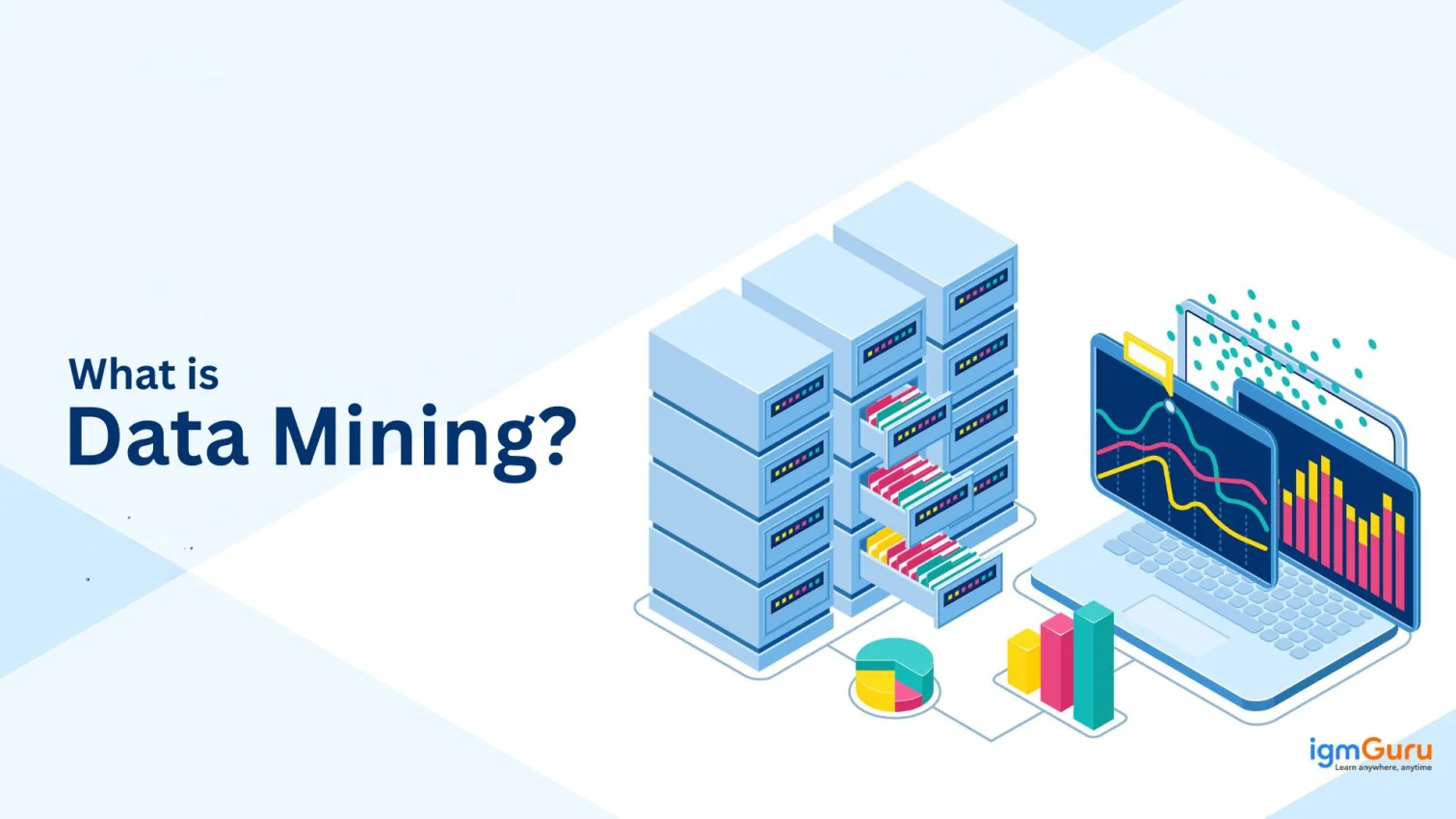
In today's digital era, data is everywhere. It is generated by our online interactions, business transactions, social media activity, and even the devices we use daily. But raw data on its own doesn't tell us much. That's where the concept of data mining comes in. So, what is data mining? Read on to know more about it.
Data Mining is the procedure of uncovering patterns, trends, and useful insights from large sets of data. Think of it as digging through massive amounts of information to find hidden gems that can drive smarter decisions, predict future trends, or even reveal surprising connections. Whether it's used in marketing, healthcare, finance, or technology, the mining process helps turn overwhelming data into meaningful knowledge.
It's kind of like being a detective, but instead of solving crimes, you're uncovering insights that can help businesses make better decisions, predict future behavior, or understand what's really going on behind the scenes.
Explore igmGuru's Python training program to build your career in data science.
Data mining has roots in classical statistics from the 18th century. Techniques like regression and correlation, pioneered by statisticians such as Karl Pearson, laid the foundation for systematic data analysis. With the rise of computers in the 1960s and the development of database systems, data storage and retrieval became more efficient.
By the 1980s, artificial intelligence and machine learning introduced algorithms like decision trees and clustering, allowing machines to learn from data. The 1990s marked the formal emergence of data mining, driven by the explosion of digital data and tools like IBM's Intelligent Miner. Today, it plays a vital role in fields like marketing, healthcare, and fraud detection.
Modern organizations use data mining at scale to turn raw information into a competitive advantage. Below are some high-value enterprise applications demonstrating what is datamining in real business environments.
Enterprises like Amazon and Netflix use mining techniques to create personalized recommendations. Tools like Apache Spark and MLflow process millions of records daily to predict user preferences and improve engagement.
Banks and fintech firms analyze streaming transactions using Kafka, Flink, and Isolation Forest algorithms to identify unusual behavior and prevent fraud in real-time.
Manufacturers use IoT data from sensors to anticipate equipment failure before it happens. Open-source tools like Dask and TensorFlow analyze time-series data for maintenance predictions.
Telecom and SaaS companies mine customer interaction data to identify at-risk users. Platforms like Azure Machine Learning or open tools like Scikit-learn help classify churn risk with accuracy.
Retailers forecast inventory and sales using regression and deep learning. Data pipelines combining Airflow, BigQuery, and Prophet models provide accurate demand insights.
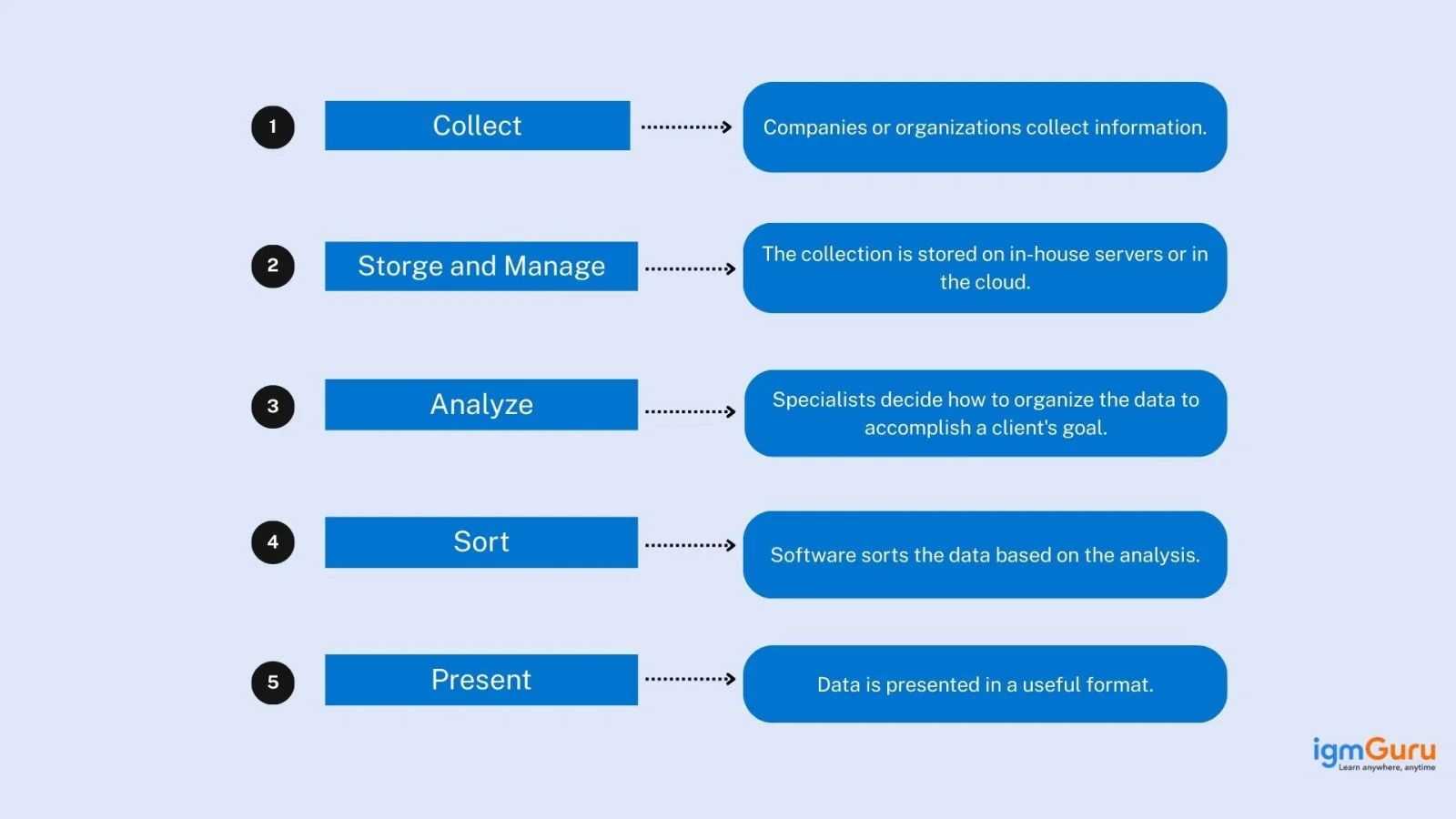
Data mining works like solving a mystery—only instead of clues, you're working with data. First, data gets collected and organized from multiple sources like websites, databases, or sensors. Then, advanced algorithms and tools uncover hidden patterns or relationships.
Steps involved:
In enterprises, mining pipelines combine batch and real-time processing:
Try this Python example on Google Colab to experience what is data mining practically:
|
There are various methods to uncover insights. Here are the main types explained simply:
Sorts data into categories like “fraud” or “non-fraud.” Used in credit scoring and spam detection.
Groups similar records together without predefined labels. Common in customer segmentation.
Finds item relationships—like customers who buy bread often buy butter.
Predicts numeric outcomes, e.g., house prices or sales forecasts.
Identifies outliers such as unusual login attempts or payment activity.
Uses historical data to forecast future trends, such as demand or customer behavior.
At its core, what is data mining all about? It’s the process of transforming raw information into actionable intelligence. From marketing to medicine, it reveals hidden insights that drive innovation, improve decision-making, and power the digital world.
It is the process of exploring large datasets to discover hidden patterns, correlations, or predictions useful for decision-making.
Businesses use it to predict customer behavior, detect fraud, optimize marketing, and improve operations based on data-driven insights.
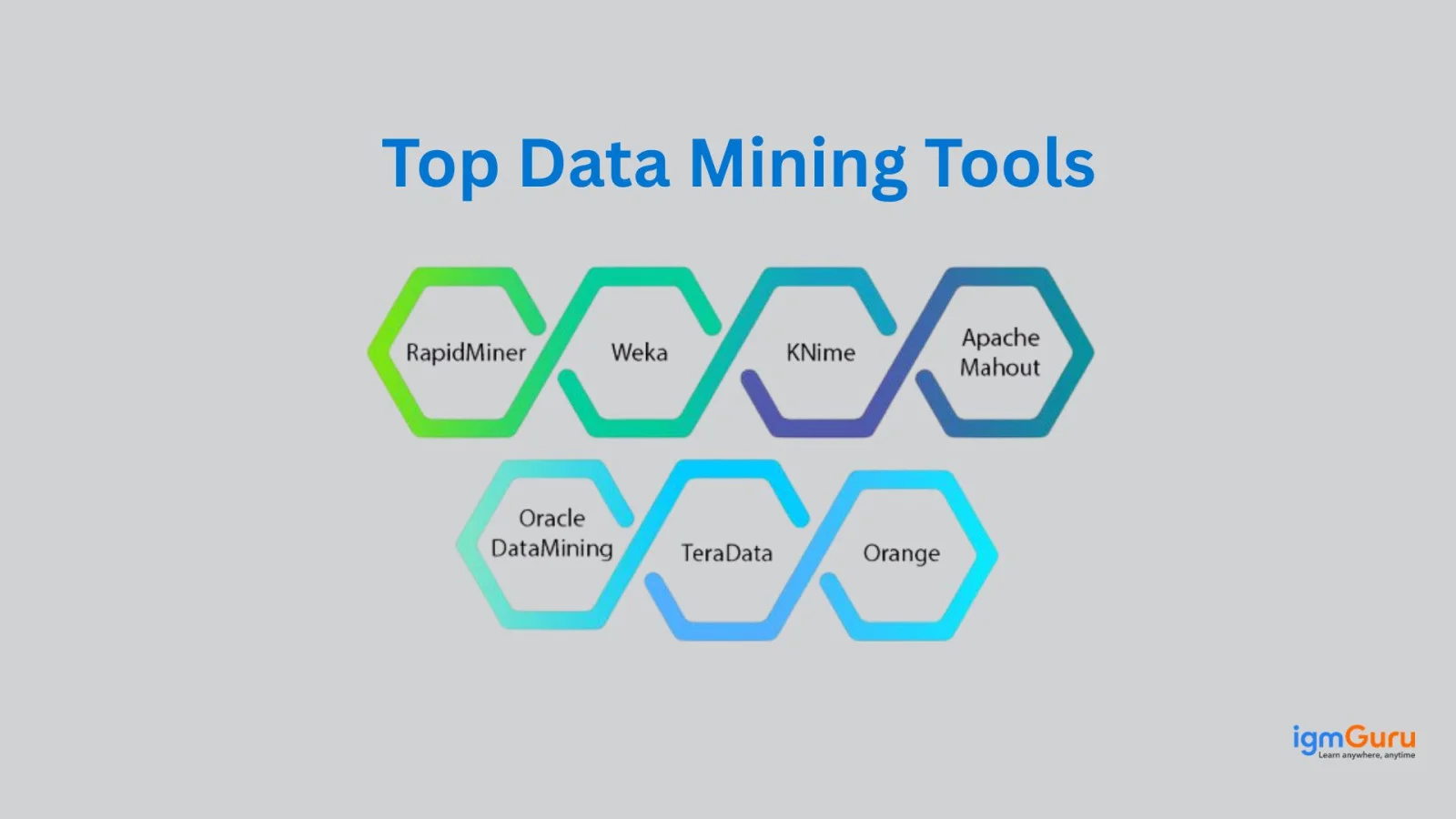
Popular tools include Python, R, Weka, KNIME, SAS, and RapidMiner for analysis, visualization, and automation.
Data analysis focuses on describing existing data, while data mining goes further to predict and discover unknown patterns.
Skills include Python/R programming, SQL, machine learning basics, data visualization, and understanding statistical models.
Data mining has four main stages including data collection, data cleaning, data analysis and result interpretation.
Course Schedule
| Course Name | Batch Type | Details |
| Data Science Certification Courses | Every Weekday | View Details |
| Data Science Certification Courses | Every Weekend | View Details |