Artificial intelligence automation, or AI automation, refers to making robotic process automation (RPA) more efficient and accurate. It enables computers and machines to accurately perform complex tasks that usually need human intelligence. In simple words, AI + RPA = AI automation.
Isn’t it an interesting technology? This post will take you through “What is AI Automation” and how it has converted our personal and professional lives into simpler and more efficient ones. It will also tell you more about how it works, the technology behind it, and a lot more useful information.
So whether you plan to become an AI automation engineer, are an RPA student, or simply want to know some interesting facts about this new topic, this article is for you.
Read Also: What is Edge AI?
AI process automation implements AI technologies like machine learning, neural networks, and natural language processing to perform complicated tasks. This work requires it to mimic human-like behavior and intelligence to achieve the most accurate results. I really find these 3 things about it astounding.
Let’s take a simple example of customer service to understand AI automation better. A simple chatbot will provide preset answers to user queries. On the other hand, an AI-powered automated chatbot will use NLP to interpret context, emotions, and give human-like responses accordingly.
Learn test automation frameworks, scripting, test execution, and defect tracking to improve software testing efficiency.

Understanding the importance alongside AI automation is really important to decide whether you should use it or not. Automation directly helps you save your important time on tedious tasks that usually do not require much logical ability.
Now, imagine if we could implement automation with a mind that can also think, reason, learn, and make decisions. This is exactly what AI automation is capable of.
It is not just an imaginary technology. Businesses have already started implementing it. You can see live examples in the following stats:
Nowadays, businesses have a lot on their hands. They can use it to automate various complex tasks with the advancement in technology through robotic process automation. This can save them a lot of time and spare them more hours to shift their focus to business growth.
It becomes more relevant, accurate, and precise with the power of AI added to RPA. Combining artificial intelligence and automation makes the bots more flexible and smarter. Overall, expanding their capabilities and giving businesses a competitive edge.
RPA can only automate well-defined actions and procedures. It is most effective for:
A pattern you may notice here is that all such simple tasks involve the same sequence of steps to get done every time. However, RPA doesn’t work for assignments that don’t have a particular result. For example, it cannot finish manual tasks without stable business processes and clear results.
AI, on the other hand, mimics human-like intelligence using neural networks. It puts several strategies and technologies to good use, such as:
The bottom line is to combine automation and artificial intelligence to get highly challenging tasks done. AI automation systems have a wide range of applications. For example, AI can:
Also Explore: 12 Best AI Chatbots For 2026
AI automation starts with foundational models (FMs) that are at its center or core. It’s a pre-trained model that learns from vast data and can complete multiple tasks across various industries.
What I like about FMs is that they can be further trained on specific functions with internal data. For example, you can use it as customer assistance. You can train it on certain internal document archives to relevantly answer customer queries.
The foundational models work with many other technologies to achieve AI automation. I have detailed them below as simply as possible.
Machine learning acts as the core engine of artificial intelligence automation. It allows systems to learn from data and make smart choices without hard-coded rules. What you have to do is feed continuous data to them. As a result, you will get a system that will become smarter over time.
Natural language processing is a branch of artificial intelligence that lets computers read, interpret, and generate human language to power automated workflows. Its main purpose is to help AI communicate in human languages. It is also used in:
Computer vision in AI automation enables machines to capture, process, and interpret visual data to make decisions and execute physical or digital tasks without a human constantly nagging it. They are mostly used in tasks like:
Predictive analytics in AI automation uses machine learning models and historical or real-time data to forecast future events and automatically trigger business workflows. It is mostly useful is tasks like:
Multimodal automation and artificial intelligence enables the intelligent system to recognize multimedia within a shared model or vector space. These multimedia include text, voice, speech, images, and videos. In AI Automation, this shifts systems from handling isolated text or basic rules to understanding rich, real-world context like a human.
Retrieval augmented generation or RAG extends the capabilities of foundational models to particular domains or an organization’s internal knowledge base without any requirement to retrain the model.
This is a cost-effective method for improving the foundational model’s output to ensure that it stays relevant, accurate, and useful in multiple contexts. Especially for small and medium-scale businesses that can’t afford expensive automation.
RAG enables businesses to connect their FMs to enterprise data. This creates a flow of information that the model uses for AI process automation.
Prompt engineering is the way a user or a developer talks with the AI model to get a specific output from it. A prompt is a set of instructions for the model, which it reads, understands, and gives a result.
For example, a user can give a prompt, “Give me an image of a blue cat” to a generative tool. But that is not going to cut it. A foundational model is like a 5-year old child. It requires detailed instructions to generate high-quality and relevant output. The rule of thumb is for you to use the most appropriate:
This enhances the system’s ability to make the automation precise.
A smart assistant is a powerful generative AI tool that leverages a company’s internal data to help automate several processes.These assistants link to enterprise data repositories to analyze and process data. These systems can:
For example, an employee can question a smart assistant about:
The system will perform AI data extraction and presentation process automation to give the most relevant and accurate response to the staff member.
Read Also: Best AI Agent Frameworks
Learn bot development, process automation, and workflow management.

Getting started with automating your business processes and tasks with AI can be complex. You need to properly plan everything, create strategies, and ease into it. One at a time. Here are some tips I followed when automating my organization’s work.
You need to have a blueprint first. This AI automation plan will have everything you need to get started on the right foot. For example, your goals, budget, strategies, and implementation pathway. Setting clear objectives is key because it aligns your new venture with your business goals.
This step is easy now that you are done with your AI process automation plan. I recommend using one of these two models of operation.
The most effective strategy is to automate every phase of the development lifecycle. I recommend you to integrate automated observatory solutions wherever possible. Overall, these algorithms optimize and monitor your automation workflow’s:
There is no point of implementing AI process automation in your business if it is not giving you the expected benefits. It is very important for you to measure the cost savings, time savings, and productivity increase due to your AI automation system.
Monitoring these factors helps you calculate the return on investment or RoI that includes your:
Maturity AI models assist organizations in evaluating your current automation and adoption status. This determines the KPIs you should set and the next steps to optimize for the future. Plus, you can also identify new use cases and opportunities that add to your business value.
Also Explore: Manus AI: The Complete Guide to the World's First Autonomous AI Agent
AI automation works by combining RPA processes with the intelligence of AI. It implements various algorithms to replicate human intelligence to perform complex tasks on its own. Still, human intervention is required to provide feedback, manually make corrections where needed and continuously improve the AI and automation system.
In short, AI automation is awesome. What’s more amazing is the rigorous processes and advanced technologies that make it function.
Foundational models and cloud services are the core of AI automation. FMs are large-scale generic systems similar to the foundation of your house. The stronger they are, the more accurate the AI automation. Cloud services deliver these FMs and make them relevant in the real world. FMs are trained on massive datasets and designed to perform various tasks like:
The next step is to gather, organize, and prepare as much data as possible from the real world. AI systems use this data to:
This is known as data collection.
The more efficient the data preparation, the more accurate the AI output. This step involves cleaning, formatting, structuring, and making machine-readable the collected data. This makes it simple for AI models to learn and make predictions.
The collected data must be task relevant. It can either come from unstructured sources like images or structured ones such as databases. AI filters out irrelevant data and structures the remaining cluster into a new format including:
Developers use prepared data to train the AI models. This can be supervised learning, unsupervised learning, or reinforced AI automation training.
Supervised learning is identical to how you teach children and toddlers. You tell them a question-answer pair that is known as labeled data in terms of artificial intelligence. For example, email spam filtering.
Unsupervised learning is identical to how you teach teenagers. Here, the data is not labeled, forcing the AI tool to identify patterns, structures, and relationships on its own. For example, customer data segmentation. That’s because customer data is analysed without any labels.
Reinforcement learning is exactly how you teach adults. The process is to let the AI tool work in an environment where it receives penalties or rewards based on how stupid or oversmart it is. For instance, an autonomous car learning how to drive on a simulated road.
Deep learning is when developers use automated systems to build, train, and deploy deep neural networks that are AI models that learn complex patterns from large data volumes. What automation does is speed up and streamline tasks like:
It ultimately simplifies the scaling of deep learning applications.
Natural language processing or NLP is the process that makes AI understand, interpret, and generate human language. The collected data is transformed into tokens, which are the smaller pieces of text such as words, parts of words, or characters that a computer extracts from a prompt, for this phase.
The developers deploy an AI model into an automation workflow after its training is complete. You need to understand decision-making and the inference engine for this part.
This is where the AI automation system makes real-time predictions based on incoming data. For example, a conversational AI model that quickly understands customer query intent.
The AI makes a decision based on the prediction. For example, the system may detect and block a fraudulent transaction. It will also send the issue to a human for further investigation on its own. Pretty handy, right?
AI models keep learning and improving their algorithms to become better and better over time. This is known as continuous learning, online learning, incremental learning, or lifelong learning.
Also Explore: 12 Best Claude Alternatives for 2026
I discussed the technology and working of AI automation so far. However, a user only sees AI applications for automation, a few of which I am going to simplify right now.
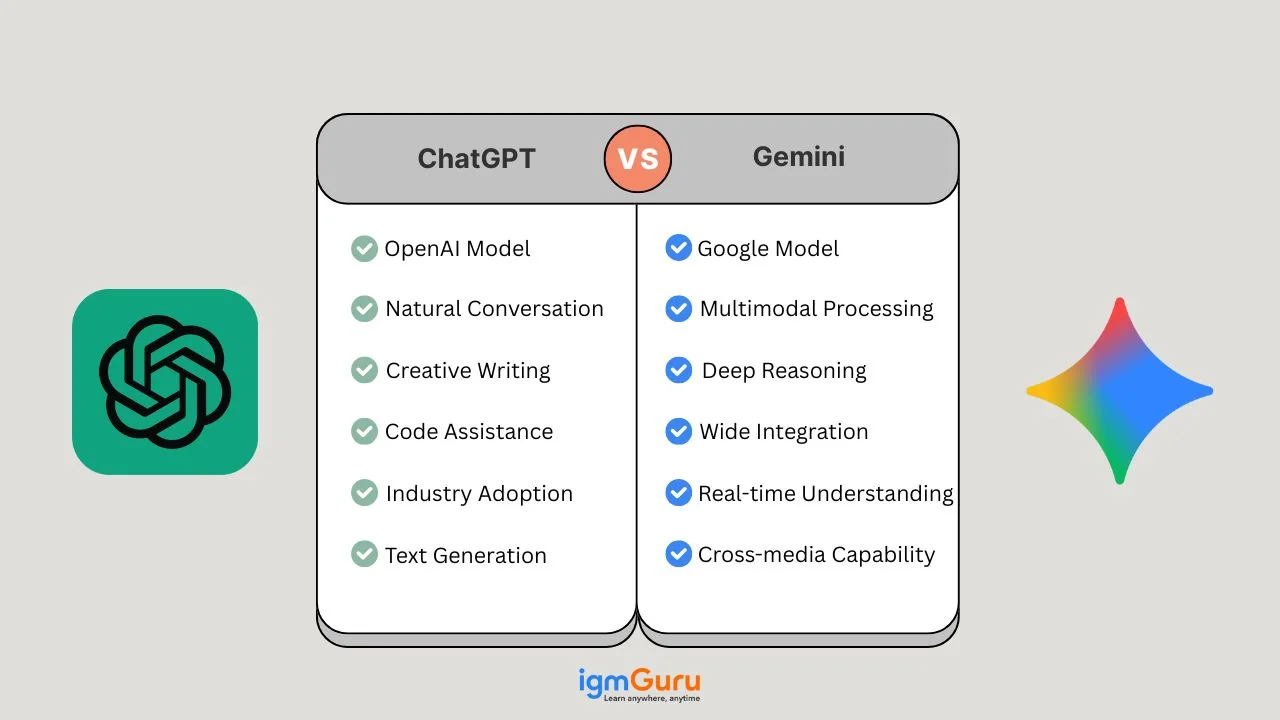
ChatGPT is primarily a generative AI tool. However, there is also a workaround for you to automate tasks with it. For example, you can connect it with third-party APIs that create external GPTs to automatically send emails, update sheets, or send slack messages on request.
Zapier is a popular AI automation tool that connects with lots of applications. It uses prompts, actions, and copilots to do so.
It is an open-source AI workflow automation tool. I recommend developers to use it because it gives you control over APIs, databases, and custom logics.
Make is a no code platform that lets you build complex data management and multi-app integrations. The user-friendly interface makes it easy for anyone to use it.
Lindy AI is your digital personal assistant that can automatically perform various tasks. It can:
Are you curious about where you can implement AI automation? This is the section for you if your answer to this question was yes. I have picked some of my favorite fields where AI automation simply makes life easy.
AI healthcare automation assists doctors in improving patient outcomes by providing useful insights. Here, AI helps with:
AI finance automation strengthens security and financial decision-making. The finance tasks AI tools automate include:
Want to improve consumer experience and work efficiency? AI retail automation is what you need to do. It automates.
AI manufacturing automation is the key to unlock the door of reduced downtime and increased productivity. Here’s where it’s useful.
AI sales automation makes the lives of sales professionals much easier. Implementing it ensures that they don’t have to perform repetitive tasks like data entry, CRM, and following up on leads. Sales teams can even automate:
AI service automation is a gift for everyone including customers, support representatives, and service teams. Here’s how it benefits them.
Task streamlining and personalization enhancement in marketing is a time saver. AI marketing automation analyzes customer data, which enables real-time segmentation and predictive analysis. This allows for emotional marketing, which means to market and trigger the right emotions at the right time in the right market to sell your product the right way. AI also automates repetitive tasks like:
It saves a lot of time for your marketing people that they can utilize to efficiently complete complex work.
AI commerce automation creates a win-win situation for both you and your consumers. Here’s how it works.
AI IT automation automates system monitoring and data management, for example. This lets IT people focus on strategic initiatives. AI process automation allows IT teams to reduce downtime and improve system reliability by identifying issues faster.
AI automotive automation benefits buyers like car owners and drivers a lot. AI can automatically process vast chunks of data to identify vehicle trends and suggest improvements. There are many innovation opportunities here. For example, automatic driverless cars.
Implementing AI supply chain automation streamlines the workflow between the production and supply chain management teams. Here, AI and ML combine forces to make decisions regarding:
For example, AI automatically pulls data internally from its sensors to adjust the heat levels of goods-transporting vehicles.
Cybersecurity is a complex job that experts make look easy. However, cyber experts are not superhumans. AI cybersecurity automation removes the need for manual work. What it does is use intelligent algorithms to automatically detect, analyze and stop digital threats.
AI HR automation improves accuracy, efficiency, saves time, and improves work-life balance. Implementing HRMS software ensures that HR professionals don’t have to perform repetitive tasks during half of their workday. Here are a few examples of how AI tools for automation work here.
Also Explore: Julius AI: AI Data Analysis Tool for Beginners
Learn AI agents, workflow automation, and intelligent process orchestration.

Automating with AI provides multiple advantages to the industries around the world. Here are some benefits that I have experienced myself.
AI systems quickly analyze large amounts of data and provide useful insights. I am talking milliseconds here. This enables you to make enhanced and informed decisions.
AI continuously learns and improves from its mistakes. It can easily adapt to your data and workflow, providing tailored insights that are specific to your department, team, or job role.
AI automation combined with the Cloud ensures that the tools and applications expand with increasing data and demands.
AI-powered task automation accelerates work speed and saves a lot of time. For example, customer query response time becomes faster.
AI process automation is all about precision and efficiency. This has been observed a lot in tasks like data entry, quality control, and image recognition, time and again.
AI simplifies complex tasks, saves time, and improves work-life balance. Especially when it’s combined with RPA. It can easily handle multilayered work that needs pattern recognition and real-time decision-making.
AI automation has never been a smooth sail. There are also a few limitations of AI and automation with which you have to adjust. Here’s what I think needs some polishing.
It’s all about the servers. AI and automation tools run on large servers because they process vast data and at maximum speed. Businesses need to maintain advanced servers that can cost up to 100s and 1000s of dollars.
The complex maintenance of high-end smart automation added another task (as if maintaining high-end AI servers wasn’t complex enough). The IT expertise level required to achieve high accuracy and efficiency here is advanced and people need to work a lot and with multiple automation apps, which is complex and frustrating. Also, did I mention that good AI automation needs 24/7 maintenance.
AI and automation is awesome. However, it’s still GIGO - garbage in garbage out. The quality of AI output still depends on the quality of data you feed to it. Especially during the data processing and collection stages.
It’s not no data, no automation. However, the scope is still limited for non-data-driven tasks. It’s common sense. Isn’t it? Even basic computers can’t do anything without data. In such cases, we have to go up a notch and implement AI automation with IoT.
Rigorous tests and feedback loops have found that AI can go haywire if the task goes on for too long or if the chain of prompts are too many for the same task.
For example, when automatically writing and refining a political article, the intelligent system can show racial bias against a specific group, which is morally wrong.
This is basically due to vast amounts of data that the system manages in real-time. This can make it trigger confusing responses for certain prompts.
Also Read: What Is Janitor AI?
AI depends on continuous learning, which is also known as lifelong learning. It’s the same when it is combined with RPA. AI automation continuously learns, adapts, and improves despite its limitations. It tries its best to mimic human intelligence and become more and more reliable over time.
Plus, with emerging technologies like Edge AI and IoT with AI, I can conclude that it’s only going to get more modular in the upcoming years. The only question is: Will AI completely steal all our jobs?
That concludes today’s article titled “What is AI Automation”. To summarize, I can safely say that I covered everything related to automating workflows with artificial intelligence. I hope you gained some useful information and it helped you in your professional or learning journey. So, which tasks will you automate to make your life easier?
Ans. AI automation engineers can earn up to $150,000 per year.
Ans. Learning to master AI automation is also a step by step process like everything else. I recommend enrolling in certificate courses, learning core concepts, and getting as much hands-on experience as you can.
Ans. It is in high demand worldwide. Companies are competing rapidly to cut costs, increase efficiency, and integrate intelligent workflows into their operations. So, they will require highly skilled people in this field.