Google Antigravity is no longer just a fun Easter egg. It is a real agent-first IDE launched by Google in November 2025, where AI agents plan, write, test and debug code on your behalf. You give the task and agents do the work.
I have tried multiple AI coding assistants, including Gemini 3, Codex and Cursor AI, but my thoughts on Antigravity will be shared here. This guide covers everything you need to know, from how it works and how to use it to its real limitations and whether it belongs in your workflow.
Let’s begin!
Read Also: How To Use ChatGPT?
Google Antigravity is an AI-powered coding platform built by Google that uses autonomous AI agents to handle coding tasks. It runs locally on your machine and is built on a modified version of Visual Studio Code.
The core idea behind Antigravity is simple. Instead of you writing every single line of code, you describe what you want to build. The AI agents inside Antigravity read your instructions, break them into smaller tasks, create a plan, execute the code, run the terminal commands, and test the results in a real browser. All of this happens inside one unified environment.
Antigravity is powered primarily by Gemini 3.1 Pro, but it also supports other models, including Claude Sonnet 4.6, Claude Opus 4.6, and GPT-OSS 120B. This flexibility makes it more than just a Google-exclusive tool.
Here is the simplest way to think about it: traditional coding tools make you a writer and the AI acts as a spell-checker. Antigravity makes you the project manager and the AI becomes your entire development team.
From personal experience working across different AI coding environments, what stands out immediately about Antigravity IDE is its workflow architecture. Most tools wait for you to ask something. Antigravity agents actually think ahead.
It basically organizes your work into two main views:
The workflow follows a repeating loop:
Plan → Execute → Verify → Iterate
Here is how that looks in practice:
This process removes a massive amount of manual labor from the development cycle and lets you focus entirely on what you actually want to build.
When I first explored Antigravity's feature list, a few things stood out as genuinely different from anything I had seen in other AI coding tools. Here is a breakdown of the most important ones.
Antigravity lets you run multiple AI agents at the same time. Each agent handles a different part of your project. One agent can work on the backend while another builds the frontend and a third runs tests. This parallel execution is one of Antigravity's most powerful advantages for large or complex projects.
Every action an agent takes gets recorded as an Artifact. This includes code diffs, screenshots, browser recordings, terminal logs and task plans. You can review exactly what the agent did and decide whether to accept or reject its changes. This audit trail is crucial for developers who need transparency and control.
Antigravity agents do not just write code. They can open your web app in a browser, click through the interface, test user flows and capture recordings of what they see. This makes end-to-end testing possible without any manual browser work on your part.
Agents have full access to the terminal inside Antigravity. They can install packages, run build commands, start development servers and execute scripts. This makes the entire development pipeline available inside a single tool.
You control how much independence the agents have. In agent-assisted mode, you stay closely involved and review each step. In full manager mode, the agents operate more independently and handle everything until you are ready to review the final output.
Antigravity supports Gemini 3.1 Pro (in both High and Low modes) as its primary model, alongside Gemini 3 Flash, Claude Sonnet 4.6, Claude Opus 4.6, and GPT-OSS 120B. You can switch models depending on the task, cost, or your preference.
Read Also- What is Google Gemini
As someone who has set up Google Antigravity on my Mac several times myself, this is by far the easiest way I have found to get it set up and working properly. If you use Windows instead of a Mac, there are only slight differences between the command lines and the installation process.
Go to the official Antigravity website and download the installer that matches your operating system. Google Antigravity works on Windows, macOS, and selected Linux systems. You will need a personal Gmail account and Chrome browser to complete the setup.
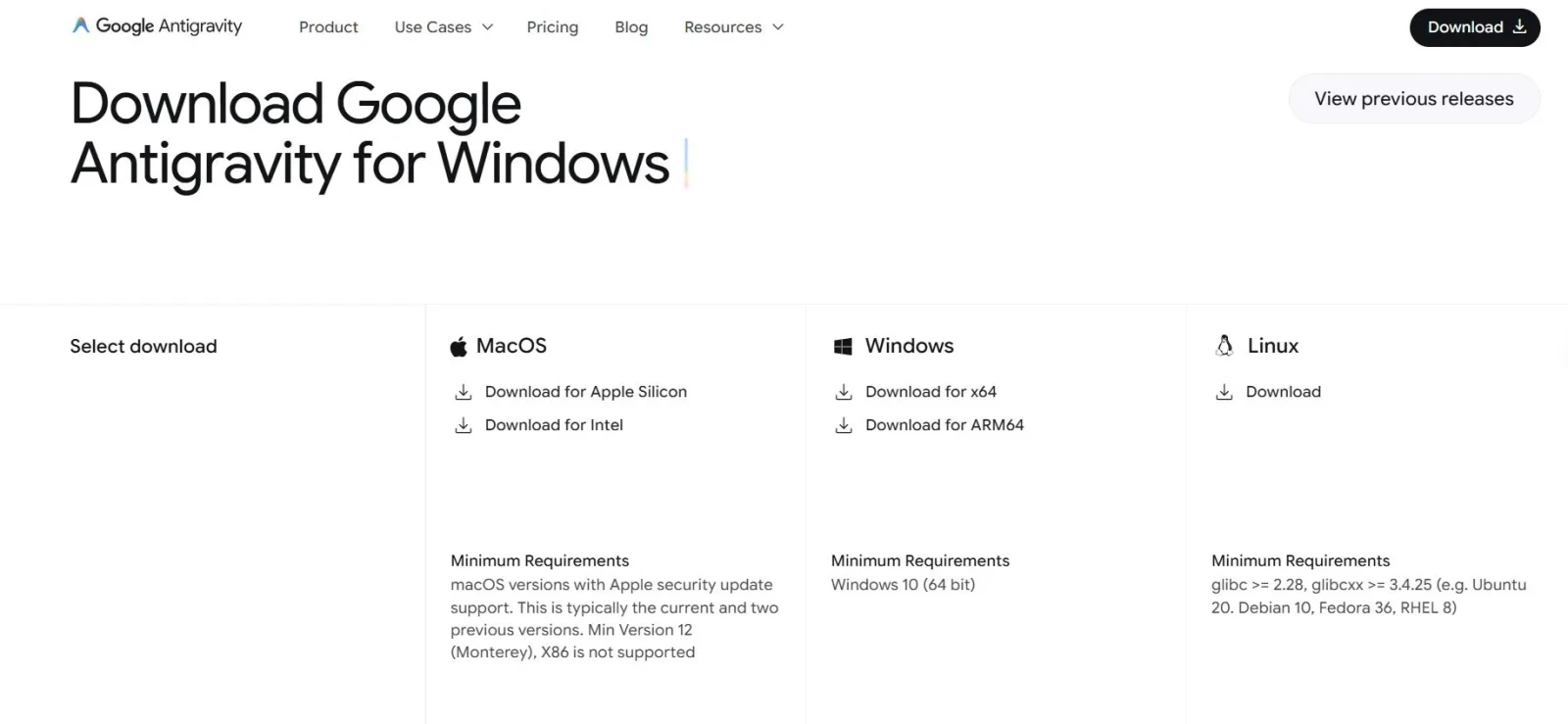
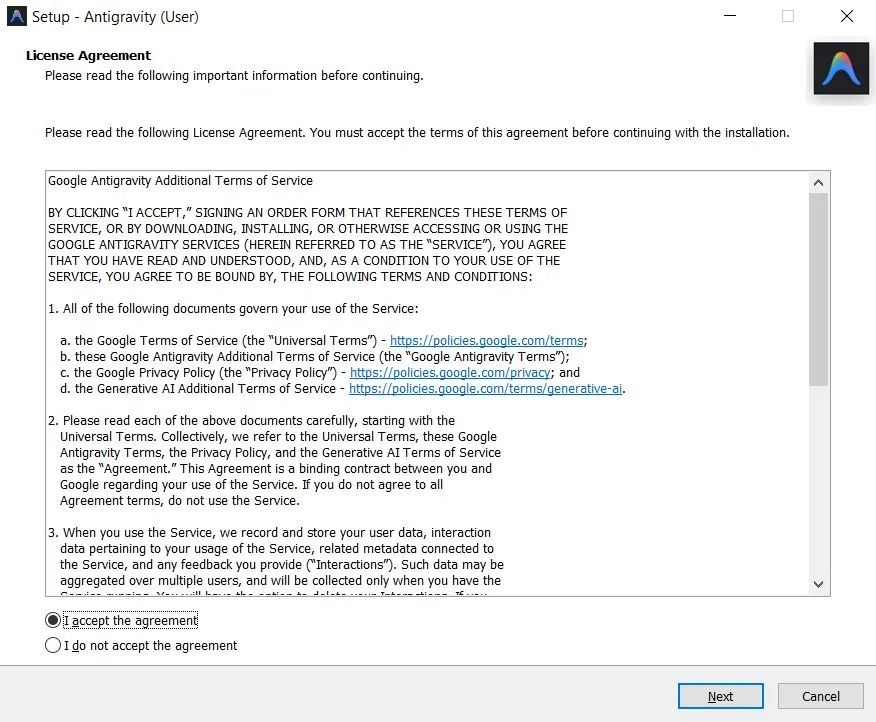
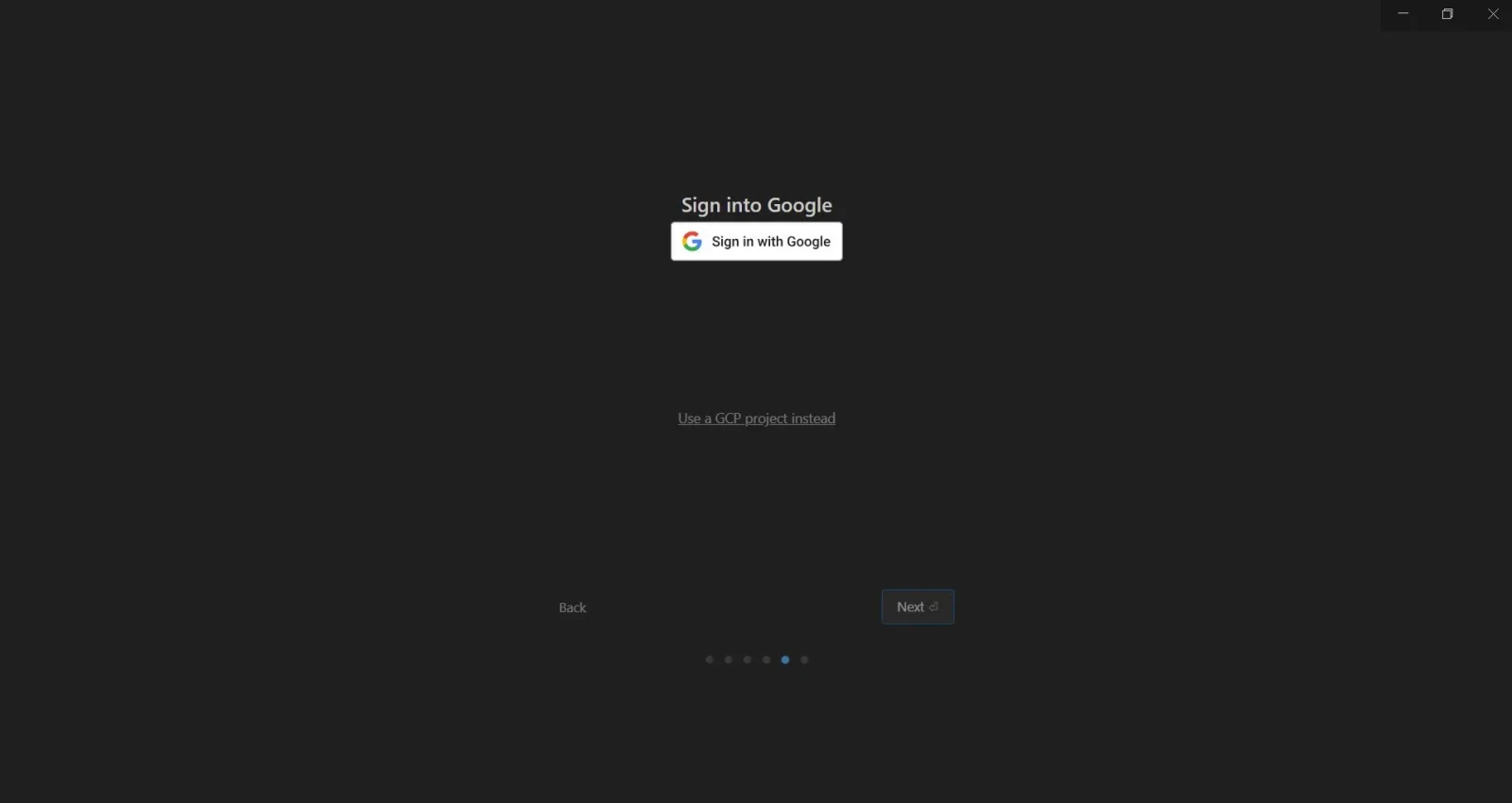
Open Antigravity and sign in with your Google account. The setup wizard walks you through basic configuration- connecting your workspace and setting your preferred AI model.
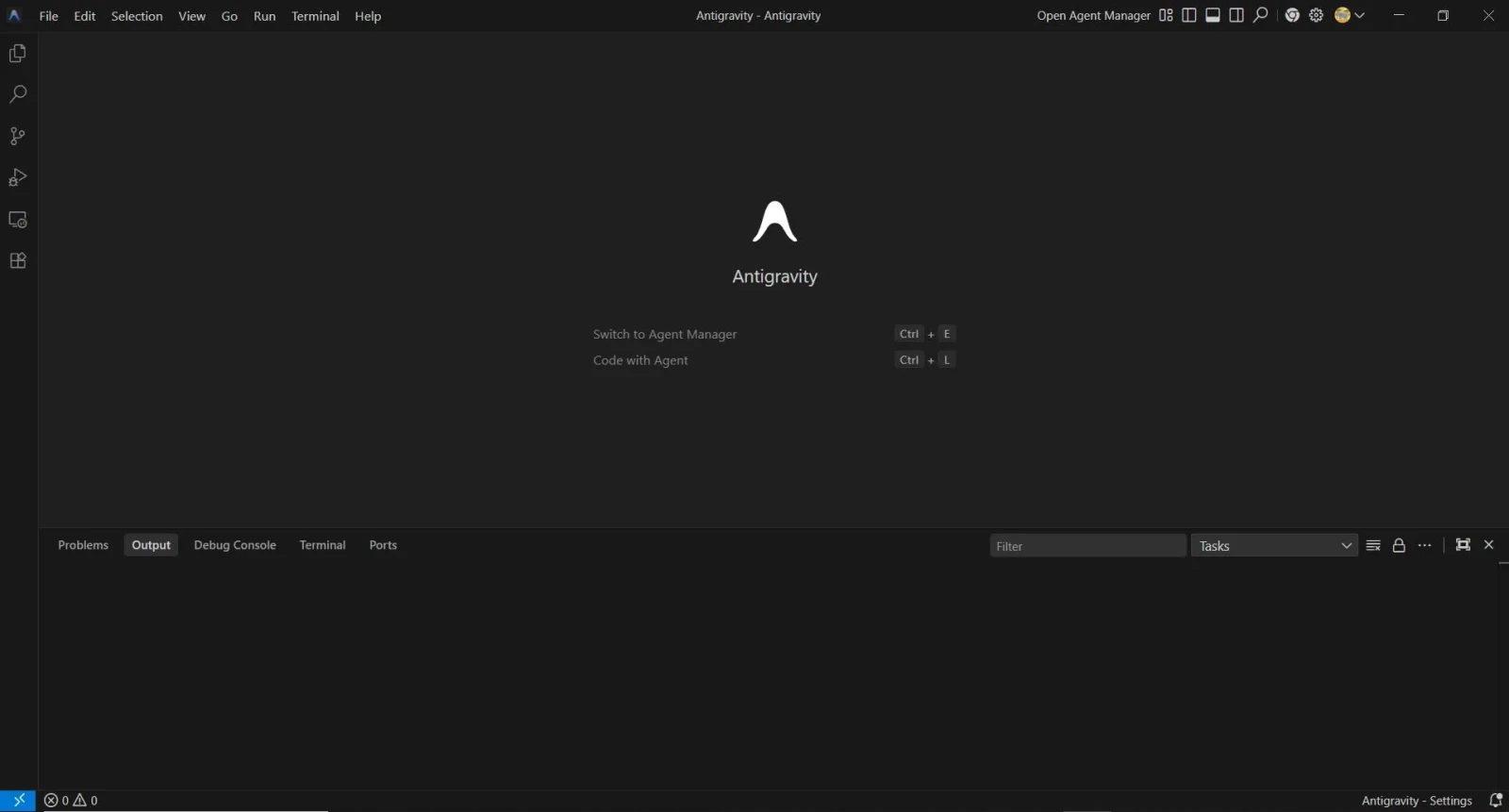
Open an existing project folder or start a new one. Antigravity will recognize your file structure and make it available to all agents in that workspace. Antigravity welcome screen with Switch to Agent Manager and Code with Agent option.
Click on the Agent Manager panel- your Mission Control. Create a new task by typing a plain-language description of what you want to build or fix.
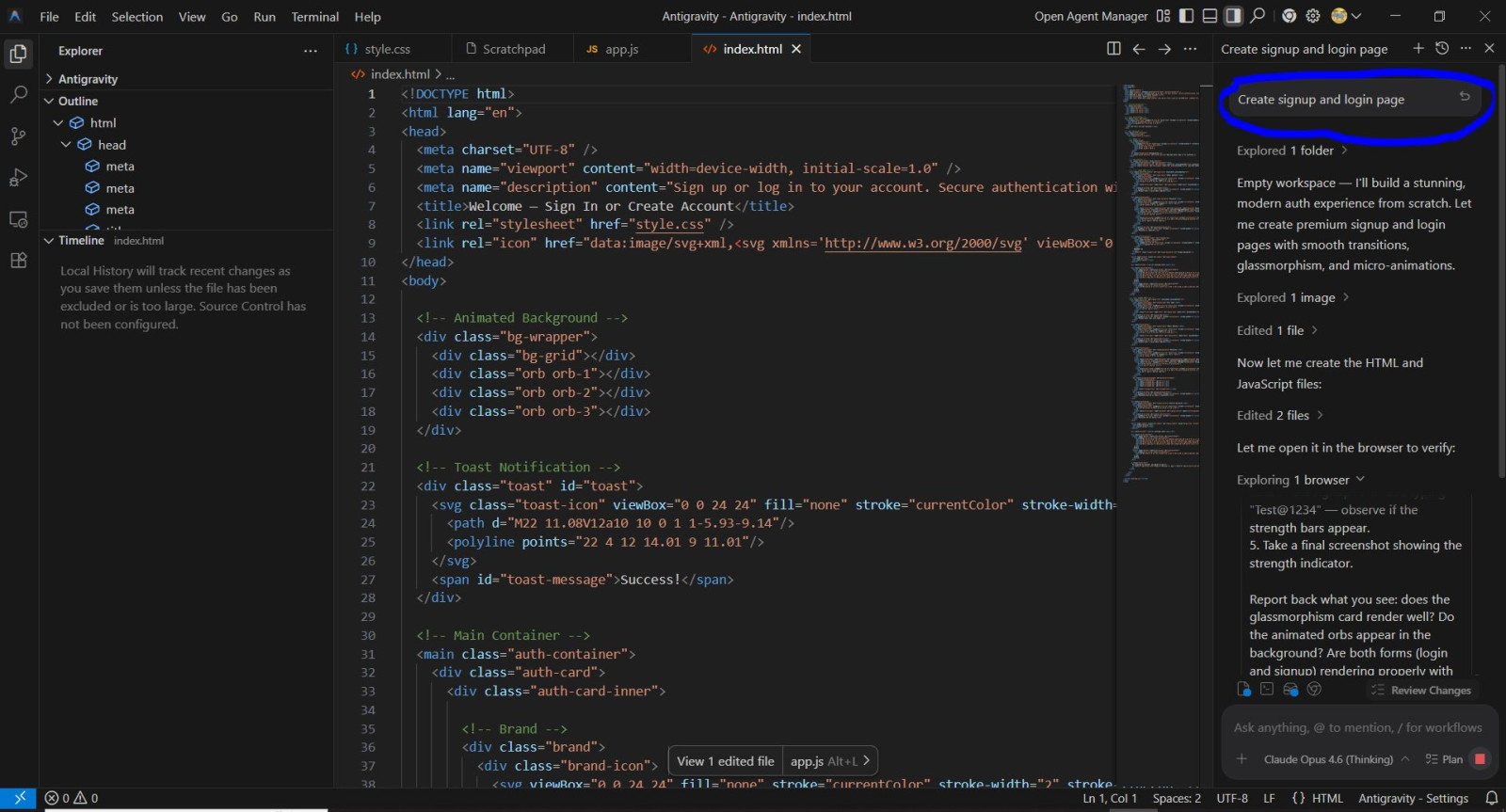
Before executing, the agent shows you a task plan- every file it intends to create or edit, every command it will run, and the steps it will follow. Review carefully, then approve, edit, or ask it to revise.
Once you approve the plan, the agent takes over. It will write code, run terminal commands, start the development server, open Chrome, and test the interface. You can watch everything happen in real time.
When the agent finishes a task or a phase of work, it generates Artifacts. These are your audit records. Check the code diffs, look at the screenshots, and review any browser recordings. This step is where you maintain quality control.
Give the agent feedback and ask it to make changes. The loop repeats. You keep refining until the result meets your standards.
Experienced developers know that every tool has tradeoffs. Antigravity is genuinely impressive, but it has real limitations that you need to understand before you adopt it for serious work.
Within 24 hours of Antigravity's public launch, security researchers discovered a serious vulnerability. When a user marks a workspace as trusted, a malicious repository can embed code that installs a persistent backdoor. That backdoor will run every time Antigravity starts, even after you close the project or reinstall the tool, unless you manually remove it.
This is not a minor bug. Antigravity gives agents deep access to your file system, terminal and browser. A compromised workspace becomes a long-term security risk. If you work with sensitive code, proprietary systems, or environments that require strict compliance, you need to sandbox Antigravity and treat workspace trust settings with extreme caution.
Users have reported crashes, agents terminating unexpectedly and integration failures with the browser extension. Antigravity is an early preview product and it shows. The core architecture is solid, but the execution is still rough around the edges. Do not rely on it for production-critical work at this stage.
The free tier now includes roughly 20 agent requests per day on Gemini Flash, a real constraint for heavy users managing large codebases or running multiple agents.
Paid tiers exist to unlock higher limits: AI Pro at $20/month and AI Ultra at $249.99/month. With the Antigravity 2.0 update, Google tripled Gemini usage limits for Pro subscribers, moving from an hourly cap to a weekly quota refresh — a meaningful improvement, but free-tier and even some paid-tier users may still hit walls during heavy workflows.
Antigravity's agent-first model shifts decision-making away from the human developer. This is fine for prototyping. It becomes a problem when you need granular control over every change, when compliance demands a full human review of all code modifications, or when the cost of a mistake is high.
When agents handle everything, developers may stop reviewing code carefully. The Artifacts system helps by making agent actions visible, but it requires discipline to actually read and evaluate what the agent produced. Over-reliance on AI output without proper review is a genuine risk for code quality and security.
Also Read: Julius AI: AI Data Analysis Tool for Beginners
Based on real-world usage and an honest look at its strengths and weaknesses, here is a practical guide to who benefits most from Google Antigravity today.
Use Google Antigravity if you are:
Approach Google Antigravity with caution if you are:
Google Antigravity offers a free tier alongside two paid plans:
Notably, Google has adjusted Antigravity's pricing and usage limits multiple times since its launch, including a significant reduction to the free tier and a shift toward a credit-based system that some users have found unpredictable. If pricing is a deciding factor for you, check the official Antigravity pricing page before committing, since these numbers can change.
The Bigger Picture: Why Google Antigravity Matters
Google Antigravity represents a genuine shift in how we think about software development tools. The move from AI as an assistant to AI as an autonomous collaborator is significant.
Until recently, AI coding tools helped you write faster. Antigravity is trying to change who does the writing altogether. The developer's role shifts from writing every line of code to defining goals, reviewing plans, and evaluating output. For many developers, this will unlock massive productivity gains. For others, it will raise important questions about skill development, code ownership, and accountability.
The broader implication is that the entire AI-powered IDE space is moving fast. Antigravity raises the bar with its multi-agent orchestration, browser automation, and Artifacts system. Competing tools will respond. We are at the beginning of a new era in developer tooling, and Antigravity is one of the clearest signals of where things are heading.
Google Antigravity is developing an early-stage AI dev tool that has many powerful features including multi-agent workflows & built in testing.
It works great for prototyping, individual developers and small teams simply trying to build fast, but currently has too many insecurity issues, lack of stability and restricted usage limits to effectively use in a production or an enterprise environment.
The practical solution is to develop with it during early phases and transfer to stable solutions like Cursor to complete production-ready work after it’s stable enough. In summary, it represents the future of code development but requires very close human oversight to manage risk effectively.
No, the Google Gravity Easter egg is a visual trick where page elements fall down the screen. Google Antigravity is a real development platform with AI agents that build software for you.
Antigravity is built around Gemini 3.1 Pro but also supports Gemini 3 Flash, Claude Sonnet 4.6, Claude Opus 4.6, and GPT-OSS 120B.
Yes, agents can handle frontend code, backend code, terminal commands, dependency management, and browser-based UI testing all inside one environment.
Artifacts are records of everything an agent does. They include code diffs, screenshots, browser recordings, terminal logs, and task plans. They help you review, approve, or reject the agent's work.