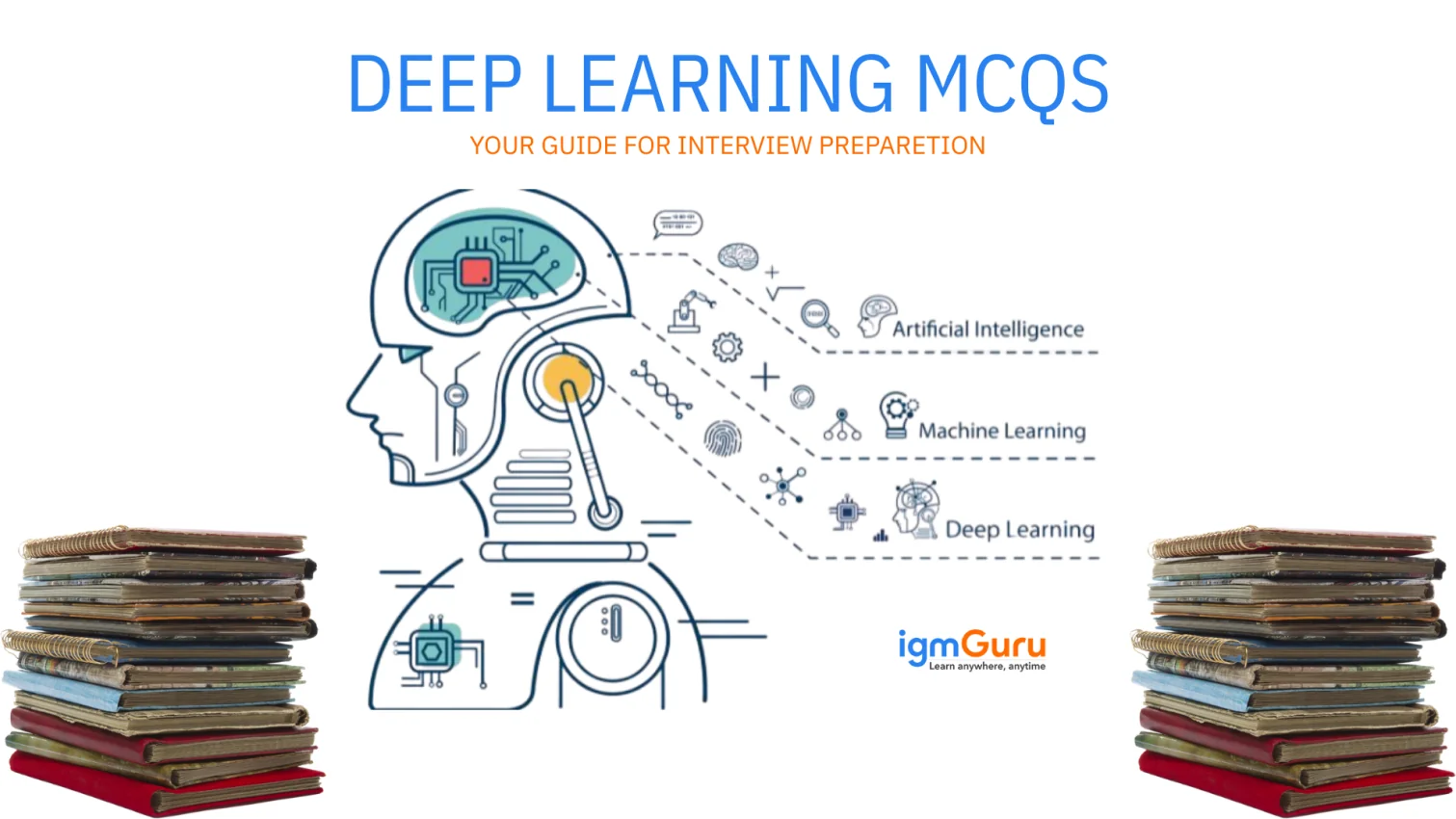
The terms machine learning and deep learning are being thrown around a lot in the recent years. They have also often been used interchangeably. These terms are related but each has its distinct meaning and that's exactly why this deep learning vs machine learning guide is here.
If talk about the market value of both of them, the global machine learning market was valued at $35.8 billion in 2022 and is expected to grow from $48.04 billion in 2023 to $505.42 billion by 2031, with an annual growth rate of 34.2% during the forecast period (2024-2031). While the global deep learning market was worth $49.6 billion in 2022 and is projected to grow at an annual rate of over 33.5% from 2023 to 2030.
The first thing to do is to understand each of these distinctly, then get into a comparison and even the similarities. Some use cases of each of these are mentioned for better understanding of their applications.
So, what is deep learning? It is a machine learning subset and uses artificial neural networks (ANNs) for processing and analyzing information. Neural networks are made up of computational nodes in a layered manner within Deep Learning algorithms. Every layer encompasses three layers namely input, output and hidden layers.
The neural network is given training data which directs the algorithm to learn and gain better accuracy. A neural network consisting of three or more layers is considered 'deep' and thus deep learning. Deep Learning algorithms are based on the human brain's workings.
Enroll in igmGuru's TensorFlow Course program to learn Deep Learning.
Machine learning is an artificial intelligence' subset for a system to autonomously learn and get better without explicit programming every time. Machine Learning algorithms recognize patterns and data. These make predictions as new data is inserted into the system. The three models usually used in this technology are supervised, reinforcement and unsupervised learning.
Enroll in igmGuru's Machine Learning Course program and accelerate your career growth.
The key difference between machine learning and deep learning is that the former uses algorithms to uncomplicate data, learn from it and make informed decisions. The latter structures algorithms in layers for creating ANNs that in turn learn and make decisions accordingly.
A lot of data is needed for Deep Learning as compared to a traditional Machine Learning algorithm for proper functioning. Machine learning can work with around a thousand data points but the other one needs at least a million.
Here is an elaborate comparison on deep learning vs machine learning.
| MACHINE LEARNING | DEEP LEARNING |
| Machine learning is deep learning's superset. | Deep Learning is machine learning's subset. |
| The data represented is different compared to DL since it uses structured data. | The data representation here is different because it uses neural networks (ANN). |
| It has thousands of data points. | It has millions of data points. |
| It retrieves data from the DB while modifying table and data structure. | It creates server pages and web applications. |
| Its outputs are numerical values like classification of the score. | Its output is anything like numerical values and free-form elements like free text and sound. |
| It uses different automated algorithms types that turn into model functions for predicting the future action from data. | It uses a neural network which data processing layers pass through for interpreting data features and relations. |
| Data analysts detect algorithms for examining specific variables in data sets. | Data analysis largely self-depict algorithms after being put into production. |
| It is used for staying in the competition and learning new things. | It solves complicated machine-learning issues. |
| Training is performed with the CPU. | A dedicated GPU is needed for training. |
| Getting results involves more human intervention. | It is more difficult to set up but later needs less intervention. |
| It is swiftly set up and run but effectiveness may be constrained. | Additional setup time is needed but these produce results immediately. |
| These apps are simpler and are executable on standard computers. | These systems use more powerful resources and hardware. |
| They solve straightforward or minutely challenging issues. | They resolve challenging issues. |
| Banks, mailboxes and doctor's offices use it already. | This technology makes way for sophisticated and autonomous algorithms like surgical robots or self-driving automobiles. |
| Algorithms are trained for identifying relationships and patterns in data. | Complex neural networks are used for analyzing more intricate relationships and patterns. |
| They range from simple linear models to complicated models like random forests and decision trees. | They are based on ANNs having multiple layers and nodes. |
| It is used for different applications like classification, clustering and regression. | It is mostly used for complicated tasks like NLP, autonomous systems and image and speech recognition. |
Understanding deep learning vs machine learning includes learning the few similarities between machine learning and deep learning. Both are methods of AI that use algorithms to work with data. Both are reliant on neural networks that are computer systems constructed according to the human analysis patterns.
Both these methods instill massive power with their users working spanning across many different professional fields. More businesses are becoming increasingly interested in using these techniques for different processes and gaining a competitive edge.
When to use machine learning vs deep learning is a big question amongst many people. There are plenty of use cases for both of these and some of the top cases are listed here.
Related Article- Difference Between AI and Machine Learning
Deep learning vs machine learning is a huge topic as both are highly potent pillars in the widespread field of artificial intelligence. Both have grounded their importance in fostering creativity by offering solutions to challenge many common issues today. Success in these fields is highly dependent on keeping up with emerging technologies and trends.
Course Schedule
| Course Name | Batch Type | Details |
| Machine Learning Training | Every Weekday | View Details |
| Machine Learning Training | Every Weekend | View Details |