When I first started working with LabVIEW, I quickly realized it's more than just a tool; it's a mindset for solving engineering problems visually. Over time, I've faced plenty of interview questions that tested not just my technical skills but also how well I could think logically and apply concepts in real scenarios. In this blog, I'll share some of the most common LabVIEW interview questions along with clear answers to help you prepare with confidence.
Let's see what it takes to impress the recruiters.
This section is your warm-up round as it discusses the LabVIEW interview questions for beginners.
LabVIEW stands for Laboratory Virtual Instrument Engineering Workbench. It's a graphical programming environment, which means users can make programs with the help of visuals instead of text-based code. It makes code by joining graphical icons called nodes instead of text via the G visual programming language. Here are some use cases of LabVIEW-
G is a visual programming language used for graphical system design and development in LabVIEW. It gives a more natural approach to programming because of its graphical nature to represent data flow and functions. This special language creates programs by connecting blocks and wires instead of typing.
Here are the three main components of LabVIEW -
Indicators are front panel objects that show data from the program like meters, graphs or text displays. Controls are the front panel objects that let user forward data into the program such as numeric fields or buttons.
A Virtual Instrument (VI) is a complete and independent program that runs on its own. A SubVI is created to be used within another VI like a function or subroutine in text-based programming. In simple words, all SubVIs are VIs but not all VIs are SubVIs.
LabVIEW uses a graphical programming style which allows you to connect function blocks. This system is very much similar to putting LEGO pieces together. It is great for beginners for its intuitive approach and easy debugging.
Property Nodes are tools that let you control and get info from your front panel objects and controls using code. They can read or change almost anything, like if an object is visible, its color, what value it holds, its size, or how a switch behaves. For instance, you can use a Property Node to change a graph's color when data goes over a set point, or to gray out a button after someone clicks it.
My top 3 favourite features of LabVIEW are as follows -
Here are some common challenges of LabVIEW -
An error cluster is a special data structure that groups error information together, usually including a Boolean (error occurred or not), a numeric code, and a source string. It's important because it helps track, handle, and pass errors between VIs, making debugging easier and ensuring the program runs reliably. By wiring error clusters through your VIs, you can catch problems early and prevent unexpected behavior.
Read Also- Top AI Testing Tools To Consider In 2026
Let's take you through some LabVIEW interview questions for intermediates to level up from the basics.
A reentrant VI can run more than one instance without them involving each other's data. This is beneficial when the same VI is called in threads or parallel loops and each instance is needed to have its own memory space. In other words, it can run in multiple places at the same time, each with its own separate data.
A Polymorphic VI is a single VI name but it changes its function based on given data. For example, you can have one polymorphic virtual instrument that adds numbers. Be it the numbers are integers, arrays or floating-point values, LabVIEW would naturally pick the right version to run.
Global variables keep data in a location that can be accessed by multiple VIs across the same project. Local variables are useful for reading and writing the value of a control or indicator within the same VI.
Clusters are data structures that bring together different data types into a single package. One can think of it as a way to group related pieces of information. For example, you can combine a name (text), a temperature (number) and a true or false value into one cluster.
Clusters play an important role in organizing the related data and make cleaner block diagrams by reducing the number of wires. They are also useful for sending multiple values into or out of a SubVI as a single connection. This improves code readability by getting rid of clutter which helps in maintaining the program.
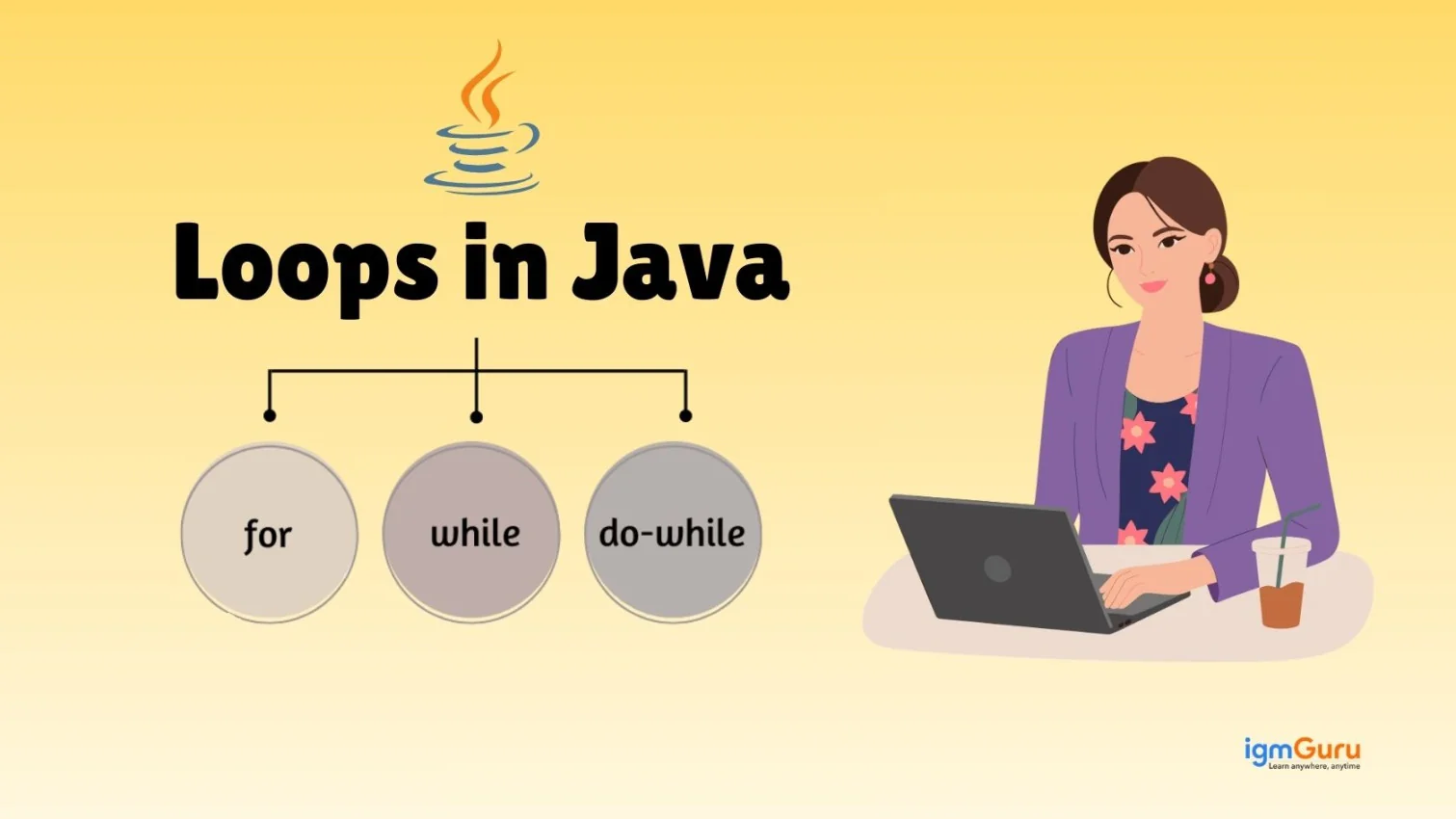
Here are the types of loops in LabVIEW -
A while loop runs the code inside over and over until a stop trigger is met. It always runs at least once since the trigger is checked after the code runs.
This loop runs the same piece of code a set number of times. One can decide the number of repeats before the loop even begins. It's great when you are sure about the number of times you want to repeat a task.
This tool runs code right on schedule at exact times. It gives real-time command and more accurate timing than regular loops. It is for real time applications, control systems and when one needs data collected in sync.
The Event Structure is not a loop but an execution structure usually placed inside a While Loop. It waits for user actions such as button clicks or value changes and executes the corresponding code only when that event occurs.
LabVIEW automatically executes independent code sections in parallel using its dataflow execution model. If two operations do not depend on each other’s output, LabVIEW can run them simultaneously, allowing efficient use of CPU resources.
Here is the table explaining the difference between a global and a local variable in LabVIEW:
| GLOBAL VARIABLE | LOCAL VARIABLE |
| Shared across multiple VIs | Exists within a single VI |
| Created using a Global Variable VI | Created using the VI using front panel items |
| Allows data exchange between VIs | Simplifies dataflow inside a VI |
| Race conditions might happen if many VIs are writing at the same time | Can mess up LabVIEW's data flow and make fixing problems tougher. |
| Shares data between different VIs | Read/write controls or indicators in the same VI |
I would use Queues, Notifiers or Events to coordinate the work between parallel loops. I would also use patterns like Producer-consumer to make sure that each loop has its own task and remains in sync with others. This will keep things organized and avoid data conflicts.
Shift registers store data between iterations of a loop. They're useful for keeping track of previous values, accumulating totals, or maintaining state information without using global variables.
LabVIEW uses Wait (ms) functions or timed loops to control execution speed. This prevents CPU overload, ensures consistent data acquisition rates, and keeps real-time applications predictable.
I would use Producer-Consumer architecture with queues to buffer the incoming data. This way, the producer loop collects data at full speed while the consumer loop processes it, preventing data loss and keeping the system responsive.
Read Also- 40 Best Selenium Interview Questions and Answers
These LabVIEW interview questions for experienced professionals would mirror real-life industry challenges.
Here are the roles of Queues, Notifiers and Events in inter-process communication -
It is great for moving data between loops like in a producer-consumer setup. One loop (producer) adds data and another loop (consumer) takes it out in the order it came in. It is best for keeping a steady stream of data flowing like sensor readings or log files.
Notifiers are used to send the latest data or status to one or more loops. It works when a value is sent and any loops waiting for it get it. It gets overwritten by the next one. It is best for sending updates on status, alarms or signals where you just need the latest information. Notifiers are not a good fit for streams of data since it does not save multiple values.
Events signal that something has happened like a user clicking a button or the program starting up. An event structure sits and waits for things to happen. It runs the code one has set for that event when a specific action takes place.
I would make sure to use a modular design with subVIs that can be reused along with organized setups like state machines or producer-consumer loops. I'd also stick to naming things the same way all the time, follow LabVIEW's style tips to keep block diagrams neat and include helpful documentation.
Putting error handling in one place using version control correctly and keeping configuration data separate from the code makes things easier to debug. In the end, I make sure the project can grow by using modules that aren't tightly connected and keep it reliable through testing and regular code check-ups.
I would first place a Cluster container on the front panel by opening the Controls Palette → Cluster, Class & Variant → Cluster. After placing the cluster container, I would add a String Control, a Numeric Control (set to integer) and a Boolean Control inside the cluster.
Now I'd have a single cluster that groups those three things. On the block diagram, it shows up as one terminal, so I can send the string, integer, and boolean values using just one wire which keeps things simple.
I would start by profiling the VI to find bottlenecks like unnecessary data. I would streamline data handling by wiring directly by using Functional Global Variables instead of local variables for memory efficiency. To keep the user interface (UI) from freezing, I'd use producer-consumer loops to keep data gathering separate from processing and showing data.
I'd also make the loops better by using good timing controls, loading settings data ahead of time instead of redoing the calculations, and closing any unused files or hardware connections. For some things that need to go even faster, compiling key parts into DLLs or using existing, speedy libraries can really help. All this work keeps the app quick, able to grow, and working well.
I would use proper dataflow, synchronization tools like Notifiers, Semaphores and Queues. I'd also replace global/local variables with Functional Global Variables to make sure that shared data access is under control.
I would use the Python Node in LabVIEW to directly call a Python script. The machine learning model can process incoming sensor data and return predictions or classifications to LabVIEW. LabVIEW can then use these results to trigger actions, control hardware, or visualize the output. This integration allows engineers to combine LabVIEW’s hardware control capabilities with Python libraries like NumPy, Pandas, TensorFlow, or PyTorch for advanced analytics.
LabVIEW Classes (LVOOP) offer object-oriented programming support. They let you bundle data with the functions that operate on that data. You can use inheritance to share features among classes and polymorphism to change how child classes act. This helps keep big projects structured, makes code reusable, and simplifies maintenance.
I would use a Producer-Consumer architecture where one loop handles data acquisition and another processes it in real-time. This keeps acquisition responsive and ensures processing doesn't block the system. For scalability, I'd make modules reusable, use Queues for data transfer, and apply error handling and logging across all modules.
I would do it with the help of a Modular Architecture such as Actor Framework or Queued Message Handler, where each module runs independently. By isolating modules in parallel loops with dedicated error handling, I can catch failures locally without shutting down the whole system. I'd also log errors and use watchdog timers to restart or recover failed processes, ensuring continuous system operations.
I would avoid unnecessary data copies by using in-place element structures, preallocating arrays when possible, and minimizing the use of local/global variables. For streaming data, I'd rely on TDMS files or producer-consumer loops with queues to process chunks instead of holding the entire dataset in memory. This reduces overhead and ensures smooth real-time performance.
The Queued Message Handler (QMH) is a popular LabVIEW design pattern used to build scalable and responsive applications. It separates the user interface, message handling, and processing logic into different loops that communicate through queues. This structure allows commands and data to be passed safely between different parts of the application.
QMH improves code maintainability, simplifies debugging, and prevents the user interface from freezing while heavy processing is running in the background.
LabVIEW is widely used in industries that require automated testing, real-time monitoring, and hardware integration. It is commonly used in automotive testing, aerospace systems, semiconductor validation, industrial automation, robotics, and research laboratories.
Engineers use LabVIEW to control instruments, collect sensor data, automate testing procedures, and analyze large datasets in real time.
A State Machine is a design pattern in LabVIEW where the program is divided into different states, and each state performs a specific task before deciding which state should execute next. Typical states might include Initialize, Acquire Data, Process Data, Save Results, and Shutdown.
I would use a State Machine when an application needs to follow a defined workflow or make decisions based on user actions, sensor inputs, or program conditions. It improves code organization, simplifies troubleshooting, and makes it easier to add new functionality without redesigning the entire application. State Machines are commonly used in test automation systems, industrial control applications, and measurement systems.
Here are some of the most asked scenario-based LabVIEW interview questions and answers.
I would isolate communication with each DAQ device in its own parallel loop so that the failure of one device does not stop the entire application. Every hardware operation would include proper error handling, allowing the application to detect communication failures without crashing.
If a device disconnects, I would log the error, notify the operator through the user interface, and periodically attempt to reconnect the hardware automatically. The remaining DAQ devices would continue collecting data normally while the failed device recovers. This design improves system reliability and minimizes production downtime.
I would avoid using shared variables for large-scale communication because they become difficult to manage as the system grows. Instead, I would use network communication protocols such as TCP/IP, Network Streams, or MQTT depending on the application requirements.
Each LabVIEW application would publish and receive data independently while maintaining proper synchronization and error handling. This architecture scales well across multiple machines and provides reliable communication even when network interruptions occur.
For deterministic execution, I would separate time-critical tasks from user interface operations and background processing. Time-sensitive code would execute inside Timed Loops on a LabVIEW Real-Time target, while logging and visualization would run independently.
I would also minimize memory allocations during execution, avoid unnecessary local variables, prioritize critical tasks, and continuously monitor execution timing. This approach ensures predictable performance and helps meet strict real-time requirements.
I would collect sensor data using dedicated acquisition loops and preprocess it locally before transmitting it to the cloud. Only the required information would be published using secure communication protocols such as MQTT or HTTPS to reduce bandwidth usage.
Local buffering would be implemented so that data is not lost during temporary network failures. Once connectivity is restored, the buffered data would automatically synchronize with the cloud platform while the application continues collecting new measurements.
I would first profile the application to identify where memory usage continuously increases. Then I would inspect loops for unnecessary data copies, large arrays, unclosed references, memory leaks, and inefficient file handling.
I would optimize the application by using In-Place Element Structures, streaming data directly to TDMS files instead of storing everything in memory, releasing unused references, and processing data in smaller chunks. Finally, I would perform extended stress testing to verify that memory consumption remains stable during long production runs.
I would separate the user interface from the robot control logic using a Producer-Consumer or Queued Message Handler (QMH) architecture. The UI loop would only receive user inputs and display system status, while a separate processing loop would handle all robotic commands.
Communication between the loops would take place through queues or events, ensuring the interface remains responsive regardless of how long the robot operations take. This design improves responsiveness, scalability, and user experience.
I would implement a Producer-Consumer architecture where one loop continuously acquires measurement data while another loop writes the buffered data to TDMS files. Queues would temporarily store incoming data during heavy workloads.
This approach prevents acquisition delays caused by disk I/O operations and ensures no measurements are lost even during temporary storage bottlenecks. Proper queue monitoring would also alert operators before buffer overflow occurs.
I would deploy each LabVIEW application as a local data acquisition node that publishes machine status, alarms, and production metrics over secure network protocols such as MQTT or TCP/IP.
A centralized dashboard would subscribe to these updates and display live production information while maintaining local operation even if network connectivity is temporarily unavailable. This architecture supports easy expansion as additional production lines are added.
I would place the entire project under version control using Git or another supported repository and divide development into feature branches. Developers would work independently while following common coding standards and modular SubVI design.
Before merging changes, code reviews and automated testing would verify that new modifications do not introduce regressions. Proper documentation and consistent naming conventions would further simplify long-term maintenance.
I would develop a hardware abstraction layer using object-oriented programming (LVOOP) or interchangeable driver modules. Each hardware device would implement the same interface while containing its own communication logic.
The application would load the appropriate hardware module during startup based on configuration settings rather than hardcoded logic. This modular approach allows new hardware models to be supported with minimal changes to the existing application while improving maintainability and scalability.
LabVIEW is a great tool for mixing visual programming with managing actual hardware. If you get the basics, learn some intermediate stuff, and get good at the advanced parts, you'll be ready for any LabVIEW interview. Just keep trying things out and stay interested. The more you play around with LabVIEW, the easier it'll be to think about how data moves, how to set things up, and how to fix issues.
Modern LabVIEW development also includes integration with Python, cloud monitoring systems, automated testing frameworks, and modular architectures like Actor Framework or Queued Message Handler. Engineers who understand both graphical programming and scalable software design are highly valued in industries such as automotive, aerospace, and semiconductor testing.
Explore Our Trending Interview Questions
The questions asked in these types of interviews depend on the required experience of the job role you are going for. The beginner-level job often includes basic questions, whereas the intermediate and experienced-level job includes advanced concepts.
LabVIEW uses a graphical programming approach to create sophisticated measurement, test, and control systems to help engineers in acquiring data, controlling instruments and automating processes.
The two main panels of LabVIEW are Front Panel and Block Diagram.
No. LabVIEW uses visual programming, so it’s easy for beginners but coding knowledge can help with advanced tasks.
LabVIEW follows dataflow, meaning a node executes only when all its input data is available, ensuring parallelism automatically.
Course Schedule
| Course Name | Batch Type | Details |
| LabVIEW Course | Every Weekday | View Details |
| LabVIEW Course | Every Weekend | View Details |