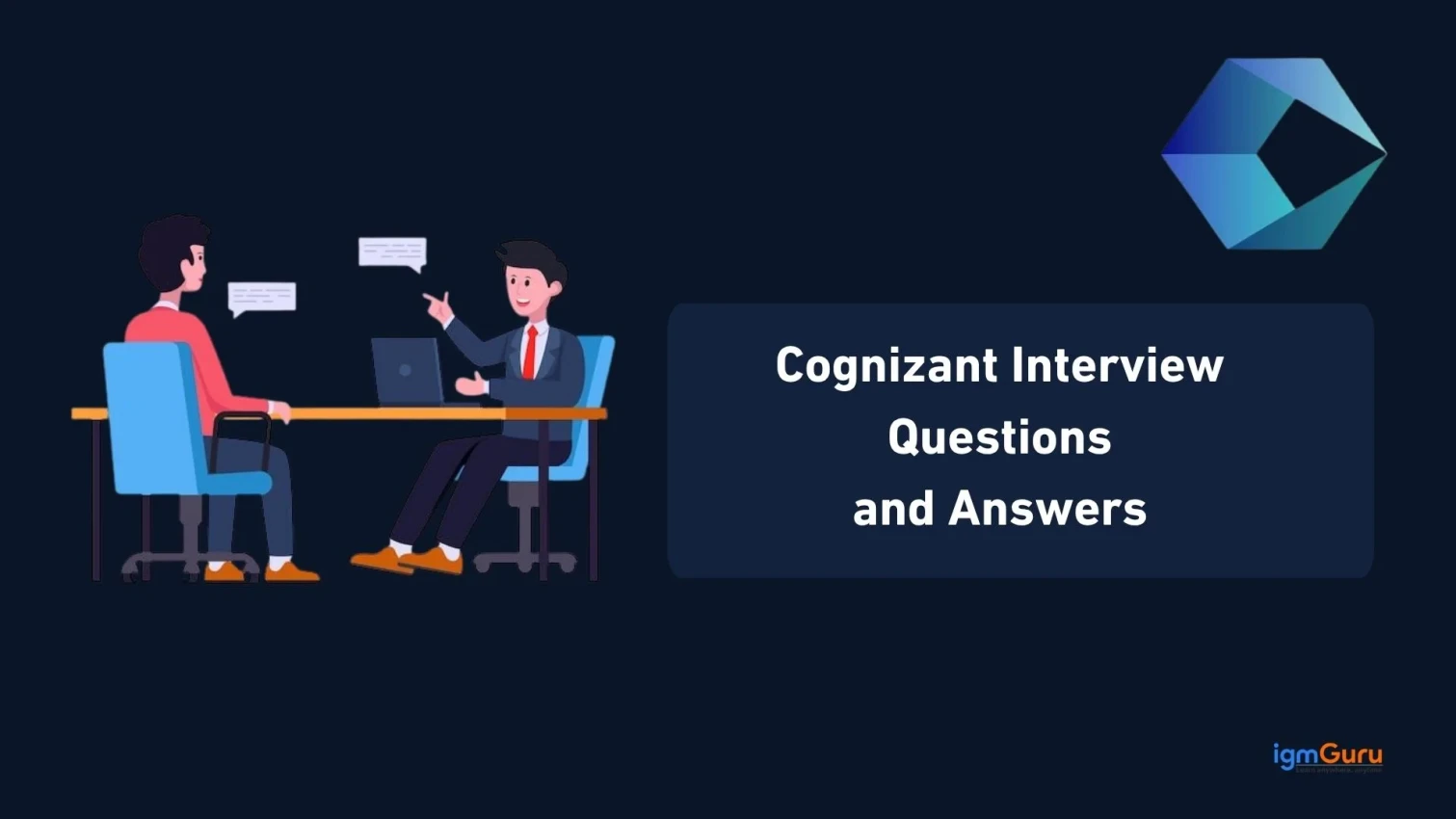
If you are a fresher preparing for a Cognizant interview, you are in the right place. Cognizant Technology Solutions is one of the top IT companies in the world. It hires thousands of fresh graduates every year through its GenC (Generation Cognizant) and GenC Elevate programs. Getting into Cognizant is absolutely achievable if you prepare the right way.
This article covers the most important Cognizant interview questions for freshers, the complete interview process, and the tips that will help you clear every round.
Let's get started!
Read Also: Personal Interview Questions and Answers
Before you look at the questions, you need to understand how Cognizant interviews freshers. The process has a few clear stages.
This is the first filter. It tests your logical reasoning, verbal ability, quantitative aptitude, and basic coding skills. Cognizant uses platforms like AMCAT or its own assessment portal for this round.
This Technical Interview round is where the interviewer checks your technical knowledge. Topics include programming basics, data structures, DBMS, operating systems, computer networks, and OOP concepts.
This is the final round. The HR manager checks your communication skills, attitude, career goals, and cultural fit.
Some roles may also include a Managerial Round between the technical and HR rounds. However, for most GenC hiring, the process is two to three rounds.
Related Article: Top Software Engineering Interview Questions
The online round is the first thing you need to clear. Here are the key topics and sample questions that Cognizant asks freshers.
Sample Question:
A can complete a task in 12 days. B can complete the same task in 18 days. If both work together, how many days will they take to finish?
Answer: 7.2 days
Sample Question:
In a certain code, MANGO is written as OCPIQ. How is APPLE written in that code?
Tip: Identify the pattern in the letter shift and apply it consistently.
This round is the most important part of the Cognizant fresher interview. The interviewer does not expect you to know everything. But they do want to see that you understand the basics clearly and can explain your thoughts.
A pointer in C is a variable that stores the memory address of another variable. It allows you to directly access and manipulate data stored in memory.
In a structure, each member gets its own memory space. In a union, all members share the same memory space. The size of a union equals the size of its largest member.
Also Read: What is Laravel?
Function overloading means defining multiple functions with the same name but different parameters. The compiler picks the right function based on the arguments you pass.
A virtual function is a member function in a base class that you can override in a derived class. It enables runtime polymorphism in C++.
A destructor is a special function in C++ that automatically runs when an object goes out of scope. It releases the resources that the object was using.
Java is platform-independent, object-oriented, secure, and multithreaded. Its main features are encapsulation, inheritance, polymorphism, and abstraction.
An abstract class can have both abstract and non-abstract methods. An interface can only have abstract methods (before Java 8). A class can implement multiple interfaces but can only extend one abstract class.
A constructor in Java is a special method that runs automatically when you create an object. It has the same name as the class and does not have a return type.
Exception handling is a mechanism to handle runtime errors using try, catch, finally, and throw keywords. It prevents your program from crashing unexpectedly.
A linked list is a linear data structure where each element, called a node, contains data and a pointer to the next node. Unlike arrays, linked lists do not store elements in contiguous memory locations.
A stack follows the LIFO (Last In First Out) principle. A queue follows the FIFO (First In First Out) principle.
Binary search is a searching algorithm that works on sorted arrays. It repeatedly divides the search range in half until it finds the target element. Its time complexity is O(log n).
A binary tree is a tree data structure where each node has at most two children, called the left child and the right child.
BFS (Breadth-First Search) explores all nodes at the current depth before moving deeper. DFS (Depth-First Search) goes as deep as possible before backtracking.
Related Article: 20 Best Programming Languages To Learn in 2026
A primary key is a column or a set of columns that uniquely identifies each row in a table. It cannot have NULL values.
Normalization is the process of organizing a database to reduce data redundancy and improve data integrity. It involves dividing large tables into smaller ones and linking them using relationships.
A JOIN in SQL combines rows from two or more tables based on a related column. Types of joins include INNER JOIN, LEFT JOIN, RIGHT JOIN, and FULL OUTER JOIN.
|
A process is an independent program in execution. A thread is the smallest unit of execution within a process. Multiple threads can share the same process resources.
Deadlock happens when two or more processes are waiting for each other to release resources, and none of them can proceed. The four conditions for deadlock are mutual exclusion, hold and wait, no preemption, and circular wait.
Also Read: Differences Between JDK, JRE and JVM
Virtual memory is a memory management technique that lets the operating system use disk space as an extension of RAM. It allows programs to run even when physical memory is full.
The OSI model is a conceptual framework that standardizes how different network systems communicate. It has seven layers: Physical, Data Link, Network, Transport, Session, Presentation, and Application.
TCP is a connection-oriented protocol. It ensures reliable data delivery and checks for errors. UDP is a connectionless protocol. It is faster but does not guarantee delivery.
Freshers often underestimate the HR round. But this round is just as important. The HR manager is checking whether you are a good fit for Cognizant's culture and values.
This is always the first question. Keep your answer structured. Start with your name, educational background, technical skills, and then close with what you are looking for. Practice this answer until it feels natural.
For example:
"Good morning, sir/madam. My name is XYZ, and I recently completed my graduation in Computer Science from XYZ University. During my academic journey, I developed skills in Java, SQL, Python, and web technologies. I also worked on academic projects that helped me improve my problem-solving and teamwork abilities. I am a quick learner, enjoy exploring new technologies, and am eager to start my professional career. As a fresher, I am looking for an opportunity at Cognizant where I can learn, grow, and contribute to the organization's success."
Talk about Cognizant's global presence, learning culture, and the opportunity to work on real-world projects. Show that you have researched the company.
For example:
"I want to join Cognizant because it is a globally recognized IT company known for innovation, digital transformation, and employee development. I am particularly impressed by its strong learning culture and opportunities for freshers to work on real-world projects. I believe Cognizant will provide the right environment for me to enhance my skills and build a successful career."
Be honest about your strengths. Pick a real strength and back it with an example. For weaknesses, name something genuine but show that you are actively working to improve it.
For example:
"My strengths are my adaptability, willingness to learn, and problem-solving skills. For example, during a college project, I quickly learned a new technology and successfully contributed to completing the project on time.
My weakness is that I sometimes hesitate to delegate tasks because I want everything to be done perfectly. However, I am working on improving my teamwork and trust in others by collaborating more effectively in group projects."
Related Article: How to Install R on Windows, Mac OS X, and Ubuntu?
Show ambition but stay realistic. Talk about growing within Cognizant, taking up more responsibility, and becoming a skilled professional in your domain.
For example:
"In five years, I see myself as a skilled and experienced professional at Cognizant, contributing to impactful projects and taking on greater responsibilities. I aim to continuously upgrade my technical knowledge and develop leadership skills while growing within the organization."
Cognizant places freshers across multiple cities. Always say yes unless you have a strong reason not to. Show flexibility.
For example:
"Yes, I am comfortable with relocation. I understand that working in different locations can provide valuable learning experiences and exposure to diverse teams and projects. I am flexible and willing to relocate based on the company's requirements."
Give an example from your college life. Talk about a time when you managed multiple tasks, like a project submission, an exam, and an extracurricular activity, all at once.
For example:
"I handle pressure by staying calm, planning my work, and prioritizing tasks effectively. For instance, during my final semester, I had project deadlines, practical exams, and assignment submissions in the same week. I created a timetable, focused on one task at a time, and successfully completed everything on schedule."
Always ask something. Good questions show interest. You can ask about the training program, the team you will join, or the kind of projects Cognizant handles in your domain.
For example:
"Yes, thank you for the opportunity.
- What does the onboarding and training process for freshers look like at Cognizant?
- What technologies and tools are commonly used by the team I may join?
- How does Cognizant support employee learning and career growth?
- What are the expectations from a fresher during the first six months?"
These questions demonstrate curiosity, professionalism, and genuine interest in the role.
Read Also: What Is Bash?
Cognizant does ask basic coding questions in the technical round. Here are the most common ones.
Simple iterative approach in any language. Practice in Python, Java, or C.
For example:
|
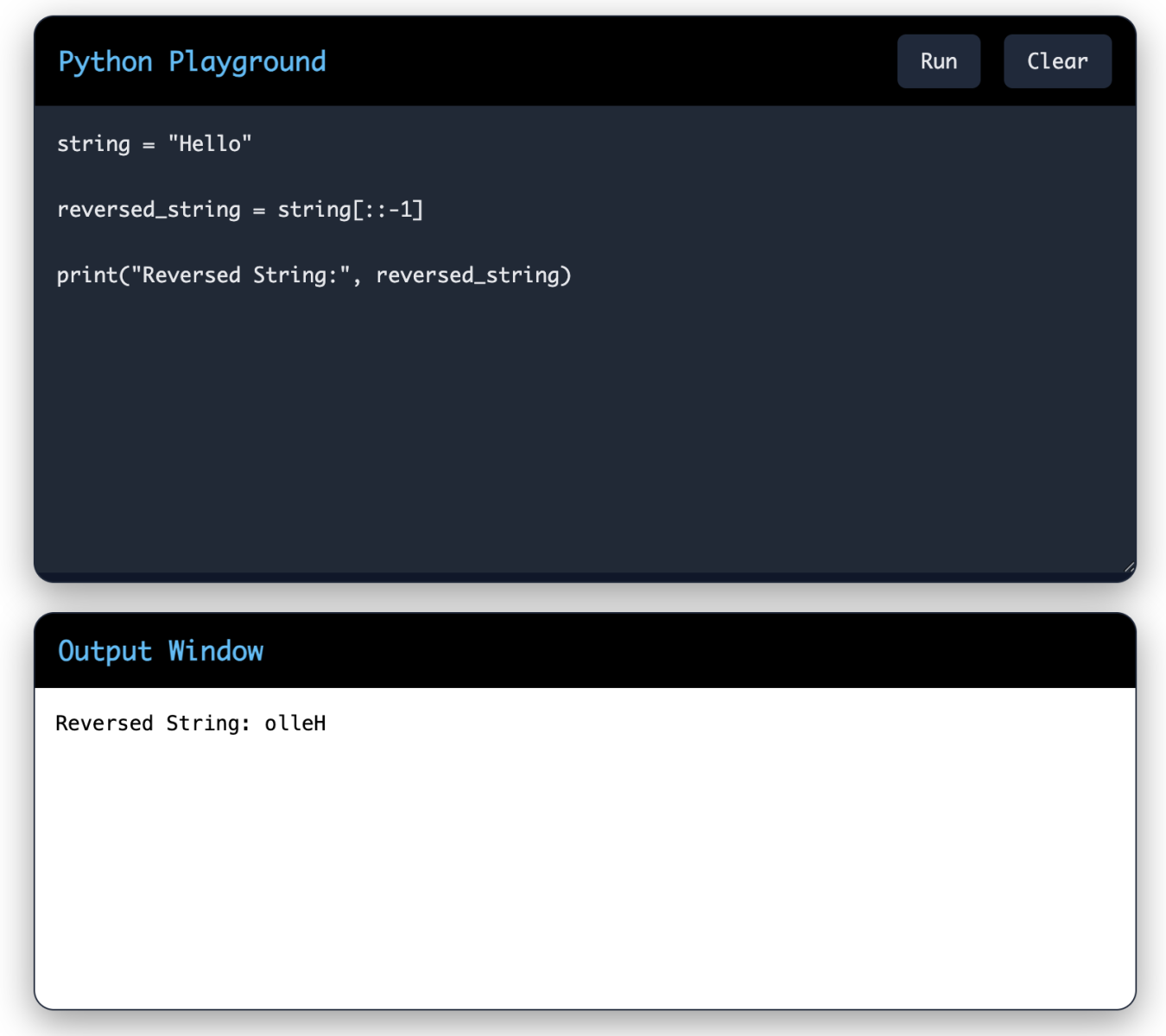
Explanation: The slicing operator [::-1] reverses the string.
Test your Python code here: Online Python Compiler
A number is a palindrome if it reads the same forwards and backwards. For example, 121 is a palindrome.
For example:
|
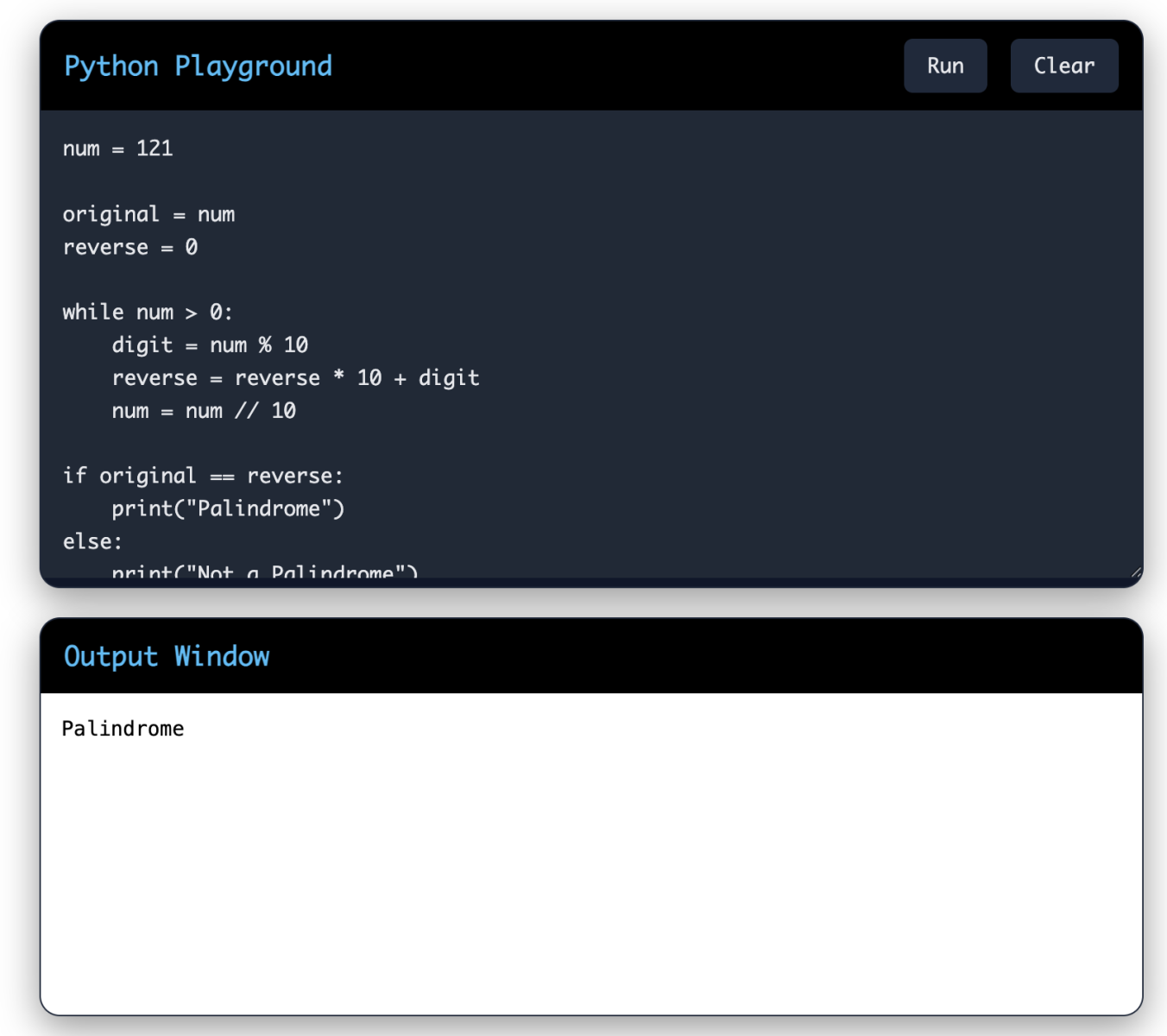
Explanation: We reverse the number and compare it with the original number.
Recursion is a core concept. Know how to write and explain it clearly.
For example:
|
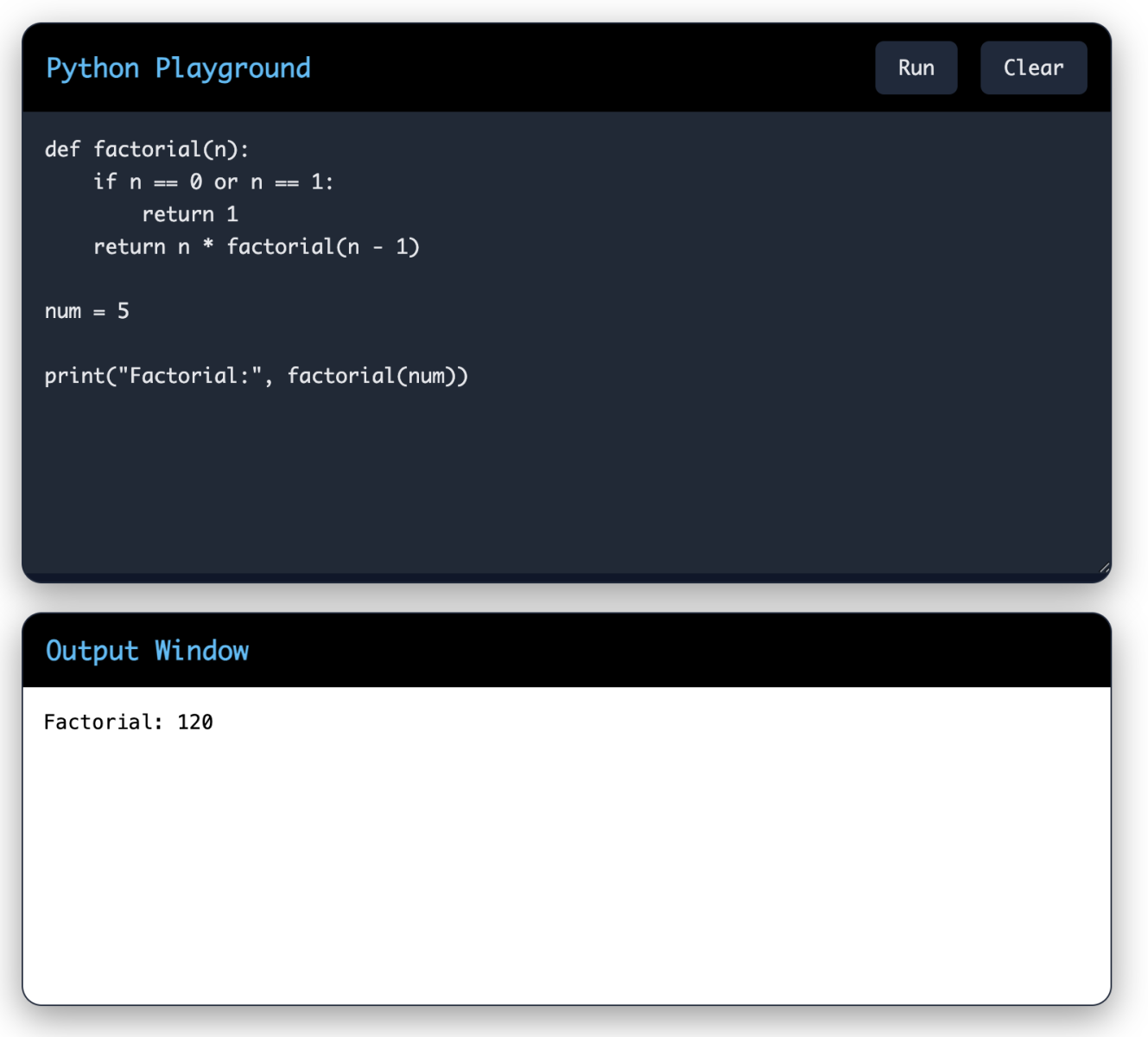
Explanation: The function keeps calling itself until it reaches the base case (n = 0 or n = 1).
Related Article: What is Pandas?
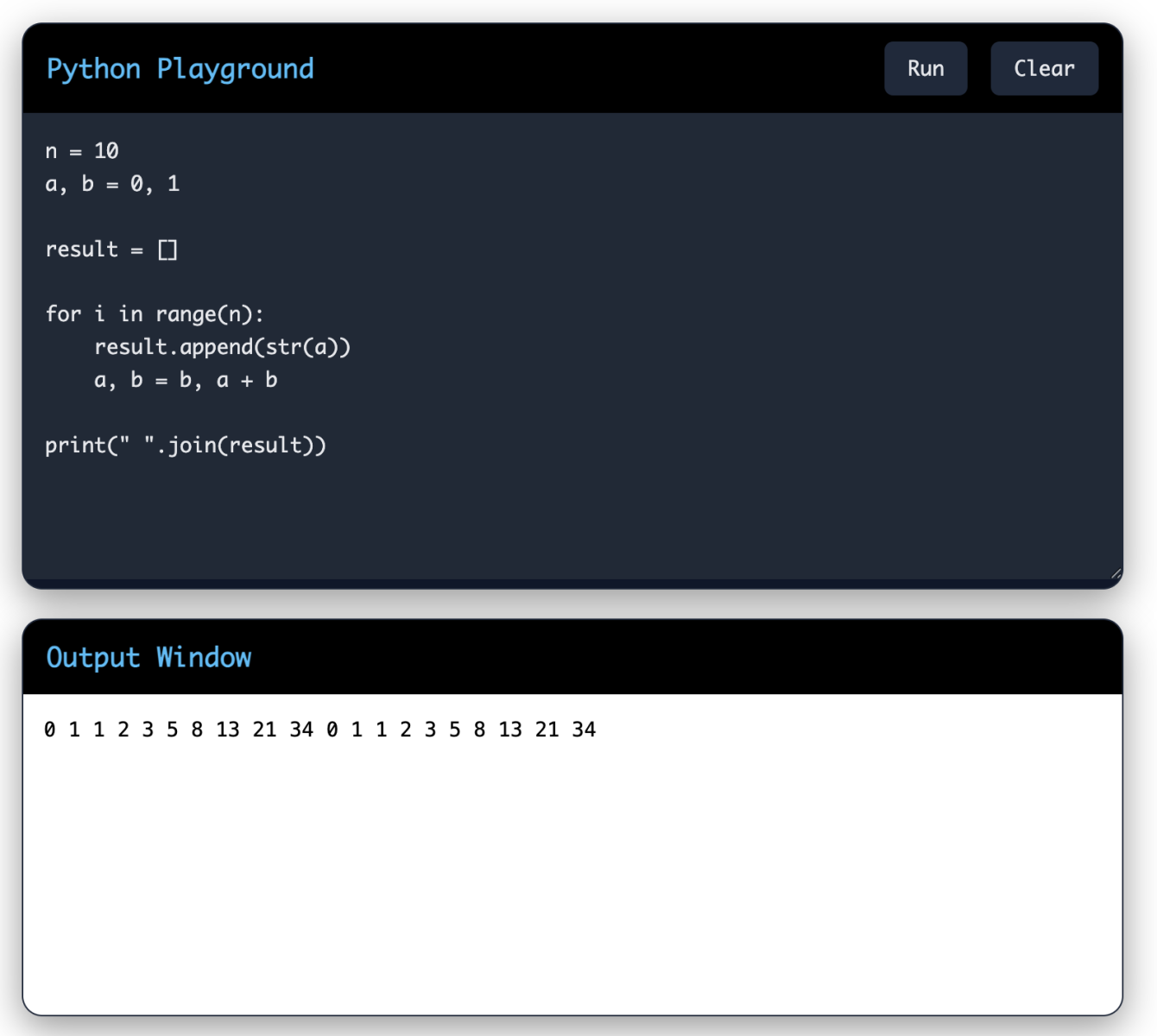
Cognizant frequently asks this in both iterative and recursive forms.
For example:
|
Two strings are anagrams if they contain the same characters in a different order. For example, "listen" and "silent" are anagrams.
For example:
|
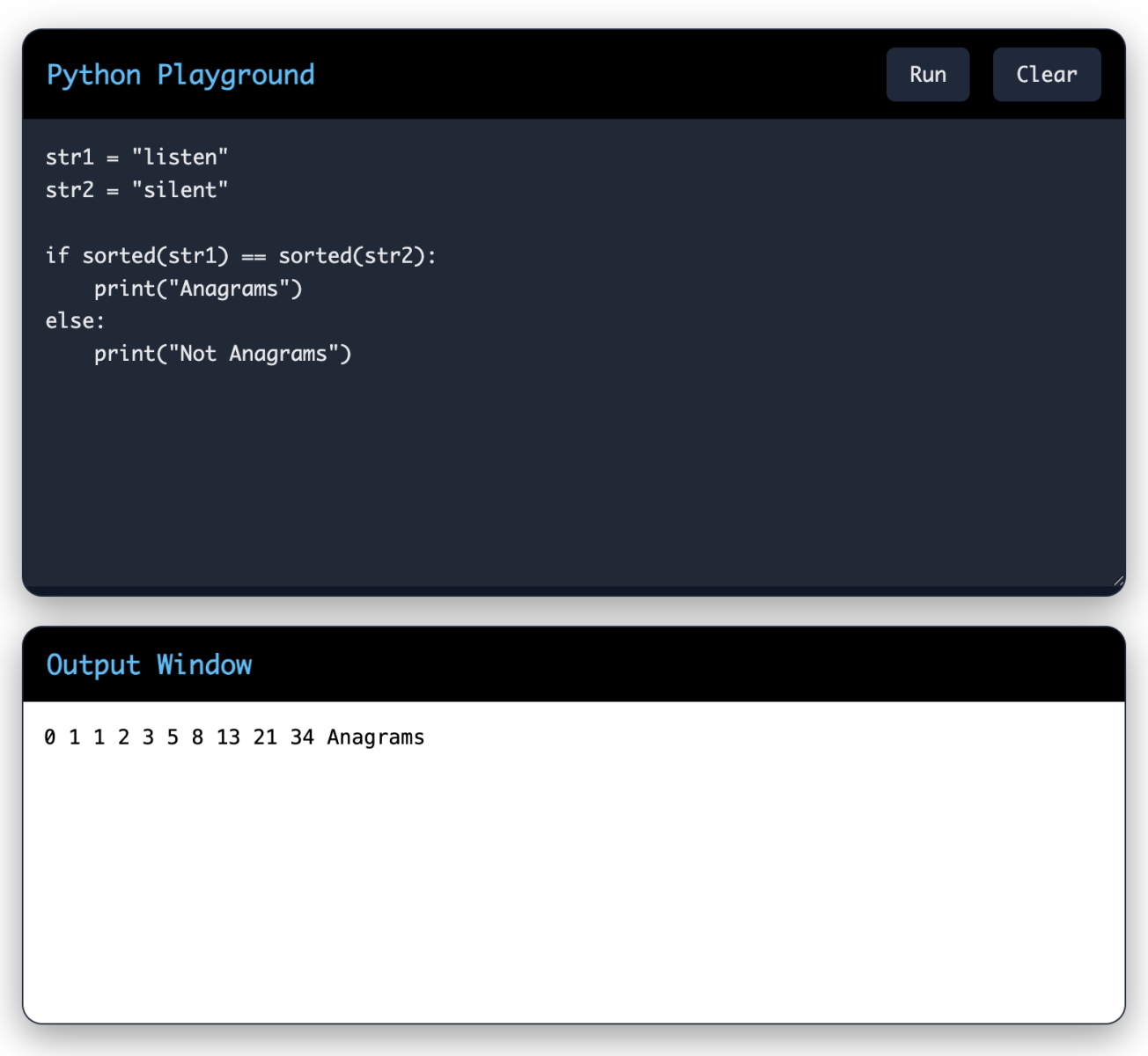
Explanation: If the sorted characters of both strings are the same, they are anagrams.
These tips come from real experiences and are genuinely useful.
Cognizant does not expect freshers to know advanced topics. But they do expect clarity on fundamentals. Revise your C, Java, DBMS, OS, and Data Structures before the interview.
The online round is a filter that eliminates a large number of candidates. Use platforms like IndiaBix, PrepInsta, or Faceprep to practice aptitude daily.
You do not need perfect English. You just need to be clear and confident. Practice speaking your answers aloud before the actual interview.
Do not write anything on your resume that you cannot explain. The interviewer will dig into your projects, internships, and certifications.
Even simple college projects work. Know what problem it solves, the technology you used, and your specific contribution.
Know the company's founding year (1994), its headquarters (Teaneck, New Jersey), its key services (IT, consulting, BPO), and its major clients.
Read Also: What is R Programming Language?
Cognizant is one of the best places to start your IT career as a fresher. The interview process is structured and fair. If you prepare your technical basics, practice aptitude questions, and work on your communication, you are in a strong position to clear the Cognizant fresher interview.
Start your preparation today. Focus on one topic at a time. Do not try to learn everything in one night. Consistent preparation over two to four weeks will give you the confidence you need on interview day.
Yes, Cognizant offers structured training programs, good salary packages for freshers, and exposure to global projects. It is a solid first company to start your IT career.
For GenC roles, the package is typically around 4 to 4.5 LPA. For GenC Elevate roles, it goes up to 5.5 to 6.5 LPA depending on your skills and performance.
The full process from application to offer letter usually takes two to six weeks. The actual interview day can last three to five hours depending on the number of rounds.
Yes, but at a basic level. Focus on arrays, strings, linked lists, stacks, queues, and basic sorting algorithms.
It is very difficult. Cognizant expects at least basic programming knowledge. Spend two to four weeks learning the fundamentals of any one language before you appear for the interview.